

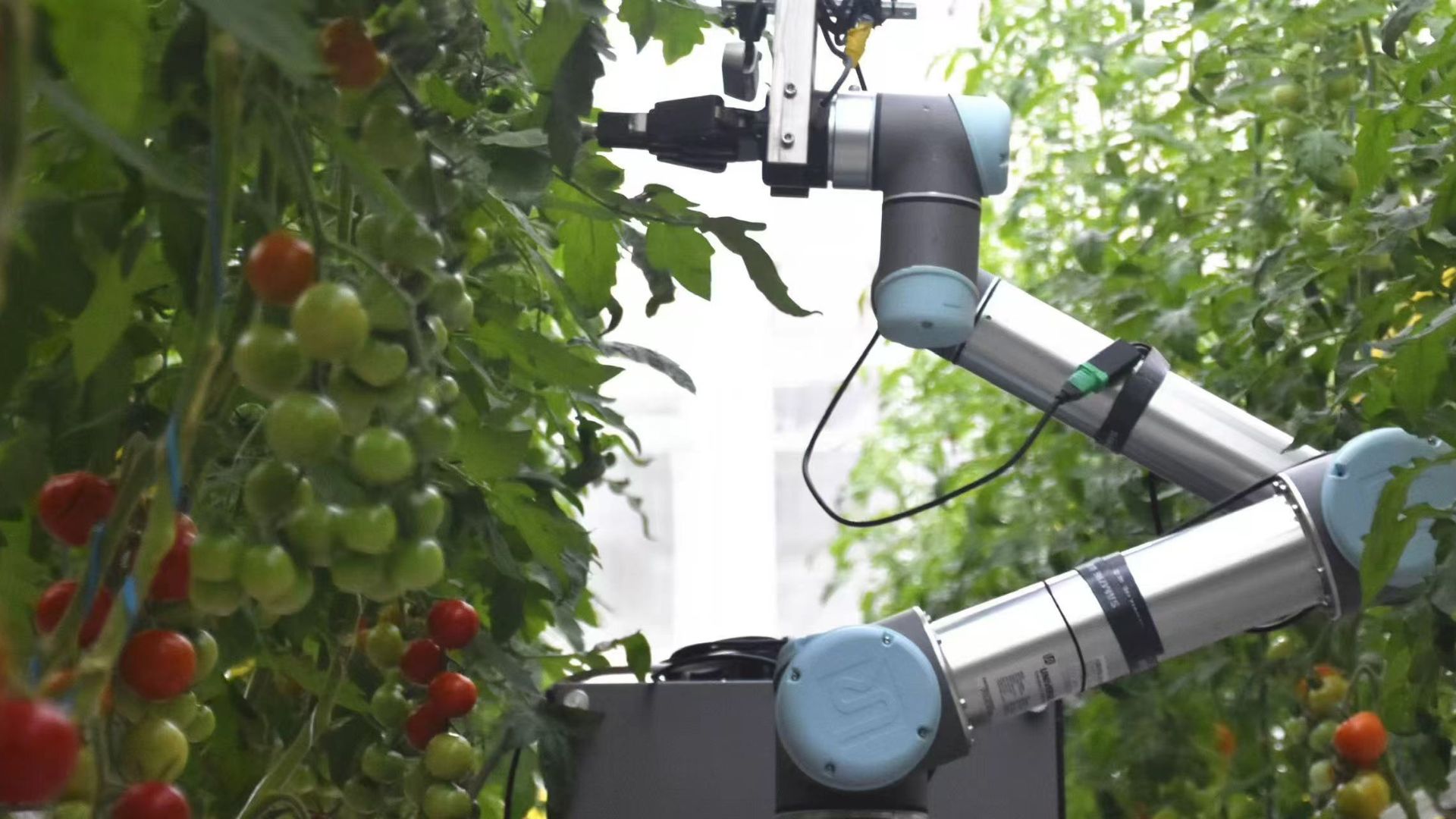
A new humanoid robot named GEAIR 2.0 has been introduced in Beijing, designed to assist in crop breeding through autonomous hybrid pollination. Developed by the Institute of Genetics and Developmental Biology under the Chinese Academy of Sciences, this robot operates independently in complex agricultural environments, enhancing its flower-recognition capabilities and improving stigma-recognition accuracy from 85% to 92.8%.
The significance of GEAIR 2.0 lies in its potential to revolutionize crop breeding by automating a labor-intensive process. By combining robotics, artificial intelligence, and biotechnology, the robot can perform pollination tasks efficiently, reducing the reliance on manual labor and lowering breeding costs. Its ability to work continuously without human supervision makes it a valuable asset for large-scale agricultural operations.
Looking ahead, the developers emphasize the robot's role in improving the efficiency of hybrid breeding. The system's design allows it to navigate through dense crops and perform tasks under varying environmental conditions. No further timeline was disclosed at the time of publication.
Editor's Note
The introduction of GEAIR 2.0 highlights the increasing integration of advanced robotics and AI in agriculture. As labor shortages persist in the agricultural sector, such innovations could significantly enhance productivity and efficiency. The focus on automating pollination tasks may also lead to broader applications in crop management and breeding strategies.

























Leave a comment