Industry Briefing
A single destination for timely, editor-curated robotics news from around the world.
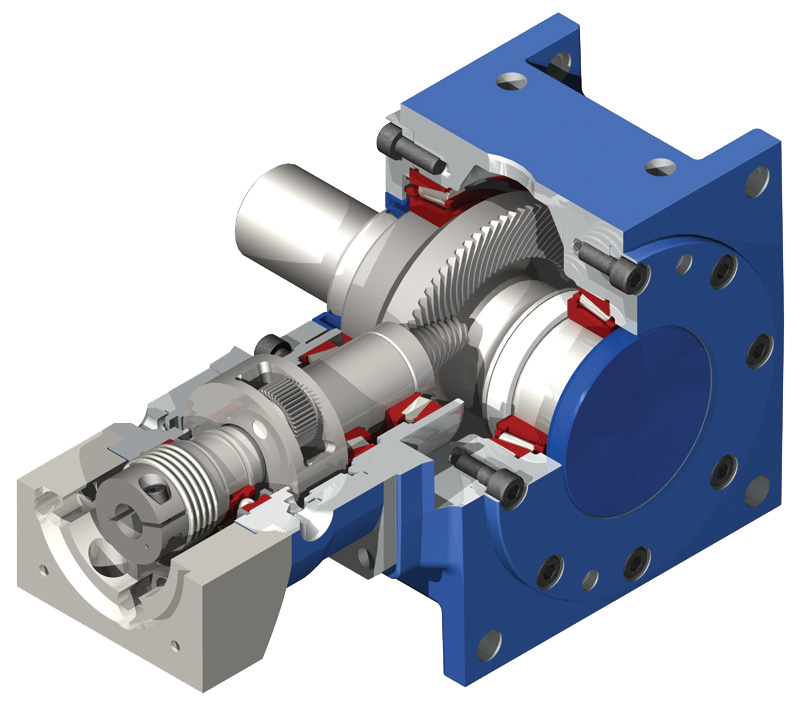
Advantages of hypoid gearing over worm, bevel and bevel-planetary
Engineers in the field of mechanical design often face challenges in achieving an optimal balance between torque capacity and mechanical efficiency when utilizing right-angle gearing. A recent analysis highlights hypoid gearing as a superior alternative, providing a more favorable combination of mechanical efficiency, load-carrying capability, and a versatile single-stage ratio range. This insight into hypoid gearing's advantages over traditional options such as worm, bevel, and bevel-planetary gears was published on The Robot Report, underscoring its potential to enhance performance in various engineering applications.
Sponsored Content GAM sponsored
Why Does a Bank Need a Chief Scientist?
Prem Natarajan, formerly the head of Alexa AI at Amazon, has transitioned to the role of Chief Scientist at Capital One, a leading financial institution serving over 100 million customers. This move comes as the landscape of artificial intelligence (AI) research shifts from large tech companies to industry-specific applications, particularly in finance, where the challenges are more complex and require a nuanced understanding of customer needs and regulatory constraints. Capital One has long been recognized for its data-driven approach, having invested heavily in cloud technology to create a robust data ecosystem. This infrastructure supports innovative AI research aimed at solving real-world problems, such as real-time fraud detection and personalized customer interactions. Unlike many banks that view AI merely as a tool, Capital One is establishing a scientific community focused on developing impactful AI solutions. Natarajan emphasizes the importance of “destination-back thinking,” where the team envisions ideal customer experiences and works backward to identify necessary scientific advancements. This methodology, combined with a commitment to continuous learning and a unique cloud-first architecture, allows Capital One to tackle challenges that are often overlooked by traditional financial institutions. The bank's efforts have garnered recognition, with Capital One being ranked as a leader in AI talent and innovation, accounting for a significant portion of AI patents in the financial sector. Through partnerships with academic institutions and a focus on agentic AI systems, Capital One aims to enhance financial services for millions, positioning itself at the forefront of AI advancements in the industry.
Ai-research Agentic-ai Financial-services Tech-careers Type-sponsored Financial-technology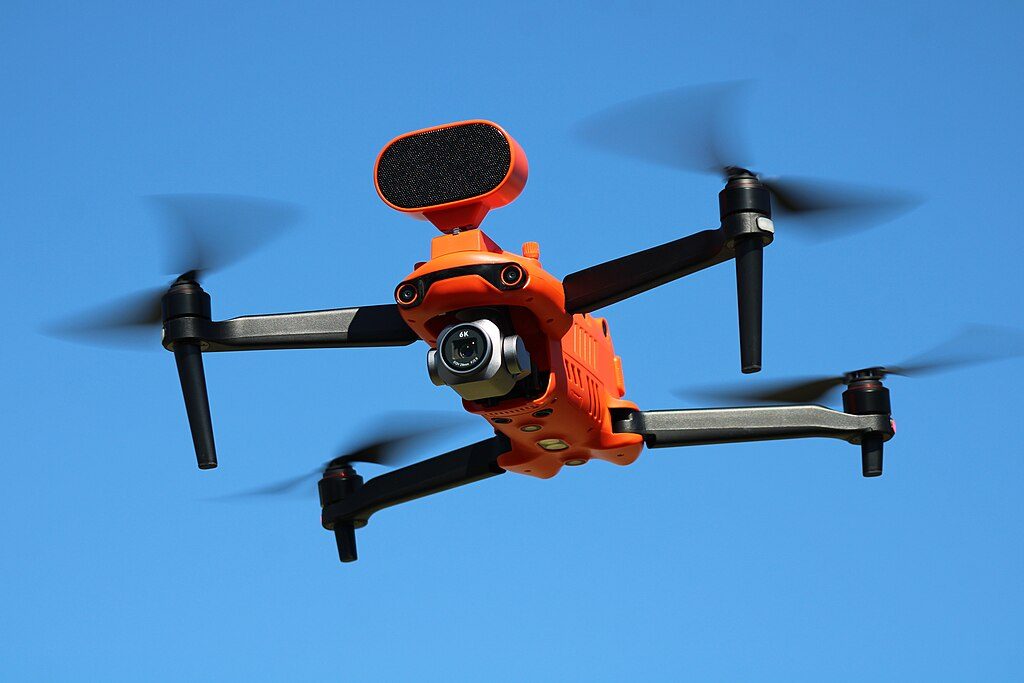
Proposed Patent Bill Could Have Major Implications for Drone Industry Intellectual Property
A newly introduced bill in Congress, the Prohibiting Adversarial Patents Act of 2026 (PAPA), aims to address concerns over certain foreign technology companies by making specific patents unenforceable while retaining ownership rights. Sponsored by Rep. Scott Fitzgerald (R-WI), the legislation seeks to expand U.S. scrutiny into the realm of intellectual property rights, particularly impacting the drone industry. The bill reflects growing apprehension regarding the influence of foreign entities on American innovation and aims to safeguard domestic technological advancements. If passed, PAPA could significantly alter the landscape of patent enforcement, particularly for companies operating within the drone sector.
Drone Manufacturing Drone News Drone News Feeds Drones in the News News US Government
CVPR 2026 fields 16,000+ paper submissions on technical advances in AI
The program committee for the 2026 Conference on Computer Vision and Pattern Recognition (CVPR), a premier event in artificial intelligence and computer vision research, has unveiled the details of this year's technical program. Co-sponsored by the IEEE Computer Society and the Computer Vision Foundation, the conference has attracted a record number of submissions, reflecting the growing interest and advancements in the field. Scheduled to take place in 2026, CVPR will serve as a platform for researchers and industry professionals to share their latest findings and innovations. The committee's announcement highlights the importance of collaboration and knowledge exchange in advancing computer vision technologies.
Engineering Events Science agentic ai ai research artificial intelligence
GMSL and the growing ecosystem around robotic vision systems
In recent years, the expectations for robotic capabilities have significantly evolved, driven by advancements in technology and changing industry needs. Site owners are now seeking robots that not only navigate from point A to point B but also operate at increased speeds and adapt to dynamic environments filled with various obstacles. This shift reflects a broader trend in the robotics industry, where the integration of advanced vision systems is becoming essential for enhancing the functionality and efficiency of robotic operations. Sponsored by Analog Devices Inc., this development highlights the growing ecosystem surrounding robotic vision systems, which are crucial for meeting the rising demands of modern automation. As the industry progresses, the focus on improving robotic agility and intelligence is set to reshape the landscape of automation in various sectors.
Sponsored Content ADI Analog Devices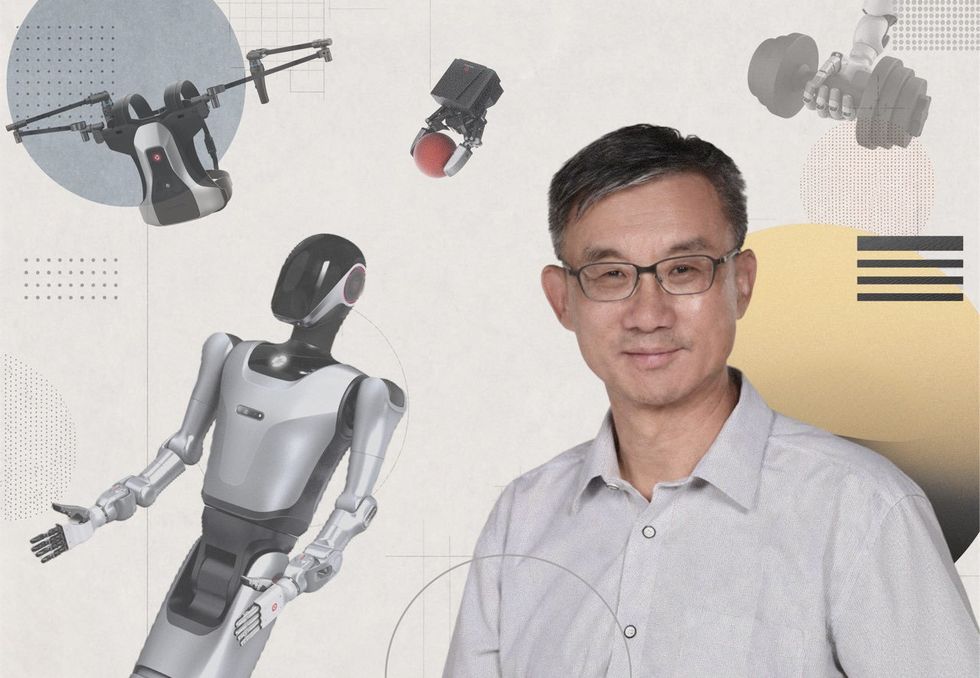
DAIMON Robotics Wants to Give Robot Hands a Sense of Touch
In April 2023, DAIMON Robotics, a Hong Kong-based company, launched Daimon-Infinity, touted as the world's largest omni-modal robotic dataset for physical AI. This extensive dataset, which includes high-resolution tactile sensing data from over 80 real-world scenarios and 2,000 human skills, aims to enhance robot manipulation capabilities across various tasks, from household chores to industrial assembly lines. The initiative is backed by collaborations with prominent partners, including Google DeepMind, Northwestern University, and the National University of Singapore. Prof. Michael Yu Wang, co-founder and chief scientist of DAIMON, emphasized the importance of tactile feedback in improving robotic dexterity, advocating for a shift from the traditional Vision-Language-Action (VLA) model to a more integrated Vision-Tactile-Language-Action (VTLA) framework. This transition is crucial for enabling robots to perform complex manipulation tasks effectively, especially in environments where visual data alone is insufficient. Recognizing a significant data gap in the robotics industry, DAIMON has committed to open-sourcing 10,000 hours of its dataset to support broader research and development efforts. The company aims to accelerate the deployment of embodied AI by providing high-quality tactile data, which is essential for training robots to interact with their surroundings more naturally and effectively. As the robotics landscape evolves, DAIMON's innovative approach positions it as a key player in advancing the capabilities of humanoid robots in real-world applications.
Type-sponsored Factory-robots Tactile-sensing Ai-models Embodied-intelligence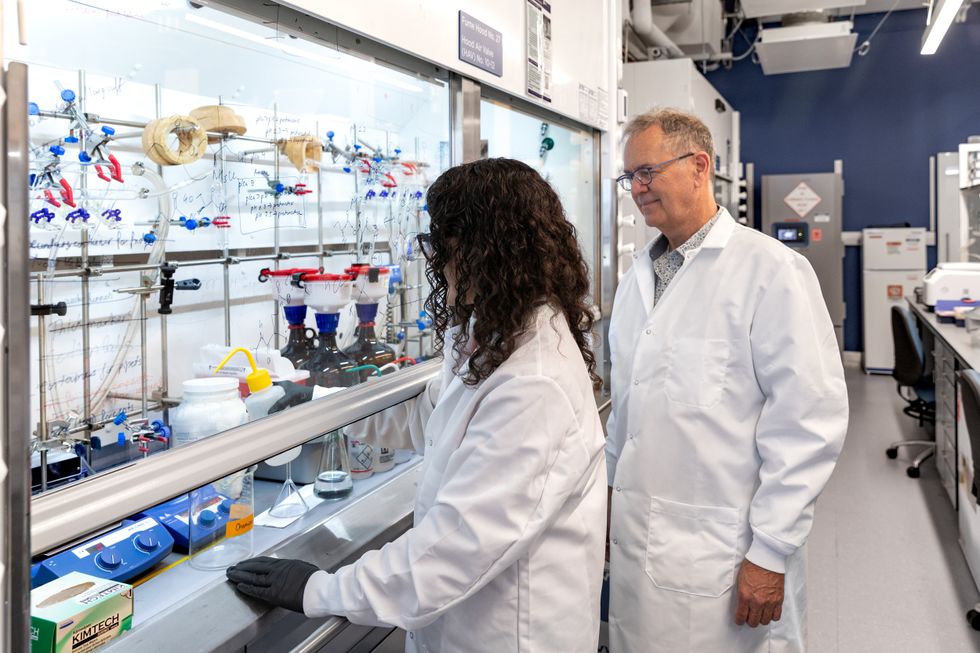
Engineering Collisions: How NYU Is Remaking Health Research
New York University (NYU) is revolutionizing academic research through its newly established Institute for Engineering Health, which focuses on addressing disease states rather than adhering to traditional academic disciplines. This innovative approach encourages collaboration among experts in various fields, including immunology, engineering, and artificial intelligence, to tackle specific health challenges, such as allergic asthma. Under the leadership of Jeffrey Hubbell, NYU's vice president for bioengineering strategy, the institute has already seen promising outcomes, such as the development of a startup that creates devices for detecting airborne pathogens and navigation technology for visually impaired subway riders. Hubbell advocates for a shift from a conventional drug-inhibition model to one that promotes beneficial biological pathways, necessitating a new breed of researchers who possess interdisciplinary skills. To foster this environment, NYU is constructing a science and technology hub in Manhattan, designed to facilitate collaboration among diverse disciplines. This initiative aligns with the university's strategy of organizing around "grand challenges" rather than traditional academic silos, as emphasized by Juan de Pablo, the executive dean of the Tandon School of Engineering. The institute also emphasizes a proactive approach to translating research into practical applications, conducting "translational exercises" to map potential pathways from discovery to deployment. This comprehensive strategy aims to accelerate innovation in science and technology, positioning NYU as a leader in addressing complex health issues through collaborative, cross-disciplinary research.
Type-sponsored Nyu-tandon Health Clinical-trials Data-science Nyu
CVPR 2026 Showcases How AI Is Powering the Next Era of Robotics Innovation
The 2026 Conference on Computer Vision and Pattern Recognition (CVPR) is set to take place from June 3 to June 7 at the Colorado Convention Center in Denver, Colorado. This premier event, co-sponsored by the IEEE Computer Society and the Computer Vision Foundation, will showcase groundbreaking advancements in artificial intelligence (AI) and robotics, highlighting how these technologies are transforming real-world applications. With a focus on embodied AI, multi-modal AI, and robotic perception, CVPR 2026 will feature workshops, technical paper presentations, and competitions, including the ManipArena Competition, which challenges participants to demonstrate physical reasoning and decision-making in real-world tasks. The conference aims to illustrate the rapid innovation in robotics and automation, with over 75% of the expo dedicated to leading AI and robotics companies that have collectively invested heavily in the field. As the global robotics market is projected to reach $124.37 billion this year, industry leaders will gather to discuss the implications of AI advancements on productivity and human-machine interaction. Grace A. Lewis, President of IEEE CS, emphasized the conference's role in bringing AI's potential to life, showcasing how these technologies are poised to reshape various industries. Media registration for the event is currently open, inviting participants to explore the future of intelligent machines.
Robotics needs a service framework.
RSF defines a common language for robot service capability, lifecycle operations, certification pathways, and service-provider networks.