

Industry Briefing
A single destination for timely, editor-curated robotics news from around the world.

Key Insights for Successful Integrated Factory Acceptance Tests in Manufacturing
A recent experience highlighted a common issue in integrated factory acceptance tests (IFAT), where communication failures arose due to unconnected hardware. Despite over fifteen years of conducting IFATs, the primary challenges remain human errors rather than technological shortcomings. It is crucial for teams to verify equipment readiness through tangible evidence before scheduling tests to avoid costly delays. The significance of this issue lies in the frequent disconnect between stated confirmations and actual conditions on-site. Many plants confirm that equipment is ready, yet integration teams often find discrepancies upon arrival. By requesting proof of operational communication links, teams can mitigate risks and ensure smoother testing processes, ultimately reducing rework and enhancing project timelines. Looking ahead, organizations should prioritize treating IFATs as firm milestones rather than informal steps. This approach can help address intermittent faults and configuration changes that may arise during the testing phase. Running IFATs at vendor sites can provide better support and accountability, although testing on actual plant networks is also valuable. Balancing these approaches will be essential for successful project outcomes.
Factory / Plant Maintenance
Firestorm Labs Demonstrates Onboard UAV Manufacturing for U.S. Navy at Sea
Firestorm Labs, based in San Diego, showcased its ability to manufacture UAV parts using 3D printing technology aboard the USS Essex during a two-week voyage to the Rim of the Pacific 2026 military exercise. The company produced over 1,000 drone components, which were assembled into Squall UAVs for target practice exercises. This demonstration is significant as it addresses the U.S. Navy's concerns regarding traditional logistics for drone manufacturing and repair, particularly in contested environments. Firestorm's CEO, Dan Magy, emphasized the importance of their solution in overcoming logistical challenges faced by the Navy, especially in areas like the Strait of Hormuz. Looking ahead, Firestorm Labs aims to enhance its mobile additive-manufacturing equipment for deployment on smaller ships. The company has already sold several xCell units to various military branches and government agencies, indicating a growing interest in this technology across multiple sectors, including oil and gas.
Applications Defense defense Drone Manufacturing Drone News Drone News Feeds
OMS Advances Sea Acceptance Tests for USV Elite, Validating Deepwater Survey P Capability and Long-range Endurance
OMS Group (OMS) has announced significant progress in the Sea Acceptance Tests (SAT) for its long-range DriX O-16 Uncrewed Surface Vessel (USV), taking place off the southern coast of France. The ongoing tests are showcasing remarkable seakeeping abilities and promising initial results regarding the vessel's deepwater multibeam echosounder performance. This development aligns with OMS's strategic objective to enhance and expand its long-range uncrewed survey capabilities on a global scale.
oms group sea acceptance tests usv deepwater survey long-range endurance
Research Indicates Animal and Anime Faces Enhance Emotional Appeal of Social Robots
Recent research suggests that equipping robot companions with animal-like or anime-style faces and voices can significantly enhance their emotional appeal to users. This finding is crucial as it provides insights into the design and development of social robots, which are increasingly being integrated into various aspects of daily life. The emotional connection users feel towards robots can influence their acceptance and interaction with these technologies. By focusing on aesthetic features that resonate emotionally, developers can create more engaging and relatable robotic companions. This research highlights the importance of emotional design in the evolving landscape of social robotics. As the field of social robotics continues to expand, it will be essential to monitor how these design choices impact user experiences and interactions. Future studies may explore the long-term effects of emotional appeal on user satisfaction and the potential for broader applications in healthcare, education, and companionship. No further timeline was disclosed at the time of publication.
Consumer & Gadgets
Royal Navy Tests Robotic Boat for Autonomous Drone Launching in Maritime Surveillance
The Royal Navy is conducting trials of a robotic boat designed to autonomously launch and recover drones at sea, enhancing uncrewed maritime surveillance capabilities. This initiative, in collaboration with ACUA Ocean and Teledyne FLIR Defense, aims to improve persistent aerial reconnaissance while minimizing risks to personnel. The system integrates an uncrewed surface vessel (USV) with a tethered uncrewed aerial system (T-UAS), allowing for extended surveillance operations. This development is significant as it represents a new approach to maritime surveillance, combining aerial and surface capabilities into a single autonomous system. The SkyCarrier and SkyRanger R70 drones, utilized during the trials, are equipped with advanced AI and imaging technologies, enabling them to perform demanding surveillance missions. The ability to maintain a stable tether connection allows for longer operational durations and continuous power supply, which is crucial for effective surveillance in challenging sea conditions. Looking ahead, the Royal Navy's exploration of this technology could lead to enhanced capabilities in anti-submarine warfare, mine countermeasures, and the protection of critical maritime infrastructure. No further timeline was disclosed at the time of publication.
AI and Robotics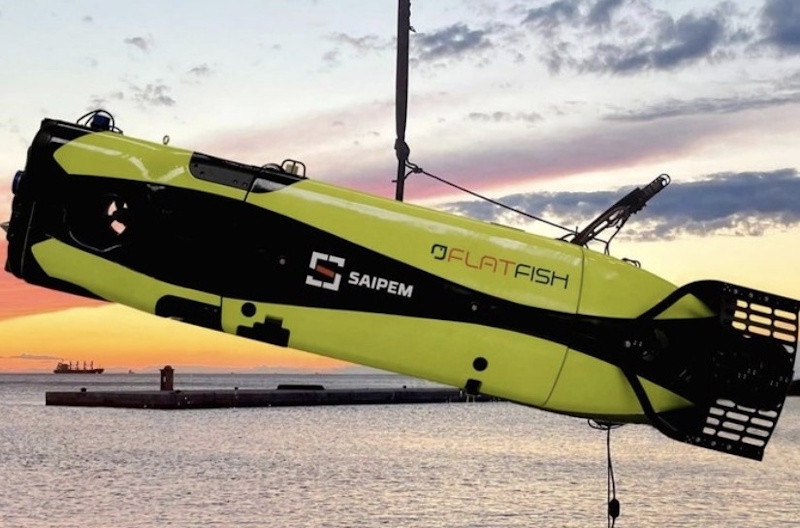
Saipem’s Subsea Drone Clears Tests with Petrobras Ahead of Offshore Deployment
Saipem's advanced underwater inspection drone, FlatFish, has successfully completed a significant milestone in its contract with Petrobras, awarded in 2023. The recent Functional Acceptance Tests were conducted in a controlled environment to ensure that the drone meets the technical and operational standards required for its autonomous robotic solution. These tests focused on verifying mission autonomy and data quality, essential components before the drone's deployment in the field. This achievement marks a critical step in the development and testing process, demonstrating Saipem's commitment to delivering innovative underwater inspection technology.
saipem subsea drone tests petrobras offshore deployment flatfishRobotics needs a service framework.
RSF defines a common language for robot service capability, lifecycle operations, certification pathways, and service-provider networks.
Join the RobotToday community on LinkedIn
Daily robotics news, in-depth analysis, conference highlights, and discussions with professionals worldwide.







