Industry Briefing
A single destination for timely, editor-curated robotics news from around the world.
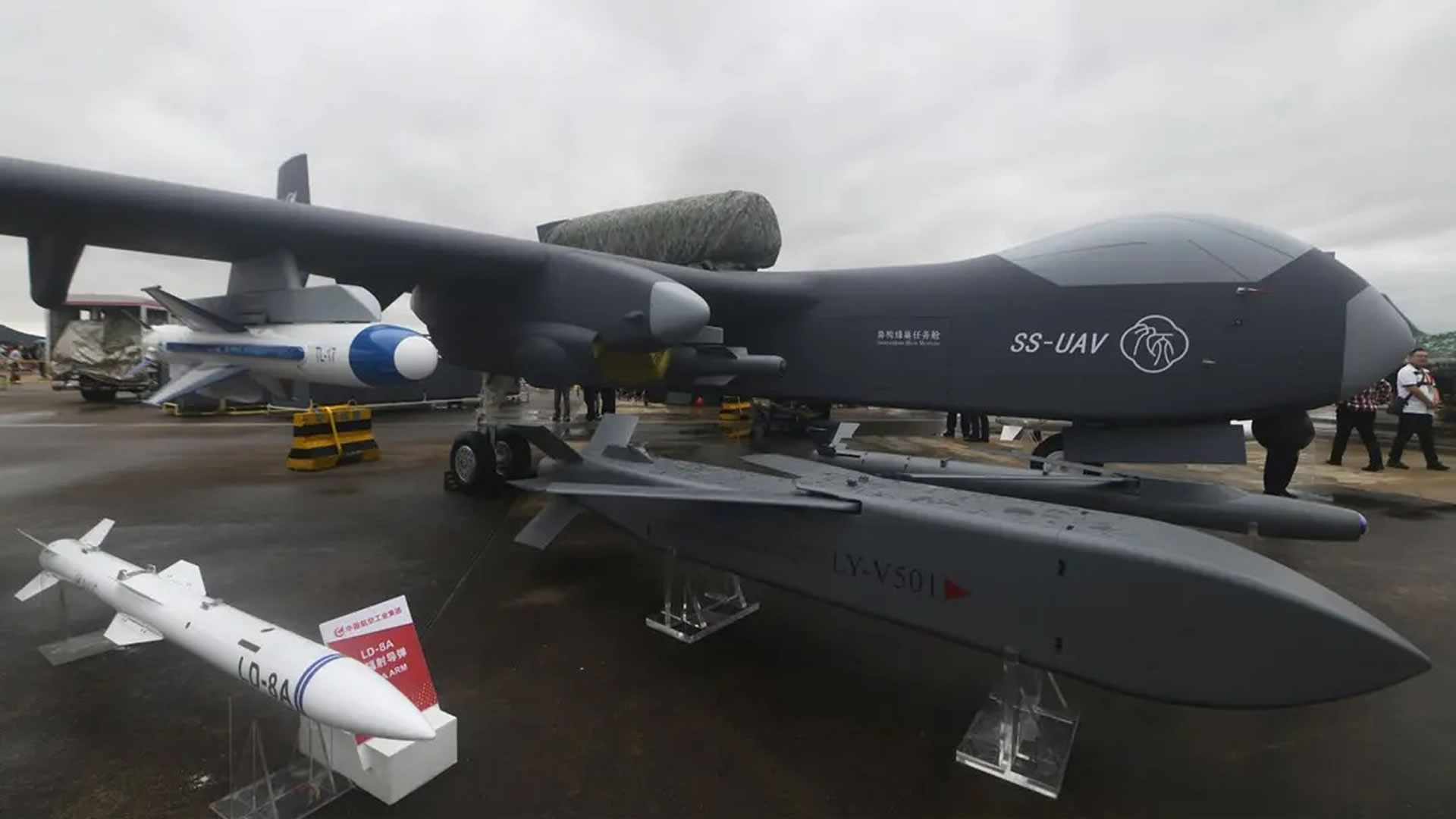
China's PLA Establishes New Colleges for Drone and Robotic Warfare Training
On September 30, 2026, China's People's Liberation Army (PLA) inaugurated several new training institutions aimed at enhancing its military capabilities in drone and robotic warfare. These institutions will focus on producing technical personnel and officers proficient in technologies such as drones and artificial intelligence (AI), aligning with Beijing's long-term military modernization goals. This initiative is part of China's broader strategy to modernize the PLA by 2035, with aspirations to establish a world-class military by mid-century. The establishment of the College of Unmanned and Intelligent Engineering is particularly significant, as it formalizes the PLA's commitment to integrating unmanned technologies and AI into military operations, reflecting a shift towards a more information-driven and intelligent military approach. Looking ahead, the PLA's focus on training personnel in advanced technologies indicates a serious commitment to enhancing its operational capabilities. The new non-commissioned officer (NCO) colleges will also play a crucial role in supporting battlefield systems and maintaining complex military equipment, ensuring that the PLA is well-equipped for future conflicts involving drones and networked weapons.
AI and Robotics Military
Agility Robotics CEO Peggy Johnson Joins Project Meridian to Advise on Future Warfare
Agility Robotics announced that CEO Peggy Johnson has been selected to participate in Project Meridian, a strategic initiative commissioned by the Department of War. This project aims to explore the future of warfare, focusing on logistics and operational support over a 10- to 20-year horizon. Johnson's involvement will leverage her extensive experience in technology leadership and Agility's expertise in humanoid robotics. She aims to contribute insights on how emerging technologies can enhance military operations, particularly in addressing physically demanding logistics tasks, thereby allowing personnel to concentrate on higher-value work. As Project Meridian gathers leaders from defense and technology sectors, Johnson's role as an individual consultant will provide practical perspectives on the application of humanoid robots in national security. No further timeline was disclosed at the time of publication.

U.S. Navy Establishes RASWDC to Enhance Robotic Warfare Capabilities
The U.S. Navy has launched the Robotic and Autonomous Systems Warfighting Development Center (RASWDC) on September 24, aimed at integrating robotic and autonomous systems into naval operations. Led by Rear Admiral Melvin Smith, the center is headquartered at Joint Expeditionary Base Little Creek-Fort Story in Virginia and will serve as the Navy's primary hub for operational integration of these technologies. This initiative is crucial for maintaining the Navy's maritime advantage, as emphasized by Chief of Naval Operations Adm. Daryl Caudle. The RASWDC will provide sailors with advanced training and specialized doctrine necessary for high-end combat scenarios, reflecting the Navy's commitment to modernizing its operational capabilities through technology. Looking ahead, the RASWDC will focus on developing warfighting concepts, training personnel, and testing new technologies under realistic conditions. The Navy's approach includes evaluating unmanned aerial systems, uncrewed surface vessels, and unmanned underwater vehicles, with a clear intent to advance systems that prove effective while reassessing those that do not meet operational standards. No further timeline was disclosed at the time of publication.
Military
Ukraine Advances Robotic Warfare by Converting Soviet BRDM-2 Vehicles into UGVs
Ukraine is transforming Soviet-era BRDM-2 armored reconnaissance vehicles into remotely controlled uncrewed ground vehicles (UGVs) to enhance combat capabilities. This initiative, led by the Central Innovation Activities Directorate of the Ukrainian Armed Forces, aims to keep troops safe while increasing the effectiveness of military operations along contested front lines. The modernization includes equipping the BRDM-2 with advanced features such as a powerful diesel engine, automatic transmission, and remote control capabilities extending up to 1,000 km. These enhancements will allow the vehicles to engage in ground combat, logistics, and casualty evacuation, thereby preserving the lives of service members while providing critical support in frontline operations. As the conflict evolves, the integration of artificial intelligence in combat UGVs is crucial for operational effectiveness. The Ukrainian military is leveraging its existing stock of BRDM-2s, which will be fitted with day/night cameras and robust satellite links for remote operation. No further timeline was disclosed at the time of publication.
News & Features Around The Globe Europe UkraineRobotics needs a service framework.
RSF defines a common language for robot service capability, lifecycle operations, certification pathways, and service-provider networks.
Join the RobotToday community on LinkedIn
Daily robotics news, in-depth analysis, conference highlights, and discussions with professionals worldwide.