

Industry Briefing
A single destination for timely, editor-curated robotics news from around the world.

NVIDIA Technologies Powering the Global Robotaxi Market's Growth to $400 Billion by 2035
The global robotaxi market is anticipated to reach $400 billion by 2035, with over 6 million commercial vehicles expected to operate as driverless fleets. This growth signifies physical AI's first commercial breakthrough, as these fleets navigate some of the world's busiest streets. Scaling a robotaxi fleet presents significant computing challenges, requiring consistent, safe performance across thousands of vehicles. NVIDIA's open platform for AI training, simulation, and safety validation is crucial in meeting these demands, providing developers with the necessary tools to ensure reliable operation across their fleets. As robotaxi programs evolve, they will increasingly leverage NVIDIA's technologies, including the DGX systems for training driving models and the Omniverse and Cosmos platforms for simulating real-world scenarios. The focus will be on optimizing models for diverse driving conditions and enhancing the capabilities of autonomous vehicles. No further timeline was disclosed at the time of publication.

Greensea IQ and Ocean Power Technologies Announce Strategic Collaboration to Advance Autonomous Hull Maintenance
Greensea IQ and Ocean Power Technologies (OPT) have announced a strategic partnership to combine Greensea IQ’s EverClean robotic hull grooming system with OPT’s WAM-V® Unmanned Surface Vehicle (USV) platform. This collaboration, unveiled recently, aims to create a fully autonomous launch and recovery system designed to enhance the efficiency and environmental sustainability of hull maintenance operations. By integrating these advanced technologies, the companies seek to revolutionize the maritime maintenance sector, addressing the growing need for eco-friendly solutions in marine operations.
greensea iq ocean power technologies strategic collaboration autonomous hull maintenance
SolarWindow Technologies Launches 24.4% Efficient ElectroFlex Solar Film for Aerospace and Transport
SolarWindow Technologies has commenced commercial production of its 0.85 mm thick solar laminate, ElectroFlex, featuring interdigitated back-contact (IBC) cells with a 24.4% efficiency rating. This innovative product offers a power-to-weight ratio of approximately 73 W/kg and is designed for direct application on various surfaces without the need for traditional mounting hardware. The introduction of ElectroFlex is significant as it addresses the limitations of conventional silicon solar setups, which require heavy structural components. By providing a flexible and lightweight solution, ElectroFlex can be installed on load-sensitive surfaces such as aircraft fuselages and train exteriors, enabling energy generation in previously unsuitable locations. Looking ahead, SolarWindow Technologies plans to deliver ElectroFlex to selected industrial partners in North America and Asia in the coming quarters. The company aims to expand its offerings beyond liquid coatings, focusing on engineered electrical systems that integrate seamlessly into transport and mobile machinery applications, converting exterior surfaces into auxiliary power sources.
Energy Innovation
US Coast Guard Pursues Advanced Technologies to Detect and Counter Underwater Drones
The United States Coast Guard is enhancing maritime security by exploring advanced technologies aimed at detecting and neutralizing underwater drones. As these unmanned underwater vehicles (UUVs) become more sophisticated, they pose significant threats to critical maritime assets, including ports and naval bases. The Coast Guard's initiative seeks innovative solutions that can continuously monitor underwater environments and respond to potential threats. The growing concern over UUVs stems from their dual-use capabilities, serving both legitimate purposes and potential malicious activities such as espionage and sabotage. The Coast Guard's efforts reflect a broader trend in global maritime security, where nations are investing in autonomous underwater technologies to protect coastlines and critical infrastructure. Experts emphasize the need for integrated surveillance systems to ensure early detection and rapid response to underwater threats. As the US Coast Guard seeks next-generation counter-drone capabilities, the focus will be on developing effective detection and response systems. This initiative is crucial for strengthening maritime security and preparing for future challenges posed by the increasing prevalence of underwater drones in both public and military operations. No further timeline was disclosed at the time of publication.
Military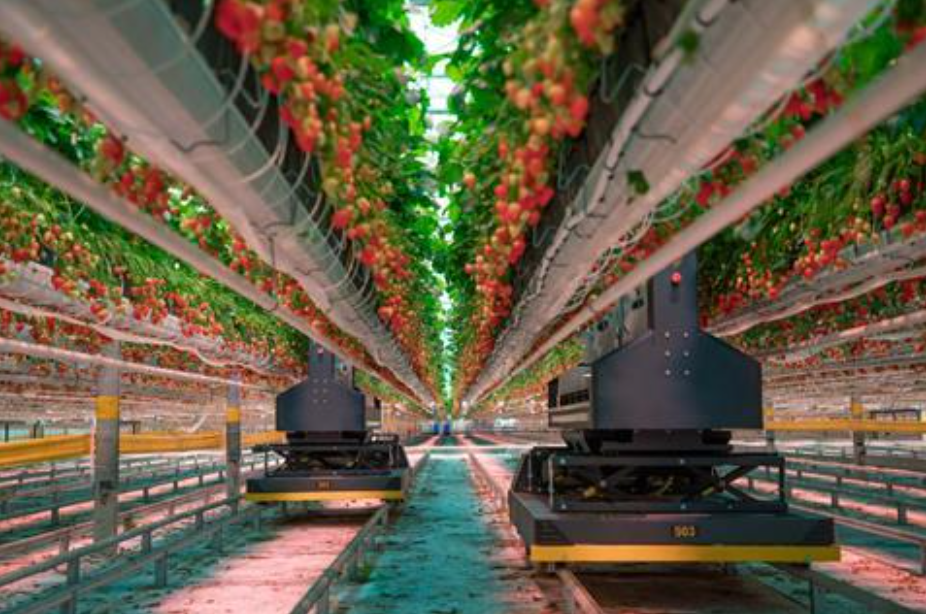
Dogtooth Technologies Secures £14 Million for AI-Powered Strawberry Harvesting
UK-based Dogtooth Technologies has successfully raised over £14 million in funding to enhance its AI-driven strawberry picking robots. The financing, provided by 24 Haymarket, EMV Capital, and ACF Investors, along with a grant from Innovate UK, aims to accelerate the deployment of these robots in both the UK and international markets. The company has already established a fleet of approximately 70 robots operating on commercial farms in the UK and Australia, harvesting tens of tons of fruit each season. The significance of this funding lies in addressing the ongoing labor shortages in agriculture, which have made robotic harvesting a necessity rather than a luxury. Dogtooth's robots utilize advanced computer vision and precision mechanical arms to autonomously navigate complex growing environments, identify ripe fruit, and perform harvesting without damage. This technology allows for continuous operation, even in cooler night conditions, thereby extending the shelf life of harvested produce. Looking ahead, Dogtooth Technologies is poised to expand its market presence, having recently delivered systems to Dyson Farming, a UK indoor berry producer. As the global horticultural industry grapples with seasonal labor shortages and rising costs, the successful deployment of these agricultural robots could signal a shift towards more widespread adoption of embodied intelligence in farming. No further timeline was disclosed at the time of publication.
Agricultural Robotics AI Technology Fruit Harvesting Embodied Intelligence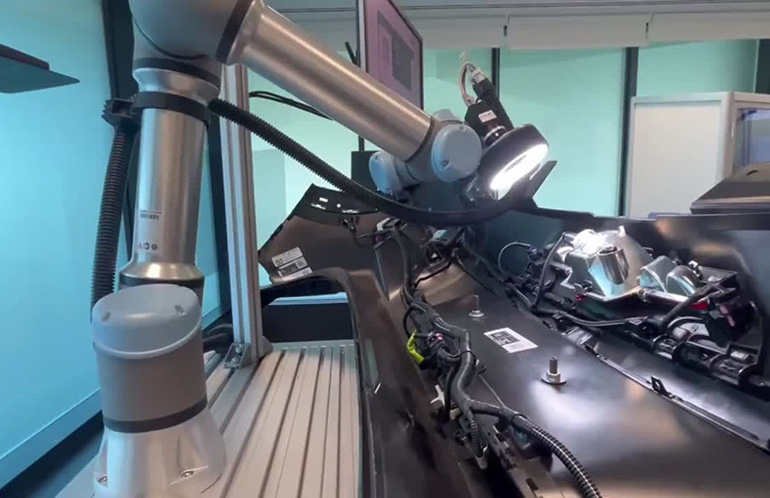
GFT Technologies AI-powered robots move from inspection to action for automakers
GFT Technologies has expanded its collaboration with Google Cloud by deploying AI-powered robots in automotive factories to enhance quality control processes. These robots are designed to identify and remove defective parts from production lines, transitioning from mere inspection to active intervention. This innovative approach aims to improve manufacturing efficiency and reduce the likelihood of faulty products reaching consumers. The initiative reflects a growing trend in the automotive industry to integrate advanced technology for better operational outcomes.
Arms / Manipulators Artificial Intelligence Artificial Intelligence / Cognition Automotive Cameras / Imaging / Vision Manufacturing
‘Predator-like’ light-powered micromotors to mine uranium from oceans, wastewater
Researchers at the Qinghai Institute of Salt Lakes in China have made a significant breakthrough by developing a new microscopic material that has the potential to revolutionize various industries. This innovative material, created using advanced techniques, was unveiled during a recent scientific conference held in Xining, the capital of Qinghai Province. The development aims to address challenges in fields such as energy storage, environmental protection, and biomedical applications. The motivation behind this research stems from the growing need for more efficient and sustainable materials that can enhance performance while reducing environmental impact. By leveraging unique properties at the microscopic level, the scientists have demonstrated that this new material can improve energy efficiency and offer enhanced functionality compared to existing alternatives. The team utilized a combination of nanotechnology and material science to synthesize the material, which exhibits remarkable strength and versatility. Initial tests have shown promising results, indicating its potential for practical applications in batteries, water purification systems, and drug delivery mechanisms. As the research progresses, the scientists are optimistic about the material's future applications and its ability to contribute to technological advancements. They plan to collaborate with industry partners to further explore its commercial viability and to bring this innovative solution to market, potentially transforming how various sectors approach material challenges.

EVENT: Oceanology International Drives Innovation to Power the Future Ocean Economy
Oceanology International, a premier event for ocean science, engineering, and technology, is set to take place at London’s ExCeL from March 10 to 12, 2026. This gathering aims to unite professionals from various sectors, including offshore energy, ocean observation, and defense, fostering innovation and collaboration within the global ocean community. The 2026 edition will focus on showcasing groundbreaking solutions that are shaping the future of ocean exploration, enhancing environmental monitoring, and promoting sustainable marine operations. Attendees can expect three days filled with networking opportunities and insightful discussions that highlight the latest advancements in ocean-related technologies and practices.
events oceanology international innovation ocean economy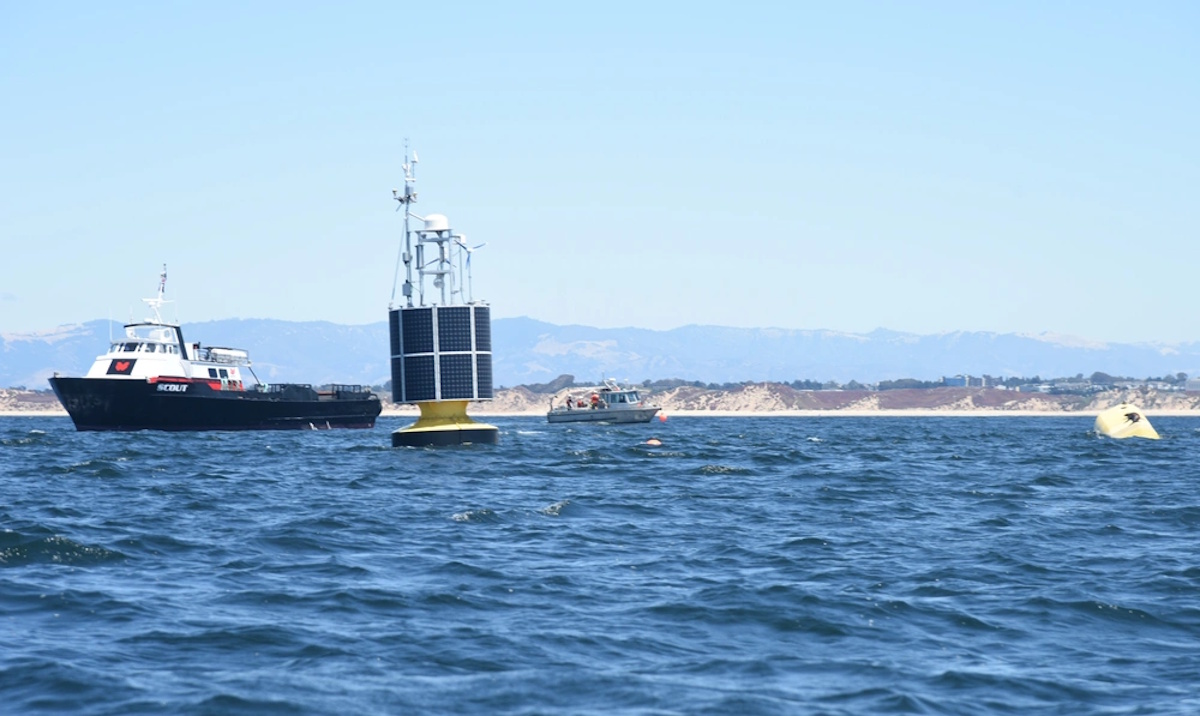
First-of-its-Kind, Self-Powered Ocean Buoy to Enhance NPS Research and 5G Maritime Communication Applications
A self-powered ocean buoy equipped with advanced oceanographic and meteorological sensors, along with 5G communication technologies, has been deployed in Monterey Bay, California, approximately five miles north of the Naval Postgraduate School (NPS) campus. This innovative buoy aims to facilitate real-time, continuous scientific and maritime observations. The initiative reflects a growing commitment to enhancing ocean research and monitoring capabilities, leveraging cutting-edge technology to provide critical data for environmental studies and maritime safety. The buoy's deployment marks a significant step forward in the integration of modern communication systems with oceanographic research, enabling scientists to gather and analyze data more efficiently than ever before.

NOC Launches New Innovation Hub to Power Ocean Tech and Blue Economy
The National Oceanography Centre (NOC) in the UK has launched a new Innovation Hub in Southampton, aimed at fostering advancements in ocean technology. This initiative, unveiled recently, seeks to bolster sustainable growth within the blue economy, which encompasses industries related to the ocean and marine resources. By providing a collaborative space for researchers, entrepreneurs, and industry leaders, the hub is expected to drive innovation and facilitate the development of cutting-edge solutions to address pressing ocean-related challenges. The establishment of the Innovation Hub reflects a commitment to harnessing scientific expertise and technological advancements to promote environmental sustainability and economic resilience in marine sectors.
noc innovation hub ocean tech blue economyRobotics needs a service framework.
RSF defines a common language for robot service capability, lifecycle operations, certification pathways, and service-provider networks.
Join the RobotToday community on LinkedIn
Daily robotics news, in-depth analysis, conference highlights, and discussions with professionals worldwide.







