

Industry Briefing
A single destination for timely, editor-curated robotics news from around the world.
Northrop Grumman Unveils Robotic Spacecraft for Satellite Repair and Life Extension
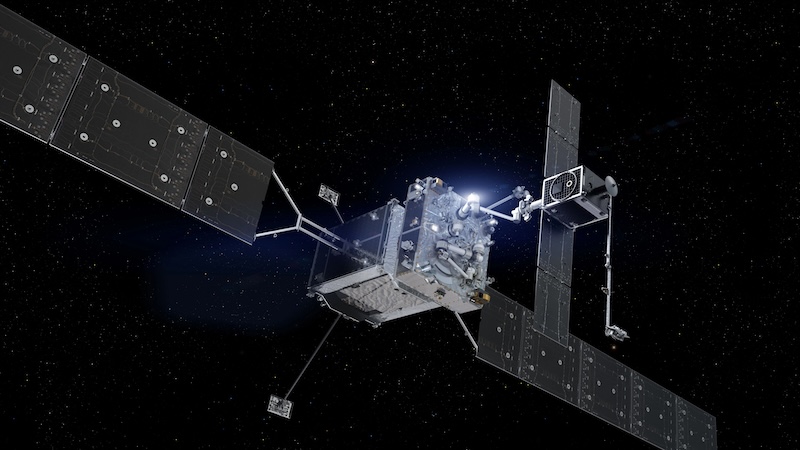
Northrop Grumman has successfully launched its advanced robotic spacecraft, the Mission Robotic Vehicle (MRV), designed to service satellites in orbit. The MRV, which took off from Cape Canaveral Space Force Station on July 21 aboard a SpaceX Falcon 9 rocket, aims to repair, upgrade, and relocate satellites, extending their operational life beyond their original fuel limits. This initiative is significant as it addresses the growing need for satellite maintenance in space, allowing expensive assets to remain functional without the need for complete replacement. The MRV is equipped with two robotic arms that facilitate satellite inspection, debris removal, and the installation of Mission Extension Pods (MEPs), which act as propulsion modules for satellites running low on fuel. Looking ahead, the MRV's first mission will showcase its capability to install MEPs on existing satellites, effectively providing them with additional propulsion. This innovative approach could redefine satellite longevity and operational efficiency. No further timeline was disclosed at the time of publication.
Features Space Autonomous robots darpa in-orbit servicing MEP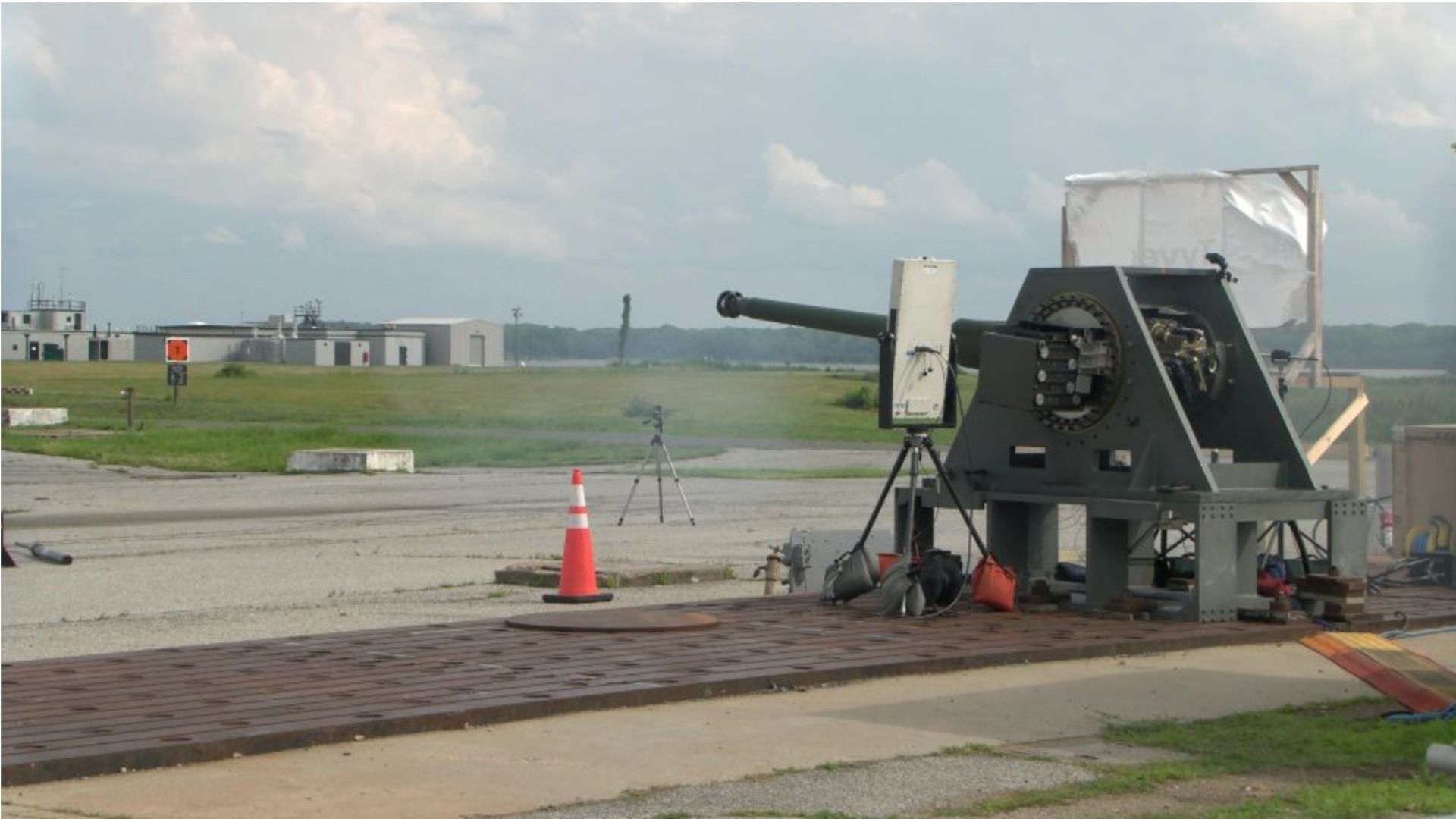
Northrop Grumman Advances 50mm Projectile Testing for Raid Hunter Air Defense System
Northrop Grumman has successfully conducted an aeroballistic test of a new 50mm round for its Raid Hunter air defense system. The test involved firing the projectile from an XM913 Chain Gun to validate its performance and gather flight data, which will aid in developing a guided, proximity-fuzed projectile. This development is significant as it enhances the Raid Hunter's capability to counter coordinated attacks from various aerial threats, including drone swarms and cruise missiles. The high-fidelity data collected during the test matched pre-test predictions, confirming the projectile's design and performance, which is crucial for the next development phase focused on guidance and proximity fuzing. Looking ahead, Northrop Grumman aims to integrate this advanced ammunition with its Bushmaster Chain Gun technology to create a high-rate defensive system. This combination is designed to effectively respond to mixed aerial threats, positioning Raid Hunter as a scalable and cost-effective solution for short-range air defense challenges.
Military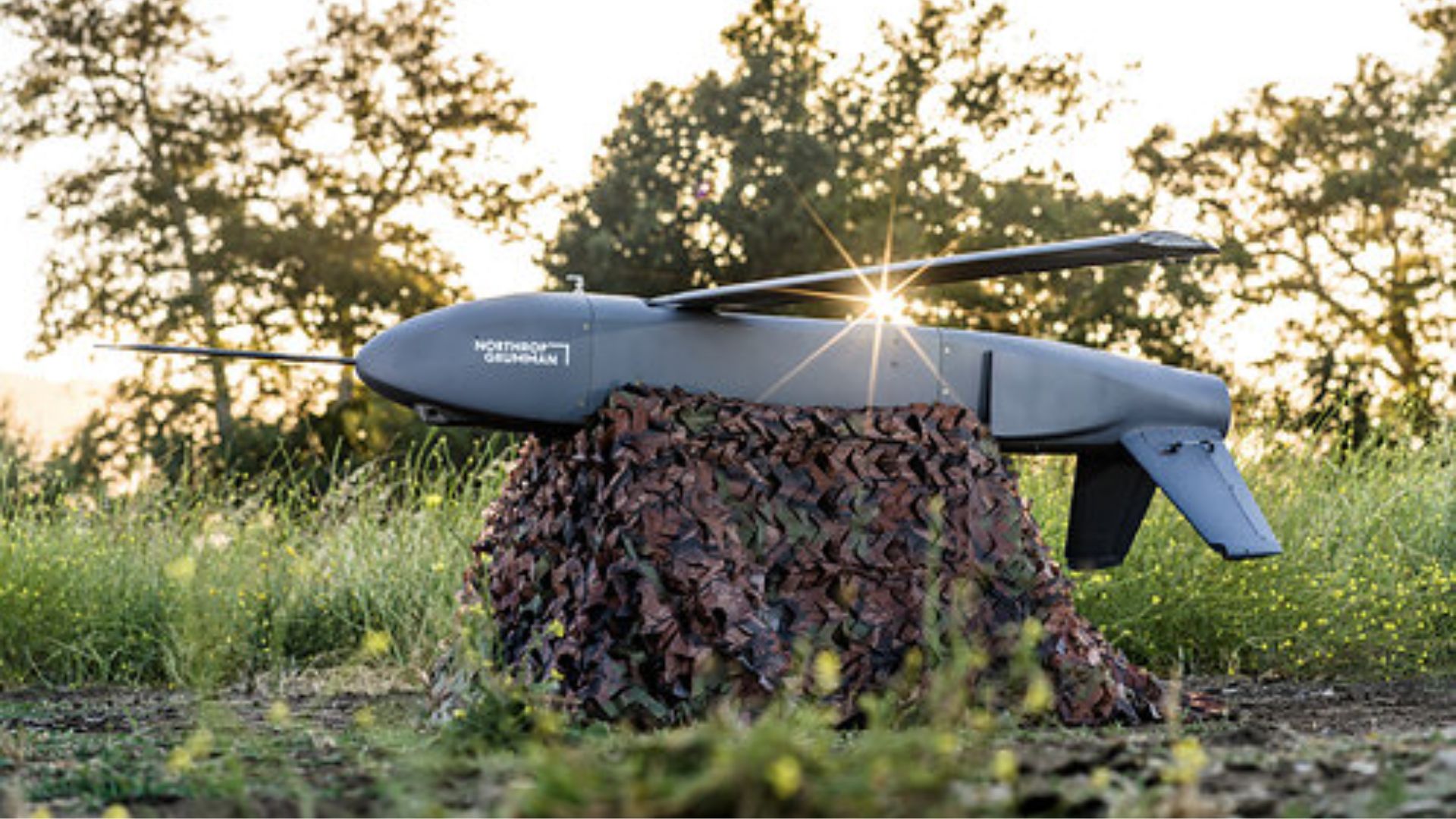
Northrop Grumman's Lumberjack Drone Successfully Tests Quantum Navigation Technology
Sandbox AQ has successfully tested its quantum sensor-based Magnetic Navigation (MagNav) on Northrop Grumman’s Lumberjack drone, marking a significant milestone in unmanned aircraft systems. This test is the first of its kind for an attritable drone, showcasing the potential of quantum navigation in GPS-denied environments, which is increasingly relevant given current military operations. The successful integration of MagNav with Lumberjack's visual navigation system is crucial as the U.S. military seeks alternatives to GPS for navigation and targeting. The ongoing conflicts in Ukraine and West Asia highlight the need for resilient navigation systems that can operate effectively even when GPS signals are jammed or spoofed. This advancement could enhance operational capabilities in contested domains. Looking ahead, the deployment of Sandbox AQ’s AQNav technology in various aircraft platforms could revolutionize military navigation. The ease of integration into existing systems, as demonstrated by the rapid installation on Lumberjack, suggests a promising future for quantum navigation solutions in defense applications. No further timeline was disclosed at the time of publication.
Military
Northrop Grumman's Mission Robotic Vehicle Enhances Satellite Longevity and Sustainability
Northrop Grumman's Mission Extension Vehicle (MEV) has successfully detached from the Optus satellite after over a year of service, paving the way for the new Mission Robotic Vehicle (MRV) and Mission Extension Pods (MEPs). This transition marks a significant advancement in satellite life-extension technology, allowing satellites to operate beyond their intended lifespan. The introduction of the MRV, equipped with advanced robotic arms, signifies a shift towards sustainable space operations. By enabling repairs and upgrades, Northrop aims to create a resilient space infrastructure that can extend the operational life of satellites, which often fail due to fuel depletion rather than technological obsolescence. The Optus satellite, launched in 2009, could potentially remain operational for an additional six years thanks to this innovative approach. Looking ahead, the MRV is set to attach an MEP to the Optus satellite in 2027, showcasing the potential for in-orbit servicing. As satellite operators increasingly seek cost-effective solutions, Northrop's advancements may redefine the future of satellite maintenance and operations, making it feasible to extend the life of larger, more expensive satellites currently in orbit.
Robotics Space Exclusive northrop grumman
Northrop Grumman Launches 50mm Raid Hunter for Enhanced Short-Range Air Defense
Northrop Grumman has unveiled the Raid Hunter, a new short-range air defense system designed to protect military bases from aerial threats. This 50mm gun-based system aims to counter cruise missiles and drone swarms, addressing a critical gap in short-range air defense capabilities. The introduction of Raid Hunter is significant as it provides military forces with a mobile and cost-effective solution to respond to large-scale aerial attacks. With its ability to strike multiple targets quickly, the system enhances the protection of vital infrastructure against evolving threats. Looking ahead, Northrop Grumman plans to conduct testing throughout the year to evaluate Raid Hunter's performance and operational deployment timeline. The system's modular design and mobility will allow for flexible deployment options, making it suitable for various operational environments.
Military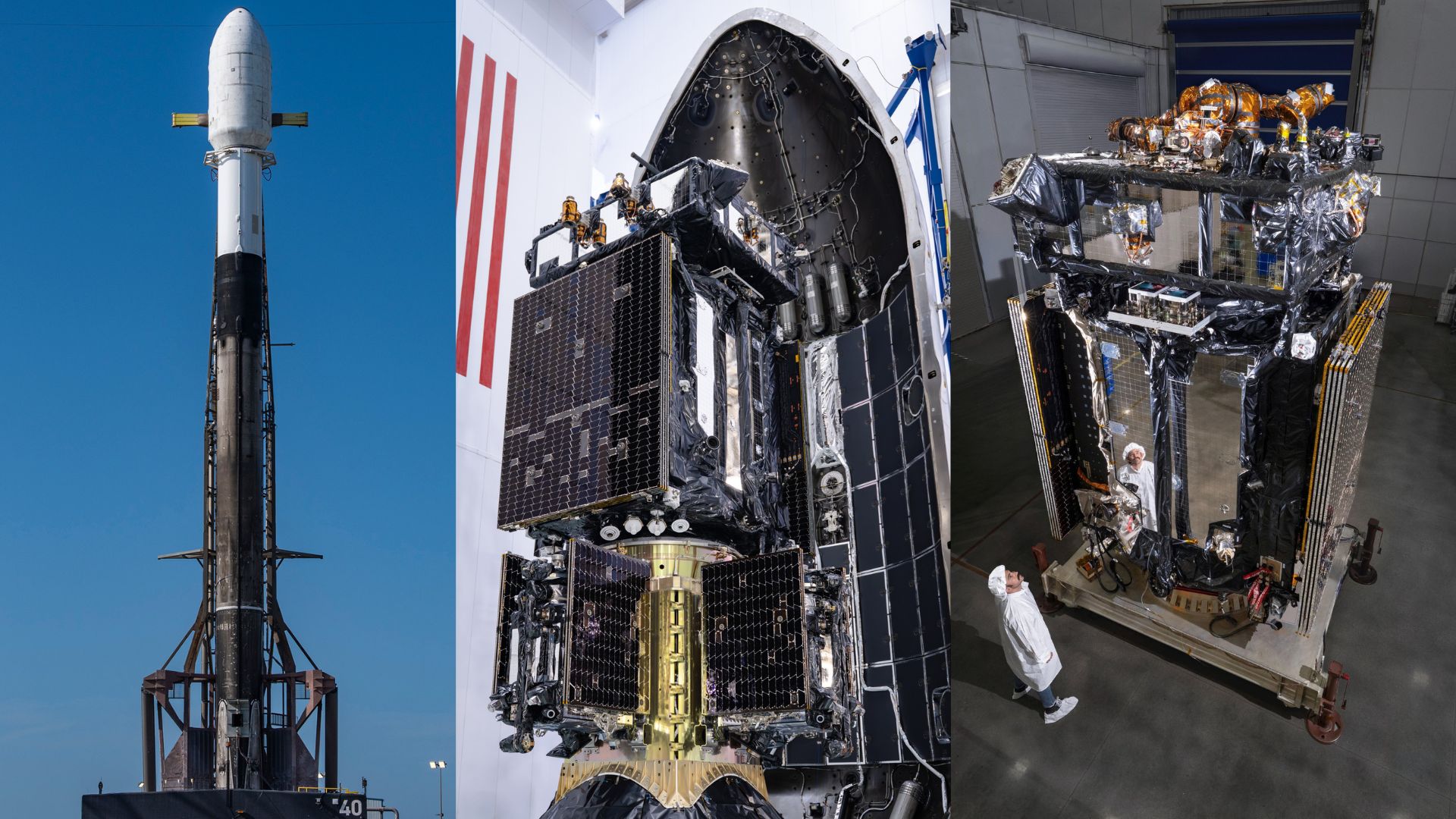
Northrop Grumman's Robotic Spacecraft Launched by SpaceX to Extend Satellite Lifespan
Northrop Grumman successfully launched its robotic spacecraft designed to extend the operational lives of aging communications satellites without the need for refueling. The spacecraft, known as the Mission Robotic Vehicle (MRV), was launched aboard a SpaceX Falcon 9 rocket from Cape Canaveral Space Force Station in Florida on July 21. This mission will test a new servicing model that allows MRV to install propulsion modules on multiple satellites in geostationary orbit. This mission is significant as it represents a shift in satellite maintenance, allowing for the servicing of multiple satellites over the MRV's operational lifespan of approximately 15 years. Unlike previous Mission Extension Vehicles that serviced a single satellite, MRV can move between clients, enhancing the efficiency of satellite operations. Northrop estimates that the technology can extend the life of a typical geostationary communications satellite by about six years. Looking ahead, Northrop plans to launch additional Mission Extension Pods for future customers while keeping the MRV operational in orbit. The U.S. Space Force has expressed interest in utilizing MRV's capabilities, indicating a growing demand for on-orbit servicing solutions. No further timeline was disclosed at the time of publication.
Space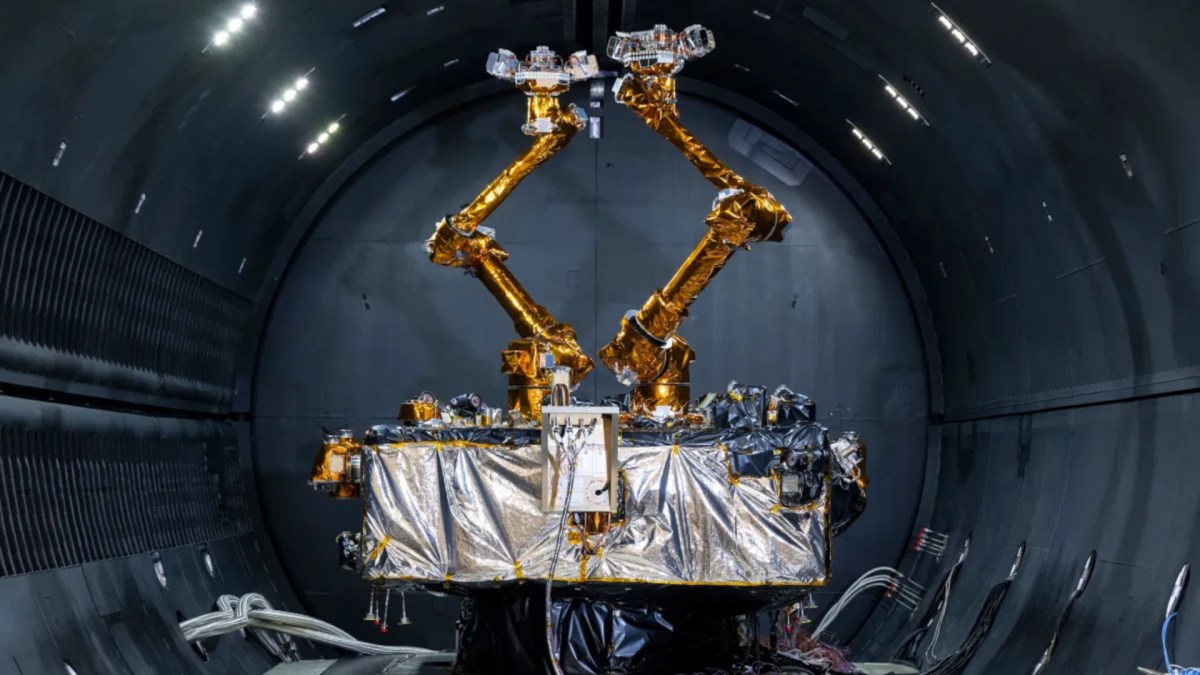
Northrop Grumman's New MRV Spacecraft Launches Today Amid Offensive Capability Questions
Northrop Grumman is set to launch its Mission Robotic Vehicle (MRV) today, equipped with two robotic arms designed for satellite servicing. While the primary purpose of the MRV is to refuel and repair satellites in geosynchronous orbit, discussions have emerged regarding its potential use in offensive operations against enemy satellites. The U.S. Space Force is exploring offensive capabilities to protect its assets, raising questions about the MRV's dual-use potential. The MRV's launch is significant as it represents a step forward in commercial satellite servicing, with the ability to install life extension jetpacks on satellites, potentially prolonging their operational life by up to eight years. Northrop Grumman's CEO, Kathy Warden, emphasized the spacecraft's capabilities during a recent earnings call, indicating that the company is prepared to offer options for technology deployment to clients, including the U.S. government. Looking ahead, the MRV is scheduled to launch aboard a SpaceX Falcon 9 rocket from Cape Canaveral, with a window starting at 5:15 PM ET. The mission will involve rendezvousing with satellites from commercial telecommunications providers Optus and SES, showcasing the MRV's versatility in on-orbit servicing and inspection. No further timeline was disclosed at the time of publication.
Space Anti-Satellite Capabilities News & Features Orbital Systems War In Space
Boeing and Northrop Grumman Enhance P-8A Poseidon and MQ-4C Triton Drone Collaboration
Boeing and Northrop Grumman have successfully conducted a pioneering test that allows P-8A Poseidon crews to command MQ-4C Triton drones. This advancement in command and control architecture enables the P-8A to issue autonomous mission orders to the Triton, enhancing operational flexibility in dynamic battle scenarios. The integration of the P-8A and MQ-4C is significant as it streamlines mission management and reduces operator workload through the Universal Command & Control Interface (UCI). This collaboration is expected to accelerate decision-making processes and improve the efficiency of maritime surveillance operations, particularly in response to sudden changes in the battlespace. Looking ahead, the U.S. Navy's ongoing efforts to integrate these platforms suggest a future where the P-8A and MQ-4C work seamlessly together. No further timeline was disclosed at the time of publication.
Air Drones Maritime Patrol MQ-4C News & Features P-8
Tesla's Optimus Robots to Support Starmind Satellite Production, Not Maintenance
Tesla's Optimus robots will not be used to repair Starmind satellites in orbit, as confirmed by recent statements from Elon Musk. Instead, these robots are intended to assist in the construction and operation of the Terafab chip manufacturing facility in Texas. The AI1 satellites, designed to disintegrate upon reentry, highlight the company's swap-and-replace strategy rather than traditional maintenance practices. This approach is significant as it reflects a broader trend in satellite management, where mass-produced satellites are replaced rather than repaired. The economics of servicing missions are prohibitive, with the cost of launching a replacement satellite being significantly lower than conducting a repair mission. This model aligns with SpaceX's operational history, where rapid replacement of satellites is more efficient than attempting to maintain them in orbit. Looking ahead, the focus will remain on the production capabilities of the Gigasat factory, which is expected to support the continuous replacement of satellites. No further timeline was disclosed at the time of publication, but the demand for rapid satellite turnover suggests a robust future for Optimus robots in terrestrial manufacturing rather than in-space servicing.
Robotics needs a service framework.
RSF defines a common language for robot service capability, lifecycle operations, certification pathways, and service-provider networks.
Join the RobotToday community on LinkedIn
Daily robotics news, in-depth analysis, conference highlights, and discussions with professionals worldwide.







