

Industry Briefing
A single destination for timely, editor-curated robotics news from around the world.

Influencer Boxer Frankie LaPenna Knocked Five Meters by Robot in MMA Match
A viral video showcases influencer Frankie LaPenna entering an MMA-style cage to face a humanoid robot, marking a historic first. The 44-second match, organized by REK, highlights advancements in robot agility and responsiveness, as LaPenna, equipped with protective gear, is knocked out of the ring by a powerful kick. This event underscores the rapid evolution of humanoid robots, which are becoming more agile and coordinated, moving beyond laboratory settings into practical applications. Enhanced mobility may enable robots to assist in physically demanding tasks, navigate disaster zones, or perform repetitive warehouse duties, potentially transforming industries such as elder care and rehabilitation. As companies continue to invest in humanoid robotics, the focus remains on improving movement, safety, and control. While the match was partly seen as performance art, it serves as a testing ground for engineers to refine robots for real-world applications, potentially reducing risks in hazardous environments and assisting with daily tasks.
Humanoid Robots Robotics Technology AI MMA Automation
Netanyahu Declares Accusations of Genocide in Gaza as 'The Biggest Lie of the Century' at UN
During a speech at the U.N. General Assembly, Israeli Prime Minister Benjamin Netanyahu labeled accusations of genocide in Gaza as 'the biggest lie of the century.' He emphasized Israel's right to defend itself against Iran, criticizing delegates who walked out during his address. Netanyahu's remarks followed a week of global condemnation of Israel's actions in Gaza, with the Palestinian Mission urging a collective walkout to protest. Netanyahu's speech highlighted the tensions surrounding Israel's military actions and the international response to its operations in Gaza. He asserted that Israel's defense efforts also protect other nations, claiming that some leaders privately express gratitude for Israel's actions against Iranian nuclear threats. His comments came amid a backdrop of accusations against Israel regarding war crimes and illegal occupation of Palestinian territories. Looking ahead, the international community's response to Netanyahu's assertions and the ongoing conflict in Gaza will be crucial. No further timeline was disclosed at the time of publication. The situation remains fluid, with potential implications for diplomatic relations and peace efforts in the region.
Politics & Geopolitics Military Headlines Israel United Nations Middle East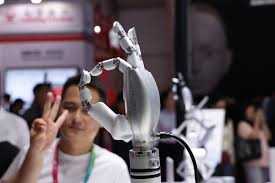
Convergent Binocular Stereo Enhances Depth Perception in Humanoid Robot Vision
A recent study published in Science Robotics highlights advancements in convergent binocular stereo technology, which significantly improves depth perception for humanoid robots. This development is crucial as it allows robots to better navigate and interact with their environments, enhancing their functionality in various applications. The importance of this technology lies in its potential to revolutionize humanoid robot capabilities, making them more effective in tasks that require spatial awareness and interaction with complex surroundings. Enhanced depth perception can lead to improved safety and efficiency in industrial and service sectors where humanoid robots are deployed. Looking ahead, researchers will focus on further refining this technology and exploring its applications in real-world scenarios. No further timeline was disclosed at the time of publication.
Research Article
Improving Agricultural UAV Safety with a Binocular Stereo Vision System for Cable Detection
A recent study published in the Journal of Field Robotics introduces a binocular stereo vision system designed to enhance the safety of agricultural UAVs by detecting overhead cables. This innovative technology aims to prevent accidents during UAV operations in farming environments, where the presence of cables poses significant risks. The development of this system is crucial as it addresses the growing need for safer UAV operations in agriculture, where the integration of drones is becoming increasingly common. By effectively detecting cables, the system can help reduce the likelihood of collisions, thereby protecting both the UAV and the surrounding infrastructure. Looking ahead, the adoption of this binocular stereo vision system could lead to broader applications in UAV safety across various industries. As UAV technology continues to evolve, monitoring advancements in safety systems will be essential for ensuring the reliability and effectiveness of drone operations in complex environments. No further timeline was disclosed at the time of publication.
RESEARCH ARTICLE
Developing Reliable Monocular Visual SLAM for Underwater Bionic Robotic Fish Using Image Enhancement and Deep Feature Matching
Recent advancements in monocular visual simultaneous localization and mapping (SLAM) have been applied to underwater bionic robotic fish. This approach integrates image enhancement techniques with deep feature matching to improve the robustness of navigation and mapping in aquatic environments. The significance of this development lies in its potential to enhance the operational capabilities of underwater robotic systems. By leveraging advanced image processing and machine learning techniques, the integration aims to address challenges faced in underwater navigation, such as low visibility and dynamic environments. Looking ahead, further research and testing will be crucial to refine these techniques and ensure their effectiveness in real-world underwater applications. No further timeline was disclosed at the time of publication.
RESEARCH ARTICLE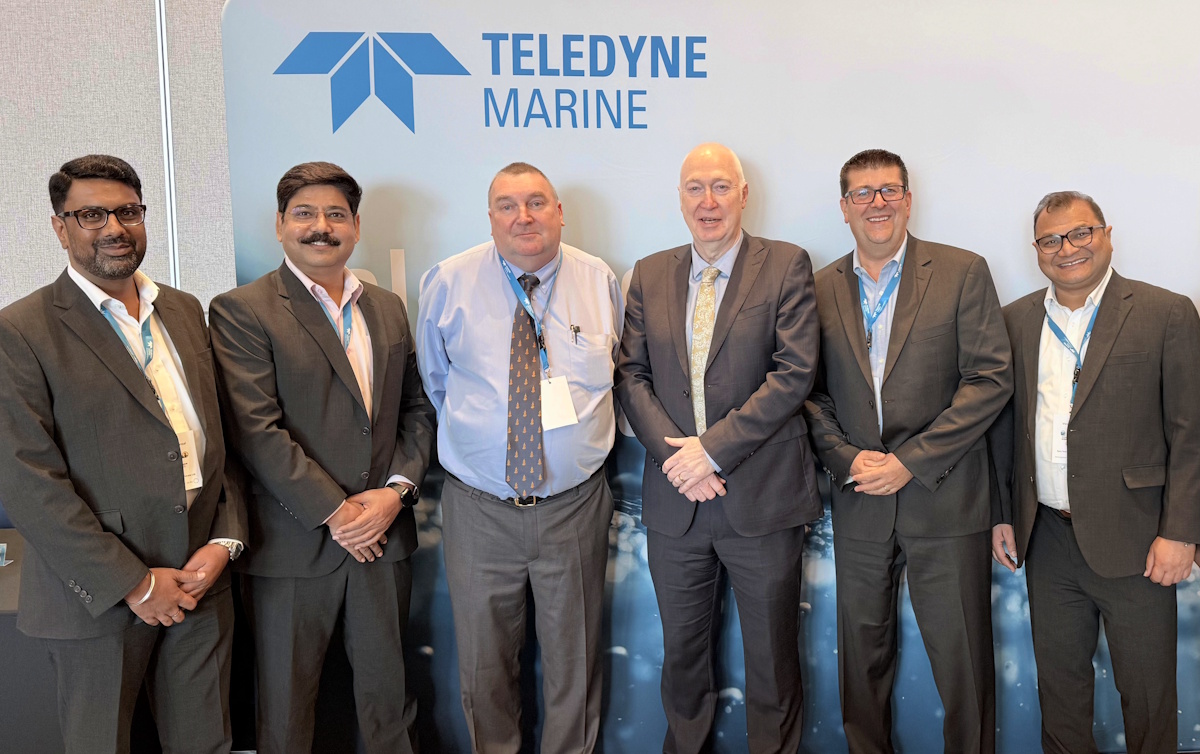
Spry Technocon and Partners Form Alliance for Unmanned Mine Countermeasure Solutions for Indian Navy
Spry Technocon Private Limited has formed a strategic partnership with Teledyne Marine, Klein Marine Systems, and VideoRay to develop advanced Unmanned Mine Countermeasure (MCM) Systems for the Indian Navy. This collaboration aims to leverage cutting-edge underwater sensing and imaging technologies alongside indigenous engineering capabilities to create a comprehensive MCM Suite. The partnership is significant as it aligns with India's Aatmanirbhar Bharat and Make in India initiatives, promoting self-reliance in defense technologies. By integrating advanced Autonomous Underwater Vehicles, high-resolution sonar systems, and remotely operated vehicles, the alliance seeks to enhance the Indian Navy's capabilities in mine warfare. Looking ahead, the focus will be on establishing a sustainable ecosystem for next-generation mine warfare technologies in India. No further timeline was disclosed at the time of publication.

NOC and ARDITI Forge Strategic Partnership for Ocean Research Advancement
The National Oceanography Centre (NOC) and ARDITI have signed a Memorandum of Understanding (MoU) on June 25, 2026, to enhance collaboration in ocean observation and deep-sea research in Madeira. This partnership aims to leverage the region's unique access to the ultra-deep ocean and its strategic position in the Northeast Atlantic. The MoU outlines a commitment to develop new technologies for ocean observation, combining observational capabilities across various marine environments and utilizing digital tools such as AI and diverse datasets. This collaboration builds on ARDITI's previous acquisition of two NOC Autosub Long Range (ALR) autonomous underwater vehicles, marking a significant step in establishing a collaborative ecosystem focused on ocean research. Looking ahead, the partnership is expected to foster methodologies, data sharing, and operational insights that will enhance ocean observation capabilities. No further timeline was disclosed at the time of publication.
noc arditi memorandum of understanding (mou)
1X Technologies Appoints Tom Sanocki as VP of Engineering for NEO Development
1X Technologies has appointed Tom Sanocki as Vice President of Engineering, effective June 25, 2026. His role will focus on steering the software organization through a pivotal transition from research to commercial deployment of the NEO humanoid robot, which is set for consumer release by late 2026 at a price of $20,000. This appointment is crucial for 1X Technologies as it aims to enhance its manufacturing capabilities at the NEO Factory in Hayward, California, while meeting the upcoming delivery timeline. Sanocki brings extensive experience in real-time systems and user-facing platforms, having previously worked with Roblox and Meta, which aligns with the company's need for advanced technical leadership. Looking ahead, Sanocki's expertise will be vital in executing the company's new software strategy, particularly with the launch of the 1X World Model Lab. This initiative aims to improve the NEO platform's cognitive capabilities and developer ecosystem, especially in light of recent geopolitical shifts affecting AI hardware supply chains. No further timeline was disclosed at the time of publication.
1X Technologies US
Light Origins Releases Open-Source LightNav-0 Navigation Model for Monocular Systems
Light Origins has announced the open-sourcing of LightNav-0, a navigation model based on Qwen3-VL-4B. This model was trained using the Real2Sim2Real methodology, incorporating over 2,000 scenes and more than 4,000 hours of Visual Language Annotation (VLA) data. It excels in leading 10 monocular navigation benchmarks with zero-shot body transfer capabilities. The significance of this development lies in its potential to enhance navigation systems across various applications. By leveraging extensive training data and advanced methodologies, LightNav-0 aims to provide robust performance in real-world scenarios, making it a valuable resource for researchers and developers in the field of navigation technology. Looking ahead, stakeholders in the robotics and AI sectors should monitor the adoption and performance of LightNav-0 in practical applications. The open-source nature of this model may encourage further innovation and collaboration, potentially leading to advancements in navigation solutions that utilize monocular systems. No further timeline was disclosed at the time of publication.
New Convergent Binocular Stereo Algorithm Enhances Humanoid Robots' Depth Perception
Researchers from York University in Toronto have developed a new vision algorithm that enables humanoid robots to perceive depth similarly to humans using two forward-facing eyes. This innovative approach, known as convergent binocular stereo (CBS), processes visual differences between images from the left and right cameras to create a more accurate 3D understanding of scenes, improving distance judgment and navigation in complex environments. The significance of this advancement lies in its potential to enhance robotic vision, making it more biologically inspired and capable. By mimicking human depth perception, CBS allows robots to calculate depth through a camera arrangement that converges on targets, rather than relying solely on parallel cameras. This method captures both horizontal and vertical disparities, enabling a more nuanced understanding of object orientation and surface slant. Looking ahead, researchers have created the Convergent Binocular Stereo–BenchMark dataset to test the algorithm, which has shown competitive performance against established stereo methods. However, limitations remain, including reduced accuracy at greater distances and the need for precise calibration. No further timeline was disclosed at the time of publication.
AI and Robotics
#RoboCup2026 – humanoid league knockout stages
The RoboCup 2026 league competitions concluded this weekend in Incheon, South Korea, showcasing the talents of robotics teams from around the globe. The event culminated in the announcement of the top three teams in the small, middle, and large humanoid divisions. In the small division, the Invic team claimed victory, followed by Wuhan University from China and the Hamburg Bit-Bots from Universität Hamburg in Germany. The competition aimed to advance robotics technology and foster international collaboration in the field, drawing participants eager to demonstrate their innovations and skills.

NOC to Co-lead REV Ocean Sargasso Sea Expedition
REV Ocean has announced the launch of its Maiden Voyage Science Program, which will feature ten partner-led missions across the South Atlantic, Caribbean, and Eastern Tropical Pacific. This initiative marks the inaugural operational research season for REV, a new vessel added to the global philanthropic fleet dedicated to ocean research and conservation. The program aims to address critical environmental issues and promote sustainable practices in marine ecosystems. Through collaborative efforts with various partners, REV Ocean seeks to enhance scientific understanding and foster innovative solutions to protect the world's oceans.
national oceanography centre (noc) rev ocean sargasso sea expedition (rose)
Innocean, SBVA launch startup growth platform
Innocean, the advertising and marketing division of Hyundai Motor Group, announced on Monday its collaboration with SBVA, a venture capital firm previously known as SoftBank Ventures Asia. This partnership aims to establish UP 2026, a growth platform focused on fostering collaboration with high-growth startups and exploring new business opportunities. SBVA, affiliated with the SoftBank Group, has a diverse investment portfolio that includes over 100 startups across various sectors such as artificial intelligence, the Internet of Things, and robotics. The initiative reflects Innocean's commitment to innovation and strategic growth in an evolving market landscape.
All News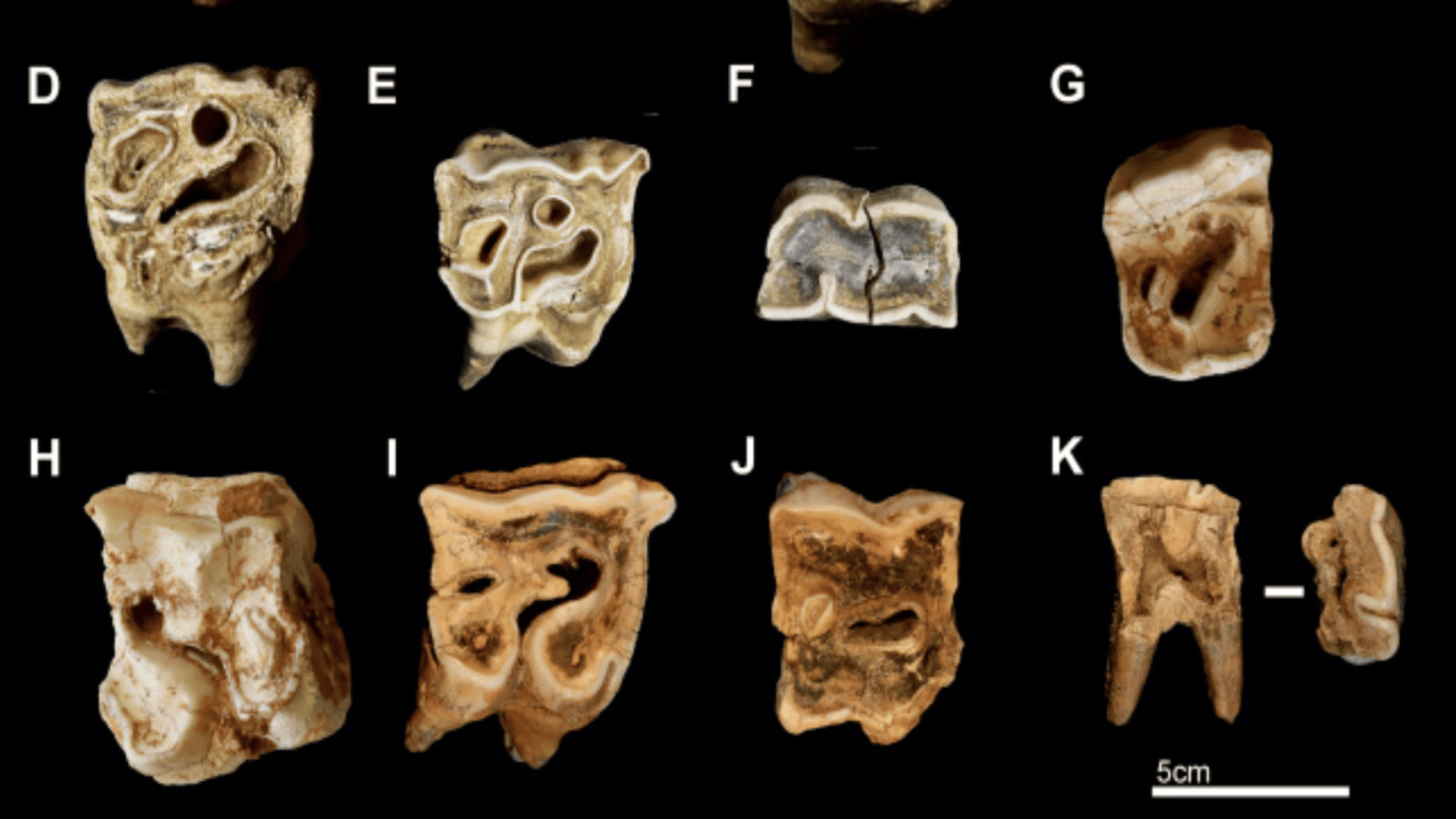
Neanderthals used rhinoceros teeth as hammers to sculpt stone tools: Study
A recent study has uncovered significant insights into Neanderthal behavior, revealing that these ancient humans not only consumed a diverse diet but also engaged in complex social interactions. Conducted by a team of researchers from various institutions, the study utilized advanced analytical techniques to examine archaeological findings from multiple sites across Europe. The research, published in a leading scientific journal, highlights the sophisticated foraging strategies employed by Neanderthals, suggesting they adapted their diets based on seasonal availability and environmental changes. This discovery challenges previous perceptions of Neanderthals as primitive and underscores their capacity for social cooperation and resource sharing. The findings, which emerged in October 2023, contribute to a growing body of evidence that illustrates the cognitive and cultural complexities of Neanderthal life, prompting a reevaluation of their role in human evolution.
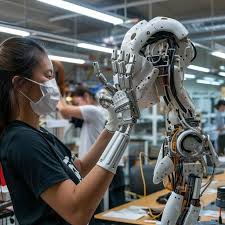
Real‐Time Monocular 2D Occupancy Grid Mapping for Autonomous Navigation of Ground Robots
In May 2026, researchers published a significant study in the Journal of Field Robotics, focusing on advancements in robotic technology. The study, appearing in Volume 43, Issue 3, pages 1844-1860, highlights innovative methodologies for enhancing the efficiency and autonomy of field robots. Conducted by a team of experts in robotics and artificial intelligence, the research aims to address the growing demand for automation in various industries, including agriculture and disaster response. The findings reveal new algorithms that improve navigation and decision-making processes for robots operating in complex environments. This research is particularly relevant as industries increasingly seek to integrate robotic solutions to optimize operations and reduce human risk in hazardous situations. By employing advanced machine learning techniques, the team demonstrated how robots can adapt to dynamic conditions, thereby increasing their effectiveness in real-world applications. The study's implications extend beyond theoretical advancements, as it provides practical frameworks for deploying robots in challenging scenarios. As the field of robotics continues to evolve, this research contributes to the ongoing dialogue about the future of automation and its potential to revolutionize traditional practices across multiple sectors.
RESEARCH ARTICLE
Cellula Robotics Extends NOC Innovation Hub Membership and Donates Model for Display
Cellula Robotics Ltd. has reaffirmed its commitment to innovation by renewing its membership at the National Oceanography Centre's Innovation Hub. This hub provides essential facilities and networking opportunities aimed at fostering collaboration among technology and research entities. In a gesture of support for the hub's initiatives, Cellula has also donated a model of its ENVOY Autonomous Underwater Vehicle (AUV), which will be showcased in the hub's newly updated communal area. This partnership underscores Cellula's dedication to advancing underwater technology and enhancing collaborative efforts within the marine research community.
cellula robotics noc innovation hub membership donation auv model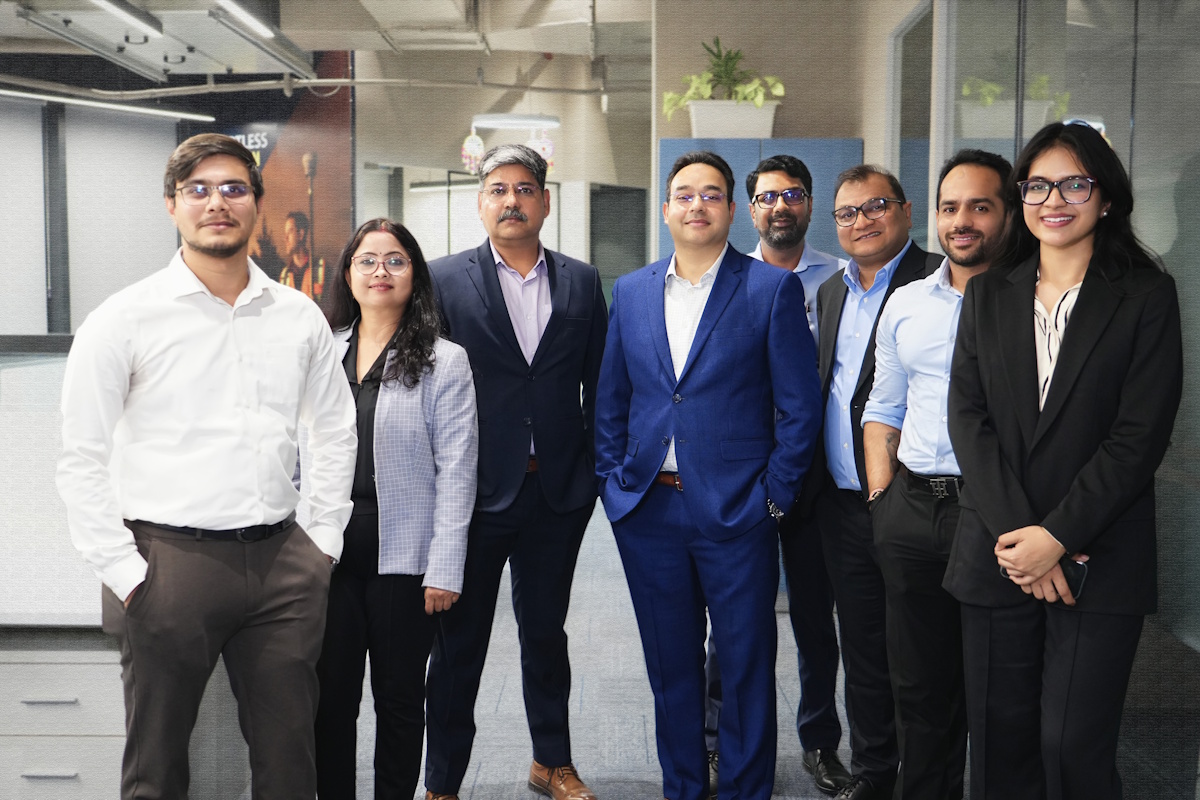
Impact Subsea Expands Presence in India with New Distribution Partner, Spry Technocon Pvt. Ltd.
Impact Subsea has appointed Spry Technocon Pvt. Ltd. as its new distributor in India, a move aimed at improving support and accessibility for users in the region. This strategic partnership is expected to enhance the availability of Impact Subsea's products and services, thereby catering to the growing demand for advanced underwater technology in India. The announcement comes as part of Impact Subsea's ongoing efforts to expand its market presence and strengthen customer relationships in key international markets.
impact subsea india distribution partner spry technocon pvt. ltd.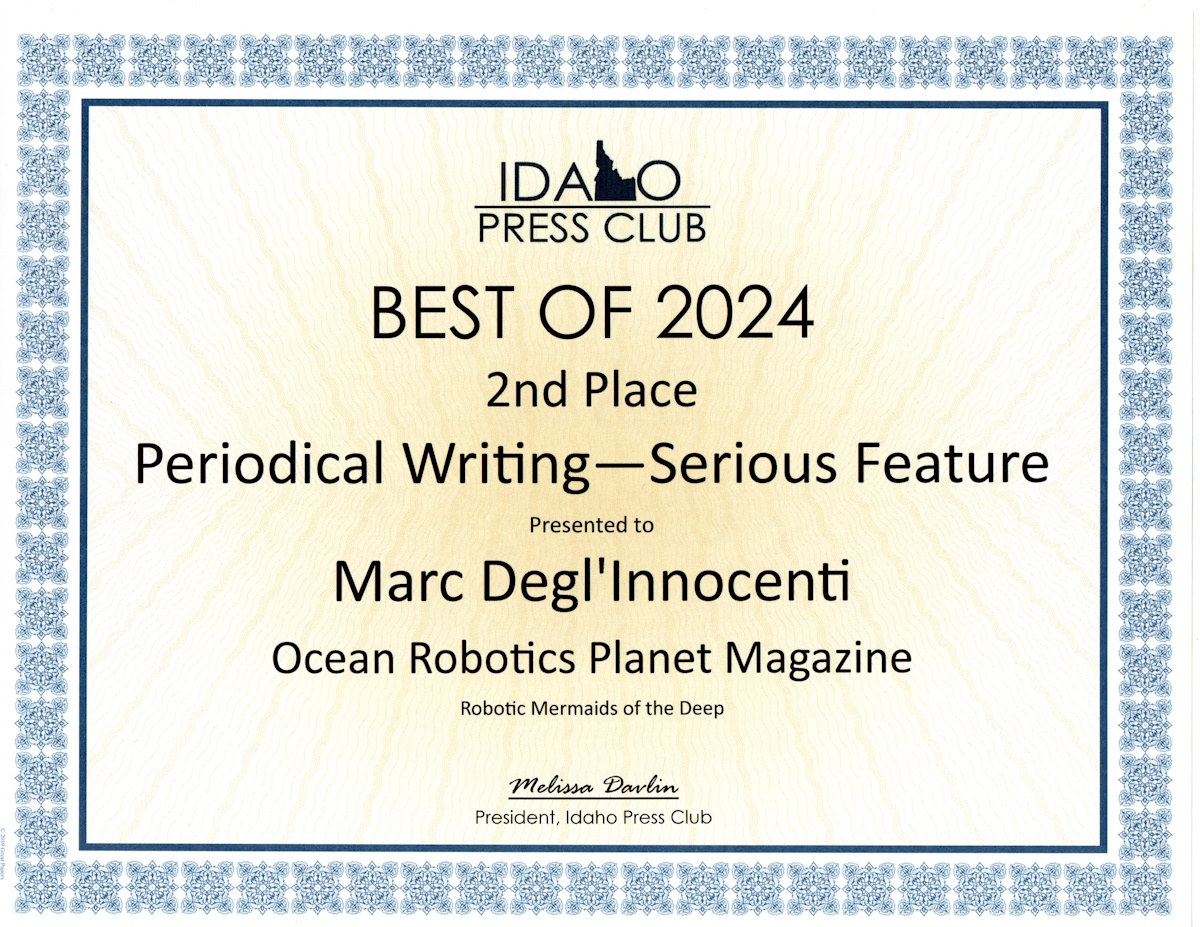
Marc Deglinnocenti & Ocean Robotics Planet Magazine Win Award from the Idaho Press Club
Captain Marc Deglinnocenti, a former ship captain and police officer who now serves as the North American Correspondent for Ocean Robotics Planet Magazine, has earned recognition for his journalistic work. He was awarded second place in the “Periodical Writing – Serious Feature” category by the Idaho Press Club for his article titled "Robotic Mermaids of the Deep." This accolade highlights Deglinnocenti's ability to blend his maritime experience with insightful reporting, showcasing the innovative developments in ocean robotics. The award ceremony took place recently in Idaho, celebrating excellence in journalism across various categories.
idaho press club award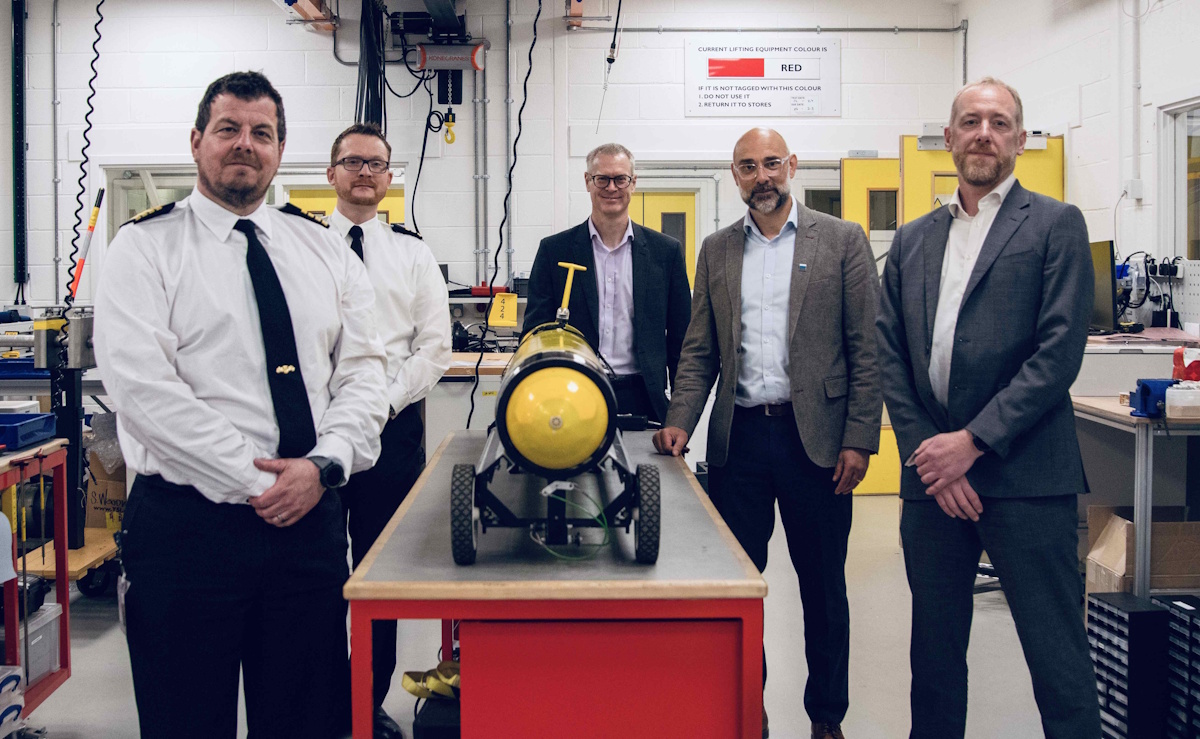
NOC and Royal Navy Renew MOU on Autonomous Maritime Capabilities
The National Oceanography Centre (NOC) in the UK has reaffirmed its commitment to marine science and technology by renewing a memorandum of understanding with the Royal Navy. This renewed agreement, which underscores a collaborative relationship that has spanned several years, aims to enhance research and innovation in oceanographic studies. The partnership is expected to facilitate the sharing of expertise and resources, ultimately contributing to advancements in understanding marine environments. The renewal of the MOU was announced recently, highlighting the ongoing dedication of both organizations to address challenges related to the oceans and maritime operations.
national oceanography centre (noc) royal navy mou autonomous maritime capabilities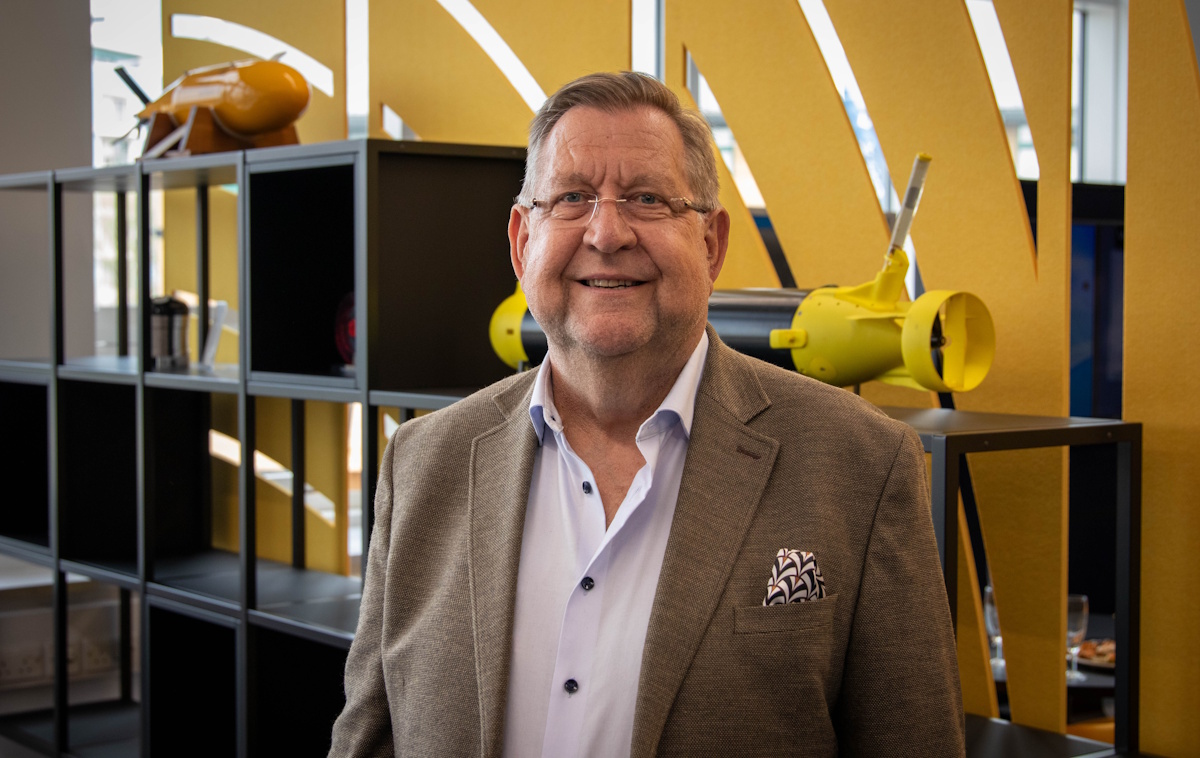
NOC Launches New Innovation Hub to Power Ocean Tech and Blue Economy
The National Oceanography Centre (NOC) in the UK has launched a new Innovation Hub in Southampton, aimed at fostering advancements in ocean technology. This initiative, unveiled recently, seeks to bolster sustainable growth within the blue economy, which encompasses industries related to the ocean and marine resources. By providing a collaborative space for researchers, entrepreneurs, and industry leaders, the hub is expected to drive innovation and facilitate the development of cutting-edge solutions to address pressing ocean-related challenges. The establishment of the Innovation Hub reflects a commitment to harnessing scientific expertise and technological advancements to promote environmental sustainability and economic resilience in marine sectors.
noc innovation hub ocean tech blue economy
NOC Ocean Robot Finds Long Lost Loch Ness Monster Camera Trap
During engineering trials in Scotland's Loch Ness, a robot developed by the UK's National Oceanography Centre (NOC) unexpectedly encountered a creature reminiscent of the legendary Loch Ness Monster. The incident occurred as the NOC was testing the capabilities of the ocean robot, which is designed for underwater exploration and data collection. The trials aimed to enhance the robot's functionality and performance in challenging aquatic environments. This surprising encounter has sparked interest and excitement, drawing attention to both the technological advancements in ocean exploration and the enduring fascination with Loch Ness's mythical creature. The NOC continues to analyze the footage captured by the robot to determine the nature of the sighting, further fueling public intrigue surrounding the mysteries of the loch.
national oceanography centre (noc) alr marine autonomous robotics systems (mars)Robotics needs a service framework.
RSF defines a common language for robot service capability, lifecycle operations, certification pathways, and service-provider networks.
Join the RobotToday community on LinkedIn
Daily robotics news, in-depth analysis, conference highlights, and discussions with professionals worldwide.







