Industry Briefing
A single destination for timely, editor-curated robotics news from around the world.

US Army Tests New Tethered Drone Capable of 50-Hour Flight and Jamming Resistance
The US Army is currently testing a new tethered drone designed to resist jamming and achieve flight durations of up to 50 hours without landing. This advancement represents a significant step in enhancing the Army's capabilities in unmanned aerial systems. The development of this drone is crucial as it addresses the increasing need for reliable and long-lasting aerial surveillance and strike capabilities in modern military operations. The ability to resist jamming is particularly important in contested environments where electronic warfare is prevalent. Looking ahead, the Army's ongoing tests will provide insights into the drone's operational effectiveness and potential integration into existing military strategies. No further timeline was disclosed at the time of publication.
Military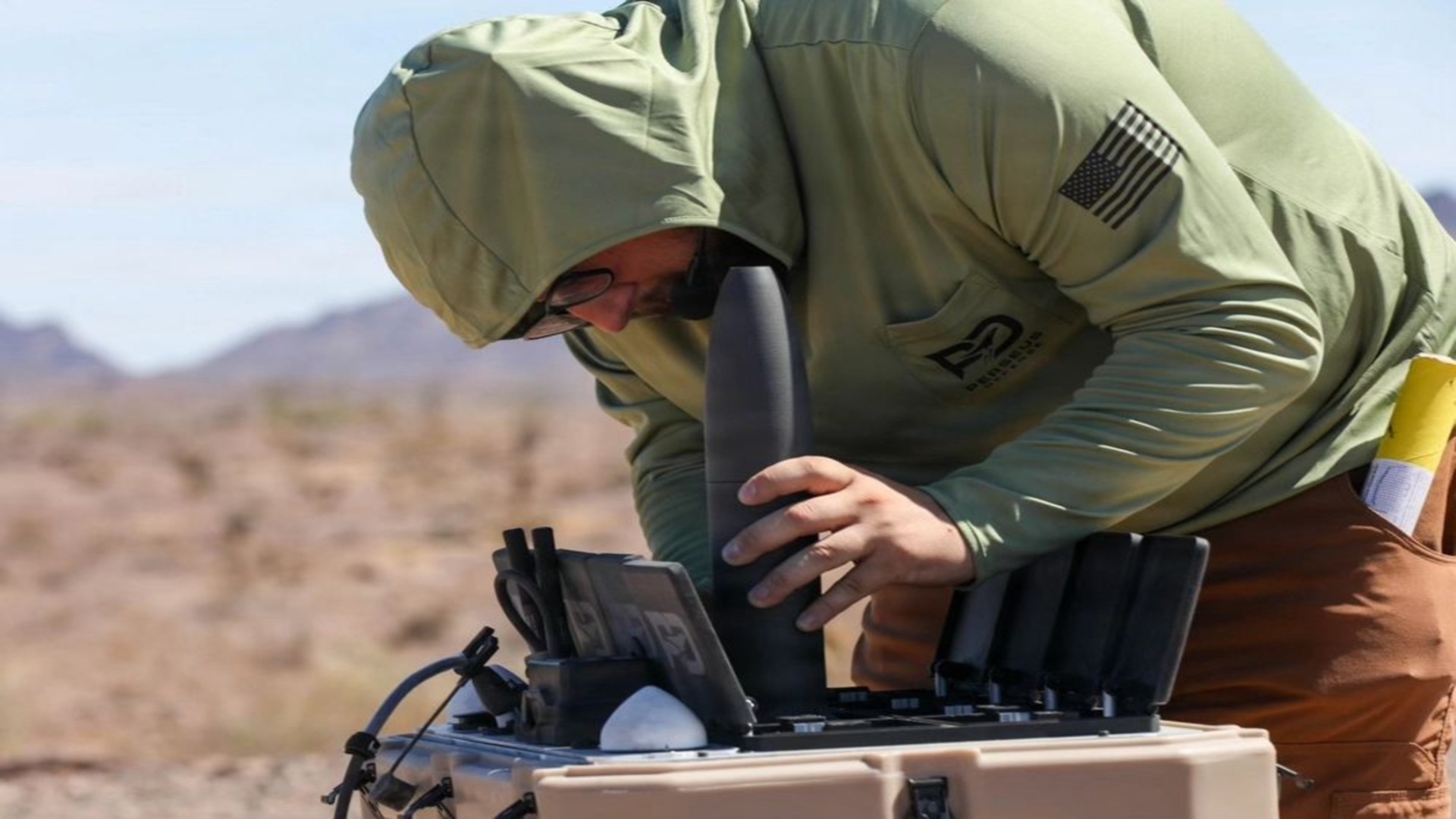
Perseus Defense Tests Low-Cost Mk-III Interceptor Against Drones at Yuma Proving Ground
Perseus Defense has successfully tested its Mk-III interceptor missile, designed to physically destroy small drones, at the Yuma Proving Ground in Arizona. This demonstration, part of Falcon Peak 26.2, showcases a cost-effective solution for military installations facing aerial threats, with each interceptor costing around $2,500. The Mk-III's kinetic hit-to-kill approach offers a significant advantage over traditional electronic warfare systems, which can struggle against drones using preprogrammed routes or fiber-optic communications. This capability is crucial as militaries seek affordable means to counter drones that typically cost only a few hundred dollars, compared to the high price of conventional missiles. Looking ahead, the demand for effective domestic counter-drone systems is expected to grow, especially following recent drone incursions over US military bases. No further timeline was disclosed at the time of publication.
Military
Innovative Navigation Systems Emerge Amidst Battlefield GPS Spoofing Challenges
Recent developments in drone navigation are being driven by the challenges posed by GPS spoofing and other jamming techniques used in warzones. These countermeasures aim to disrupt drone operations, prompting companies to innovate and create navigation systems that can function effectively despite such interference. The significance of these advancements lies in their potential to enhance the reliability and resilience of drone operations in military applications. As drones become increasingly integral to modern warfare, the ability to navigate accurately in jamming environments is crucial for mission success and operational safety. Looking ahead, the focus will be on how these new navigation technologies are integrated into existing drone systems and their performance in real-world scenarios. The ongoing evolution of counter-jamming solutions will be a key area to monitor as the demand for robust drone capabilities continues to grow.

Developing a Framework for Tactile-Based Proximity Sensing of Buried Objects in Granular Media
A new framework has been proposed for tactile-based proximity sensing of buried objects using granular media jamming. This method aims to enhance the detection capabilities of robotic systems in challenging environments where traditional sensing methods may fail. The significance of this framework lies in its potential applications in search and rescue operations, archaeological explorations, and environmental monitoring. By improving the ability to sense buried objects, it can lead to more efficient and effective operations in various fields. Future developments will focus on refining the technology and testing its effectiveness in real-world scenarios. No further timeline was disclosed at the time of publication.
RESEARCH ARTICLE
New sub-450-gram mini drone system sustains autonomous surveillance despite GPS jamming
As military forces seek innovative solutions to enhance soldier safety and situational awareness, recent advancements in technology are being explored. These developments aim to provide troops with better protection while ensuring they remain alert to their surroundings. The initiative comes in response to the increasing challenges faced by soldiers operating in high-stress environments, where the balance between safety and awareness is crucial. By integrating cutting-edge wearable devices and advanced communication systems, armies are working to create a more effective and responsive combat experience. This effort is particularly relevant in light of ongoing conflicts and the evolving nature of warfare, which demands that soldiers be both protected and informed. The implementation of these technologies is expected to improve operational efficiency and reduce risks on the battlefield, ultimately enhancing the overall effectiveness of military missions.
Military
Taiwan unveils AI drone navigation system that flies through GPS jamming
Taiwan’s Aerospace Industrial Development Corporation (AIDC), a state-backed entity, has introduced an innovative AI-powered navigation system aimed at enhancing the capabilities of its aerospace technology. This announcement was made during a press conference held on October 15, 2023, in Taichung, Taiwan. The new system is designed to improve the safety and efficiency of aircraft operations, reflecting AIDC's commitment to advancing the nation’s aerospace industry amid growing global competition. By integrating artificial intelligence into navigation processes, AIDC aims to streamline flight operations and reduce the risk of human error. The development of this technology comes as part of Taiwan's broader strategy to bolster its defense capabilities and maintain technological sovereignty in the face of regional tensions.

China’s autonomous drone swarm system claims to hunt targets despite network jamming, chaos
A Chinese research team has announced the development of a groundbreaking artificial intelligence algorithm that promises to enhance data processing efficiency significantly. This innovative technology, unveiled in a study published on October 15, 2023, aims to address the growing demand for faster and more accurate data analysis in various sectors, including healthcare, finance, and logistics. The researchers, based at a leading university in Beijing, designed the algorithm to improve machine learning capabilities by optimizing data handling and reducing processing time. The motivation behind this advancement stems from the increasing complexity of data sets that organizations face today, necessitating more sophisticated tools to extract meaningful insights. The team conducted extensive testing to validate the algorithm's performance against existing models, demonstrating superior accuracy and speed. This development is expected to have far-reaching implications, potentially transforming how industries leverage AI for decision-making and operational efficiency. As organizations continue to seek innovative solutions to manage vast amounts of data, this new algorithm could play a pivotal role in shaping the future of artificial intelligence applications.

New drone targeting tech counters GPS jamming threats
As GPS jamming and spoofing tactics gain prevalence in modern warfare, drone operators are facing significant challenges with the accuracy of their video feeds. While the visual quality of the footage remains clear, the geographic coordinates associated with it can often be misleading, leading to what defense companies describe as “targeting paralysis.” This phenomenon complicates precision targeting efforts, posing a serious obstacle for military operations. The increasing sophistication of these electronic warfare techniques highlights the urgent need for advancements in drone navigation and targeting systems to ensure operational effectiveness in combat scenarios.
NewsRobotics needs a service framework.
RSF defines a common language for robot service capability, lifecycle operations, certification pathways, and service-provider networks.
Join the RobotToday community on LinkedIn
Daily robotics news, in-depth analysis, conference highlights, and discussions with professionals worldwide.