Top News

Industry Briefing

A single destination for timely, editor-curated robotics news from around the world.
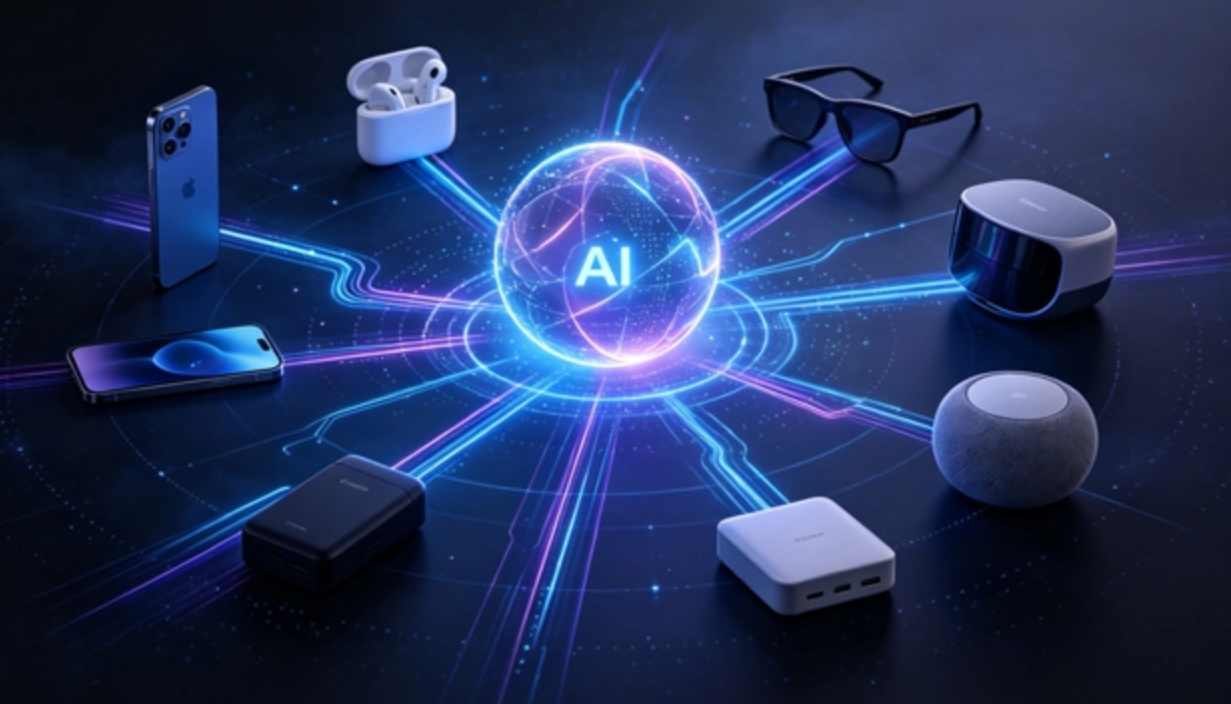
Apple under Ternus: what comes next for the tech giant’s hardware strategy

Apple under Ternus: what comes next for the tech giant’s hardware strategy

Apple has announced that John Ternus will take over as CEO, a move that underscores a potential shift in the company's strategic focus back to its hardware roots. Ternus, who has a strong background in hardware development, is expected to prioritize the innovation and enhancement of Apple's device lineup. This leadership change comes as the tech giant seeks to reinvigorate its product offerings and maintain its competitive edge in the market. The transition is set to take place in the coming months, as Apple aims to align its vision with Ternus's expertise in hardware, which could lead to new advancements in its popular devices.

Hardware AI Gadgets Robotics Apple John Ternus
Smart Wheelchair Captivates Attention at Stanford AI Summit Over Humanoid Robots

Smart Wheelchair Captivates Attention at Stanford AI Summit Over Humanoid Robots

At the Humanity & AGI Summit held at Stanford University, a smart wheelchair presented by Fu Sheng, Chairman of Cheetah Mobile, garnered significant attention, overshadowing humanoid robots. Attendees were drawn to the wheelchair's autonomous obstacle avoidance and user-friendly features, prompting many to experience it firsthand. The interest in the smart wheelchair highlights a critical shift in the robotics landscape, as Fu Sheng noted that humanoid robots are unlikely to achieve commercial scalability in the next five to ten years. He emphasized that the current limitations in software and hardware development hinder the practical application of humanoid robots, with most sales directed towards research institutions rather than commercial markets. Looking ahead, the focus on practical solutions like the smart wheelchair suggests a growing recognition that functionality is more important than form in robotics. As the industry continues to evolve, the demand for effective, user-centric products will likely shape future innovations, steering attention away from humanoid designs towards more practical applications.

Smart Wheelchairs Humanoid Robots AI Technology Robotics Assistive Devices
Why Are Custom Harness Solutions Essential for Next Generation Technology?

Why Are Custom Harness Solutions Essential for Next Generation Technology?

In the realm of hardware development, a recurring issue has emerged where wiring is often considered an afterthought. Engineers invest significant time and resources into creating advanced electric powertrains and high-density sensor arrays, ensuring that the mechanical and software components are meticulously designed. However, a common oversight occurs when the physical connections fail to fit within the designated space, leading to potential setbacks in the project timeline. This problem is particularly pronounced when relying on off-the-shelf components that may not be compatible with innovative designs. As the industry continues to evolve, addressing these wiring challenges is crucial for the successful integration of new technologies.

Engineering Technology aerospace Cable assembly Cable management Custom harness solutions
Transforming Smart Models into Productive Robots: The Journey of Self-Variables

Transforming Smart Models into Productive Robots: The Journey of Self-Variables

Self-Variables has made significant strides in robotics by evolving from advanced models to practical applications, showcasing their self-developed technologies and engineering expertise. This transition, achieved through overcoming challenges in training, hardware development, and real-world implementation, has enabled the company to demonstrate its capabilities across various sectors, including home cleaning and logistics. The successful application of their robots has garnered substantial investment from industry leaders, highlighting the growing interest in their innovative solutions.

Robotics AI Automation Machine Learning
Alibaba and ByteDance Invest in Embodied Intelligence: What Can Internet Giants Bring to Robotics?

Alibaba and ByteDance Invest in Embodied Intelligence: What Can Internet Giants Bring to Robotics?

On June 16, Alibaba introduced the Qwen-Robot series, a new line of embodied intelligence models designed to improve robotic capabilities. This launch marks a significant shift in the robotics industry, as Alibaba, alongside ByteDance, transitions from a passive observational role to active engagement in the sector. Both companies are utilizing their extensive resources and expertise to drive innovation in robotics. However, they face ongoing challenges related to hardware development and the commercialization of their products.

Embodied Intelligence Robotics Artificial Intelligence Automation
Itera raises $12 million for fluid circuit board that rewires itself in under a minute

Itera raises $12 million for fluid circuit board that rewires itself in under a minute

Deep tech startup Itera has unveiled its groundbreaking prototype of the world's first fluid circuit board, a technology that enables engineers to rewire and retest physical electronic circuits in under a minute. This significant advancement aims to streamline the design and testing processes in electronics, potentially transforming how engineers approach circuit development. The announcement was made as Itera emerged from stealth mode, highlighting its innovative capabilities. To support its launch and further development, the company secured $12 million in seed funding from notable investors including Upfront Ventures, Costanoa Ventures, and Colle Capital. This funding will facilitate Itera's efforts to bring its revolutionary technology to market, marking a pivotal moment in the evolution of electronic circuit design.

Electronics News automation news deep tech startups electronic design automation electronics design
Summary of Microsoft's "Build 2026" announcement: expanding development platforms, safety measures, and hardware.

Summary of Microsoft's "Build 2026" announcement: expanding development platforms, safety measures, and hardware.

At the recent Build 2026 conference, Microsoft announced significant enhancements to its development platform aimed at supporting the creation of autonomous AI agents and ensuring safety controls. The tech giant introduced a new inference model named MAI, alongside high-performance local development terminals and a roadmap for quantum computing initiatives. These advancements reflect Microsoft's commitment to advancing AI technology and improving developer tools, positioning the company at the forefront of innovation in the tech industry.

Open source hardware for robotics: Democratizing robot building

Open source hardware for robotics: Democratizing robot building

In recent years, discussions surrounding open-source robotics have predominantly centered on software, particularly the Robot Operating System (ROS), which has established itself as a leading framework for robot development. However, the narrative is evolving as a diverse ecosystem of open-source hardware platforms emerges, significantly reducing barriers for developers and innovators in the field. This shift is occurring against the backdrop of a growing demand for accessible robotic solutions, driven by advancements in technology and an increasing interest in automation across various industries. The integration of open-source hardware with existing software frameworks is fostering collaboration and innovation, enabling a broader range of participants to contribute to and benefit from the robotics revolution. As this trend continues to gain momentum, it is reshaping the landscape of robotics, making it more inclusive and accessible to a wider audience.

Computing Features Robotics arduino automation news automation technology
Greensea IQ is Awarded $18 Million Contract by the US Navy for the Bayonet Underwater Controller (BUC) Development and Sustainment

Greensea IQ is Awarded $18 Million Contract by the US Navy for the Bayonet Underwater Controller (BUC) Development and Sustainment

Greensea Systems, Inc., operating as Greensea IQ, has secured an $18.15 million Indefinite-Delivery/Indefinite-Quantity (IDIQ) contract to deliver hardware, software, and engineering technical services. This contract, awarded for an undisclosed duration, focuses on the development of underwater controllers essential for the operation of autonomous and remotely operated systems in maritime settings. The contract aims to enhance capabilities in underwater technology, reflecting the growing demand for advanced solutions in marine environments.

greensea iq u.s. navy new contract bayonet underwater controller (buc) development and sustainment
Top Computer Vision Development Company Options for 2026

Top Computer Vision Development Company Options for 2026

Selecting the appropriate computer vision development company is crucial for ensuring compatibility with the specific environment in which the model will operate. This could range from camera system-on-chips (SoCs) and cloud-based software as a service (SaaS) products to medical devices and live video systems. Among the available options, SQUAD stands out as a robust choice for edge hardware and smart camera products. Meanwhile, Intellias and Softeq are recognized as strong contenders for embedded AI solutions. As the industry evolves, companies must carefully assess their needs to align with the right technology partner.

Components Computing Technology AI development artificial intelligence automation news
Nvidia’s AI Hardware Comes to Windows in RTX Spark PCs

Nvidia’s AI Hardware Comes to Windows in RTX Spark PCs

At Computex 2026 in Taipei, Taiwan, Nvidia unveiled its highly anticipated RTX Spark superchip for Windows PCs, marking a significant development in the tech industry. This announcement, which comes a year later than initially expected, was made in collaboration with Microsoft, which introduced two new devices powered by the RTX Spark: the Surface Laptop Ultra and the Surface RTX Spark Dev Box. Major PC manufacturers, including Asus, Dell, Lenovo, HP, and MSI, also showcased their Windows PCs featuring the new chip. The RTX Spark is based on Nvidia's Blackwell GB10 architecture, boasting 20 Arm CPU cores, 6,144 GPU cores, and support for up to 128 gigabytes of LPDDR5X memory. While the chip is designed to consume less power than its predecessor, the DGX Spark, it is expected to maintain strong performance, particularly in gaming and professional applications. Analysts suggest that Nvidia's established presence in the GPU market, with over 90% share, will enhance the software ecosystem for RTX Spark, setting it apart from previous attempts by Qualcomm and Microsoft with their AI-focused Copilot+ PCs. As Nvidia and Microsoft aim to position RTX Spark as a viable alternative to traditional x86 chips from Intel and AMD, they face the challenge of proving its effectiveness as a general-purpose PC. The launch is seen as a strategic move to leverage AI capabilities while appealing to both creators and gamers, with Nvidia emphasizing the importance of robust software support alongside hardware advancements. RTX Spark desktop workstations are expected to be available in the third quarter of 2026, further expanding the potential applications of this new technology.

Nvidia Pcs Windows Arm Ai-hardware
Lumisition Robotics Secures $7 Million in Angel Funding for All-Terrain Quadruped Robot Development

Lumisition Robotics Secures $7 Million in Angel Funding for All-Terrain Quadruped Robot Development

Lumisition Robotics, founded in February 2026 by a team of experts including a former DJI engineer, has raised approximately 50 million yuan (around $7 million) in angel funding led by Zhengxuan Capital. The funds will primarily support product development, algorithm iterations, and preparations for mass production of their consumer-grade quadruped robots aimed at outdoor applications. The company targets homeowners in Europe and North America, outdoor enthusiasts, and the elderly, focusing on practical applications such as transporting goods over challenging terrains. Unlike many consumer robots that emphasize companionship, Lumisition aims to enhance physical labor capabilities, addressing needs like last-mile transportation in large residential areas. Their product line will include various models suited for urban, light urban, and outdoor environments. Lumisition Robotics plans to conduct outdoor testing in October 2027 and officially launch their product at CES 2027, with mass production expected to begin between April and May 2027. The company is also focused on reducing hardware costs through innovative design and optimization strategies, ensuring competitive pricing while maintaining performance.

Vbot Launches Daitou EDU: A Versatile Quadruped Robot Development Platform

Vbot Launches Daitou EDU: A Versatile Quadruped Robot Development Platform

Vbot has introduced the Daitou EDU, a quadruped robot development platform designed for real-world applications. Unlike traditional robots that focus on speed and agility, the Daitou EDU emphasizes the importance of practical use cases in various sectors, such as property management and healthcare. The significance of the Daitou EDU lies in its advanced capabilities, including 128 TOPS edge computing power, integrated perception hardware, and autonomous mobility features. This platform allows developers to create applications without starting from scratch, addressing the gap between robotic capabilities and practical applications in diverse environments. Looking ahead, the Daitou EDU represents a shift in the robotics industry towards creating adaptable robots that can be redefined for multiple scenarios. As developers begin to leverage its features, the potential for innovative applications in various fields will expand, raising questions about the future roles of robots in everyday life.

Quadruped Robots Robotics Development Embodied Intelligence AI Applications
Soft, robotic cells from morph embed physical AI into hardware

Soft, robotic cells from morph embed physical AI into hardware

Morph has introduced an innovative soft robotics platform that focuses on the design and manufacturing of what it terms “soft robotic cells.” This new technology integrates physical artificial intelligence into hardware, enhancing the capabilities of robotic systems. The launch marks a significant advancement in the field of robotics, aiming to improve the functionality and adaptability of robots in various applications. The announcement was made recently, highlighting Morph's commitment to pushing the boundaries of robotics and AI integration. The development of these soft robotic cells is expected to open new avenues for automation and intelligent systems across multiple industries.

Artificial Intelligence Artificial Intelligence / Cognition Design / Development Financial Grippers Investments
Better Hardware Could Turn Zeros into AI Heroes

Better Hardware Could Turn Zeros into AI Heroes

Researchers at Stanford University have developed a groundbreaking hardware accelerator named Onyx, designed to enhance the efficiency of artificial intelligence (AI) computations by leveraging the concept of sparsity. This innovation comes in response to the growing energy demands and carbon footprint associated with increasingly large language models (LLMs), such as Meta's recent Llama release, which boasts 2 trillion parameters. Onyx aims to address the limitations of current hardware, which often fails to fully utilize the sparse nature of AI models, where many parameters are effectively zero. By re-engineering the architecture to support both sparse and dense computations, Onyx achieves significant energy savings—consuming up to one-seventieth the energy of traditional CPUs and performing computations eight times faster on average. The development of Onyx reflects a broader trend in AI research, where experts are exploring new algorithms and hardware solutions to mitigate the environmental impact of AI technologies. The team at Stanford plans to expand Onyx's capabilities to support a wider range of AI operations, potentially revolutionizing the field and paving the way for more sustainable AI practices. As the demand for efficient AI solutions grows, Onyx represents a promising step toward balancing performance and energy consumption in machine learning.

Ai-models Gpus Energy-efficiency Data-compression
XPENG's Head of Robotics Admits Hardware is 'Bottleneck' as 2026 Production Goal Looms

XPENG's Head of Robotics Admits Hardware is 'Bottleneck' as 2026 Production Goal Looms

At a recent technical workshop held in Beijing, Mi Liangchuan from XPENG highlighted the rapid advancements in robotic AI, particularly concerning the development of the 'Iron' humanoid robot. However, he emphasized that challenges persist, notably in hardware reliability and the absence of clear data strategies. These issues pose significant obstacles to further progress in the field, underscoring the need for improved solutions as the technology continues to evolve.

manufacturing China XPeng IRON
NVIDIA Virtualizes Game Development With RTX PRO Server

NVIDIA Virtualizes Game Development With RTX PRO Server

Game development teams are increasingly navigating larger virtual environments and more intricate production processes, often collaborating across geographically dispersed locations. Despite these advancements, many studios continue to depend on traditional, stationary GPU hardware for essential tasks in their production workflows. This reliance on fixed technology poses challenges in efficiency and adaptability, as the industry evolves to meet the demands of more expansive and complex gaming experiences. As developers gather at the Game Developers Conference, discussions are expected to focus on innovative solutions that could enhance productivity and streamline operations in an era where flexibility and scalability are paramount.

HNSE ASIA AI HARDWARE BATTLE 2025 Adds Japan retail showcase for Top 10 Winners

HNSE ASIA AI HARDWARE BATTLE 2025 Adds Japan retail showcase for Top 10 Winners

The HaiNan-Southeast Asia AI Hardware Battle (HNSE AHB) has announced an enhanced prize package for its upcoming competition. Organized by TechNode and TNGlobal, and presented by Lingshui Li Autonomous County Development Group Holdings Limited, this year’s event will reward each of the Top 10 winners with a minimum two-week in-store showcase at select CCC Group retail outlets across Japan. This initiative aims to provide greater visibility and support for innovative AI hardware solutions, fostering collaboration and growth within the tech community. The competition is set to take place in the coming months, highlighting the increasing importance of AI technology in the region.

Events News CHINA Hardware HNSE ASIA AI HARDWARE BATTLE 2025 ADDS JAPAN RETAIL SHOWCASE FOR TOP 10 WINNERS; GREEN FUNDING JOINS AS STRATEGIC PARTNER
Hugging Face Acquires Pollen Robotics, Eyes Open Source Future for Humanoid Hardware

Hugging Face Acquires Pollen Robotics, Eyes Open Source Future for Humanoid Hardware

AI platform Hugging Face has made its inaugural foray into hardware by acquiring French startup Pollen Robotics. This acquisition, announced recently, includes Pollen's open-source humanoid robot, Reachy, along with its development team. The move reflects Hugging Face's strategic expansion into the robotics sector, reinforcing its commitment to open-source principles that have traditionally guided its AI software initiatives. By integrating Pollen's technology and expertise, Hugging Face aims to enhance its offerings and innovate within the robotics field.

open-source pollen-robotics hugging-face
Doosan Robotics Declares AI-Driven Innovation: Launches Intelligent Robot Solutions and Accelerates Humanoid Technology Development

Doosan Robotics Declares AI-Driven Innovation: Launches Intelligent Robot Solutions and Accelerates Humanoid Technology Development

Doosan Robotics has announced a transformative strategy centered on AI innovation, marking 2025 as a key year for the company. During a town hall meeting on April 14 at its Bundang headquarters, CEO Kevin Kim revealed plans to shift from a hardware-focused model to one that emphasizes "intelligent robot solutions." This new approach integrates collaborative robot (cobot) hardware, software, and artificial intelligence into a user-friendly system designed to optimize operational efficiency in various sectors, including logistics and manufacturing. The company aims to launch its intelligent robot solutions for manufacturing automation later this year, with plans to expand into other areas gradually. To support this initiative, Doosan Robotics will kick off a large-scale recruitment campaign on April 21, seeking experienced professionals in robotics, AI, and software development. Additionally, dedicated R&D teams for AI and humanoid technologies will be established by the second half of 2025, alongside the construction of a state-of-the-art Research and Development Center. Doosan Robotics is also committed to advancing "practical humanoids," which are designed to perform complex tasks efficiently. The company is developing key technologies, including multi-arm control and collision avoidance systems, to enhance its robot solutions. With the AI-based robotics market projected to grow significantly, Doosan Robotics is adopting a Blitzscaling strategy to accelerate its market presence and foster a culture of rapid innovation. CEO Kim emphasized the need for technological breakthroughs to differentiate products and deliver greater customer value, while also participating in the K-Humanoid Alliance to strengthen Korea's robotics ecosystem.

Klein Marine Systems Signs Development Agreement With SAAB to Provide Synthetic Aperture Sonar (SAS) Technology

Klein Marine Systems Signs Development Agreement With SAAB to Provide Synthetic Aperture Sonar (SAS) Technology

Klein Marine Systems, a prominent player in sonar technology, has secured a contract to supply Synthetic Aperture Sonar (SAS) hardware to Saab Kockums AB, based in Linköping, Sweden. This partnership underscores Klein's commitment to advancing maritime surveillance and reconnaissance capabilities. The agreement highlights the growing demand for sophisticated sonar systems in defense applications, as both companies aim to enhance underwater operational efficiency. The collaboration is expected to leverage Klein's cutting-edge technology to support Saab's ongoing projects, reflecting a strategic alignment in the defense sector.

klein marine systems development agreement saab synthetic aperture sonar (sas) technology
Marvel-Tech Secures Over RMB500 Million in Two Financing Rounds for Gas Turbine Development

Marvel-Tech Secures Over RMB500 Million in Two Financing Rounds for Gas Turbine Development

Shanghai-based Marvel-Tech has successfully completed two financing rounds, raising over RMB500 million. The C round was led by HongShan, while the B round saw joint leadership from C&D Emerging Investment and Qiming Venture Partners. The funds raised will be utilized to establish a manufacturing and assembly center for Marvel-Tech's gas turbine product lines, as well as a high-power unit performance testing center. The company aims to achieve a manufacturing and delivery capacity of 1GW by 2026. Marvel-Tech's current offerings include 8MW and 30MW gas turbines tailored for green-fuel applications and AI data center power infrastructure. Notably, its technology allows for the combustion of hydrogen, ammonia, and natural gas without requiring hardware modifications. No further timeline was disclosed at the time of publication.

News Feed
OpenAI Enters Robotics with Sora Brain and New Robot Development

OpenAI Enters Robotics with Sora Brain and New Robot Development

On June 1, OpenAI unveiled its new initiative, OpenAI Robotics, under the leadership of CEO Sam Altman. This strategic move signifies a departure from the company's previous approach of solely investing in robotics, as it now aims to develop its own hardware and algorithms. The primary focus of OpenAI Robotics will be to create AI-driven robots designed to assist skilled laborers in sectors such as construction and infrastructure. The initiative also envisions a future where personal robots become commonplace for individuals, highlighting OpenAI's commitment to integrating AI into everyday physical tasks.

Robotics AI Automation Skilled Labor Hardware Development
NVIDIA may return to the PC market with Arm SoCs "N1/N1X" hinting at future hardware for Windows.

NVIDIA may return to the PC market with Arm SoCs "N1/N1X" hinting at future hardware for Windows.

NVIDIA and Microsoft are generating significant buzz on social media as they prepare for COMPUTEX TAIPEI 2026, scheduled for June 2026. The tech giants are hinting at developments within the "Windows on Arm" ecosystem, which is expanding across various market segments from high-end to low-end devices. This strategic focus aims to enhance the versatility and performance of Windows on Arm, positioning it as a key player in the evolving tech landscape. As anticipation builds for the event, industry experts are keen to decipher the implications of these announcements and what they may mean for the future of computing.

AI Company Aims to Be the 'Brain Supplier' for Embodied Intelligence with World Models and Hardware Adaptation

AI Company Aims to Be the 'Brain Supplier' for Embodied Intelligence with World Models and Hardware Adaptation

An innovative AI company is making strides in the development of advanced world models and adaptable systems aimed at enhancing embodied intelligence. Rather than concentrating solely on physical robotics, the company prioritizes the capabilities of its models, reflecting a shift in focus within the industry. Founded by a team of seasoned professionals with extensive experience in artificial intelligence, the company has effectively implemented its solutions in a range of real-world applications. This approach not only showcases the versatility of their technology but also highlights the growing recognition of the significance of model performance in the evolving landscape of AI.

Embodied Intelligence AI Models Robotics Industrial Automation
OpenMind Launches Hardware-Agnostic App Store to Unify Humanoid "Skills"

OpenMind Launches Hardware-Agnostic App Store to Unify Humanoid "Skills"

OpenMind has launched a new shared marketplace for robotic applications, aiming to unify the fragmented robotics industry. This initiative is backed by prominent partners such as UBTECH and AgiBot, who are collaborating to eliminate existing software silos that hinder innovation and integration in the field. The marketplace, introduced in October 2023, seeks to foster collaboration among developers and users by providing a centralized platform for accessing and sharing robotic software solutions. By streamlining the development process and enhancing interoperability, OpenMind hopes to accelerate advancements in robotics technology and broaden its accessibility to a wider audience.

LimX Dynamics US Deep Robotics China AGIBOT UBTECH Robotics
Samsung Backs Norwegian Motor Specialist Alva Industries in Push for Humanoid Hardware

Samsung Backs Norwegian Motor Specialist Alva Industries in Push for Humanoid Hardware

Samsung Electro-Mechanics has made a strategic investment in Alva Industries to acquire its innovative "FiberPrinting" motor technology. This technology is essential for the development of Samsung's forthcoming humanoid robotic hands. The investment underscores Samsung's commitment to advancing its robotics capabilities and enhancing its product offerings in the rapidly evolving field of robotics. By integrating this cutting-edge technology, the company aims to improve the functionality and dexterity of its robotic hands, positioning itself as a leader in the market. The collaboration with Alva Industries is expected to accelerate the development process and bring these advanced robotic solutions to market more efficiently.

South Korea Samsung Europe Business
White House Eyes "Robotics Executive Order" as Trump Administration Pivots to Hardware

White House Eyes "Robotics Executive Order" as Trump Administration Pivots to Hardware

The incoming administration is developing a national robotics strategy aimed at enhancing the United States' competitive edge against China, as part of a broader initiative focused on advancing artificial intelligence in software. Commerce Secretary Howard Lutnick is spearheading discussions with key industry players, including Apptronik, Tesla, and Boston Dynamics. This strategy reflects a growing recognition of the importance of robotics and AI in maintaining technological leadership and economic strength on the global stage. The initiative is expected to outline specific goals and frameworks for collaboration between the government and private sector, fostering innovation and ensuring the U.S. remains at the forefront of robotics development.

Business
Interview with Olo Robotics COO Eleanor Tang-Smith: Making robot programming accessible to everyone

Interview with Olo Robotics COO Eleanor Tang-Smith: Making robot programming accessible to everyone

Recent advancements in robotics hardware have led to the emergence of highly capable autonomous mobile robots, quadrupeds, robotic arms, and humanoid robots, which are now more commercially available than ever. However, many organizations face significant challenges in adopting these technologies due to the complexities associated with software development. Creating robotic applications often necessitates specialized knowledge in platforms like ROS 2 (Robot Operating System 2). This gap in expertise hinders the widespread implementation of robotic solutions in various sectors, despite the promising capabilities of the hardware. As the industry continues to evolve, addressing the software barriers will be crucial for facilitating broader adoption and maximizing the potential of robotic innovations.

Computing Design Features Robot simulation ai robotics automation news
Re:Build Manufacturing Launches US-Made Lithium-Ion Battery Packs for UAVs

Re:Build Manufacturing Launches US-Made Lithium-Ion Battery Packs for UAVs

Re:Build Manufacturing has initiated direct commercial sales of its new lithium-ion battery packs designed for unmanned aerial vehicles (UAVs). This product line includes the Core, Power, and Performance series, which cater to various energy configuration needs. The launch is part of a broader manufacturing expansion at the company's Pennsylvania facility, aimed at producing Group 1, Group 2, and Group 3 unmanned aircraft systems (UAS). The introduction of these battery packs is significant as it addresses supply chain vulnerabilities in domestic aerospace hardware. UAV developers, particularly in dual-use, public safety, and military sectors, face stringent procurement regulations regarding component origins. Re:Build's assembly protocol utilizes non-FEOC battery cells to ensure compliance with National Defense Authorization Act (NDAA) procurement frameworks, thus enhancing the reliability of UAV operations. Looking ahead, Re:Build Manufacturing is set to provide dedicated engineering support for custom energy storage solutions, including Battery Management System (BMS) development. The company's advanced manufacturing facility in New Kensington, spanning 175,000 square feet, is designed to facilitate the transition from UAV prototyping to mass production, addressing common scaling challenges in the industry. No further timeline was disclosed at the time of publication.

Military
Xuri S600 Achieves Mass Production Validation with Over 20 Clients at WAIC

Xuri S600 Achieves Mass Production Validation with Over 20 Clients at WAIC

On July 15, during the World Artificial Intelligence Conference (WAIC) in Shanghai, Digua Robotics announced significant progress regarding the Xuri S600. The company has secured partnerships with over 20 leading clients, collaborating with more than 100 industry partners to complete adaptive integration across various sectors, including humanoid robots and industrial applications. Several collaborative models have entered real-world testing and mass production validation phases, accelerating the platform's industrial deployment. The importance of this development lies in the Xuri S600's recognition for its core capabilities in embodied intelligence mass production. The platform's single-chip full-stack design offers high reliability and a comprehensive engineering toolchain, which has garnered industry-wide acknowledgment since its launch in November 2025. Notably, multiple benchmark projects have made clear progress, with the A3 robot from Itstone Technology set to deploy the Xuri S600 for large-scale industrial applications. Looking ahead, the Xuri S600 is transitioning from technical validation to real hardware and mass production verification. Key clients have shared their experiences, emphasizing the platform's ability to facilitate stable and predictable robot deployment. No further timeline was disclosed at the time of publication.

Embodied Intelligence Humanoid Robotics Industrial Automation AI Technology
Booster Robotics Launches Booster T2 Humanoid Robot with NVIDIA Thor Computing Power

Booster Robotics Launches Booster T2 Humanoid Robot with NVIDIA Thor Computing Power

Booster Robotics has introduced the Booster T2, a humanoid robot platform aimed at real-world applications and embodied AI research. The T2 Pro version utilizes NVIDIA’s Thor chip, delivering up to 2,070 TFLOPS for real-time perception and control. The robot is designed for tasks requiring mobility and manipulation, showcasing advanced capabilities such as walking, dynamic balance, and athletic movements. The significance of the Booster T2 lies in its integration of cutting-edge technology and open development. With features like whole-body coordination and onboard AI computing, it supports a wide range of applications in robotics. The introduction of Booster Studio, an open software platform, further enhances its utility by allowing developers to simulate and deploy AI models effectively. Looking ahead, the Booster T2 is positioned to advance research in embodied AI and robotics. Its robust design, including 31 degrees of freedom and multiple hardware configurations, makes it suitable for various manipulation tasks. No further timeline was disclosed at the time of publication.

AI and Robotics
LimX Dynamics Raises $200 Million in Pre-IPO Funding, Achieves $15 Billion Valuation

LimX Dynamics Raises $200 Million in Pre-IPO Funding, Achieves $15 Billion Valuation

On July 14, humanoid robotics company LimX Dynamics announced the completion of nearly $200 million in Pre-IPO funding, translating to approximately 1.36 billion RMB. The post-funding valuation reached 15 billion RMB, officially placing the company among unicorns valued over 10 billion. Over the past six months, the company has raised approximately 2.72 billion RMB in total funding. This funding round was backed by IDG Capital, leading AI hardware manufacturer Lens Technology, GGG Group, Redstone VC, Silicon Valley Huashan Capital, and Hefei Binhu Industrial Development Group, among others. Notably, nearly 70% of the funding came from overseas institutions in Europe, the Middle East, and North America. The participation of Lens Technology is strategically significant, as the production of humanoid robots requires a mature consumer electronics manufacturing system. Founded in 2022 by Professor Zhang Wei from Southern University of Science and Technology, LimX Dynamics has developed a comprehensive three-layer technology architecture. The company is currently advancing its IPO process for the Hong Kong stock market, with no revenue or delivery performance guarantees set in previous funding rounds. As of March 2026, LimX Dynamics aims to finalize its preparations for an IPO, leveraging its rapid funding momentum and a combination of global capital, local manufacturing leadership, and self-developed technology.

Humanoid Robots Pre-IPO Funding Robotics Technology AI Hardware Global Expansion
Ant Group's Robotics Subsidiary Introduces Innovative Robot Brain Technology

Ant Group's Robotics Subsidiary Introduces Innovative Robot Brain Technology

Ant Group's robotics subsidiary, Robbyant, has adopted a unique approach by prioritizing the development of a robot brain over hardware design. This strategy leverages the AI infrastructure behind Alipay, which processes billions of payment transactions daily, to enhance robots' ability to perceive their environment and make autonomous decisions. The introduction of the LingBot-VA 2.0 marks a significant advancement as it is the world's first embodiment-native pre-trained VA base model, specifically tailored for robots. In real-world tests, robots equipped with this model achieved a remarkable success rate of 93.6% in dual-arm tasks, showcasing the potential of this innovative technology. As hardware becomes increasingly standardized, the focus on software intelligence and data advantages is emerging as a new competitive edge. Ant Group's initiative to create a robot brain from its extensive payment data aims to bridge the gap between the digital and physical worlds, positioning Robbyant as a leader in the robotics field.

Robotics AI Machine Learning Automation
Ruiwei Technology Becomes First Visual Embodied Intelligence Company on Hong Kong Stock Exchange

Ruiwei Technology Becomes First Visual Embodied Intelligence Company on Hong Kong Stock Exchange

On July 8, 2026, Ruiwei Technology (07656.HK) officially listed on the Hong Kong Stock Exchange, closing at HKD 21 per share, with a market capitalization of approximately HKD 6.411 billion. This marks the first company to enter the market under the Hong Kong Stock Exchange's Chapter 18C specialized technology rules, positioning itself as a leader in 'visual embodied intelligence.' Ruiwei's revenue from its smart civil aviation business reached CNY 172 million by the end of 2025, accounting for 38.9% of total revenue. The company is rapidly diversifying, with smart commercial and smart safe driving segments contributing 34.9% and 26.2% of revenue, respectively. However, the embodied intelligence robotics segment was not disclosed as a separate revenue stream in the prospectus. Looking ahead, Ruiwei aims to leverage its decade-long expertise in 3D spatial perception from airport facial recognition systems to expand into embodied intelligence robotics. The company plans to use over 50% of its IPO proceeds, approximately HKD 5.29 billion, for research and development in visual large models, embodied technology, and commercial robot hardware, targeting significant overseas revenue growth within 3 to 5 years.

Visual Intelligence Facial Recognition Robotics AI Technology
Thirteen New Embodied AI Models Released in June 2026 by BAAI and Alibaba

Thirteen New Embodied AI Models Released in June 2026 by BAAI and Alibaba

In June 2026, the landscape of embodied AI saw the introduction of 13 new models, including significant contributions from BAAI and Alibaba's Qwen-Robot. This rapid development indicates a shift from traditional hardware benchmarks to a focus on software intelligence, highlighting the competitive nature of the field. The emergence of these models underscores the growing importance of software capabilities in embodied AI, as companies strive to enhance their offerings and differentiate themselves in a crowded market. This trend reflects a broader industry movement towards prioritizing intelligent software solutions over hardware specifications. Looking ahead, industry observers should monitor the ongoing advancements in embodied AI models, as the pace of innovation suggests that new releases may continue to emerge frequently. No further timeline was disclosed at the time of publication.

Technology
Emesent Secures $17 Million to Enhance AI-Driven Drone Operations and Expand Manufacturing

Emesent Secures $17 Million to Enhance AI-Driven Drone Operations and Expand Manufacturing

Emesent, an Australian drone mapping company, has raised $17 million to boost its AI-powered autonomous operations. This funding includes a $7 million venture debt facility from the National Reconstruction Fund Corporation and a $10 million equity round from notable investors such as Main Sequence and QIC Ventures. The investment aims to enhance the capabilities of drones in complex environments with minimal human intervention. The significance of this funding lies in Emesent's strategy to focus on software advancements alongside hardware improvements. The company plans to develop its Cortex AI autonomy software and Aura cloud platform, which will enable drones to operate in GPS-denied areas and process 3D mapping data efficiently. Emesent's existing Hovermap LiDAR payload is already utilized in over 200 mine sites globally, showcasing its established presence in the industrial drone sector. Looking ahead, Emesent intends to expand its manufacturing capabilities in Queensland while pursuing growth in international markets. CEO Charles Miller emphasized the importance of this investment in enhancing AI and autonomy for industries such as mining and defense. No further timeline was disclosed at the time of publication for the anticipated developments from this funding round.

News
Insta360 Introduces AI Cameraman Concept with Luna Ultra Gimbal on 11th Anniversary

Insta360 Introduces AI Cameraman Concept with Luna Ultra Gimbal on 11th Anniversary

Insta360 celebrated its 11th anniversary by presenting a vision for an AI-powered Cameraman robot. This concept is not limited to a single hardware product but represents an AI agent capable of autonomous filming, with panoramic drones as one of its initial prototypes. The company has developed essential technologies for various components of the robot, including its brain and sensory systems. The significance of this development lies in Insta360's ambition to innovate beyond traditional photography solutions. The Luna Ultra dual-camera gimbal is highlighted as a crucial step towards realizing the Cameraman's full potential. Founder Liu Jingkang emphasized the company's commitment to addressing challenges that others may avoid, focusing on creativity and aesthetics in their technological pursuits. Looking ahead, Insta360 aims to further refine its AI Cameraman concept and explore additional prototypes. No further timeline was disclosed at the time of publication, but the company's focus on commercialization and efficiency suggests a strategic roadmap for future developments in autonomous filming technology.

News Feed
Epson Unveils Digital Solutions at 2026 China B2B E-commerce Expo

Epson Unveils Digital Solutions at 2026 China B2B E-commerce Expo

From July 4 to 5, 2026, the China B2B E-commerce Expo took place in Hangzhou, showcasing various enterprise service providers and e-commerce platforms. Epson (China) Co., Ltd. presented multiple collaborative solutions alongside ecosystem partners, engaging directly with clients to better understand B2B user needs and foster ecosystem cooperation. The significance of Epson's participation lies in its strategic focus on addressing industry pain points, such as the competitive pricing of B2B hardware and shrinking profits for service providers. The company introduced its Nebula Plan ecosystem, which emphasizes a four-tier development logic: product solutionization, solution productization, product service integration, and business ecosystem development. This approach aims to connect supply and demand effectively through an online platform that links quality partners across the nation. Epson showcased standardized digital solutions tailored to government and enterprise client needs, including intelligent receipt robots and RFID asset coding solutions. The interactive nature of the event attracted significant client interest, indicating a strong market demand for comprehensive solutions. No further timeline was disclosed at the time of publication.

B2B E-commerce Digital Solutions Ecosystem Collaboration Business Growth
Small-AI Models Gain Traction Around the World

Small-AI Models Gain Traction Around the World

One morning in 2019, Adebayo Alonge was in a Cape Town hotel room, preparing to demonstrate his startup’s AI answer to a serious problem in African health care: counterfeit medication, which kills thousands of people across the continent every year.The RxScanner is a handheld spectrometer that scans a pill with infrared light, then sends the item’s molecular profile to an AI model equipped with a pharmaceutical database. In seconds, the AI identifies the medication from its molecular profile—or reports that it’s phony.Pharmacies were using the system in more than a dozen countries, including Ghana, Kenya, Myanmar, and Alonge’s native Nigeria. But that morning in South Africa, it didn’t work. “I was shocked,” Alonge says.The spectrometer connected to the AI model—but the data center was 14,000 kilometers away and bandwidth was limited. “Our server was in the United States, and just to get the result of a single scan was taking me over 5 minutes.”So Alonge immediately asked his engineers to shrink the AI model down to a smaller, low-power, unconnected version that could run entirely on his Android phone. They produced it 2 hours later, and that saved the demo.More importantly, the work birthed a new version of his device, which can authenticate a pill in places without broadband, computers, or even reliable electricity. It also turned Alonge into an advocate for this kind of “small AI.”Small AI for Global Health Care AccessSmall AI is a far cry from wealthy nations’ colossal large language models (LLMs), hyperscale data centers, multibillion-dollar investments, and debates about AI consciousness. But for millions of people around the world, the only AI that matters, and often the only kind available, is small. (According to a World Bank Report issued in November, only 0.7 percent of internet users in the world’s poorest countries have used ChatGPT, compared to a quarter of all internet users in the most developed nations.)“Most people are discussing AI from the LLM/generative side. But that needs a lot of computing power, electricity, massive data, and skilled people to manage it,” Ajay Banga, president of the World Bank, said last January at the World Economic Forum, in Davos. “Outside the developed world, other than maybe India and China, very few countries have that combination.”By contrast, small AI can deliver useful, even life-saving services to people in areas that have none of those things, Banga said. In India, where the government’s AI plans call for more development of small AI, many such systems are working for farmers.For example, a drone-based system developed by Bala Murugan and colleagues at the Vellore Institute of Technology, in India, takes photos of cashew plants and quickly identifies those with splotches that indicate disease. All the processing takes place on the drone itself, so there’s no need for a computer on-site, nor for a connection to a central server.Using small language models trained for a specific problem, and sometimes running on cheap, low-power devices, other small-AI implementations have been developed to identify ant infestations in a Uruguayan vineyard, detect the presence of malaria-carrying mosquitoes in a number of nations, and run electrocardiograms from an Arduino device in parts of Brazil that lack access to more complex equipment.“This is the most important area in AI nowadays,” says Marcelo José Rovai, a professor at the Institute of Engineering and Information Systems at the Federal University of Itajubá, in Brazil, who was involved in all three projects. “It’s growing very fast.”Low-Power, Small-AI Models on Devices Small AI models can run on a variety of low-power devices, including [from left to right] an Arduino Nano 33 BLE Sense, a Seeed Wio Terminal, and an Arduino Portenta.Moez AltayebFor Alonge, Rovai, and other advocates, small AI is not just “a promising trend,” as that November World Bank report calls it. It may be, in the long term, the form of AI that will touch the most lives and remain sustainable after some of the giant models become too costly for most users.“I think the future of AI is not like one giant model, at a center. I think it’s millions of small, precise models deployed at the edge, each one solving like a specific problem, a specific context,” Alonge says. This is partly because much of humanity—including people in parts of rich countries as well as the developing world—lives without access to cutting-edge frontier models. But, he says, it’s also because those models are not sustainable.“If someone is not subsidizing it, most people will not be able to afford those models. So those of us who are said to be small-AI developers are the ones who will have to build for the majority of the world,” Alonge says.There is no strict definition of “small AI,” but people often use the term for language models with at most a few billion parameters. (Compare that to cutting-edge models, which can include more than a trillion.) That’s small enough to run directly on a phone or a Raspberry Pi. That’s what allows these applications to run on devices without a connection to a data center and use only a few watts of power, often supplied by a battery or a solar panel.Despite their small footprint, these models aren’t fundamentally different technology from that of gigantic AI models, Rovai says. Many instances of small language models were created the same way the phone-based version of Alonge’s pharmaceuticals scanner was—by “pruning” large models, or removing the parameters that weren’t involved in the task. The result is a system that’s less capable generally but still very good at the specific job it was pruned for, Rovai says. A lighter version of RxAll’s RxScanner spectrometer sends its results to an AI model run locally on a phone to check that a drug’s molecular signature is genuine.RxAllOther small models are created by “distillation.” They are trained to mimic a large model, until their performance approaches that of their “teacher,” Rovai says. In other cases, a larger model’s precision is reduced, for example, so that a model run on 32-bit architecture can run on 8-bit designs. In situations where the machine learning application is being used to classify data or predict patterns (like an ant infestation), it’s trained from the beginning on a small device, not derived from a larger model at all. Running all these small, specialized systems is becoming easier, Rovai says, for two reasons.The first reason is that hardware is getting better and more capable while using less power, he says. This means more and more phones can run small AI—especially those equipped with neural processing units, which are specialized chips that handle AI tasks like facial recognition and changing the brightness, shadows, or contrast in a photo.In 2025, slightly more than a third of all smartphones shipped worldwide were capable of running generative AI, and that figure will reach 45 percent by the end of this year, according to the technology research firm Counterpoint. By the end of next year, slightly more than half of all smartphones will be able to run a small AI model.The second reason Rovai cites is the shrinking footprint of language models. Both Google DeepMind’s Gemma 4 (released in April) and Alibaba’s Qwen 3.5 are “fantastic” for small AI, Rovai says. Both models are “open weight,” meaning users can adjust the connections between parameters to suit their needs. This makes it easy, for example, “to take a lot of data from, say, the milk industry and retrain the model specifically on that,” Rovai says.Rovai illustrated these reasons on a Zoom call, using one of his most recent experiments. Holding up a device, he says, “This is the new Arduino UNO Q—a US $50 device with a Qualcomm chipset. I’m running a language model here, which collects data from sensors and analyzes that data to detect tiny pools of water where mosquitoes might be breeding. It takes 3 watts to run it.”Support for Small-AI DevelopmentConvinced that millions of people are already benefiting from these kinds of applications, the World Bank now actively promotes small AI with grants, mentorship programs, financing, technical advice, and models of government policies that are friendly for small-AI development. For example, in Rwanda, the World Bank is backing a government program to help low-income households get devices that can run AI.All that said, no one claims that large language models are going away entirely. To create a generative AI that can run on a phone or other small device requires the architectural insights, data processing, and results of a larger model, Rovai says. “We need the big models to create these smaller models.” And for all that small AI can benefit people without access to big AI, the technology can’t solve the larger problems of development and digital inequality, Alonge says. Implementing small AI won’t allow nations to escape the challenge of creating an ecosystem to support AI: reliable power, a supply chain that works, and an educational system that develops the talents needed to create AI tools.Though his drug-scanning system can run for days on a phone with no connection, “you still want to be able to enable periodic syncing for updates with new signatures for the medications and analytics,” Alonge says. “And even when you are using batteries, reliable power is important. That phone battery is not going to last forever.”In many parts of the world, the future of small AI isn’t assured, he says. “It works, and many places will eventually need to use it. The question is whether or not the political actors are wise enough to invest in infrastructure to support it long term.”

Small-language-models Artificial-intelligence Llms
Japan Pioneered Humanoid Robots—Can It Now Catch China?

Japan Pioneered Humanoid Robots—Can It Now Catch China?

“In the future, the relationship between humans and robots will deepen, and the distinction between them will probably disappear.” This prediction, from one of the attendees at the recent Humanoids Summit in Tokyo, might have been unremarkable had it not come directly from an android that was first introduced to the world 20 years ago. Geminoid HI-6 is the sixth-generation of a robot originally designed in 2006. The mechanical twin of Osaka University professor Hiroshi Ishiguro, Geminoid HI-6 is now equipped with a large language model trained on Ishiguro’s own writings and interviews. It has advanced conversational skills and can even have a chat with its creator, an eerie spectacle. But at the Humanoids Summit, Geminoid was one of the few humanoid robots from Japan, the country that pioneered the form factor.While the event in Tokyo only had about 40 robots on display, Chinese systems outnumbered Japanese by roughly three to one. Some Japanese robotics firms were even using Chinese robots in their own technology demonstrations, something that would have been unthinkable in the recent past—one Japanese engineer described the situation as “sad.” The conference was a stark reminder of how Japan has ceded its early lead in humanoid robot development to overseas competitors, and the challenge it now faces to secure a place in an ecosystem increasingly dominated by general-purpose robots powered by AI. Twenty-five years ago, Japan was turning out groundbreaking humanoids that were showstopping in their abilities, but they were not commercialized as practical machines in any meaningful way. Heavily influenced by science fiction and lacking practical applications, they were mostly expensive technology demonstrations that were eventually mothballed. What Japan retains, however, is robotics design and know-how, which it must leverage to be a key player in the rapidly evolving humanoid ecosystem. Learning to Walk—Then Standing StillTo anyone who has seen recent videos of Chinese humanoids doing kung-fu and synchronized acrobatics, as well as half-marathon races, China’s remarkable progress in the field is nothing new. At the Humanoids Summit, Toyota showed a video of its latest basketball-playing robot, and Honda exhibited its latest robot hand, but the full-scale humanoids on the floor were mostly Chinese–the kid-size K1 machines from Booster Robotics of Beijing were dancing to Michael Jackson tunes. The full-scale G1 humanoid from Unitree Robotics of Hangzhou was also doing demos. “You cannot sell these bipedal systems in Japan for safety and compliance reasons,” says Shuichi Nagao, a frequent visitor to China as CTO of Omakase Robotics, a division of Zeals, a Japanese humanoid robot developer. Omakase was exhibiting a G1 modified with an external PC controller, a dextrous hand, a suction-cup manipulator and a sensor “hat” with an extra speaker, mic and camera. “In China, the government is pushing humanoid development. They didn’t have an industry 20 years ago. The people pushing it are young, in their 20s and 30s. It’s a really different mentality out there,” says Nagao. “Big players in Japan are still looking for use cases for humanoids. In China, they’re already doing mass production and reducing the cost, so other countries can’t compete with them anymore.”Another Japanese company showing off G1 bots was summit sponsor GMO AI & Robotics, a subsidiary of Japanese internet company GMO. It’s using the robots in partnership with Japan Airlines to load and unload cargo containers at Tokyo’s Haneda airport. The cargo project is a trial—like many other humanoid experiments—but the fact that Chinese machines have penetrated so far into Japan’s ecosystem upends a long history. In 1973, scientists at Waseda University in Tokyo built WABOT-1, considered the first full-scale humanoid robot and capable of slow bipedal locomotion, grasping objects and simple communication. It inspired Honda’s groundbreaking Asimo humanoid, but it was never commercialized. Asimo was eventually retired in 2022, the year ChatGPT was released. Two years later, Unitree’s G1 went on sale for US $16,000. China’s High Torque Technology Co. showed off its Mini Pi biped, customized with an anime-inspired head, at Humanoids Summit in Tokyo. The regular version is priced at $3,500. Tim HornyakSupply and DemandJapan’s development of humanoids happened before practical applications or widespread demand were in place, but bad timing is only part of the story—Japan also has a history of developing technologies that might appeal to domestic consumers but not necessarily those overseas. For example, decades after they first appeared, its highly engineered, multifunction toilets have only recently found a following abroad. Japan’s humanoid prowess was partly built on the back of its legendary industrial automation, yet even that stronghold has eroded. Ani Kelkar, a partner from McKinsey & Company in Boston who produces analytical reports about the robotics industry, told the summit audience that while Japan occupied the top spot in the world in manufacturing robot density (the number of multipurpose industrial robots in operation per 10,000 employees) from at least 1994 to 2009, it then slipped to second in 2014, third in 2019 and fifth in 2024. In that year, South Korea was at the top of the leaderboard with a robot density of 1,220 compared to Japan’s 446. The International Federation of Robotics estimates China now has the most operational industrial robots in the world, with around 2 million total units, approximately 4.5 times more than Japan. “The annual installation numbers are impressive too: 54 percent of all robots installed worldwide in 2024 were deployed in China,” the IFR said in a release in April 2026. “I think the loss of Japanese leadership is more to do with the rise of China as a manufacturing powerhouse including for sectors that Japan had high export levels,” Kelkar said in an email interview. “The recovery has not yet happened as Japan ‘missed’ the rapid acceleration in AI for robotics and is now playing catchup.”How Japan Can Adapt Kelkar believes Japan has a US $100 billion opportunity in general-purpose robotics, which are machines that can perform a wide variety of tasks, and it cannot rely on the slower-growing industrial robot market, which is centered on factory machines that do one simple and predictable task like welding car parts. He points to a McKinsey white paper suggesting that while Japan has much of the hardware and technology experience needed to support general purpose robot development, it must change its strategy to capture more share in AI, software, data collection and robotics platforms.Tetsuya Ogata is a professor of engineering and director of the Institute for AI and Robotics at Waseda University, the birthplace of humanoids in Japan. He briefed the summit on how a nonprofit he chairs, the AI Robot Association (AIRoA), is working with Toyota and other members to develop foundational technologies for collaborative use. For instance, AIRoA has collected some 80,000 hours of data on remote operation of mobile manipulators, and Ogata believes it’s the largest dataset of its kind. Using the data, it built and verified Vision-Language-Action (VLA) models, and it has also started data collection for dual-arm mobile manipulation. In an interview, Ogata acknowledged Japan’s struggle to find its place in the changing landscape. “The world of AI is inherently a game of scale,” says Ogata. “Therefore, Japan’s absolute prerequisite is to secure a competitive baseline of scale—in data, computing resources, and talent. Beyond that, what I consider most critical is a mindset shift: rather than trying to hoard scale within a single nation or company, we must grow stronger by collaborating with a diverse ecosystem of domestic and international players.” Specifically, this means creating a ‘collaborative domain’ to address data—the single biggest bottleneck—through industry-wide cooperation rather than data-siloing. By collectively nurturing a pre-competitive, shared data infrastructure and foundation model, individual companies can then compete on top of it with their own applications. “By offering this open ‘data ecosystem’ to the world, we can engage global players and establish a ‘third pole’ alongside the US and China,” says Ogata. “I believe this is how Japan can reclaim its global presence.”In 1999, Japan introduced the world’s first mobile internet services platform. But being first didn’t turn Japan into a smartphone manufacturing or design center—it’s now merely a supplier of parts to other countries who are leading the smartphone industry. If Japan can avoid a repeat of that experience and successfully deregulate, diversity, and commercialize its original humanoid dreams, it stands a better chance of influencing the direction of the industry and reaping billions in value. As automobiles and electronics were pillars of Japan’s industrial strategy in the last century, Japan could make humanoid robots one of its key value generators in the 21st century, an approach that would not only deliver economic benefits but give Japan greater clout in how the industry will evolve. Just like Japanese cars, electronics, and even toilets, Japanese humanoids could stand for craftsmanship and reliability. It’s a legacy that Japan can’t afford to give up.

Japan Robotics Humanoids Humanoid-robots
What lessons is Ideal learning to catch up with FSD V14?

What lessons is Ideal learning to catch up with FSD V14?

The competitive landscape of the intelligent driving industry has undergone significant changes in recent years, shifting from hardware specifications to advanced model development. Companies are increasingly recognizing that merely having larger models is insufficient for achieving generational advantages; instead, the integration of models, data, computing power, and chips into a continuous iterative loop is becoming crucial. This realization has prompted many automakers to invest in in-house research and development. Tesla has established a comprehensive ecosystem that spans data collection, training infrastructure, and self-developed chips, while Chinese companies like Li Auto, Xpeng, and NIO are also deepening their technological foundations. Li Auto has introduced its self-developed Mach M100 chip in its L8 and L9 models, which it views as a significant advancement in AI technology. In a recent discussion with Li Auto's autonomous driving and chip leaders, they emphasized that the industry should focus on the practical problems these investments aim to solve rather than merely the existence of in-house development. They outlined their strategies to achieve performance comparable to Tesla's Full Self-Driving (FSD) system, highlighting the importance of safety, efficiency, and comfort in user experience. As the industry moves towards higher levels of autonomy, the integration of vision and language models is seen as essential for developing systems that can handle complex, unforeseen scenarios. The executives noted that achieving higher levels of autonomy (L3 and L4) requires models that can reason and think like humans, underscoring the growing significance of language in AI systems. Overall, the conversation revealed the industry's focus on enhancing AI capabilities through innovative chip design and data utilization, aiming for a future where autonomous driving technology can meet the challenges of real-world driving conditions.

Why everyone from OpenAI to SpaceX is building their own chips (and turning up the heat on Nvidia)

Why everyone from OpenAI to SpaceX is building their own chips (and turning up the heat on Nvidia)

Nvidia, a leader in the AI chip market, may soon face increased competition as OpenAI announces its development of a new custom inference chip named Jalapeño, in collaboration with Broadcom. This strategic move comes as OpenAI joins a growing list of tech giants, including Google, Apple, and SpaceX, who are seeking to reduce their reliance on a single supplier for critical technology. The initiative reflects a broader industry trend aimed at diversifying chip sources to mitigate risks associated with dependence on Nvidia. OpenAI's plans signal a significant shift in the competitive landscape of AI hardware, potentially reshaping the dynamics of the market.

AI a24 agility AI chips AI loops Anthropic
Smarter Automation with Industrial PCs and HMIs

Smarter Automation with Industrial PCs and HMIs

In a recent episode of the Automation World podcast, host Chris McNamara engaged with Chris Barber, product marketing manager at Phoenix Contact, to explore the evolving landscape of industrial automation. The discussion, which aired on June 24, 2026, delved into the transition towards web-based Human-Machine Interfaces (HMIs), industrial PCs, edge computing, and software-defined control systems. Barber highlighted Phoenix Contact’s innovative PLCnext approach, which integrates traditional operational technology (OT) programming with IT-friendly tools, aiming to simplify integration, enhance real-time processing, and bridge the gap between IT and OT. Barber provided a practical example from the water-wastewater sector, illustrating how edge PCs can significantly improve local alarm handling and data reliability. The conversation also touched on Phoenix Contact’s strengths in hardware and customer support, as well as emerging trends such as cloud-edge convergence and the development of smarter, connected systems that facilitate easier deployment. This insightful dialogue underscores the ongoing advancements in automation technology and its implications for various industries.

Sponsored
Why Capital is Intensely Investing in AGILINK? The Answer Lies Beyond Just Dexterous Hands

Why Capital is Intensely Investing in AGILINK? The Answer Lies Beyond Just Dexterous Hands

AGILINK, a company specializing in dexterous manipulation, has reached unicorn status in a remarkable five-month timeframe, completing four funding rounds and achieving a valuation exceeding $1 billion. This rapid ascent in the embodied intelligence sector underscores the confidence of both financial and strategic investors in AGILINK's innovative approach, which combines hardware and software to improve robotic dexterity and intelligence. The swift success highlights a growing interest in advancements in robotics and automation, as the company positions itself at the forefront of technological development in this field.

Dexterous Manipulation Embodied Intelligence Robotics Technology Investment Trends
New radio frequency platform achieves 85% real-time signal accuracy under one watt

New radio frequency platform achieves 85% real-time signal accuracy under one watt

Australia-based technology company BrainChip has unveiled a new hardware platform aimed at enhancing the classification of radio frequency signals. This innovative development was announced recently, positioning BrainChip at the forefront of advancements in signal processing technology. The platform is expected to improve the efficiency and accuracy of radio frequency classification, which is crucial for various applications, including telecommunications and defense. By leveraging cutting-edge technology, BrainChip seeks to address the growing demand for sophisticated signal analysis tools in an increasingly complex technological landscape. The launch underscores the company's commitment to driving innovation and providing solutions that meet the evolving needs of the industry.

AI and Robotics Military
Humanoid robots: How human-like machines could change our daily lives

Humanoid robots: How human-like machines could change our daily lives

Researchers at Friedrich-Alexander-Universität Erlangen-Nürnberg (FAU) are advancing the development of humanoid robots, which are increasingly capable of performing complex tasks traditionally handled by humans. In an interview, Dr. Sebastian Reitelshöfer from the FAU Chair of Manufacturing Automation and Production Systems discussed the potential of these robots to enhance various sectors, including industry, services, and private households. This innovative technology, which could significantly benefit northern Bavarian industry, represents a shift from science fiction to practical application. The ongoing research focuses on both the hardware and software necessary to create human-like robots that can effectively support human activities in the near future.

Robotics
NIO enhances smart driving education; Ren Shaoqing states innovation will reshape competition.

NIO enhances smart driving education; Ren Shaoqing states innovation will reshape competition.

On June 18, NIO announced the rollout of its latest world model software across multiple vehicle platforms, including eight NT2.0 models, four NT2.5 models, and six NT3.0 models. This update allows NIO to run the same complex autonomous driving code on different generations of chips, addressing a common industry challenge where software updates were often limited to the latest hardware, leaving older vehicle owners at a disadvantage. The initiative stems from a long-term effort by NIO's team, led by Ren Shaoqing, who began exploring solutions in 2020. NIO developed an AI infrastructure that bridges gaps between different chip architectures, enhancing vehicle processing speeds with an AI compiler and automating deployment processes with AI agents. This innovation has significantly reduced deployment times from days to just a couple of hours. NIO's approach includes running the latest models in a "shadow mode" on production vehicles to gather valuable data without interfering with user driving. This data is used to train smarter models, creating a feedback loop that enhances the software's performance. The company has reported a substantial increase in its autonomous driving capabilities, attributing this to a shift in understanding the development cycle of physical AI. As the industry evolves, NIO has restructured its autonomous driving team to focus on foundational research and innovation, positioning itself to leverage advancements in large model technology and closed-loop reinforcement learning. The company aims to enhance its competitive edge by continuously improving its algorithms and data systems, ultimately striving for a more robust autonomous driving experience.

Sequoia and Alibaba-backed embodied AI company secures hundreds of millions in new funding.

Sequoia and Alibaba-backed embodied AI company secures hundreds of millions in new funding.

Noematrix, a company specializing in embodied intelligence, has recently secured hundreds of millions in funding, led by Wuxi Data Group, with participation from Shanghai Jiao Tong University's AI Future Fund, Shanghai Chuangzhi Technology Co., and Yicun Capital. This marks the latest financing round for Noematrix, which has attracted investments from several notable firms, including Prosperity7 Ventures and Alibaba, since its establishment in November 2023. The company focuses on the autonomous development of foundational models and systems for embodied intelligence, having launched its core product, Noematrix Brain. This product is part of a comprehensive hardware and software ecosystem that spans data collection, model training, deployment, and application in embodied robotics. The industry narrative surrounding embodied intelligence is shifting from merely executing tasks to ensuring robots can operate stably in real-world environments. Noematrix aims to enhance model robustness by integrating real-world and simulated data into its training processes, utilizing its proprietary data collection devices to gather diverse datasets from various environments. Noematrix's robots have already begun commercial deployment in pharmacies, addressing longstanding labor challenges in the sector by automating order fulfillment. The company has partnered with several leading pharmacy chains, achieving significant order volumes. Following this funding round, Noematrix plans to accelerate the development of its general-purpose embodied intelligence models, targeting applications in retail and hospitality sectors.

Amazon AI exec predicts first 'commercially useful' quantum computers in 5-7 years

Amazon AI exec predicts first 'commercially useful' quantum computers in 5-7 years

In a rapidly evolving landscape, major technology companies such as Microsoft, Google, and IBM are intensifying their efforts in the field of quantum computing. This surge in competition is driven by the potential of quantum technology to revolutionize computing power and solve complex problems beyond the capabilities of classical computers. As of October 2023, these industry leaders are investing heavily in research and development, aiming to secure a competitive edge in what many consider the next frontier of computing. The race involves not only advancements in hardware but also the development of software and algorithms tailored for quantum systems. This strategic push reflects a broader recognition of quantum computing's transformative potential across various sectors, including pharmaceuticals, finance, and artificial intelligence. As these tech giants advance their initiatives, the implications for innovation and economic growth are significant, positioning quantum computing as a pivotal area of focus in the tech industry.

RobotToday Initiative

Robotics needs a service framework.

RSF defines a common language for robot service capability, lifecycle operations, certification pathways, and service-provider networks.