

Industry Briefing
A single destination for timely, editor-curated robotics news from around the world.
China Dominates Global Humanoid Robot Shipments with 77.9% Share in H1 2026
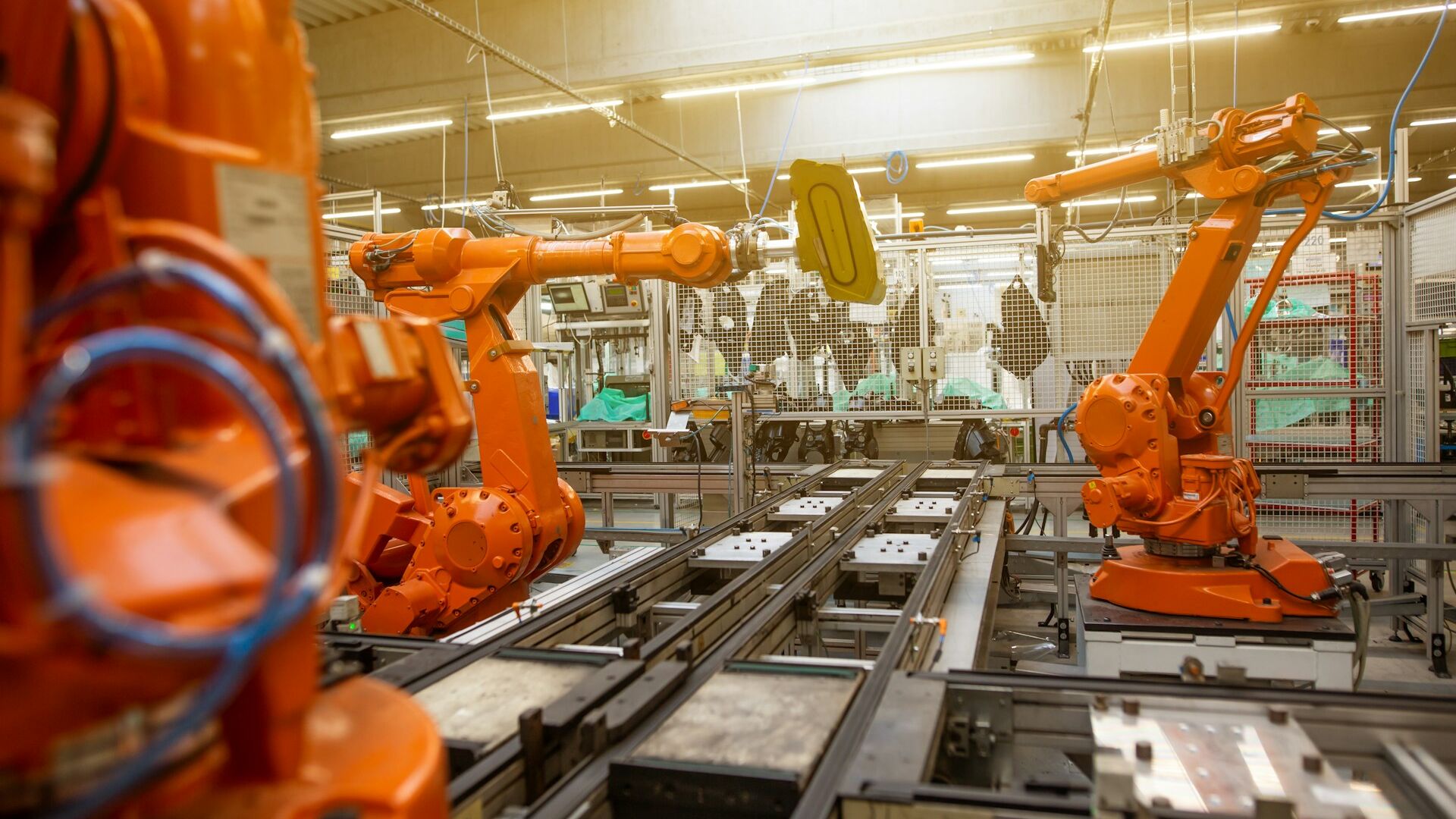
In the first half of 2026, China shipped over 19,000 humanoid robots, representing 77.9% of the global total of nearly 25,000 units. This marks a significant increase of 432.1% year over year in global shipments, highlighting China's leading role in the humanoid robotics market. The surge in shipments underscores the growing demand for humanoid robots, with China at the forefront of this trend. IDC's data indicates a robust market expansion, reflecting advancements in technology and increased adoption across various sectors. Looking ahead, IDC has revised its forecast for global humanoid robot shipments, projecting over 750,000 units by 2030. This anticipated growth signals a continued evolution in the robotics industry, with China likely maintaining its dominant position in the market.
News Feed
UBTECH Reports 104% Revenue Growth in H1 2026 Driven by Full-Size Humanoids
UBTECH Robotics, based in Shenzhen, reported a remarkable 104% increase in revenue for the first half of 2026, reaching RMB 1.27 billion (approximately $188.8 million). This surge is attributed to the growing enterprise adoption of its full-size humanoid platforms, particularly the Embodied Intelligence segment, which saw revenue soar by 1,445% year-over-year. The company’s financial performance reflects a significant transformation from its previous focus on educational and consumer toys to bipedal and embodied systems, which now serve as its primary revenue drivers. Full-size humanoids accounted for 46.5% of UBTECH's total revenue, with shipments increasing nearly twentyfold compared to the same period last year. Looking ahead, UBTECH's operational metrics indicate a positive trend, with gross profit rising by 160.9% and gross margins expanding. However, the company faces challenges as revenue from its legacy product lines continues to decline. No further timeline was disclosed at the time of publication.
Market China UBTECH Robotics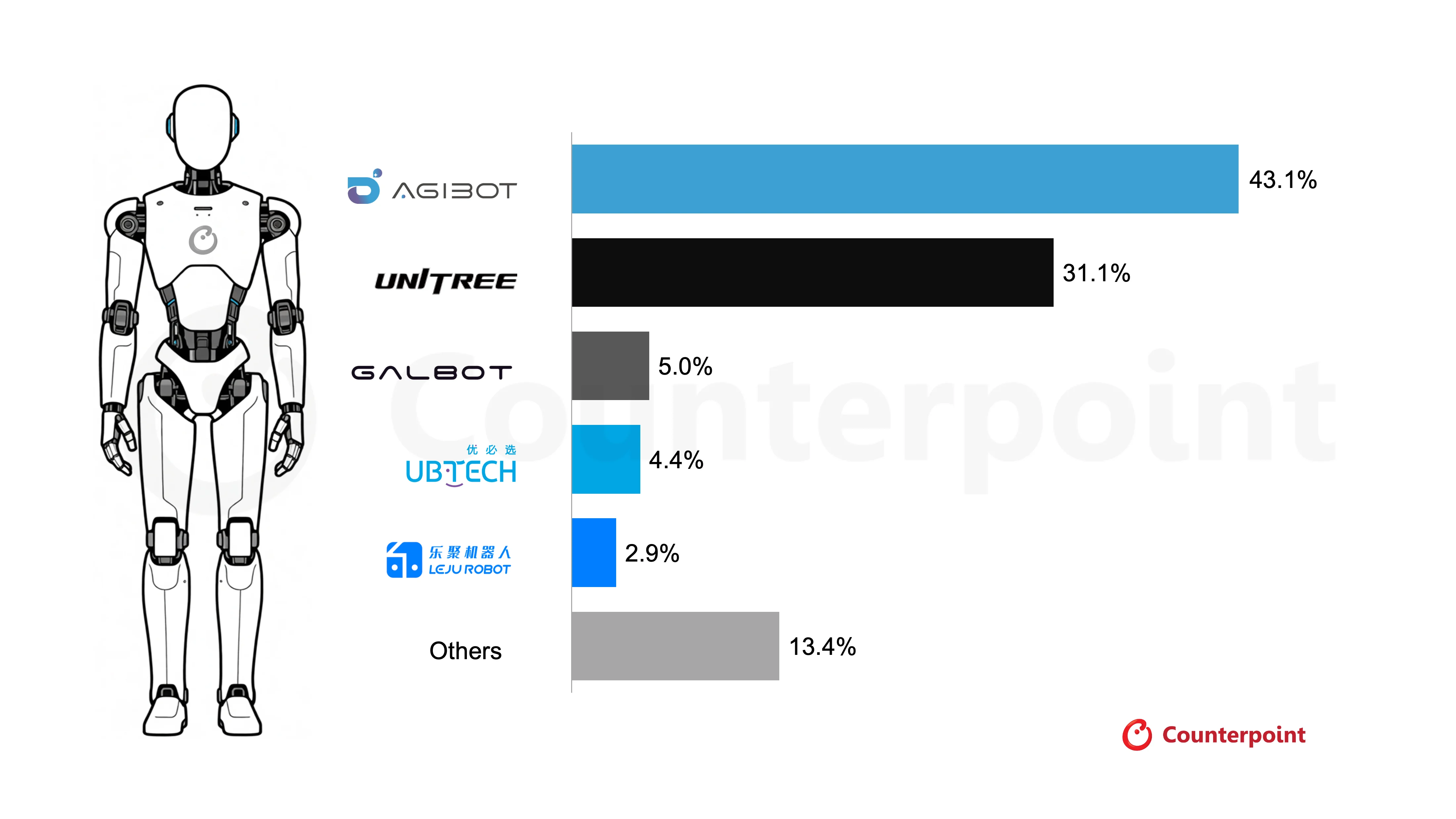
Humanoid Robot Shipments Exceed 22,000 in H1 2026, AGIBOT Leads Market
Global humanoid robot shipments surpassed 22,000 units in the first half of 2026, marking a nearly 300% increase from the previous year, according to Counterpoint Research. AGIBOT led the market with 9,700 units, capturing a 43.1% share, while Unitree Robotics followed with over 7,000 units, representing 31.1% of the market. This surge in shipments highlights a rapidly evolving market landscape, with the top five manufacturers accounting for approximately 86% of total deliveries. AGIBOT's diverse product strategy, including its A-series, X-series, and G-series, has contributed to its leading position. However, the industry faces ongoing debates regarding the definition of humanoid robots, particularly concerning the inclusion of hybrid and wheeled systems. Looking ahead, the competition among manufacturers is intensifying, with Unitree focusing on bipedal humanoids and planning to expand its production capabilities. Other players like Galbot and UBTECH are also diversifying their offerings to enhance their market presence. No further timeline was disclosed at the time of publication.
Unitree Robotics Leju Robot Galbot Business China AGIBOT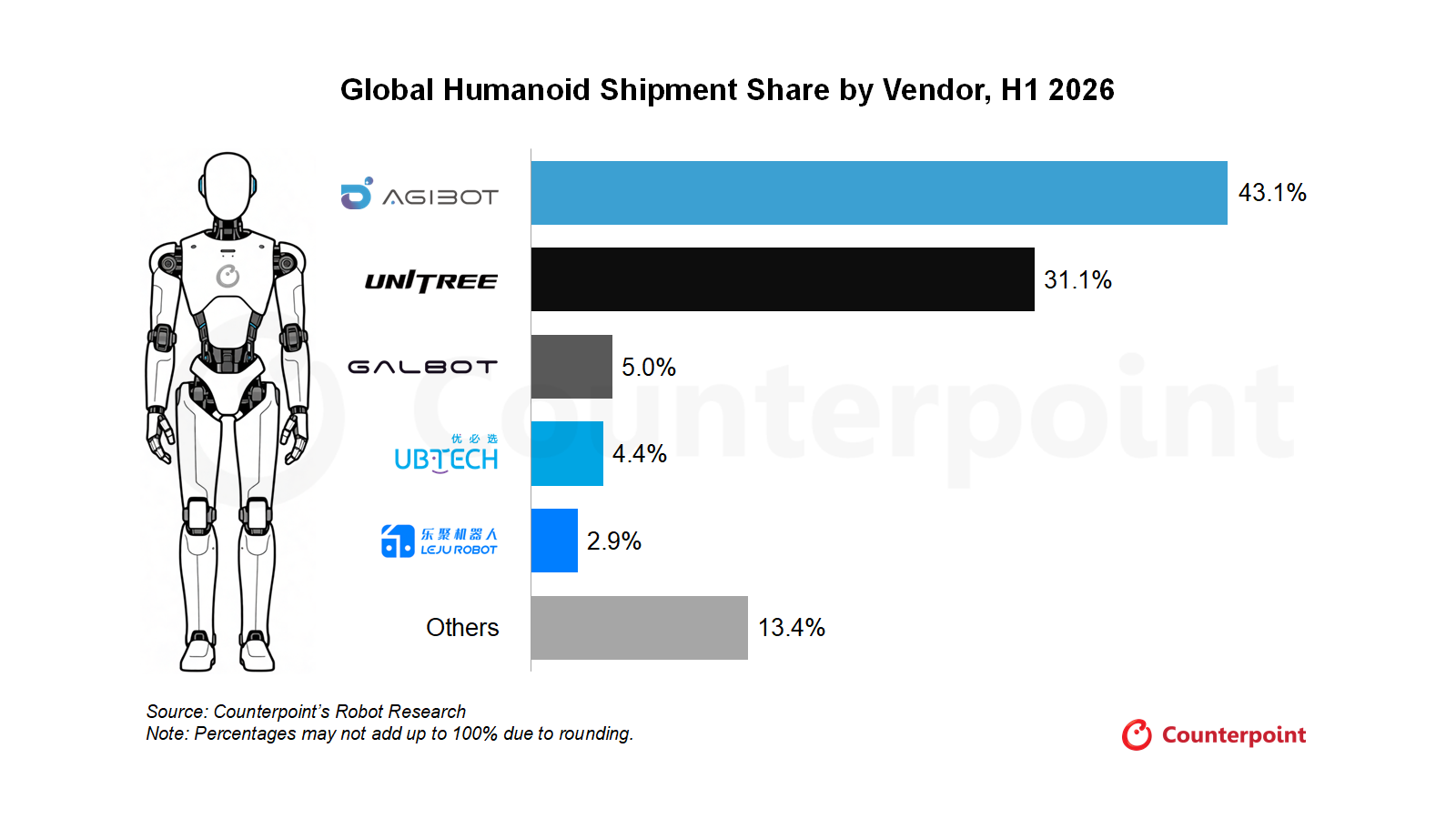
AGIBOT Leads Global Humanoid Robot Shipments in H1 2026 with 9,700 Units Delivered
AGIBOT has secured the leading position in global humanoid robot shipments for the first half of 2026, delivering around 9,700 units and achieving over 43% market share, according to Counterpoint Research. This remarkable growth reflects a nearly 300% increase in the humanoid robot market year-on-year, highlighting the rising demand and deployment of these robots beyond initial pilot projects. Looking ahead, the market is projected to exceed 50,000 units by the end of 2026, indicating a significant expansion in the adoption of humanoid robots across various sectors. No further timeline was disclosed at the time of publication.
Humanoid Robots Robotics Industry AI Technology Manufacturing Commercial Applications
Chinese Manufacturers Dominated Global Humanoid Robot Shipments with 97% Share in H1 2026
In the first half of 2026, Chinese manufacturers were responsible for over 97% of global humanoid robot shipments, totaling approximately 19,100 units. This marks a significant increase from about 5,100 units shipped during the same period in the previous year. Notably, AgiBot contributed around 8,400 units, representing 44% of the global total, while Unitree shipped approximately 5,900 units. The surge in shipments indicates a growing demand for humanoid robots, particularly in industrial and commercial sectors, which accounted for more than 70% of total shipments, compared to around 50% a year earlier. This trend highlights the increasing integration of humanoid robots into various applications, reflecting advancements in technology and market acceptance. Looking ahead, the market is projected to reach 60,000 shipments by the end of 2026 and is expected to grow significantly, with forecasts estimating 500,000 shipments by 2030. No further timeline was disclosed at the time of publication.
News Feed
Agibot Leads Global Humanoid Robot Shipments with 8,400 Units in H1 2026
According to a recent report by Smart Analytics Global (SAG), global shipments of humanoid robots reached 19,100 units in the first half of 2026, marking a 272% year-on-year increase. Chinese manufacturers accounted for over 97% of the global market share, with the domestic market absorbing more than 85% of the demand. Agibot, based in Shanghai, shipped 8,400 units in the first half of the year, a significant 562% increase, elevating its global market share from 25% to 44%, surpassing Yushu Technology. Yushu Technology shipped 5,900 units, a 170% increase, securing a 31% market share and falling to second place. Together, these two companies represent 75% of global shipments. The report highlights that industrial and commercial applications have become the core deployment scenarios, accounting for over 70% of shipments, up from 50% the previous year. SAG forecasts that global shipments will approach 60,000 units in 2026, generating approximately $1.6 billion in revenue, with expectations of reaching 500,000 units by 2030. No further timeline was disclosed at the time of publication.
Humanoid Robots Market Analysis Robotics Industry AI Technology
AgiBot and Unitree Dominate Global Humanoid Robot Shipments in H1 2026
According to Smart Analytics Global, global humanoid robot shipments reached 1.91 million units in the first half of 2026, marking a significant increase of 274 percent compared to the previous year. Chinese manufacturers accounted for an impressive 97 percent of these shipments, with AgiBot leading at 44 percent and Unitree following closely with 30.9 percent. This surge in shipments highlights the growing dominance of Chinese companies in the humanoid robot market, reflecting advancements in technology and production capabilities. The substantial market share captured by AgiBot and Unitree indicates a strong competitive landscape, particularly as the US imposed restrictions on Chinese robots in late July. Looking ahead, the impact of US restrictions on Chinese robot exports may influence future shipment trends and market dynamics. No further timeline was disclosed at the time of publication.

Tianbing No.1 AR-H1: The First Parallel Structure Humanoid Robot for Industrial Automation
The Tianbing No.1 AR-H1, developed by Atongmu Robotics, is the world's first humanoid robot featuring a parallel structure designed for industrial automation. This innovative design allows the robot to carry a maximum load of 200 kg while maintaining flexibility and stability, addressing the limitations of traditional series-joint humanoid robots. This advancement is significant as it redefines the capabilities of humanoid robots in industrial settings, focusing on robust load capacity and adaptability to various tasks. The AR-H1's 26 degrees of freedom enable it to replicate human movements, making it suitable for complex industrial processes and reducing the need for extensive modifications in existing facilities. Looking ahead, the AR-H1's unique design positions it as a practical solution for heavy-duty operations in factories. No further timeline was disclosed at the time of publication.
Humanoid Robots Industrial Automation Robotics Technology AI Smart Manufacturing
Humanoid Robot H1 Completes First Live Gallbladder Surgery Under Surgeon Control
In July 2026, a humanoid robot successfully performed the world's first live gallbladder surgery on a pig under the control of a surgeon. This groundbreaking procedure, documented by Nature and featured on the front page of the New York Post, has sparked significant discussions in the tech community about the implications of humanoid robots in surgical settings, particularly regarding remote control and AI capabilities. The significance of this achievement lies in its potential to disrupt the surgical robotics market, which has been dominated by the Da Vinci surgical system for nearly two decades. The Da Vinci system, known for its high costs exceeding $2 million, relies on specialized robotic arms and instruments. In contrast, the humanoid robot's design allows it to utilize standard surgical tools, which could lead to reduced costs and increased accessibility for hospitals. Looking ahead, the successful completion of this surgery marks a pivotal moment for humanoid robots in healthcare. While regulatory hurdles and clinical validation processes remain, the experiment demonstrates that humanoid robots can perform complex surgical tasks. The next challenge will be determining when the costs associated with these robots can be lowered enough for broader adoption by hospitals beyond top-tier institutions. No further timeline was disclosed at the time of publication.
Humanoid Robots Surgical Robotics AI in Healthcare Remote Surgery
GMO subsidiary to sell acrobatic humanoid robots "H1" and "G1" in Japan under Unitree partnership.
On June 19, GMO AI & Robotics Trading announced a partnership with Chinese humanoid robot manufacturer Unitree Robotics, establishing a domestic agency agreement. This collaboration marks the beginning of sales for several robotic models, including the humanoid robots "G1" and "H1," as well as the quadrupedal robots "Go2" and "B2." The move aims to enhance the availability of advanced robotics technology in the domestic market, reflecting a growing interest in automation and robotics solutions.

Global Humanoid Robot Shipments Surge Nearly 300% in H1 2026 Amidst Industry Evolution
During the 2026 World Robot Conference, attendees witnessed robots performing tasks such as grasping cups and folding clothes. However, significant advancements in robotics are occurring beneath the surface. Global shipments of humanoid robots reached over 22,000 units in the first half of 2026, marking an increase of nearly 300%. Despite this growth, only about 20% of these robots are being utilized in smart manufacturing and warehousing sectors, highlighting a competitive race among companies to enhance generalization and copying capabilities. This surge in humanoid robot shipments indicates a growing interest and investment in robotics technology, particularly in applications that extend beyond traditional roles. The limited adoption in smart manufacturing and warehousing suggests that while the market is expanding, the integration of these robots into more complex environments remains a challenge. Companies are focusing on developing robots that can generalize tasks and replicate human abilities, which is crucial for broader acceptance in industrial applications. Looking ahead, it will be important to monitor how companies address the challenges of integrating humanoid robots into smart manufacturing and warehousing. The ongoing evolution of robotics technology, particularly in terms of generalization and adaptability, will be key to unlocking new opportunities in various sectors. No further timeline was disclosed at the time of publication.

China's Humanoid Robot Market Review and Future Forecast for H1 2026
Today, Yushu Technology launched its new stock subscription, marking a significant entry into the capital market for a leading player in the humanoid robot sector. This event has refocused attention on the actual development level of China's humanoid robot industry. According to the latest data from MIR DATABANK, the production of humanoid robots in China reached nearly 25,000 units in the first half of 2026, a staggering increase of 312% year-on-year, while shipments approached 20,000 units, also up 314% compared to the previous year. The rapid growth in production and shipments indicates that the industrialization of humanoid robots is advancing faster than anticipated. Many manufacturers are establishing their own production lines or leveraging partnerships with contract manufacturers and government pilot bases to enhance mass production capabilities. Notable companies like Zhiyuan Robotics and Leju Robotics have successfully ramped up their production, achieving significant monthly delivery milestones. Looking ahead, the market is expected to continue evolving, with a shift in focus from basic movement capabilities to autonomous operational abilities of robots. The demand landscape is changing, with increasing interest in commercial applications across various sectors, including entertainment, logistics, and healthcare. No further timeline was disclosed at the time of publication.
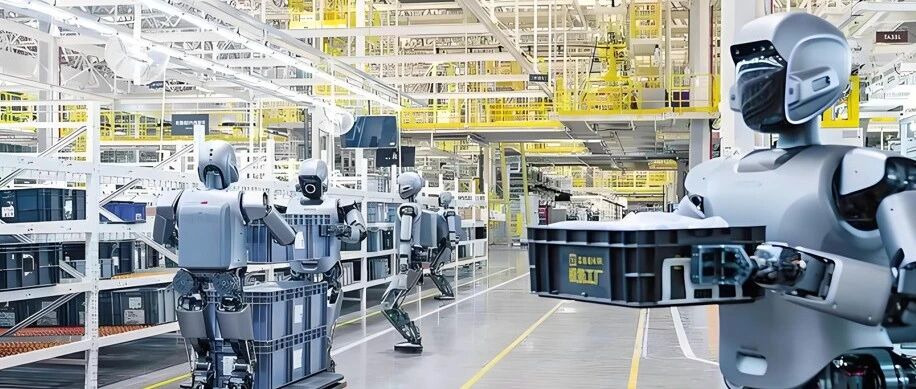
Top 15 Humanoid Robot Suppliers in China for H1 2026 by Production and Shipment Volume
In the first half of 2026, the humanoid robot industry in China officially entered a new phase of deployment and commercialization. The focus has shifted from showcasing prototypes to large-scale implementation in real-world scenarios, driven by advancements in technology and supply chain improvements. The market is witnessing rapid product iterations and breakthroughs in embodied intelligence technology, with key players like Zhiyuan Robotics, Yushu Technology, and UBTECH leading in production and shipment volumes. According to MIR DATABANK, the top 15 suppliers by production include Zhiyuan Robotics, Yushu Technology, and UBTECH, while the shipment rankings feature similar leaders, indicating a competitive landscape. Looking ahead, the humanoid robot sector is expected to continue its growth trajectory as it integrates deeper into industrial and commercial applications. No further timeline was disclosed at the time of publication.

Unitree Unveils H2, a Full-Sized Humanoid Successor to the H1
Unitree has unveiled its latest flagship humanoid robot, the H2, which stands at an impressive 1.8 meters tall. This new model represents a significant advancement over the company's previous affordable offering, the R1, and aligns with Unitree's strategy to cater to different segments of the market. The announcement highlights the company's commitment to innovation and development in robotics, showcasing the H2 as a more sophisticated option for consumers and businesses alike. The launch reflects Unitree's ongoing efforts to expand its product lineup and meet the evolving demands of the robotics industry.
H1 Unitree Robotics H2 R1Robotics needs a service framework.
RSF defines a common language for robot service capability, lifecycle operations, certification pathways, and service-provider networks.
Join the RobotToday community on LinkedIn
Daily robotics news, in-depth analysis, conference highlights, and discussions with professionals worldwide.







