

Industry Briefing
A single destination for timely, editor-curated robotics news from around the world.
GXO Logistics and Exotec Collaborate to Enhance Fashion Fulfillment for Guess in the Netherlands
GXO Logistics has partnered with Exotec to implement the Skypod System at its Venlo facility in the Netherlands, which serves the fashion brand Guess. This deployment features 127 Skypod robots and 60,000 rack locations, along with eight goods-to-person picking stations, aimed at optimizing the fulfillment process. This collaboration is significant as it leverages advanced robotics technology to streamline operations for Guess, a well-known global fashion brand. The integration of Exotec's Skypod System is expected to enhance efficiency and accuracy in order fulfillment, which is crucial in the fast-paced fashion industry. Looking ahead, the impact of this partnership on the logistics and fashion sectors will be noteworthy. The successful deployment of the Skypod System may set a precedent for future advancements in warehouse automation. No further timeline was disclosed at the time of publication.
Logistics News Warehouse robots exotec fashion logistics fulfillment automation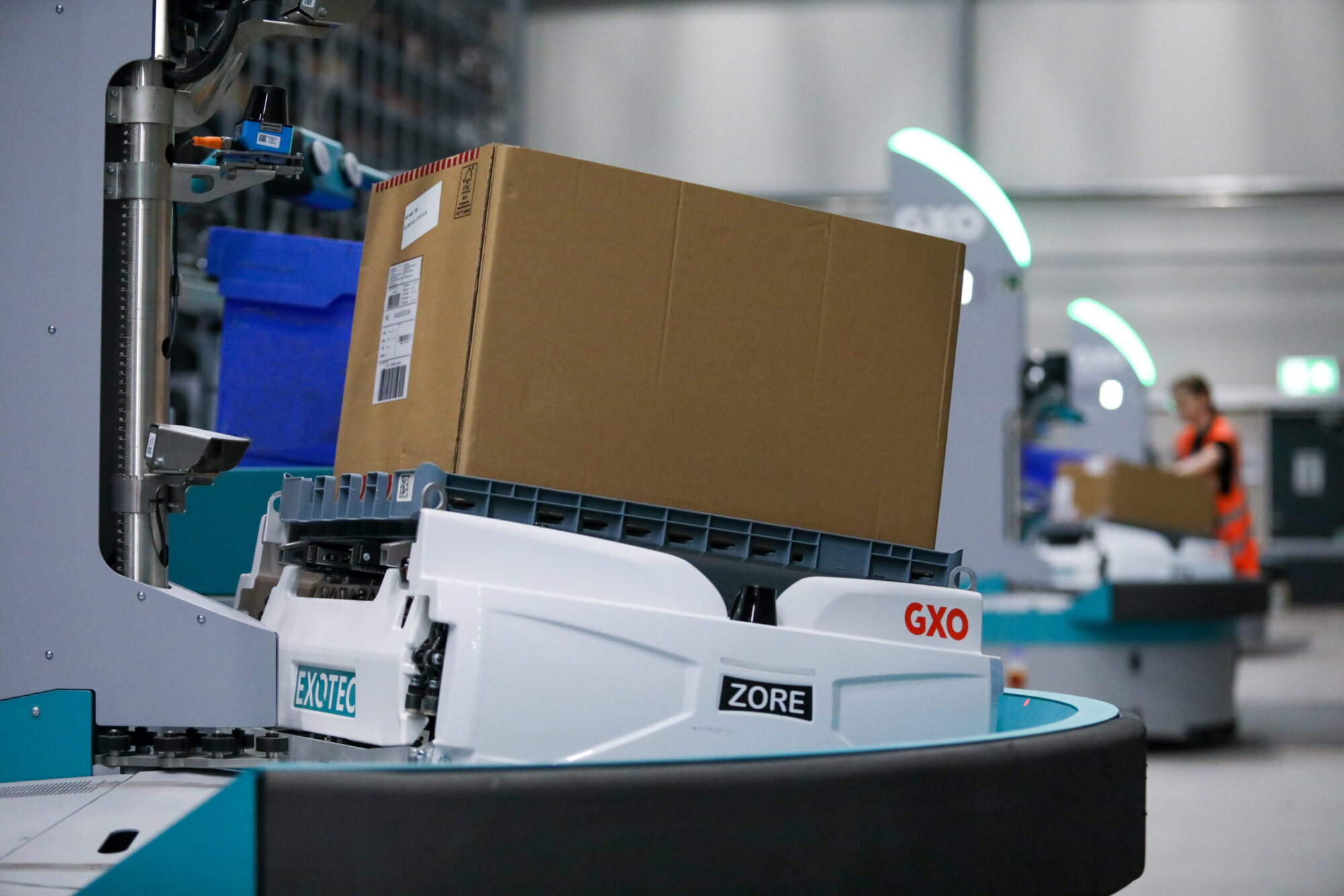
GXO Implements Exotec's Skypod System for Guess Fashion Fulfilment Automation
GXO has successfully deployed Exotec’s Skypod robotic system at its Venlo facility in the Netherlands to automate fulfilment operations for Guess, a global fashion brand. This advanced system is tailored to meet the unique challenges of fashion logistics, capable of processing between 40,000 and 70,000 pieces daily, with peak throughput reaching 2,200 order lines per hour. The automation installation includes 127 robots, 60,000 rack locations, eight goods-to-person picking stations, and a 200-metre conveyor network. GXO manages various logistics services for Guess, including quality control and garment conditioning, while also preparing for e-commerce fulfilment in the Benelux market. This project highlights the importance of customizing automation solutions to fit specific operational needs rather than applying a generic approach. As fashion fulfilment demands can fluctuate seasonally, the Skypod system is designed to scale operations effectively, ensuring that GXO can handle increased volumes during peak periods. Since the system's implementation, GXO reports that the operation has become more predictable and streamlined, supporting Guess’s retail distribution across EMEA and Asia.
Automation Systems and Shuttles Conveying and Sortation eFulfilment Materials Handling Robotic Picking Storage & Racking
OpenRouter Launches Anonymous AI Model 'Ox Alpha' That Outperforms Leading Coding Models
On August 20, OpenRouter introduced stealth/ox-alpha, an anonymous AI model that has demonstrated superior coding capabilities compared to several closed frontier models. This unexpected launch has ignited speculation within the industry regarding the identity of the model and its implications for AI development. The emergence of Ox Alpha is significant as it highlights the competitive landscape of AI models, particularly in China, where stealth models are becoming increasingly prominent. The ability of Ox Alpha to outperform established models raises questions about the effectiveness of current benchmarks and the potential for new entrants to disrupt the market. As the industry continues to speculate about the origins and capabilities of Ox Alpha, stakeholders should monitor developments closely. The ongoing guessing game could lead to further innovations in AI modeling and coding, as well as shifts in strategic approaches among leading AI companies. No further timeline was disclosed at the time of publication.
Award-Winning Researcher Trains Robots to Make Educated Guesses
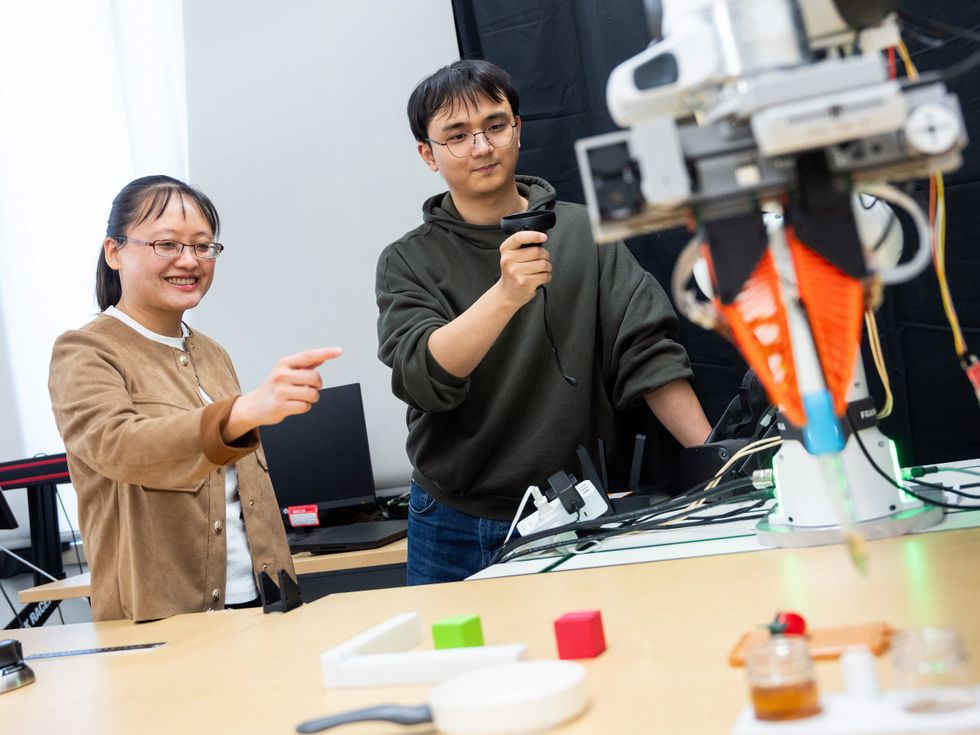
Yen-Ling Kuo, an assistant professor of computer science at the University of Virginia, has been recognized for her significant contributions to robotics and automation. Last year, she received the IEEE Robotics and Automation Society’s inaugural Outstanding Women in Robotics and Automation Early Career Contribution Award for her paper, “Diff-DAgger: Uncertainty Estimation with Diffusion Policy for Robotic Manipulation.” This innovative research introduces a method that enhances robots' ability to identify and manage uncertainty during unfamiliar tasks, thereby reducing the need for human supervision and increasing task completion rates. Kuo’s journey began in Taiwan, where her fascination with science and technology was sparked by early exposure to programming and computer logic. After earning her degrees from National Taiwan University and MIT, she gained practical experience at Google, where she contributed to AI-driven shopping technologies. This experience motivated her to pursue a Ph.D. to deepen her understanding of neural networks. Her current research focuses on developing computational models that enable robots to interpret both explicit data and subtle social cues, aiming to replicate human-like reasoning in machines. Kuo's work has garnered attention from the National Science Foundation, which awarded her a five-year Career Award to support her research on human-robot interactions. As robotics and autonomous vehicles become more prevalent, Kuo envisions creating robots that can seamlessly integrate into social environments, enhancing human-robot collaboration.
Ieee-member-news Robots Artificial-intelligence Ieee-robotics-and-automation-soc Careers Type-ti
From 'Guessing' to 'Calculating': China's First Manifold Topology-Preserving Robot World Model Released
In Chengdu, China, researchers have unveiled an innovative robot world model that significantly improves robots' ability to comprehend and anticipate physical environments. This advanced model utilizes manifold topology preservation, which enhances the spatial intuition and physical reasoning of robots. As a result, these machines can make safer and quicker decisions in dynamic situations. The development marks a significant step forward in robotics, potentially transforming how robots interact with their surroundings and respond to changing conditions.
Robot World Model AI Robotics Spatial Reasoning Machine LearningRobotics needs a service framework.
RSF defines a common language for robot service capability, lifecycle operations, certification pathways, and service-provider networks.
Join the RobotToday community on LinkedIn
Daily robotics news, in-depth analysis, conference highlights, and discussions with professionals worldwide.






