

Industry Briefing
A single destination for timely, editor-curated robotics news from around the world.

Trump Implements 100 Percent Tariffs on Specific Drones and Aircraft Parts
President Donald Trump has announced a 100 percent tariff on imports of drones equipped with thermal cameras and those weighing over 25kg, along with all parts for unmanned aircraft of the same weight. Additionally, a 25 percent tariff will apply to smaller drones under 250 grams. This move follows a previous ban on foreign drones and aims to increase costs for existing imports. The tariffs are part of a broader strategy to encourage domestic production of unmanned aerial systems (UAS) and their components. Companies can avoid these tariffs by committing to manufacture drones or parts in the United States. The tariffs also feature reduced rates for certain countries, including a 15 percent tariff for the EU and others, contingent on local production of technology. Looking ahead, the Secretary of Commerce has been authorized to create a program to incentivize investment in U.S. production facilities for UAS. However, the legality of these tariffs has been challenged in court, raising questions about their long-term viability and impact on consumers and companies alike. No further timeline was disclosed at the time of publication.
News Policy
Firestorm Labs 3D-prints Over 1,000 Parts and Assembles 12 Drones on USS Essex
Firestorm Labs successfully manufactured over 1,000 components and assembled 12 Squall drones aboard the USS Essex during a two-week trial. This operation took place while the US Navy warship was en route from San Diego to Hawaii for RIMPAC 2026, showcasing the potential for on-site production of military hardware during maritime missions. The significance of this trial lies in its demonstration of the xCell manufacturing platform's capabilities, which allowed for the production of drone components and repair parts despite challenging sea conditions. By reducing reliance on shore-based resupply, the operation enhances combat readiness and supports repairs directly at sea, marking a pivotal shift in military logistics. Looking ahead, the successful deployment of the xCell platform under operational conditions opens avenues for future maritime manufacturing initiatives. Firestorm Labs' ability to produce critical components on demand could revolutionize military operations, particularly in remote or hostile environments. No further timeline was disclosed at the time of publication.
Innovation Military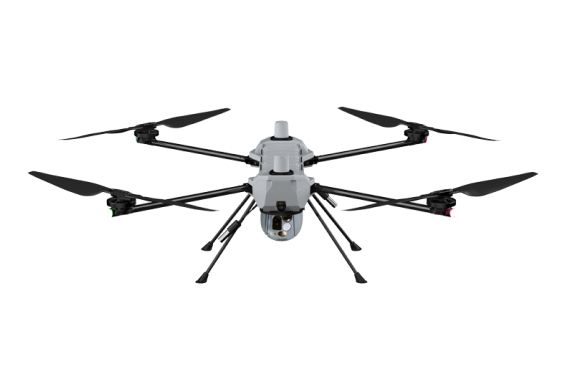
PDW CEO Emphasizes Domestic Drone Production and Component Manufacturing for U.S. Military
James Slider, CEO of PDW Holdings, highlighted the necessity of establishing domestic production for drones and their critical components to support the U.S. military. He emphasized that while America excels in innovation, the real challenge lies in scaling production effectively. PDW has secured a conditional loan of up to $820 million from the Department of War to enhance domestic manufacturing capabilities. The urgency for U.S. drone production is underscored by the ongoing conflict in Ukraine, which has shown the importance of rapid drone deployment and the need for resilient supply chains. Slider pointed out that the U.S. must learn from Ukraine's strategy, as innovation alone does not equate to capability without production. The reliance on foreign supply chains for essential drone components poses significant risks to U.S. defense readiness. Looking ahead, the focus will be on increasing domestic manufacturing to reduce dependence on foreign sources, particularly for critical components like rare-earth magnets. Slider's comments reflect a broader industry concern about maintaining a robust supply chain to ensure the U.S. military can effectively respond to emerging threats. No further timeline was disclosed at the time of publication.
DL Exclusive Drone News Drone News Feeds Dual Use Feature 1 News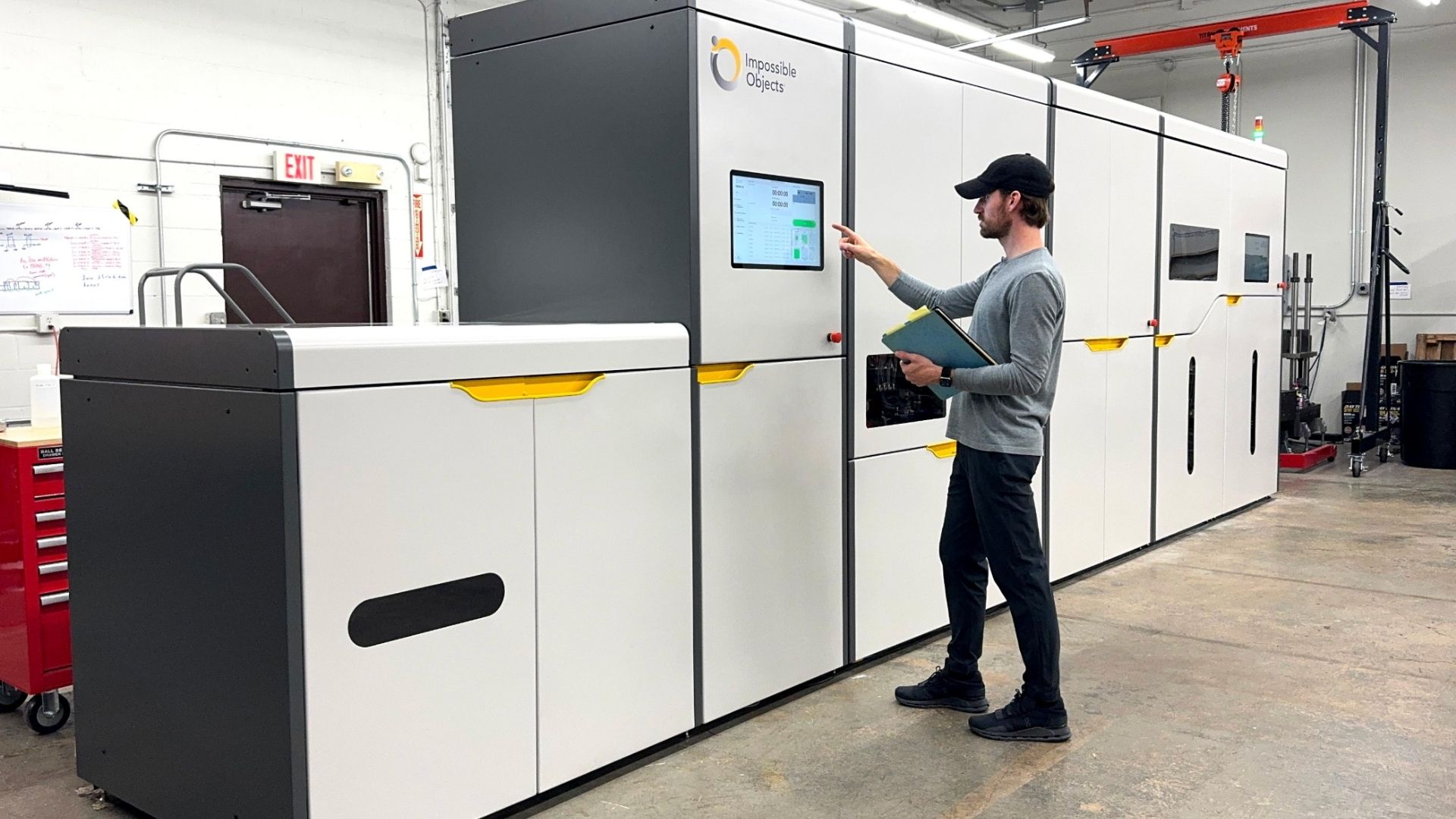
Impossible Objects Secures $40 Million for Carbon-Fiber 3D Printing Expansion
Impossible Objects, an Illinois-based manufacturing technology firm, has raised $40 million in a Series B funding round led by Inflection Equity. This investment aims to enhance the production capabilities of its Composite-Based Additive Manufacturing (CBAM) systems, particularly the CBAM 25, which specializes in carbon-fiber printing for drones and aircraft parts. The significance of this funding lies in its potential to revolutionize industrial-scale 3D printing, traditionally limited to prototyping due to slow speeds and high costs. The CBAM 25 addresses these challenges by enabling rapid production of strong, lightweight components, thereby reducing tooling requirements and lead times, making it competitive with CNC machining and injection molding. Looking ahead, Impossible Objects has already received five orders for the CBAM 25 since its introduction in early 2025. The company aims to deploy its technology across aerospace, defense, and advanced manufacturing sectors. No further timeline was disclosed at the time of publication.
InnovationRobotics needs a service framework.
RSF defines a common language for robot service capability, lifecycle operations, certification pathways, and service-provider networks.
Join the RobotToday community on LinkedIn
Daily robotics news, in-depth analysis, conference highlights, and discussions with professionals worldwide.







