
Top News

Industry Briefing

A single destination for timely, editor-curated robotics news from around the world.
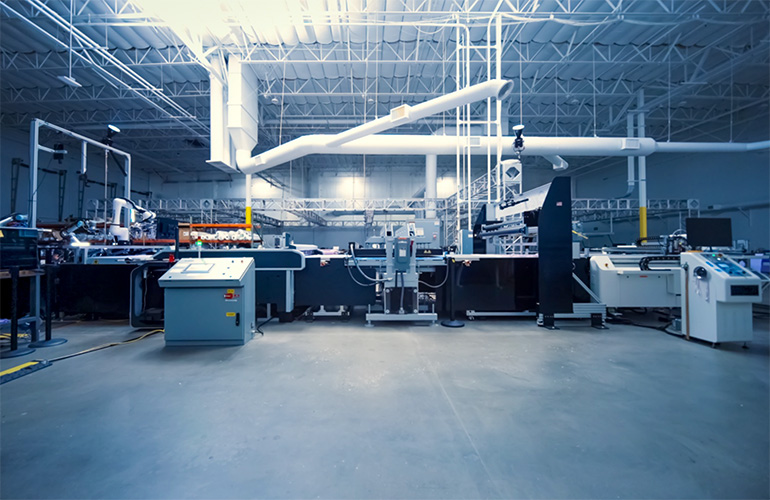
Interview with CreateMe CEO Campbell Myers: From stitching to bonding – physical AI could transform the way clothes are made

Interview with CreateMe CEO Campbell Myers: From stitching to bonding – physical AI could transform the way clothes are made

Apparel manufacturing continues to be one of the most labor-intensive sectors globally, despite advancements in automation in other industries such as automotive and electronics. The difficulty in automating textile production arises from the unique properties of fabric, which can stretch, wrinkle, and shift unpredictably. This complexity has hindered the development of effective robotic solutions for handling soft materials, leaving the apparel industry largely reliant on human labor. As manufacturers seek to improve efficiency and reduce costs, the challenge of integrating automation into textile production remains a significant hurdle.

Engineering Features Manufacturing adhesive bonding apparel automation apparel industry
Why deformable materials are physical AI’s real manufacturing test

Why deformable materials are physical AI’s real manufacturing test

Createme's CEO has highlighted the potential of Physical AI in revolutionizing the assembly of deformable materials, particularly in the apparel industry. This insight comes as the company explores innovative approaches and software solutions to enhance manufacturing processes. The discussion emphasizes the importance of adapting technology to effectively handle the complexities of working with flexible materials. As the demand for advanced manufacturing techniques grows, the application of Physical AI could serve as a significant test for the industry, showcasing its capabilities beyond traditional manufacturing methods.

6-Axis Artificial Intelligence / Cognition Manufacturing Materials News Opinion
New Record in Robotic Micro-Manipulation: 42G Ejection and Precision Control Across 14 Orders of Magnitude

New Record in Robotic Micro-Manipulation: 42G Ejection and Precision Control Across 14 Orders of Magnitude

A team of researchers has unveiled a revolutionary liquid metal universal gripper (LiMU) that boasts exceptional manipulation capabilities, achieving a record ejection speed of 42G. This cutting-edge technology can handle a wide range of objects, from picograms to hundreds of grams, making it suitable for delicate tasks across various environments. The development of LiMU represents a significant advancement in robotic manipulation, potentially transforming industries that require precision handling of fragile materials.

Robotic Grippers Micro-Manipulation Liquid Metal Technology Adaptive Robotics
Cobot’s Proxie Gen 2 robot adds autotasking, mobile manipulation

Cobot’s Proxie Gen 2 robot adds autotasking, mobile manipulation

Cobot, led by founder and CEO Brad Porter, has unveiled its latest innovation, the Proxie Gen 2 robot, which enhances automation capabilities in material handling. This advanced robot is designed to autonomously assess when materials are ready for transport, pinpoint their destinations, and generate tasks without the need for human oversight. The introduction of Proxie Gen 2 marks a significant step forward in mobile manipulation technology, aiming to streamline operations in various industries. This development reflects Cobot's commitment to advancing robotic solutions that improve efficiency and reduce reliance on manual labor.

Artificial Intelligence Artificial Intelligence / Cognition Autonomous Mobile Robots (AMRs) Design / Development Healthcare Robotics Logistics
Beyond Dexterity: Why Contact May Define the Next Era of Robotics

Beyond Dexterity: Why Contact May Define the Next Era of Robotics

At the 2026 IEEE International Conference on Robotics (ICRA) in Vienna, AGILINK showcased a captivating demonstration of robotic dexterity by creating a balloon dog, which drew significant attention from attendees. This seemingly playful task is recognized in the robotics community as a complex manipulation challenge due to the balloon's lightweight and highly deformable nature. The demonstration highlighted the intricate balance between motion and contact intelligence, essential for successful robotic manipulation. AGILINK's approach involved mapping the actions of professional balloon artists to robotic hands, allowing the robot to learn both successful manipulation sequences and recovery strategies during failures. This dual focus on motion and contact intelligence is crucial, as maintaining stable interaction with the balloon is as important as executing the correct sequence of actions. In conjunction with the balloon dog demonstration, AGILINK introduced the OmniHand 3 Ultra-M, a dexterous robotic hand designed to enhance contact intelligence through advanced sensing and faster response capabilities. The hand features 20 active degrees of freedom and a direct-drive architecture, enabling precise force regulation and tactile sensing across its surface. The significance of these advancements extends beyond balloon animals, addressing broader challenges in robotics related to unstable and deformable interactions, such as delicate assembly and household tasks. As robotics research increasingly prioritizes interaction dynamics, AGILINK's innovations may pave the way for more effective manipulation in unpredictable real-world environments.

Humanoid-robots Physical-ai Dexterous-hands Direct-drive-actuation Robotic-manipulation Reinforcement-learning
JAIST and King's College Develop EleTac Soft Gripper with Integrated Tactile Sensing

JAIST and King's College Develop EleTac Soft Gripper with Integrated Tactile Sensing

Researchers from Japan's JAIST and King's College London have developed EleTac, a soft robotic gripper inspired by the trunk of an elephant. This innovative design integrates grasping, external tactile perception, and proprioception within a single soft structure. The gripper can manipulate various objects, including tofu and fabric, while estimating contact position and force using a vacuum system operating at 30 kPa. The significance of EleTac lies in its ability to handle delicate and irregularly shaped items, addressing the challenges of soft robotics. Traditional rigid grippers utilize clear joints for sensing, while soft grippers often struggle with limited perception due to their material properties. EleTac's design allows for continuous tactile sensing across its surface, enhancing its ability to discern between self-induced deformations and external contacts. Future developments will focus on refining the visual-based tactile sensing capabilities of EleTac, which utilizes an internal optical system to monitor material deformation. This advancement could lead to improved performance in applications requiring precise manipulation of fragile objects. No further timeline was disclosed at the time of publication.

Soft Robotics Tactile Sensing Proprioception Robotic Grippers
XELA Robotics to Unveil New Major Tactile Sensor Capabilities at Automate 2026

XELA Robotics to Unveil New Major Tactile Sensor Capabilities at Automate 2026

Researchers have successfully developed advanced robotic fingertips equipped with sensitive nails, enabling precise grasping of extremely thin objects. This innovative technology, which was unveiled recently, features a universal manipulation interface that enhances the robot's ability to interact with various items. Additionally, the system includes improved magnetic interference compensation, allowing for more reliable handling of fragile objects. The advancements aim to address challenges in robotic dexterity and manipulation, making these robotic fingertips suitable for a range of applications, from delicate assembly tasks to intricate surgical procedures. This breakthrough represents a significant step forward in robotics, potentially transforming industries that require high precision and care in handling lightweight and fragile materials.

Doosan Robotics to Unveil 'AI Robot Solution' at Automatica 2025

Doosan Robotics to Unveil 'AI Robot Solution' at Automatica 2025

Doosan Robotics has announced its participation in Automatica 2025, Europe’s leading automation exhibition, set to take place in Munich, Germany, starting June 24. The company will showcase its innovative 'AI Robot Solution' across two exhibition zones: 'Automation in Action' and 'Automation to Reality.' In the 'Automation to Reality' area, attendees will have the opportunity to explore a variety of AI-integrated robotic solutions, including technologies developed in collaboration with NVIDIA and AWS. Among the highlights is 'Voice to Real,' a voice-recognition solution co-developed with AWS, and an enhanced version of *Mixmaster Moodie*, which features a 3D vision camera to understand everyday language and execute tasks autonomously. The Material Handling Solution will demonstrate three collaborative robots capable of recognizing and manipulating objects without prior training, utilizing Doosan's Multi-Arm Dynamic Manipulation Engine for complex tasks. Additionally, the Sanding Solution will enable robots to autonomously polish intricate surfaces, while the Inspection Solution will conduct real-time vehicle inspections using a 3D scanning system. Another key feature is "Sim to Real," a motion control solution that leverages NVIDIA Isaac Sim for simulating AI-driven robots, allowing for rapid computation of robot trajectories and seamless transfer to physical robots. The 'Automation in Action' zone will exhibit practical applications of robotics in manufacturing processes such as welding, assembly, and quality inspection. These solutions, co-developed with European partners, are already in use by major companies like General Motors, Danone, Heineken, and Royal Mail, highlighting their commercial viability in the European market.

Helix Learns to Fold Laundry

Helix Learns to Fold Laundry

Helix, a humanoid robot developed by Figure, has reached a notable milestone by successfully folding laundry, a task that has long posed challenges for robotic technology. This achievement showcases Helix's advanced dexterity and adaptability, particularly in managing deformable items such as towels. The robot employs the same architectural framework used in its logistics applications, highlighting its versatility and potential for broader applications in everyday tasks. This breakthrough in humanoid robotics not only emphasizes the progress made in the field but also opens up new possibilities for integrating robots into domestic environments.

humanoid robotics autonomous systems machine learning dexterous manipulation artificial intelligence
Kirisense wins funding to develop robotic fingertips that can sense touch and slip

Kirisense wins funding to develop robotic fingertips that can sense touch and slip

Kirisense, a UK robotics startup, has received funding from the Henry Royce Institute to advance its development of tactile sensing technology aimed at enhancing robots' sense of touch to more closely resemble that of humans. This initiative, part of the Henry Royce Institute’s Industrial Collaboration Programme, is being executed in collaboration with the University of Sheffield. The project will concentrate on creating robotic fingertips that can provide a more nuanced and sensitive interaction with their environment, potentially revolutionizing the field of robotics by improving the dexterity and functionality of robotic systems.

News Sensors advanced automation advanced materials artificial intelligence automation news
Chef Robotics Advances Bi-Manual Physical AI System for Prep Table Food Assembly Powered by a Food Foundation Model

Chef Robotics Advances Bi-Manual Physical AI System for Prep Table Food Assembly Powered by a Food Foundation Model

Chef Robotics has announced the development of a bi-manual physical AI system aimed at enhancing food assembly tasks on prep tables, such as burger and burrito preparation. This innovative system, which is set to launch on May 19, 2026, will cater to various sectors including ghost kitchens, fast-casual restaurants, and catering services, focusing on lower-volume yet more complex meal assembly compared to traditional food manufacturing processes. The new AI system utilizes two robotic arms for coordinated and dexterous manipulation, mimicking human-like capabilities to handle a variety of food items and utensils. It is powered by Chef's Food Foundation Model (FFM), which employs imitation learning to adapt quickly to diverse tasks and environments, overcoming the limitations of existing robotic systems that struggle with the variability of food materials. Chef Robotics aims to automate manual prep table assembly, a critical area in the food industry that has remained largely reliant on human labor. By leveraging the FFM, the system is designed to learn from demonstrations, allowing it to generalize across different tasks and robotic platforms. This advancement is expected to improve operational efficiency, yield, and consistency in food preparation, ultimately transforming how food assembly is approached in various culinary settings.

Video Friday: Heavy Robotic Machinery Operates Itself

Video Friday: Heavy Robotic Machinery Operates Itself

IEEE Spectrum robotics has released its latest edition of "Video Friday," showcasing a variety of innovative robotics videos and announcing upcoming robotics events. Notable conferences include ICRA 2026 in Vienna from June 1-5, and the Summer School on Multi-Robot Systems in Prague from July 29 to August 4, 2026. Among the featured content is a groundbreaking autonomous material-handling solution developed by ETH Zurich, capable of operating a 40-ton material handler, traditionally a labor-intensive task. Other highlights include the introduction of the world's first production-ready manned mecha by Unitree, and the launch of NIX, an embodied AI exploring dance and movement, which will be made available for free to select partners. NTNU has unveiled the Unified Autonomy Stack, a robust system designed for aerial and ground robots, enhancing their autonomy through advanced perception and navigation capabilities. This system has been validated in challenging environments, showcasing its effectiveness in exploration and object discovery. Robotics expert Rodney Brooks, cofounder of Robust AI, shared insights on the challenges of innovation in robotics and the implications of the current AI surge during a Q&A session ahead of his panel at the Forbes America Innovates event in San Francisco. As the field continues to evolve, the integration of data collection methods remains a significant challenge, with the Koala platform exemplifying innovative approaches to enhance robotic manipulation tasks.

Home-robots Humanoid-robots Video-friday Material-handling-technology Robot-videos Robot-grippers
Deepfake Detection Dataset Aims to Keep Up With Generative AI

Deepfake Detection Dataset Aims to Keep Up With Generative AI

A collaborative effort involving researchers from Microsoft, Northwestern University, and the non-profit organization Witness has led to the development of a new dataset aimed at enhancing the detection of AI-generated media. Announced in a study published on April 10 in IEEE Intelligent Systems, the Microsoft-Northwestern-Witness (MNW) deepfake detection benchmark is designed to address the growing challenge of distinguishing real from fake content in an era where generative AI technology is rapidly advancing. The dataset includes a diverse array of AI-generated images, audio, and videos, reflecting the current landscape of generative AI. Thomas Roca, a principal research scientist at Microsoft, emphasized the increasing sophistication of AI-generated media, which can easily be produced by anyone using accessible applications. This proliferation raises significant concerns, including identity fraud and the creation of harmful content. The MNW benchmark aims to improve the effectiveness of detection systems by providing a wider variety of AI-generated materials, including those that have undergone post-processing manipulations. Researchers acknowledge that while this dataset could potentially be misused to develop new evasion techniques, it is crucial for enhancing the ability to assess the authenticity of media as generative AI continues to evolve. The team plans to update the dataset biannually to incorporate the latest developments in generative AI and detection challenges, with the goal of fostering transparency and raising standards in the fight against deepfake content.

Deepfakes Generative-ai Artificial-intelligence Microsoft Journal-watch
Physical AI Company Chef Robotics Completes 100 Million Servings in Production

Physical AI Company Chef Robotics Completes 100 Million Servings in Production

A leading company in food robotics has announced that it now possesses the largest dataset of in-production deformable material training data among all physical AI firms. This significant achievement comes as the company continues to advance its technology, enhancing the capabilities of its robotic systems. The data, which has been compiled and refined up to October 2023, is expected to improve the efficiency and effectiveness of food preparation processes. By leveraging this extensive dataset, the company aims to set new standards in the industry, driving innovation and potentially transforming how food is produced and handled.

Arizona State University Develops Innovative HARP Artificial Muscle for Versatile Applications

Arizona State University Develops Innovative HARP Artificial Muscle for Versatile Applications

A research team led by Professor Sun Jiefeng at Arizona State University has developed a new artificial muscle structure known as HARP (Helical Anisotropic Reinforced Actuator). Unlike traditional artificial muscles that compromise on performance, HARP offers modularity and flexibility, allowing for adjustments in materials and design parameters to meet various application needs. This innovation is significant as it addresses the limitations of existing artificial muscles, which often excel in specific scenarios but struggle to meet multiple requirements simultaneously. HARP achieves an impressive power density of 1.93 kW/kg, a contraction rate of up to 75%, and the ability to lift weights up to 100 times its own weight, making it suitable for diverse and complex applications. Looking ahead, the HARP's modular design allows for customization and optimization of its components, enhancing its adaptability in extreme environments. The research team demonstrated HARP's durability in wear resistance tests, showcasing its potential for reliable operation in harsh industrial settings. No further timeline was disclosed at the time of publication.

Artificial Muscles Robotics Modular Design Self-Healing Materials
New color-changing tactile sensor gives robots a real-time sense of touch

New color-changing tactile sensor gives robots a real-time sense of touch

Researchers have developed an innovative color-changing tactile sensor that enables machines to perceive and respond to their surroundings in real-time. This groundbreaking technology was unveiled in October 2023 and represents a significant advancement in the field of robotics and artificial intelligence. The sensor mimics the way humans and animals sense touch and texture, providing machines with the ability to "see" and interpret the materials they come into contact with. The motivation behind this development lies in enhancing the interaction between machines and their environment, allowing for more sophisticated and responsive robotic systems. By integrating this tactile sensor, robots can better understand the properties of objects, leading to improved performance in various applications, such as manufacturing, healthcare, and service industries. The process involves a combination of advanced materials and engineering techniques that allow the sensor to change color based on the pressure and texture of the surfaces it touches. This visual feedback not only aids in object recognition but also enhances the machine's ability to make informed decisions based on tactile information. As this technology continues to evolve, it holds the potential to revolutionize how machines interact with the world, paving the way for smarter, more adaptable robotic systems that can operate effectively in diverse environments.

AI and Robotics
Robots can now 'see' touch thanks to a new color-changing tactile sensor

Robots can now 'see' touch thanks to a new color-changing tactile sensor

Engineers at Queen Mary University of London have developed an innovative color-changing tactile sensor that enables robots to perceive their environment through both sight and touch in real-time. The groundbreaking invention, led by postdoctoral researcher Giacomo Sasso from the School of Engineering and Materials Science, utilizes a unique mechanism that converts invisible forces into vibrant color patterns. This technology allows for the immediate generation of high-resolution maps detailing contact, strain, and pressure, significantly enhancing robotic interaction with their surroundings. The advancement promises to improve the capabilities of robots in various applications, from manufacturing to healthcare, by providing them with a more nuanced understanding of their physical interactions.

Robotics
Rough Surface Gripper for Handling

Rough Surface Gripper for Handling

Schmalz has introduced the FSGA-78 CF balg suction gripper, designed to adapt effectively to structured materials, ensuring a secure grip. This innovative solution addresses the challenges posed by rough surfaces, enhancing operational efficiency in various industrial applications. The product aims to improve handling processes by providing reliable performance even in demanding environments.

Allgemein Greifer & Werkzeuge Robotik
Why is Cobot Polishing Important for Electronics and Auto Parts Quality?

Why is Cobot Polishing Important for Electronics and Auto Parts Quality?

In the high-end electronics and automotive manufacturing sectors, the introduction of collaborative robots, or cobots, is revolutionizing the surface finishing process. Traditionally reliant on manual labor, which often resulted in inconsistencies and human error, these industries are now leveraging advanced technology to enhance quality and efficiency. The challenge of polishing complex geometries—such as intricate smartphone frames and engine components—has been addressed through the implementation of force-controlled cobots. Unlike conventional robots, these cobots can adjust their pressure in real-time, ensuring uniform contact with varying surface shapes. This capability is crucial for maintaining the integrity of delicate materials and achieving high-quality finishes. The benefits of adopting cobot polishing are significant. They provide consistent pressure across multiple parts, reducing batch variance and ensuring compliance with strict OEM standards. Additionally, the precision of these robots minimizes scrap rates, translating to substantial cost savings in industries where material expenses are critical. Furthermore, by automating the polishing process, human workers can avoid exposure to hazardous dust, allowing them to focus on higher-level tasks. JAKA has developed the S series of collaborative robots, specifically designed for force-sensitive applications. The JAKA S5 model, with its advanced force sensors and agile design, is particularly suited for the electronics and automotive industries. It offers features such as constant force tracking and wireless management through the JAKA App, enhancing the precision and adaptability of the polishing process. By integrating these intelligent robots into their operations, manufacturers are moving towards achieving near-zero defect rates, setting a new standard for quality in surface finishing.

Implementing Automated Quality Inspection with a Pick and Place Robotic Arm

Implementing Automated Quality Inspection with a Pick and Place Robotic Arm

In a significant advancement towards "Zero-Defect Manufacturing," the boundaries between production and quality control are being redefined. Modern manufacturing facilities are now incorporating real-time inspection directly into the material handling process, rather than waiting until products reach the end of the assembly line. This shift is facilitated by the use of a 6-axis robotic arm, which functions as both a pick-and-place device and an inspection station, enabling manufacturers to detect defects immediately and minimize waste. During the automated quality inspection, the robotic arm evaluates components as it lifts them, utilizing a vision tunnel or high-resolution sensors to check for dimensional accuracy, surface integrity, and assembly verification. Parts that meet quality standards proceed to the "Good" bin, while those that fail are diverted to rework or scrap stations, ensuring that only flawless components advance in the production process. To achieve effective robotic inspection, three key technologies are essential: adaptive grippers for versatile handling, advanced vision sensors for precise measurements, and Edge AI processing to enable real-time data analysis. The JAKA Zu series of robots exemplifies this integration, particularly the JAKA Zu7 model, which is designed for high-precision inspection tasks. With a payload capacity of 7kg and a work radius of 819mm, it offers the agility and strength needed for rapid inspection cycles, while its compatibility with various communication protocols allows seamless integration with manufacturing systems. This innovative approach transforms each handling operation into an opportunity for quality assurance, enhancing overall production efficiency.

Hangkai Microelectronics TG 9801 Tactile Intelligent Gripper: No Programming Required for Smart Grabbing, Natively Supports ROS2/485/CAN, Versatile for All Scenarios

Hangkai Microelectronics TG 9801 Tactile Intelligent Gripper: No Programming Required for Smart Grabbing, Natively Supports ROS2/485/CAN, Versatile for All Scenarios

Suzhou Hangkai Microelectronics has introduced the HKVR TG 9801 tactile adaptive gripper, a cutting-edge solution designed to simplify automation and robotics applications. This innovative gripper eliminates the need for complex programming, allowing for flexible grasping of diverse materials and sizes. The device features native support for ROS2 and various industrial communication protocols, facilitating seamless integration and quick deployment in industrial settings. This advancement aims to enhance operational efficiency and adaptability in automation processes, catering to the growing demand for versatile robotic solutions in various sectors.

Tactile Grippers Robotics Integration Industrial Automation ROS2 Smart Manufacturing
Chef Robotics Expands into Component Assembly for CPG Manufacturing

Chef Robotics Expands into Component Assembly for CPG Manufacturing

Chef Robotics has announced an expansion into component assembly for consumer packaged goods (CPG) manufacturing, enabling automation of secondary packaging and kitting processes. This development, revealed on May 11, 2026, allows Chef robots to efficiently handle a variety of items, including sauce sachets, seasoning packets, and even non-food inserts like cutlery kits and instruction cards. Historically, CPG assembly lines have relied heavily on manual labor due to the challenges posed by lightweight and deformable items. Chef Robotics aims to address this issue by utilizing AI-powered computer vision, which enables robots to assess and manipulate items in real time, ensuring precise placement without damage. The technology adapts to the variability of items in unstructured bins, eliminating the need for pre-sorting. The new assembly application features three key capabilities: detecting and reorienting items mid-pick for accurate placement, picking and placing multiple components simultaneously, and ensuring correct item allocation in multi-compartment products. This innovation promises higher throughput, reduced labor dependency, and consistent item placement across production shifts. Chef's CPG assembly application is available in the US, Canada, the UK, and Germany, and operates on existing robotic hardware and software, allowing for seamless integration into current manufacturing setups. The service is offered under Chef's robotics-as-a-service (RaaS) pricing model, further solidifying the company's position as a leader in AI-driven food robotics solutions.

Video Friday: This Floor Lamp Will Do Your Chores

Video Friday: This Floor Lamp Will Do Your Chores

IEEE Spectrum robotics has released its weekly roundup of notable robotics videos, along with a calendar of upcoming events in the field. Key events include the International Conference on Robotics and Automation (ICRA) scheduled for June 1-5, 2026, in Vienna, and the Robotics Science and Systems (RSS) conference from July 13-17, 2026, in Sydney. Among the highlights is Lume, a sculptural floor lamp that reportedly can perform household chores such as making beds and folding laundry, though skepticism surrounds its capabilities due to the presentation of its functionality in promotional materials. Additionally, researchers from MIT Media Lab and Politecnico di Bari have introduced Electrofluidic Fiber Muscles, a new type of artificial muscle that is soft and flexible, utilizing electric fields to operate silently without external pumps. Another innovation is GEN-1, a general-purpose AI model that significantly improves success rates in physical tasks and enhances speed, marking a step towards achieving generalist intelligence in robotics. The report also discusses advancements in legged manipulators, which face challenges in interacting with diverse articulated objects, and highlights the development of Tether, a system for autonomous interactive play that enhances policy learning through efficient data generation. As the robotics community continues to innovate, these developments signal exciting possibilities for the future of robotics applications.

Home-robots Video-friday Artificial-muscle Agricultural-robots Robot-ai Quadruped-robots
HEAPGrasp: A faster, smarter way for robots to handle tricky objects

HEAPGrasp: A faster, smarter way for robots to handle tricky objects

The manufacturing, logistics, and restaurant industries are rapidly embracing automation, particularly through the use of robots for various tasks. A significant application of this technology is in material handling, where robotic grippers are utilized to transport items such as automotive parts, logistics packages, food ingredients, and restaurant dishes. This shift not only alleviates the workload for human employees but also minimizes the risk of workplace accidents, enhancing overall safety. As companies seek to improve efficiency and reduce operational risks, the integration of robotics is becoming increasingly vital across these sectors.

Robotics
Assembler Robots in Medical Device Manufacturing: Precision and Sterilization

Assembler Robots in Medical Device Manufacturing: Precision and Sterilization

In the rapidly evolving field of medical device manufacturing, JAKA is at the forefront of integrating assembler robots into production lines to enhance precision and maintain strict sterilization standards. These advanced 6-axis robot arms are designed to navigate the complexities of assembling miniature components and delicate materials, ensuring stable motion control and predictable positioning throughout long operating cycles. By minimizing human contact in sensitive environments, JAKA's automation solutions help reduce contamination risks and support adherence to sterilization protocols. The implementation of these robots allows manufacturers to adapt to cleanroom layouts while remaining flexible enough to accommodate product changes. JAKA's lightweight robotic structures can be quickly deployed and adjusted, making them ideal for small-batch and multi-variety manufacturing, which is prevalent in the medical sector. This adaptability not only prevents workpiece loss but also enhances productivity without compromising quality. As the demand for precision and efficiency in medical device assembly continues to grow, JAKA's focus on practical automation solutions positions them as a key player in the industry. Their commitment to developing reliable motion control and adaptive assembly logic ensures that manufacturers can achieve consistent performance while navigating the challenges of regulated production environments. By leveraging the capabilities of assembler robots, JAKA is paving the way for more controlled and efficient medical device manufacturing processes.

Graphene-based sensor to improve robot touch

Graphene-based sensor to improve robot touch

Researchers have made significant advancements in robotic technology by developing a miniature tactile sensor designed to enhance the touch capabilities of robots. Despite improvements in vision and movement, touch has remained a critical limitation for robotic systems. This innovative sensor, which is part of a sensing array on a robotic manipulator, utilizes multiscale-structured materials to provide enhanced tactile feedback. The development aims to bridge the gap in robotic sensory perception, allowing robots to interact more effectively with their environments. This breakthrough was reported recently, highlighting the ongoing efforts to improve robotic functionality and adaptability in various applications.

Implementing a Sorting Robot for Quality Inspection in Recycling Processes

Implementing a Sorting Robot for Quality Inspection in Recycling Processes

Recycling facilities face ongoing challenges in maintaining material purity due to the variability of recyclables, which complicates manual sorting processes. To address this issue, JAKA is proposing the implementation of automated sorting robots designed to integrate seamlessly into existing workflows. These collaborative robots, or cobots, are equipped with advanced vision-guided systems that can identify and separate diverse materials based on visual or spectroscopic signals. The robots are engineered to operate effectively in the dynamic environments of recycling plants, where safety is paramount. JAKA's cobots feature multiple safety mechanisms, including force sensing and collision detection, allowing them to work alongside human operators without the need for extensive safety barriers. Their compact design enables installation in tight spaces, making them suitable for retrofitting in current facilities. Successful deployment of these sorting robots relies on a well-coordinated system that includes high-resolution cameras or near-infrared sensors for accurate material identification, as well as adaptive grippers or vacuum cups for handling various materials. JAKA emphasizes intuitive programming, allowing technicians to quickly adjust the robots for different material streams, thus minimizing downtime. By incorporating JAKA's sorting robots into recycling quality inspection processes, facilities can significantly enhance material purity and throughput. This strategic move not only improves operational consistency but also supports the essential work of modern recycling, ensuring a more efficient and effective waste management system.

What Do Polishing Robots Do? Functions in Metal and Surface Finishing

What Do Polishing Robots Do? Functions in Metal and Surface Finishing

JAKA, a robotics company, is revolutionizing the polishing industry by introducing collaborative robots designed to enhance the quality and efficiency of surface finishing operations. These robots are engineered to perform repetitive and physically demanding polishing tasks with precision and consistency, addressing the variability often seen in manual labor due to human fatigue. The innovative JAKA polishing robots utilize high-precision control technology, ensuring that each part receives identical treatment, which significantly improves surface quality from the first item to the last. Their compact design, particularly the lightweight Zu series, allows them to navigate complex geometries and confined spaces, making them ideal for polishing curved metal pieces and intricate molds. Equipped with advanced force control technology, these robots can adjust their pressure in real-time, ensuring safe and effective material removal without damaging the workpiece. This capability, combined with safety features like collision detection, allows the robots to operate closely alongside human workers, facilitating easier oversight and quicker tool changes. By integrating these advanced capabilities, JAKA aims to make automated polishing more accessible for various workshops, ultimately enhancing the efficiency and quality of metal and surface finishing operations.

What Is the Most Common Robot Arm?

What Is the Most Common Robot Arm?

JAKA Robotics, a leading supplier of robotic arms, highlights the growing dominance of articulated robot arms across various industries due to their versatility and reliability. These arms, designed with multiple rotary joints that mimic human movement, are essential tools in modern automation, capable of performing tasks such as welding, material handling, and assembly. The popularity of articulated arms is attributed to their reach and dexterity, allowing them to service multiple machines and navigate complex angles within confined spaces. JAKA has developed its own collaborative models, like the Zu series, which feature a compact design and intuitive operation, making them suitable for environments where traditional robots may be too cumbersome. As the technology matures, JAKA focuses on enhancing the reliability of these arms by integrating precision control and robust anti-interference features, ensuring consistent performance in high-volume manufacturing settings. The company is also pioneering the evolution of collaborative articulated arms, such as the S series, which incorporate advanced safety mechanisms and force control technology, enabling safe interaction with human workers in shared workspaces. This shift towards collaborative robotics signifies a major advancement in automation, as JAKA Robotics continues to provide solutions that combine the trusted capabilities of articulated arms with the adaptability required for the future of work. Businesses seeking effective automation solutions are encouraged to understand this evolution to implement sustainable practices in their operations.

Bio-hybrid robots turn food waste into functional machines

Bio-hybrid robots turn food waste into functional machines

Researchers at the CREATE Lab of the École Polytechnique Fédérale de Lausanne (EPFL) have unveiled a groundbreaking robotic gripper crafted from langoustine tails. This innovative design, showcased in 2025, marks a significant departure from traditional robotic components typically made from metals and plastics. By drawing inspiration from nature, the team aims to enhance the functionality and adaptability of robotic systems. The use of organic materials not only aligns with sustainable practices but also offers unique advantages in terms of flexibility and grip. This development highlights a growing trend in robotics, where natural elements are increasingly influencing technological advancements.

CoRL2025 – RobustDexGrasp: dexterous robot hand grasping of nearly any object

CoRL2025 – RobustDexGrasp: dexterous robot hand grasping of nearly any object

Researchers are increasingly focused on bridging the dexterity gap between human and robotic hands, a challenge that has significant implications for various industries. Human hands, with their remarkable 20 degrees of freedom, exhibit an unparalleled ability to perform intricate tasks, from gripping tools to making quick adjustments in response to unexpected changes. This natural dexterity allows humans to engage in a wide range of activities with ease and precision. The quest to replicate this level of skill in robotic hands has gained momentum in recent years, driven by the growing demand for advanced automation in sectors such as manufacturing, healthcare, and service industries. As of October 2023, experts are exploring innovative designs and technologies that could enhance the functionality and adaptability of robotic hands, aiming to create machines that can perform complex tasks with the same fluidity as human hands. By leveraging advancements in artificial intelligence, machine learning, and materials science, researchers are developing robotic systems that can learn from their environment and improve their performance over time. This ongoing effort not only seeks to enhance the capabilities of robots but also aims to expand their applications, potentially transforming the way humans and machines interact in everyday tasks. The successful integration of dexterous robotic hands could lead to significant improvements in efficiency and safety across various fields, marking a pivotal step toward a future where robots can seamlessly assist humans in their daily lives.

RobotToday Initiative

Robotics needs a service framework.

RSF defines a common language for robot service capability, lifecycle operations, certification pathways, and service-provider networks.







