Industry Briefing
A single destination for timely, editor-curated robotics news from around the world.

Manufacturers Must Prioritize Industrial Data Governance Before AI and Analytics
Manufacturers are generating unprecedented amounts of data through automation systems, capturing everything from process values to production metrics. However, many plants face challenges in quickly answering fundamental operational questions, such as equipment status during issues or alarm sequences. The root cause often lies in a lack of structured, contextualized data governance rather than insufficient data itself. As manufacturers increasingly invest in analytics and AI, the importance of a solid data foundation becomes critical. Structured data not only aids in generating meaningful reports but also enhances AI insights. Poorly designed automation systems can lead to disorganized data, resulting in confusion and inefficiencies that erode trust among operators and complicate reporting for engineers and maintenance teams. To address these challenges, manufacturers must focus on establishing effective data governance from the outset of automation system design. Collecting more data does not inherently create value; instead, organizing data around relevant categories is essential for it to be actionable. No further timeline was disclosed at the time of publication.
Factory / Analytics
Tech Week Shanghai founding edition to connect global tech players with China’s data ecosystem
Tech Week Shanghai will take place on May 6 and 7 in Shanghai, marking its inaugural event. This conference and exhibition aims to unite leaders from the enterprise technology sector, including exhibitors, policymakers, and industry practitioners. Participants will engage in discussions and showcase innovations across various domains such as cloud computing, cybersecurity, data center infrastructure, data governance, data services, artificial intelligence, and enterprise digital transformation. The event seeks to foster collaboration and knowledge sharing among professionals to drive advancements in these critical areas of technology.
Events
National Initiative: Why Leading Companies Like Leju, Ant Group, and Yushu Are Joining the Embodied Open Source Dataset Community
China has launched its first open-source dataset community focused on embodied intelligence, a move designed to tackle the critical shortage of high-quality operational data essential for the development of humanoid robots. This initiative, backed by the Ministry of Industry and Information Technology, aims to standardize data governance and foster greater collaboration within the robotics industry. By creating a centralized platform for data sharing, the community seeks to enhance the capabilities of humanoid robots and accelerate advancements in the field.
Humanoid Robots Open Source Data AI Data Governance
Robot Talk Episode 149 – Robot safety and security, with Krystal Mattich
Claire recently engaged in a conversation with Krystal Mattich, the Senior Director of Security, Privacy, and Risk at Brain Corp, a leading company in the field of autonomous robotics. The discussion focused on the importance of ensuring that autonomous robots can be trusted in public spaces. Mattich, who oversees global data governance, system security, and privacy compliance at Brain Corp, emphasized the need for a robust privacy-first infrastructure to support the safe integration of these technologies into everyday environments. The dialogue highlighted the growing reliance on commercial robotics and the critical role that security and privacy play in fostering public confidence in autonomous systems.

AI Adoption in Mid-Market Manufacturing Faces Significant Challenges
A recent report by Kaufman Rossin highlights the struggles of mid-market manufacturers in adopting AI technologies. While these companies are experimenting with AI, widespread deployment remains uncommon due to inadequate data infrastructure and legacy systems. Only 27% of manufacturing firms have a data warehouse, and 45% still rely on siloed data, making it difficult to leverage AI effectively. The urgency for digital transformation is increasing as manufacturers face pressure from customers to digitize and automate operations. However, many industrial companies lack the foundational data capabilities necessary for successful AI integration. The report reveals that 73% of manufacturing firms are still in the testing phase of AI implementation, with none operating AI as a core business function. Looking ahead, the challenge for mid-market manufacturers will be to overcome these barriers and build the necessary data infrastructure to support AI initiatives. As the demand for digital solutions continues to grow, companies must prioritize data governance and integration to fully realize the potential of AI technologies. No further timeline was disclosed at the time of publication.
Factory / Digital Transformation
The Rise of Enterprise AI Agents: Is Your Infrastructure Prepared for the Shift?
Enterprise AI agents are transitioning from laboratory environments to corporate systems, enabling them to track workflows, generate reports, and make decisions across various applications. This shift enhances operational speed and service quality but also places significant demands on existing technical infrastructures. The importance of robust AI agent infrastructure cannot be overstated, as it must accommodate fluctuating workloads, ensure secure access, and maintain data integrity. Without a solid foundation, AI agents may excel in pilot programs but struggle with reliability when integrated into live systems with larger datasets and user bases. Looking ahead, organizations must prioritize capacity planning guided by reporting and internal deadlines. As AI agents require organized and accurate data access to function effectively, businesses must establish clear rules for data retrieval and management. No further timeline was disclosed at the time of publication.
AI agents Infrastructure agentic ai ai agents AI infrastructure API integration
Physical AI’s looming data rights battle: Interview with Kate Shen of Anaxi Labs
As artificial intelligence technology advances and integrates more into everyday life, industry experts are shifting their focus from the capabilities of robots and AI models to the ownership of the data that powers these innovations. This growing concern has emerged as a critical topic among stakeholders, prompting discussions about data rights and the implications for both developers and users. The conversation is gaining momentum as the demand for vast datasets to train AI systems increases, raising questions about privacy, consent, and the ethical use of information. As the AI landscape evolves, understanding data ownership will be essential for shaping future regulations and ensuring fair practices in the burgeoning field of physical AI.
Artificial Intelligence Features AI compliance ai governance AI infrastructure AI regulation
Opal Security Secures $23M and Expands Leadership Team to Unify Identity Governance Across Human, Non-Human, and Agentic AI
Opal Security, an AI-native access governance platform, has secured $23 million in new funding to enhance its identity management solutions. The funding round was led by Greylock, a prominent venture capital firm. In conjunction with this financial boost, Opal has made five key senior leadership appointments, including Sameer Mehta as Chief Product Officer. Mehta previously worked at Veza, where he developed products focused on non-human identity and access intelligence. This strategic move aims to strengthen Opal's position in the identity security market and drive innovation in access governance for various identities.
AI Funding & Investment
DOJ says ransomware gang tapped into Russian government databases
U.S. prosecutors have accused a ransomware gang of contributing to corruption within the Russian government, claiming that the group's activities enabled its leaders to evade taxes and escape military conscription. This assertion highlights the intersection of cybercrime and state corruption, suggesting that the gang's operations not only undermine financial systems but also have broader implications for governance in Russia. The allegations come amid ongoing scrutiny of cybercriminal organizations and their links to state actors, raising concerns about the effectiveness of law enforcement in addressing such complex criminal networks.
Security cyberattacks cybercriminals cybersecurity justice department Kremlin
Import AI 436: Another 2GW datacenter; why regulation is scary; how to fight a superintelligence
A recent discussion among experts in artificial intelligence has raised questions about the concept of AI balkanization, which refers to the fragmentation of AI technologies and systems across different regions and platforms. The dialogue took place during a conference held in San Francisco on October 15, 2023, where researchers and industry leaders gathered to explore the implications of this phenomenon. Participants highlighted the growing concern that varying regulations and standards across countries could lead to a disjointed landscape for AI development and deployment. This fragmentation could hinder innovation and collaboration, as companies may struggle to navigate differing compliance requirements. Experts emphasized the need for a unified approach to AI governance to ensure that advancements in technology benefit a global audience rather than being confined to specific markets. They proposed that measuring the extent of AI balkanization could provide valuable insights into its impact on the industry and society at large. The conference concluded with a call for further research into the metrics that could effectively gauge AI balkanization, aiming to foster a more cohesive and collaborative environment for AI development worldwide.

Bee Technology Secures Hundreds of Millions in Angel+ Round Financing with State-Owned and Industrial Partnerships
Bee Technology, a comprehensive physical AI data service platform, has secured hundreds of millions in a strategic financing round. This funding, spearheaded by Guofang Venture Capital and backed by several state-owned and industrial partners, is intended to bolster the company's data collection and governance capabilities. The initiative seeks to tackle significant challenges within the embodied intelligence sector, positioning Bee Technology for enhanced growth and innovation in this rapidly evolving field.
AI Data Services Data Governance Embodied Intelligence Robotics Investment
South Africa Has AI Leverage. Its Draft Policy Leaves It Unused
South Africa is positioned uniquely in the global landscape of artificial intelligence (AI) governance due to its substantial reserves of platinum-group metals, which are essential for semiconductor manufacturing. This strategic advantage, coupled with the country’s status as the largest data center market in Africa, places it at the center of a geopolitical contest between Chinese and American tech companies vying for influence over AI infrastructure on the continent. The urgency for South Africa to establish a robust AI policy has intensified following the withdrawal of a draft policy that failed to address critical governance issues. Minister of Communications and Digital Technologies Solly Malatsi's decision to withdraw the draft came after concerns were raised about inaccuracies within the document. In response, a new independent panel has been formed to revise the policy, led by experts from various institutions, although no timeline for completion has been established. As major investments from companies like Microsoft and Huawei are underway, South Africa faces a pivotal choice: to negotiate terms that ensure data sovereignty and technology transfer or to accept standard commercial terms that could lead to dependency on foreign infrastructure. The outcome of these negotiations will not only impact South Africa but could also set a precedent for AI governance across the African continent. Without a clear policy framework, the country risks losing its leverage in a rapidly evolving technological landscape.
Ai Artificial-intelligence Microsoft South-africa Huawei Ai-policy
iRobot Completes Court-Supervised Transaction with Picea, Enabling the Next Chapter of Growth
iRobot, a Boston-based leader in consumer robotics, has successfully emerged from Chapter 11 bankruptcy, positioning itself for a stronger future. The company announced the establishment of a new independent subsidiary, iRobot Safe, which will focus on data protection and governance. This strategic move aims to enhance the company’s commitment to safeguarding user data and ensuring compliance with regulatory standards. The announcement, made in Bedford, Massachusetts, marks a significant milestone for iRobot as it seeks to rebuild and innovate within the rapidly evolving tech landscape. The establishment of iRobot Safe reflects the company's proactive approach to addressing growing concerns over data privacy and security in the consumer robotics sector.

Shadow IT: Risks, Realities, and How to Manage it
In a growing trend, many employees are increasingly utilizing shadow IT—tools and services that bypass official approval from their organization's IT departments. This practice includes actions such as storing company files in personal cloud accounts or employing external password managers for convenience. While these alternatives may offer ease of use, they pose significant risks to data security and compliance, as they are not vetted by the organization's security protocols. As businesses grapple with the implications of this unauthorized technology usage, experts emphasize the need for clear policies and employee training to mitigate potential vulnerabilities. The rise of shadow IT highlights the ongoing challenge organizations face in balancing employee autonomy with the necessity of maintaining robust cybersecurity measures.
Computing Technology access control automation news browser security cloud security
Indonesia Enhances Fishery Enforcement with Advanced Digital Surveillance Systems
In the eastern Indian Ocean, Indonesia is leveraging advanced digital surveillance to enhance fishery enforcement. Utilizing satellite monitoring and Vessel Monitoring Systems (VMS), the country can detect potential violations in real-time, marking a significant shift in maritime governance. This transition allows for proactive enforcement rather than reactive measures, addressing the challenges of monitoring vast maritime areas. The integration of digital tools is crucial for Indonesia, which manages over six million square kilometers of maritime space. With 9,394 fishing vessels actively transmitting data through the VMS by early 2026, the country is able to identify unauthorized fishing activities and prioritize inspections based on data-driven assessments. This capability is transforming how fisheries are monitored and regulated. Looking ahead, the implications of this digital transformation are profound. In the first quarter of 2026 alone, Indonesia's monitoring system tracked over 14,000 vessels and identified nearly 500 suspected violations. As digital surveillance continues to evolve, it will be essential to watch how these technologies reshape enforcement strategies and compliance in the fishing industry.
Fishing Environmental-monitoring Indonesia Poaching Surveillance
China’s new humanoid robot joins officers to handle street management tasks
China has initiated its first urban management enforcement pilot program, which aims to enhance city governance through the collaboration of human officers and advanced technology. This innovative program was launched in several major cities, including Beijing and Shanghai, on October 15, 2023. The initiative seeks to address urban challenges such as traffic management, waste disposal, and public safety by integrating human oversight with smart surveillance systems and data analytics. The motivation behind this program is to improve the efficiency and effectiveness of urban management, ultimately leading to a better quality of life for residents. By employing a combination of on-the-ground officers and high-tech tools, the program is designed to streamline operations, allowing for quicker responses to urban issues. This approach not only aims to enhance enforcement capabilities but also to foster a more cooperative relationship between citizens and authorities. As cities continue to grow and face increasing demands, this pilot program represents a significant step towards modernizing urban governance in China, setting a precedent for future initiatives that may be adopted nationwide.

China's WAIC Highlights AI Advancements Amid US Rivalry and Global Collaboration Efforts
The World AI Conference (WAIC) in Shanghai is set to showcase China's ambition to compete in the AI sector, particularly in models, chips, and robotics. This event occurs against the backdrop of increasing technological rivalry with the US, which has imposed restrictions limiting China's access to advanced computing chips. China's government has prioritized technological self-reliance, accelerating the development of domestic alternatives in both hardware and software. Foreign ministry spokesman Lin Jian emphasized that China opposes ideological divisions and technological blockades, aiming to use WAIC to foster exchanges and consensus while promoting AI benefits to developing countries. This year's WAIC will serve as a critical indicator of China's progress in transforming AI model advancements into a comprehensive industrial ecosystem. Observers should pay attention to how China plans to influence global AI governance, safety standards, and international collaboration as AI technology increasingly integrates into the physical world.

Anthropic's Claude model officially launched on Microsoft Foundry.
On June 29, Anthropic announced the official availability of its Claude model on Microsoft Foundry, specifically within the Azure AI Foundry platform. This development allows enterprise users to deploy and utilize the Claude model directly in the Azure environment, leveraging existing Azure authentication, billing, and governance systems. Currently, the platform supports Claude Opus 4.8 and Claude Haiku 4.5, which include features such as prompt caching and extended thinking capabilities. These functionalities are designed for applications in programming, intelligent agents, and complex reasoning scenarios. Anthropic also noted that users can choose to run their inference either on Azure or in an Anthropic-hosted environment. Looking ahead, both companies plan to gradually align their features and models for enhanced compatibility.

NVIDIA and SAP Bring Trust to Specialized Agents
At the SAP Sapphire event today, NVIDIA founder and CEO Jensen Huang participated in a keynote alongside SAP CEO Christian Klein via video link to announce an expanded collaboration between the two companies. This partnership aims to enhance enterprise capabilities by enabling the deployment of specialized agents that incorporate robust security and governance controls. The initiative is designed to help organizations leverage advanced technologies while ensuring compliance and safeguarding sensitive information.

Scaling AI into production is forcing a rethink of enterprise infrastructure
Nutanix executives Tarkan Maner and Thomas Cornely discussed the challenges organizations face in transitioning from AI experimentation to large-scale deployment during a recent interview with VentureBeat. This shift is crucial as AI increasingly influences various industries, including banking, healthcare, and retail. While companies have made strides in piloting AI solutions, Cornely highlighted the significant gap between developing prototypes and deploying them across large workforces. The emergence of agentic AI, which operates autonomously and manages complex workflows, adds to the operational demands on enterprises. Nutanix emphasizes the need for a robust infrastructure that can handle multiple AI agents and workloads while ensuring security and governance. The company’s recent launch of the Nutanix Agentic AI Solution aims to provide a comprehensive platform that supports both experimentation and production, facilitating collaboration between AI developers and infrastructure teams. As organizations navigate the complexities of AI deployment, they are increasingly relying on hybrid environments that combine cloud and on-premises solutions to meet regulatory and security requirements. Nutanix’s approach offers flexibility across various cloud providers, enabling enterprises to optimize their AI capabilities. Ultimately, the goal is to operationalize AI effectively, bridging the gap between development and infrastructure management to support enterprise-wide deployment.
Orchestration
GoZTASP: A Zero-Trust Platform for Governing Autonomous Systems at Mission Scale
ZTASP, a cutting-edge assurance and governance platform for autonomous systems, has made significant advancements in ensuring the safety and integrity of operations in real-world environments. This platform integrates various technologies, including drones, robots, sensors, and human operators, into a cohesive zero-trust architecture. Utilizing Secure Runtime Assurance (SRTA) and Secure Spatio-Temporal Reasoning (SSTR), ZTASP continuously monitors system integrity and enforces safety protocols, allowing for resilient operations even in challenging conditions. Recently, ZTASP has achieved operational validation at Technology Readiness Level (TRL) 7, demonstrating its effectiveness in mission-critical scenarios. Key components, such as the Saluki secure flight controllers, have reached TRL 8 and are now actively deployed in customer systems. Originally designed for high-stakes missions, the platform's assurance capabilities are increasingly applicable across various sectors, including healthcare, transportation, and critical infrastructure. This evolution reflects a growing recognition of the need for robust safety measures in diverse operational domains.
Autonomous-systems Drones Sensors Transportation Type-whitepaper
ImportAI 449: LLMs training other LLMs; 72B distributed training run; computer vision is harder than generative text
As artificial intelligence continues to evolve, experts are raising concerns about its potential to disrupt political systems globally. A recent discussion among political analysts and technologists highlighted the possibility of an unprecedented political interregnum driven by AI advancements. This conversation gained momentum in October 2023, as various stakeholders, including policymakers and industry leaders, began to assess the implications of AI on governance and societal structures. The rapid integration of AI technologies into everyday life is prompting fears that traditional political frameworks may struggle to adapt, leading to instability and uncertainty. Analysts argue that the increasing reliance on AI for decision-making processes could undermine democratic institutions, as algorithms may not reflect the complexities of human values and ethics. In response to these concerns, experts are advocating for proactive measures to ensure that AI development aligns with democratic principles. They emphasize the need for transparent regulations and ethical guidelines to mitigate potential risks associated with AI's influence on political landscapes. The discourse around AI's role in shaping future governance is expected to intensify as the technology continues to advance, prompting a reevaluation of how societies govern themselves in an increasingly automated world. As the debate unfolds, the urgency for a collaborative approach among technologists, policymakers, and civil society becomes clear, aiming to harness the benefits of AI while safeguarding democratic integrity and social cohesion.

Microsoft offers devs a better way to control AI agent behavior
A new specification has been introduced that empowers developer, compliance, and security teams to create customized policies for agents through portable policy files. This initiative aims to enhance flexibility and control over policy implementation, allowing organizations to tailor their approaches to meet specific needs and regulatory requirements. By enabling teams to define their own guidelines, the specification seeks to streamline processes and improve overall security measures. The rollout of this specification is expected to take place in the coming months, providing teams with the tools necessary to adapt to evolving challenges in the technology landscape.
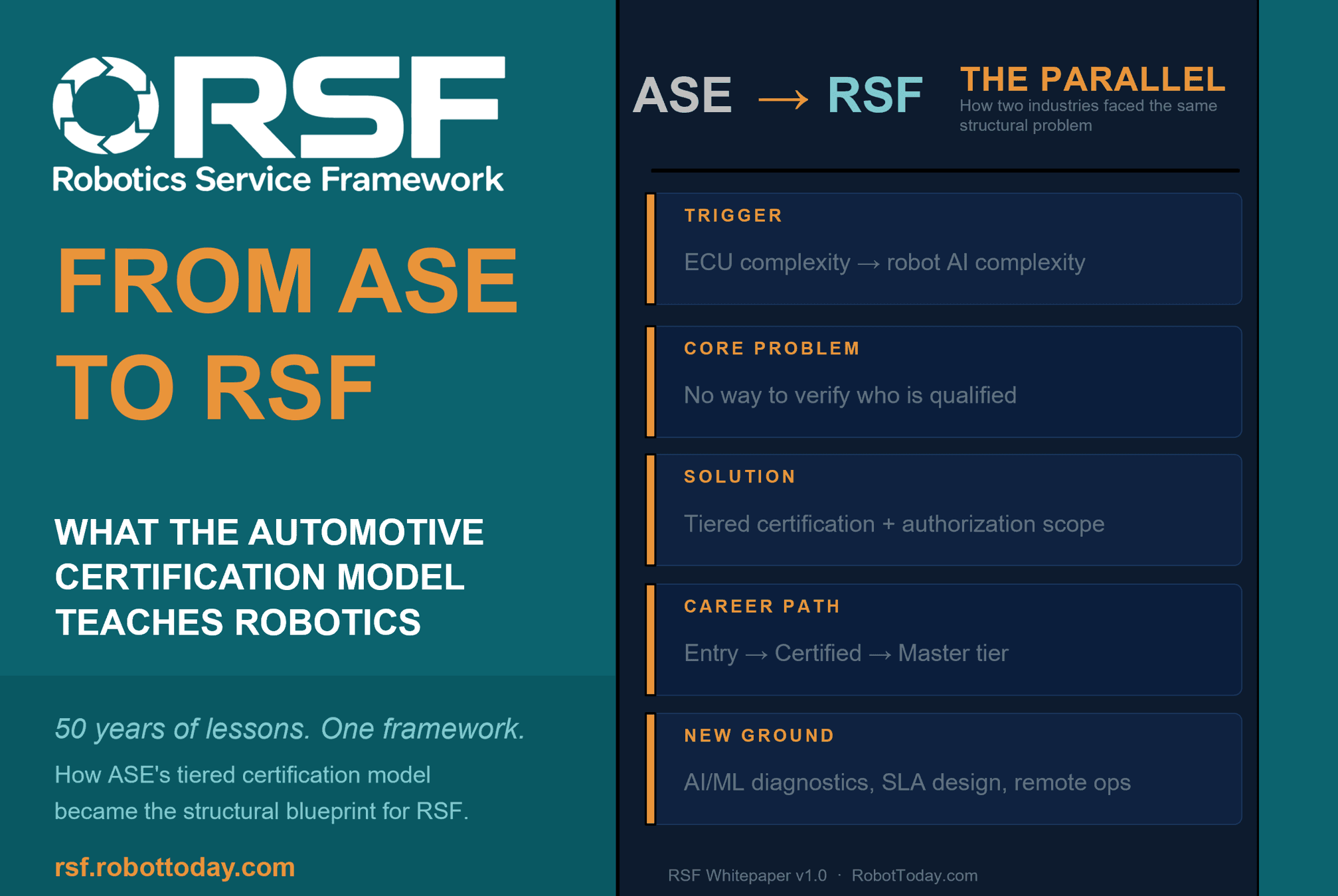
AI Agent Control Specification AI agents AI governance MicrosoftRobotics needs a service framework.
RSF defines a common language for robot service capability, lifecycle operations, certification pathways, and service-provider networks.