

Industry Briefing
A single destination for timely, editor-curated robotics news from around the world.

DARPA Initiates $3.5 Million Competition for Autonomous Trauma Surgery Robots
The Defense Advanced Research Projects Agency (DARPA) is launching a $3.5 million competition aimed at developing robotic systems capable of assisting surgeons and eventually performing trauma surgeries autonomously during combat and mass-casualty scenarios. The competition will commence on September 22, 2026, with an Industry Day and will conclude with a finals event in March 2027. This initiative is crucial due to the shortage of available surgeons during large-scale traumatic injury events, where survivable injuries can become fatal if medical personnel are overwhelmed. DARPA's program manager, Dr. Jeremy C. Pamplin, emphasized that the goal is not to replace surgeons but to create highly skilled robotic partners that enhance surgical capabilities through advanced artificial intelligence and human-machine collaboration. Competitors will undergo rigorous testing in medical knowledge, physical capability, and rapid learning, with top teams advancing to two operational tracks, each offering a $1.5 million prize pool. The competition also aims to explore potential civilian applications in disaster response and rural healthcare, highlighting the broader impact of the technologies developed through this initiative.
AI AI Funding & Investment Robotics autonomous trauma surgery robots competition DARPA Funding
DARPA Lift Challenge Showcases Innovative Heavy-Lift Drone Designs This Weekend
The DARPA Lift Challenge is currently underway, featuring a variety of unique heavy-lift drone designs. This event showcases the latest advancements in drone technology, with several overview videos highlighting the innovative approaches taken by participants. The significance of the DARPA Lift Challenge lies in its potential to push the boundaries of drone capabilities, particularly in heavy-lift operations. As these designs evolve, they could play a crucial role in various applications, including logistics and emergency response. Looking ahead, the livestreams of the event provide an opportunity for enthusiasts and professionals to witness the cutting-edge developments in drone technology. No further timeline was disclosed at the time of publication.
Video-friday Darpa Robotics-videos Cargo-drones Robotic-grippers Humanoid-robots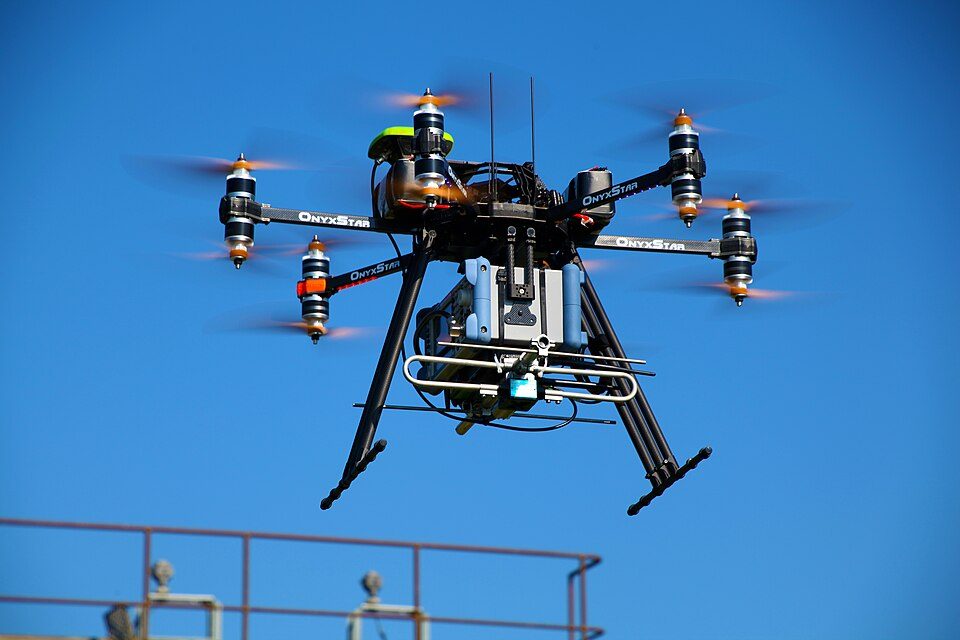
DARPA Initiates $6.5 Million Challenge to Innovate Heavy-Lift Drone Technology
The Defense Advanced Research Projects Agency (DARPA) has launched a challenge aimed at developing heavy-lift drones capable of carrying payloads exceeding four times their weight. This initiative addresses the current limitations of multirotor UAVs, which typically have low payload-to-weight ratios, often below one-to-one. The DARPA Lift Challenge Competition will take place from August 6 to 9 at the National Museum of the U.S. Air Force in Dayton, Ohio, with over 100 teams competing for a total of $6.5 million in prize money. This challenge is significant as it seeks to revolutionize the heavy-lift drone sector, potentially lowering costs and expanding applications across various industries. DARPA program manager Phillip Smith highlighted that enhancing the lifting capabilities of drones could lead to a transformation similar to the impact of mass production introduced by Henry Ford. By overcoming the payload weight barrier, the challenge aims to make unmanned vertical-lift transport more accessible and economically viable. Looking ahead, the outcome of the DARPA Lift Challenge could pave the way for a new generation of UAVs that outperform traditional manned aircraft in transporting large payloads. No further timeline was disclosed at the time of publication.
Applications Defense defense DL Exclusive Drone News Drone News Feeds
Weekly Robotics Highlights: DARPA Lift Challenge and Innovative Robots
This week's Video Friday features a collection of engaging robotics videos curated by IEEE Spectrum robotics. Highlights include recaps from the DARPA Lift Challenge, showcasing the excitement and challenges faced during the event. Additionally, various innovative robots are presented, such as STEMbot, which climbs plant stems to detect pests, and Monumental's robots that efficiently laid 20,000 bricks for a new home. The significance of these developments lies in their potential to enhance automation and efficiency across various sectors. The DARPA Lift Challenge emphasizes the importance of resilience in robotics, as teams navigate failures and recoveries. Meanwhile, the introduction of robots like STEMbot and those used in construction reflects the growing integration of robotics in agriculture and building industries, paving the way for future advancements. Looking ahead, the upcoming robotics events, including Actuate 2026 and IROS 2026, will provide platforms for further innovation and collaboration in the field. As robotics technology continues to evolve, stakeholders should monitor these developments and their implications for automation and intelligent systems in various applications. No further timeline was disclosed at the time of publication.
Video-friday Darpa Cargo-drones Robotics-videos Physical-ai Robotic-grippers
DARPA X-Plane Designed To Maneuver With Just Bursts Of Air Finally Gets Its Wings
Aurora Flight Sciences, in collaboration with the Defense Advanced Research Projects Agency (DARPA), is aiming to launch the X-65 drone in the upcoming year following previous delays and budget increases. This innovative drone is designed to maneuver using only bursts of air, showcasing advanced aerodynamics and control technology. The project reflects DARPA's commitment to pushing the boundaries of aviation technology and enhancing military capabilities. The successful flight of the X-65 could mark a significant milestone in drone development, potentially leading to new applications in both defense and civilian sectors.
Air Drones News & Features Unmanned
DARPA solicits swarm-capable, automated robotic medics to treat battlefield casualties
The Defense Advanced Research Projects Agency (DARPA) has initiated a new program aimed at advancing the development of robotic systems designed for complex tasks in various environments. Announced in October 2023, this initiative seeks to enhance the capabilities of robots to operate autonomously in challenging conditions, which could include disaster response scenarios, military operations, and other critical missions. The motivation behind this program is to leverage cutting-edge technology to improve efficiency and safety in situations where human intervention may be risky or impractical. Through a combination of innovative engineering and artificial intelligence, DARPA plans to collaborate with industry leaders and academic institutions to create these advanced robotic systems. The program is expected to unfold over several years, with milestones set for testing and deployment in real-world applications.
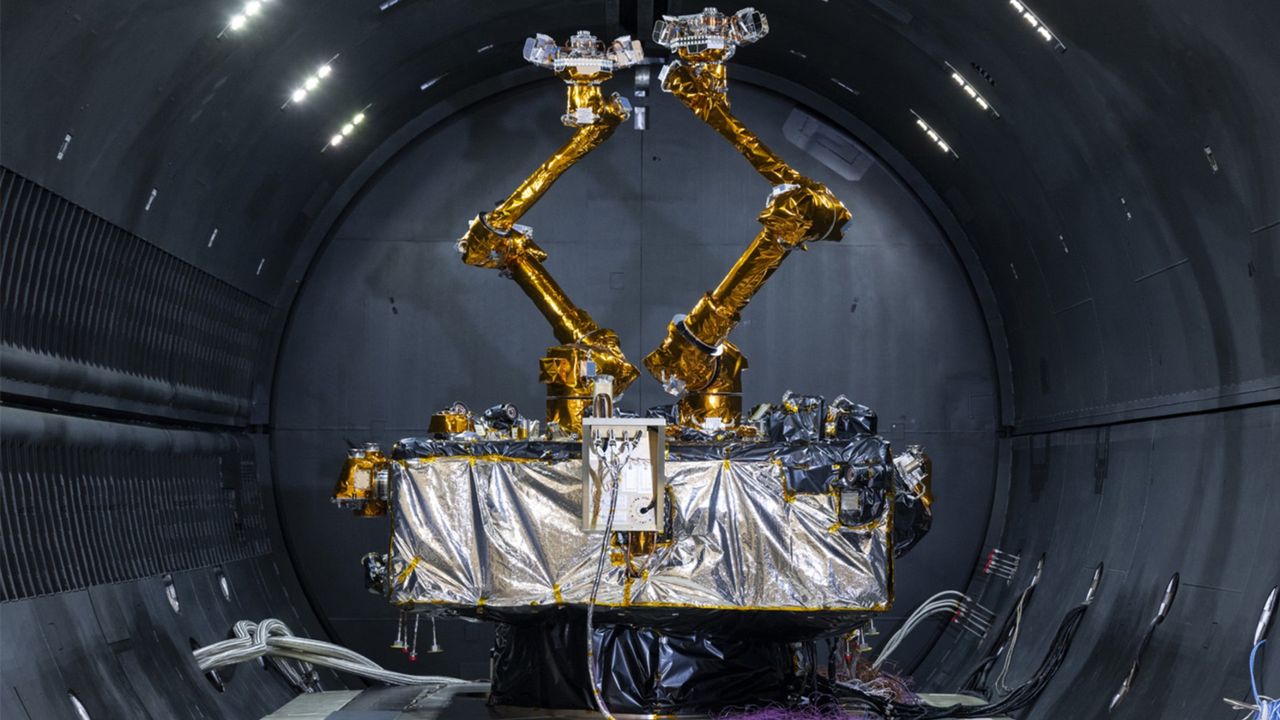
DARPA readies robotic deep-space repair satellite for 2026 launch
The Defense Advanced Research Projects Agency (DARPA) is set to launch a mission this summer to extend the operational lifespan of geosynchronous satellites beyond their typical expiration dates. This initiative aims to address the growing need for sustainable satellite operations in space, allowing for continued functionality and service without the immediate need for replacement. By testing innovative technologies and methods, DARPA seeks to enhance the longevity of these critical assets, which play a vital role in communication, weather monitoring, and national security. The upcoming mission represents a significant step towards ensuring that satellites can remain in service for years longer than previously anticipated.
Satellites Space Exploration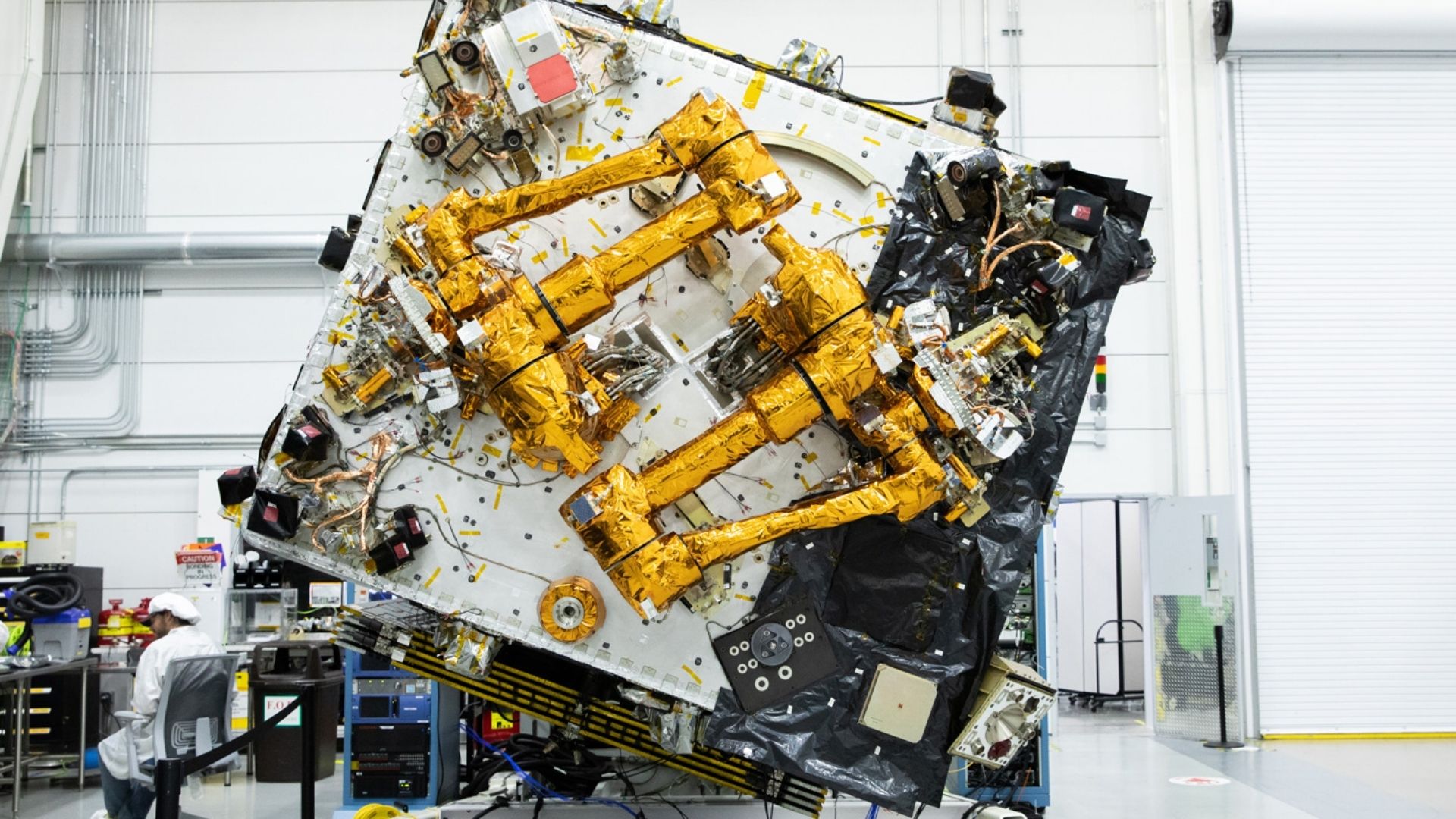
DARPA`s orbital robotic servicing satellite set for 2026 launch
The Defense Advanced Research Projects Agency (DARPA) is set to launch its Robotic Servicing of Geosynchronous Satellites (RSGS) program this summer. This initiative aims to enhance the capabilities of satellites in geosynchronous orbit by enabling robotic servicing, which includes maintenance, upgrades, and repairs. The program is designed to address the growing need for satellite longevity and functionality in an increasingly crowded orbital environment. By employing advanced robotics technology, DARPA seeks to extend the operational life of critical satellite assets, thereby ensuring continued communication and data services. The launch of RSGS represents a significant step forward in satellite servicing, with the potential to revolutionize how space assets are managed and maintained.
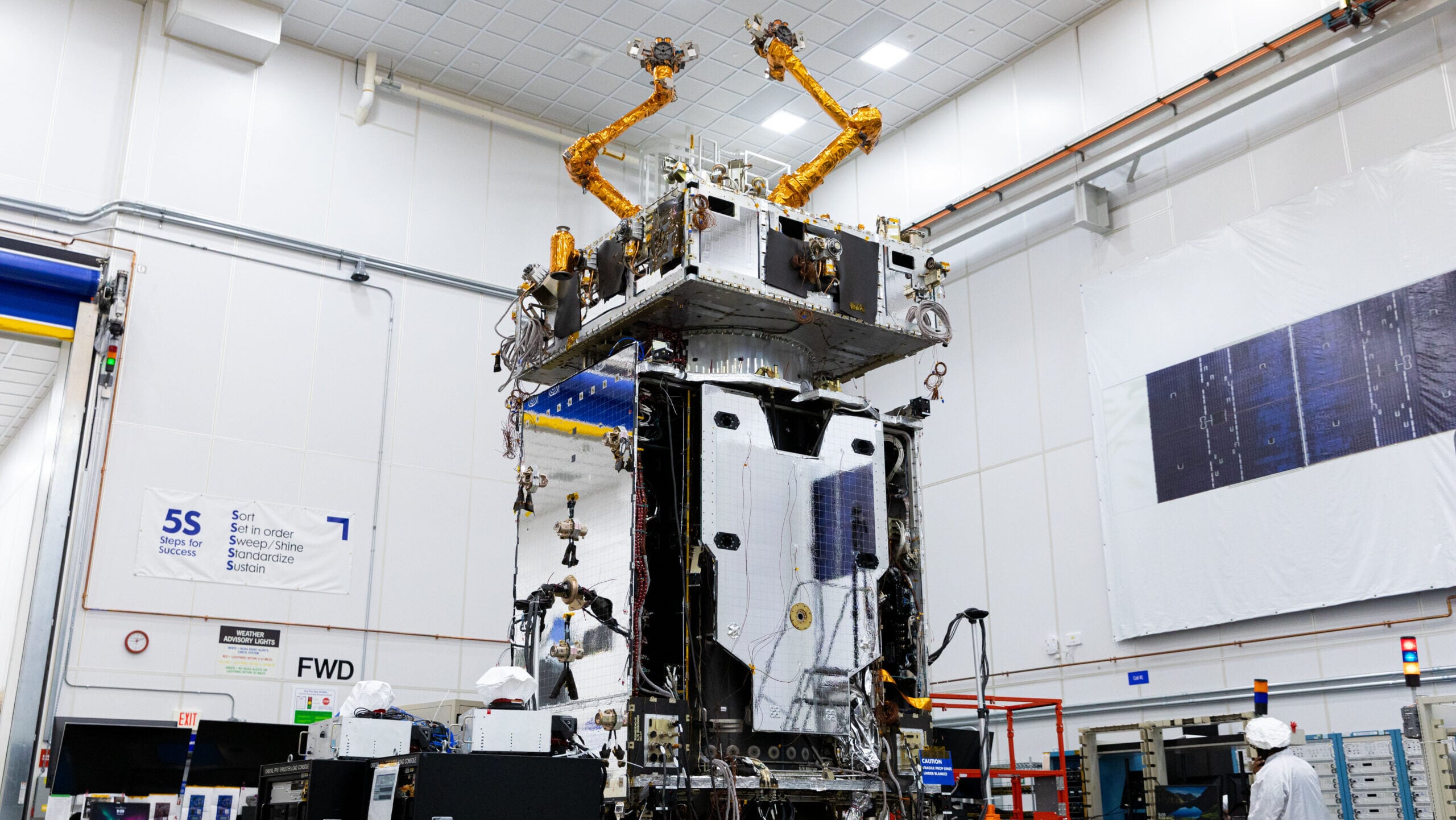
DARPA’s robotic servicing spacecraft to finally fly this summer
The Robotic Servicing of Geosynchronous Satellites mission, a collaboration between DARPA and Northrop Grumman, is set to establish the United States' first on-orbit servicing capability for satellites. This groundbreaking initiative aims to enhance satellite maintenance and repair, extending the operational lifespan of critical space assets. Company officials announced the mission's significance, highlighting its potential to revolutionize satellite operations and reduce costs associated with launching new satellites. The project is expected to take place in the coming months, marking a pivotal advancement in space technology and satellite management.
Space darpa Defense Advanced Research Projects Agency Naval Research Laboratory Northrop Grumman on-orbit refueling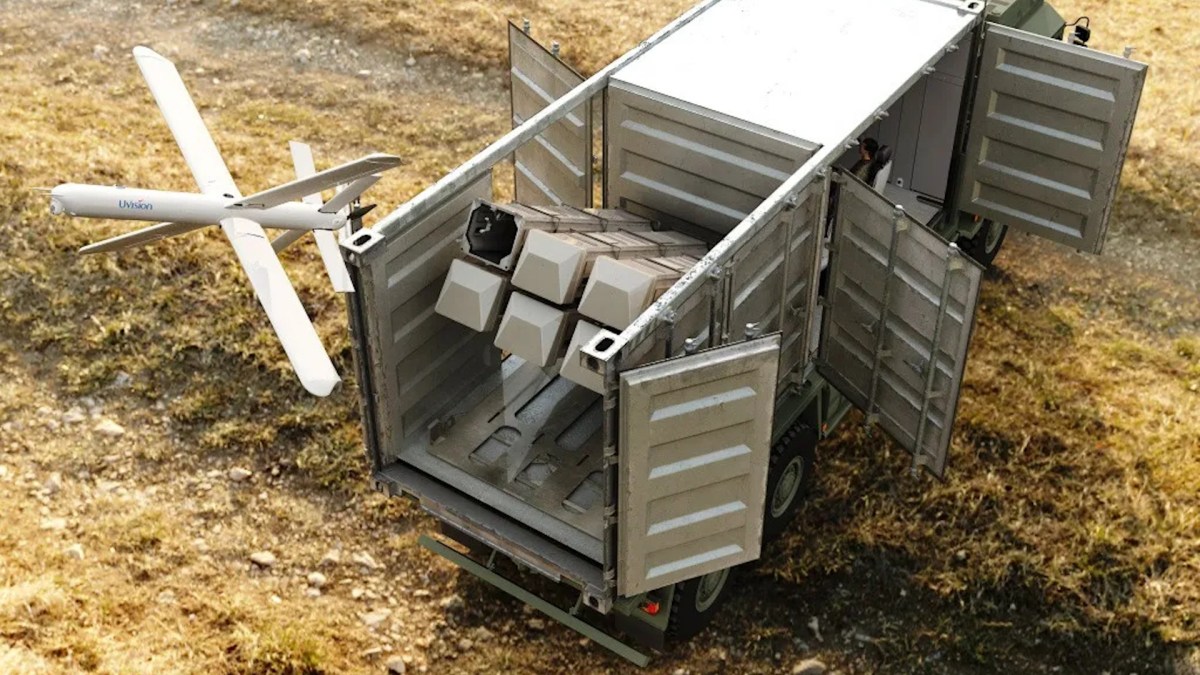
Drone Swarms Packed Into Unassuming Containers Sought By DARPA
The Defense Advanced Research Projects Agency (DARPA) is exploring the development of remotely triggered drone swarms that can be concealed within unassuming containers. This innovative approach aims to enhance military capabilities by deploying swarms behind enemy lines, creating a versatile and challenging threat that could emerge from multiple locations. The initiative reflects a growing interest in advanced drone technology and its potential applications in modern warfare, as military strategists seek to outmaneuver traditional defense systems. By leveraging containerized drones, DARPA aims to increase operational flexibility and surprise in combat scenarios, posing significant implications for future military engagements.
News & Features Air Drones Unmanned
Laminar-Flow Drone From Otto Aerospace Clears Flight-Test Campaign for DARPA
Otto Aerospace, a Fort Worth-based aeronautics company, has successfully completed a flight-test campaign for its unmanned laminar-flow drone, validating its low-drag airframe. This significant milestone was announced on May 6, 2026, from the White Sands Missile Range, following tests conducted at Spaceport America in New Mexico. The campaign is part of the Defense Advanced Research Projects Agency's (DARPA) Energy Web Aircraft program, aimed at enhancing the efficiency and performance of aerial vehicles. The successful validation of the drone's design marks a crucial step in advancing innovative aeronautics technology.
Defense defense Drone News Drone News Feeds News safety and security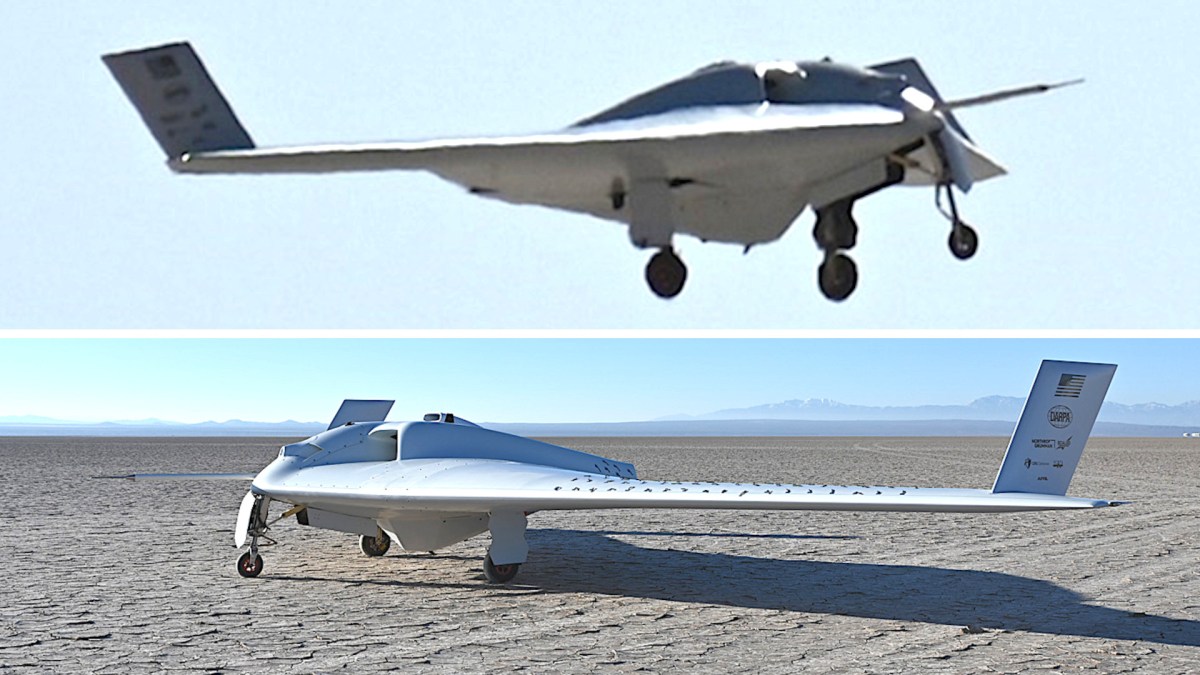
DARPA’s XRQ-73 Hybrid-Electric Flying Wing Drone Has Flown
The XRQ-73 hybrid-electric flying wing drone, developed by DARPA, has successfully completed its first flight, showcasing advancements in quiet and efficient flight technology. This latest iteration of the drone has undergone significant evolution since its last appearance in 2024, reflecting ongoing efforts to enhance its capabilities. The successful flight marks a key milestone in DARPA's mission to innovate in unmanned aerial systems, aiming to improve operational efficiency and stealth in various military applications. The testing took place in a controlled environment, allowing engineers to assess the drone's performance and gather valuable data for future developments.
Air Air Forces Drones News & Features U.S. Air Force Unmanned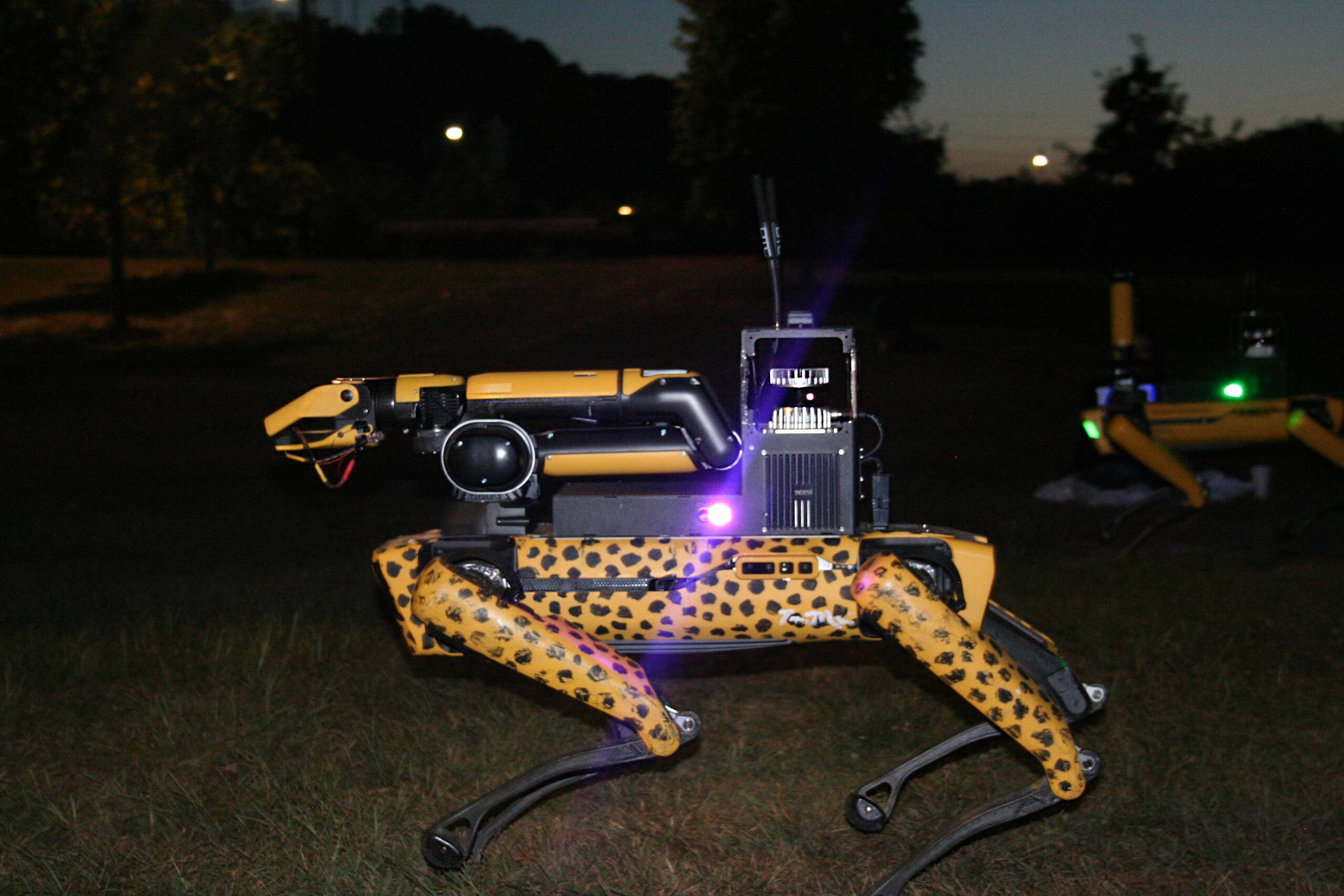
Team Chiron Advances to Final Phase of DARPA Triage Challenge
A team of researchers from Carnegie Mellon University and the University of Pittsburgh, known as Team Chiron, is set to compete in the final phase of the DARPA Triage Challenge (DTC) next November. This competition aims to advance the development of portable, autonomous systems capable of assessing and monitoring injured individuals in various environments. As part of their preparation, the team has been testing quadruped robots on grass terrain during nighttime, showcasing their innovative approach to addressing emergency medical response challenges. The DTC represents a significant step towards enhancing the efficiency and effectiveness of medical triage in critical situations.
Announcements
Bajcsy Earns DARPA Young Faculty Award
Andrea Bajcsy, an assistant professor at Carnegie Mellon University's Robotics Institute, has been awarded the prestigious DARPA Young Faculty Award for her innovative research in developing models and algorithms that enhance the decision-making capabilities of embodied AI systems in various environments. This recognition is part of DARPA's initiative to support promising junior faculty members in their pursuit of groundbreaking research. The award aims to foster advancements in artificial intelligence, ultimately contributing to more reliable and efficient AI applications across different sectors.
Awards
Saab Awarded ASIMOV Contract by DARPA to Develop Responsible AI Benchmarks for Autonomous Systems
The Defense Advanced Research Projects Agency (DARPA) has contracted a team led by Saab, Inc.’s newly established accelerator, Skapa by Saab, in collaboration with the Massachusetts Institute of Technology (MIT). This partnership is part of DARPA's Autonomy Standards and Ideals with Military Operational Values (ASIMOV) program, which seeks to create benchmarks for objectively and quantitatively assessing the ethical complexities of future autonomous systems and their readiness for military applications. The initiative underscores the growing importance of integrating ethical considerations into the development of autonomous technologies in defense.
saab contract award asimov darpa ai autonomous systems
CMU, Pitt Researchers Move Forward in Three-Year, $7M DARPA Triage Challenge
Researchers from Carnegie Mellon University and the University of Pittsburgh, collectively known as Team Chiron, are advancing to the second round of the Defense Advanced Research Projects Agency's (DARPA) Triage Challenge. This competition, which spans three years and has a total funding of $7 million, aims to develop innovative solutions for emergency medical triage. Team Chiron's participation highlights their commitment to enhancing healthcare responses in critical situations, leveraging their combined expertise in robotics and artificial intelligence. The next phase of the challenge will test their advancements in real-world scenarios, showcasing the potential impact of their research on emergency medical services.
Uncategorized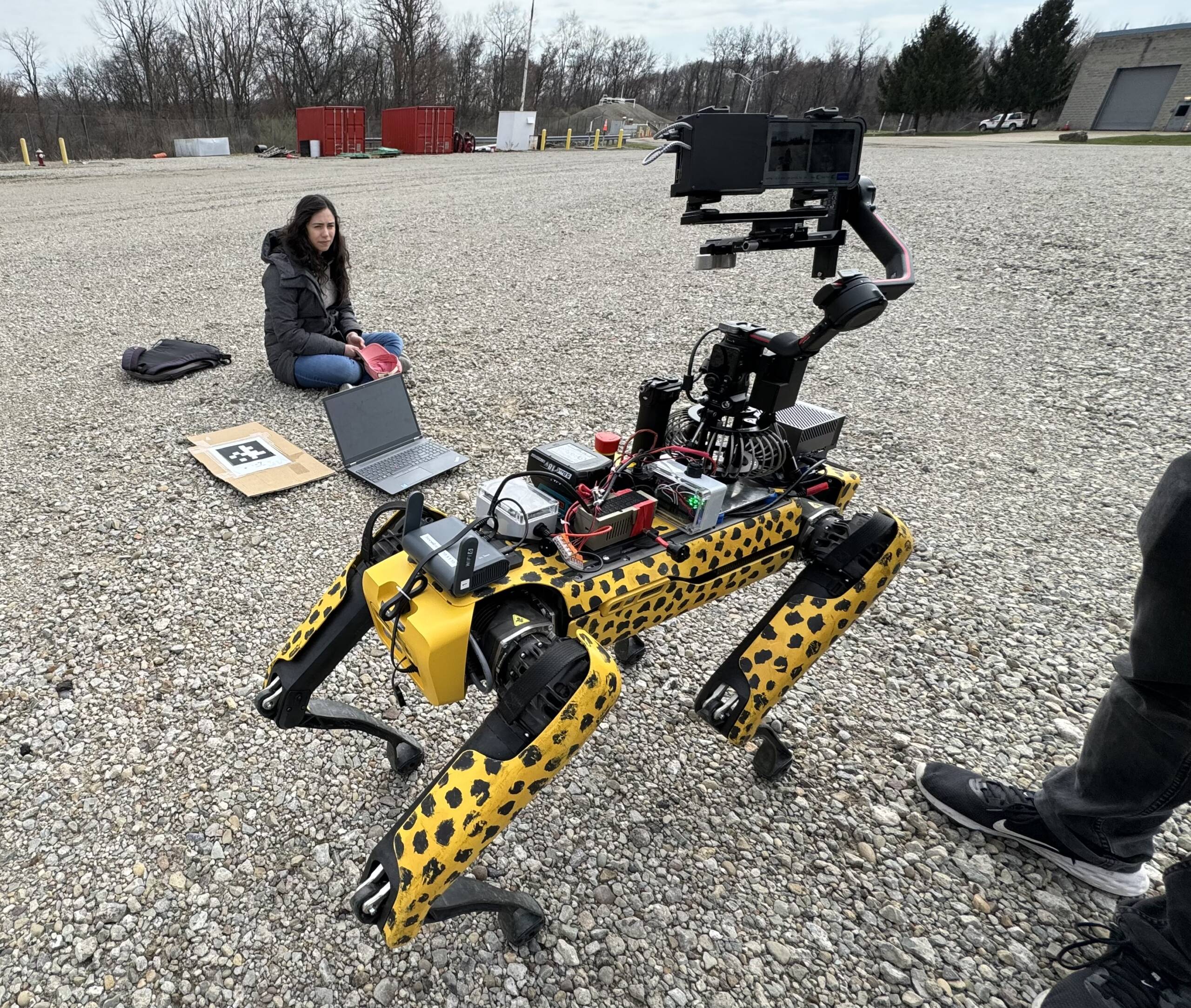
CMU, Pitt Researchers Compete in Three-Year, $7M DARPA Triage Challenge
Researchers from Carnegie Mellon University and the University of Pittsburgh are participating in a three-year, $7 million challenge organized by DARPA aimed at improving emergency medical triage during mass casualty events. The initiative focuses on leveraging advancements in robotics, artificial intelligence, drones, and advanced sensing technologies to enhance the efficiency of identifying individuals who require immediate medical attention. By streamlining the triage process, the goal is to save lives by ensuring that medical personnel can quickly and accurately direct their efforts to those most in need. This innovative approach underscores the critical importance of timely medical response in emergency situations.
UncategorizedRobotics needs a service framework.
RSF defines a common language for robot service capability, lifecycle operations, certification pathways, and service-provider networks.
Join the RobotToday community on LinkedIn
Daily robotics news, in-depth analysis, conference highlights, and discussions with professionals worldwide.







