

Industry Briefing
A single destination for timely, editor-curated robotics news from around the world.

Kingsoft Cloud Advances Robotics Innovation with Embodied Intelligence Solutions
The 2026 World Robot Conference was successfully held in Beijing, focusing on embodied intelligence and humanoid robot technologies. Kingsoft Cloud participated, showcasing its advancements in embodied intelligence and cloud services. Song Ye, General Manager of Internet Solutions at Kingsoft Cloud, emphasized that cloud computing is essential for industrial intelligence, helping manufacturers innovate in core robotics applications. Kingsoft Cloud addresses challenges in the robotics sector, such as high R&D costs and slow deployment, by offering a comprehensive computing cluster platform and simulation services tailored for various robot enterprises. Their robust computing resources support model development and real-time inference, ensuring efficient and stable cloud-based services for robotics. The company is committed to enhancing its presence in the embodied intelligence sector, providing essential support for the high-quality development of the domestic industry. As the field of embodied intelligence and humanoid robots continues to grow, Kingsoft Cloud's contributions are crucial for accelerating innovation and efficiency in this evolving market.
Embodied Intelligence Robotics Innovation Cloud Computing AI Model Development
Microagi Partners with Google Cloud to Advance AI Robotics Development
Microagi, a Munich-based AI startup, has announced a collaboration with Google Cloud to enhance the development of robotics that can understand and interact with physical environments. This partnership will leverage Google Cloud's AI infrastructure alongside the NVIDIA Blackwell platform to process extensive physical datasets and train specialized 'embodied AI' models. This collaboration is significant as it aims to accelerate the capabilities of robotics in real-world applications, enabling them to better navigate and respond to their surroundings. By utilizing advanced AI technologies, Microagi seeks to push the boundaries of what embodied AI can achieve in various sectors. Looking ahead, it will be important to monitor the progress of Microagi's model training efforts and the practical applications of their robotics solutions. No further timeline was disclosed at the time of publication.
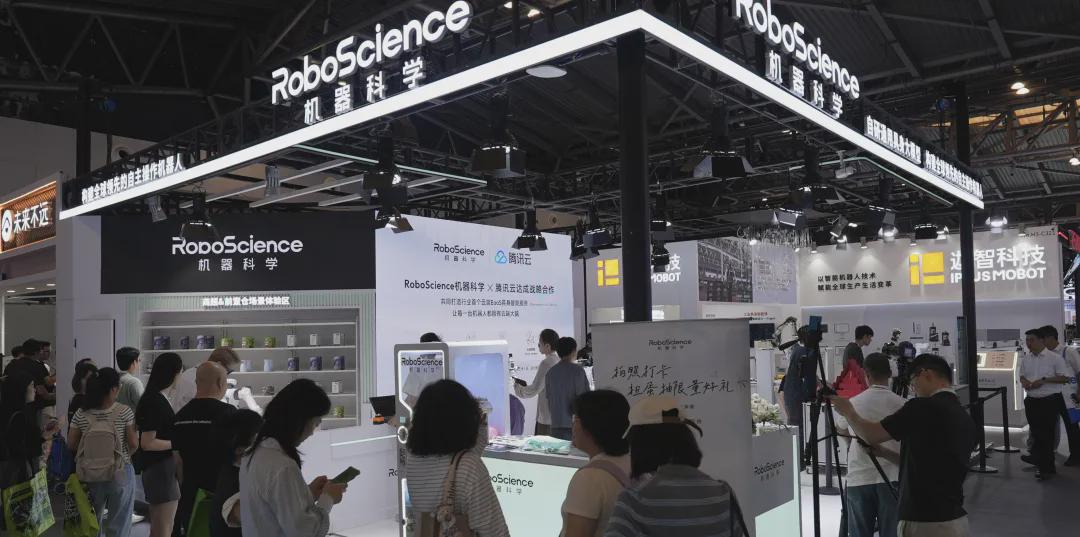
RoboScience Unveils First Cloud-Based Large Model for Robotics at WAIC
At the WAIC, RoboScience showcased a groundbreaking cloud-based embodied large model named Visics, capable of controlling multiple robotic hands. This innovation allows for seamless switching between different robotic hands while maintaining operational efficiency, demonstrating the ability to recognize and grasp various objects autonomously within 30 seconds. The significance of this development lies in its potential to revolutionize robotic operations across diverse applications. By enabling a single model to adapt to various hand configurations, Visics enhances the versatility of robotic systems, allowing them to perform complex tasks without the need for extensive retraining when hardware changes occur. Looking ahead, the industry will be keen to observe how Visics performs in real-world scenarios and its ability to execute long-term tasks by integrating multiple actions. No further timeline was disclosed at the time of publication.
Robotics Cloud Computing AI Automation Object Recognition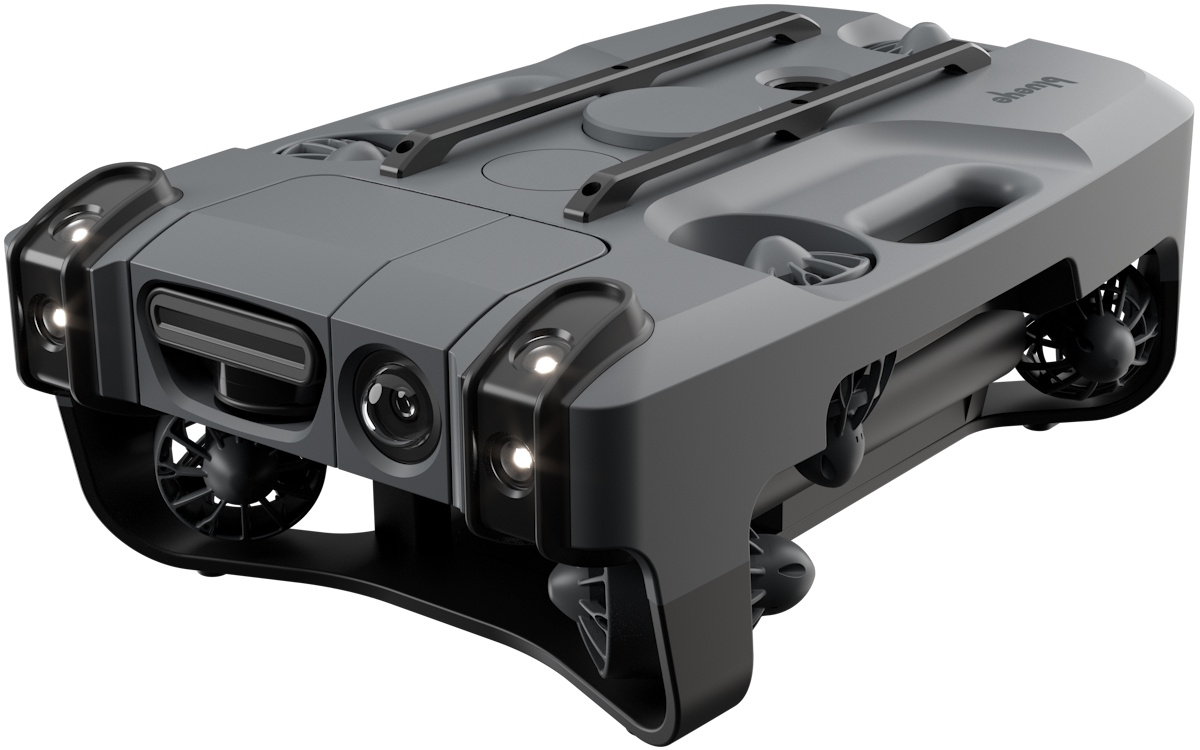
Blueye Robotics launches the Blueye X7, X3 Ultra, and Blueye Cloud
Blueye Robotics has announced the launch of its next-generation underwater drone lineup, marking a significant advancement in underwater operations. The new flagship remotely operated vehicle (ROV), the Blueye X7, is set to enhance exploration capabilities, while the upgraded Blueye X3 Ultra features improved 4K HDR imaging and onboard artificial intelligence for more efficient data collection. Additionally, the company introduced Blueye Cloud, a new platform designed to streamline the connection between fleets, data, and teams, facilitating better collaboration and operational efficiency. This launch comes nearly a decade after Blueye began supporting underwater operations globally, reflecting the company's commitment to innovation and technological advancement in the field. The new products aim to meet the growing demand for sophisticated underwater exploration tools and improve the overall effectiveness of marine operations.
blueye robotics blueye x7 blueye x3 blueye ultra blueye cloud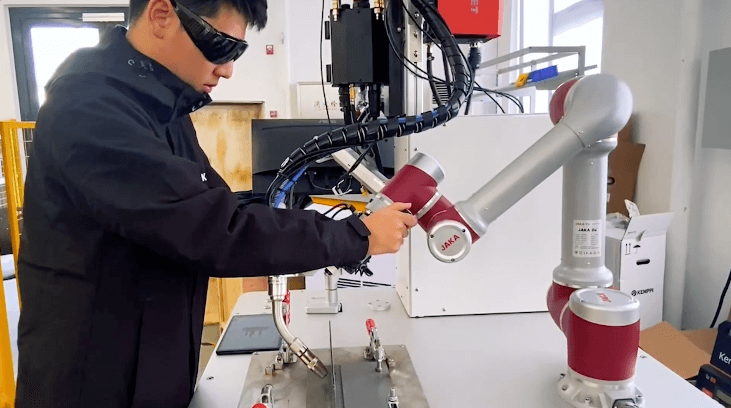
Top 5 Trends of the Industrial Robotics Solutions Industry in 2026 (Focus on AI & Cloud)
The automation sector is witnessing significant advancements, particularly in industrial robotics, as companies like JAKA adapt to evolving demands for flexibility, intelligence, and connectivity. As the industry heads toward 2026, five key trends are shaping the future of robotic solutions. Manufacturers are increasingly focusing on adaptive and accessible automation, enabling easier deployment and reconfiguration of sophisticated systems. JAKA is leading this shift with user-friendly interfaces that allow shop-floor personnel to quickly set up industrial welding robots, minimizing downtime and skill barriers. Another trend is the growth of cloud-connected system management, which facilitates centralized monitoring and data analytics across multiple robotic arms. This connectivity allows manufacturers to optimize maintenance and streamline operations, particularly in welding applications where real-time tracking of consumable usage is crucial. Artificial intelligence is also playing a pivotal role, moving beyond vision inspection to enhance real-time process control. JAKA's AI-enhanced welding robots can make instantaneous adjustments, improving efficiency and reducing rework by compensating for material variations. The expansion of human-robot collaboration is evident as collaborative robots (cobots) become smarter and more integrated into workflows. JAKA's cobots assist operators in welding tasks, allowing humans to focus on quality inspection and decision-making, thereby boosting productivity. Lastly, the integration of digital twin technology is gaining traction, enabling manufacturers to simulate robotic processes without disrupting production. JAKA's compatibility with simulation platforms allows for pre-validation of welding paths, reducing debugging time and accelerating return on investment. These trends underscore a shift toward more connected and intelligent automation, with JAKA committed to developing user-centric solutions that meet the demands of the smart factory era.
Robotics needs a service framework.
RSF defines a common language for robot service capability, lifecycle operations, certification pathways, and service-provider networks.
Join the RobotToday community on LinkedIn
Daily robotics news, in-depth analysis, conference highlights, and discussions with professionals worldwide.







