

Industry Briefing
A single destination for timely, editor-curated robotics news from around the world.

HYFIX CEO Discusses U.S. Drone Technology Development on Drone Radio Show
In a recent episode of the Drone Radio Show, Mike Horton, CEO of HYFIX, discussed the challenges facing U.S. drone technology. He highlighted the U.S. government's restrictions on foreign drone technology, emphasizing the need for domestic alternatives that are not yet fully developed. Horton pointed out that fragmented drone systems pose significant security and supply chain risks, making the case for integrated, U.S.-made systems as essential for the future of autonomy. This perspective underscores the importance of developing robust domestic capabilities in the drone sector. Looking ahead, the conversation raises critical questions about the pace of innovation in U.S. drone technology and the regulatory landscape. No further timeline was disclosed at the time of publication.
Drone Manufacturing Drone News Drone News Feeds drone technology News Podcast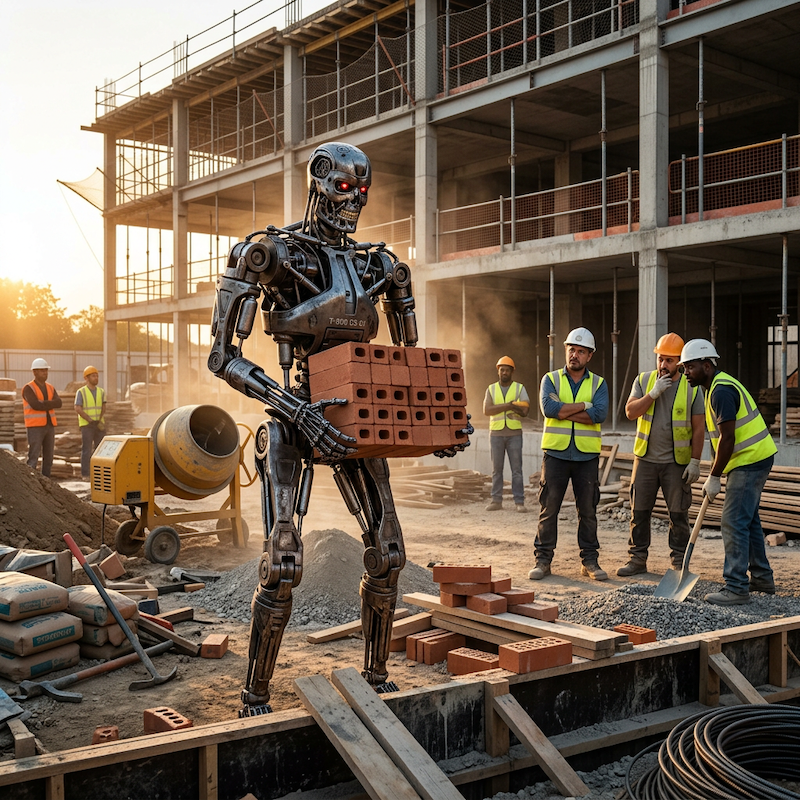
Exploring How Robots Utilize SLAM Technology to Navigate Construction Sites
Autonomous robots are increasingly being deployed on construction sites, where GPS signals are unreliable due to environmental factors. Instead of relying on external positioning, these robots utilize Simultaneous Localization and Mapping (SLAM) technology to create real-time maps using cameras and LiDAR. This capability allows them to navigate effectively around moving crews and changing site conditions. The importance of SLAM technology in construction cannot be overstated, as it enables robots to adapt to the dynamic nature of building sites. Unlike warehouse environments, where layouts remain relatively stable, construction sites frequently undergo changes, making it essential for robots to operate with updated maps. SLAM allows robots to determine their location and understand the current layout of the site, ensuring they can perform tasks accurately. Looking ahead, the integration of SLAM technology in robotics will continue to evolve, enhancing the capabilities of autonomous machines in construction. As construction sites become more complex, the need for real-time mapping and localization will grow, driving advancements in SLAM and related technologies. No further timeline was disclosed at the time of publication.
Features Robotics autonomous navigation Autonomous robots BIM boston dynamics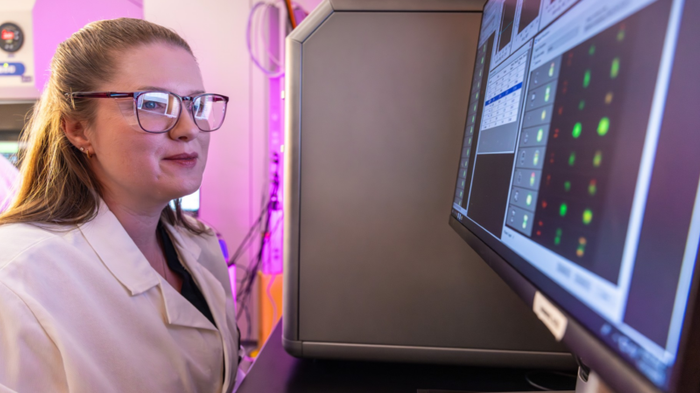
Bristol Myers Squibb Launches Advanced AI Factory with NVIDIA Vera Rubin Technology
Bristol Myers Squibb (BMS) has announced the deployment of its second NVIDIA DGX SuperPOD, featuring eight DGX Vera Rubin NVL72 systems. This new AI cluster is touted as the most powerful and energy-efficient in the life sciences sector, significantly enhancing researchers' access to AI capabilities. BMS aims to democratize AI access among its scientists, allowing for faster drug discovery processes without the constraints of resource limitations. The introduction of this advanced AI infrastructure is crucial for BMS as it seeks to translate AI capabilities into measurable impacts in drug discovery. The new system will facilitate a unified AI platform, including the NVIDIA BioNeMo Agent Toolkit, which will streamline predictions and model training across the drug discovery pipeline. BMS has already seen substantial benefits from its existing DGX SuperPOD, including significant time savings in target identification and the expansion of its library of CELMoD compounds. Looking ahead, BMS is focused on leveraging AI to optimize lead discovery and enhance the efficiency of laboratory experiments. The new system is expected to alleviate current computational bottlenecks and support large-scale predictions. As BMS continues to innovate in the AI space, it emphasizes the importance of making advanced technology accessible to scientists to drive impactful research outcomes. No further timeline was disclosed at the time of publication.

WIRobotics Begins Building a Physical AI Development Ecosystem: The First Technology Release Features the ALLEX Simulation Model
ALLEX Technologies has announced plans to sequentially release additional core technologies aimed at enhancing the development of Physical AI. This initiative is set to expand the Physical AI development ecosystem, facilitating high-fidelity Sim-to-Real validation processes. The company aims to create an open environment that supports researchers and robotics developers in their quest to innovate within the field. By fostering collaboration and providing advanced tools, ALLEX Technologies seeks to drive advancements in Physical AI, making it more accessible and effective for various applications.
Tianxing Technology's $1.2 Billion Bet: Building 40,000 Units Ahead of Industry Boom
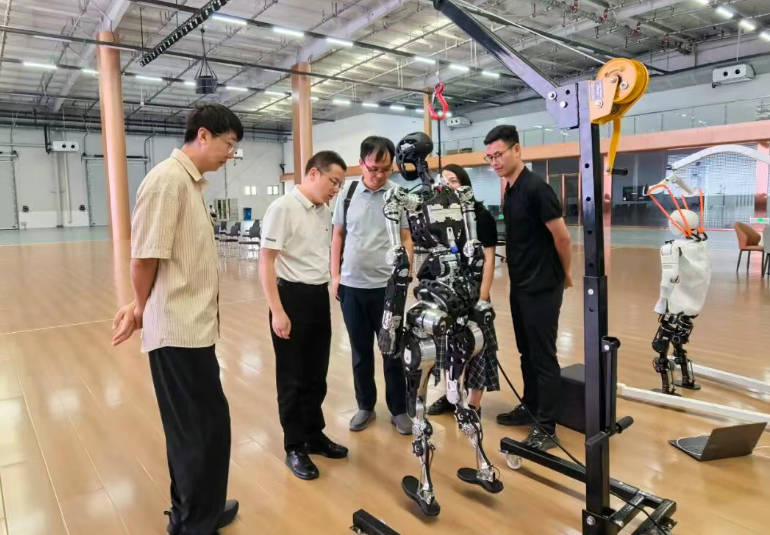
Tianjin Tianxing Technology has announced a significant investment of 1.2 billion yuan to transition from its traditional software services to a focus on embodied intelligence. This strategic shift includes the establishment of a production capacity for 40,000 units, reflecting the company's commitment to integrating hardware and software. The move is aimed at positioning the company to take advantage of anticipated growth in the industry, which is expected to accelerate by 2027.
Embodied Intelligence Robotics Manufacturing AutomationRobotics needs a service framework.
RSF defines a common language for robot service capability, lifecycle operations, certification pathways, and service-provider networks.
Join the RobotToday community on LinkedIn
Daily robotics news, in-depth analysis, conference highlights, and discussions with professionals worldwide.







