Top News

Industry Briefing

A single destination for timely, editor-curated robotics news from around the world.

Tsinghua University and Shouyi Technology Launch EgoEMG Dataset for Hand Pose Estimation

Tsinghua University and Shouyi Technology Launch EgoEMG Dataset for Hand Pose Estimation

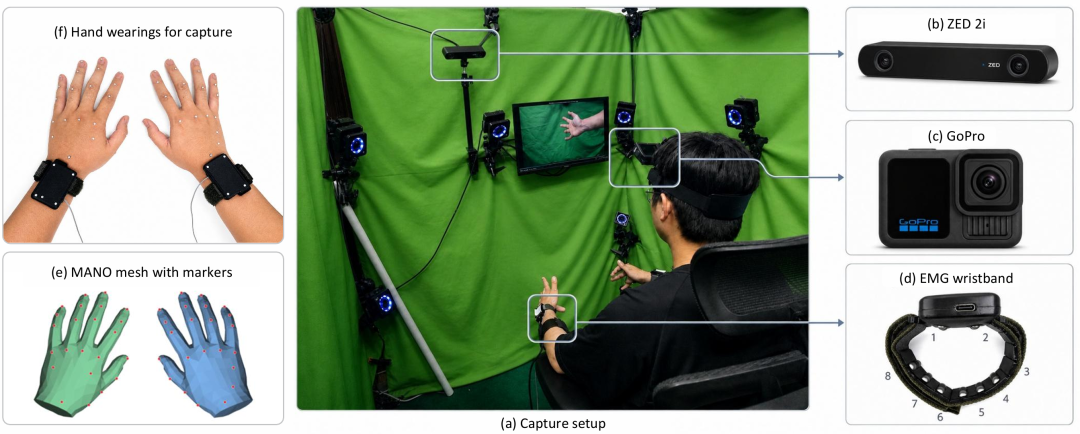
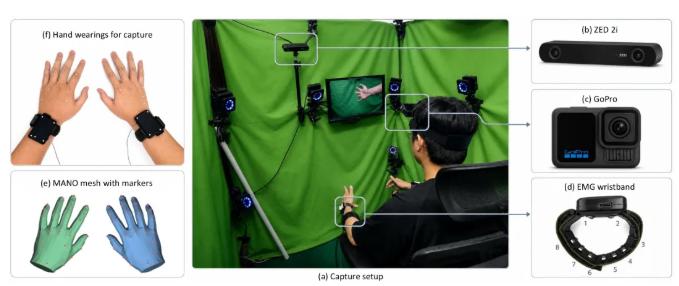
Researchers from Tsinghua University and Shouyi Technology have unveiled the EgoEMG dataset, marking a significant advancement in the field of hand pose estimation. This innovative dataset is the first of its kind to publicly integrate electromyography (EMG), visual, depth, and motion data, providing a comprehensive resource for studying hand movements. Released in October 2023, the dataset aims to enhance embodied intelligence by offering precise data on hand operations. Its development is expected to facilitate progress in robotic dexterity through multimodal learning techniques, ultimately bridging existing gaps in the understanding of human-like manipulation in robotics.

Hand Pose Estimation EMG Technology Multimodal Data Robotics Artificial Intelligence
Tsinghua University and Shouyi Technology Launch EgoEMG Dataset for Hand Pose Estimation

Tsinghua University and Shouyi Technology Launch EgoEMG Dataset for Hand Pose Estimation

A groundbreaking dataset, known as EgoEMG, has been launched through a collaboration between Tsinghua University and Shouyi Technology. This dataset is notable for being the first public resource to offer synchronized multimodal data specifically designed for hand pose estimation, incorporating both electromyography (EMG) and visual signals. Released in October 2023, EgoEMG aims to address existing challenges in hand perception for robotics. By providing comprehensive data that reflects human hand movements, the dataset seeks to enhance the capability of machines to learn and perform dexterous tasks through human demonstration. This initiative represents a significant step forward in the field of robotics, potentially improving the interaction between humans and machines in various applications.

Hand Pose Estimation Multimodal Data Robotics EMG Technology
Tsinghua University and FiveAges Team Win Global Championship at ICRA 2026 Robotics Competition

Tsinghua University and FiveAges Team Win Global Championship at ICRA 2026 Robotics Competition

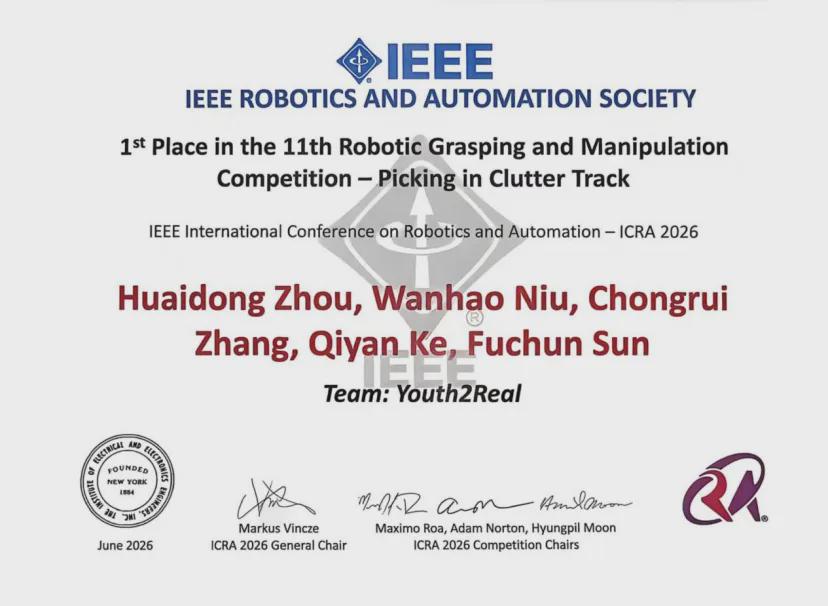
The Youth2Real team, a partnership between Tsinghua University and FiveAges, has achieved a remarkable victory by winning the global championship in the Picking in Clutter Track at the 11th Robotic Grasping and Manipulation Competition (RGMC). This prestigious event took place during the International Conference on Robotics and Automation (ICRA) 2026 in Vienna. The team's success underscores their advanced expertise in robotic grasping and manipulation, reflecting significant technological progress that has potential applications in various real-world scenarios.

Robotic Grasping Artificial Intelligence Robotics Competition Automation Technology

Breakthrough in Collective Intelligence: Tsinghua University Develops Aquatic Robot Swarm

Breakthrough in Collective Intelligence: Tsinghua University Develops Aquatic Robot Swarm

Researchers at Tsinghua University have successfully created a swarm of miniature aquatic robots capable of exhibiting self-organized criticality without the need for central control. This innovative development, revealed in recent studies, highlights how these robots can engage in complex collective behaviors, including object manipulation and bridge formation, through simple physical interactions. The findings suggest significant potential for these systems to be applied in various fields, emphasizing their robustness and scalability. The research showcases a breakthrough in understanding how decentralized systems can operate effectively, paving the way for future advancements in robotics and automation.

Aquatic Robots Collective Intelligence Self-Organized Systems Robotics Research
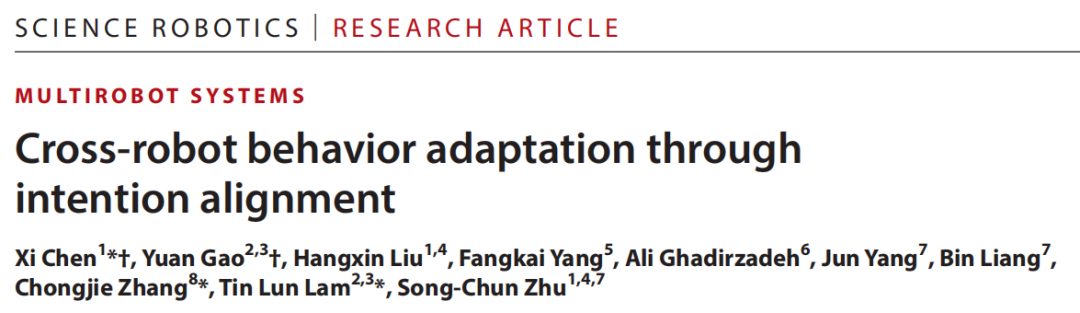
Can Heterogeneous Robots Share Skills? Collaborative Breakthrough by Peking University, Tsinghua University, and Others in IAIL Framework Published in Science Robotics

Can Heterogeneous Robots Share Skills? Collaborative Breakthrough by Peking University, Tsinghua University, and Others in IAIL Framework Published in Science Robotics

A collaborative research team from leading universities has introduced the IAIL framework, a groundbreaking system that allows diverse robots to autonomously comprehend and perform tasks without the need for prior programming or human input. This innovative framework emphasizes intention alignment over mere action replication, which markedly improves coordination among multiple robots. The development, announced in October 2023, aims to revolutionize the way robots interact and collaborate in various environments, paving the way for more efficient and effective robotic applications across multiple sectors.

Heterogeneous Robots Robot Collaboration AI Frameworks Robotics Research
Tsinghua alumni launch AI startup, securing hundreds of millions in angel funding for the automotive industry.

Tsinghua alumni launch AI startup, securing hundreds of millions in angel funding for the automotive industry.

Embodied intelligence company Guangxiang Technology has successfully secured hundreds of millions in angel funding, with significant participation from leading investors including Zhuhai Technology Industry Group, Xingsheng Capital, and several others. Founded in April 2025 through a collaboration between Tsinghua University's Vehicle and Transportation Institute and its AI Institute, Guangxiang aims to advance the development of its physical native base model and commercialize embodied intelligent robots for industrial applications. The company's founder and CEO, Zhang Tao, previously led the spatial perception engine at Amap, while co-founder Professor Li Shengbo is a renowned expert in reinforcement learning and autonomous driving. The team, which includes members from major tech firms like Alibaba and Huawei, is focused on a unique technological approach that diverges from mainstream visual-language-action models. Guangxiang's flagship product, the Phi-Bot X1, was launched in June 2026 and is designed for industrial environments. The robot has demonstrated impressive capabilities, completing a full welding operation on an automotive production line without errors during a 21.5-hour continuous run at the 2026 ATC exhibition. The company plans to expand its applications in the automotive sector, targeting the remaining 30% of automation gaps that traditional methods cannot address. Zhang envisions a robust market for automotive production line robots, estimating a potential market size of around 100 billion yuan in China. Guangxiang Technology is committed to refining its products and scaling operations, with a focus on real-world applications and continuous feedback to enhance its offerings.

Tsinghua Vehicle School Alums Launch Guangxiang Technology, Raise Hundreds of Millions for Embodied AI in Automotive

Tsinghua Vehicle School Alums Launch Guangxiang Technology, Raise Hundreds of Millions for Embodied AI in Automotive

Guangxiang Technology, a company incubated by Tsinghua University, has successfully raised hundreds of millions in angel funding to advance its innovative physics-native embodied AI model aimed at revolutionizing automotive manufacturing. This significant financial backing comes as the company seeks to enhance efficiency and precision in the automotive sector through advanced artificial intelligence solutions. The funding round, which reflects growing investor confidence in AI technologies, positions Guangxiang Technology to further develop its cutting-edge applications and expand its market presence. The investment underscores the increasing importance of AI in transforming traditional manufacturing processes, particularly in the automotive industry, where precision and efficiency are paramount.

Startups AI
Tsinghua Professor Launches Startup in Physics AI After Publishing Cover Paper in Nature

Tsinghua Professor Launches Startup in Physics AI After Publishing Cover Paper in Nature

Feng Shuo, an associate professor at Tsinghua University and a notable figure in the field of artificial intelligence, has launched a new venture called Dense AI. This company aims to create a subscription-based world model specifically designed for the physics AI sector. Feng's academic credentials, highlighted by a cover paper published in the prestigious journal Nature, have garnered considerable attention for this initiative. The launch of Dense AI comes at a time when the AI industry is experiencing rapid growth, positioning the company to potentially make significant contributions to the field.

Physics AI World Models Machine Learning Artificial Intelligence
Tsinghua-backed startup secures hundreds of millions in seed funding, aims to avoid "world model" label.

Tsinghua-backed startup secures hundreds of millions in seed funding, aims to avoid "world model" label.

In a significant development within the field of artificial intelligence, Li Yiming, an assistant professor at Tsinghua University and former researcher at NVIDIA, has introduced a comprehensive framework for Physical AI. This initiative aims to enhance the capabilities of robots across various applications by integrating data collection, model training, and physical engine development into a cohesive system. The framework, named Physical AI Infra, includes two key components: a data pipeline designed to scale data collection from hundreds of thousands to millions of hours, and a physical engine that creates a closed-loop system for robots to learn and execute tasks in real-world environments. This approach addresses the challenges posed by the current hype surrounding "world models," which have become a focal point in AI discussions but often lack a clear definition and practical application. Li's team has already garnered significant investment, raising hundreds of millions in seed funding from prominent investors, including Sequoia China and Hillhouse Capital. The team, primarily composed of Tsinghua graduates with an average age of 23, is focused on developing a full-stack solution that encompasses all aspects of Physical AI, making it distinct in a market where such integrated approaches are rare. Looking ahead, Li aims to launch a scalable world model solution by the end of 2026, with plans for broader deployment by 2028. His vision is to create a universal Physical AI infrastructure that can be adapted for various physical tasks, ultimately transforming how robots interact with the world.

Tsinghua Ecosystem Sets Its Sights on World Models as the Next AI Frontier

Tsinghua Ecosystem Sets Its Sights on World Models as the Next AI Frontier

Tsinghua University-affiliated companies, including Zhipu AI, Shengshu Tech, and Momenta, are advancing their research and development efforts in world models, focusing on applications in video processing, robotics, and autonomous driving. These initiatives are part of a broader push to enhance artificial intelligence capabilities and improve the efficiency and effectiveness of automated systems. The companies aim to leverage cutting-edge technology to address real-world challenges and contribute to the rapidly evolving landscape of AI. With a commitment to innovation, these firms are positioning themselves at the forefront of the AI revolution, seeking to establish a competitive edge in the global market.

AI
Star Dynasty Raises Over RMB 4 Billion, Tsinghua Professor's Humanoid Robots Head to SF Express Logistics

Star Dynasty Raises Over RMB 4 Billion, Tsinghua Professor's Humanoid Robots Head to SF Express Logistics

Star Dynasty, a humanoid robot company supported by Tsinghua University, has successfully raised over RMB 4 billion in funding. This significant financial boost will enable the company to enhance its operations and expand its technological capabilities. In a strategic move to integrate its innovations into the logistics sector, Star Dynasty has begun deploying its humanoid robots at SF Express logistics centers throughout China. This initiative aims to improve efficiency and streamline operations within the rapidly evolving logistics industry. The deployment of these advanced robots marks a notable step in the application of robotics in everyday business practices, reflecting the growing trend of automation in various sectors.

HumanoidRobotics Robotics
Tsinghua PhD Team Secures Exclusive Investment from Lei Jun for Innovative rPPG Technology

Tsinghua PhD Team Secures Exclusive Investment from Lei Jun for Innovative rPPG Technology

Microface Technology, a startup established by PhD graduates from Tsinghua University, has received exclusive investment from Shunwei Capital, led by prominent entrepreneur Lei Jun. The company has developed a groundbreaking remote photoplethysmography (rPPG) technology that allows for non-contact monitoring of physiological and emotional states using standard RGB cameras. This innovative approach has demonstrated high accuracy in detecting heart rates and emotional responses. After facing initial challenges, the team strategically shifted its focus to physiological emotion sensing, which has led to successful applications across various sectors, including healthcare and the automotive industry. This investment is expected to bolster Microface Technology's efforts in expanding its capabilities and market reach, further enhancing its contributions to the fields of health monitoring and emotional analytics.

Health Monitoring Emotion Recognition Wearable Technology AI Computer Vision
Tsinghua-Harvard Team's Acorn Robot Develops 'Zero-Data' Robot That Learns Through Instinct, Not Training Data

Tsinghua-Harvard Team's Acorn Robot Develops 'Zero-Data' Robot That Learns Through Instinct, Not Training Data

A team of researchers educated at Tsinghua University and Harvard has developed an innovative robot capable of learning physical manipulation without any prior training data. This groundbreaking technology relies solely on tactile sensors and an instinct-driven trial and error approach to tackle complex tasks, such as picking up a flat credit card. The project highlights a significant advancement in robotics, showcasing the potential for machines to adapt and learn in real-time, which could revolutionize various applications in automation and artificial intelligence.

Robotics
Tsinghua PhD Team Secures Nearly $15 Million Seed Funding with Innovative Instinct-Driven Technology

Tsinghua PhD Team Secures Nearly $15 Million Seed Funding with Innovative Instinct-Driven Technology

Oak Fruit Robotics, a startup founded by a team of nine PhD graduates from Tsinghua University, has successfully secured nearly $15 million in seed funding. This funding will support the company's innovative approach to robotics, which they describe as 'instinct-driven' technology that seeks to challenge conventional visual-linguistic attention (VLA) methods. The company aims to enhance robotic capabilities specifically in flexible manufacturing environments by emphasizing the difference between operational and linguistic intelligence. This new funding round marks a significant step in their mission to revolutionize the industry.

Embodied Intelligence Robotics Flexible Manufacturing AI Technology
Young Tsinghua PhD Raises Nearly $500 Million for Global Leading World Model

Young Tsinghua PhD Raises Nearly $500 Million for Global Leading World Model

LiberAI, a startup founded by Tsinghua University graduate Liu Songming, has quickly raised nearly 500 million yuan in funding within just three months. The company is dedicated to creating an innovative physical world model that allows robots to comprehend causality, significantly improving their operational abilities. With substantial investments from prominent firms such as Sequoia China and Meituan, LiberAI is set to transform the landscape of robotics and intelligent systems, positioning itself as a key player in the industry’s future.

Robotics AI Machine Learning Startups
First Day Surge Exceeds 109%! Tsinghua Couple Launches Billion-Dollar Robot IPO, SF Express Gains Nearly 1.4 Billion

First Day Surge Exceeds 109%! Tsinghua Couple Launches Billion-Dollar Robot IPO, SF Express Gains Nearly 1.4 Billion

Kales Technology, a company founded by graduates of Tsinghua University, made a striking entrance on the Hong Kong Stock Exchange on March 24, with its shares skyrocketing by more than 109% on their first trading day. The firm specializes in developing all-in-one intelligent logistics robots, a sector that has garnered considerable interest and investment. Notably, SF Express, a major player in the logistics industry, has invested significantly in Kales, benefiting from the company's successful market debut. This remarkable performance highlights the growing demand for innovative logistics solutions and the potential for substantial returns in the tech-driven logistics sector.

Logistics Robots Warehouse Automation Intelligent Robotics IPO Supply Chain Technology
Robots Finally Learn Skills from Watching Videos: What the Tsinghua + Astribot Team's CLAP Framework Achieves

Robots Finally Learn Skills from Watching Videos: What the Tsinghua + Astribot Team's CLAP Framework Achieves

A research team from Tsinghua University, in collaboration with Astribot, has introduced the CLAP framework, a groundbreaking method that allows robots to acquire practical skills by analyzing human-operated videos. This innovative approach aligns visual changes with corresponding physical actions, effectively addressing the limitations that have previously hindered robotic training. The development marks a significant advancement in the field of robotics, potentially enhancing the capabilities of robots in various applications. The framework's unveiling comes as part of ongoing efforts to improve human-robot interaction and skill acquisition, paving the way for more intuitive and efficient robotic systems.

Robotics Machine Learning Computer Vision AI
SF Express, Sequoia China and IDG Back Tsinghua-Spinout Humanoid Robot Unicorn

SF Express, Sequoia China and IDG Back Tsinghua-Spinout Humanoid Robot Unicorn

Wujie Power, a humanoid robot startup spun out from Tsinghua University, has successfully secured over $200 million in angel-stage funding. The investment round was backed by prominent firms including Sequoia China, Linear Capital, Hillhouse, Baidu Ventures, and SF Express. This significant financial boost comes as the company aims to advance its development in the robotics sector, leveraging cutting-edge technology to enhance humanoid robot capabilities. The funding will facilitate research and development efforts, positioning Wujie Power to compete in the rapidly evolving market for intelligent robotics.

News
Zhang Yaqin: AI is not a bubble, but AI companies are.

Zhang Yaqin: AI is not a bubble, but AI companies are.

In June, during an interview at the Tsinghua Wuxi Research Institute's Intelligent Industry Innovation Center, Academician Zhang Yaqin discussed the current state of AI investment and entrepreneurship, suggesting a more cautious approach to the rapidly growing sector. Zhang, who founded the Tsinghua University Intelligent Industry Research Institute (AIR) five years ago, noted that while AIR has successfully incubated ten companies with a combined valuation of 150 billion yuan, its primary focus remains on research rather than commercialization. Zhang, a prominent figure in AI and a fellow of the IEEE, likened the current AI investment climate to the internet boom of 1998-1999, emphasizing the importance of sustainable growth and cautioning against the potential for market bubbles. He highlighted the need for new AI algorithms to enhance efficiency and pointed out that while the AI sector holds significant long-term potential, many early-stage companies may face challenges in proving their viability. Every June, AIR hosts the "Taihu Dialogue" in Wuxi, fostering discussions on AI advancements. Zhang expressed concerns about the risks associated with high valuations and the necessity for a focused approach in startups. He emphasized that while funding is crucial, it should not overshadow the importance of developing robust products and technologies. Looking ahead, Zhang identified "physical AI" as a key area for development by 2026 and outlined the challenges of creating robots capable of performing complex tasks in real-world environments. He underscored the importance of collaboration between academia and industry to cultivate talent and drive innovation in AI, while also addressing the ethical and safety risks associated with advanced AI systems.

New ceramic solid-state battery for military, aerospace tech survives 302°F heat

New ceramic solid-state battery for military, aerospace tech survives 302°F heat

A research team from Tsinghua University in China has successfully developed a compact, all-ceramic solid-state lithium-ion battery. This innovative battery design aims to enhance safety and efficiency in energy storage solutions. The announcement was made recently, highlighting the potential of this technology to address common issues associated with traditional lithium-ion batteries, such as flammability and limited lifespan. By utilizing an all-ceramic structure, the researchers believe they can significantly improve the performance and stability of batteries, making them more suitable for various applications, including electric vehicles and portable electronics. The team's work represents a significant advancement in battery technology, driven by the growing demand for safer and more efficient energy storage options in an increasingly electrified world.

Energy
Qingyan Precision Secures Funding to Drive Physical AI Infrastructure Development

Qingyan Precision Secures Funding to Drive Physical AI Infrastructure Development

Qingyan Precision, a spin-off from Tsinghua University, has successfully secured hundreds of millions in its latest funding round to bolster its advancements in physical artificial intelligence. The company is dedicated to revolutionizing automotive testing by developing a comprehensive engineering system that gathers and analyzes real-world data. With more than 2,000 data collection nodes already in operation, Qingyan Precision is positioning itself as a significant contributor to the industrial AI sector. This funding will enable the firm to enhance data-driven decision-making processes within the manufacturing industry, further establishing its role in the evolving landscape of technology and engineering.

Physical AI Industrial Automation Data Infrastructure Engineering Systems
Roundtable Forum: The Real Landscape of AI Venture Capital Beyond Consensus

Roundtable Forum: The Real Landscape of AI Venture Capital Beyond Consensus

In a recent roundtable discussion on the evolving landscape of artificial intelligence (AI) investment, industry leaders emphasized the importance of acting ahead of consensus to seize opportunities. The forum featured prominent figures such as Zhu Tianyu, managing partner at BlueRun Ventures, and Qin Shentao, founder and CEO of OriginFlow, who shared insights on their early investment strategies. Zhu, who joined BlueRun in 2009, highlighted his early investments in successful companies like Li Auto and Genspark, noting that he made quick decisions based on a structured understanding of global challenges rather than just project details. He expressed confidence in OriginFlow’s potential, which focuses on non-invasive neural interfaces for embodied intelligent robots, aligning with key trends in artificial general intelligence (AGI), robotics, and 3D interaction. Qin, a Tsinghua University PhD, explained that OriginFlow aims to revolutionize how intelligent systems interact with the physical world, addressing a significant gap in data collection and processing. Within just five months of operation, the company secured over 500 million RMB in funding, demonstrating strong market interest. Both leaders acknowledged the challenges of navigating the current AI investment climate, characterized by rapid funding influxes and potential market bubbles. They stressed the need for investors to discern genuine innovation from fleeting trends, emphasizing that true value lies in solving fundamental problems rather than chasing hype. As the discussion concluded, they reiterated their commitment to fostering groundbreaking advancements in AI and embodied intelligence.

LiberAI: Redefining World Models in AI

LiberAI: Redefining World Models in AI

LiberAI, a company founded by Tsinghua University alumnus Liu Songming, is making strides in artificial intelligence by developing an innovative physical world model. This initiative aims to enhance AI's predictive capabilities and decision-making processes by fostering a deeper understanding of the physical environment, rather than relying solely on imitation. Recently, LiberAI has attracted significant investment from leading investors, which will support its mission to advance AI's ability to engage in causal reasoning. The company's efforts are positioned to transform how AI interacts with the world, marking a pivotal shift in the technology's evolution.

World Models AI Development Causal Reasoning Machine Learning
Post-00s Entrepreneur Secures 500 Million Funding: Can NeuroMuscular Tech Solve Robot Control Challenges?

Post-00s Entrepreneur Secures 500 Million Funding: Can NeuroMuscular Tech Solve Robot Control Challenges?

OriginFlow, a data technology firm founded by 25-year-old Tsinghua University PhD student Qin Shentao, has successfully secured over $500 million in funding to advance its NeuroScale product. This innovative technology employs surface electromyography to accurately capture human motion intent and force parameters, aiming to enhance robotic precision. The company seeks to address a significant challenge in the robotics industry: the difficulty robots face in mastering fine motor tasks. By bridging the data gap in robotic training, OriginFlow's NeuroScale has the potential to transform the way robots interact with physical objects, paving the way for more sophisticated and capable robotic systems.

Robotic Control Neurotechnology Data Acquisition Artificial Intelligence
From Space to Ground: The Next Frontier for Flexible Robotic Arms

From Space to Ground: The Next Frontier for Flexible Robotic Arms

In March 2026, Tsinghua University's Shenzhen International Graduate School successfully launched the 'Yuxing-3' satellite, which features a groundbreaking flexible robotic arm capable of in-orbit fuel refueling. This innovative technology is designed to operate in extreme environments on Earth, addressing industrial challenges that traditional rigid robotic arms struggle to manage. The unique design of the arm enables precise maneuvers in confined spaces, making it particularly suitable for applications in critical sectors such as nuclear power, aerospace, and the chemical industry. The successful demonstration of this technology marks a significant advancement in robotics and could enhance operational efficiency in various high-stakes environments.

Flexible Robotics Space Technology Industrial Automation Robotic Arms Extreme Environment Operations
Lumos Robotics Closes ~1B RMB Across A1 and A2 Rounds, Mitsubishi Electric Leads

Lumos Robotics Closes ~1B RMB Across A1 and A2 Rounds, Mitsubishi Electric Leads

Lumos Robotics, an embodied AI company established by Tsinghua University, has successfully raised approximately 1 billion RMB in funding through its A1 and A2 investment rounds. The funding was primarily led by Mitsubishi Electric and aims to enhance the company's capabilities in deploying AI solutions within industrial and logistics sectors. This significant financial backing underscores the growing interest and investment in advanced robotics technology, particularly as industries seek to improve efficiency and automation. The funding rounds, completed in late 2023, position Lumos Robotics to expand its operations and accelerate the development of its innovative AI applications.

News
29,900 Half-Body Robots! Qingbao Robotics Redefines the Future with 41 Degrees of Freedom and 200+ Micro-Expressions

29,900 Half-Body Robots! Qingbao Robotics Redefines the Future with 41 Degrees of Freedom and 200+ Micro-Expressions

Qingbao Robotics, a company spearheaded by Tsinghua University PhD Wang Lei, is making significant strides in the half-body humanoid robot sector by integrating advanced technology that facilitates emotional interaction and various commercial applications. The robots developed by Qingbao are equipped with 41 degrees of freedom, allowing for nuanced micro-expressions that enhance empathy and interaction between humans and robots. This innovation aims to transform the way robots engage with people, making them more relatable and effective in diverse settings. As the demand for emotionally intelligent robots grows, Qingbao Robotics is positioning itself at the forefront of this emerging industry, potentially reshaping the future of human-robot relationships.

Humanoid Robots Emotional AI Robotics Technology AI Interaction
30,000 Hours of 'Garbage Data' Fuel a 1 Billion Parameter Robot Brain, Boosting Performance by 48%!

30,000 Hours of 'Garbage Data' Fuel a 1 Billion Parameter Robot Brain, Boosting Performance by 48%!

A collaborative team from Peking University and Tsinghua University has unveiled a groundbreaking robot model, the LDA-1B, which leverages an extensive dataset comprising 30,000 hours of varied interaction data, including previously overlooked 'garbage data.' This innovative methodology has led to a remarkable 48% improvement in the robot's performance in dexterous tasks. The development marks a significant advancement in the field of robotics, showcasing how the integration of diverse data sources can enhance learning capabilities and operational efficiency.

Robot Learning Data Utilization Artificial Intelligence Robotics Machine Learning
Dynamic Skill Learning for Tactile Myoelectric Prosthetic Hands in Tool Handling

Dynamic Skill Learning for Tactile Myoelectric Prosthetic Hands in Tool Handling

A collaborative research team from Beijing University of Posts and Telecommunications, Tsinghua University, and Wuhan University of Science and Technology has unveiled a groundbreaking multimodal control framework designed for myoelectric prosthetic hands. This innovative technology, introduced recently, aims to enhance the stability and efficiency of dynamic tool handling, thereby significantly improving the daily independence of amputees. By integrating advanced control mechanisms, the framework allows users to perform tasks with greater ease and precision, marking a notable advancement in prosthetic technology.

Myoelectric Prosthetics Bionic Systems Assistive Technology Robotics
Serving an Ace: LATENT Framework Teaches Unitree G1 Athletic Tennis Skills

Serving an Ace: LATENT Framework Teaches Unitree G1 Athletic Tennis Skills

A collaborative team of researchers from Tsinghua University and Peking University has developed a groundbreaking system named LATENT, which allows the Unitree G1 humanoid robot to engage in high-speed tennis rallies. This innovative technology leverages "imperfect" human motion data to enhance the robot's performance, employing corrective residual actions to improve its agility and precision on the court. The project showcases advancements in robotics and artificial intelligence, aiming to bridge the gap between human-like movement and robotic capabilities. The research highlights the potential for robots to learn from human behavior, even when that behavior is not perfect, thereby expanding the applications of robotics in sports and beyond.

China embodied-ai physical-ai embodied intelligence
DiDi Autonomous Driving launches Voyager Labs for multimodal end-to-end driving research

DiDi Autonomous Driving launches Voyager Labs for multimodal end-to-end driving research

DiDi Autonomous Driving has launched DiDi Voyager Labs, a new research initiative aimed at advancing end-to-end autonomous driving through the development of multimodal large models, world models, and reinforcement learning. This initiative, announced recently, will collaborate with a research team led by Professor Li Shengbo from Tsinghua University. The partnership is designed to leverage a joint framework that combines specialized expertise and resources to enhance the capabilities of autonomous driving technologies. This strategic move underscores DiDi's commitment to innovation in the autonomous vehicle sector and its efforts to stay at the forefront of technological advancements in this rapidly evolving field.

News Feed
China unveils humanoid robot standards committee with members from Unitree, ZhiYuan, Xiaomi, Huawei, ZTE and XPeng

China unveils humanoid robot standards committee with members from Unitree, ZhiYuan, Xiaomi, Huawei, ZTE and XPeng

China’s Ministry of Industry and Information Technology (MIIT) announced the formation of a new Standardisation Technical Committee for Humanoid Robots on Monday, unveiling a proposed roster of 65 members. Among those appointed as deputy chairs are Wang Xingxing, founder of Unitree Robotics, and Peng Zhihui, co-founder of ZhiYuan Robotics. The committee includes senior executives from major technology firms such as Huawei, ZTE, and XPeng, alongside prominent scholars from Tsinghua University. This initiative aims to establish standardized practices and guidelines in the rapidly evolving field of humanoid robotics, reflecting China's commitment to advancing its technological capabilities and fostering innovation in this sector. The establishment of the committee is seen as a strategic move to enhance collaboration between industry leaders and academic institutions, ensuring that the development of humanoid robots aligns with national standards and global trends.

News Feed
Breakthrough optical processor lets AI compute at the speed of light

Breakthrough optical processor lets AI compute at the speed of light

Researchers at Tsinghua University have unveiled a groundbreaking optical engine known as the Optical Feature Extraction Engine (OFE2), which operates at a remarkable speed of 12.5 GHz by utilizing light instead of electricity. This innovative technology incorporates integrated diffraction and data preparation modules, significantly enhancing the speed and efficiency of artificial intelligence tasks. Demonstrations of the OFE2 in applications such as imaging and trading have showcased its ability to improve accuracy, reduce latency, and lower power consumption. This advancement marks a significant step forward in the field of optical computing, bringing it closer to practical, high-performance applications in AI.

Xingdong Era Secures 1 Billion Yuan Funding: Why is the National Team Betting on This Tsinghua Robotics Company?

Xingdong Era Secures 1 Billion Yuan Funding: Why is the National Team Betting on This Tsinghua Robotics Company?

Xingdong Era Robotics has successfully secured 1 billion yuan in its latest financing round, led by state-owned enterprises such as Chengtong Fund. This funding marks the third major investment for the company in 2023, bringing its total capital raised this year to over 3.5 billion yuan. The influx of capital underscores a strategic shift towards industry collaboration and a commitment to advancing embodied intelligence, particularly in logistics applications. The company aims to enhance practical delivery and ensure operational stability, positioning itself for long-term growth in the evolving robotics sector.

Robotics Embodied Intelligence Logistics Automation Funding Tsinghua University
Tsinghua and CAS teams collaborate with West China Hospital to develop a home care transport robot.

Tsinghua and CAS teams collaborate with West China Hospital to develop a home care transport robot.

Shenzhen-based Kolidian Technology Co., Ltd. has recently secured strategic financing led by Lihe Kechuang, with participation from the Jiangsu Zhongke Intelligent Science and Technology Application Research Institute. This funding will primarily support product development, team expansion, and commercialization efforts. Kolidian focuses on AI and robotics in the eldercare sector, offering products designed for home companionship and rehabilitation. The company has developed a proactive companionship robot for home use and a rehabilitation transport robot in collaboration with Sichuan University’s West China Hospital. Both products have completed prototype development and are moving towards small-scale production and commercialization. As China's population ages, the silver economy is emerging as a significant market, with projections suggesting it could exceed 30 trillion yuan by 2035. The national strategy to actively address aging demographics is driving growth in the eldercare robotics sector. The GR-150 rehabilitation transport robot, designed for medical and eldercare institutions, utilizes advanced navigation and sensor fusion technology to assist patients with mobility. Kolidian's second-generation home companionship robot integrates health monitoring, emotional support, cognitive assistance, and safety features. It can interact with users, detect falls, and provide alerts, while also offering multimedia capabilities. The company aims to finalize product design by the third quarter of 2026 and begin small-scale production by the fourth quarter, with plans for revenue generation by 2027. The founding team, led by Wang Yuheng, combines expertise from prestigious institutions, positioning the company to capitalize on the growing demand for intelligent eldercare solutions. Investors view Kolidian as a promising player in the intersection of the silver economy and embodied intelligence.

RobotToday Initiative

Robotics needs a service framework.

RSF defines a common language for robot service capability, lifecycle operations, certification pathways, and service-provider networks.