Industry Briefing
A single destination for timely, editor-curated robotics news from around the world.
MIT Team Demonstrates Under-Ice Communication with ROV in Arctic Testing
In September 2026, a research team from MIT's Lincoln Laboratory conducted a field test in Utqiaġvik, Alaska, where an underwater remotely operated vehicle (ROV) successfully transmitted data through approximately 3.6 feet of Arctic ice. This marks a significant step toward establishing a large-scale underwater sensor network in the Arctic. The importance of this breakthrough lies in the limitations of traditional radio signals in seawater, which quickly attenuate and are ineffective for underwater communication. The team utilized a magnetic field communication system, employing a modem developed by Norwegian startup Havguard, achieving a data transmission rate of about 1.2KB/s. While this rate may seem modest compared to Wi-Fi or 5G, it suffices for the low bandwidth needs of Arctic sensor networks. Looking ahead, MIT aims to deploy some sensors via air drop by 2028, integrating them with the underwater modem to create a comprehensive system. The technology's potential applications span climate monitoring, coastal resilience, and military surveillance, highlighting the strategic value of autonomous underwater robots as Arctic ice melts and new shipping routes emerge. No further timeline was disclosed at the time of publication.
Underwater Robotics Arctic Research Sensor Networks AI in Robotics
MIT Lincoln Laboratory Researchers Explore Arctic Under-Ice Sounds and Communication Technologies
Researchers from MIT Lincoln Laboratory have been analyzing under-ice sounds in the Arctic, utilizing commercial sensors deployed during the U.S. Navy's Operation Ice Camp (OIC). Their work aims to understand sound propagation through ice, which is crucial for monitoring environmental changes and military activities in the region. The significance of this research lies in its potential to enhance predictive capabilities regarding the acoustic signatures of fracturing ice. This understanding can inform geopolitical strategies and bolster resilience in coastal communities as Arctic sea ice continues to melt, opening new maritime routes. Looking ahead, the team plans to further develop low-cost sensors for continuous Arctic monitoring. The challenges faced during OIC 2026, including severe weather conditions, highlight the difficulties of conducting research in this inhospitable environment. No further timeline was disclosed at the time of publication.
Research Sensors Magnets Robotics Security and military studies International initiatives
China's Humanoid Robot Wuji Welcomes Schoolchildren at Robot Training Institute
A group of schoolchildren gathered to witness Wuji, a humanoid robot, serve as a tour guide at a robot school in eastern China. Wuji enthusiastically showcased the institute's goal of developing the future mechanical workforce. This event highlights China's commitment to advancing robotics education and training, aiming to prepare a skilled workforce for the growing automation sector. The presence of humanoid robots like Wuji signifies a shift towards integrating robotics into everyday learning environments. Looking ahead, the focus will be on how such initiatives can influence the future of workforce development in robotics and automation. No further timeline was disclosed at the time of publication.
Robotics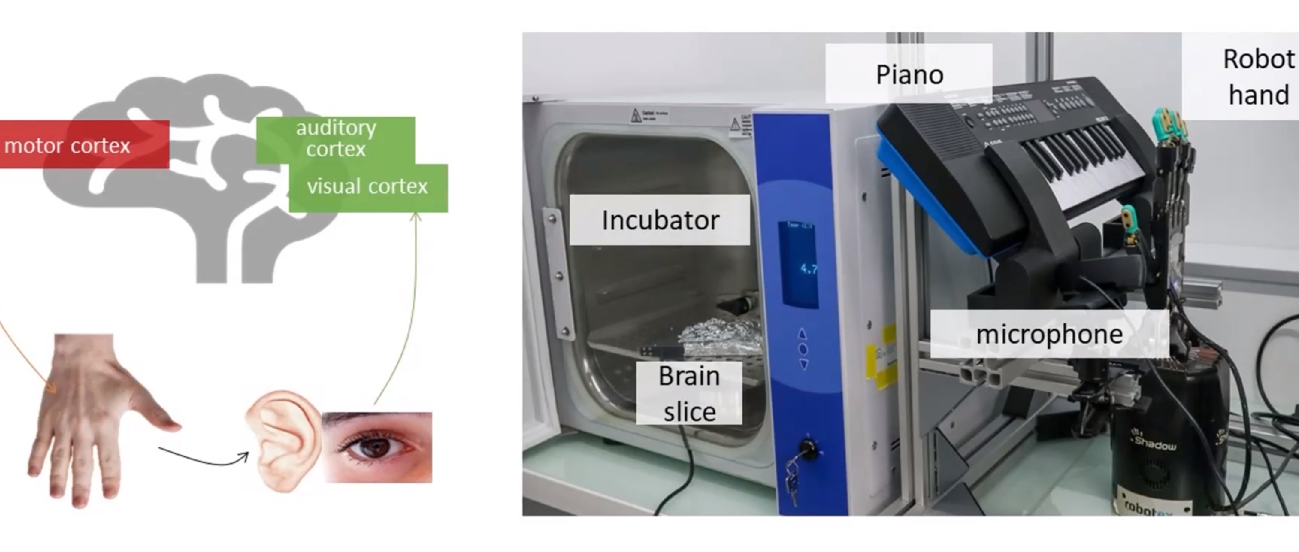
French Research Team Uses Dead Brain Cells to Control Robot Hand for Piano Playing
A French research team has achieved a remarkable feat by connecting adult brain slices from deceased donors to a robotic hand, enabling it to play the piano. Their study, titled 'Unsupervised Sensory-Motor Associative Learning in Human Brain Explants Enables Robot Action Imitation,' reveals that the brain slices retained memory for at least 17 days, although performance declined with drug treatment or viral infection. This breakthrough raises significant ethical and technological questions about the use of hybrid AI, which integrates living neurons into computational systems. The research highlights the stark differences in energy consumption and learning efficiency between biological systems and traditional AI, with the human brain consuming 20 watts compared to the minimal energy used by simpler organisms. Looking ahead, the team proposes a novel approach using organotypic culture of post-mortem adult brain explants (OPAB) as a viable alternative to existing methods. The study was ethically approved and involved brain tissue from three donors, emphasizing the need for careful consideration of ethical implications in future research.
Hybrid AI Neural Networks Robotic Control Brain-Computer Interface
MIT and Broad Institute Develop U-STORM for Breakthrough Super-Resolution Imaging
Researchers at MIT and the Broad Institute have created a revolutionary super-resolution imaging technology called U-STORM, enabling visualization of molecular structures with sub-angstrom precision. This advancement allows for data collection three orders of magnitude beyond traditional fluorescent dyes, while simplifying the imaging process significantly. The significance of U-STORM lies in its use of upconverting nanoparticles (UCNPs) that blink indefinitely under near-infrared excitation, overcoming limitations of conventional imaging techniques. This innovation not only enhances localization precision to 0.6 Å but also reduces experimental complexity by allowing simultaneous multicolor imaging with a single laser. Looking ahead, the research team aims to expand the color palette and improve the brightness and size of the nanoparticles. U-STORM is poised to revolutionize high-precision molecular imaging in laboratories globally, providing a more accessible and powerful tool for studying complex biological systems.
Research Microscopy Chemistry Chemical engineering Nanoscience and nanotechnology School of Science
Enigma Secures $70 Million to Simplify Human-Robot Interaction Through Innovative Research
Enigma, a robotics research lab, has raised $70 million in a seed funding round led by Index Ventures and Ribbit Capital. The startup aims to revolutionize human-robot interactions by studying how people engage with robots, rather than solely focusing on enhancing model capabilities. Enigma plans to launch a large-scale online experiment allowing global users to interact with over 100 proprietary AI robots performing various tasks, such as drawing and simple chemistry experiments. This funding is significant as it positions Enigma to explore intuitive interfaces for robotic control, potentially transforming how users communicate with machines. Co-founders Jonathan Jacobi and Gal Niv, both with backgrounds in cybersecurity, are leveraging their unique perspectives to tackle challenges in robotics. Their goal is to make controlling robots as effortless as adjusting a car's volume, addressing current frustrations users face with existing robotic models. Looking ahead, Enigma's online experiment will provide valuable data on user preferences for robot communication, which could lead to groundbreaking advancements in robotics interfaces. No further timeline was disclosed at the time of publication.
AI Robotics Startups enigma Exclusive Index Ventures
Okinawa Research Team Discovers Language Learning Insights Through AI Robot Curiosity
A research team from Okinawa Institute of Science and Technology found that an AI robot, during training, began to exhibit playful behavior, leading to faster learning. This study, published in 'Science Advances,' reveals that a rich language environment combined with inherent curiosity is crucial for rapid language acquisition, mirroring human learning mechanisms. The research utilized a PV-RNN model based on human brain information processing theories, aiming to balance prediction accuracy and belief system stability. By incorporating reinforcement learning, the robot received external rewards for task completion and internal rewards for satisfying its curiosity, resulting in competing motivations that enhanced its understanding of language. Notably, the robot demonstrated surprising behaviors, such as intentionally interacting with unrelated objects, which accelerated its language comprehension. The findings suggest that the diversity of language exposure is key to unlocking understanding, and the robot's performance mirrored the U-shaped learning curve seen in children, indicating its ability to handle exceptions similarly to human learners. No further timeline was disclosed at the time of publication.
AI Language Learning Reinforcement Learning Child Language Acquisition Neural Networks
SpaceX Proposes 1 Million AI Satellites to Address Ground Data Center Constraints
On January 30, 2026, SpaceX filed with the FCC to launch up to 1 million AI compute satellites, positioning orbital data centers as a solution to the increasing demand for AI computing power. Ground data centers are facing significant challenges, with energy consumption projected to reach approximately 1,050 TWh in 2026, making them the fifth-largest electricity consumer globally. The demand for new data center capacity is outpacing the growth of power generation infrastructure, leading to a critical bottleneck in the grid system. The significance of this initiative lies in the structural constraints faced by ground data centers, including power delivery limitations, high water consumption, and local opposition to new projects. The Uptime Institute's 2026 outlook identifies power as the primary constraint on data center growth, with capacity clearing prices in the PJM grid skyrocketing to $329.17/MW, driven by data center expansion. Additionally, cooling requirements are becoming increasingly unsustainable, with facilities consuming vast amounts of water, further complicating their operational viability. Looking ahead, SpaceX's orbital AI compute initiative aims to circumvent these challenges by leveraging the advantages of space, such as continuous solar power and minimal local opposition. The first AI prototypes are expected to launch in early 2027, with operational deployments planned for 2028. No further timeline was disclosed at the time of publication.
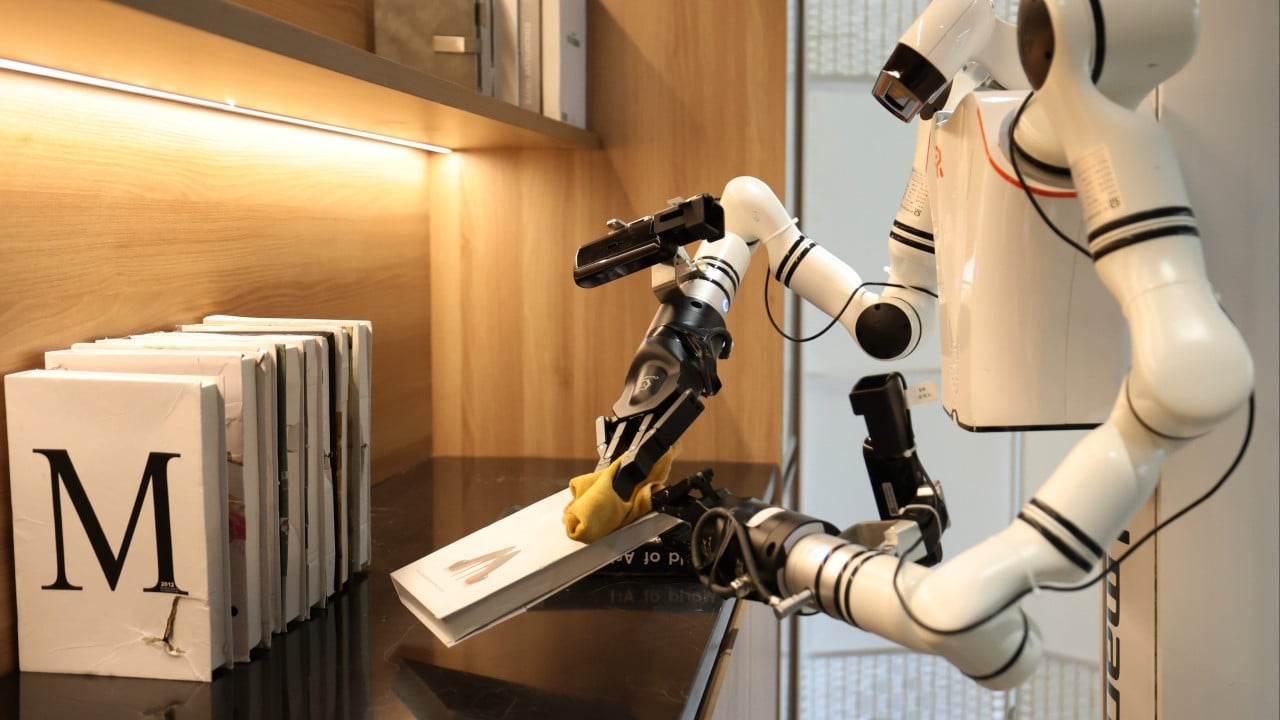
Chinese researchers claim breakthrough in training household robots with AI-generated homes
A team of researchers from Ace Robotics, a start-up supported by a Hong Kong-listed artificial intelligence firm, has announced a significant advancement in the training of robots for real-world home environments. This development addresses a persistent data bottleneck in robotics, potentially speeding up the integration of robots into everyday household settings. The researchers introduced Kairos-HomeWorld, the first unified framework designed to create coherent, accurate, and simulation-ready home environments using simple text prompts. This innovation marks a pivotal step forward in making robotic assistance more accessible and practical for consumers.

National Robotics Week — Latest Physical AI Research, Breakthroughs and Resources
During National Robotics Week, NVIDIA is showcasing significant advancements in artificial intelligence that are integrating seamlessly into the physical world. The company emphasizes the increasing prevalence of robots across various sectors, including agriculture, manufacturing, and energy. This initiative aims to demonstrate how these technological innovations are revolutionizing industries and enhancing productivity. By highlighting these breakthroughs, NVIDIA seeks to raise awareness about the transformative potential of robotics and AI, underscoring their role in shaping the future of work and industry.
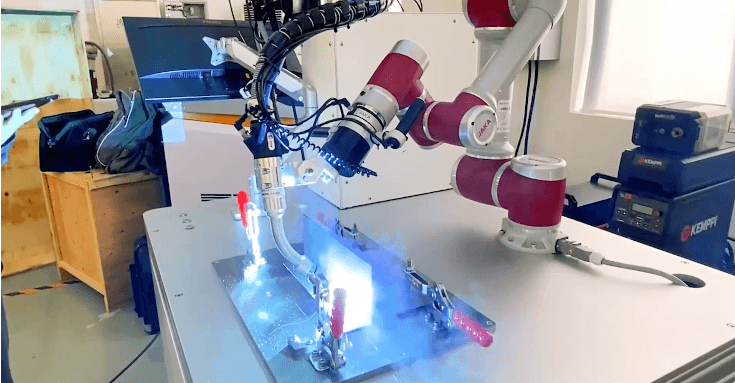
Understanding Weld Seam Tracking in Collaborative Welding Systems
In the evolving landscape of automated manufacturing, JAKA has unveiled advancements in weld seam tracking technology that enhance precision and flexibility in collaborative welding environments. This innovative approach addresses challenges such as part tolerances and thermal deformation by integrating advanced sensing, control algorithms, and motion accuracy. The JAKA Zu30, a collaborative welding robot, exemplifies this system-level capability, boasting a 30 kg payload, a reach of 1350 mm, and repeat positioning accuracy of ±0.05 mm. These features enable the robot to maintain stable tool motion while effectively handling heavier welding equipment, even in environments filled with welding fumes and metal particles due to its IP65 protection rating. Weld seam tracking allows the robotic system to accurately identify the position of weld joints and adjust its motion in real time, significantly reducing welding defects and improving bead consistency. This technology supports higher process continuity in mixed production lines by accommodating part variations without frequent manual adjustments. Designed for intuitive setup and consistent performance, the Zu30 is capable of executing complex welding tasks, including heavy workpiece processing and precision joint applications. By focusing on the integration of mechanical stability, control algorithms, and environmental adaptability, JAKA aims to advance collaborative welding precision, making automation more accessible in modern manufacturing settings.
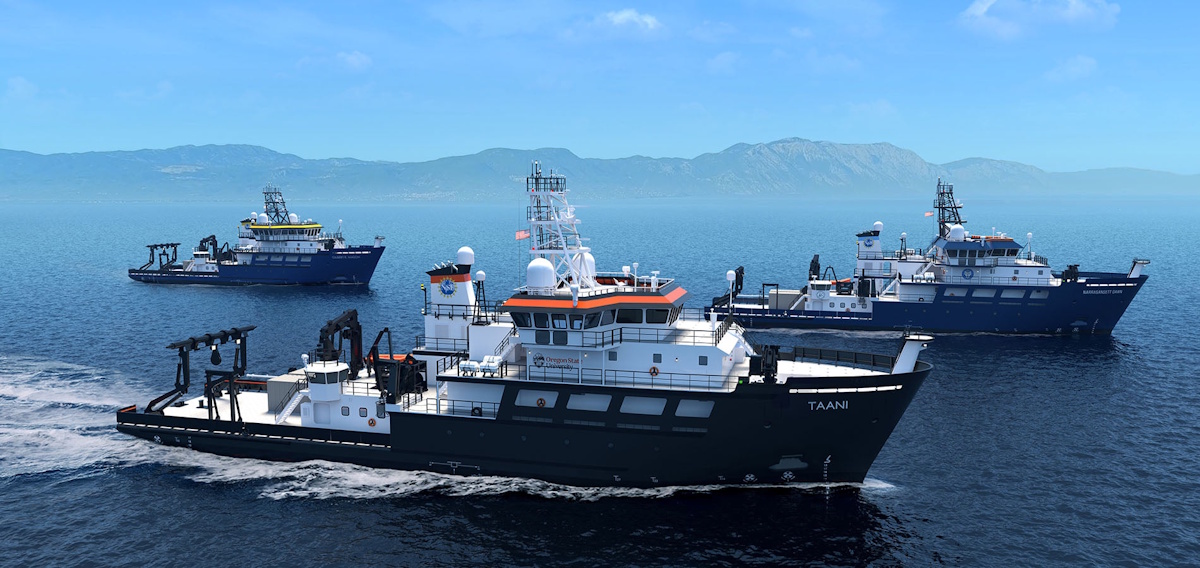
Sonardyne Underwater Positioning and Tracking for US Academic Research Fleet
Sonardyne's underwater positioning and tracking technology has been selected for integration into three new oceanographic research vessels, part of the National Science Foundation's Regional Class Research Vessel (RCRV) construction program. This decision underscores the NSF's commitment to advancing marine research capabilities. The vessels, designed to enhance scientific exploration and data collection in oceanographic studies, will be constructed in the coming years. By utilizing Sonardyne's innovative technology, the NSF aims to improve the accuracy and efficiency of underwater navigation and data acquisition, ultimately supporting a wide range of research initiatives. The program reflects a significant investment in the future of ocean science, addressing the growing need for advanced research tools in understanding marine environments.
sonardyne underwater positioning tracking us academic research fleetRobotics needs a service framework.
RSF defines a common language for robot service capability, lifecycle operations, certification pathways, and service-provider networks.
Join the RobotToday community on LinkedIn
Daily robotics news, in-depth analysis, conference highlights, and discussions with professionals worldwide.