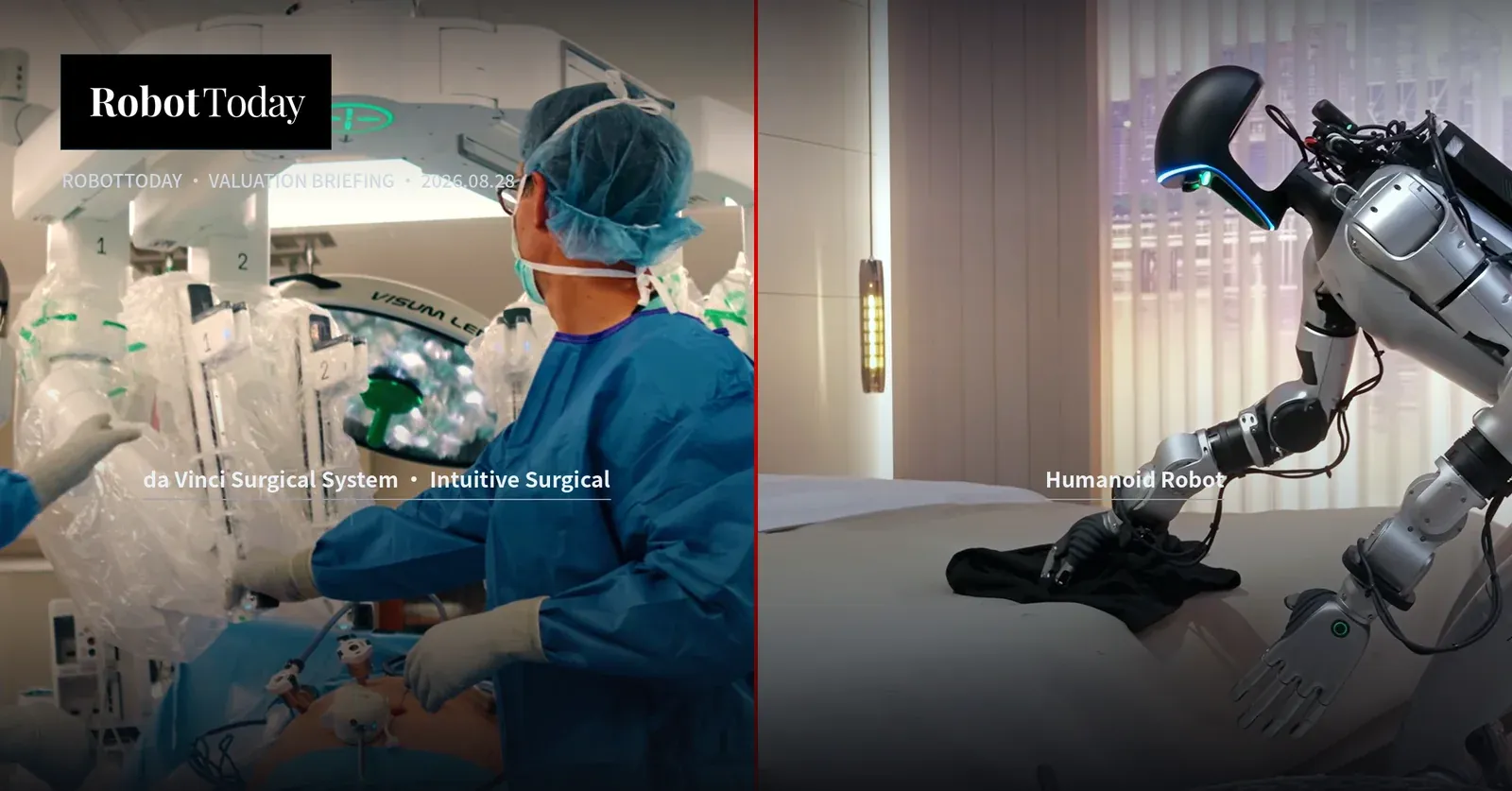
A single destination for timely, editor-curated robotics news from around the world.
The U.S. National Science Foundation’s National Artificial Intelligence Research Resource (NAIRR) pilot program has been instrumental in advancing innovative research over the past two years, supporting more than 700 projects across the country. These initiatives cover a wide range of topics, including protein prediction and infectious disease modeling. By providing essential resources and funding, the NAIRR program aims to enhance the capabilities of researchers and institutions in the field of artificial intelligence. This initiative not only fosters collaboration among scientists but also addresses pressing challenges in health and technology, showcasing the potential of AI to drive significant advancements in various sectors.

NvidiaNews By NVIDIA Jun 22, 2026
Researchers are exploring the potential of robots that can not only conduct experiments but also learn and adapt alongside human scientists. This initiative aims to develop advanced robotic systems capable of functioning in real laboratory settings, allowing them to respond to dynamic conditions and collaborate effectively with their human counterparts. By integrating machine learning and artificial intelligence, these robots could enhance scientific research, increasing efficiency and innovation in various fields. The project is currently in its developmental stages, with ongoing studies focused on refining the robots' capabilities to ensure they can seamlessly integrate into existing scientific workflows. As this technology evolves, it holds the promise of transforming the landscape of scientific inquiry and experimentation.
roboticstomorrow-Robotics May 18, 2026
Los Alamos National Laboratory (LANL) is set to enhance its computational capabilities with the development of new supercomputers, named Mission, Vision, and Veritas, in collaboration with HPE and NVIDIA. This initiative aims to harness NVIDIA Vera CPUs to significantly accelerate scientific discovery and advance the integration of agentic AI in scientific research. The project underscores LANL's commitment to leveraging cutting-edge technology to address complex scientific challenges. The supercomputers are expected to play a crucial role in various research domains, facilitating breakthroughs that could have far-reaching implications for science and technology.
NvidiaNews By NVIDIA Jun 22, 2026
During the ISC conference taking place this week in Hamburg, NVIDIA unveiled innovative software aimed at accelerating artificial intelligence applications in scientific research. The newly introduced DAQIRI library and ALCHEMI NIM software are designed to enhance processes in various fields, including chemistry, materials discovery, and even the exploration of dark matter. By leveraging advanced AI capabilities, NVIDIA seeks to empower researchers and scientists to achieve breakthroughs more efficiently, addressing the growing demand for faster and more effective scientific solutions.
NvidiaNews By NVIDIA Jun 22, 2026
Researchers at the University of Massachusetts Amherst have unveiled a groundbreaking artificial intelligence architecture aimed at significantly lowering the energy consumption of advanced AI systems while maintaining their learning capabilities. This innovative approach, inspired by brain function, was developed with funding from the U.S. National Science Foundation and the Air Force Office of Scientific Research. By mimicking the efficiency of the human brain, the new architecture seeks to address the growing energy demands associated with AI technologies, which have raised concerns regarding sustainability and environmental impact. The research, which highlights the potential for more eco-friendly AI solutions, could pave the way for advancements in various fields reliant on artificial intelligence, ultimately promoting a more sustainable future for technology.
AIInsider By Greg Bock Jun 09, 2026 AI AI Research & Advances Robotics architecture energy consumption Research
Researchers at Argonne National Laboratory are advancing the field of laboratory automation by creating AI-powered robotic assistants capable of learning and performing various laboratory procedures. This innovative project aims to enhance efficiency and accuracy in scientific research, addressing the growing demand for streamlined processes in laboratories. The development is part of a broader effort to integrate artificial intelligence into everyday scientific tasks, allowing researchers to focus on more complex problem-solving. As the project progresses, the team is exploring various machine learning techniques to enable these robots to adapt and improve their skills over time. This initiative is expected to revolutionize how experiments are conducted, ultimately accelerating the pace of scientific discovery.
InterestingEngineering.com By Neetika Walter May 18, 2026
In a groundbreaking initiative, Greenpeace has launched an underwater robot to conduct a scientific survey of vulnerable deep-sea ecosystems along the Arctic Mid-Ocean Ridge. This event marks the deepest banner protest ever executed from the seabed, occurring at a depth of 2,300 meters. The robot displayed a powerful message urging global leaders to heed scientific advice, stating, “LISTEN TO THE SCIENCE!” The campaign aims to raise awareness about the urgent need for action to protect these unexplored marine environments. Dr. Sandra Schöttner, a key figure in the initiative, emphasized the importance of scientific research in informing policy decisions regarding environmental conservation. This innovative protest not only highlights the threats facing deep-sea ecosystems but also seeks to galvanize international attention and action on climate change and marine protection.
RoboticsAndAutomationNews.com By Sam Francis May 27, 2026 Environment News Arctic Ocean automation news autonomous underwater vehicles climate change
Beijing AI for Science labs have introduced autonomous robotic scientists that can design experiments, collect data, and discover new materials within a rapid timeframe of 20 seconds. This deployment represents a significant advancement in the capabilities of AI in scientific research, particularly in material science. The introduction of these robotic scientists is crucial as it signifies a paradigm shift in research methodologies, allowing for faster and more efficient experimentation. By automating the design and data collection processes, researchers can focus on higher-level analysis and innovation, potentially accelerating the pace of scientific discovery. Looking ahead, the impact of these robotic scientists on the research landscape will be closely monitored. The labs have not disclosed further timelines for additional capabilities or expansions, but the initial deployment marks a pivotal moment in the integration of AI and robotics in scientific exploration.
PanDaily.com By [email protected] (Pandaily) Jul 10, 2026 Technology
OpenAI has launched its latest family of models, GPT-5.6, featuring three variants: Sol, Terra, and Luna. Announced on Thursday, these models promise significant advancements in enterprise applications, coding, and scientific research. Notably, Sol is reported to be 54% more token efficient for coding tasks, positioning it as a leading option in the AI landscape. The introduction of GPT-5.6 is significant as it aims to enhance cybersecurity capabilities, with OpenAI claiming it is their strongest model yet in this area. The model supports various defensive activities such as threat modeling and code review, addressing concerns raised by previous regulatory scrutiny. This launch is strategically timed to compete with offerings from rivals like Anthropic, with OpenAI asserting that its models outperform competitors in key metrics. Looking ahead, OpenAI's new models are now available across platforms including ChatGPT and Codex, with pricing structured per million tokens. The company has not disclosed specific timelines for future updates or enhancements, but the competitive landscape suggests ongoing developments in AI model capabilities and market positioning.
TechCrunch By Lucas Ropek Jul 09, 2026 AI ChatGPT gpt-5.6 OpenAI sam altman
Nobel Prize-winning physicist Giorgio Parisi has joined forces with the AI model Claude to tackle a long-standing conjecture in statistical physics. Their collaboration, which took place recently, involved extensive dialogue and intricate calculations, ultimately leading to the discovery of a surprisingly simple proof. This partnership not only underscores the potential of artificial intelligence in advancing scientific research but also highlights the critical role of human oversight in the process. Parisi, who had previously expressed skepticism about AI, now illustrates how such technology can complement human expertise in solving complex scientific problems.
leaderobot.com By Leaderobot Jul 08, 2026 AI in Research Mathematical Conjectures Statistical Physics Scientific Collaboration
NASA is advancing its exploration of space with the development of the Habitable Worlds Observatory, where robots are set to play a crucial role in its operations. This initiative, which showcases the integration of robotics in space missions, aims to enhance our understanding of potentially habitable planets beyond Earth. The observatory is expected to be operational in the coming years, with significant milestones anticipated in the near future. By employing robotic technology, NASA seeks to conduct complex tasks that will facilitate the search for life-sustaining environments in the universe. This innovative approach not only underscores NASA's commitment to exploring new frontiers but also highlights the growing reliance on automation in scientific research and exploration.
SPACE.com By [email protected] (Chelsea Gohd) Jul 06, 2026 Space Exploration
The landscape of laboratory testing is undergoing a significant transformation as traditional reagent kits are being replaced by advanced robotics. This shift, which has been gaining momentum throughout 2023, is taking place in laboratories across various sectors, including healthcare and research institutions. The move towards automation is driven by the need for greater efficiency, accuracy, and speed in testing processes, which are critical in an era of rapid scientific advancement and increasing demand for reliable results. As laboratories adopt robotic systems, they are able to streamline workflows, reduce human error, and enhance productivity. These systems are designed to handle complex tasks, from sample preparation to analysis, allowing scientists and technicians to focus on more strategic aspects of their work. The integration of robotics not only improves operational efficiency but also supports the growing trend of high-throughput testing, which is essential for large-scale studies and diagnostics. This evolution in laboratory practices is indicative of a broader trend towards automation in various industries, reflecting a commitment to innovation and improved outcomes. As the reliance on reagent kits diminishes, the future of laboratory testing appears increasingly reliant on robotic technology, promising a new era of precision and efficiency in scientific research and healthcare diagnostics.
leaderobot.com By Leaderobot Jun 25, 2026 Robotics Automation AI
Norway has initiated the inaugural expedition of its advanced robot submarine, designed to reach depths of nearly 6,000 meters. This groundbreaking mission commenced recently in the North Atlantic, showcasing the submarine's capabilities in deep-sea exploration. The project aims to enhance scientific research and environmental monitoring in the region, addressing the growing need for innovative technology in oceanography. The submarine is equipped with state-of-the-art sensors and imaging systems, allowing it to gather critical data on marine ecosystems and geological formations. This expedition marks a significant step forward in Norway's commitment to advancing underwater research and understanding the complexities of ocean environments.
InterestingEngineering.com By Georgina Jedikovska Jun 22, 2026 Science
NVIDIA has unveiled its latest innovation, the NVIDIA Vera Rubin platform, at the ISC High Performance 2026 conference. This new platform is designed to provide cutting-edge supercomputing capabilities specifically for scientific applications. It features native double-precision (FP64) performance, which is crucial for complex calculations in various scientific fields. Additionally, the Vera Rubin platform integrates NVIDIA's CUDA-X™ libraries, enhancing its computational efficiency and versatility. This announcement underscores NVIDIA's commitment to advancing high-performance computing and supporting scientific research through superior technology. The launch event took place during the prominent ISC High Performance conference, highlighting the growing intersection of computing technology and scientific inquiry.
NvidiaNews By NVIDIA Jun 22, 2026
A modified Unitree G1 humanoid robot, named Pemba, successfully reached the summit of Chimborazo volcano in Ecuador, standing at 6,310 meters. This achievement highlights the capabilities of legged robots in conducting environmental monitoring in challenging terrains. The ascent took place recently, showcasing advancements in robotics technology and its potential applications in remote and difficult-to-access areas. By navigating the rugged landscape of one of the highest peaks in the Andes, Pemba's journey underscores the growing interest in utilizing robotic systems for scientific research and environmental observation.
PanDaily.com By [email protected] (Pandaily) Jun 20, 2026 HumanoidRobotics
Engineers at the European Space Agency (ESA) are currently in the process of assembling a highly sophisticated robotic arm designed for future space missions. This advanced technology aims to enhance the capabilities of European spacecraft, allowing for more complex tasks in orbit and on planetary surfaces. The assembly is taking place at ESA's facilities in the Netherlands, where teams are meticulously working to ensure the arm meets stringent operational standards. The initiative is part of ESA's broader strategy to strengthen its role in international space exploration and to contribute to collaborative missions with other space agencies. By developing this cutting-edge robotic arm, ESA seeks to improve the efficiency and effectiveness of its missions, ultimately advancing scientific research and exploration beyond Earth.
InterestingEngineering.com By Neetika Walter Jun 18, 2026 AI and Robotics
Researchers at Los Alamos National Laboratory have unveiled a groundbreaking tool named Prelim Attention, designed to enhance the analysis of complex data sets. This innovative tool, which leverages advanced machine learning techniques, aims to streamline the process of identifying significant patterns and insights within large volumes of information. The development was announced in October 2023, highlighting the laboratory's commitment to advancing data science and its applications in various fields. The motivation behind creating Prelim Attention stems from the increasing demand for efficient data analysis solutions in scientific research, national security, and other sectors that rely heavily on data interpretation. By improving the capability to focus on critical data points, the tool is expected to facilitate more informed decision-making and accelerate research outcomes. The researchers employed a combination of algorithms and user-friendly interfaces to ensure that Prelim Attention can be utilized effectively by both experts and non-experts alike. This approach not only enhances accessibility but also broadens the potential user base, allowing a wider range of professionals to benefit from its capabilities. The introduction of Prelim Attention marks a significant advancement in the field of data analysis, promising to transform how researchers and analysts approach complex data challenges in the future.
InterestingEngineering.com By Atharva Gosavi Jun 15, 2026 AI and Robotics
In 2024, a groundbreaking autonomous rolling rover demonstrated its innovative design by transforming from a sphere into a robot during a successful exploration of the moon's surface. This mission marks a significant advancement in lunar exploration technology, showcasing the rover's ability to navigate diverse terrains effectively. The development of such versatile rovers aims to enhance our understanding of the moon's environment and potentially pave the way for future manned missions. The exploration was conducted as part of ongoing efforts to gather data that could inform scientific research and exploration strategies.
SPACE.com By Keith Cooper Jun 13, 2026 The moon Astronomy Solar System
A new fellowship program has been launched to support doctoral students in applied sciences, engineering, and mathematics who are dedicated to addressing critical challenges in science and technology. This initiative aims to recognize and empower emerging researchers who are developing innovative solutions to pressing issues. The program is designed to enhance the educational and research opportunities for these students, providing them with the resources necessary to advance their work. By fostering a new generation of scientists and engineers, the fellowship seeks to contribute to the advancement of knowledge and technology, ultimately benefiting society as a whole. The initiative is expected to play a significant role in shaping the future of scientific research and technological development.
MITNews By Division of Graduate and Undergraduate Education Jun 11, 2026 Awards, honors and fellowships Students Graduate, postdoctoral Alumni/ae Chemistry Mechanical engineering
A humanoid robot has made history by successfully reaching the summit of Chimborazo, Ecuador's highest volcano. This remarkable achievement took place recently, showcasing advancements in robotics and artificial intelligence. The mission aimed to explore the capabilities of robots in extreme environments, highlighting their potential for future scientific research and exploration. The robot, equipped with advanced sensors and navigation systems, ascended the challenging terrain, demonstrating its ability to operate in harsh conditions. This milestone not only marks a significant technological breakthrough but also opens new avenues for utilizing robotics in remote and inaccessible locations.
InterestingEngineering.com By Kaif Shaikh Jun 08, 2026
On the evening of May 29, 36Kr and Light Source Capital hosted the second offline gathering titled "TokenAge" in Beijing, focusing on the impact of AI on productivity rather than just token consumption metrics. The event featured four prominent guests from the AI startup scene: Huang Yi, founder of RoboParty, which specializes in open-source bipedal robots; Zheng Jiaxi, founder of Eup Robotics, developing underwater inspection robots for offshore energy platforms; Jin Ruofan, founder of Science Intelligence, exploring AI applications in scientific research; and Huang Xinxin, head of Light Source Capital's 3i Innovation Incubator. The gathering highlighted the challenges faced by young entrepreneurs in the AI sector, emphasizing the need for rapid product delivery and clear commercialization strategies. Attendees, including entrepreneurs and investors, engaged in discussions about how companies should reorganize in the AI era and why AI has yet to significantly enhance organizational efficiency. Light Source Capital's CEO, Zheng Xuanle, noted that AI represents a fundamental shift in productivity, akin to electricity, and is driving innovation across various sectors. The event underscored the importance of understanding AI's potential and the necessity for organizations to adapt to its rapid evolution. As AI becomes increasingly integrated into business processes, the focus will shift from merely adopting technology to fostering a culture of innovation and strategic thinking among teams. The evening concluded with each guest setting ambitious goals for the coming year, reflecting their commitment to advancing their respective fields within the AI landscape.
36kr.com Jun 04, 2026
On June 2, 2023, in Beijing, Gaode Map and the Singapore Tourism Board signed a strategic cooperation memorandum, marking the launch of the first collaborative tourism ranking list between a Chinese company and an overseas national tourism board. This initiative will feature the Singapore Street Ranking, utilizing Gaode's advanced aerial street view technology to provide a 360-degree perspective of local attractions, hotels, neighborhoods, and restaurants. The goal is to enhance the travel experience by allowing visitors to assess their destinations before arrival. In a separate development, the Jiangxi National Rare Earth Technology Innovation Center was established with a registered capital of 1.25 billion yuan, focusing on mineral resource exploration and scientific research. Additionally, WeRide and Uber announced plans to introduce Spain's first commercial Robotaxi service in Madrid, expanding WeRide's presence to its twelfth global city. The initiative aims to deploy hundreds of Robotaxis in the city center as operational benchmarks are met. In France, Ardian, a private equity firm, revealed a partnership with Verne to invest up to 5 billion euros in developing a next-generation digital infrastructure park in the Île-de-France region, with a target capacity of 500 megawatts by 2030. Other notable news includes a collaboration between Google and Telstra to build a fiber and submarine cable network in Australia, updates on the recovery timeline for Blue Origin's launch facilities following a recent rocket explosion, and a reduction in fuel surcharges for domestic flights in China starting June 5.
36kr.com Jun 02, 2026
Researchers from the University of Amsterdam’s Van ’t Hoff Institute for Molecular Sciences, led by Professor Timothy Noël, have made significant advancements in autonomous laboratory systems aimed at optimizing synthesis processes. Their findings, published in the journal Nature Synthesis, introduce RoboChem Flex, a versatile and modular system that incorporates “human-in-the-loop” analytics. This innovative design allows for enhanced flexibility and efficiency in chemical synthesis, potentially transforming how laboratories conduct research and development. The study highlights the growing importance of automation in scientific research, driven by the need for more efficient and accurate synthesis methods.
Robohub.org By University Of Amsterdam Jun 02, 2026
China is integrating its robotic Chang'e lunar probe initiatives with its human spaceflight program, aiming to achieve a manned moon landing by 2030. This strategic move reflects the country's commitment to advancing its space exploration capabilities and establishing a more comprehensive approach to lunar missions. By combining robotic and human efforts, China seeks to enhance the efficiency and safety of its lunar exploration endeavors, paving the way for future scientific research and potential long-term lunar habitation. The initiative underscores China's ambition to become a leading player in space exploration, following a series of successful robotic missions that have already gathered valuable data about the moon's surface and resources.
SPACE.com By Leonard David May 27, 2026 Space Exploration
NASA has announced ambitious plans for a moon base that will span hundreds of square miles, with the potential use of scout drones to monitor its perimeter. To kickstart this initiative, the agency has awarded contracts totaling $1 billion. This funding aims to facilitate the development and construction of the lunar facility, which is part of NASA's broader strategy to establish a sustainable human presence on the Moon. The contracts were awarded recently, marking a significant step forward in lunar exploration efforts. The project is expected to enhance scientific research and pave the way for future missions to Mars and beyond.
SPACE.com By [email protected] (Mike Wall) May 26, 2026 The moon Astronomy Solar System
China has announced the successful completion of a groundbreaking 537-day deep-sea material corrosion exposure experiment, claiming it to be the first of its kind in the world. Conducted in the South China Sea, the project aimed to assess the durability and longevity of various materials used in marine engineering and construction. The initiative is part of China's broader efforts to enhance its capabilities in deep-sea exploration and technology, driven by the increasing demand for sustainable and resilient infrastructure in challenging underwater environments. Researchers monitored the materials' performance and degradation over the extended period, providing valuable data that could inform future developments in maritime engineering. This achievement underscores China's commitment to advancing its scientific research and technological prowess in the field of marine sciences.
InterestingEngineering.com By Atharva Gosavi May 25, 2026
Researchers have developed a groundbreaking jellyfish-inspired soft robot capable of navigating through water at unprecedented speeds. This innovative technology, unveiled in a recent study, showcases the potential for advanced underwater exploration and environmental monitoring. The robot mimics the unique propulsion mechanism of jellyfish, allowing it to move efficiently and swiftly. The development took place in a laboratory setting, where scientists aimed to enhance robotic mobility in aquatic environments. By studying the biomechanics of jellyfish, the team was able to replicate their movement patterns, resulting in a soft robot that not only moves faster than existing models but also carries out tasks such as data collection and monitoring marine ecosystems. This advancement comes at a crucial time as researchers seek sustainable solutions for underwater exploration, driven by the need to better understand and protect marine life. The soft robot's design allows for flexibility and adaptability, making it suitable for various applications, from scientific research to environmental conservation efforts. As the technology progresses, the team envisions further enhancements that could lead to even greater speeds and capabilities, paving the way for a new era of robotic exploration in our oceans.
InterestingEngineering.com By Neetika Walter May 14, 2026
At Anton Paar GmbH, a KUKA robot named KR AGILUS is revolutionizing laboratory operations by automating the process of placing samples for testing and disposing of them afterward. This innovation significantly reduces the workload for lab technicians, allowing them to focus on more complex tasks. The robot operates continuously, ensuring quality control by utilizing a rheometer for precise measurements. This advancement not only enhances efficiency but also streamlines the testing process, demonstrating the growing integration of robotics in laboratory settings. As of October 2023, the KR AGILUS exemplifies how automation can transform traditional workflows in scientific research and quality assurance.
kuka.com By KUKA Apr 28, 2026
A groundbreaking deep-sea neutrino detector is currently under construction, aimed at revolutionizing our understanding of the universe. This ambitious project, which is set to enhance scientific research significantly, will utilize advanced positioning technology provided by the underwater technology firm Sonardyne. The collaboration between scientists and Sonardyne is expected to ensure the detector's precise placement in the challenging underwater environment. As the project progresses, it promises to contribute valuable insights into fundamental questions about cosmic phenomena, potentially reshaping our knowledge of particle physics and astrophysics. The initiative highlights the growing intersection of technology and scientific exploration, as researchers strive to unlock the mysteries of the universe.
ROVplanet.com By ROV Planet Apr 20, 2026 sonardyne fetch deep-sea neutrino telescope
JAKA, a company specializing in robotic solutions, is at the forefront of laboratory automation, a technological shift aimed at enhancing efficiency and reliability in scientific research. This evolution is marked by the introduction of compact lab automation robots, which streamline tasks traditionally performed by humans, thereby increasing throughput and reducing repetitive strain on technicians. Laboratory automation encompasses a spectrum of technologies, from basic automated liquid handlers to sophisticated robotic systems. The primary goal is to minimize human involvement in repetitive and error-prone processes, resulting in improved consistency and the ability to conduct experiments unattended for extended periods. JAKA's robotic arms, such as the MiniCobo, exemplify this trend, offering lightweight and compact designs that integrate seamlessly into existing lab setups without significant reconfiguration. Implementing laboratory automation requires careful planning, starting with the identification of suitable protocols for standardization. JAKA emphasizes the importance of intuitive programming and flexible software, enabling researchers to easily adapt robotic systems to new tasks without extensive technical expertise. This user-friendly approach, combined with the precision of their robotic arms, ensures the safe handling of delicate samples and enhances overall research quality. By automating routine tasks, JAKA's solutions allow scientists to focus more on analysis and innovation, ultimately accelerating scientific progress and making research processes more reliable and scalable.
jaka.com By JAKA Mar 05, 2026
Kongsberg Discovery has launched the HISAS2020 synthetic aperture sonar, making one of the world’s most advanced underwater imaging technologies accessible to the market. This innovative sonar system is designed to enhance underwater exploration and mapping capabilities, providing users with high-resolution imagery that can significantly improve marine research, resource management, and environmental monitoring. The launch, which took place today, aims to meet the growing demand for sophisticated underwater imaging solutions across various sectors, including defense, oil and gas, and scientific research. By leveraging cutting-edge technology, Kongsberg Discovery seeks to empower organizations with the tools necessary for more effective underwater analysis and decision-making.
ROVplanet.com By ROV Planet Feb 26, 2026 kongsberg
Shubham Tulsiani, an assistant professor at Carnegie Mellon University's Robotics Institute, has been honored with the National Science Foundation's prestigious CAREER Award. This recognition is awarded to early career faculty who demonstrate exceptional potential in their research and education efforts. Tulsiani's project focuses on developing advanced perception systems aimed at enhancing the understanding of the three-dimensional world. The award underscores both his innovative contributions to the field of robotics and the importance of fostering new talent in scientific research.
ri.cmu.edu By Mallory Lindahl Jan 20, 2026 Awards
A new expeditionary unmanned underwater vehicle (UUV) has been unveiled, showcasing advanced capabilities that include six-degree-of-freedom maneuverability, increased thrust, and modular mission flexibility. This compact platform is designed to enhance operational efficiency for various underwater missions. The development comes amid growing demands for innovative maritime technology, as military and research organizations seek to improve their underwater exploration and operational capabilities. The UUV's design allows for easy adaptation to different mission requirements, making it a versatile tool for a range of applications. The introduction of this advanced vehicle marks a significant step forward in underwater technology, promising to support both military operations and scientific research in challenging aquatic environments.
ROVplanet.com By ROV Planet Jan 15, 2026 videoray rov wraith aerovironment
In Berkeley, California, researchers at the Lawrence Berkeley National Laboratory are utilizing an AI agent to enhance high-stakes physics experiments at the Advanced Light Source (ALS) particle accelerator. This innovative technology aims to improve the efficiency and accuracy of experiments conducted at the facility, which is renowned for its cutting-edge research in particle physics. The deployment of the AI agent marks a significant advancement in the integration of artificial intelligence within scientific research, as it assists scientists in analyzing complex data and optimizing experimental conditions. This initiative, launched in October 2023, reflects the growing trend of leveraging AI to accelerate discoveries in the field of physics and beyond. By streamlining processes and providing real-time insights, the AI agent is expected to contribute to groundbreaking findings at the ALS, further solidifying its position as a leader in particle acceleration research.
NvidiaNews By NVIDIA Jan 08, 2026
The RESIDENT R&D program, initiated two years ago in partnership with IFREMER, is focused on developing and qualifying technological components for remotely operated vehicles (ROVs) to ensure their long-term residency on the seabed. This innovative project aims to enhance the capabilities of ROVs for underwater exploration and research by improving their durability and functionality in challenging marine environments. The collaboration seeks to address the growing need for advanced underwater technology as industries increasingly rely on ROVs for tasks such as environmental monitoring, resource exploration, and scientific research. The program is set to continue its efforts into 2024, with ongoing testing and evaluation of the technologies being developed.
ROVplanet.com By ROV Planet Dec 31, 2025 argos-x forssea robotics resident rov demo ifremer
Teledyne Marine has announced the winners of its 2025 Photo & Data Contest, recognizing the innovative and technical skills of its customers who utilize Teledyne instruments. The contest showcased a variety of striking marine projects, including images of storms, underwater gliders, lost excavators, and a seaweed farm at sunrise. These winning entries highlight the diverse environments and applications of Teledyne technology, which plays a crucial role in gathering data that influences the management of rivers, ports, coastlines, and offshore scientific research. The contest celebrates the creativity of participants from around the globe, emphasizing the impact of Teledyne's instruments in marine data collection and environmental monitoring.
ROVplanet.com By ROV Planet Dec 02, 2025 best of teledyne marine 2025 photo & data contest
A new low-cost Earth Observation mission, developed with the assistance of the National Oceanography Centre (NOC), has successfully been launched into orbit. This mission aims to enhance the monitoring of environmental changes and provide valuable data for scientific research and policy-making. The launch took place recently, marking a significant advancement in affordable space technology. By utilizing innovative approaches and streamlined processes, the mission is designed to deliver high-quality observational data while minimizing costs. This initiative reflects a growing trend in the space industry towards more accessible and efficient satellite missions, ultimately contributing to better understanding and management of Earth's resources.
ROVplanet.com By ROV Planet Dec 01, 2025 national oceanography centre (noc) hydrognss ‘new space’ mission for global science
Claire recently engaged in a discussion with Yuen Ting Chan, a seasoned expert from the Natural History Museum, regarding the innovative use of robots in automating molecular biology experiments. With nearly two decades of experience in translating and optimizing laboratory protocols across various fields, including DNA forensics and biomedicine, Chan has been at the forefront of integrating automation into molecular laboratories for over 12 years. This advancement aims to enhance efficiency and accuracy in laboratory processes, ultimately transforming the way scientific research is conducted. Chan's insights shed light on the significant impact of robotics in streamlining complex experiments, thereby facilitating more rapid and reliable results in the ever-evolving landscape of molecular biology.
Robohub.org By Robot Talk Oct 17, 2025
Founded in 2000, SIDUS has emerged as a leading integrated systems provider specializing in security and video surveillance solutions tailored for various sectors, including energy, nuclear, scientific research, military, and petrochemical industries. The company focuses on designing, servicing, and manufacturing comprehensive security and surveillance systems that cater to marine, defense, and subsea applications. By leveraging advanced technology and expertise, SIDUS aims to enhance safety and operational efficiency across critical industries, addressing the growing demand for robust security measures in complex environments.
ROVplanet.com By ROV Planet Mar 12, 2025 sidus solutions strategic partnership industrial device investments
Researchers from the U.S. Department of Energy’s Brookhaven National Laboratory, Northeastern University, Google Quantum AI, and the University of Texas at Austin have introduced a new quantum computing algorithm called the quantum Hermite transform (QHT). This algorithm aims to broaden the scope of problems that future quantum computers can address, particularly in artificial intelligence and scientific simulations. The significance of the quantum Hermite transform lies in its potential to improve data processing and simulation capabilities of quantum computers. By introducing a new computational building block, the QHT could lead to more efficient quantum algorithms in various fields, including materials science and energy research. The findings were presented at the 58th Annual ACM Symposium on Theory of Computing in Salt Lake City. Looking ahead, the researchers emphasize that expanding the library of reusable quantum primitives like the QHT will facilitate the development of innovative quantum algorithms. This advancement could provide exponential speed advantages over classical methods, marking a pivotal step in the evolution of quantum computing applications. No further timeline was disclosed at the time of publication.
InterestingEngineering.com By Kaif Shaikh 12 hours ago AI and Robotics
Rice University and NASA have introduced the iMETRO Dynamic Simulation, the first open-source platform for developing robots for spacecraft and habitats. Unveiled at the 2026 IEEE International Conference on Robotics and Automation in Vienna, this simulator creates a digital twin of NASA's iMETRO facility, enabling global researchers to test intravehicular robotic systems in a virtual setting. This platform is significant as it broadens access to advanced space robotics research, facilitating innovation for future human space missions. It focuses on robot manipulators that assist with maintenance and logistics tasks, which are crucial for reducing astronaut workloads during extended missions. The simulator features an eight-degree-of-freedom robotic manipulator model and supports ROS 2 and MuJoCo, enhancing usability and compatibility for developers. Looking ahead, the iMETRO Dynamic Simulation aims to maximize astronaut productivity by automating routine tasks, allowing crew members to focus on scientific exploration. The research team successfully demonstrated the simulator's capabilities by transferring a robotic application from simulation to the physical facility in under a day. No further timeline was disclosed at the time of publication.
InterestingEngineering.com By Jijo Malayil Jul 09, 2026 AI and Robotics
AGIBOT unveiled its cutting-edge humanoid robots and educational solutions at the BETT UK event, highlighting its role as a leader in the humanoid robotics sector. The company's presentation focused on advancing embodied intelligence education throughout Europe, aiming to connect theoretical knowledge with practical application in talent development. In a significant move to bolster innovation in this field, AGIBOT also announced a partnership with the University of Cambridge. This collaboration is expected to enhance research and development efforts, further positioning AGIBOT at the forefront of educational technology.
agibot.com By AgiBot Jan 27, 2026 Humanoid Robots Embodied Intelligence Education Technology Talent Development Scientific Research
Fugro has made a significant contribution to ocean research by donating two EdgeTech Deep Tow survey systems to the Commonwealth Scientific and Industrial Research Organisation (CSIRO), Australia’s national science agency. This donation, announced recently, underscores Fugro's commitment to advancing global ocean science initiatives and supports the objectives of the United Nations Decade of Ocean Science for Sustainable Development. By providing these advanced survey systems, Fugro aims to enhance the capabilities of CSIRO in conducting vital oceanographic research, ultimately contributing to sustainable management and conservation of ocean resources.
ROVplanet.com By ROV Planet May 08, 2025 fugro survey equipment csiro ocean research edgetech deep tow
The UK’s National Oceanography Centre (NOC) and Madeira Island’s Regional Agency for the Development of Research, Technology and Innovation (ARDITI) have forged a significant partnership aimed at enhancing deep-ocean research. This collaboration was highlighted by the arrival of the research vessel RRS Discovery in Madeira, which coincided with ARDITI's acquisition of two advanced NOC Autosub Long Range (ALR) autonomous underwater vehicles. This marks a historic moment as it is the first instance of this cutting-edge technology being sold internationally. The partnership aims to leverage these innovative tools to further scientific exploration and understanding of the deep ocean, underscoring the growing importance of international cooperation in marine research.
ROVplanet.com By ROV Planet Nov 21, 2025 national oceanography centre (noc) madeira island’s regional agency for the development of research technology and innovation (arditi) noc autosub long range (alr) autonomous underwater vehicles
Sonardyne's underwater positioning and tracking technology has been selected for integration into three new oceanographic research vessels, part of the National Science Foundation's Regional Class Research Vessel (RCRV) construction program. This decision underscores the NSF's commitment to advancing marine research capabilities. The vessels, designed to enhance scientific exploration and data collection in oceanographic studies, will be constructed in the coming years. By utilizing Sonardyne's innovative technology, the NSF aims to improve the accuracy and efficiency of underwater navigation and data acquisition, ultimately supporting a wide range of research initiatives. The program reflects a significant investment in the future of ocean science, addressing the growing need for advanced research tools in understanding marine environments.
ROVplanet.com By ROV Planet Oct 23, 2025 sonardyne underwater positioning tracking us academic research fleet
In an effort to enhance research efficiency and data reliability, academic institutions and laboratories are increasingly adopting automation technologies, particularly 6 axis robot arms. JAKA, a leading provider in this field, emphasizes the importance of flexibility over production speed when integrating robotic systems into experimental workflows. Researchers are prioritizing features such as stable motion control and compatibility with existing laboratory instruments, allowing for seamless inspection, sample handling, and measurement tasks. The integration of these robotic arms is designed to be straightforward, enabling connections with vision systems and data acquisition devices already in use. JAKA’s Zu7 Inspection solution exemplifies this approach, automating manual inspection processes to improve efficiency and ensure consistent quality. By alleviating repetitive tasks, researchers can focus more on analysis and validation. Given the dynamic nature of academic research, which often involves changing experiments and funding cycles, JAKA's robotic systems are built for expandability. This allows laboratories to scale automation according to project needs without significant hardware changes. The open interface design facilitates the integration of additional sensors or tools over time, ensuring that the robotic systems remain valuable and adaptable. By prioritizing flexibility, compatibility, and expandability, JAKA aims to support researchers in building reliable automation foundations that can evolve alongside their scientific endeavors, ultimately enhancing the accuracy of inspections and reducing manual workloads in laboratory settings.
jaka.com By JAKA Apr 13, 2026
In a recent study, researchers explored the capabilities of generative AI in analyzing complex medical datasets, comparing its performance to that of human experts. The findings revealed that in certain instances, the AI not only matched but also surpassed the effectiveness of teams that had dedicated months to developing prediction models. By utilizing precise prompts to generate usable analytical code, the AI significantly decreased the time required for processing health data. This advancement suggests a promising future where artificial intelligence could accelerate the transition from data analysis to scientific discovery, potentially transforming research methodologies in the medical field.
ScienceDaily.com Feb 21, 2026
AquaTitans, a subsea engineering company known for its innovations in ocean technology, has joined the Scottish Association for Marine Science’s (SAMS) Ocean Changemakers initiative. This partnership aims to foster collaboration and drive advancements in marine science and sustainability. By participating in this program, AquaTitans seeks to leverage its expertise to contribute to the development of sustainable ocean solutions. The announcement of this collaboration highlights AquaTitans' commitment to addressing pressing environmental challenges and underscores the growing importance of marine science in combating climate change. The partnership is expected to enhance research and innovation efforts within the marine sector, benefiting both the company and the broader scientific community.
ROVplanet.com By ROV Planet Feb 04, 2026 sams
In a recent conversation, Claire engaged with Edith-Clare Hall, a prominent figure at the Advanced Research and Invention Agency (ARIA) and a PhD student at the University of Bristol. Hall, who also leads Women in Robotics UK, discussed her efforts to accelerate scientific and technological advancements. Her research emphasizes the importance of critical interfaces where interconnected systems converge, aiming to enhance collaboration and innovation in the field. The dialogue highlights Hall's commitment to bridging gaps in technology and promoting diversity within the robotics sector. This exchange underscores the vital role of interdisciplinary approaches in driving progress and addressing complex challenges in modern science and technology.
Robohub.org By Robot Talk Oct 31, 2025
A self-powered ocean buoy equipped with advanced oceanographic and meteorological sensors, along with 5G communication technologies, has been deployed in Monterey Bay, California, approximately five miles north of the Naval Postgraduate School (NPS) campus. This innovative buoy aims to facilitate real-time, continuous scientific and maritime observations. The initiative reflects a growing commitment to enhancing ocean research and monitoring capabilities, leveraging cutting-edge technology to provide critical data for environmental studies and maritime safety. The buoy's deployment marks a significant step forward in the integration of modern communication systems with oceanographic research, enabling scientists to gather and analyze data more efficiently than ever before.
ROVplanet.com By ROV Planet Jul 14, 2025RSF defines a common language for robot service capability, lifecycle operations, certification pathways, and service-provider networks.