

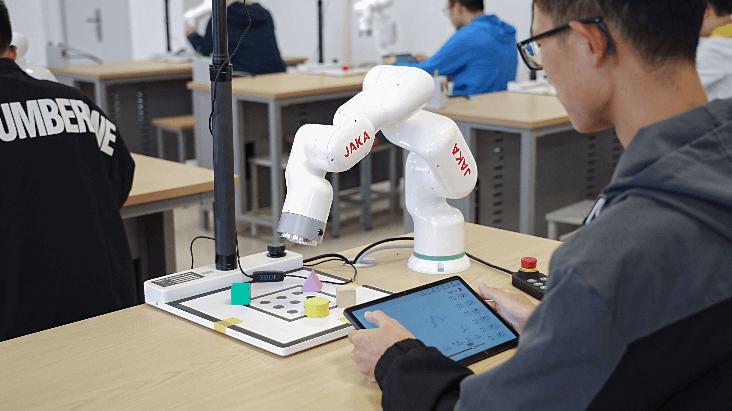
JAKA, a company specializing in robotic solutions, is at the forefront of laboratory automation, a technological shift aimed at enhancing efficiency and reliability in scientific research. This evolution is marked by the introduction of compact lab automation robots, which streamline tasks traditionally performed by humans, thereby increasing throughput and reducing repetitive strain on technicians.
Laboratory automation encompasses a spectrum of technologies, from basic automated liquid handlers to sophisticated robotic systems. The primary goal is to minimize human involvement in repetitive and error-prone processes, resulting in improved consistency and the ability to conduct experiments unattended for extended periods. JAKA's robotic arms, such as the MiniCobo, exemplify this trend, offering lightweight and compact designs that integrate seamlessly into existing lab setups without significant reconfiguration.
Implementing laboratory automation requires careful planning, starting with the identification of suitable protocols for standardization. JAKA emphasizes the importance of intuitive programming and flexible software, enabling researchers to easily adapt robotic systems to new tasks without extensive technical expertise. This user-friendly approach, combined with the precision of their robotic arms, ensures the safe handling of delicate samples and enhances overall research quality.
By automating routine tasks, JAKA's solutions allow scientists to focus more on analysis and innovation, ultimately accelerating scientific progress and making research processes more reliable and scalable.









Leave a comment