Industry Briefing
A single destination for timely, editor-curated robotics news from around the world.
DNA Origami Creates Nanoscale Switch with High Endurance, Featured in Science Robotics
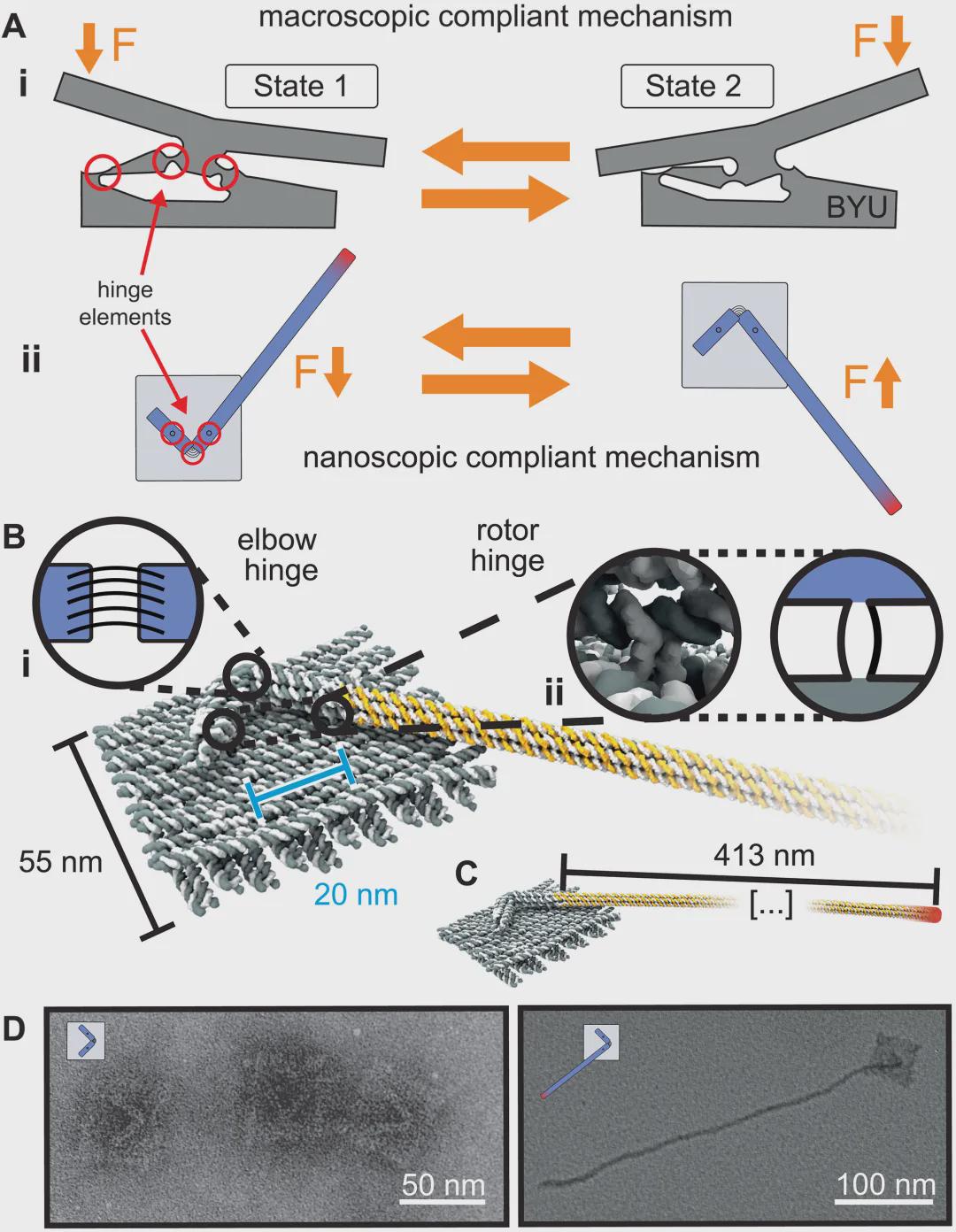
Researchers at the Technical University of Munich have unveiled a groundbreaking DNA origami switch that can undergo more than 190,000 state transitions while maintaining an impressive efficiency of 94%. This innovative nanoscale device operates effectively under electric fields and is capable of retaining its state even when power is turned off. The development of this switch represents a significant advancement in the use of DNA as a durable engineering material for nanoscale applications, positioning it as a potential key component in the future design of nanorobots. The study underscores the versatility and robustness of DNA in engineering, paving the way for new technological possibilities in nanotechnology.
DNA Nanotechnology Nanoscale Devices Robotics Biomolecular Engineering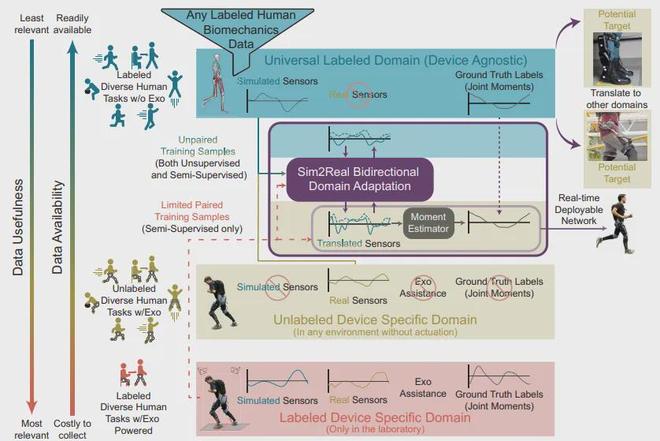
Science Robotics: Deep Domain Adaptation Significantly Reduces Exoskeleton Data Annotation Costs
A research team at Georgia Tech has introduced a groundbreaking deep domain adaptation framework that significantly minimizes the reliance on exoskeleton-specific annotated data, cutting the requirement by 95% while ensuring optimal control performance. This innovative method utilizes open-source biomechanics datasets to convert human motion data into training data for exoskeletons. The development aims to tackle the substantial costs associated with data acquisition in the field, thereby enhancing the efficiency and accessibility of exoskeleton technology.
Exoskeleton Technology Data Annotation Biomechanics Machine Learning Robotics
Can Heterogeneous Robots Share Skills? Collaborative Breakthrough by Peking University, Tsinghua University, and Others in IAIL Framework Published in Science Robotics
A collaborative research team from leading universities has introduced the IAIL framework, a groundbreaking system that allows diverse robots to autonomously comprehend and perform tasks without the need for prior programming or human input. This innovative framework emphasizes intention alignment over mere action replication, which markedly improves coordination among multiple robots. The development, announced in October 2023, aims to revolutionize the way robots interact and collaborate in various environments, paving the way for more efficient and effective robotic applications across multiple sectors.
Heterogeneous Robots Robot Collaboration AI Frameworks Robotics Research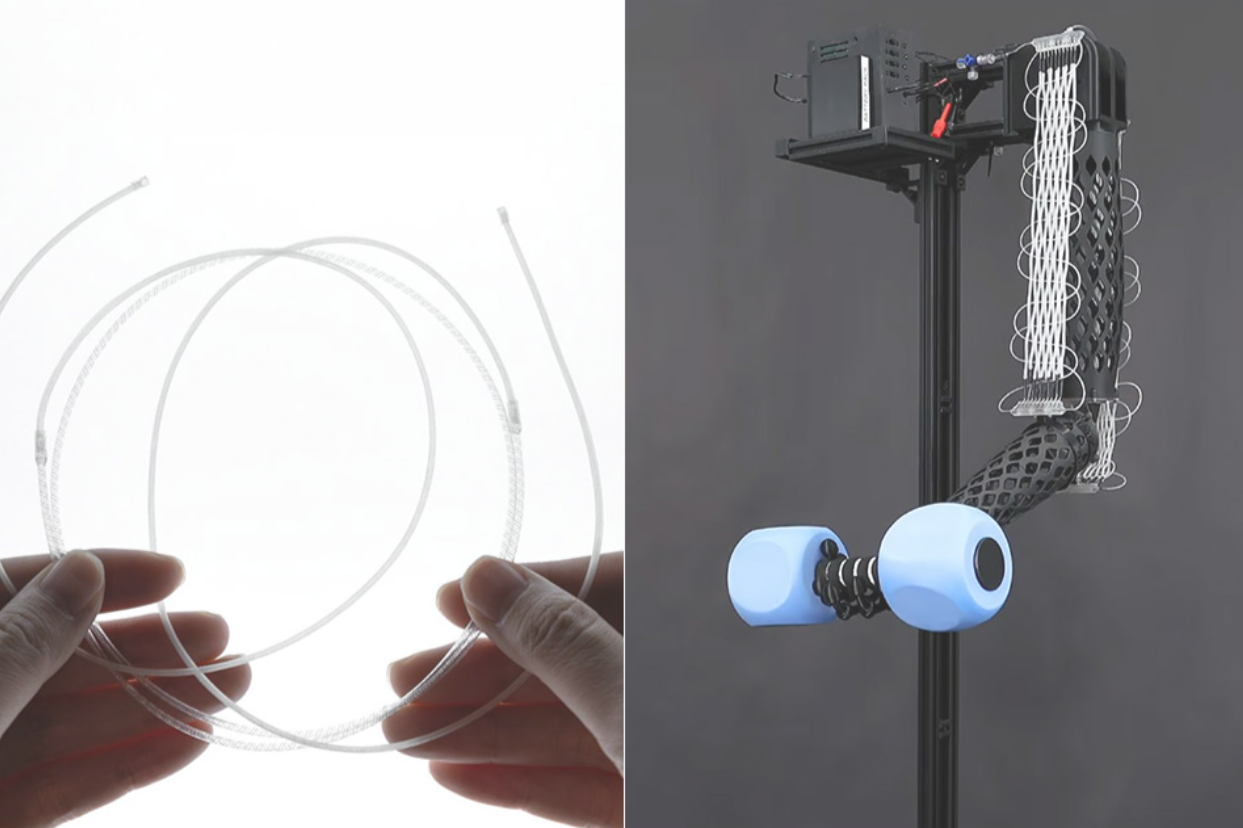
MIT Develops Innovative 'Fiber Muscles' for Robots to Imitate Natural Muscle Movement
Researchers from MIT Media Lab and Bari Polytechnic University have unveiled a groundbreaking technology in soft robotics, detailed in the journal Science Robotics. They have developed 'fiber muscles' that operate silently and efficiently, eliminating the need for external pumps and bulky components traditionally used in robotic joints. This innovation is significant as it addresses the limitations of current robotic systems, which rely on motors and gearboxes that generate noise and require heavy parts, impacting flexibility and energy efficiency. The new system integrates miniature pumps within the muscle fibers, allowing for a self-contained, lightweight, and quiet operation that mimics human muscle movement. Looking ahead, this technology could revolutionize the design of soft robots, enabling them to be embedded in robotic arms, wearable exoskeletons, or prosthetics. The potential for these fiber muscles to enhance human-robot interaction and create more adaptable robotic systems is promising, suggesting a future where the physical boundaries of human-robot coexistence may become more fluid.
Soft Robotics Robotic Actuators Bio-inspired Technology Wearable Robotics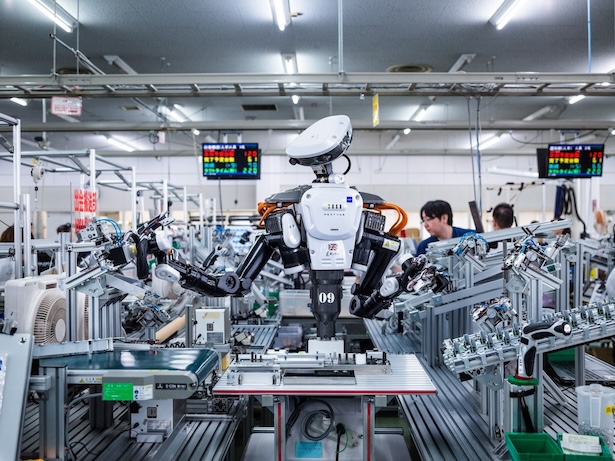
Correction Notice for Research Article on Robot Peer Failures and Student Learning
An erratum has been issued for the research article titled 'Observing a robot peer’s failures facilitates students’ classroom learning' published in Science Robotics. This correction addresses inaccuracies found in the original publication, ensuring the integrity of the research findings. The importance of this erratum lies in its impact on the understanding of how robot interactions can enhance educational outcomes. The original study highlighted the role of robot peer failures in facilitating learning among students, a significant aspect of integrating robotics into educational settings. Moving forward, it will be essential to monitor any further updates or corrections related to this research. No further timeline was disclosed at the time of publication.
Errata
Agile Multiskill Locomotion Techniques for Quadrupedal Robots in Natural Environments
A recent study published in Science Robotics explores advanced locomotion techniques for quadrupedal robots designed for outdoor environments. The research focuses on developing agile and perceptive multiskill locomotion capabilities that enable these robots to navigate complex terrains effectively. This advancement is significant as it enhances the operational versatility of quadrupedal robots, making them more suitable for various applications in challenging environments. By improving their ability to adapt to different terrains, these robots can be utilized in fields such as search and rescue, environmental monitoring, and exploration. Looking ahead, the implications of this research could lead to further innovations in robotic mobility and autonomy. No further timeline was disclosed at the time of publication.
Research Article
Allocentric Teleoperation Enhances Multirobot Coordination from Variable Perspectives
In the July 2026 issue of Science Robotics, researchers introduced allocentric teleoperation as a novel approach to enhance multirobot coordination. This method allows operators to control multiple robots from various perspectives, improving situational awareness and operational efficiency. The significance of this development lies in its potential to transform how operators interact with robotic systems. By enabling a variable perspective, allocentric teleoperation can facilitate more intuitive control and better decision-making in complex environments, which is crucial for applications in fields such as search and rescue, exploration, and industrial automation. Looking ahead, the implications of allocentric teleoperation could lead to advancements in robotic teamwork and autonomy. Future research may focus on refining this technology and exploring its integration into existing robotic systems. No further timeline was disclosed at the time of publication.
Research Article
Learning flight navigation like a honey bee
In June 2026, a groundbreaking study published in Science Robotics highlights significant advancements in robotic technology aimed at enhancing human-robot collaboration. Researchers from leading universities and tech companies have developed a new generation of robots equipped with advanced artificial intelligence, enabling them to perform complex tasks alongside human workers more efficiently. This initiative is driven by the increasing demand for automation in various industries, particularly in manufacturing and healthcare, where precision and reliability are paramount. The study outlines how these robots can adapt to dynamic environments, learn from human interactions, and improve their performance over time, thereby reducing the risk of workplace accidents and increasing productivity. The research team conducted extensive field tests in factories and hospitals to evaluate the robots' capabilities in real-world scenarios. The results demonstrated a marked improvement in task execution speed and accuracy when robots and humans worked in tandem, showcasing the potential for these technologies to transform traditional workflows. As industries continue to evolve, the implications of this research could lead to a new era of collaboration between humans and machines, addressing labor shortages and enhancing operational efficiency. The findings underscore the importance of ongoing innovation in robotics, paving the way for future developments that could redefine the nature of work across various sectors.
Editors' Choice
Is your robot vacuum cleaner spying on you?
In a groundbreaking study published in the June 2026 issue of Science Robotics, researchers have unveiled a new robotic system designed to enhance surgical precision and efficiency. This innovative technology, developed by a team of engineers and medical professionals, aims to reduce the risks associated with complex surgical procedures. The research team conducted extensive trials over a two-year period, testing the robotic system in various surgical environments. Their findings indicate that the robot can perform intricate tasks with a level of accuracy surpassing that of human surgeons, potentially leading to improved patient outcomes. The motivation behind this development stems from the increasing demand for safer and more effective surgical methods, particularly in high-stakes operations. By integrating advanced robotics with surgical practices, the team hopes to address common challenges such as human error and fatigue during lengthy procedures. The trials took place in multiple hospitals across the United States, where the robotic system was utilized in real-time surgeries. Observations showed a significant decrease in operation times and recovery periods for patients, highlighting the potential of robotics to revolutionize the field of surgery. As the medical community continues to explore the implications of this technology, the research team is optimistic about future applications, including training programs for surgeons and expanded use in various medical specialties. This advancement marks a significant step forward in the intersection of robotics and healthcare, promising to enhance the capabilities of surgical teams worldwide.
Focus
DNA origami snaps into place
In a groundbreaking study published in the June 2026 issue of Science Robotics, researchers from leading universities have unveiled a new robotic system designed to assist in complex surgical procedures. This innovative technology aims to enhance precision and reduce recovery times for patients undergoing surgery. The research team, comprised of engineers and medical professionals, conducted extensive trials over the past year, demonstrating the robot's capabilities in various surgical environments. Their findings indicate that the robotic system can significantly improve outcomes in surgeries that require high levels of dexterity and accuracy. The motivation behind this development stems from the increasing demand for minimally invasive surgical techniques, which are known to offer patients quicker recovery and less postoperative pain. By integrating advanced robotics with surgical practices, the team hopes to address these needs and set a new standard in surgical care. The trials were conducted in multiple hospitals across the United States, where the robotic system was tested in real-time surgical scenarios. Feedback from surgeons and patients has been overwhelmingly positive, highlighting the robot's potential to revolutionize surgical procedures. As the medical community continues to explore the integration of robotics in healthcare, this study marks a significant step forward, paving the way for future innovations that could transform patient care and surgical practices worldwide.
Focus
A high-endurance DNA origami snap-through switch for functional nanoscale control
In June 2026, a groundbreaking study published in Science Robotics highlights advancements in robotic technology that could revolutionize various industries. Researchers from leading universities and tech companies collaborated to develop a new generation of robots capable of performing complex tasks with unprecedented efficiency and precision. This innovation aims to address the growing demand for automation in sectors such as manufacturing, healthcare, and logistics. The study showcases robots equipped with advanced artificial intelligence and machine learning algorithms, enabling them to adapt to dynamic environments and learn from their experiences. By enhancing their operational capabilities, these robots can significantly reduce labor costs and improve productivity, ultimately benefiting businesses and consumers alike. The research team conducted extensive experiments in controlled environments to test the robots' performance, demonstrating their ability to execute intricate tasks that were previously thought to require human intervention. This development comes in response to the increasing pressure on industries to streamline operations and meet the challenges posed by a rapidly changing economic landscape. As companies seek to integrate these advanced robotic systems into their workflows, the implications for the workforce and future job markets are profound. The study underscores the potential for robots to not only augment human labor but also create new opportunities in technology and engineering fields. The findings are expected to spark further research and investment in robotics, paving the way for a more automated future.
Research Article
Do people feel safe in a robot’s presence?
In a groundbreaking study published in the June 2026 issue of Science Robotics, researchers from a leading university have unveiled a new robotic system designed to assist in disaster response efforts. The innovative technology, which combines advanced artificial intelligence with agile mobility, aims to enhance the efficiency and effectiveness of rescue operations in environments that are hazardous or difficult to navigate. The research team conducted extensive field tests in various simulated disaster scenarios, demonstrating the robot's ability to traverse challenging terrains and perform critical tasks such as locating survivors and delivering supplies. These tests were carried out in collaboration with emergency response organizations to ensure real-world applicability. The motivation behind this development stems from the increasing frequency and severity of natural disasters, which necessitate improved response mechanisms to save lives and minimize damage. By integrating cutting-edge robotics with emergency protocols, the researchers hope to provide first responders with a powerful tool that can operate in conditions that are unsafe for human intervention. This advancement in robotic technology represents a significant step forward in disaster management, showcasing how innovation can be harnessed to address pressing global challenges. The study highlights the potential for future enhancements and the importance of ongoing collaboration between scientists and emergency services to refine these systems for practical use in real-world situations.
Editors' Choice
Stop chasing identical outcomes in HRI replication: Learn from the differences
In a groundbreaking study published in the June 2026 issue of Science Robotics, researchers from leading universities have unveiled a new robotic system designed to assist in complex surgical procedures. This innovative technology aims to enhance precision and reduce recovery times for patients undergoing surgery. The research team, comprised of experts in robotics and medicine, conducted extensive trials to evaluate the system's effectiveness. Their findings indicate that the robotic assistant can significantly improve surgical outcomes by minimizing human error and providing surgeons with advanced tools for intricate tasks. The development of this robotic system comes in response to the growing demand for more efficient and safer surgical methods, driven by an increase in minimally invasive procedures. By integrating artificial intelligence and machine learning, the robot is capable of adapting to various surgical environments and techniques, thereby expanding its applicability across different medical specialties. The trials took place in several hospitals, where the robotic system was tested alongside traditional surgical methods. Results showed a marked improvement in patient recovery rates and overall satisfaction with the surgical experience. As the healthcare industry continues to evolve, this robotic innovation represents a significant step forward in the integration of technology into medical practice, promising to transform the future of surgery and patient care.
Focus
Therapist-exoskeleton-patient interaction for gait therapy
In a groundbreaking study published in the June 2026 issue of Science Robotics, researchers have unveiled a new robotic system designed to enhance surgical precision. This innovative technology, developed by a team of engineers and medical professionals, aims to improve patient outcomes in complex surgical procedures. The study highlights the system's ability to integrate advanced imaging techniques with real-time data analysis, allowing surgeons to navigate intricate anatomical structures with unprecedented accuracy. Conducted at a leading medical research facility, the trials demonstrated a significant reduction in operation time and postoperative complications compared to traditional methods. The motivation behind this development stems from the increasing demand for minimally invasive surgical options, which promise quicker recovery times and less trauma for patients. By leveraging cutting-edge robotics and artificial intelligence, the team has created a tool that not only assists surgeons but also enhances their decision-making capabilities during operations. As the medical community continues to embrace technological advancements, this robotic system represents a significant step forward in the field of surgery, potentially transforming how procedures are performed in the future. The researchers are optimistic that further refinements and clinical trials will lead to widespread adoption in hospitals worldwide, ultimately benefiting countless patients.
Research Article
Translational bottlenecks for biohybrid microrobots
In a groundbreaking study published in the June 2026 issue of Science Robotics, researchers from leading universities have unveiled a new robotic system designed to assist in disaster relief efforts. This innovative technology aims to enhance the efficiency and effectiveness of rescue operations in the aftermath of natural disasters. The research team, comprised of experts in robotics and emergency management, conducted extensive field tests to evaluate the robot's capabilities in various simulated disaster scenarios. These tests demonstrated the robot's ability to navigate challenging terrains, locate survivors, and deliver essential supplies, significantly improving response times compared to traditional methods. The motivation behind this development stems from the increasing frequency and severity of natural disasters worldwide, which necessitates advanced solutions to aid first responders. By integrating artificial intelligence and machine learning, the robotic system can adapt to dynamic environments and make real-time decisions, thereby optimizing rescue strategies. The study's findings highlight the potential for robotics to transform disaster response, offering a promising tool for humanitarian efforts. As the world faces escalating climate-related challenges, this innovative approach could play a crucial role in saving lives and mitigating the impact of future disasters.
Focus
From ball to rover: Transformable palm-sized rover SORA-Q for autonomous lunar exploration
In June 2026, a groundbreaking study published in Science Robotics highlights advancements in robotic technology, showcasing innovative designs and applications that could revolutionize various industries. Researchers from leading institutions collaborated to develop these robots, which are engineered to enhance efficiency and safety in sectors such as manufacturing, healthcare, and logistics. The study emphasizes the integration of artificial intelligence and machine learning, enabling robots to adapt to complex environments and perform tasks with greater precision. This research is particularly timely as industries seek to recover and innovate following disruptions caused by global events in previous years. The findings were presented at an international robotics conference held in Tokyo, where experts gathered to discuss the future of automation and its implications for the workforce. The motivation behind this research stems from the increasing demand for automation solutions that can address labor shortages and improve productivity. By employing advanced algorithms and sensor technologies, the robots demonstrated their ability to collaborate with human workers, paving the way for safer and more efficient workplace environments. This study not only marks a significant milestone in robotic development but also sets the stage for further exploration into the ethical and economic impacts of widespread robotic integration in society.
Research Article
Precise aggressive aerial maneuvers with sensorimotor policies
In a groundbreaking study published in the June 2026 issue of Science Robotics, researchers from leading universities have unveiled a new robotic system designed to assist in complex surgical procedures. This innovative technology aims to enhance precision and reduce recovery times for patients undergoing surgery. The research team, comprised of experts in robotics and medicine, conducted extensive trials over the past two years to refine the system's capabilities. The trials were held at various hospitals, allowing for real-world testing and feedback from surgical teams. The motivation behind this development stems from the increasing demand for minimally invasive surgical options, which can lead to better patient outcomes. By integrating advanced robotics with surgical techniques, the team hopes to address challenges faced by surgeons, such as limited visibility and dexterity during operations. The robotic system employs state-of-the-art sensors and AI algorithms to assist surgeons in real-time, providing them with enhanced control and accuracy. Initial results from the trials indicate a significant reduction in surgery time and improved patient recovery rates, suggesting that this technology could revolutionize surgical practices. As the medical community anticipates further advancements, the researchers are optimistic about the potential for widespread adoption of this robotic system in operating rooms around the world, paving the way for a new era in surgical care.
Research Article
Fusing LiDAR and vision to generate high-quality reconstructions
In a groundbreaking study published in the May 2026 issue of Science Robotics, researchers have unveiled a new robotic system designed to enhance surgical precision. This innovative technology, developed by a team at a leading university, aims to reduce the risks associated with complex surgical procedures. The research, conducted over the past two years, involved extensive testing and collaboration with medical professionals to ensure the system meets clinical needs. The robotic system employs advanced algorithms and real-time imaging to assist surgeons during operations, allowing for greater accuracy and control. This development comes in response to the increasing demand for minimally invasive surgical techniques that promise quicker recovery times and fewer complications for patients. The team conducted trials in various surgical settings, demonstrating the system's effectiveness in improving outcomes across different types of procedures. By integrating cutting-edge robotics with traditional surgical methods, the researchers hope to set a new standard in the field, ultimately benefiting both surgeons and patients alike. As the medical community continues to explore the potential of robotics in healthcare, this study represents a significant step forward in the quest for safer and more efficient surgical practices. The implications of this research could lead to widespread adoption of robotic assistance in operating rooms around the world, transforming the landscape of surgical care.
Editors' Choice
The Moon needs robots
In May 2026, a groundbreaking study published in Science Robotics highlights advancements in robotic technology aimed at enhancing human-robot collaboration in various industries. Researchers from leading universities and tech companies conducted extensive experiments to develop robots capable of adapting to dynamic work environments, thereby improving efficiency and safety in tasks ranging from manufacturing to healthcare. The study reveals that these advanced robots utilize artificial intelligence and machine learning algorithms to learn from their surroundings and make real-time decisions. This innovation is particularly significant as it addresses the growing demand for automation in response to labor shortages and the need for increased productivity in the wake of global economic challenges. The research team conducted trials in diverse settings, including factories and hospitals, demonstrating the robots' ability to work alongside human operators without compromising safety. The findings suggest that integrating these robots into the workforce could lead to substantial improvements in operational workflows and reduce the risk of workplace accidents. By showcasing the potential of these technologies, the study aims to encourage further investment in robotic systems that can seamlessly collaborate with humans, ultimately transforming the landscape of various sectors. As industries continue to evolve, the insights from this research could pave the way for a new era of enhanced human-robot interaction, fostering innovation and growth in the global economy.
Focus
Embodied or virtually represented: Navigating the embodiment debate in human-robot interaction
In a groundbreaking study published in the May 2026 issue of Science Robotics, researchers have unveiled a new robotic system designed to enhance surgical precision. This innovative technology, developed by a team of engineers and medical professionals, aims to improve patient outcomes in minimally invasive procedures. The research was conducted at a leading medical institution, where the team tested the robotic system in various surgical scenarios. The motivation behind this development stems from the increasing demand for advanced surgical techniques that can reduce recovery times and minimize complications. By integrating advanced algorithms and real-time imaging, the robotic system allows surgeons to perform intricate tasks with greater accuracy than traditional methods. Initial trials have shown promising results, indicating a significant reduction in surgical errors and improved overall efficiency in the operating room. As the medical community continues to seek ways to enhance surgical practices, this new technology represents a significant step forward in the quest for safer and more effective medical interventions. The team plans to conduct further studies to refine the system and explore its applications across different types of surgeries.
Focus
Extreme dynamic symmetry enables omnidirectional and multifunctional robots
In a groundbreaking study published in the May 2026 issue of Science Robotics, researchers have unveiled a new robotic system designed to assist in complex surgical procedures. This innovative technology aims to enhance precision and reduce recovery times for patients undergoing surgery. Conducted at a leading medical research facility, the study highlights the collaboration between engineers and medical professionals to develop a robot capable of performing intricate tasks with minimal human intervention. The research team, motivated by the need for improved surgical outcomes and efficiency, utilized advanced algorithms and machine learning techniques to train the robot. Over a series of trials, the system demonstrated remarkable accuracy in simulated environments, suggesting its potential for real-world applications in operating rooms. As healthcare continues to evolve, this robotic system represents a significant advancement in surgical technology, promising to transform the way surgeries are performed and ultimately improve patient care. The findings underscore the importance of interdisciplinary collaboration in driving innovation in medical robotics, paving the way for future developments in the field.
Research Article
A minimally invasive robotic spinal surgical system for anterior lumbar nerve decompression
In May 2026, a groundbreaking study published in Science Robotics highlights the advancements in robotic technology aimed at enhancing human-robot collaboration. Researchers from leading universities and tech companies gathered to explore innovative methods for integrating robots into various industries, including manufacturing and healthcare. The study reveals that the increasing complexity of tasks in these sectors necessitates a more sophisticated approach to robotics, emphasizing the need for machines that can adapt to dynamic environments and work alongside human counterparts effectively. The research team conducted extensive experiments to develop algorithms that enable robots to learn from their interactions with humans, improving their efficiency and safety. This initiative is driven by the growing demand for automation and the potential for robots to alleviate labor shortages while increasing productivity. By focusing on collaborative robots, or cobots, the researchers aim to create systems that not only perform tasks but also understand and respond to human cues, fostering a more intuitive working relationship. The findings are expected to pave the way for the next generation of robotic systems that can seamlessly integrate into the workforce, ultimately transforming how industries operate and enhancing overall productivity. As the field of robotics continues to evolve, this research marks a significant step towards realizing the full potential of human-robot collaboration.
Research Article
Revolutionizing Communication: Robots Enable Musicians to Achieve 'Tactile Communication' with Superior Coordination
A recent study published in Science Robotics has demonstrated that tactile feedback from robotic exoskeletons significantly improves musical coordination among violinists, surpassing the effectiveness of traditional visual cues. Conducted by a team of researchers, this pioneering work highlights the potential of touch-based interaction in enhancing collaborative performance in music. By integrating tactile sensations into the practice of playing instruments, the study suggests new possibilities for human collaboration, particularly in musical settings. This innovative approach not only showcases the advancements in robotics but also emphasizes the importance of sensory experiences in artistic endeavors.
Robotic Exoskeletons Tactile Feedback Musical Coordination Human-Robot Interaction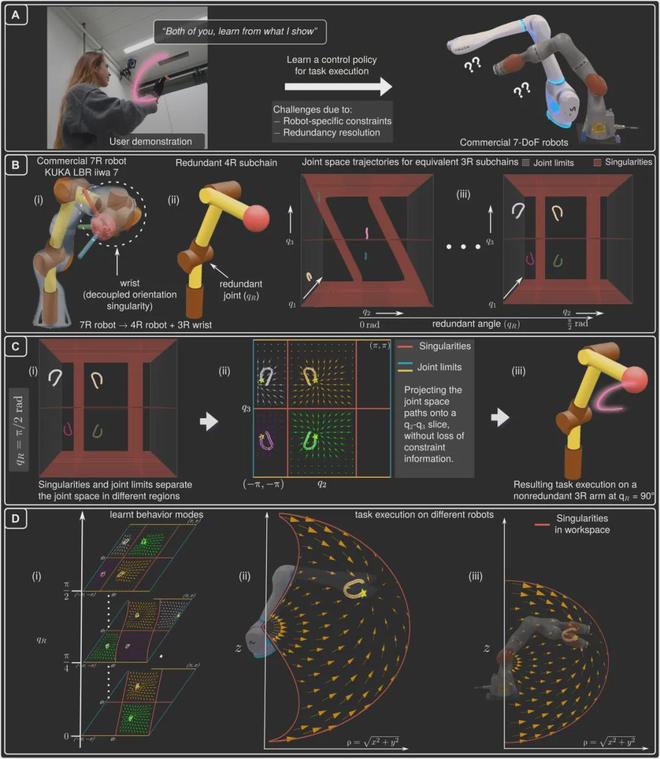
Why Switching Robots Requires Relearning Skills: A Breakthrough in Kinematic Intelligence
A recent study published in 'Science Robotics' has made significant strides in the field of robotics by tackling the challenge of skill transfer among different robotic systems. Researchers have introduced a concept known as 'kinematic intelligence,' which allows robots to comprehend their own physical structures. This advancement enables skills acquired by one robot to be effectively applied to others without the necessity for retraining. This breakthrough could revolutionize the way robots are programmed and utilized across various applications, enhancing their adaptability and efficiency in diverse environments.
Kinematic Intelligence Robot Skill Transfer Machine Learning Robotics Engineering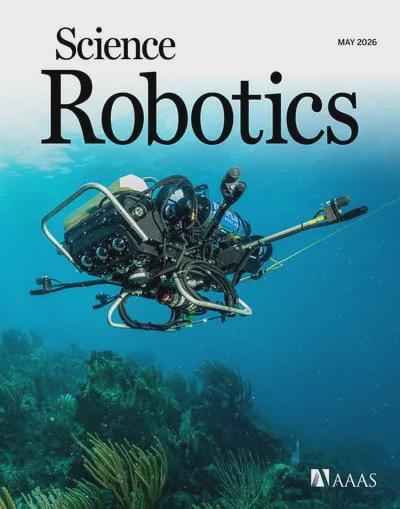
CUREE: An Underwater Robot That Locates Marine Life Using Sound and Vision
A groundbreaking development in marine ecology has emerged with the introduction of the CUREE underwater robot, which autonomously identifies marine life hotspots in the Caribbean. Utilizing advanced auditory and visual sensors, this innovative technology significantly enhances ecological monitoring and contributes to a deeper understanding of coral reef ecosystems. The findings and capabilities of the CUREE robot were detailed in the latest issue of Science Robotics, showcasing its potential to revolutionize the way researchers study and protect marine environments. By providing precise data on marine biodiversity, the CUREE robot aims to support conservation efforts and promote sustainable practices in the region.
Underwater Robotics Marine Biology Ecological Monitoring AI Technology
Shape-morphing metamaterials with continuous relearning
In a groundbreaking study published in the May 2026 issue of Science Robotics, researchers from a leading robotics institute have unveiled a new autonomous robotic system designed to assist in disaster response efforts. The innovative technology aims to enhance the efficiency and effectiveness of rescue operations in the aftermath of natural disasters, such as earthquakes and floods. The research team, comprised of experts in robotics and emergency management, conducted extensive field tests in various simulated disaster scenarios to evaluate the robot's capabilities. These tests demonstrated the system's ability to navigate challenging terrains, locate survivors, and deliver essential supplies, significantly reducing response times. The motivation behind this development stems from the increasing frequency and severity of natural disasters worldwide, which necessitate improved response strategies. By integrating advanced artificial intelligence and machine learning algorithms, the robotic system can adapt to dynamic environments and make real-time decisions, ultimately saving lives. The study highlights the potential for collaboration between technology and emergency services, showcasing how robotics can play a crucial role in humanitarian efforts. As the world grapples with the impacts of climate change, this innovation represents a significant step forward in preparing for and responding to future crises.
Editors' Choice
Acceptance of humanoid robots: A psychological perspective
In a groundbreaking study published in the May 2026 issue of Science Robotics, researchers have unveiled a new robotic technology designed to assist in complex surgical procedures. This innovative system, developed by a team at a leading robotics institute, aims to enhance precision and reduce recovery times for patients undergoing surgery. The research team conducted extensive trials over the past year, testing the robotic system in various surgical environments to assess its effectiveness and safety. Their findings indicate that the robotic assistant can significantly improve surgical outcomes by providing surgeons with enhanced dexterity and real-time data analysis during operations. The motivation behind this development stems from the increasing demand for advanced surgical techniques that minimize invasiveness while maximizing efficiency. By integrating cutting-edge robotics into the operating room, the researchers hope to address challenges faced by surgeons and improve patient care. The study's implications are far-reaching, as it not only showcases the potential of robotics in medicine but also sets the stage for future innovations in surgical technology. As the healthcare industry continues to evolve, this robotic system could become a standard tool in operating rooms worldwide, ultimately transforming the landscape of surgical procedures.
Focus
“Humanoids will soon replace most human workers”: A debate
In May 2026, a groundbreaking study published in Science Robotics highlights significant advancements in autonomous robotic systems. Researchers from leading technology institutes have developed a new generation of robots capable of performing complex tasks in unpredictable environments. This innovation aims to enhance efficiency in various sectors, including manufacturing, healthcare, and disaster response. The study reveals that these robots utilize advanced artificial intelligence algorithms, allowing them to adapt to changing conditions and make real-time decisions. This capability is particularly crucial for applications in emergency situations, where human intervention may be limited or dangerous. The research team conducted extensive field tests in diverse settings, demonstrating the robots' ability to navigate obstacles and collaborate with human operators effectively. The findings suggest that the integration of such robotic systems could revolutionize industries by improving productivity and safety. The motivation behind this development stems from the increasing demand for automation and the need for reliable solutions in challenging environments. As industries continue to seek ways to optimize operations and reduce human risk, these autonomous robots represent a significant step forward in robotics technology. Overall, the study underscores the potential of robotics to transform various fields, paving the way for future innovations that could further enhance human-robot collaboration.
Viewpoint
Cross-link collective: Entangled robotic matter with cohesive motion
In a groundbreaking study published in the May 2026 issue of Science Robotics, researchers have unveiled a new robotic system designed to assist in complex surgical procedures. This innovative technology, developed by a team of engineers and medical professionals, aims to enhance precision and reduce recovery times for patients undergoing surgery. The research was conducted at a leading medical institution, where the team tested the robotic system in various simulated surgical scenarios. The results demonstrated significant improvements in accuracy compared to traditional methods, showcasing the potential for robots to support surgeons in high-stakes environments. The motivation behind this development stems from the increasing demand for advanced surgical techniques that can minimize invasiveness and improve patient outcomes. By integrating robotics into the operating room, the researchers hope to address challenges such as human error and variability in surgical performance. The robotic system operates through a combination of advanced algorithms and real-time imaging, allowing it to adapt to the unique conditions of each surgical procedure. This adaptability is crucial for ensuring that the technology can be effectively utilized across a range of operations. As the medical field continues to evolve, this research marks a significant step towards the future of surgery, where robotic assistance could become a standard part of the surgical toolkit, ultimately benefiting patients and healthcare providers alike.
Research Article
Autonomous seeking and mapping coral reef biodiversity hotspots with a multimodal AUV
In a groundbreaking study published in the May 2026 issue of Science Robotics, researchers have unveiled a new robotic system designed to assist in complex surgical procedures. This innovative technology, developed by a team of engineers and medical professionals, aims to enhance precision and reduce recovery times for patients undergoing surgery. The research was conducted at a leading medical institution, where the team tested the robotic system in a series of simulated surgeries. The results demonstrated significant improvements in accuracy compared to traditional surgical methods, showcasing the potential for robots to play a crucial role in the operating room. The motivation behind this development stems from the increasing demand for minimally invasive surgical techniques that can lead to quicker patient recovery and lower risk of complications. By integrating advanced robotics with surgical practices, the team hopes to address these challenges and improve overall patient outcomes. The robotic system operates through a combination of artificial intelligence and real-time data analysis, allowing it to adapt to the unique requirements of each surgical procedure. This adaptability is expected to empower surgeons, providing them with enhanced tools to perform intricate tasks with greater confidence. As the medical community continues to explore the integration of robotics in healthcare, this study represents a significant step forward in the evolution of surgical practices, potentially transforming the landscape of modern medicine.
Research Article
RAPTOR: A foundation policy for quadrotor control
In May 2026, a groundbreaking study published in Science Robotics highlights advancements in robotic technology that could revolutionize various industries. Researchers from leading universities and tech companies collaborated to develop a new generation of robots capable of performing complex tasks with enhanced precision and efficiency. This innovation aims to address labor shortages and improve productivity in sectors such as manufacturing, healthcare, and logistics. The study showcases robots equipped with advanced artificial intelligence and machine learning algorithms, enabling them to adapt to dynamic environments and learn from their experiences. The research team conducted extensive testing in real-world scenarios to demonstrate the robots' capabilities, revealing significant improvements in operational speed and accuracy compared to previous models. The motivation behind this development stems from the increasing demand for automation in response to global economic challenges and the need for more efficient workflows. By integrating these sophisticated robots into various industries, the researchers believe they can not only alleviate workforce pressures but also enhance safety and reduce operational costs. As industries continue to evolve, the findings from this study could pave the way for widespread adoption of robotic solutions, ultimately transforming how businesses operate and interact with technology. The implications of this research extend beyond mere automation, suggesting a future where humans and robots work collaboratively to achieve greater outcomes.
Research Article
What will it take to make AI-enabled robots safer?
Researchers from Penn Engineering, Carnegie Mellon University, and the University of Oxford have raised concerns about the inadequacy of current efforts to align artificial intelligence with human values, particularly in robotic systems. Their findings, published in the journal Science Robotics, emphasize the urgent need for more comprehensive frameworks to ensure that AI-enabled robots adhere to fundamental ethical principles. This call to action echoes the famous dictum by science fiction writer Isaac Asimov, which states, "A robot may not injure a human being." The study highlights the potential risks associated with the integration of AI in robotics and advocates for a proactive approach to safeguard human welfare.
Robotics
Impossible Metals Announces New Advanced Marine Robotics Hub in Pittsburgh for Mineral Robotics Development
Impossible Metals has unveiled plans to establish an Advanced Marine Robotics Hub in Pittsburgh, aimed at developing dual-use autonomy for ocean science and naval systems. This initiative is part of a broader effort to create a China-free critical-mineral supply chain, leveraging the region's expertise in robotics. The new hub will not only foster innovation in mineral robotics technology but also generate over a dozen high-paying engineering and science jobs in Pennsylvania. This move underscores the importance of local talent in advancing the United States' capabilities in marine robotics and autonomy. Looking ahead, stakeholders should monitor the hub's progress and its potential impact on the critical-mineral supply chain. No further timeline was disclosed at the time of publication.
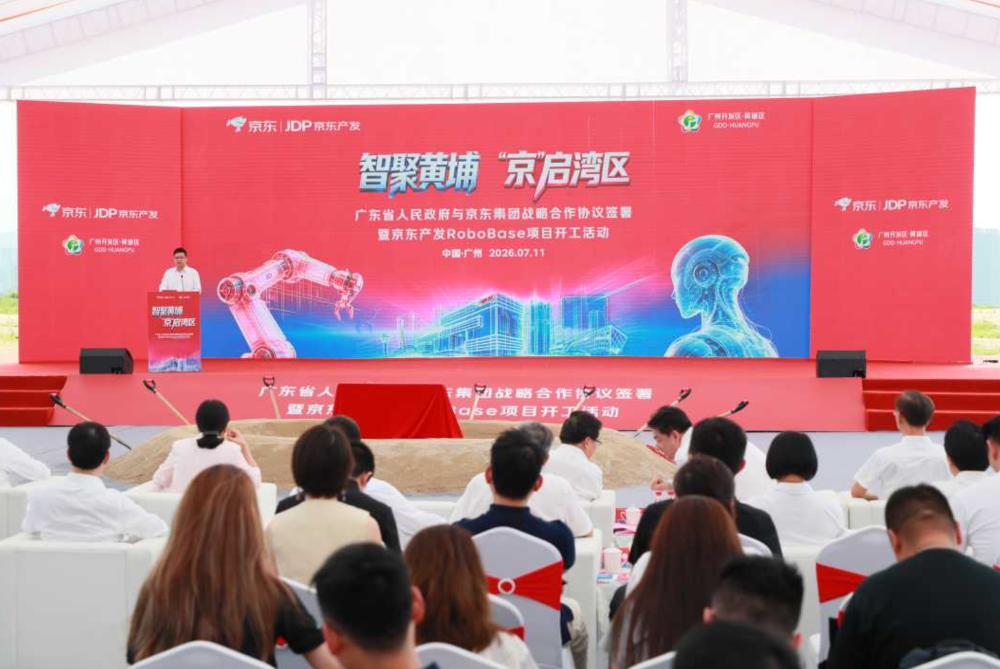
JD Group Launches First RoboBase Project in Guangzhou to Foster Robotics Ecosystem
On July 11, JD Group signed a comprehensive strategic cooperation agreement with the Guangdong provincial government, focusing on nine key areas including digital economy and modern logistics. The first physical benchmark of this agreement, the RoboBase project, commenced construction in the Huangpu Science City, Guangzhou. This marks JD's first RoboBase globally, covering approximately 190,000 square meters, with completion expected by the end of 2028 and an anticipated annual output value of about 1.75 billion yuan. The RoboBase project aims to integrate high-end manufacturing, technological innovation, and ecological services, concentrating on core robotic components, complete machine manufacturing, and high-end intelligent equipment. JD's approach is unique as it positions itself as an 'industrial infrastructure operator' rather than directly engaging in robot manufacturing. This strategy is designed to support robotics companies by providing a conducive environment for their operations. Looking ahead, JD's RoboBase will facilitate long-term testing for robots across various real-world scenarios, including JD MALL and logistics parks. The project also emphasizes talent development through partnerships with vocational schools in Guangdong. No further timeline was disclosed at the time of publication.
Robotics Ecosystem High-End Manufacturing Technological Innovation Supply Chain Solutions
MIT Technology Review releases 2025 ’50 Smartest Companies’ list, recognizes Deepseek, Game Science and Unitree Robotics
At the EmTech China 2025 Global Technology Summit held last Friday, MIT Technology Review announced its prestigious annual list of the “50 Smartest Companies.” Among the distinguished honorees were Deepseek, Game Science, and Unitree Robotics. Deepseek stood out for its remarkable achievement in algorithm optimization, demonstrating world-class model performance while maintaining low training costs, marking a significant advancement in resource efficiency within the tech industry. The summit highlighted these companies' innovative contributions to technology, underscoring the importance of efficiency and performance in the rapidly evolving landscape.
News Feed
Locus Robotics Appoints Dr. Oscar Mendez to Lead AI and Data Science Team, Pioneering Next-Generation “Physical AI”
Locus Robotics, a leader in AI-driven mobile warehouse automation, has announced significant advancements in its technology aimed at enhancing operational efficiency for logistics companies. The announcement was made today, highlighting the company's commitment to innovation in the rapidly evolving supply chain sector. By integrating advanced artificial intelligence and robotics, Locus Robotics aims to streamline warehouse operations, reduce labor costs, and improve order fulfillment speed. This initiative comes in response to the growing demand for automation solutions in warehouses, driven by the increasing complexity of supply chains and the need for businesses to adapt to changing consumer expectations. The company plans to implement these advancements through strategic partnerships and ongoing research and development, positioning itself at the forefront of the industry as it addresses the challenges faced by logistics providers worldwide.
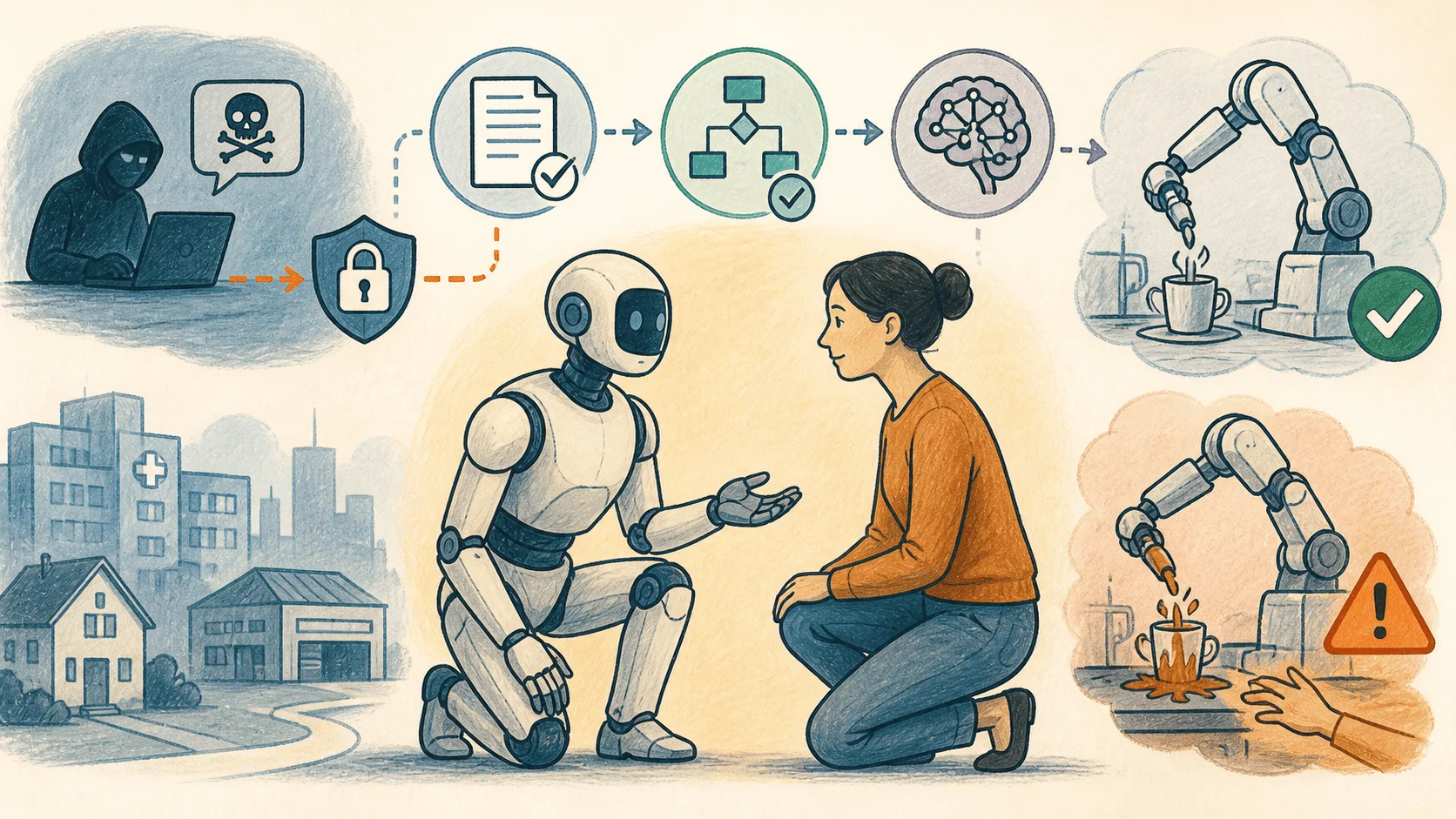
Researchers Suggests More Safety Measures Needed for Robots than AI Chatbots
A recent study conducted by researchers from the University of Pennsylvania, Carnegie Mellon University, and the University of Oxford highlights significant concerns regarding the safety of AI-powered machines operating in close proximity to humans. The findings suggest that current safety protocols may be inadequate as these robots begin to interact with people in physical environments. The researchers emphasize the necessity for more advanced, context-aware safety systems that go beyond the existing measures used for AI chatbots. This study raises alarms about the potential risks associated with deploying AI technologies in real-world settings, urging developers and policymakers to prioritize enhanced safety measures to protect individuals from unforeseen consequences.
AI AI Research & Advances Robotics Carnegie Mellon University Research robots
Generalist AI Releases "Science of Pretraining" Deep Dive: Why Data Quality Trumps Volume in Robotics
Generalist AI has unveiled new insights into its pretraining methodology in a technical addendum related to its recent GEN-0 launch. The company introduced innovative metrics, including "Reverse KL," designed to evaluate the creativity of its models. Additionally, Generalist AI announced that its infrastructure can process an impressive volume of data, equating to 6.85 years of robotic experience each day. This advancement highlights the company's commitment to enhancing artificial intelligence capabilities and underscores its efforts to push the boundaries of machine learning technology.
Data Collection Generalist AI embodied-ai
Crowdfunder Success Prepares Ocean Robotics Game for Launch
A team of scientists has launched an innovative tabletop game aimed at educating players about marine robotics and technology, following the success of their recent crowdfunding campaign. This initiative seeks to make learning about complex scientific concepts accessible and engaging for both homes and classrooms. By combining entertainment with education, the creators hope to inspire a new generation of young minds to explore the field of marine science and robotics. The game is designed to facilitate hands-on learning experiences, encouraging players to interact with the technology in a fun and interactive way. With the backing of enthusiastic supporters from the crowdfunding platform, the project is set to reach a wider audience, promoting awareness and interest in marine technology.
crowdfunding ocean robotics game launch scottish association for marine science (sams)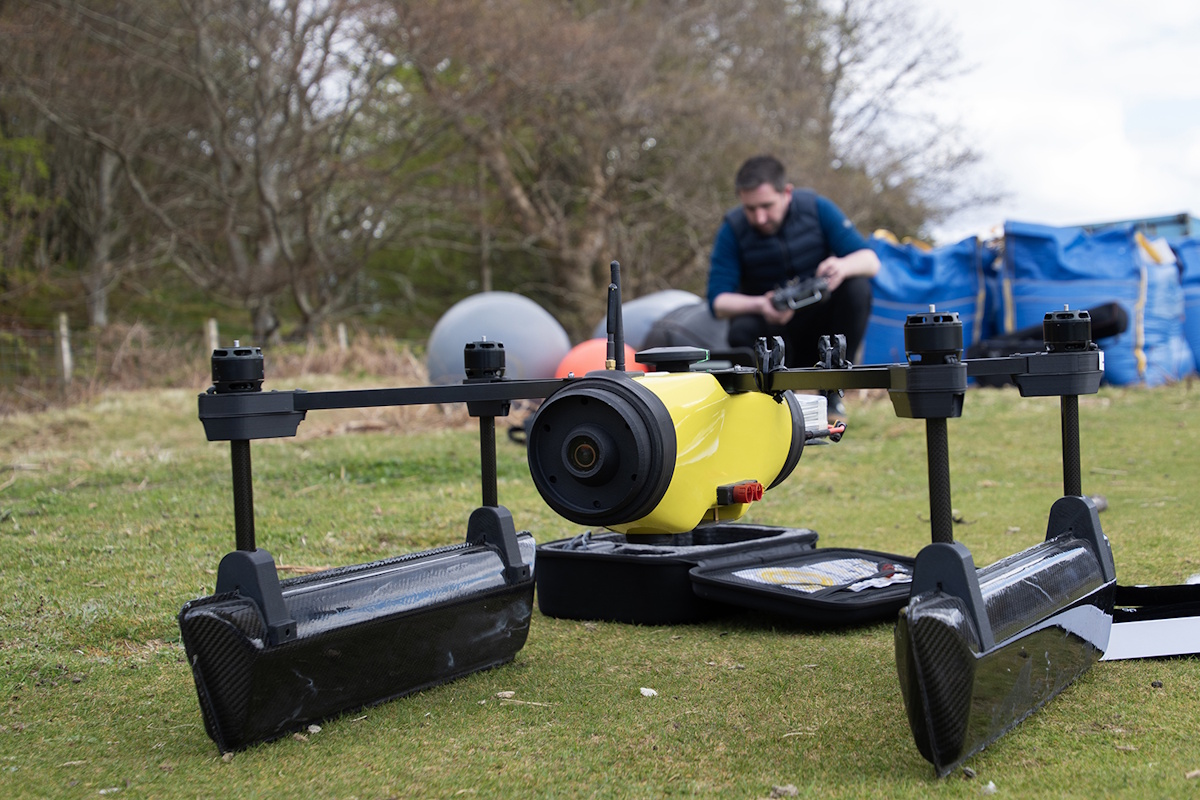
Master the Future of Technology with this Cutting-edge Course from the Scientific Robotics Academy
The Scientific Robotics Academy, located at the Scottish Association for Marine Science (SAMS) in Oban, is set to showcase various robotics systems during a training course scheduled for September 3rd to 5th. This initiative is partially funded by the UK government through the UK Shared Prosperity Fund, highlighting the government's commitment to advancing technological education and innovation. The event aims to enhance participants' understanding of robotics applications in marine science, providing hands-on experience with cutting-edge technology.
course scientific robotics academy scottish association for marine science (sams)
The USC Professor Who Pioneered Socially Assistive Robotics
Maja Matarić, a professor at the University of Southern California, has been a pioneering force in the field of socially assistive robotics since co-defining the area in 2005. Her work focuses on developing robots that provide personalized therapy and support through social interactions, particularly for individuals with anxiety, depression, and autism spectrum disorder. Matarić's research has led to the creation of robots like Bandit, which helps children with autism improve communication skills, and Blossom, designed to assist students in practicing cognitive behavioral therapy (CBT). Recently, Matarić was honored with the 2025 Robotics Medal from MassRobotics, recognizing her contributions to advancing robotics. The award ceremony took place in Boston, where she expressed her joy and gratitude for the support of her peers. Matarić's journey began in Belgrade, Serbia, and she credits her family for inspiring her interest in engineering and computer science. Her current research includes a clinical trial funded by the U.S. National Institute of Mental Health, exploring the effectiveness of Blossom in delivering CBT to students. The trial involves 120 participants and aims to assess the robot's ability to adapt to individual user preferences while measuring their mental health outcomes. Matarić emphasizes the importance of combining engineering with psychology in her work and encourages her students to engage with professional communities like IEEE, which she joined as a graduate student in 1992.
Ieee-member-news Robots Socially-assistive-robotics Mental-health Ieee-robotics-and-automation-soc Type-ti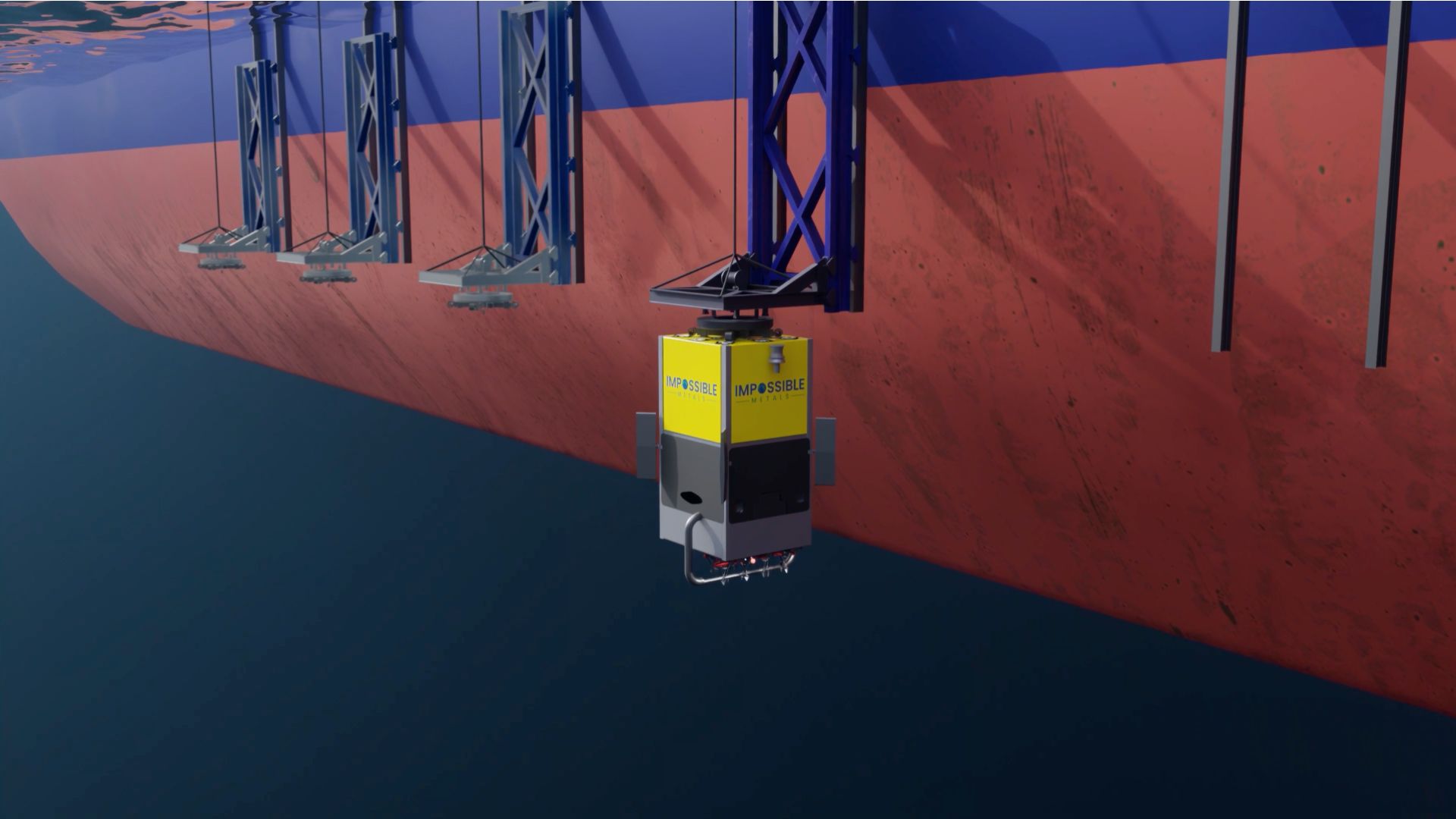
Impossible Metals to Launch Advanced Marine Robotics Hub for Deep-Sea Mineral Harvesting
Impossible Metals, a US mining technology company, has announced plans to establish an Advanced Marine Robotics Hub in Pittsburgh, Pennsylvania. This facility will focus on developing autonomous marine systems for the deep-sea collection of critical minerals, creating over a dozen high-paying engineering and science jobs. The hub aims to enhance US capabilities in marine robotics and critical mineral technologies through collaboration with local universities and researchers. The significance of this initiative lies in its potential to redefine deep-sea mining practices. According to Mike Regan, Chief Growth Officer at Impossible Metals, the hub will enable swarms of autonomous robots to harvest critical minerals like nickel, cobalt, copper, and manganese with minimal environmental impact. This approach not only promises to produce the lowest-cost critical metals on Earth but also aims to strengthen the US supply chain and reduce reliance on foreign sources of essential materials. Looking ahead, the Advanced Marine Robotics Hub will serve as the primary research center for advancing the Eureka autonomous underwater platform and Smart Launch and Recovery Systems. The company plans to continue developing dual-use technologies that cater to both commercial and naval applications. No further timeline was disclosed at the time of publication.
AI and Robotics
Understanding Technological Singularity and Its Impact on Robotics and AI
For decades, technological singularity was more a concept of science fiction than engineering reality. Today, it is a topic of discussion among AI laboratories, industrial giants, investment funds, and robotics companies worldwide. The rapid advancement of generative AI, autonomous robots, foundation models, and AI agents raises a fundamental question: what will happen when machines can enhance their own intelligence faster than humans? The origins of the technological singularity date back to 1965 when British mathematician I.J. Good proposed that an 'ultra-intelligent machine' could trigger an intelligence explosion. In the 1990s, mathematician Vernor Vinge expanded on this idea, suggesting that once a certain level of AI is reached, technological evolution would become unpredictable for humans. Ray Kurzweil later popularized the concept, predicting that artificial general intelligence (AGI) could emerge in the coming decades, leading to continuous self-improvement of systems. Currently, the landscape is shifting rapidly, with large language models, vision-language-action models, and autonomous agents enabling robots to understand natural language instructions, interpret their environment, and learn new tasks without specific programming. Companies like NVIDIA, Google DeepMind, and Tesla are investing billions in developing this new generation of intelligent robots.
À la une IA Industrie Robotique agents autonomes agents IA
Beijing AI for Science Labs Launch Autonomous Robotic Scientists for Material Discovery
Beijing AI for Science labs have introduced autonomous robotic scientists that can design experiments, collect data, and discover new materials within a rapid timeframe of 20 seconds. This deployment represents a significant advancement in the capabilities of AI in scientific research, particularly in material science. The introduction of these robotic scientists is crucial as it signifies a paradigm shift in research methodologies, allowing for faster and more efficient experimentation. By automating the design and data collection processes, researchers can focus on higher-level analysis and innovation, potentially accelerating the pace of scientific discovery. Looking ahead, the impact of these robotic scientists on the research landscape will be closely monitored. The labs have not disclosed further timelines for additional capabilities or expansions, but the initial deployment marks a pivotal moment in the integration of AI and robotics in scientific exploration.
Technology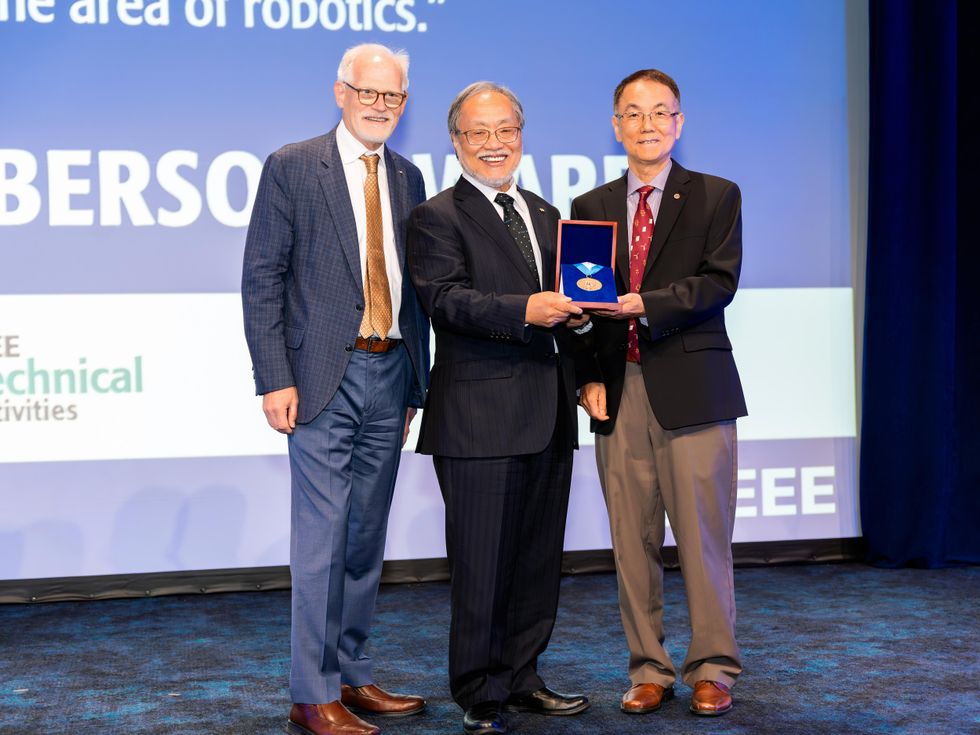
IEEE Honors Robotics Pioneer Toshio Fukuda
Toshio Fukuda has been blazing trails for most of his career. He is considered to be one of the most prolific scholars in robotics, writing more than 2,000 research papers and authoring several books on the field. He’s an influential figure thanks to his pioneering work developing biomedical robotic systems, industrial robots, micro-nano robotics, mechatronics, and AI-driven automation.Fukuda launched one of the first robotics conferences, the IEEE/RSJ International Conference on Intelligent Robots and Systems (IROS). It is still popular almost 40 years later.Toshio FukudaEmployerEgypt-Japan University of Science and Technology, in Alexandria TitleProfessor and vice president of research Member gradeLife Fellow Alma matersWaseda University, in Tokyo; University of Tokyo An IEEE Life Fellow, he is a professor emeritus in the department of micro-nano systems engineering and a visiting professor at Nagoya University, in Japan, where he taught for nearly 25 years. Currently, he is a vice president of research at the Egypt-Japan University of Science and Technology, in Alexandria, Egypt.Within IEEE, Fukuda has held top volunteer positions including the organization’s highest office: He served as IEEE president in 2020, becoming the first person of Asian descent to hold the role.He’s a former program director of Japan’s Moonshot program, which by 2050 intends to develop advanced AI robots.Born in Japan, Fukuda has been recognized by the country for his contributions to science with two of its highest awards: the Medal of Honor with a purple ribbon in 2015 and the Order of the Sacred Treasure in 2022.IEEE honored him with this year’s Richard M. Emberson Award for “distinguished service advancing the technical objectives of IEEE, especially in the area of robotics.” The IEEE Board-level award is sponsored by the IEEE Technical Activities Board. Fukuda received the award on 24 April at a ceremony in New York City.As a former IEEE president who has served as a master of ceremonies at several of the organization’s major award events, Fukuda noted that he is more accustomed to bestowing awards than receiving them.“It’s very interesting to be on the receiving end,” he says.The journey into robotics researchAs a teenager, Fukuda spent his summer breaks teaching himself how to build things including transistor radios and steam engines.“It was very nice to have a hands-on hobby and make these kinds of things myself,” he says. His experimentation led him to study engineering.He earned a bachelor’s degree in engineering in 1971 from Waseda University, in Tokyo. He says one of his professors there—Ichiro Kato, regarded as the father of Japanese robotics research—was a good mentor who made a positive impact.Fukuda’s research interests were robotics and mechatronics, a field that combines robotics, electronics, computer science, and control systems.He went on to earn a master’s degree and a doctorate in science from the University of Tokyo, in 1971 and 1977. During those years, he also attended Yale, where he conducted research on advanced control theory in 1973.He reflects fondly on his time at Yale: “It was a very nice environment and a kind of free-thinking atmosphere. It motivated me to study more.”“IEEE doesn’t care who you are, what you do, what country you are from, or whether you are male or female. IEEE accepts people who have energy and passion.”While at Yale, Fukuda served as an assistant to his advisor—which led him to consider a career in academia, he says, because he enjoyed the freedom that research work afforded him.But he realized that such freedom comes with a price. University researchers are expected to raise the money that funds their work. He compares researchers to small-business owners who have to bring in money to keep their enterprise afloat.That realization led him to select robotics as his field because he intended to develop technologies useful to industry, he says.After earning his doctorate, he returned to Japan in 1977 to work as a research scientist at the government’s Mechanical Engineering Laboratory, later renamed the National Institute of Advanced Industrial Science and Technology, in Tsukuba.“There was a lot of research going on at the lab, including practical robotics and theory,” he says.He left Japan in 1979 to become a visiting research fellow at the University of Stuttgart, in Germany. During his year there, he studied systems, software problems, and related topics.He returned to Japan and was hired as an associate professor of mechanical engineering at the Tokyo University of Science. He conducted research into practical uses for robots by visiting industrial plants. He decided to develop robots that inspect industrial equipment such as those used in assembly plants, oil refineries, and power stations—places that “can be hostile environments for humans,” he says.His work drew interest from chemical, oil, and utility companies.“I got a lot of money from them for this very practical application, which funded my research,” he says, laughing.Developing popular robotic systemsFukuda grew tired of making those robots, he says, so he switched to creating ones for scientific applications. He developed many techniques, but he probably is best known for his modular, cellular robotic systems (CEBOTs), which he introduced in 1985.He has described how CEBOTs work in numerous papers published in the IEEE Xplore Digital Library.The CEBOT system is composed of a number of autonomous robotic cells that stick together like interlocking Lego plastic bricks, he says.Each cell is a fundamental modular unit that has a function. When a simple task is given, the system can analyze it and generate the structure of the cellular manipulator. The cells connect to and detach from each other through connection mechanisms and cooperate mutually, creating complex structures and configurations.“You start developing from the component-wise to the cell-wise to a small functional unit—and then you come up with clusters that make bigger systems. We can make a society of robot beings like that,” he explained in his oral history published on the Engineering and Technology History Wiki. “It’s a distributed robotic system, a self-organized robotic system, and also an evolutionary robotic system.“It’s also a fault-tolerant robot system because if something is wrong, you just remove those things and make a new one. You keep the system working. That’s a great thing.”Today CEBOTs are used for a variety of tasks such as delivering medication in hospitals, assisting with planting crops, and transporting products in distribution centers. Check out IEEE Spectrum’s Robots Guide for news from the world of robotics.In 1989 Fukuda joined Nagoya University as a professor of mechanical engineering and micro-nano systems engineering. During his 24-year career there, he was director of the university’s Center for Micro-Nano Mechatronics. He developed a long list of technologies at the university, including many for medical applications. He also conducted groundbreaking research into intelligent robotic systems and micro- and nano-robotics.Another technology he is known for is brachiation robots, which he helped develop in 1988. He calls them monkey robots because they’re based on the pendulum-like movement of monkeys swinging from tree to tree. The gravity-based locomotion enables continuous movement.Brachiation robots now are inspecting high-voltage transmission towers and bridges, searching damaged buildings for survivors, and performing maintenance on pipelines and cables.Fukuda retired from the university in 2013 and was named professor emeritus.He didn’t stay retired for long, though. He next held a teaching appointment at Meijo University, in Nagoya, until he left in 2022 to join the Egypt-Japan University.A prominent volunteerHe joined IEEE in 1980 at the encouragement of one of his research advisors, Professor Fumio Harashima, now an IEEE Life Fellow. After attending conferences and reading the organization’s publications, Fukuda says, he looked forward to becoming more involved.“I wanted to know how to organize a conference and how to edit a paper for one of its Transactions,” he says. “I wanted to know what was going on from inside the organization, not just the outside.”In 1988 he was the founding chair and organizer of IROS, in Tokyo. The conference had 330 attendees that year, and was supported by Harashima. Today it is one of the largest and most prestigious conferences on the topic, attracting more than 9,000 people annually. Out of 120,000 conferences, it was the only conference in the Nature Index database for this year, Fukuda says.In 1996 he and other members launched IEEE Transactions on Mechatronics.He was the founding president of the IEEE Nanotechnology Council, which was established in 2002. He is considered a pioneer in nanotechnology research, particularly regarding how it relates to robotics.Over the years, he has held numerous volunteer positions on IEEE editorial boards and committees.He was the 1998–1999 president of the IEEE Robotics and Automation Society, becoming the first non-U.S. member to hold the title.He was director of IEEE Division X (2001–2002 and 2017–2018), which covers intelligent systems, biological engineering, robotics, control systems, and photonic technologies. He served as the 2013–2014 director of IEEE Region 10 (Asia-Pacific).As the 2020 IEEE president, Fukuda saw the organization through the early part of the COVID-19 pandemic. Because of travel restrictions, he realized IEEE should change how it offered its in-person services, specifically educational programs. He encouraged IEEE Educational Activities to develop an online learning platform. The IEEE Learning Network started with just three courses and now offers nearly 2,000 courses, webinars, and learning materials.An award-winning memberThe Emberson Award joins a slew of other recognitions Fukuda has received from IEEE. They include several from the IEEE Robotics and Automation Society: a 2004 Pioneer Award, a 2009 Saridis Leadership Award, and the 2011 Harashima Award for Innovative Technologies. He is also a recipient of the Board-level 2010 IEEE Robotics and Automation Technical Field Award.He says he feels strongly that IEEE should be a diverse organization that is welcoming to all. As IEEE president, he led efforts to devise a diversity, equity, and inclusion program. Several policies, procedures, and bylaws were revised to give members a safe, inclusive place for discourse.“It’s important for IEEE to make everyone feel comfortable,” he says. “DEI programs are important. All people should be equal. IEEE doesn’t care who you are, what you do, what country you are from, or whether you are male or female. IEEE accepts people who have energy and passion.“It accepted me, from the Far East. That’s why I like it.”You can learn more about Fukuda and his career from the oral history conducted by the IEEE History Center.
Robotics Robots Ieee-member-news Type-ti Ieee-awards Toshio-fukuda
"Connecting Cognition and Execution through Object Trajectories, RoboScience Machine Science Releases Embodied Large Model Visics"
RoboScience Machine Science has announced the release of its latest innovation, Embodied Large Model Visics, aimed at bridging the gap between cognitive processes and physical execution through the analysis of object trajectories. This development, unveiled in October 2023, seeks to enhance the understanding of how cognitive functions can inform and improve robotic movements and interactions with the environment. By integrating advanced modeling techniques with real-time data on object trajectories, the new system promises to refine robotic capabilities in various applications, from manufacturing to autonomous navigation. The initiative reflects a growing interest in the intersection of cognitive science and robotics, highlighting the potential for more intuitive and responsive robotic systems.
Robotics Automation AI
"Featured in Science, a New Biomimetic Approach! Soft Actuators for Minimally Invasive Autonomous Tumor Removal"
Researchers have introduced a groundbreaking biomimetic approach for minimally invasive tumor removal, as detailed in a recent publication in the journal Science. This innovative method utilizes soft actuators designed to autonomously navigate and eliminate tumors with precision. The study, conducted by a team of scientists, aims to enhance surgical techniques and reduce recovery times for patients undergoing cancer treatment. By mimicking natural movements found in certain organisms, the soft actuators can adapt to various tissue types, ensuring minimal damage to surrounding healthy cells. This advancement represents a significant step forward in the field of medical robotics and could revolutionize how tumors are treated in clinical settings. The research highlights the potential for these soft actuators to transform surgical practices, making them safer and more efficient for patients in need of tumor removal.
Robotics Automation AI
LG executives to meet Nvidia officials in US for AI, robotics talks
Senior executives from LG Group are set to visit Nvidia's headquarters in Santa Clara, California, this Monday to engage in discussions focused on physical AI and robotics. This meeting follows a recent encounter between LG Chairman Koo Kwang-mo and Nvidia CEO Jensen Huang. The delegation will feature key figures from LG's major affiliates, including LG CNS CEO Hyun Shin-gyoon and LG Sciencepark President Chung S. The talks aim to strengthen collaboration between the two companies in the rapidly evolving fields of artificial intelligence and robotics, reflecting LG's commitment to advancing its technological capabilities.
All News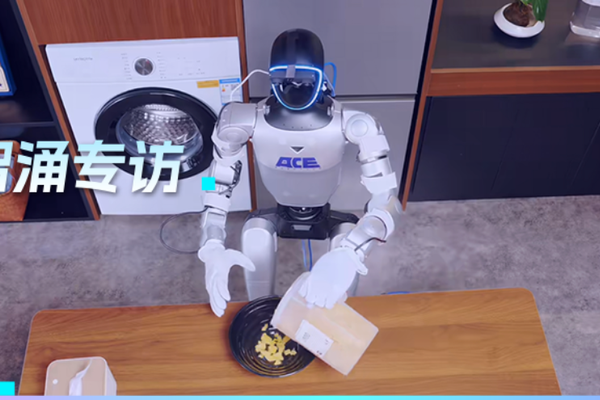
Founder of "Daxiao Robotics," which raised hundreds of millions, reveals divisions in the embodied AI industry.
In a recent interview, Wang Xiaogang, chairman of ACE Robotics and co-founder of SenseTime, discussed the rapid advancements of his company since its establishment in July 2025. Within just a year, ACE Robotics has emerged as a significant player in the field of embodied intelligence, recently launching its Kairos 3.0 model, which achieved state-of-the-art results in four global benchmarks. The company has also developed an innovative data collection strategy that expands its training dataset to over one million hours, significantly enhancing its capabilities compared to traditional methods. On June 15, 2026, ACE Robotics announced the successful completion of its angel+ funding round, raising substantial capital from various investors, including Da Chen Capital and Shanghai Science and Technology Innovation Fund. This brings the total funding raised in 2026 to several hundred million dollars, positioning ACE Robotics as one of the fastest unicorns in the industry. Wang emphasized the importance of collaboration within the long and complex supply chain of embodied intelligence, noting that many companies are hesitant to enter practical applications due to technical maturity and resource constraints. He outlined ACE's strategy of focusing on scalable business-to-business (B2B) scenarios, such as road inspections and logistics, before expanding into more complex consumer-facing applications. Despite the competitive landscape, Wang believes that ACE Robotics can leverage its unique approach to data collection and model training to establish a strong foothold in the market, ultimately aiming to enhance the efficiency and effectiveness of embodied intelligence solutions across various sectors.

ABB Robotics and PSYONIC Use Human-Generated Data to Advance Robotic Dexterity
ABB Robotics has partnered with California-based bionics company PSYONIC to enhance robotic dexterity and grasping capabilities by utilizing human-generated data from prosthetic use. Announced on June 16, 2026, this collaboration aims to address the significant challenge of replicating human-like dexterity in industrial robotics, which is essential for the development of Autonomous Versatile Robotics (AVR™). By integrating the PSYONIC Ability Hand with ABB's GoFa™ collaborative robot, the two companies will explore how real-world manipulation data can train robots to perform delicate tasks that are typically difficult to automate. This initiative is expected to reduce engineering time by up to 30% and improve productivity, flexibility, and workplace safety across various industries, including automotive, aerospace, packaging, logistics, and life sciences. Marc Segura, President of ABB Robotics, emphasized the importance of bridging the gap between human and robotic dexterity to enable robots to learn and interact with their environments more intuitively. Dr. Aadeel Akhtar, Founder and CEO of PSYONIC, highlighted that the collaboration will leverage high-fidelity data on movement and grip force to enhance robotic performance in complex tasks. The GoFa™ robot will provide the precision necessary for industrial applications, ensuring consistent execution of intricate movements, which is crucial for handling fragile or irregular objects. This partnership represents a significant step towards advancing physical AI in robotics, allowing for more effective collaboration between humans and machines.
Robotics needs a service framework.
RSF defines a common language for robot service capability, lifecycle operations, certification pathways, and service-provider networks.