Industry Briefing
A single destination for timely, editor-curated robotics news from around the world.
Robbyant Launches Upgraded LingBot-VLA 2.0 AI Model for Advanced Robotics
Robbyant, a company specializing in embodied AI under Ant Group, has unveiled the upgraded LingBot-VLA 2.0 model. This next-generation vision-language-action model enhances morphological generalization, degrees of freedom support, and deployment efficiency, addressing a critical gap in the embodied AI industry. The significance of LingBot-VLA 2.0 lies in its extensive pre-training on 60,000 hours of real-world data, which includes interactions from 20 different robot morphologies. This upgrade allows for improved whole-body control and dual-arm manipulation, achieving leading scores on benchmarks, thus demonstrating its effectiveness in industrial-scale deployment. Looking ahead, the introduction of a version optimized for efficient post-training and a threefold increase in inference efficiency positions LingBot-VLA 2.0 as a strong contender for real-time commercial applications. No further timeline was disclosed at the time of publication.
Computing Robot simulation artificial intelligence dual-arm robots embodied ai humanoid robots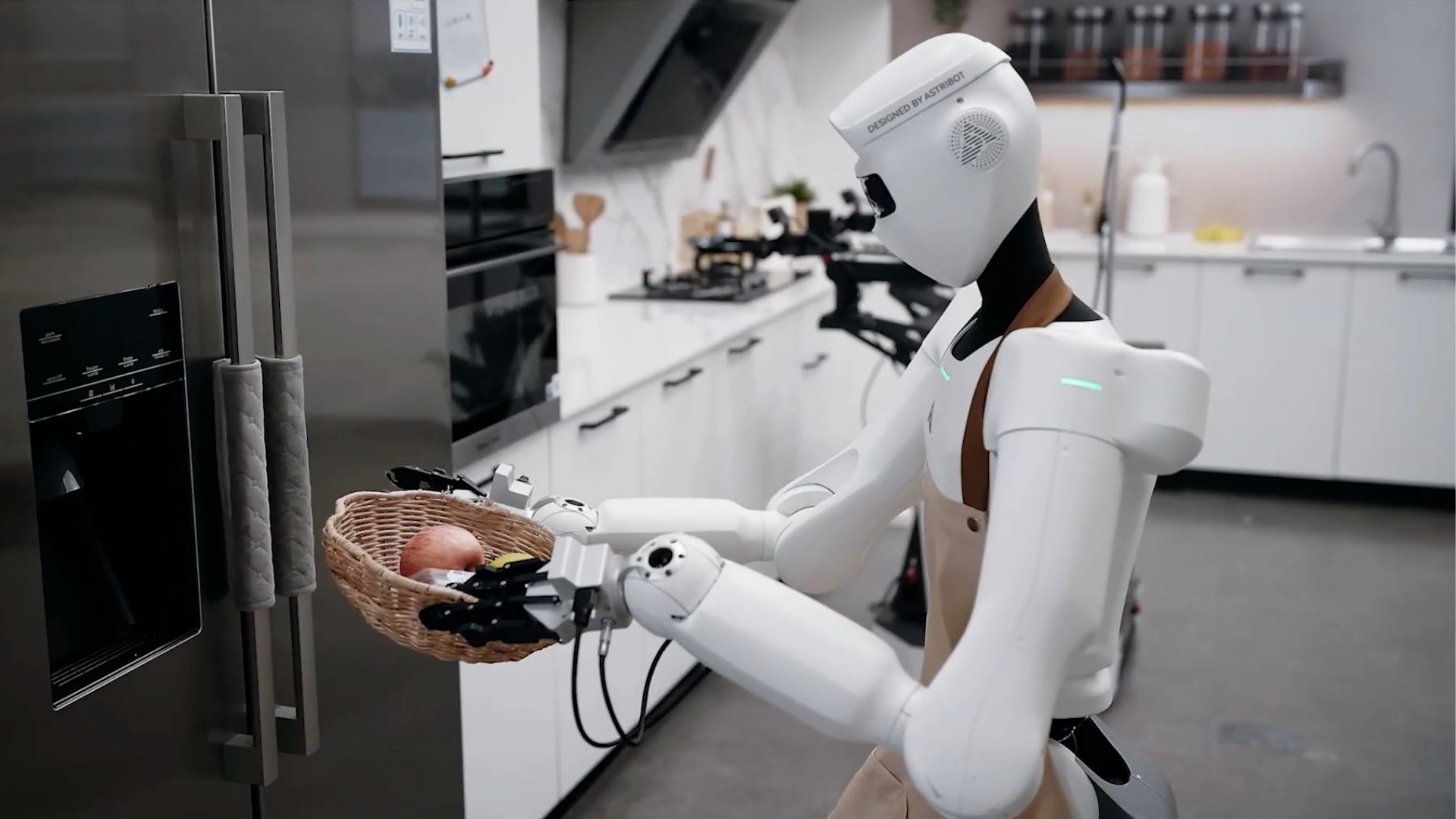
Robbyant Launches LingBot-VA 2.0, the First Embodied-Native AI Model for Robotics
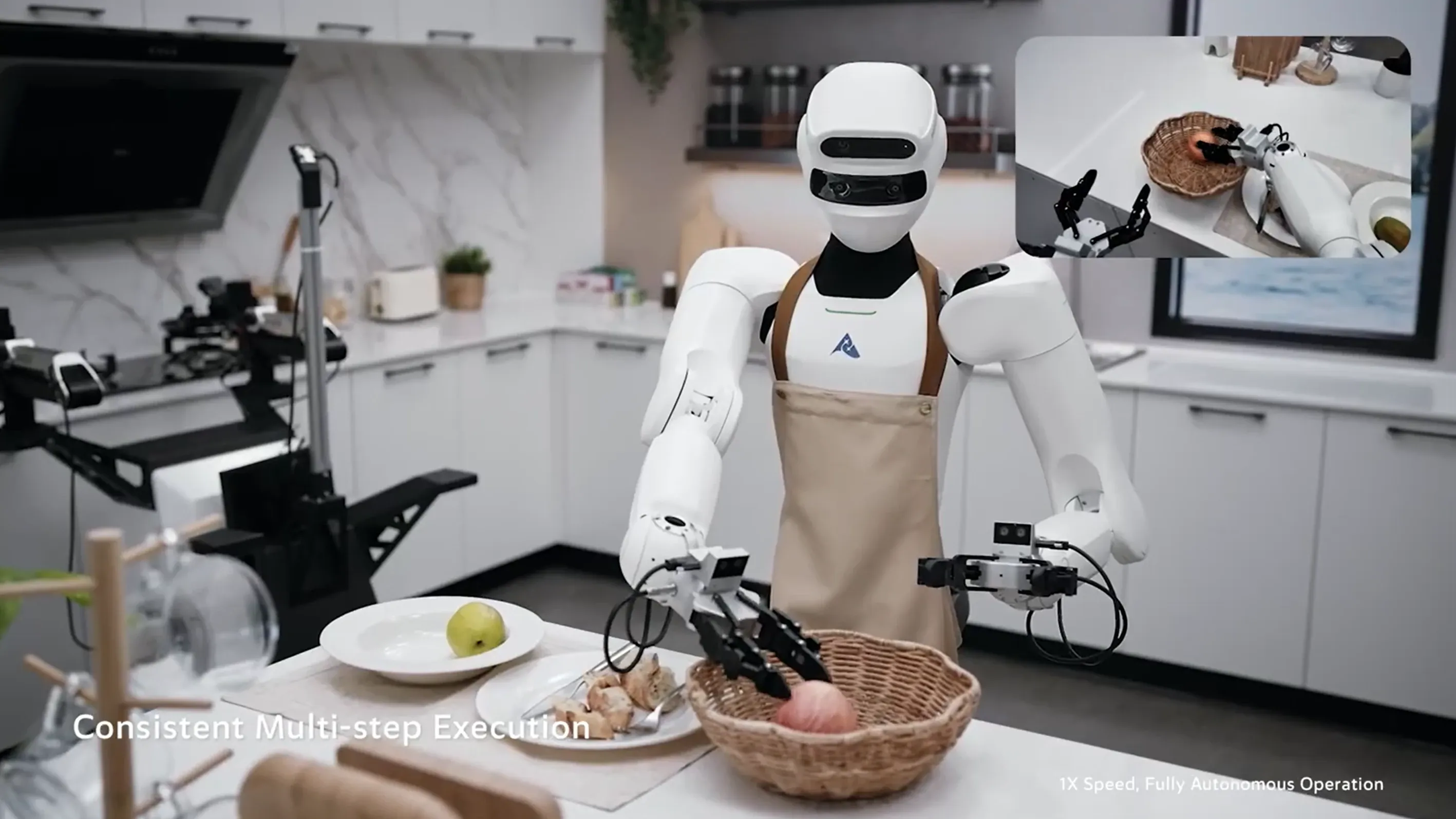
Robbyant, a company under China's Ant Group, has introduced LingBot-VA 2.0, touted as the first embodied-native video-action world model specifically designed for robotics. Unlike traditional models adapted from digital content, LingBot-VA 2.0 is built from the ground up for physical-world tasks, enhancing physical accuracy and execution efficiency through its autoregressive architecture. This innovation is significant as it marks a departure from conventional robotics models that often compromise real-world performance by relying on video generation systems. Robbyant's approach allows for better prediction of how robot actions affect their environment, thus improving generalization and operational effectiveness in real-world applications. Looking ahead, Robbyant's LingBot-VA 2.0 is expected to advance the capabilities of robots in various tasks, demonstrated through its performance in complex scenarios such as preparing breakfast and unpacking deliveries. No further timeline was disclosed at the time of publication.
AI and Robotics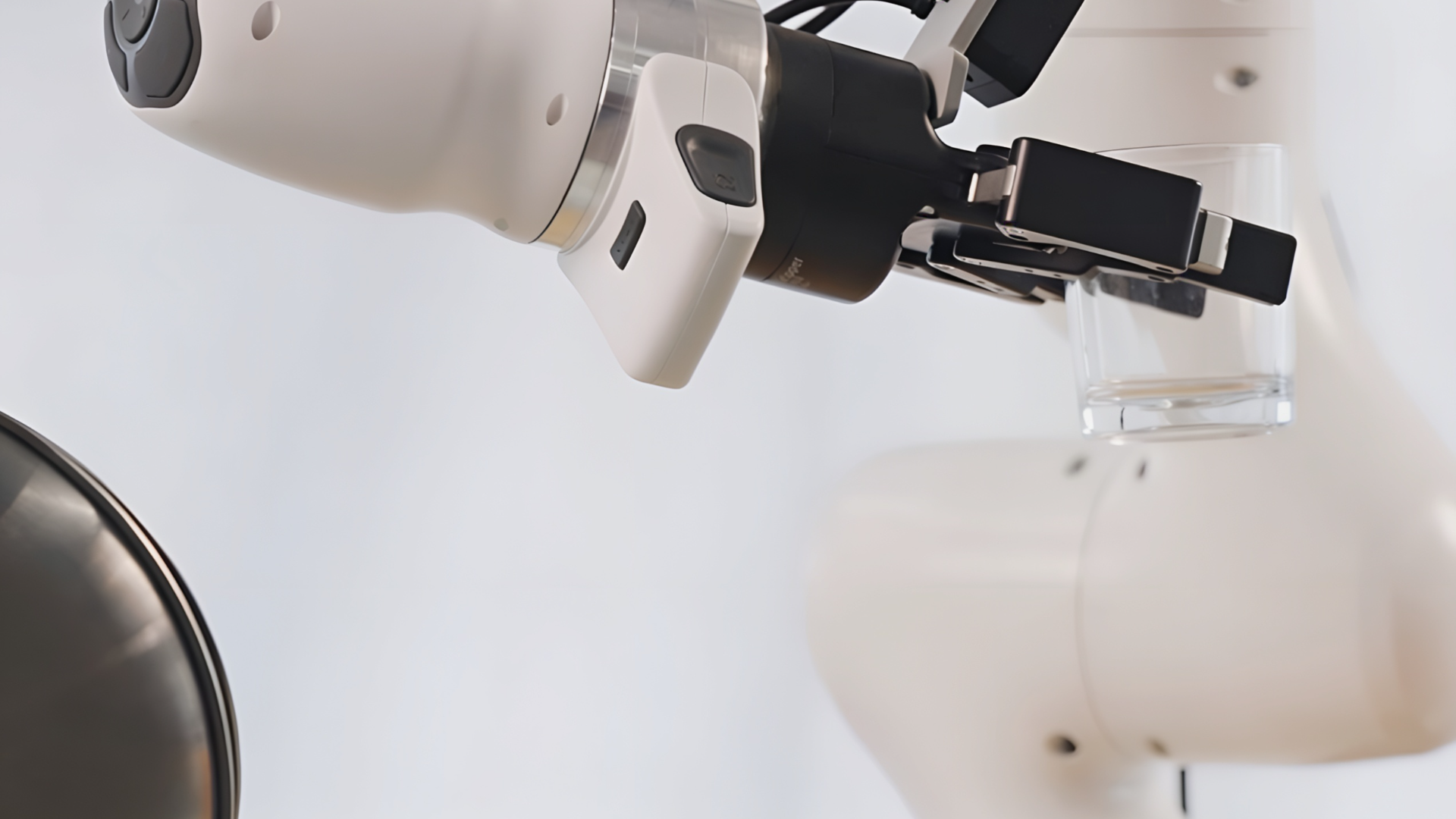
Robbyant Unveils LingBot-Depth 2.0 with Enhanced Spatial Perception for Robotics
Chinese AI company Robbyant has launched LingBot-Depth 2.0, a next-generation spatial perception model designed to enhance robotic navigation in complex environments. This model builds on the previous LingBot-Depth, utilizing the Masked Depth Modeling technique and trained on 150 million samples, achieving top results in 12 out of 16 depth completion benchmarks. Notably, it reduces depth error by over 50%, improving accuracy in challenging indoor settings. The significance of LingBot-Depth 2.0 lies in its ability to accurately perceive transparent and reflective surfaces, areas where traditional depth cameras often struggle. The model's advancements are attributed to LingBot-Vision, a visual foundation model that employs a unique “boundary structure” pre-training objective, enabling sub-pixel-level boundary localization. Despite being trained on a smaller dataset of 160 million images, it demonstrates robust performance across various robotic vision applications, enhancing object boundary detection and tracking. Looking ahead, Robbyant's collaboration with Orbbec aims to integrate LingBot-Depth 2.0 into new hardware solutions for robotics data collection. The RGB-D EGO device, part of Orbbec’s Robot-Free Data Collection Hardware Platform, will feature a customized version of the model. Future updates are expected to further enhance depth completion and spatial structure understanding, providing a solid foundation for training embodied AI systems in real-world scenarios. No further timeline was disclosed at the time of publication.
AI and Robotics
Robbyant Upgrades and Open-Sources LingBot-VLA 2.0 as a Next-Generation Universal Brain for Embodied AI
While the embodied AI industry is witnessing rapid advancements in hardware and control systems, the lack of a truly universal brain remains a primary bottleneck for industrial-scale deployment. LingBot-VLA 2.0 addresses this critical gap by dramatically expanding its pre-training data and architectural capabilities.

Robbyant Unveils LingBot-Depth 2.0 and LingBot-Vision to Redefine Robotic Spatial Perception
Building upon the success of LingBot-Depth, which pioneered the Masked Depth Modeling (MDM) technique to resolve depth sensing challenges for transparent and reflective surfaces, LingBot-Depth 2.0 represents a massive scale-up in training data and performance.

Ant Group's Robotics Subsidiary Introduces Innovative Robot Brain Technology
Ant Group's robotics subsidiary, Robbyant, has adopted a unique approach by prioritizing the development of a robot brain over hardware design. This strategy leverages the AI infrastructure behind Alipay, which processes billions of payment transactions daily, to enhance robots' ability to perceive their environment and make autonomous decisions. The introduction of the LingBot-VA 2.0 marks a significant advancement as it is the world's first embodiment-native pre-trained VA base model, specifically tailored for robots. In real-world tests, robots equipped with this model achieved a remarkable success rate of 93.6% in dual-arm tasks, showcasing the potential of this innovative technology. As hardware becomes increasingly standardized, the focus on software intelligence and data advantages is emerging as a new competitive edge. Ant Group's initiative to create a robot brain from its extensive payment data aims to bridge the gap between the digital and physical worlds, positioning Robbyant as a leader in the robotics field.
Robotics AI Machine Learning Automation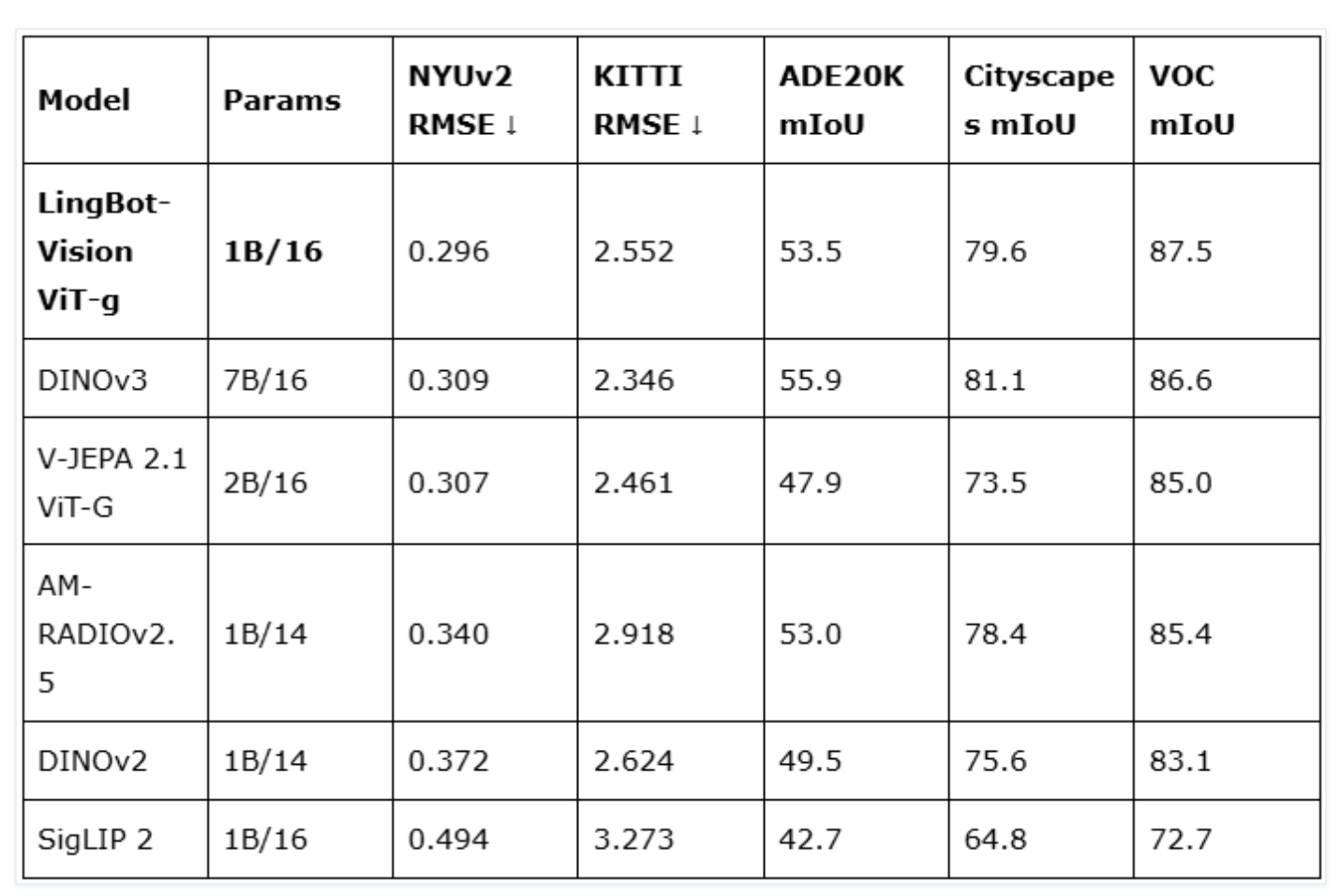
Ant Group Launches Open Source LingBot-Vision: A Breakthrough in Robotic Vision Technology
Ant Group's Robbyant has introduced the LingBot-Vision model, a groundbreaking visual perception technology designed for robots. This innovative model, which operates with just 1.1 billion parameters, significantly outperforms traditional systems in depth estimation and object boundary recognition. By enhancing robots' ability to comprehend intricate environments, LingBot-Vision represents a major leap forward in the field of embodied intelligence. The technology has been made available as open-source, fostering further advancements and collaboration within the robotics community.
Robotic Vision Depth Perception AI Technology Open Source Embodied Intelligence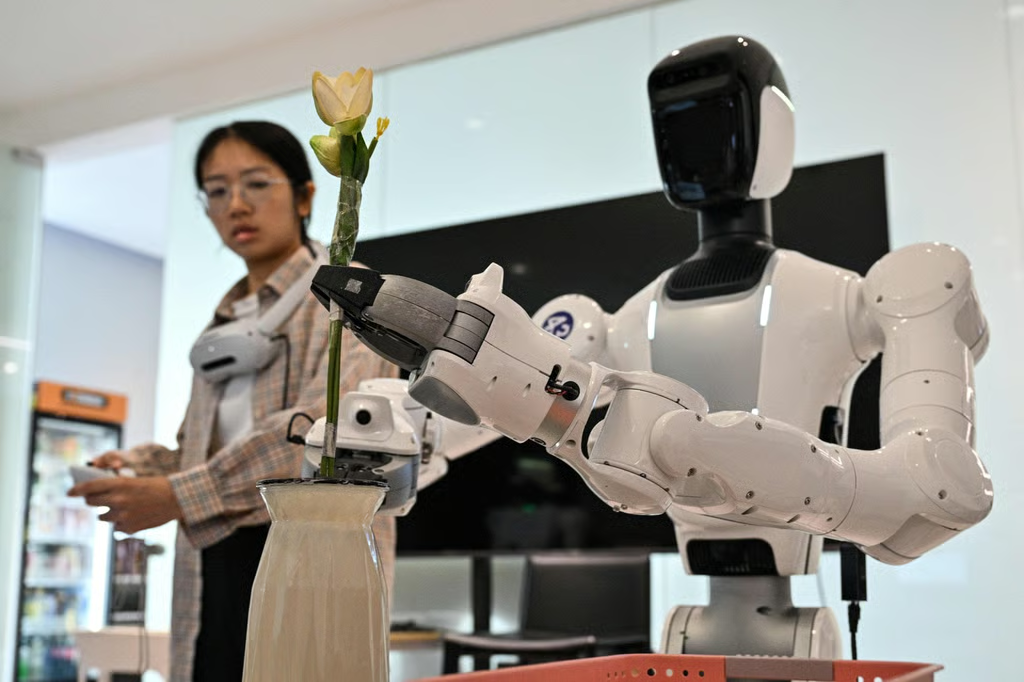
Ant Group Unveils Groundbreaking Spatial Perception Model for Robots
Ant Group's Robbyant has unveiled LingBot-Depth 2.0, an advanced spatial perception model designed to enhance robot vision in complex environments, such as those involving glass and mirrors. This innovative model, which operates with just 1.1 billion parameters, demonstrates superior performance compared to larger models while requiring less training data. The launch, which marks a significant milestone in artificial intelligence technology for robotics, reflects ongoing efforts to improve the capabilities of robots in navigating and interpreting their surroundings effectively.
Robotics AI Computer Vision Depth Perception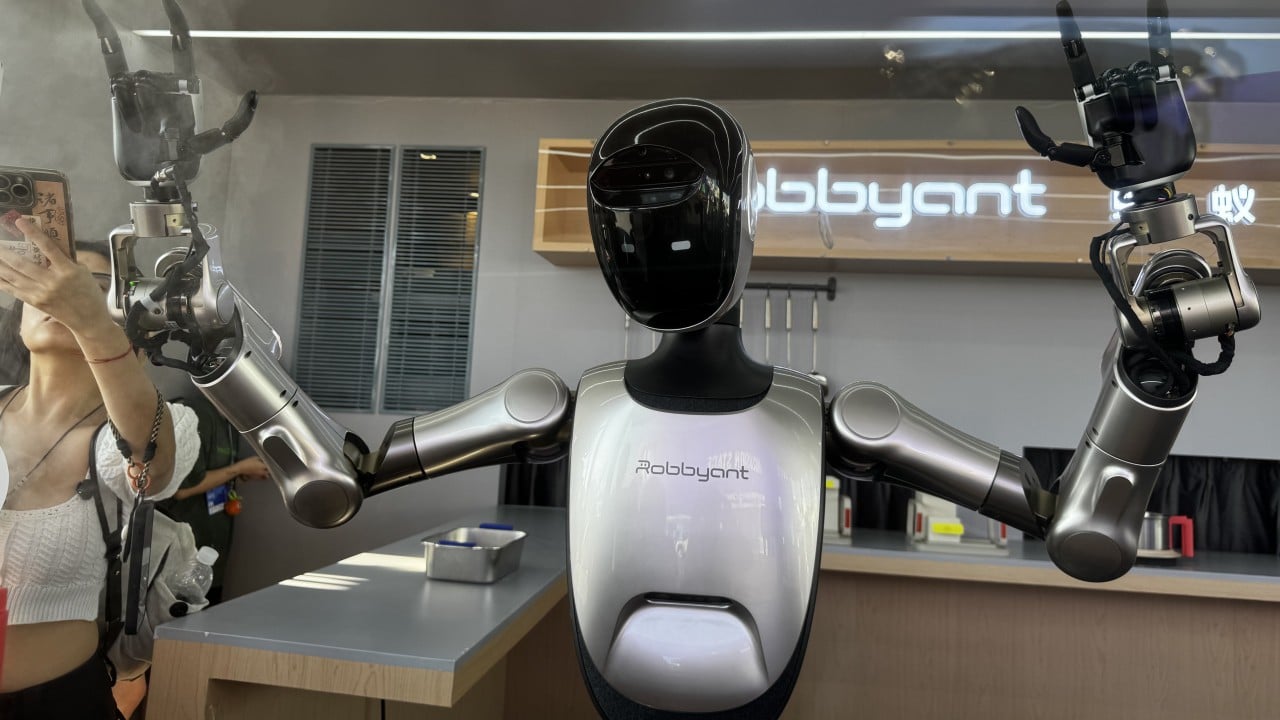
Glass crashes slashed? Ant Group embodied AI unit claims breakthrough in robot sensing
Robbyant, the embodied artificial intelligence arm of Chinese fintech giant Ant Group, launched a new vision model that it claims can help robots overcome a long-standing challenge: accurately perceiving glass, mirrors and transparent objects. The unit of Hangzhou-based Ant Group on Tuesday unveiled its next-generation spatial perception model, LingBot-Depth 2.0, alongside a new foundational visual model called LingBot-Vision, as AI labs race to equip machines with the “brains” required to...

ABB Robotics completes its AI-powered Visual SLAM AMR portfolio with new autonomous forklift
ABB Robotics completes its AI-powered Visual SLAM AMR portfolio with new autonomous forklift Visit http://go.abb/robotics for further information -The new Flexley Stack F712 extends ABB Robotics’ AI-powered Visual SLAM technology to autonomous forklifts, enabling pallet transport and high-density storage. -Customers can now deploy mixed fleets of Visual SLAM-powered tugs, movers and forklifts on a common navigation, fleet management and software platform. -Powered by ABB Robotics' AMR Studio, the portfolio enables up to 20% faster commissioning while ensuring seamless interoperability and safe, reliable operation. 07/07/26, 07:10 AM | Industrial Robotics, Mobile Robots | ABB Inc. ABB Robotics is expanding its Autonomous Mobile Robotics (AMR) portfolio with the launch of the Flexley® Stack F712, creating a complete interoperable ecosystem across all major Visual SLAM AMR types. Combining autonomous forklifts, tugs and movers on one platform, ABB Robotics enables customers to automate a broader range of material-handling and intralogistics processes. Offering market-leading accuracy, the F712 is designed for demanding material handling, end-of-line storage and warehouse operations across industries including automotive manufacturing, helping increase efficiency, flexibility and scalability. More Headlines A3's Automate 2026 Breaks Records as Demand for Robotics, AI and Automation Grows NVIDIA and Hugging Face Bring New Models and Frameworks to LeRobot for the Open Robotics Community Palladyne AI Executes $4.2 Million U.S. Air Force Contract to Advance Swarming Capabilities for Integrated Cross-Domain Operations UMA Unveils Its Vision for the Next Generation of Humanoid Robots Robbyant Unveils LingBot-Depth 2.0 and LingBot-Vision to Redefine Robotic Spatial Perception Articles Unleash AI Innovation: The Power of NVIDIA RTX PRO 6000 Blackwell Workstation Edition Fueled by PNY-Supplied GPUs Automate 2026 Q&A with DESTACO Automate 2026 Q&A with Roboteon Advances in Robots to See & Interpret within Warehouse Environments Building Resilient Fulfillment Networks with Robotics and Real-Time Logistics Data "Across intralogistics operations, businesses are being asked to process greater volumes in less time, while working with increasingly limited resources," said Marc Segura, President, ABB Robotics. "They are under pressure to move goods faster and with greater flexibility, while labour availability is becoming a critical constraint. As part of our journey to more autonomous and versatile robotics (AVRTM), we have combined advanced vision, mobility and intelligence in the Flexley Stack F712 forklift AMR, completing our scalable, AI-powered AMR portfolio." F712 is versatile, capable of handling multiple load types and sizes - including open and closed pallets, containers or racks- up to 2,000 kg and reaching heights of 8.5 meters. The Flexley Stack AMR F712 joins the Flexley Tug and Flexley Mover in ABB Robotics' growing Visual SLAM AMR portfolio. Applications include intralogistics tasks such as warehouse storage and retrieval, as well as line supply, end-of-line handling, body- and press-shop and drive-in and light buffer in the automotive and industries sector. Unlike conventional AMR forklifts on the market, F712 uses Visual SLAM to map and navigate its environment, eliminating the need for pre-installed infrastructure like markers or reflectors. The AI-enabled Visual SLAM supports the autonomous decisions required to operate in complex, dynamic warehouse operations with a market-leading positional accuracy of ±10 mm. Together with AMR Studio®, this shortens commissioning times by up to 20 percent and creates a versatile and reliable system that can adapt instantly when a warehouse or production floor layout changes. Certified to the latest ISO and ANSI safety standards, Flexley Stack F712 can safely operate at class-leading speeds of up to 1.7 m/s while loaded. F712 is fully integrated with AMR Studio and is VDA5050 compatible, enabling seamless integration with ABB Robotics' Visual SLAM AMRs and existing systems within a unified project. This makes it easy to manage complex projects and integrate different types of mobile robots. The no-code, drag-and-drop software suite supports rapid setup, fleet coordination, traffic management and real-time visualization, allowing ABB Robotics' tugs, movers and forklifts to operate together in the same layout for scalable turnkey automation projects. ABB Robotics as one of the world's leading robotics companies, is the only company with a comprehensive and integrated AI-powered portfolio covering robots, cobots and Autonomous Mobile Robots (AMRs), designed and orchestrated by our value-creating software. We help companies of all sizes and sectors - from automotive to electronics and logistics - to outperform by becoming more resilient, flexible and efficient. ABB Robotics is at the forefront of developing and commercializing a new generation of Autonomous Versatile Robotics

Palladyne AI Executes $4.2 Million U.S. Air Force Contract to Advance Swarming Capabilities for Integrated Cross-Domain Operations
Palladyne AI Executes $4.2 Million U.S. Air Force Contract to Advance Swarming Capabilities for Integrated Cross-Domain Operations Visit http://www.palladyneai.com for further information Palladyne AI’s SwarmOS™ platform to support satellite integration, marking a major expansion of its multi-domain autonomy and ISR capabilities across space, air, maritime, and land 07/07/26, 06:15 AM | Mobile Robots, Other Topics | Palladyne AI Corp. Palladyne AI Corp. (NASDAQ: PDYN and PDYNW) ("Palladyne AI"), a developer of artificial intelligence software for robotic platforms in the defense and commercial sectors, today announced that it has executed the previously announced contract awarded by the Air Force Research Laboratory (AFRL) to solve one of the most persistent challenges in modern defense operations—how to make different autonomous systems work together as one coordinated team. The "Hierarchical Adaptive Networked Game-Theoretic Integration of Multiple Echelons (HANGTIME)" contract will address this need. More Headlines A3's Automate 2026 Breaks Records as Demand for Robotics, AI and Automation Grows NVIDIA and Hugging Face Bring New Models and Frameworks to LeRobot for the Open Robotics Community ABB Robotics completes its AI-powered Visual SLAM AMR portfolio with new autonomous forklift UMA Unveils Its Vision for the Next Generation of Humanoid Robots Robbyant Unveils LingBot-Depth 2.0 and LingBot-Vision to Redefine Robotic Spatial Perception Articles Unleash AI Innovation: The Power of NVIDIA RTX PRO 6000 Blackwell Workstation Edition Fueled by PNY-Supplied GPUs Automate 2026 Q&A with DESTACO Automate 2026 Q&A with Roboteon Advances in Robots to See & Interpret within Warehouse Environments Building Resilient Fulfillment Networks with Robotics and Real-Time Logistics Data Today, drones, ships, and satellites often operate largely independently, limiting how quickly warfighters can see and respond to threats. HANGTIME will utilize Palladyne AI's patented SwarmOS™ software platform—the defense variant of the Palladyne™ Pilot embodied AI software—as the baseline technology to bridge that gap, connecting disparate systems so they can share intelligence, adapt to changing conditions, and act in sync across domains, including space, air, maritime, and land. By integrating satellites for the first time, this project also extends Palladyne AI's technology from the ground to orbit, enabling faster, more informed decision-making and coordinated mission execution, turning tactical commanders into strategic commanders by giving them more cross-domain intelligence, surveillance, and reconnaissance (ISR) capabilities than ever before. "Our collaboration with AFRL showcases what's next for autonomous operations," said Ben Wolff, President and CEO, Palladyne AI. "This isn't about replacing humans—it's about giving them sharper, faster insight. By connecting satellite, aerial, and ground systems using the patented SwarmOS embodied AI platform as a foundational technology, we're helping the warfighter make better decisions in real time and stay one step ahead on the battlefield." "The HANGTIME project is a breakthrough that unites high-altitude assets and situational unmanned systems into one coordinated sensor network—delivering a major advantage for the defense industry," said Dr. Denis Garagic, Chief Technology Officer, Palladyne AI. "For the first time, a single AI framework can coordinate assets across multiple domains, including satellites. That means these systems can now think and act together as a team, sharing what they see and learning as conditions change." "The HANGTIME effort represents a critical step in multi-domain autonomy for coordinated execution in challenging environments," said Caleb Williams, Program Manager, AFRL/RIEA. For more information on Palladyne AI and its patented collaborative autonomy software, including SwarmOS, please visit www.palladyneai.com. For more information about AFRL, please visit www.afrl.af.mil. About Palladyne AI Palladyne AI is a U.S.-based technology company developing patented embodied artificial intelligence, collaborative autonomy solutions, advanced avionics, autonomous systems, advanced UAV engineering services, and precision-manufactured components for defense and industrial markets. Palladyne AI delivers secure, American-developed and operated platforms designed to meet the stringent requirements of U.S. government and public-sector customers, including data sovereignty, security, and compliance. Palladyne AI's embodied AI is designed to operate in complex, contested, and high-risk environments, enabling distributed tasking, human-on-the-loop decision-making, degraded-communications resilience, and multi-domain coordination. Its platform-agnostic autonomy stack combines real-time sensor fusion, adaptive AI models, and edge-native orchestration—without vendor lock-in—to support autonomous and collaborative systems across air, ground, maritime, and industrial domains w
Robotics needs a service framework.
RSF defines a common language for robot service capability, lifecycle operations, certification pathways, and service-provider networks.