Industry Briefing
A single destination for timely, editor-curated robotics news from around the world.

New Applications of Magnetic Soft Robots: Random Number Generation and Reservoir Computing
Researchers from Helmholtz-Zentrum Dresden-Rossendorf and the University of Messina have unveiled a groundbreaking application of magnetic soft robots in the fields of random number generation and reservoir computing. This innovative study, conducted recently, highlights how these robots utilize chaotic dynamics to convert their unpredictable movements into effective computational resources. The findings suggest significant potential for enhancing secure communication systems and developing low-cost computing solutions, particularly in resource-limited settings. By harnessing the inherent randomness of the robots' movements, the research opens new avenues for technological advancements in various applications.
Soft Robotics Magnetic Actuators Random Number Generation Reservoir Computing
Virginia Tech researchers control soft robotics with ‘AI’s cousin’: ‘Reservoir computing’
Researchers at Virginia Tech are advancing the field of soft robotics, which utilizes flexible, muscle-like materials to create machines capable of bending and stretching in ways that surpass traditional rigid robots. This innovative technology enables applications such as harvesting ripe tomatoes and navigating complex search-and-rescue environments. However, the inherent flexibility of these robots presents significant challenges in control and precision. The team at Virginia Tech is focused on addressing these control difficulties to enhance the functionality and reliability of soft robotics, aiming to unlock their full potential in various practical applications.
Computing Features Robotics Science agricultural robotics ai robotics
Unlocking soft robotics control with AI's cousin: Reservoir computing
Recent advancements in soft robotics, which utilize flexible, muscle-like materials, have revolutionized the field, allowing machines to perform tasks such as picking ripe tomatoes and navigating complex search-and-rescue environments. However, despite their impressive capabilities, these innovative robots face significant challenges in terms of control. The inherent flexibility that enables their fluid movements also complicates their operation, making it difficult for developers to achieve precise control. As researchers continue to explore the potential of soft robotics, the quest for improved control mechanisms remains a critical focus, highlighting the balance between versatility and functionality in this emerging technology.
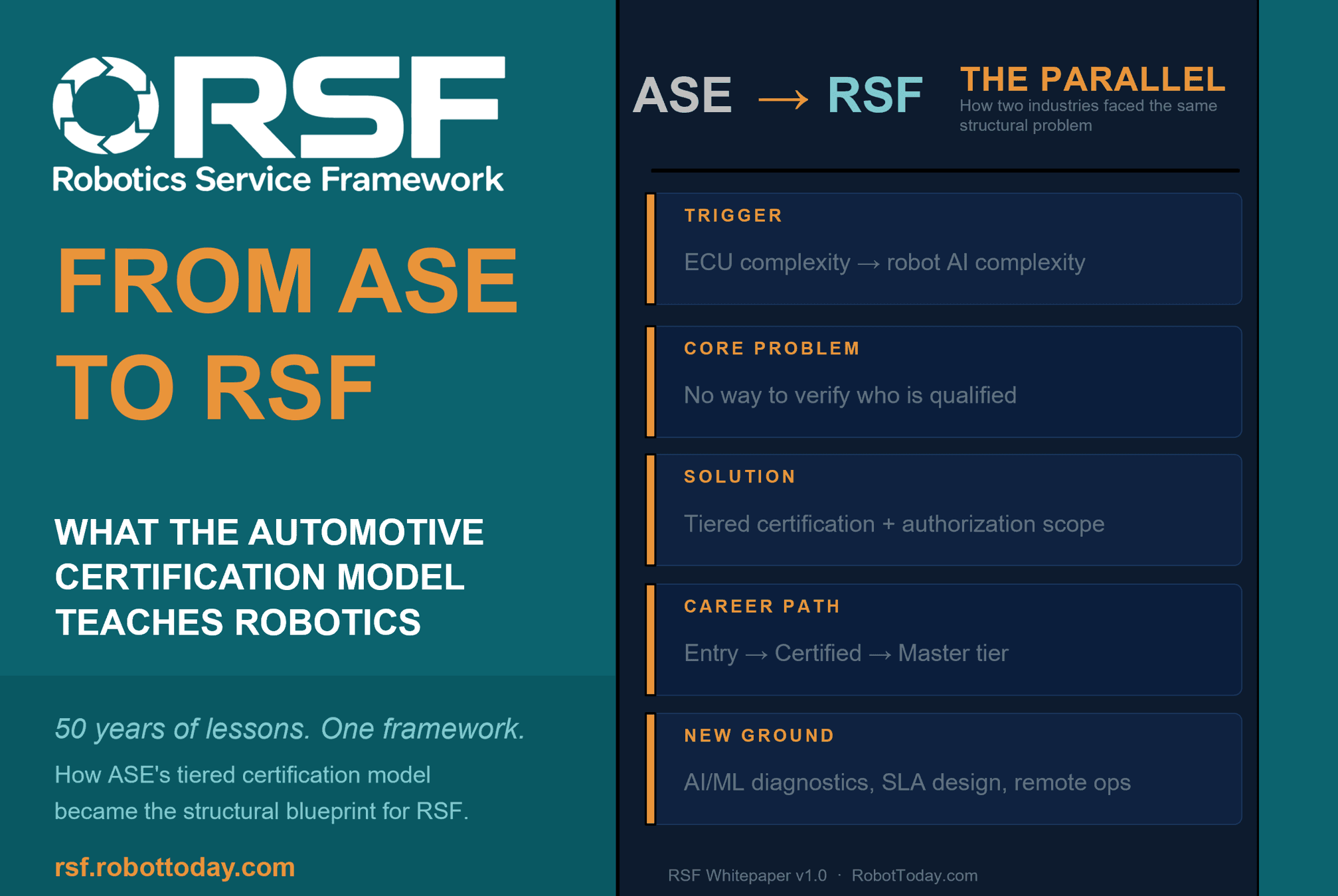
RoboticsRobotics needs a service framework.
RSF defines a common language for robot service capability, lifecycle operations, certification pathways, and service-provider networks.