Industry Briefing
A single destination for timely, editor-curated robotics news from around the world.

The Classical Advances Needed to Make Quantum Computers Tick
Quantum computers are poised to tackle problems beyond the capabilities of today's most advanced supercomputers, but their operation relies heavily on classical computing infrastructure. As the industry prepares for the anticipated scale of quantum computing, major players like Nvidia, Q-CTRL, IBM Quantum, and Google Quantum AI are developing innovative classical hardware and software solutions to support these machines. In April, Nvidia unveiled AI-based software designed to enhance the classical tasks essential for quantum computing. Sydney-based Q-CTRL has created an automatic calibration algorithm that utilizes Nvidia’s system to streamline the calibration process, which is crucial for maintaining the reliability of qubits—quantum bits that are inherently unstable and require regular adjustments. Calibration involves a meticulous two-stage process that traditionally demands significant time and expertise, prompting a push for automation. Q-CTRL's intelligent software analyzes calibration data in real-time, allowing for dynamic adjustments to improve efficiency. Additionally, quantum error correction is a critical focus, as it enables the detection and compensation of errors in qubits, a process that must occur rapidly to maintain quantum states. While AI is gaining traction in simplifying hardware control, challenges such as latency and computational expense remain. Experts suggest that a hybrid approach combining traditional and AI methods may be necessary to optimize performance. As quantum technology evolves, the demand for robust classical support will grow, necessitating new strategies to manage the increasing complexity of quantum systems.
Quantum-computers Quantum-error-correction Internal-calibration Nvidia Quantum-computing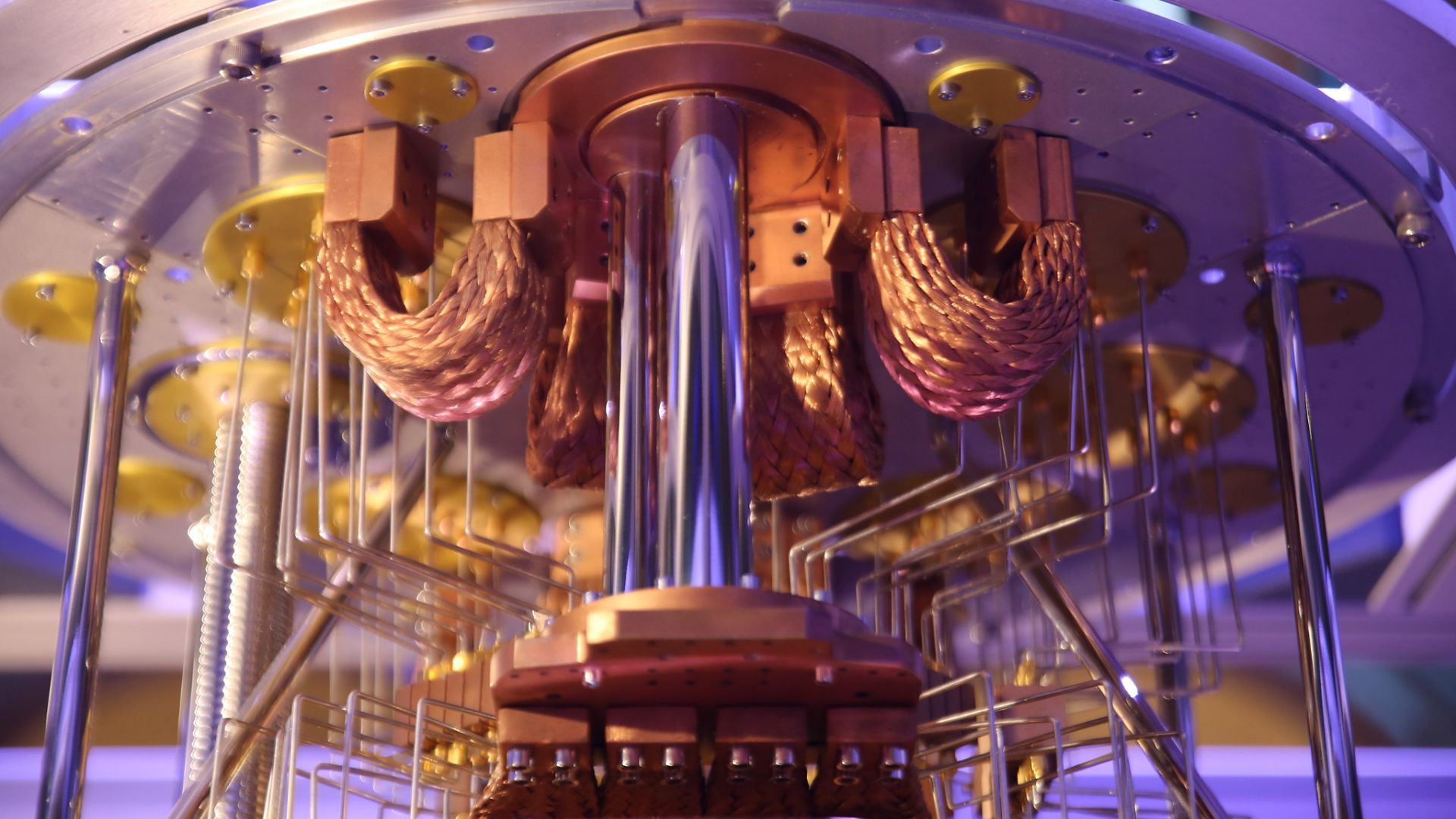
New Quantum Hermite Transform Algorithm Enhances AI and Scientific Computing Potential
Researchers from the U.S. Department of Energy’s Brookhaven National Laboratory, Northeastern University, Google Quantum AI, and the University of Texas at Austin have introduced a new quantum computing algorithm called the quantum Hermite transform (QHT). This algorithm aims to broaden the scope of problems that future quantum computers can address, particularly in artificial intelligence and scientific simulations. The significance of the quantum Hermite transform lies in its potential to improve data processing and simulation capabilities of quantum computers. By introducing a new computational building block, the QHT could lead to more efficient quantum algorithms in various fields, including materials science and energy research. The findings were presented at the 58th Annual ACM Symposium on Theory of Computing in Salt Lake City. Looking ahead, the researchers emphasize that expanding the library of reusable quantum primitives like the QHT will facilitate the development of innovative quantum algorithms. This advancement could provide exponential speed advantages over classical methods, marking a pivotal step in the evolution of quantum computing applications. No further timeline was disclosed at the time of publication.
AI and Robotics
Amazon AI exec predicts first 'commercially useful' quantum computers in 5-7 years
In a rapidly evolving landscape, major technology companies such as Microsoft, Google, and IBM are intensifying their efforts in the field of quantum computing. This surge in competition is driven by the potential of quantum technology to revolutionize computing power and solve complex problems beyond the capabilities of classical computers. As of October 2023, these industry leaders are investing heavily in research and development, aiming to secure a competitive edge in what many consider the next frontier of computing. The race involves not only advancements in hardware but also the development of software and algorithms tailored for quantum systems. This strategic push reflects a broader recognition of quantum computing's transformative potential across various sectors, including pharmaceuticals, finance, and artificial intelligence. As these tech giants advance their initiatives, the implications for innovation and economic growth are significant, positioning quantum computing as a pivotal area of focus in the tech industry.

Scientists found a way to cool quantum computers using noise
Scientists in Sweden have developed an innovative quantum refrigerator that utilizes noise to facilitate cooling in quantum computers, a breakthrough that addresses a significant challenge in the field. Traditionally, quantum computers require extreme cold to function, but the cooling systems often introduce noise that can compromise delicate quantum information. By harnessing this noise rather than combating it, the researchers have created a device capable of managing heat at incredibly small scales. This new quantum refrigerator can serve multiple functions, including acting as a refrigerator, heat engine, or energy amplifier within quantum circuits. This advancement not only enhances the performance of quantum computers but also opens new avenues for research and application in quantum technology.

Quantum simulations that once needed supercomputers now run on laptops
Researchers at the University at Buffalo have developed a groundbreaking method that allows for the simulation of complex quantum systems without the need for supercomputers. By enhancing the truncated Wigner approximation, the team has created a more accessible and efficient approach to modeling quantum behavior, translating intricate equations into a format that can be executed on standard computers. This innovation could significantly change the landscape of quantum physics, enabling physicists to explore quantum phenomena more effectively and broaden their research capabilities.
NVIDIA Launches Ising, the World’s First Open AI Models to Accelerate the Path to Useful Quantum Computers
NVIDIA has unveiled the world's first family of open-source quantum AI models, known as NVIDIA Ising, aimed at empowering researchers and enterprises to develop quantum processors that can effectively execute practical applications. This announcement, made today, marks a significant advancement in the field of quantum computing, as it provides accessible tools for innovation and exploration in quantum technology. By fostering collaboration and knowledge sharing, NVIDIA hopes to accelerate the development of quantum applications, addressing the growing demand for powerful computing solutions. The initiative reflects the company's commitment to advancing AI and quantum research, positioning itself at the forefront of this emerging field.

China claims new quantum computer solves task in microseconds what Frontier can’t in years
China has unveiled its latest photonic quantum computer, Jiuzhang 4.0, which aims to achieve quantum supremacy. This advanced technology was introduced during a press conference held in Beijing on October 15, 2023. Researchers from the University of Science and Technology of China, who developed Jiuzhang 4.0, assert that it can perform complex calculations at speeds unattainable by traditional supercomputers. The motivation behind this development is to enhance China's position in the global quantum computing race, a field that holds significant implications for various industries, including cryptography and materials science. Jiuzhang 4.0 utilizes photonic technology to process information, which allows it to manipulate quantum bits more efficiently than its predecessors. This breakthrough is expected to pave the way for further advancements in quantum technology, potentially revolutionizing computing capabilities and fostering innovation in numerous sectors.
JUPITER supercomputer breaks world record with 50-qubit quantum simulation
In a groundbreaking achievement, scientists in Germany have successfully simulated a 50-qubit quantum computer, marking the first time this has been accomplished. This significant milestone was made possible through the use of Europe’s advanced exascale supercomputer, JUPITER. The simulation surpasses the previous record of 48 qubits, showcasing the remarkable capabilities of next-generation supercomputers. This development not only demonstrates the progress in quantum computing research but also emphasizes the potential of supercomputing technology in tackling complex computational problems.

Quantum AI just got shockingly good at predicting chaos
A team of researchers has demonstrated that integrating quantum computing with artificial intelligence significantly enhances the prediction capabilities of complex and chaotic systems. By utilizing quantum computers to uncover hidden patterns within data, the AI systems exhibit improved accuracy and stability over time. This innovative approach not only surpasses traditional models but also operates with considerably reduced memory requirements. The findings, which could revolutionize various sectors including climate science, energy, and medicine, highlight the potential of this technology to address intricate challenges in these critical fields.
Robotics needs a service framework.
RSF defines a common language for robot service capability, lifecycle operations, certification pathways, and service-provider networks.