

Industry Briefing
A single destination for timely, editor-curated robotics news from around the world.

Shangwei New Materials Launches Personal Robots Despite Stock Price Decline
On September 20, Shangwei New Materials launched two personal robots under its consumer brand, Qiyuan Robotics, targeting the personal and family market. CEO Tian Hua stated that their goal is to position their products as the 'Apple of robotics.' However, following the launch, the company's stock price fell by 4.14% on September 21 and continued to decline over the next two days. The introduction of Q1, the world's first small-sized humanoid robot, and T1, a transformable personal robot, aims to explore the consumer market for robotics. Key functionalities include children's programming, companionship, and remote photography. Industry experts suggest that while the initial focus on fun is valid, the long-term value will depend on the robots' practical applications. Looking ahead, Qiyuan Robotics plans to invest 1 billion yuan over the next five years to develop its ecosystem and enhance its hardware and AI capabilities. The success of these personal robots in generating stable sales and profits will be crucial for Shangwei New Materials as it seeks to establish a new growth trajectory in the robotics sector.
Personal Robots Consumer Robotics AI Technology Smart Home Robot Development
Qiyuan Robot Introduces Personal Robots Priced from 19,999 Yuan
On September 20, Qiyuan Robot, a consumer robotics brand under Upwind New Materials, launched two personal robots, the Q1 and T1, starting at 19,999 Yuan. The Q1 is priced at 19,999 Yuan, with an exploration version at 26,999 Yuan, while the T1 starts at 19,999 Yuan and the T1 Pro at 29,999 Yuan. Orders will be fulfilled sequentially starting October 1. This launch is significant as it marks a shift in the consumer humanoid robot market towards price differentiation and varied applications. Qiyuan's strategy focuses on education, companionship, and entertainment rather than household chores, reflecting a pragmatic approach to commercialization. The company has already tested prototypes in thousands of homes, gathering extensive user feedback to inform future product development. Looking ahead, Qiyuan aims to evolve its products through three stages: interesting, useful, and lovable. The company is also advancing a large model focused on household tasks. As the market evolves, the success of Qiyuan's subscription and service models will depend on creating a robust ecosystem that goes beyond hardware sales, with a target of achieving 30% of overseas revenue in the robotics sector by next year.
Personal Robots Companionship Technology Consumer Robotics AI Development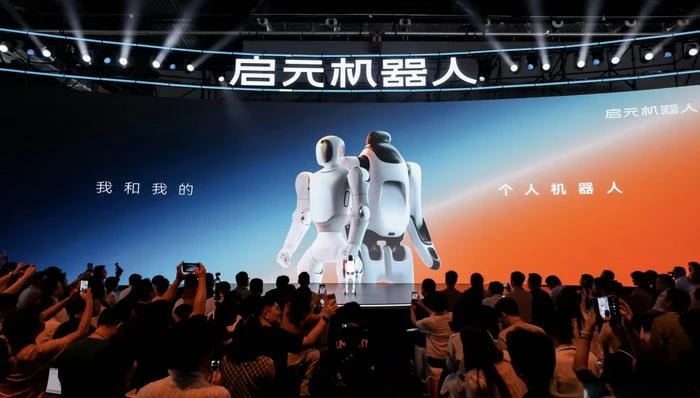
PrimeBOT Introduces Q1 and T1 Personal Robots Priced at 19,999 Yuan
PrimeBOT, known as Qiyuan in China, launched its Q1 and T1 personal robots in Shanghai on September 20, priced at 19,999 yuan each. Deliveries are set to commence on October 1, with the robots designed for home use, emphasizing personalization and programming capabilities. The introduction of these robots marks a significant commercial milestone for PrimeBOT, following their presentation at IFA in Berlin. The Q1 is an 88-centimeter humanoid robot with 22 degrees of freedom, while the T1 can switch between humanoid and quadrupedal modes, featuring applications like autonomous filming and following. Looking ahead, PrimeBOT's strategy focuses on education, companionship, and entertainment rather than complex household tasks. CEO Tian Hua highlighted potential revenue from content and services, suggesting that the robots' long-term success will depend on their integration into daily routines and the quality of available applications.
product-launch China Consumer Tech PrimeBOT
PrimeBot Introduces Q1 and T1 Personal Robots Featuring 260g Egg Joint
PrimeBot has commenced sales of its foldable Q1 and transformable T1 personal robots, priced starting at approximately RMB 19,999. These robots are built around a 47mm, 260g mass-produced joint that boasts a peak torque density of 85 N·m/kg, enhancing their performance and versatility. The introduction of the Q1 and T1 models is significant as it showcases PrimeBot's commitment to innovation in personal robotics. The advanced joint technology not only contributes to the robots' lightweight design but also improves their operational capabilities, making them suitable for various applications. Looking ahead, PrimeBot plans to begin shipping the Q1 and T1 robots starting October 1. Industry observers will be keen to see how these new models perform in the market and whether they can capture consumer interest in the growing personal robotics sector.

The Rise of Household Robots: Transforming Mobility and Daily Life by 2026
By 2026, the tech industry anticipates a significant shift where robotaxis will replace personal vehicles, and humanoid robots will become essential household members. This narrative suggests that cars will transition from personal ownership to mobility services, while robots will evolve similarly, becoming integral to family life. The implications of this shift are profound, as automotive companies leverage their expertise in intelligent driving technologies for robotics. Tesla's Optimus and FSD share architecture and AI chips, with mass production delayed until summer 2027. Meanwhile, BYD's humanoid robot, Xiaodi, is already in experience centers, highlighting the automotive sector's readiness to adapt. However, the transition from industrial to home environments remains challenging. Despite a surge in humanoid robot shipments, household penetration is low, with most units directed towards entertainment and education. As the industry moves towards a service-oriented model, the focus will shift from hardware ownership to the value of the underlying intelligent systems, data, and services that drive competition in this evolving landscape.
Humanoid Robots Robotaxi Service Robotics AI Mobility Solutions
Strutt Launches Personal Mobility Robot EV1 with Nearly $100 Million in Funding
Strutt, a company founded by former DJI executive Hong Xiaoping, has successfully launched its personal mobility robot, the EV1, achieving a near 50% test drive conversion rate and a 0% return rate. The company recently completed a Pre-A+ funding round, raising nearly $100 million from leading global mobility tech firms and major internet funds in China. The EV1 is designed for various environments, including homes, communities, and outdoor spaces, featuring a multi-modal sensor system and advanced driving capabilities. Unlike traditional mobility devices, the EV1 aims to integrate into daily life as a physical AI terminal, providing driving assistance while maintaining user control. The product has already generated millions in sales across dozens of countries since its launch in May. Looking ahead, Strutt plans to expand the EV1's capabilities with additional features such as robotic arms and end-effectors for personal and household tasks. The company intends to adapt its strategy for the Chinese market, leveraging local supply chains and urban living scenarios, with plans to initiate operations there in the second half of 2026. No further timeline was disclosed at the time of publication.
Personal Mobility Robots Robotics AI Technology Smart Transportation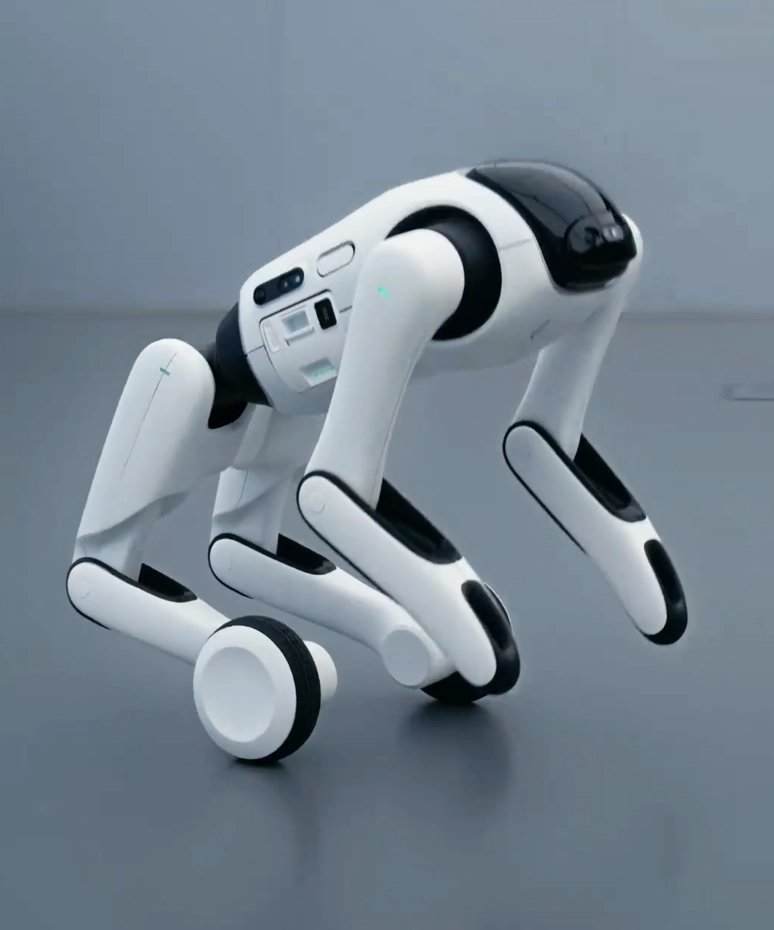
Swancor Qiyuan T1 to Showcase Transformative Personal Robot at WAIC 2026
Swancor Qiyuan's T1, touted as the world's first 'transformable personal robot,' will be publicly demonstrated on July 17, 2026, at the World Artificial Intelligence Conference (WAIC 2026). This robot features a unique Transformer architecture that allows seamless switching between humanoid and quadruped modes, enhancing its interaction and mobility capabilities in various home environments. The significance of the T1 lies in its ability to autonomously select its form based on terrain and tasks, moving beyond traditional manual controls. This innovation is expected to expand the scenarios in which personal robots can operate, addressing common household obstacles while reducing the overall ownership cost for users by eliminating the need for multiple devices. Looking ahead, Swancor's strategy focuses on content creation, education, and companionship rather than general household chores. With offline experience stores already established in major Chinese cities, the T1's success will depend on its pricing and acceptance in the market, potentially proving that adaptable robots hold greater commercial value than those merely mimicking human form.
Transformable Robots Home Robotics AI Technology Robotic Innovation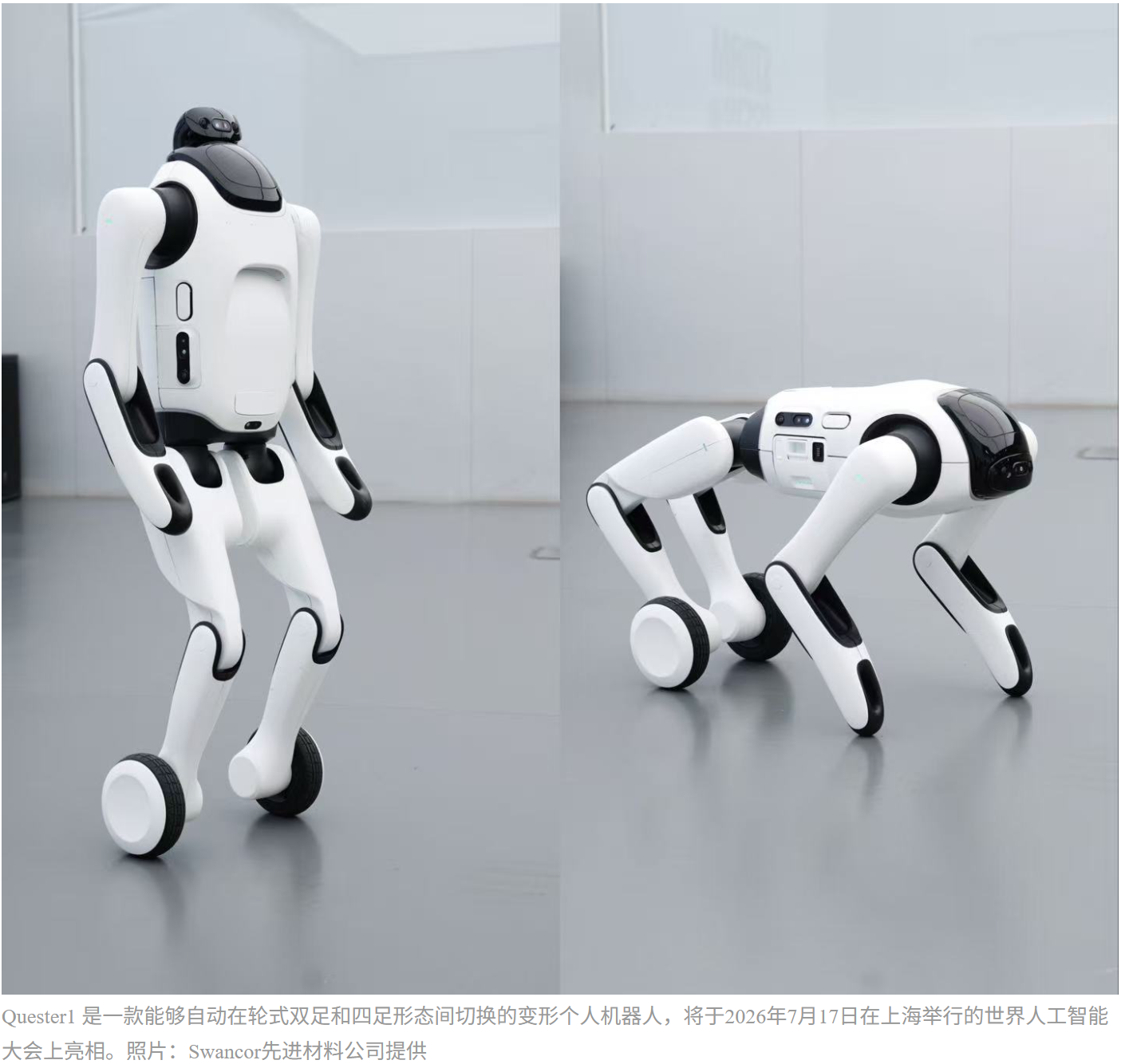
Swancor Advanced Materials to Launch World's First Shape-Shifting Personal Robot at WAIC
Swancor Advanced Materials is set to unveil the Quester1, the world's first shape-shifting personal robot, at the 2026 World Artificial Intelligence Conference (WAIC) on July 17. This innovative robot can automatically switch between bipedal and quadrupedal modes without manual disassembly, showcasing a unique 'transformable cross-modal integration architecture' that enables smooth transitions. The Quester1 is designed for various environments, with its bipedal form ideal for flat surfaces and intricate tasks, while the quadrupedal mode excels in navigating stairs and rough terrain. CEO Tian Hua emphasized that this product aims to redefine personal robotics for consumer markets, marking Swancor's first foray into the consumer robotics sector. As the Quester1 prepares for its debut, it highlights the rapid development of transformable robotics in China. The WAIC will feature over 1,100 companies and more than 300 product launches, indicating a significant shift towards embodied intelligence in robotics. No further timeline was disclosed at the time of publication.
Personal Robots Shape-Shifting Technology AI Robotics Consumer Robotics
Humanoid Robots Enhance Mobility with AI-Driven Sprinting and Spin Kicks
Recent advancements in humanoid robots have led to the development of systems capable of sprinting and executing spin kicks, utilizing AI trained on human motion data. This progress signifies a leap in the capabilities of humanoid robots, which have traditionally been limited in their movement repertoire. The ability of humanoid robots to perform complex movements like sprinting and spin kicks is crucial for their potential application in assisting humans with manual tasks across various environments. Enhanced mobility could enable these robots to engage more effectively in real-world scenarios, thereby increasing their utility and acceptance in society. Looking ahead, the focus will likely be on further refining the movement capabilities of humanoid robots and exploring their practical applications in industries such as healthcare, logistics, and personal assistance. No further timeline was disclosed at the time of publication.
Robotics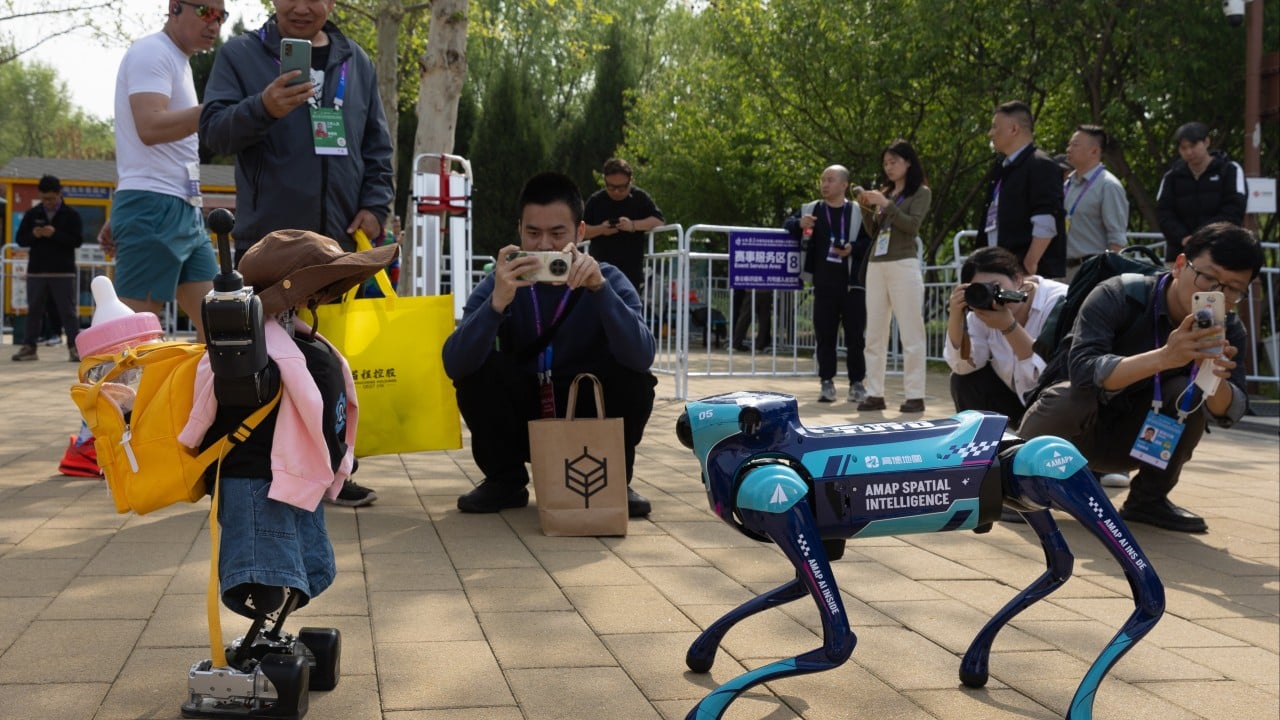
Amap Unveils ABot Framework for Unified Robot Intelligence and Mobility
Amap, a unit of Alibaba Group Holding, has introduced the ABot framework, which integrates a robot's essential functions into a cohesive system. This innovative technology combines five specialized AI models—ABot-N1, ABot-M0.5, ABot-ER, ABot-AgentOS, and ABot-C0—to address the industry's challenge of fragmented robot capabilities. The significance of the ABot framework lies in its ability to enhance robot performance by enabling self-evolving systems that share data and experiences. Amap highlighted that traditional models often operate in isolation, limiting their effectiveness. The ABot-N1 model, for instance, achieves a 92.9% success rate in outdoor navigation using standard cameras, eliminating the need for expensive high-definition maps. Looking ahead, the integration of these models could revolutionize how robots navigate and interact with their environments. Amap's approach to combining movement and manipulation functions through the ABot-M0.5 model is particularly noteworthy, as it allows robots to grasp objects while in motion. No further timeline was disclosed at the time of publication.
NVIDIA and LG Group build AI factory to train robots and power future mobility
Researchers and engineers are advancing the next frontier of artificial intelligence, focusing on the development of machines capable of movement, visual perception, and autonomous decision-making. This initiative, which has gained momentum in recent months, aims to enhance the functionality and adaptability of AI systems across various sectors, including healthcare, transportation, and robotics. The push for these advancements is driven by the increasing demand for intelligent systems that can operate in dynamic environments and perform complex tasks without human intervention. By integrating advanced sensors and machine learning algorithms, developers are working to create AI that not only processes information but also interacts with the physical world in real-time. This evolution in AI technology is taking place in research laboratories and tech hubs around the globe, with significant contributions from universities, private companies, and government agencies. As these entities collaborate, they are exploring innovative applications that could revolutionize industries and improve everyday life. The ongoing research is expected to culminate in prototypes and pilot programs by early 2024, showcasing the potential of these intelligent machines. As the field progresses, ethical considerations and safety measures are also being prioritized to ensure responsible deployment and integration into society. The ultimate goal is to create AI systems that enhance human capabilities and contribute positively to various aspects of life.

Academician Yin Zhouping: The Evolution of Humanoid Robots from 'Mobility' to 'Interactivity' is Overcoming Three Challenges
Academician Yin Zhouping has highlighted the significant advancements in humanoid robots, noting a transformative shift from basic mobility to sophisticated intelligent interaction. During a recent discussion, he emphasized the critical role of tactile sensing and emotional computing in facilitating more natural interactions between humans and robots. Yin outlined a strategic development pathway that aims to enhance these capabilities, underscoring the importance of integrating advanced technologies to create robots that can better understand and respond to human emotions. This evolution in robotics is poised to redefine human-robot relationships, making them more intuitive and effective in various applications.
Humanoid Robots Tactile Sensing AI Interaction Robotics TechnologyRobotics needs a service framework.
RSF defines a common language for robot service capability, lifecycle operations, certification pathways, and service-provider networks.
Join the RobotToday community on LinkedIn
Daily robotics news, in-depth analysis, conference highlights, and discussions with professionals worldwide.







