Top News

Industry Briefing

A single destination for timely, editor-curated robotics news from around the world.

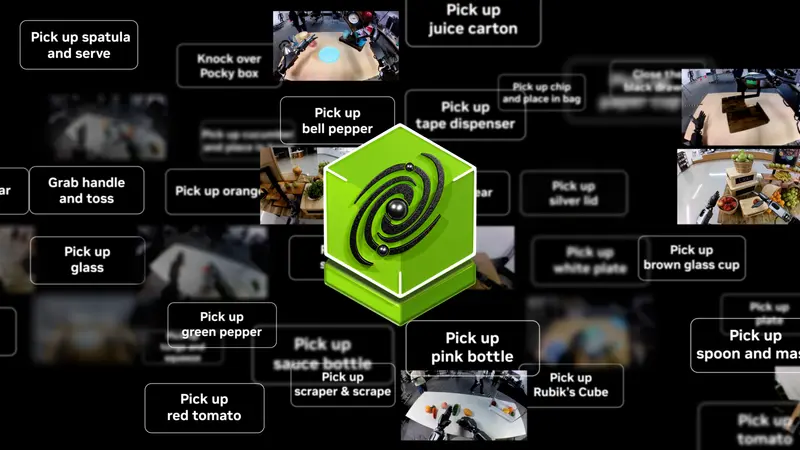
Teleexistence reveals humanoid's success in autonomous convenience store bagging using VLA and NVIDIA's "DreamZero."

Teleexistence reveals humanoid's success in autonomous convenience store bagging using VLA and NVIDIA's "DreamZero."

On June 10, 2026, Teleexistence showcased a demonstration of autonomous operations using humanoid robots as part of the "Physical AI Fellowship 2026," a collaborative initiative supported by AWS, NVIDIA, and MassRobotics. The event highlighted the integration of NVIDIA's World Model, "DreamZero," showcasing advancements in robotic technology and artificial intelligence. This demonstration aims to illustrate the potential of physical AI in enhancing robotic capabilities and fostering innovation in the field.

Sharpa brings dexterous robot hands to Nvidia and Unitree humanoid reference design

Sharpa brings dexterous robot hands to Nvidia and Unitree humanoid reference design

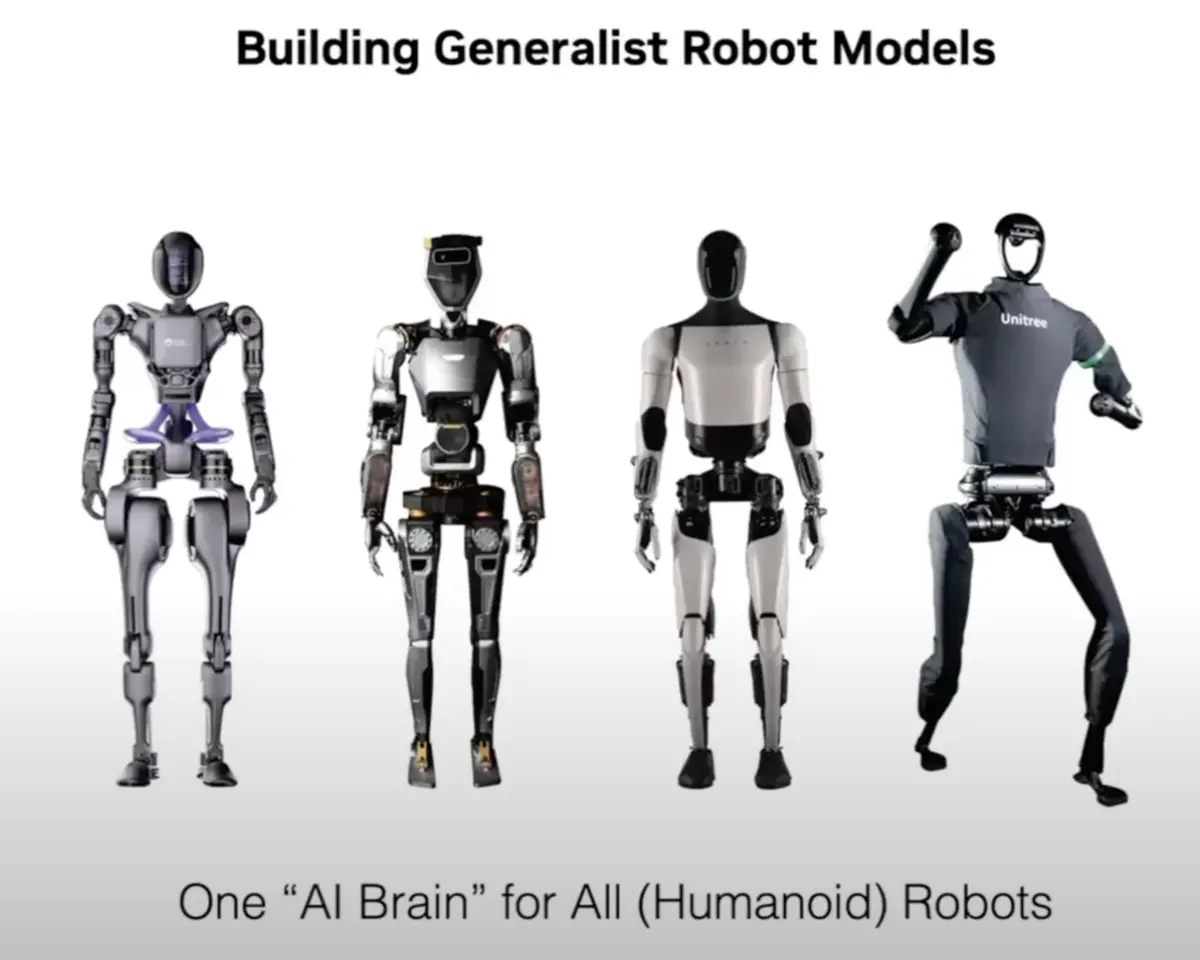
Sharpa has unveiled the integration of its Wave tactile robot hands into the Unitree H2 Plus humanoid robot reference design, marking a significant advancement in robotics technology. This collaboration makes the Unitree H2 Plus the first dexterous humanoid platform to utilize Sharpa's tactile manipulation technology within Nvidia’s Isaac GR00T development framework. The companies aim to enhance the capabilities of robotics developers and researchers by providing a sophisticated platform that combines advanced tactile feedback with humanoid robotics. This integration is expected to facilitate innovative developments in the field, enabling more nuanced and effective interactions between robots and their environments.

Humanoids News automation news dexterous manipulation humanoid robots nvidia
NVIDIA and LG Group build AI factory to train robots and power future mobility

NVIDIA and LG Group build AI factory to train robots and power future mobility

Researchers and engineers are advancing the next frontier of artificial intelligence, focusing on the development of machines capable of movement, visual perception, and autonomous decision-making. This initiative, which has gained momentum in recent months, aims to enhance the functionality and adaptability of AI systems across various sectors, including healthcare, transportation, and robotics. The push for these advancements is driven by the increasing demand for intelligent systems that can operate in dynamic environments and perform complex tasks without human intervention. By integrating advanced sensors and machine learning algorithms, developers are working to create AI that not only processes information but also interacts with the physical world in real-time. This evolution in AI technology is taking place in research laboratories and tech hubs around the globe, with significant contributions from universities, private companies, and government agencies. As these entities collaborate, they are exploring innovative applications that could revolutionize industries and improve everyday life. The ongoing research is expected to culminate in prototypes and pilot programs by early 2024, showcasing the potential of these intelligent machines. As the field progresses, ethical considerations and safety measures are also being prioritized to ensure responsible deployment and integration into society. The ultimate goal is to create AI systems that enhance human capabilities and contribute positively to various aspects of life.

Nebius and Nvidia launch Physical AI Living Lab for European robotics startups

Nebius and Nvidia launch Physical AI Living Lab for European robotics startups

Nebius, a prominent AI cloud company, has launched the Physical AI Living Lab, a six-month initiative aimed at supporting robotics startups across Britain and Europe. This program provides participants with access to Nvidia’s advanced physical AI development tools alongside Nebius’s robust AI cloud infrastructure. The initiative addresses a significant challenge faced by early-stage robotics companies, which often lack the resources to create large-scale simulations, generate synthetic data, and utilize accelerated computing necessary for their development. By offering these essential tools and support, Nebius aims to foster innovation and growth within the robotics sector, ultimately enhancing the capabilities of emerging technologies in the field.

Artificial Intelligence Computing AI cloud computing AI infrastructure automation news nebius
NVIDIA unveils 320 billion-parameter self-driving model "Alpamayo 2 Super" to accelerate Level 4 robo-taxi development.

NVIDIA unveils 320 billion-parameter self-driving model "Alpamayo 2 Super" to accelerate Level 4 robo-taxi development.

NVIDIA announced a significant expansion of its open AI model family, "NVIDIA Alpamayo," aimed at developing safe Level 4 robotic taxis. The announcement was made during the NVIDIA GTC Taipei event held on June 1, 2026, in Taipei, Taiwan. This initiative reflects NVIDIA's commitment to advancing autonomous vehicle technology, enhancing safety and efficiency in transportation. The expansion of Alpamayo is expected to play a crucial role in the future of urban mobility, as the company seeks to address the growing demand for innovative transportation solutions.

Upstart chipmakers keep challenging Nvidia. This time it's Microsoft-backed D-Matrix

Upstart chipmakers keep challenging Nvidia. This time it's Microsoft-backed D-Matrix

D-Matrix, a competitor to Nvidia, has announced that it is commencing full production of a new AI chip, which the company claims is ten times faster than traditional GPUs. This development aims to address the ongoing memory shortage that has been affecting the tech industry. The chip's innovative design allows it to operate efficiently without relying heavily on conventional memory resources. D-Matrix's move comes at a crucial time as demand for advanced AI processing capabilities continues to surge, and the company seeks to carve out a significant market share in the rapidly evolving landscape of artificial intelligence technology.

RLWRLD and Nvidia launch DexBench to standardize humanoid robot dexterity

RLWRLD and Nvidia launch DexBench to standardize humanoid robot dexterity

RLWRLD, a company specializing in physical AI, has partnered with Nvidia to establish new industry standards for humanoid robot artificial intelligence. This initiative, announced recently, aims to enhance the capabilities of humanoid robots through three key components. The first is DexBench, a universal benchmark designed to assess dexterity performance in robotic systems. The second component focuses on creating a standardized data framework for training robots in dexterous manipulation. Lastly, the collaboration will ensure deep integration with Nvidia's open-source platforms, Isaac Lab and Isaac Lab-Arena, facilitating advanced development and testing of robotic technologies. This initiative is set to advance the field of robotics by providing essential tools and standards for evaluating and improving robot dexterity and functionality.

Computing Software automation news DexBench dexterous manipulation embodied ai
NVIDIA Confidential Computing to Help Expand Apple’s Private Cloud Compute

NVIDIA Confidential Computing to Help Expand Apple’s Private Cloud Compute

NVIDIA has announced that its GPUs equipped with Confidential Computing technology are now being utilized for confidential inference in Apple’s Private Cloud Compute (PCC). This development marks a significant expansion of Apple’s cloud capabilities, extending beyond its own data centers to include Google Cloud. The announcement was made during Apple’s annual Worldwide Developers Conference (WWDC), where the company showcased its latest advancements and innovations aimed at enhancing data security and privacy for users. This collaboration with NVIDIA is expected to bolster Apple’s commitment to maintaining user confidentiality while leveraging cloud resources effectively.

LG, Nvidia chiefs pledge to cooperate on robots, AI data centers

LG, Nvidia chiefs pledge to cooperate on robots, AI data centers

LG Group Chairman Koo Kwang-mo and Nvidia CEO Jensen Huang convened on Monday at LG Twin Towers in Yeouido, western Seoul, to explore potential collaborations in robotics, AI data centers, and mobility. The meeting, characterized by LG as a top management discussion, was attended by LG Vice Chairman and COO Kwon Bong-seok and LG Electronics CEO Lyu Jae-cheol. This encounter marked the second meeting between Koo and Huang within three days, following a dinner on Friday in Hongdae that included the chairmen of SK and Naver. The discussions reflect a growing interest in leveraging advanced technologies to enhance operational capabilities and foster innovation in various sectors.

All News
Hyundai, Nvidia chiefs discuss deeper ties in physical AI

Hyundai, Nvidia chiefs discuss deeper ties in physical AI

Hyundai Motor Group Executive Chair Chung Euisun and Nvidia CEO Jensen Huang convened in Seoul on Monday to explore potential collaborations in integrating physical AI across various deep tech sectors, including autonomous driving, robotics, and smart factories. During the meeting, which took place at Hyundai's newly renovated headquarters in Yangjae, Gangnam, Huang was given a tour of the facility around 2 p.m. The visit showcased the automaker's innovative deployment of three service robots, including the DAL-e Gardener, designed for tasks such as watering plants. This partnership aims to leverage advanced AI technologies to enhance Hyundai's capabilities in the evolving automotive and technology landscape.

All News
Doosan seeks bigger role in Nvidia's AI factory ecosystem

Doosan seeks bigger role in Nvidia's AI factory ecosystem

Doosan Group announced on Monday its intention to strengthen its partnership with US technology leader Nvidia, focusing on the development of physical AI-driven robotics and AI factories. This collaboration aims to extend beyond their existing work with collaborative robots, creating a more comprehensive AI value chain. By leveraging Doosan's manufacturing expertise in robotics, energy solutions, and advanced materials for AI semiconductors alongside Nvidia's advanced computing and Physical AI platforms, the two companies plan to explore new business opportunities. This strategic alliance is expected to yield significant synergies, enhancing both firms' capabilities in the rapidly evolving AI landscape.

All News
Nvidia Announces Partnerships with Doosan, LG Focused on Physical AI, Robotics

Nvidia Announces Partnerships with Doosan, LG Focused on Physical AI, Robotics

Nvidia is enhancing its presence in South Korea by forming strategic partnerships with Doosan Group and LG Group. This initiative aims to advance the development of industrial robots, autonomous equipment, robotics training data, and AI-powered manufacturing systems. The collaborations, announced recently, seek to transcend conventional factory automation by emphasizing the creation of software, simulation, and other innovative technologies. These efforts reflect Nvidia's commitment to driving AI integration in manufacturing processes, positioning the company as a key player in the rapidly evolving industrial landscape of South Korea.

AI AI Funding & Investment Robotics Doosan Group LG Group Partnership
AI agents enhance autonomous inspections, revamping manual approval processes for drones and ground robots by DataRobot, Chevron, and NVIDIA.

AI agents enhance autonomous inspections, revamping manual approval processes for drones and ground robots by DataRobot, Chevron, and NVIDIA.

DataRobot has announced a collaboration with Chevron U.S.A. Inc., a subsidiary of Chevron Corporation, to implement agent-based AI in edge environments. This partnership aims to enhance autonomous patrol and inspection operations at Chevron facilities. By leveraging advanced AI technology, the initiative seeks to improve operational efficiency and safety in the company's infrastructure.

Increased Security for Physical AI

Increased Security for Physical AI

Infineon Technologies has announced the integration of its Optiga TPM SLB 9672 hardware security module into Nvidia's Jetson Thor computing platform, which is designed for robotics and autonomous systems. This collaboration aims to enhance security measures for physical artificial intelligence applications. By incorporating advanced security features, the partnership seeks to address growing concerns regarding data protection and system integrity in increasingly automated environments. The integration is expected to provide developers with robust tools to build secure and reliable robotic solutions.

Allgemein Robotersteuerung & Digital Twin Robotik
A pitch for future partnership

A pitch for future partnership

Nvidia CEO Jensen Huang made a special appearance at the Seoul Jamsil Baseball Stadium on Sunday, where he threw the ceremonial first pitch before the Doosan Bears' game against the Kiwoom Heroes. Joining him on the field was Park Jeong-won, the Chair of Doosan Group and owner of the Doosan Bears, who served as the ceremonial batter. This notable event has sparked speculation among industry observers about the potential for future collaborations in robotics and artificial intelligence between the two prominent figures in the tech and business sectors.

All News
Jensen Huang courts Korea's AI ecosystem on packed Seoul tour

Jensen Huang courts Korea's AI ecosystem on packed Seoul tour

Nvidia CEO Jensen Huang is currently on a high-profile visit to South Korea, engaging with local tech leaders and fans in a series of events designed to strengthen the company's partnerships in artificial intelligence and robotics. His trip, which includes appearances at popular PC bangs and interactions with renowned figures from the gaming community, highlights Nvidia's commitment to fostering collaboration in the region. Scheduled activities through Monday night involve enjoying traditional Korean cuisine, such as fried chicken and samgyetang, and attending a baseball game, all while discussing advancements in next-generation technologies. Huang's visit underscores Nvidia's strategic focus on enhancing its presence and influence within the South Korean tech landscape.

All News
NVIDIA, KRAFTON, NC and Reigning ‘League of Legends’ Champions T1 Celebrate RTX Spark at Korea’s PC Bangs

NVIDIA, KRAFTON, NC and Reigning ‘League of Legends’ Champions T1 Celebrate RTX Spark at Korea’s PC Bangs

During COMPUTEX last week in Taipei, NVIDIA introduced its latest innovation, the RTX Spark superchip, designed to transform Windows PCs for the emerging era of personal AI agents. Following this significant announcement, NVIDIA's founder and CEO, Jensen Huang, traveled to South Korea to further discuss the implications and applications of this groundbreaking technology. The RTX Spark aims to enhance computing capabilities, enabling more advanced AI functionalities and improving user experiences in personal computing. This development reflects NVIDIA's commitment to leading the charge in AI integration within everyday technology, positioning itself at the forefront of the evolving digital landscape.

NVIDIA and Doosan Group Collaborate to Advance Physical AI and AI Factory Infrastructure

NVIDIA and Doosan Group Collaborate to Advance Physical AI and AI Factory Infrastructure

NVIDIA and Doosan Group have announced an expansion of their collaboration aimed at enhancing advancements in physical AI, robotics, and AI factory infrastructure. This partnership will encompass various sectors within Doosan, including Doosan Robotics, Doosan Bobcat, Doosan Enerbility, and Doosan Corporation Electro-Materials. The initiative, which reflects a strategic move to leverage NVIDIA's AI technology alongside Doosan's diverse industrial capabilities, is expected to create new opportunities and innovations in the rapidly evolving fields of robotics and AI-driven manufacturing. The collaboration is set to unfold in the coming months, with both companies committed to integrating cutting-edge AI solutions into their operations to improve efficiency and productivity.

SK Telecom and NVIDIA Build AI Infrastructure to Power Korea’s AI Innovation

SK Telecom and NVIDIA Build AI Infrastructure to Power Korea’s AI Innovation

NVIDIA and SK Telecom have revealed plans for a significant advancement in artificial intelligence infrastructure in South Korea. The telecommunications company intends to construct a gigawatt-scale AI Cloud utilizing the NVIDIA DSX™ platform, with the inaugural AI factory expected to commence operations in 2027. This initiative aims to enhance the country's AI capabilities and support various industries by leveraging cutting-edge technology. The collaboration between NVIDIA and SK Telecom underscores a commitment to innovation and positions South Korea as a key player in the global AI landscape.

NVIDIA and SK hynix Announce Multiyear Technology Partnership to Advance Memory for AI Factories

NVIDIA and SK hynix Announce Multiyear Technology Partnership to Advance Memory for AI Factories

NVIDIA and SK hynix have entered into a multiyear technology partnership aimed at enhancing next-generation memory solutions to support the global expansion of artificial intelligence infrastructure. This collaboration, announced today, seeks to accelerate advancements in semiconductor design and manufacturing, addressing the growing demand for AI technologies. By combining their expertise, the two companies aim to innovate and streamline the production of memory components essential for AI applications, ultimately contributing to the efficiency and effectiveness of AI systems worldwide.

NAVER Expands AI Infrastructure With NVIDIA to Serve Surging Global AI Demand

NAVER Expands AI Infrastructure With NVIDIA to Serve Surging Global AI Demand

NVIDIA and NAVER have joined forces to enhance sovereign AI infrastructure, initiating a project that will start with a capacity of 55 megawatts and aims to scale up to gigawatt levels. This collaboration leverages the NVIDIA DSX™ platform, which will facilitate the rapid design, construction, and scaling of comprehensive AI platforms. The announcement marks a significant step in advancing AI capabilities, reflecting both companies' commitment to expanding their technological influence in the AI sector.

NVIDIA and LG Group Build an AI Factory to Advance Physical AI, Mobility and AI Infrastructure

NVIDIA and LG Group Build an AI Factory to Advance Physical AI, Mobility and AI Infrastructure

NVIDIA and LG Group have announced plans to establish an AI factory aimed at enhancing LG's upcoming AI-driven initiatives, which include advancements in robotics, autonomous driving, data center technologies, and GPU cloud services. This collaboration is set to significantly accelerate the development of these technologies, positioning LG Group at the forefront of the AI industry. The factory's establishment reflects both companies' commitment to innovation and their strategic focus on harnessing artificial intelligence to drive future business growth. The partnership is expected to leverage NVIDIA's expertise in AI and GPU technology, facilitating the creation of cutting-edge solutions that will benefit various sectors.

How the UK Is Turning Sovereign AI Ambition Into Action With NVIDIA Technologies

How the UK Is Turning Sovereign AI Ambition Into Action With NVIDIA Technologies

At this year's London Tech Week, NVIDIA founder and CEO Jensen Huang, alongside U.K. Prime Minister Keir Starmer, reaffirmed their commitment to establishing the U.K. as a leader in artificial intelligence development. This declaration follows a similar announcement made a year prior, emphasizing the nation's ambition to become an AI maker rather than merely adopting existing technologies. During the event, NVIDIA and its partners are demonstrating innovative AI solutions and advancements, highlighting the collaborative efforts to foster a robust AI ecosystem in the U.K. The initiative aims to position the country at the forefront of AI innovation, leveraging partnerships and investments to drive growth in this critical sector.

Nvidia’s AI Hardware Comes to Windows in RTX Spark PCs

Nvidia’s AI Hardware Comes to Windows in RTX Spark PCs

At Computex 2026 in Taipei, Taiwan, Nvidia unveiled its highly anticipated RTX Spark superchip for Windows PCs, marking a significant development in the tech industry. This announcement, which comes a year later than initially expected, was made in collaboration with Microsoft, which introduced two new devices powered by the RTX Spark: the Surface Laptop Ultra and the Surface RTX Spark Dev Box. Major PC manufacturers, including Asus, Dell, Lenovo, HP, and MSI, also showcased their Windows PCs featuring the new chip. The RTX Spark is based on Nvidia's Blackwell GB10 architecture, boasting 20 Arm CPU cores, 6,144 GPU cores, and support for up to 128 gigabytes of LPDDR5X memory. While the chip is designed to consume less power than its predecessor, the DGX Spark, it is expected to maintain strong performance, particularly in gaming and professional applications. Analysts suggest that Nvidia's established presence in the GPU market, with over 90% share, will enhance the software ecosystem for RTX Spark, setting it apart from previous attempts by Qualcomm and Microsoft with their AI-focused Copilot+ PCs. As Nvidia and Microsoft aim to position RTX Spark as a viable alternative to traditional x86 chips from Intel and AMD, they face the challenge of proving its effectiveness as a general-purpose PC. The launch is seen as a strategic move to leverage AI capabilities while appealing to both creators and gamers, with Nvidia emphasizing the importance of robust software support alongside hardware advancements. RTX Spark desktop workstations are expected to be available in the third quarter of 2026, further expanding the potential applications of this new technology.

Nvidia Pcs Windows Arm Ai-hardware
Nvidia CEO Jensen Huang embarks on packed Seoul visit focused on AI, robotics

Nvidia CEO Jensen Huang embarks on packed Seoul visit focused on AI, robotics

Nvidia founder and CEO Jensen Huang will arrive in Seoul on Friday afternoon for a four-day visit aimed at strengthening collaborations with South Korea's technology, manufacturing, and artificial intelligence sectors. This marks Huang's longest stay in the country in recent years and follows his previous trip seven months ago for the APEC summit. The visit comes as Nvidia seeks to broaden its partnerships beyond semiconductors, exploring opportunities in emerging fields such as robotics, physical AI, and AI infrastructure.

All News
Generalist AI raises $400 million to scale robot intelligence platform

Generalist AI raises $400 million to scale robot intelligence platform

Generalist AI, a startup focused on creating foundation models for robotics, has successfully secured $400 million in a recent funding round. This investment aims to expedite the development of what the company refers to as “physical AGI,” or artificial general intelligence that can function in the physical world through robotic systems. Following this funding, Generalist AI's valuation has reached approximately $2 billion. The influx of capital will enable the company to enhance its research and development efforts, positioning it at the forefront of advancements in robotics and AI technology.

Computing News Software 8VC ai funding AI models
Chinese Embodied AI Company Tops RoboArena Benchmark, Beating NVIDIA and Physical Intelligence

Chinese Embodied AI Company Tops RoboArena Benchmark, Beating NVIDIA and Physical Intelligence

At the NVIDIA GTC Taipei 2026 event, a significant milestone was announced for China's embodied intelligence sector. This achievement highlights the advancements made in the field, showcasing the country's commitment to innovation and technology development. The announcement is expected to bolster China's position in the global tech landscape, reflecting ongoing efforts to enhance artificial intelligence capabilities. The event served as a platform for industry leaders to discuss future trends and the implications of these advancements on various sectors.

EmbodiedAI
A Chinese robotics start-up beat Nvidia on a global AI ranking. Is a new tech war brewing?

A Chinese robotics start-up beat Nvidia on a global AI ranking. Is a new tech war brewing?

As artificial intelligence transitions from digital applications to real-world implementations, the competition between China and the United States intensifies over the development of advanced robotic technologies. This rivalry escalated following the recent launch of Nvidia's Cosmos 3 model, which aims to enhance the cognitive capabilities of physical AI by enabling it to "think before it acts." Just two days later, on Wednesday, the Chinese start-up Spirit AI, based in Hangzhou, Zhejiang province, captured attention by unveiling its own foundation model for embodied AI. This development highlights the growing urgency among tech companies to innovate in the field of robotics, as both nations strive to establish dominance in this critical area of technology.

Forecast: Fun Ahead — 18 Games Join in June to Stream on GeForce NOW

Forecast: Fun Ahead — 18 Games Join in June to Stream on GeForce NOW

In June, GeForce NOW is set to enhance the gaming experience for its members by introducing a diverse lineup of new titles, ranging from popular blockbusters to unique indie games. Gamers will have the opportunity to explore fresh virtual worlds and engage in new playlists, ensuring an exciting month ahead for the platform's users. This initiative aims to cater to a wide array of gaming preferences, encouraging players to discover and enjoy a variety of gaming adventures. With a commitment to delivering quality content, GeForce NOW continues to solidify its position as a leading cloud gaming service.

Seoul Purpose: How NVIDIA and South Korea Are Building the Future of AI

Seoul Purpose: How NVIDIA and South Korea Are Building the Future of AI

NVIDIA founder and CEO Jensen Huang is visiting Seoul this week, highlighting South Korea's status as a global hub for artificial intelligence and robotics innovation. The country is recognized not only for its advanced technological infrastructure but also for its vibrant gaming community, which plays a significant role in the development and application of AI technologies. Huang's presence underscores the importance of collaboration between industry leaders and local innovators in driving advancements in AI. This visit aims to foster partnerships and explore opportunities within South Korea's dynamic tech landscape, further solidifying its position in the global AI arena.

Why Nvidia is betting on Korea for physical AI

Why Nvidia is betting on Korea for physical AI

Nvidia CEO Jensen Huang is set to highlight South Korea's advancements in physical AI during his visit to Seoul, scheduled for Thursday. Speaking at Nvidia's inaugural "Korea Partner Night" in Taiwan on Tuesday, Huang emphasized the significance of robotics for the nation, expressing his desire to contribute to its development. He noted the country's robust ecosystem and indicated that Nvidia is open to potential investments in South Korea's technology sector. This visit underscores the growing importance of robotics in the region and Nvidia's commitment to fostering innovation in the field.

All News
The Classical Advances Needed to Make Quantum Computers Tick

The Classical Advances Needed to Make Quantum Computers Tick

Quantum computers are poised to tackle problems beyond the capabilities of today's most advanced supercomputers, but their operation relies heavily on classical computing infrastructure. As the industry prepares for the anticipated scale of quantum computing, major players like Nvidia, Q-CTRL, IBM Quantum, and Google Quantum AI are developing innovative classical hardware and software solutions to support these machines. In April, Nvidia unveiled AI-based software designed to enhance the classical tasks essential for quantum computing. Sydney-based Q-CTRL has created an automatic calibration algorithm that utilizes Nvidia’s system to streamline the calibration process, which is crucial for maintaining the reliability of qubits—quantum bits that are inherently unstable and require regular adjustments. Calibration involves a meticulous two-stage process that traditionally demands significant time and expertise, prompting a push for automation. Q-CTRL's intelligent software analyzes calibration data in real-time, allowing for dynamic adjustments to improve efficiency. Additionally, quantum error correction is a critical focus, as it enables the detection and compensation of errors in qubits, a process that must occur rapidly to maintain quantum states. While AI is gaining traction in simplifying hardware control, challenges such as latency and computational expense remain. Experts suggest that a hybrid approach combining traditional and AI methods may be necessary to optimize performance. As quantum technology evolves, the demand for robust classical support will grow, necessitating new strategies to manage the increasing complexity of quantum systems.

Quantum-computers Quantum-error-correction Internal-calibration Nvidia Quantum-computing
Microsoft and NVIDIA unveil next-gen PCs capable of 1 petaflop performance.

Microsoft and NVIDIA unveil next-gen PCs capable of 1 petaflop performance.

Microsoft and NVIDIA have unveiled a next-generation PC equipped with the NVIDIA RTX Spark, boasting an impressive AI performance of up to 1 petaflop. This announcement was made recently as part of their ongoing collaboration to enhance computing power. The new system features significant optimizations for Windows, aiming to expand the ecosystem of local AI agents, applications, and games. This development reflects both companies' commitment to advancing AI technology and improving user experiences across various platforms.

Microsoft unveils AI-focused mini PC "Surface RTX Spark Dev Box" featuring NVIDIA SoC.

Microsoft unveils AI-focused mini PC "Surface RTX Spark Dev Box" featuring NVIDIA SoC.

At the recent Build 2026 conference, Microsoft unveiled its new AI-focused desktop PC, the Surface RTX Spark Dev Box. This powerful machine is equipped with NVIDIA's RTX Spark technology, delivering an impressive computational performance of up to 1 petaflop and featuring 128GB of memory. These specifications enable local inference and training of models with over 120 billion parameters. Additionally, the device comes pre-installed with a variety of development tools, catering to the needs of developers working in artificial intelligence and machine learning.

NVIDIA Research Unlocks Advanced Grasping, Smarter Autonomous Driving and Agent Training at Scale

NVIDIA Research Unlocks Advanced Grasping, Smarter Autonomous Driving and Agent Training at Scale

Researchers are exploring advancements in robotics, focusing on the versatility of robot grippers and the safety of autonomous vehicle systems. The study highlights that the true utility of a robot gripper lies not only in its ability to grasp a single object but also in its capacity to adapt and handle various unfamiliar items consecutively. Similarly, the effectiveness of autonomous vehicles is assessed not just on their reasoning capabilities but on their overall safety in diverse driving conditions. This research, conducted by a team of engineers and computer scientists, aims to enhance the functionality of robotic systems and improve public trust in autonomous technology. The findings, which are expected to influence future designs and applications, were presented at a technology conference in early October 2023. By integrating advanced algorithms and machine learning techniques, the team is developing systems that can learn from experience, thereby increasing their efficiency and reliability in real-world scenarios.

NVIDIA Enables the Next Era Of Physical AI Research With Agent Skills For Autonomous Vehicles, Robotics And Vision AI

NVIDIA Enables the Next Era Of Physical AI Research With Agent Skills For Autonomous Vehicles, Robotics And Vision AI

At the Computer Vision and Pattern Recognition (CVPR) conference, NVIDIA is showcasing innovative physical AI agent skills aimed at accelerating the development of autonomous vehicles, robotics, and vision AI systems. This unveiling comes as researchers and developers face significant challenges in advancing physical AI, particularly in creating more capable and efficient systems. By introducing these new skills, NVIDIA seeks to enhance the capabilities of AI agents, ultimately facilitating faster progress in the field. The event highlights NVIDIA's commitment to driving advancements in AI technology, which is crucial for the future of autonomous systems.

NVIDIA unveils its first open humanoid reference design, "Isaac GR00T."

NVIDIA unveils its first open humanoid reference design, "Isaac GR00T."

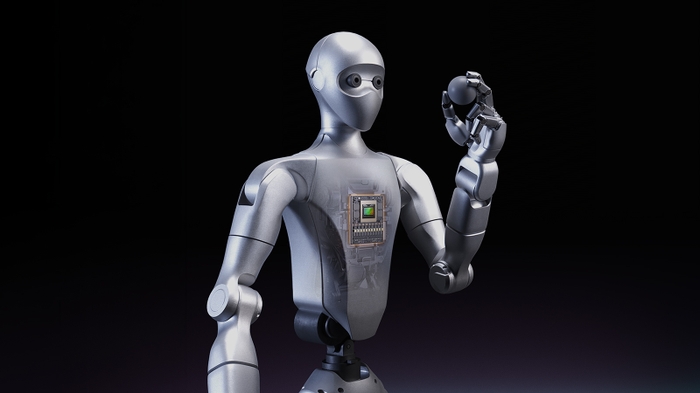
NVIDIA has unveiled its first open-source humanoid robot reference design, named the NVIDIA Isaac GR00T Reference Humanoid Robot, aimed at advancing robotics research. This announcement was made recently, highlighting NVIDIA's commitment to fostering innovation in the field of robotics. The new design is expected to provide researchers and developers with a versatile platform to explore and develop robotic applications. By making the design open-source, NVIDIA aims to encourage collaboration and accelerate advancements in humanoid robotics, allowing a broader community to contribute to and benefit from this technology.

Doosan Robotics extends rally on Huang's Korea robotics push

Doosan Robotics extends rally on Huang's Korea robotics push

Doosan Robotics experienced a significant surge in its stock price on Tuesday, following remarks from Nvidia CEO Jensen Huang, who highlighted robotics as a key area for potential investment in South Korea. By midday, shares were trading at 157,900 won ($104.12), reflecting a 14.09 percent increase from the previous day. This rise followed an impressive 29.95 percent jump on Monday, when the stock reached its daily price ceiling, a limit imposed by Korean exchanges that caps single-day price movements at 30 percent. Huang's comments, made during a dinner event on Monday, have sparked investor interest and optimism about the future of robotics in the region.

All News
Aptiv to Deliver Production-Ready Edge AI with Long-Term Support with NVIDIA

Aptiv to Deliver Production-Ready Edge AI with Long-Term Support with NVIDIA

NVIDIA and its partner companies are collaborating to advance the NVIDIA Jetson platform, focusing on the development of next-generation systems, including the upcoming Jetson Thor. This initiative aims to create commercially supported, production-ready edge AI platforms designed for the future of intelligent systems. The partnership underscores a commitment to enhancing AI capabilities and ensuring that these technologies are viable for widespread commercial use. The evolution of the Jetson platform is expected to significantly impact various industries by providing robust solutions for edge computing and artificial intelligence applications.

Microsoft unveils its first AI reasoning model ahead of OpenAI IPO

Microsoft unveils its first AI reasoning model ahead of OpenAI IPO

Microsoft has introduced its first artificial intelligence reasoning model, MAI-Thinking-1, during the annual Build developer conference held on June 2, 2026, in San Francisco. This launch marks a strategic move by the tech giant to lessen its reliance on OpenAI, which is preparing for an initial public offering. The unveiling of MAI-Thinking-1 highlights Microsoft's commitment to advancing its AI capabilities amid a competitive landscape. Additionally, the company is collaborating with Nvidia to develop a new chip designed for Windows, further enhancing its technological offerings. This initiative reflects Microsoft's broader ambitions in the AI sector as it seeks to innovate and maintain a leading position in the industry.

NVIDIA Partners With Microsoft on Unified Stack for Agentic AI Deployment, From Windows Devices to Cloud to Local

NVIDIA Partners With Microsoft on Unified Stack for Agentic AI Deployment, From Windows Devices to Cloud to Local

NVIDIA and Microsoft have announced a significant advancement in artificial intelligence, highlighting the arrival of what they term the "agentic AI moment." This development emphasizes that realizing the full potential of AI technology necessitates not only sophisticated models but also the integration of high-speed hardware, secure operational environments, and a responsive data infrastructure. The companies are focusing on optimizing AI models for extended reasoning capabilities, which are crucial for complex decision-making processes. This collaboration aims to enhance the efficiency and effectiveness of AI applications, paving the way for more intelligent and autonomous systems in various sectors. The initiative underscores the importance of a comprehensive approach to AI development, combining cutting-edge technology with robust security measures to foster innovation.

Industrial Software Leaders Build Secure, Autonomous AI Engineers With NVIDIA NemoClaw

Industrial Software Leaders Build Secure, Autonomous AI Engineers With NVIDIA NemoClaw

Accelerated computing has transformed the field of industrial engineering by significantly reducing simulation times from weeks to mere hours. Despite these advancements, experts indicate that challenges persist in the end-to-end workflow associated with simulations, which includes critical processes such as computer-aided design, meshing, and the simulations themselves. As industries continue to adopt these technologies, addressing these workflow issues is essential for maximizing efficiency and effectiveness in engineering practices. The ongoing developments in accelerated computing are expected to further streamline these processes, enhancing productivity and innovation in the sector.

Nvidia chases $200B CPU market with AI agent PCs from Microsoft, Dell, and HP

Nvidia chases $200B CPU market with AI agent PCs from Microsoft, Dell, and HP

Nvidia is poised to revolutionize the accessibility of artificial intelligence by developing a method to deploy AI agents that are not only user-friendly but also safe and effective. This breakthrough could significantly impact various sectors, making advanced AI technology available to a broader audience. The initiative comes at a time when the demand for AI solutions is surging, with businesses and consumers alike seeking innovative tools to enhance productivity and efficiency. By leveraging its expertise in AI and machine learning, Nvidia aims to simplify the integration of these agents into everyday applications, potentially transforming how individuals and organizations interact with technology. If successful, this advancement could mark a pivotal moment in the evolution of AI, democratizing its benefits and fostering a new wave of innovation across industries.

AI Hardware TC AI PC cpus Microsoft
NVIDIA releases new and updated tools for physical AI developers

NVIDIA releases new and updated tools for physical AI developers

NVIDIA has unveiled a suite of open-source tools and skills designed for developers working with physical AI agents, alongside the introduction of the Isaac GR00T humanoid reference robot. This announcement, aimed at enhancing the capabilities of AI in real-world applications, reflects NVIDIA's commitment to advancing robotics and AI technology. The release is part of the company's ongoing efforts to foster innovation within the AI community, providing developers with the resources necessary to create more sophisticated and capable physical AI systems. The tools and the humanoid robot were made available recently, signaling a significant step forward in the integration of AI into practical robotics.

Artificial Intelligence Artificial Intelligence / Cognition Automotive Autonomous Mobile Robots (AMRs) Development Tools / SDKs / Libraries Healthcare Robotics
Nvidia CEO Jensen Huang expected to visit Korea this week for talks with industry leaders

Nvidia CEO Jensen Huang expected to visit Korea this week for talks with industry leaders

Nvidia CEO Jensen Huang is set to visit South Korea this week to engage in discussions with leaders from major companies such as SK Group, LG Group, Naver, and Hyundai Motor Group. The meetings will focus on potential collaborations in AI chips, robotics, and physical artificial intelligence. Huang is scheduled to arrive in Seoul on Thursday, following his participation in Nvidia’s annual AI conference, GTC Taipei, in Taiwan. The discussions with Korean industry executives are expected to commence on Friday, highlighting Nvidia's strategic interest in strengthening ties within South Korea's technology sector.

All News
Microsoft announces "Surface Laptop Ultra" featuring NVIDIA's new RTX Spark chip for local execution of large AI models.

Microsoft announces "Surface Laptop Ultra" featuring NVIDIA's new RTX Spark chip for local execution of large AI models.

Microsoft has unveiled its latest high-performance laptop, the Surface Laptop Ultra, which features NVIDIA's new Arm processor, the RTX Spark. This innovative device is designed to deliver powerful AI computing capabilities, enabling users to run large AI models in local environments. The announcement highlights Microsoft's commitment to advancing technology that enhances productivity and performance for users seeking cutting-edge solutions.

China establishes a venture capital fund in Hangzhou with 1 billion yuan; Tianjin opens AI sensor industrial park; Zhejiang plans

China establishes a venture capital fund in Hangzhou with 1 billion yuan; Tianjin opens AI sensor industrial park; Zhejiang plans

ZTO Express has established a new logistics company, Guangzhou Zhongjing Logistics Co., Ltd., in Guangzhou with a registered capital of 500 million RMB. The company, wholly owned by ZTO Express, will engage in domestic freight transportation, equipment leasing, and computer system services. OpenAI has announced its entry into the robotics sector, focusing on developing assistive robots. CEO Sam Altman stated the company is looking for engineers to create robots that can aid in building future infrastructure. The initiative, which has evolved from a world simulation research project, aims to integrate hardware and machine learning for practical applications. Nan Er, Vice President of Zhejiang Chint Electric, has been recognized as a "2026 Zhejiang Youth Technology Entrepreneur" as part of a program to support technology entrepreneurs in the region. Foxconn and French company Bull will collaborate to manufacture AI and cloud infrastructure, with an initial investment of over 120 million euros. The project will utilize facilities in both France and the Czech Republic. On June 1, new regulations for online food delivery were implemented, with Taobao Flash collaborating with various local regulatory bodies to label the first batch of "no dine-in" merchants, enhancing compliance among 60,000 restaurants this year. Muyu Group has partnered with Alibaba Cloud to develop an AI model for the livestock industry, significantly improving the efficiency of health checks for pigs. In investment news, a new venture capital fund, Guoxin Qianjiang, has been established in Hangzhou with a capital of 1 billion RMB, while Zhi Mi has opened a financing window with a pre-IPO valuation of approximately 70 billion RMB. In product developments, a new automotive brand resulting from a collaboration between Sairus and ByteDance is set to launch a hybrid vehicle this year, while Sharpa has introduced a humanoid robot equipped with advanced tactile capabilities in partnership with NVIDIA. Lastly, the Tianjin AI Sensor Industrial Park has officially opened, with ten companies signing contracts, and Shanghai is focusing on advancing core software technologies as part of its development plan. Zhejiang Province is also seeking to implement the "Spark Plan" to accelerate the application of quantum technology products.

NVIDIA unveils full-stack platform for humanoid robots, robotaxis and smart factories

NVIDIA unveils full-stack platform for humanoid robots, robotaxis and smart factories

NVIDIA has introduced a comprehensive range of technologies designed to enhance the development of physical artificial intelligence. The announcement was made during a recent event, showcasing the company's commitment to advancing AI capabilities. This initiative aims to address the growing demand for more efficient and powerful AI systems across various industries. By leveraging its cutting-edge hardware and software solutions, NVIDIA seeks to empower developers and researchers to create innovative applications that can operate in real-world environments. The unveiling of these technologies marks a significant step forward in the integration of AI into everyday life, highlighting NVIDIA's role as a leader in the tech industry.

New Server Hopes to Break Through AI’s “Memory Wall”

New Server Hopes to Break Through AI’s “Memory Wall”

Majestic Labs, an AI hardware startup, is addressing the memory limitations of large language models (LLMs) with its upcoming server, Prometheus, set to launch in 2027. This innovative server will feature up to 128 terabytes of memory, significantly surpassing the capabilities of Nvidia’s current offerings. Co-founder Sha Rabii emphasizes that this substantial memory increase will enhance performance and efficiency, particularly as models grow larger. Prometheus employs a unique DRAM-centric architecture, utilizing LPDDR6 memory and a proprietary memory interface with miniature copper cables that allow for greater memory placement flexibility. This design aims to overcome the “memory wall” that hampers LLM performance, providing a memory bandwidth of up to 25.6 terabytes per second. To complement its memory capabilities, Prometheus will incorporate the Ignite AI processing unit, which combines ARM application cores with RISC-V vector and tensor cores on a single chip. This integration allows for seamless handling of LLM inference tasks without the need for processor handoffs. Majestic Labs is also focused on ensuring compatibility with existing AI frameworks like PyTorch and OpenAI’s Triton, allowing customers to run their models without modifications. The server, designed in compliance with the Open Compute Project, will be modular, enabling future memory upgrades. Despite the advanced technology, Majestic Labs aims to offer competitive pricing by leveraging DRAM instead of more expensive high-bandwidth memory. Rabii claims that this approach could reduce customer capital expenditures and power consumption significantly, potentially by 10 to 50 times, depending on the workload.

Memory Server Ai-accelerators Performance