

Industry Briefing
A single destination for timely, editor-curated robotics news from around the world.
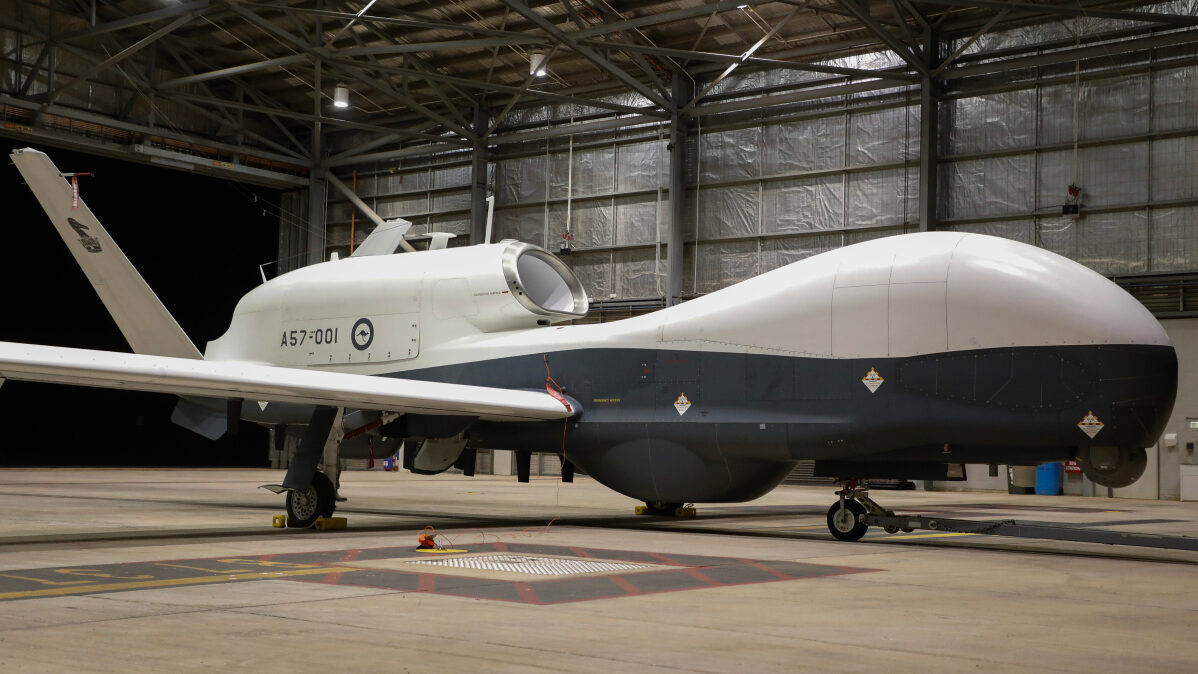
RAAF Achieves Initial Operational Capability for MQ-4C Tritons and MC-55A Peregrines
The Royal Australian Air Force (RAAF) has announced that it has achieved Initial Operational Capability (IOC) for its MQ-4C Triton unmanned aerial vehicles. This milestone is expected to significantly enhance the RAAF's capacity to provide persistent intelligence, surveillance, and reconnaissance (ISR) capabilities across Australia's primary military interest areas. Achieving IOC for the MQ-4C Tritons is crucial as it strengthens the RAAF's operational effectiveness in ISR missions, which are vital for national security and defense strategies. The integration of these advanced systems is anticipated to improve situational awareness and decision-making processes within the Australian defense framework. Looking ahead, the RAAF will likely focus on further operational integration and training to maximize the capabilities of the MQ-4C Tritons and MC-55A Peregrines. No further timeline was disclosed at the time of publication.
Air Warfare Global Air Force Asia australia Indo-Pacific
P-8A Poseidon Crews Can Now Control MQ-4C Triton Drones In-Flight
The U.S. Navy has announced that P-8A Poseidon crews can now direct MQ-4C Triton drones during flight without relying on ground stations. This advancement enhances operational flexibility and coordination in military missions, allowing for more efficient targeting and engagement of multiple threats simultaneously. This capability is significant as it represents a leap in military technology, enabling real-time command and control of unmanned aerial vehicles (UAVs). The ability to manage drones in-flight improves response times and situational awareness, which are critical in modern warfare scenarios. Looking ahead, the integration of P-8A Poseidon and MQ-4C Triton systems may lead to further enhancements in naval operations. The U.S. Navy's ongoing commitment to advancing drone technology will likely continue to shape future military strategies and capabilities. No further timeline was disclosed at the time of publication.
Military
Boeing and Northrop Grumman Enhance P-8A Poseidon and MQ-4C Triton Drone Collaboration
Boeing and Northrop Grumman have successfully conducted a pioneering test that allows P-8A Poseidon crews to command MQ-4C Triton drones. This advancement in command and control architecture enables the P-8A to issue autonomous mission orders to the Triton, enhancing operational flexibility in dynamic battle scenarios. The integration of the P-8A and MQ-4C is significant as it streamlines mission management and reduces operator workload through the Universal Command & Control Interface (UCI). This collaboration is expected to accelerate decision-making processes and improve the efficiency of maritime surveillance operations, particularly in response to sudden changes in the battlespace. Looking ahead, the U.S. Navy's ongoing efforts to integrate these platforms suggest a future where the P-8A and MQ-4C work seamlessly together. No further timeline was disclosed at the time of publication.
Air Drones Maritime Patrol MQ-4C News & Features P-8Robotics needs a service framework.
RSF defines a common language for robot service capability, lifecycle operations, certification pathways, and service-provider networks.
Join the RobotToday community on LinkedIn
Daily robotics news, in-depth analysis, conference highlights, and discussions with professionals worldwide.







