

Industry Briefing
A single destination for timely, editor-curated robotics news from around the world.
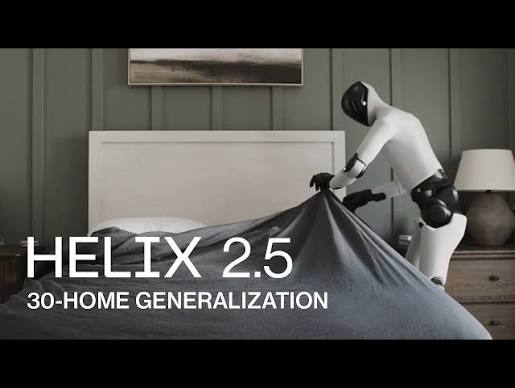
Figure Launches Helix 2.5: Robots Perform Household Tasks in Unfamiliar Environments
Figure has introduced the Helix 2.5 model, enabling robots to autonomously handle household chores. The company rented 30 homes in the San Francisco Bay Area, where the robots began tidying up without any additional training upon arrival. The Helix 2.5 aims to explore whether humanoid robots can enter an unfamiliar home and immediately start working independently. This development is significant as it addresses the challenge of zero-shot generalization, where robots operate in new environments without prior data collection or mapping. Traditionally, robots required extensive preparation to adapt to new settings. However, Helix 2.5's design allows for minimal adjustments to a universal base model, demonstrating improved performance in unfamiliar households. Moving forward, it will be important to monitor whether the 56% success rate in task completion remains consistent over extended periods in real homes and if other household tasks can be generalized in a similar manner beyond the three tested behaviors.
Household Robots AI Robotics Autonomous Systems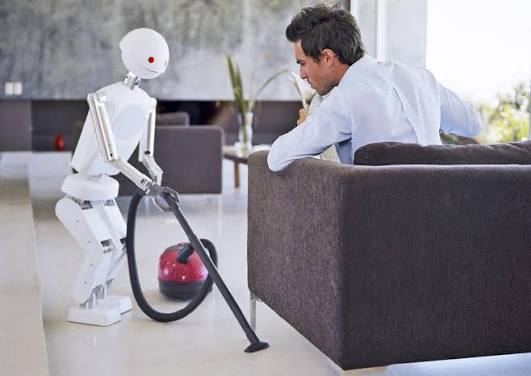
Survey Shows 42% of Respondents Would Trust Humanoid Robots with Household Tasks
A recent survey conducted by Live Science revealed that 42% of over 600 participants would allow humanoid robots to handle household chores. This interest reflects a growing acceptance of robots in daily life, although many still express skepticism about their capabilities. For instance, 36% of respondents indicated they would not trust robots with their dishes, while others preferred to wait for neighbors to test the technology first. The survey highlights a significant gap between the capabilities of humanoid robots being developed and the expectations of potential users. While companies are racing to create robots that can navigate everyday environments, users are concerned about the robots' ability to make nuanced decisions, such as determining which dishes are dishwasher-safe. The comments from participants reveal doubts about robots' dexterity and reliability in performing tasks like dusting or moving furniture. Looking ahead, the results suggest that the first household chore robots may successfully master could be simpler tasks that require fewer judgments. As the technology evolves, there may be more suitable applications for robots in structured environments, such as commercial nurseries, rather than in homes where tasks are more complex and varied. No further timeline was disclosed at the time of publication.
Humanoid Robots Household Automation AI Technology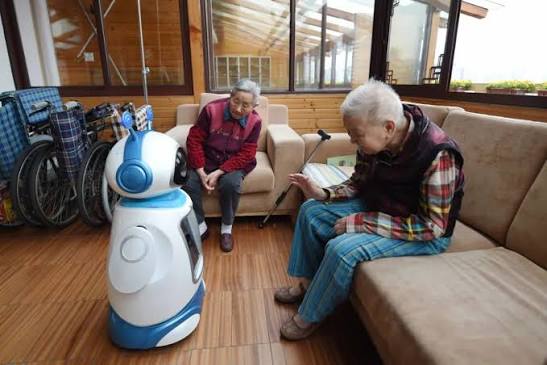
Beijing Advocates for Elderly Care Robots in Households Amidst Market Challenges
Beijing is actively promoting the integration of elderly care robots into households, aiming to tap into a lucrative market. However, there are three significant hurdles that must be overcome to ensure these robots do not end up unused. These challenges include technological limitations, consumer acceptance, and regulatory frameworks that need to be addressed. The push for elderly care robots is crucial as the aging population in Beijing increases, creating a demand for innovative solutions to support independent living. The potential market for these robots is substantial, estimated to be worth millions, but without overcoming the identified barriers, the adoption rate may remain low. Looking ahead, stakeholders in the robotics and healthcare sectors should focus on addressing these hurdles to facilitate the successful deployment of elderly care robots. No further timeline was disclosed at the time of publication.
Robotics Automation AI
The Rise of Household Robots: Transforming Mobility and Daily Life by 2026
By 2026, the tech industry anticipates a significant shift where robotaxis will replace personal vehicles, and humanoid robots will become essential household members. This narrative suggests that cars will transition from personal ownership to mobility services, while robots will evolve similarly, becoming integral to family life. The implications of this shift are profound, as automotive companies leverage their expertise in intelligent driving technologies for robotics. Tesla's Optimus and FSD share architecture and AI chips, with mass production delayed until summer 2027. Meanwhile, BYD's humanoid robot, Xiaodi, is already in experience centers, highlighting the automotive sector's readiness to adapt. However, the transition from industrial to home environments remains challenging. Despite a surge in humanoid robot shipments, household penetration is low, with most units directed towards entertainment and education. As the industry moves towards a service-oriented model, the focus will shift from hardware ownership to the value of the underlying intelligent systems, data, and services that drive competition in this evolving landscape.
Humanoid Robots Robotaxi Service Robotics AI Mobility Solutions
Household Robots Face Challenges: Market Growth and Open Source Solutions Ahead
The shipment of humanoid robots is surging, with IDC projecting around 18,000 units globally by 2025, a 508% increase. However, the penetration of these robots into households remains minimal, as most are still used in entertainment, education, and data collection. Ecovacs Group Chairman Qian Dongqi noted that it may take three to five years for humanoid robots to enter homes, citing a decade-long journey for their vacuum robots to achieve household integration. Despite technological advancements, the industry faces significant challenges, particularly high component costs and the lack of a robust supply chain. The performance of humanoid robots drops dramatically in real home environments, with a success rate of only 12% compared to 89.4% in simulated settings. This disparity highlights the complexities of domestic environments, which present unpredictable variables that robots struggle to navigate. To address these issues, leading companies are shifting towards open-source ecosystems. Ecovacs launched the “Eight Realms” open-source robot platform, allowing community contributions to improve functionality. Similarly, Lexiang Technology is focusing on community-driven product development. While the widespread adoption of household robots may take longer than anticipated, the path forward is becoming clearer as companies seek to engage users in defining practical applications.
Humanoid Robots Open Source Robotics Household Automation AI Robotics Development
Chinese Cities Develop Innovative Approaches to Train Robots for Household Tasks
In Tai'an, a 59-year-old community resident, Zhu Chuan-zhen, demonstrates folding clothes repeatedly while wearing a sports camera. This seemingly ordinary household task is becoming a training material for robots. There are no educational restrictions or technical background requirements; the only necessity is to perform household chores to standard. Over 60 residents are engaged in this role, known as 'data collectors', with plans to deploy thousands of collection devices and create over 600 jobs. The Tai'an district has established a complete data annotation ecosystem, transitioning from data collection to intelligent labeling and model training. Meanwhile, in Shangyu, a quadruped robot navigates through high-temperature spray towers, equipped with a 'mechanical eye' for continuous monitoring. Previously, workers had to cover temperature and vibration readings every four hours, but now robots handle inspections, allowing workers to focus on detailed management. In Guiyang, the cost advantage is significant, with lower rental and labor costs compared to first-tier cities. As a hub for data processing, Guiyang hosts one of the world's largest data center clusters, supporting model training. These three cities—Tai'an, Shangyu, and Guiyang—are paving distinct paths for the embodied intelligence industry using their unique resources while major cities debate the design of humanoid robots.
Data Collection Robotics Training AI Applications Smart Manufacturing
Challenges in Developing Household Robots with Industrial Logic Highlighted by Stanford Report
The Stanford 2026 AI Index Report reveals that humanoid robots achieve an 89.4% success rate in controlled environments for household tasks, but this drops to 12.4% in real homes. Despite a projected 508% increase in global humanoid robot shipments by 2025, most production is focused on industrial applications, leaving household integration a challenge. Tesla's Optimus is in trial production, with a public release expected by late 2027, though industry analysts remain skeptical. The traditional metrics for evaluating robots—speed, load, and precision—are inadequate for home environments, which prioritize safety and emotional interaction. The complexity of household tasks requires a shift from industrial logic to a more nuanced understanding of family dynamics. Figure 03, designed specifically for home use, aims for limited deployment in 2026. Demonstrations show impressive autonomous capabilities, but concerns arise about performance in typical family settings. The company Future Not Far, founded in Shanghai, has completed significant funding and is testing its F1 robot in homes, achieving high user satisfaction and engagement metrics.
Humanoid Robots Household Robotics AI Robotics Technology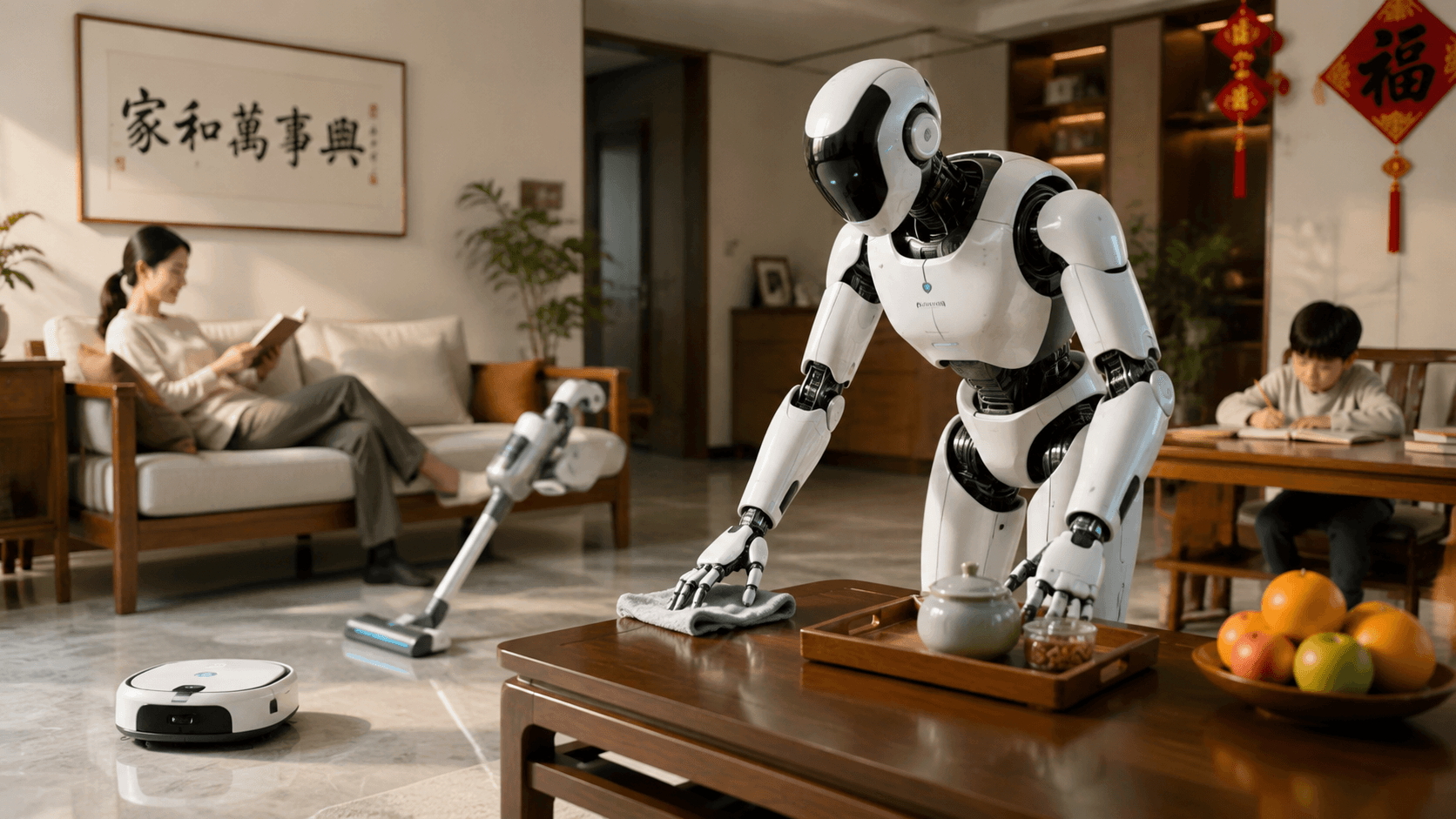
74 Yuan for 3 Hours: Embodied AI Robots Begin Entering Chinese Homes for Household Chores
China has introduced a new service offering embodied AI robots for home hire, with rates starting at just 74 yuan for a three-hour period. This development has ignited discussions regarding the true value of the substantial investments made in embodied AI technologies, which amount to billions of dollars. The initiative reflects a growing trend in the integration of advanced robotics into everyday life, as consumers seek innovative solutions for various household tasks. The availability of these robots marks a significant step in the commercialization of AI, raising questions about the balance between cost and the benefits provided by such technology. As the market evolves, stakeholders are closely examining the implications of this service on both the economy and society at large.
Industry AI
Chinese firm to deploy 100 humanoid robots to households for daily chores
A Chinese robotics company has initiated the deployment of its humanoid robots in private residences, signaling a significant advancement in domestic automation. This initiative commenced recently as part of the company's broader strategy to integrate advanced robotics into everyday life. The robots are designed to assist with various household tasks, enhancing convenience and efficiency for homeowners. By introducing these humanoid robots into real homes, the company aims to showcase their capabilities and gather user feedback to refine their technology further. This move reflects the growing trend of incorporating artificial intelligence and robotics into personal living spaces, driven by the increasing demand for smart home solutions. The deployment is expected to pave the way for more widespread acceptance and utilization of humanoid robots in domestic settings.
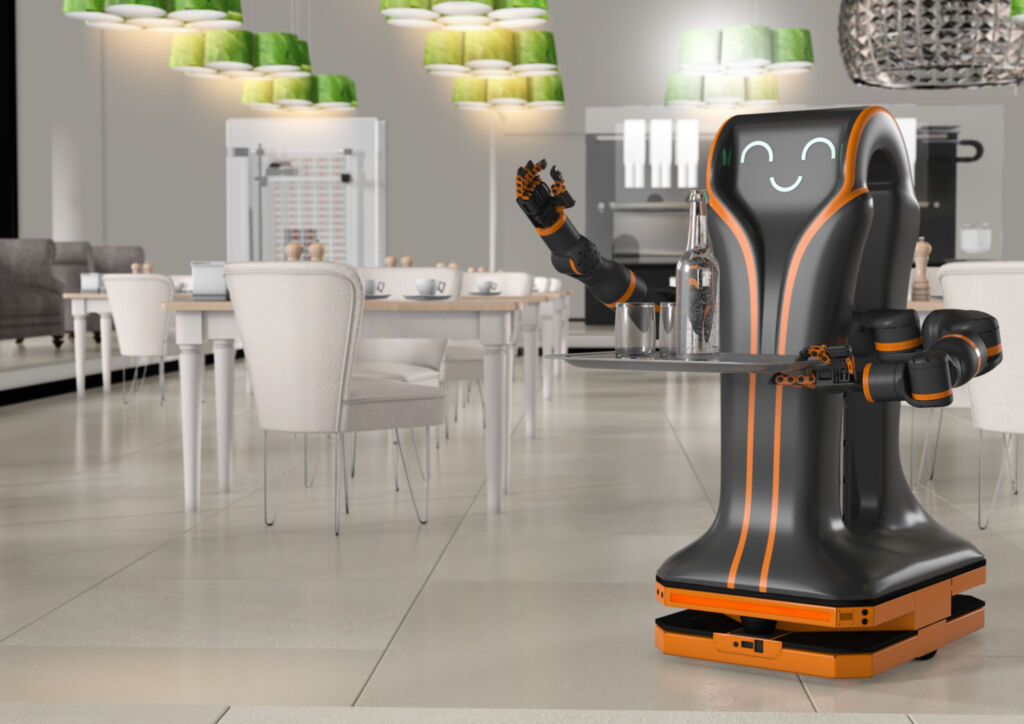
Humanoid service robots for household use
Igus has expanded its product lineup with the introduction of the Iggy Rob Home, a new humanoid service robot designed for household use. This latest addition aims to enhance domestic life by providing assistance in various tasks, reflecting the company's commitment to innovation in robotics. The announcement was made recently, highlighting Igus's ongoing efforts to integrate advanced technology into everyday environments. The Iggy Rob Home is expected to cater to the growing demand for smart home solutions, offering users a convenient and efficient way to manage household chores.
Allgemein Humanoide Robotik Robotik Servicerobotik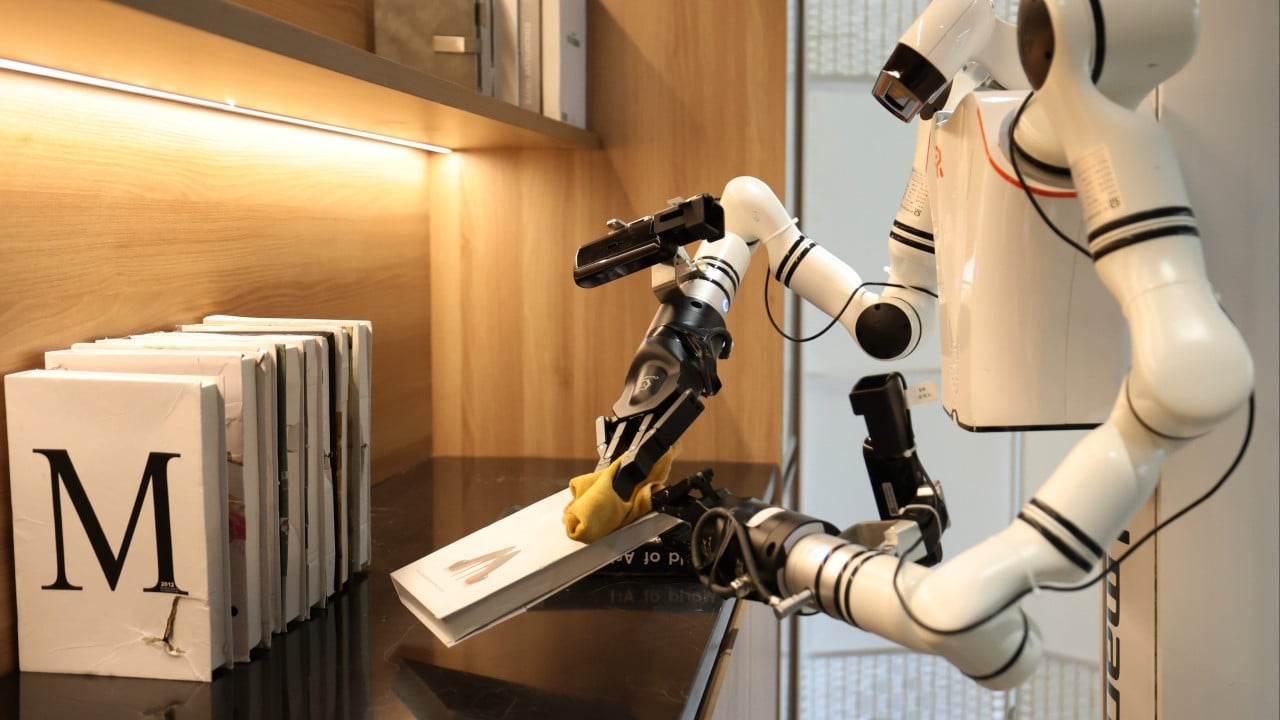
Chinese researchers claim breakthrough in training household robots with AI-generated homes
A team of researchers from Ace Robotics, a start-up supported by a Hong Kong-listed artificial intelligence firm, has announced a significant advancement in the training of robots for real-world home environments. This development addresses a persistent data bottleneck in robotics, potentially speeding up the integration of robots into everyday household settings. The researchers introduced Kairos-HomeWorld, the first unified framework designed to create coherent, accurate, and simulation-ready home environments using simple text prompts. This innovation marks a pivotal step forward in making robotic assistance more accessible and practical for consumers.
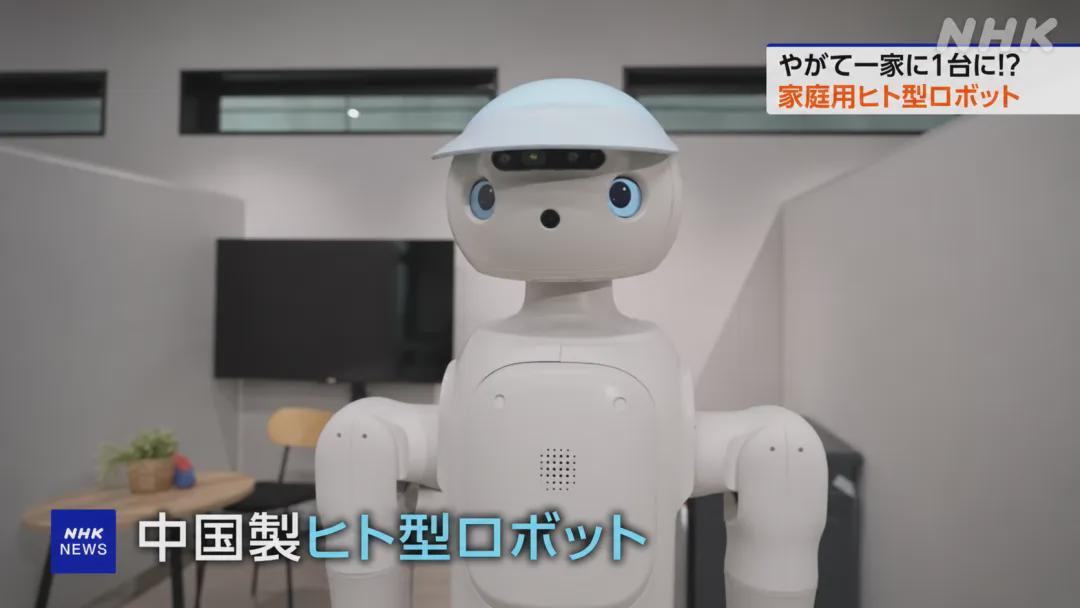
Is a Chinese Version of Figure Coming? Woan Robotics Brings Household Robots to Real-World Overseas Scenarios
Woan Robotics is advancing its international efforts to commercialize household robots, recently demonstrating the capabilities of its onero H1 model in real family settings. This initiative comes in response to the increasing demand for domestic automation solutions in developed markets, particularly due to aging populations and a shortage of available labor. The company's focus on practical applications for their technology reflects a broader trend in the robotics industry, where the integration of robots into everyday life is becoming more prevalent.
Household Robots AI Robotics Global Market Expansion Smart Home Technology
Unitrees Strategic Focus on Industrial Robots Amid Household Safety Concerns
Unitree, a Chinese robotics company, is shifting its focus from household robots to industrial applications, citing safety concerns as a primary reason for this strategic change. The company aims to enhance the safety features of its humanoid robots, with the intention of making them suitable for domestic environments in the future. This decision reflects a growing emphasis on ensuring that robotic technology can be safely integrated into everyday life, while still addressing the demands of industrial sectors. By refining its designs and functionalities, Unitree is positioning itself to meet both current market needs and future consumer expectations.
G1 Unitree RoboticsRobotics needs a service framework.
RSF defines a common language for robot service capability, lifecycle operations, certification pathways, and service-provider networks.
Join the RobotToday community on LinkedIn
Daily robotics news, in-depth analysis, conference highlights, and discussions with professionals worldwide.







