Industry Briefing
A single destination for timely, editor-curated robotics news from around the world.
23 Key Scenarios for Embodied Intelligence Valued at 250 Billion Yuan Annually
The State Council of China has issued guidelines to accelerate the cultivation and application of high-value scenarios for embodied intelligence, highlighting the country's vast market and complete industrial system. This initiative aims to foster strategic and economically significant scenarios that meet the needs of technology, industry, and consumption, driving high-quality innovation and efficient results. Embodied intelligence, a technology requiring agents to interact with the physical world, is identified as a key area aligned with this policy. The development of this technology relies on extensive real-world data and iterative validation in practical conditions. The article outlines 23 core scenarios where embodied intelligence can be applied, assessing their feasibility, standardization, economic, and strategic value, providing a quantifiable framework for scenario cultivation and openness. The analysis indicates that while not all scenarios hold high value, those with high standardization and clear economic benefits, such as manufacturing and logistics, are more likely to achieve scalable deployment. The manufacturing sector is highlighted as the primary area for embodied intelligence, with a conservative estimated annual value of 140 to 320 billion yuan across seven core industrial scenarios.
Embodied Intelligence High-Value Scenarios Technological Innovation Economic Growth
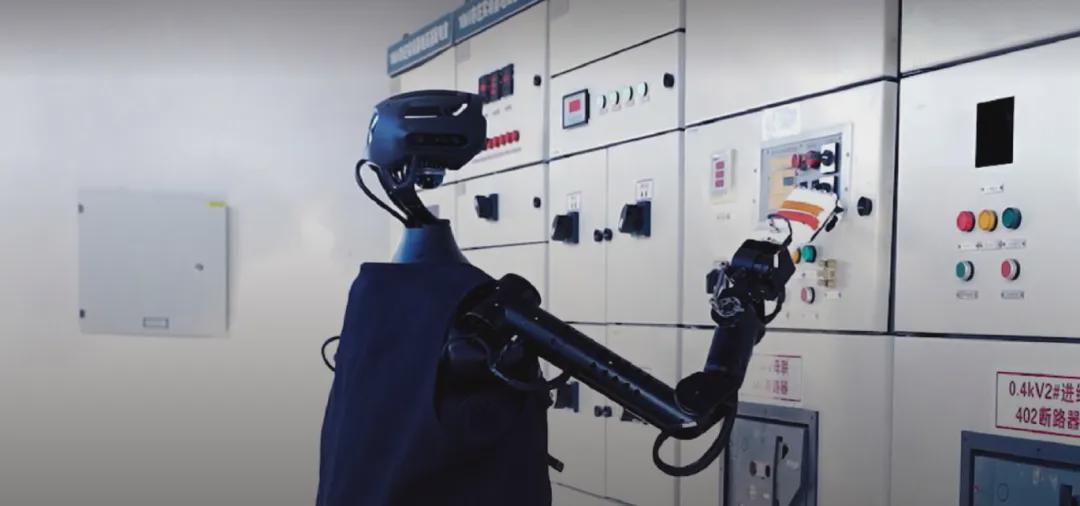
Ruoyu Technology's Strategic Positioning in High-Risk Energy Scenarios for Special Robots
The year 2026 is widely recognized as a pivotal moment for the commercialization of humanoid robots and embodied intelligence, with various factors maturing. However, the transition from technology validation to large-scale deployment is ongoing. High-risk energy scenarios are becoming critical testing grounds for the industry, reflecting its future direction. The special robot market is on an upward trajectory, with projections indicating a growth from 290 billion yuan in 2025 to 352 billion yuan in 2026 in China. Despite this expansion, not all players will benefit equally. Two distinct narratives have emerged: traditional hardware-focused manufacturers and algorithm-driven startups, each with different approaches to market engagement. As the industry approaches 2026, which is seen as a key year for commercialization, there is a clear market gap for qualified, intelligent, and operational solutions in high-risk scenarios. The need for robots that can autonomously adapt and operate safely in hazardous environments is critical, as highlighted by the participation of Ruoyu Technology in the recent energy innovation conference, emphasizing their commitment to enhancing safety in dangerous work conditions.
Special Robots Embodied Intelligence Energy Sector Safety Compliance Automation Technology
Prioritizing High-Value Data for Effective Physical AI in Manufacturing
Physical AI companies in manufacturing are shifting focus from data volume to generating high-value data that enhances decision-making. This 'decision-first' approach is crucial in high-mix manufacturing, where AI models must support complex processes like cell design and factory optimization. The emphasis is on collecting contextual data through controlled experiments, which is essential for developing effective AI agents that can improve manufacturing outcomes. The significance of this strategy lies in its potential to transform manufacturing processes. Unlike other AI domains, high-mix manufacturing requires data that is tightly coupled with specific conditions, making generic data less valuable. Agents in manufacturing must rely on contextualized data to make informed decisions, which can lead to more economically meaningful outcomes. This approach addresses the unique challenges of high-mix environments, where the complexity of configurations demands a more nuanced understanding of data. Looking ahead, companies must refine their data generation strategies to ensure they capture the right information that informs agent decisions. The focus should be on structured decision episodes that link input states, actions, and outcomes, rather than merely collecting observational data. As the landscape evolves, the ability to generate and utilize high-value data will be a key differentiator for success in the manufacturing sector.

Army Grants $465M Contract to AeroVironment for First High-Energy Laser Production
The Army has awarded AeroVironment (AV) a $464.8 million contract for the Enduring-High Energy Laser (E-HEL) program, marking the first production contract for a high-energy laser weapon. This program aims to enhance the Army's capabilities to counter unmanned systems effectively, as stated by Gen. Christopher LaNeve, the acting chief of staff. The contract will enable the delivery of AV's LOCUST X3 laser counter-drone systems, which are designed to operate in various combat environments. This contract is significant as it introduces production-directed energy systems for the first time in U.S. history, according to AV's vice president of directed-energy systems, John Garrity. The E-HEL system, powered by electric energy, is capable of defeating drones at a lower cost compared to traditional kinetic weapons. AV is expected to deliver initial capabilities within the year and scale production significantly in the coming months. Looking ahead, the Army plans to deploy dozens of LOCUST X3 systems across combatant commands globally. The system is designed to counter drone threats, including those from Group 3 drones weighing up to 1,320 pounds. No further timeline was disclosed at the time of publication.
Land Warfare Aerovironment Army Counter UAS cUAS directed energy Drones
UK Army Commander Highlights Limitations of Ground Robots in Complex Battlefield Exercises
As military forces worldwide seek to learn from the Ukraine conflict, unmanned ground vehicles (UGVs) are being rapidly integrated into operations. However, a former frontline commander of the UK Army recently concluded that these machines are not always the right tools for the job. During a high-intensity exercise called 'Fusion Program Apex 6' at the National Training Center in California, UGVs were put to the test alongside troops from the UK and US. Colonel John Black from the Yorkshire Regiment noted that despite testing various use cases, significant challenges emerged regarding the practical application of ground robots in combat. Heavy logistical burdens were identified, as many mid-sized UGVs require trailers or flatbed trucks for transport, complicating battlefield mobility. Additionally, energy supply issues, including the need for extra batteries or fuel, further complicate operations. The exercise revealed that ideal operational ranges often fall short in complex terrains, with obstacles confusing most UGVs. Furthermore, maintaining stable remote control connections in a battlefield environment poses significant challenges. Black emphasized that while UGVs may address specific battlefield pain points, they are not universal solutions. The core value of such tests lies in understanding how unmanned systems can integrate into existing combat networks, potentially transforming the nature of warfare.
Unmanned Ground Vehicles Military Robotics Logistics Technology Autonomous Systems
Tacta Systems Launches AI-Driven Robotic Hand for Advanced Manufacturing Applications
Tacta Systems has introduced a new robotics platform aimed at enhancing industrial automation with human-like dexterity. The TactaBot, the company's inaugural product, integrates a robotic hand, a wearable skill capture system, and an AI engine to perform intricate manufacturing tasks that demand precision and tactile feedback. This innovation is significant as it addresses critical challenges in robotics, such as creating a robotic hand for industrial performance and enabling robots to possess a sense of touch. Tacta's platform, featuring the proprietary Fluidic Tendon actuation technology, is designed to automate complex tasks in sectors like electronics and automotive manufacturing, with initial deployments expected in early 2027. Looking ahead, Tacta plans to expand its technology into additional industries, including medical devices and aerospace. The company aims to revolutionize the way robots interact with their environment, potentially transforming manufacturing processes across various sectors. No further timeline was disclosed at the time of publication.
Components News ai robotics Dexterous Intelligence dexterous robotics industrial robotics
Elon Musk Highlights Tesla's Megapods as a Key Driver for AI and Energy Security
During Tesla's latest earnings call, CEO Elon Musk emphasized the potential of the company's Megapod business to support its AI initiatives. He described Megapods as modular data center units that can be deployed near energy sources, enhancing Tesla's energy security and AI computing capabilities. Musk explained that Megapods combine standard x86 servers with Tesla's proprietary AI4 hardware, creating compact compute clusters that can be strategically placed at Supercharger stations and solar farms. This approach allows Tesla to scale its AI compute capabilities while leveraging its energy assets, such as Megapacks and solar arrays, to optimize power demand. As Tesla aims to reduce latency in fleet data processing and lessen its dependence on third-party cloud services, the competition remains fierce. Industry leaders like Nvidia, Amazon, Microsoft, and Google have established robust AI training systems, posing challenges for Tesla's Megapod strategy. No further timeline was disclosed at the time of publication.
Fourier Showcases Home Robot Technology at WAIC with GR-3 and GRW Innovations
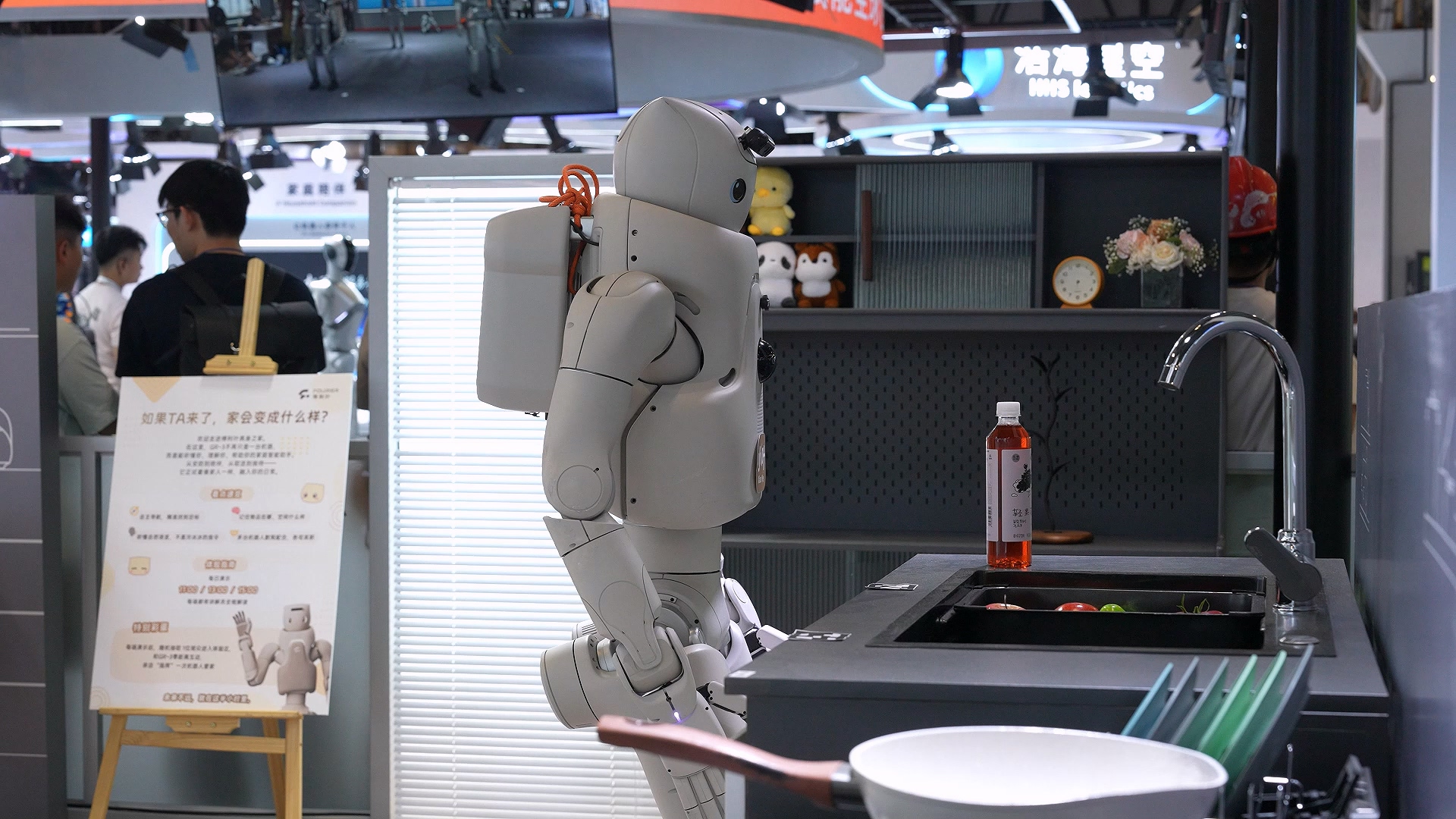
On July 17, 2026, the World Artificial Intelligence Conference (WAIC) commenced in Shanghai, where Fourier demonstrated a complete home scenario featuring the GR-3 humanoid robot. The robot performed tasks such as item retrieval, delivery, and security inspections, responding to natural language commands from the audience. This demonstration sparked discussions about the application paths for health and wellness robots, highlighting the complexity of validating technology in home environments. The significance of this demonstration lies in its challenge to traditional service robots, which typically operate on a point-to-point navigation model. By testing technology in the unstructured home environment, Fourier aims to address the limitations of existing robots that struggle with ambiguous commands and complex task sequences. The ability to understand user intent and adapt to dynamic situations is crucial for the advancement of embodied intelligence in robotics. Looking ahead, the focus will be on how Fourier's technology can transition from home applications to broader commercial scenarios, particularly in healthcare settings. The success of the GR-3 and the newly introduced GRW robot will be pivotal in determining the future of intelligent robots in everyday life. No further timeline was disclosed at the time of publication.
Health Robots Natural Language Processing Home Automation Robotic TechnologyRobotics needs a service framework.
RSF defines a common language for robot service capability, lifecycle operations, certification pathways, and service-provider networks.
Join the RobotToday community on LinkedIn
Daily robotics news, in-depth analysis, conference highlights, and discussions with professionals worldwide.