Top News

Industry Briefing

A single destination for timely, editor-curated robotics news from around the world.
Japan Unveils National Robot Strategy: 10 Million Robots by 2040 for Care and Food Manufacturing

Japan Unveils National Robot Strategy: 10 Million Robots by 2040 for Care and Food Manufacturing

The Japanese government has unveiled an ambitious national robot strategy, targeting the deployment of around 10 million robots across 18 sectors, such as healthcare and food manufacturing, by the year 2040. This initiative, announced recently, aims to tackle labor shortages and boost productivity through the integration of advanced AI technology. The strategy also emphasizes the importance of international collaborations to facilitate both the development and deployment of these robotic systems.

Robotics Healthcare Automation Food Manufacturing AI Technology
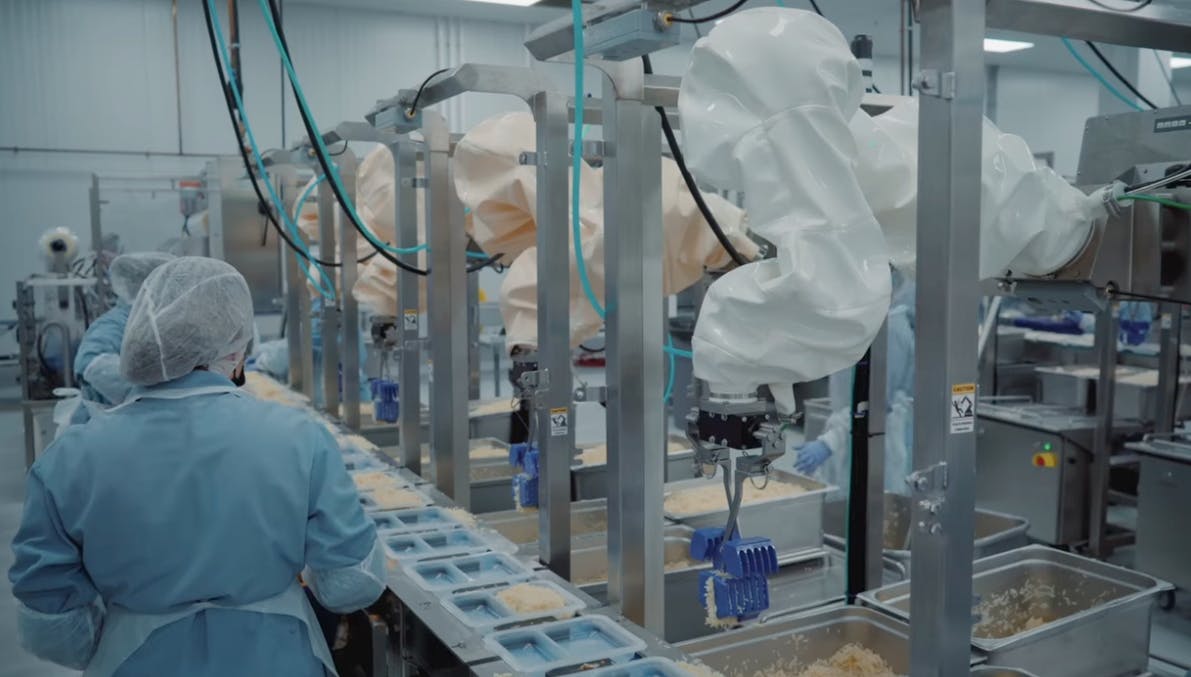
Chef Robotics Successfully Deploys Physical AI in Food Manufacturing

Chef Robotics Successfully Deploys Physical AI in Food Manufacturing

A technology company has developed a system utilizing physical artificial intelligence to automate various tasks. This innovative approach relies on models that have been trained using real-world production data, allowing for enhanced efficiency and accuracy in operations. The initiative aims to streamline processes across different sectors, addressing the growing demand for automation in the workforce. By leveraging data collected up to October 2023, the company is positioned to implement cutting-edge solutions that respond effectively to industry needs. This advancement not only promises to reduce manual labor but also to improve productivity, making it a significant development in the realm of AI-driven automation.

Process / Analytics
Chef Robotics Advances Bi-Manual Physical AI System for Prep Table Food Assembly Powered by a Food Foundation Model

Chef Robotics Advances Bi-Manual Physical AI System for Prep Table Food Assembly Powered by a Food Foundation Model

Chef Robotics has announced the development of a bi-manual physical AI system aimed at enhancing food assembly tasks on prep tables, such as burger and burrito preparation. This innovative system, which is set to launch on May 19, 2026, will cater to various sectors including ghost kitchens, fast-casual restaurants, and catering services, focusing on lower-volume yet more complex meal assembly compared to traditional food manufacturing processes. The new AI system utilizes two robotic arms for coordinated and dexterous manipulation, mimicking human-like capabilities to handle a variety of food items and utensils. It is powered by Chef's Food Foundation Model (FFM), which employs imitation learning to adapt quickly to diverse tasks and environments, overcoming the limitations of existing robotic systems that struggle with the variability of food materials. Chef Robotics aims to automate manual prep table assembly, a critical area in the food industry that has remained largely reliant on human labor. By leveraging the FFM, the system is designed to learn from demonstrations, allowing it to generalize across different tasks and robotic platforms. This advancement is expected to improve operational efficiency, yield, and consistency in food preparation, ultimately transforming how food assembly is approached in various culinary settings.

Inside modern supplement manufacturing: How automated filling lines are raising the quality bar

Inside modern supplement manufacturing: How automated filling lines are raising the quality bar

Recent advancements in automation are transforming the supplement manufacturing industry, particularly through the implementation of cutting-edge filling lines that enhance both quality and efficiency. These innovative systems not only incorporate advanced technologies but also necessitate the establishment of new protocols and expectations for quality assurance. As manufacturers adopt these automated solutions, they are experiencing significant breakthroughs and adopting best practices that elevate production standards. The article delves into how these automated filling lines are setting a new benchmark in the industry, emphasizing the critical controls that are essential for maintaining high-quality output.

Health Manufacturing automated filling lines automated inspection automation news checkweighers
How HGHY Pulp Molding Production Lines Are Reshaping Sustainable Manufacturing

How HGHY Pulp Molding Production Lines Are Reshaping Sustainable Manufacturing

As global manufacturers increasingly prioritize sustainable production, HGHY's pulp molding equipment and automation systems are emerging as essential elements in eco-friendly manufacturing. This shift is driven by stricter environmental regulations, escalating labor costs, and a growing demand for recyclable products. In response, more manufacturers are adopting fully automated molded fiber production lines, positioning HGHY at the forefront of this transformation. The company's innovative solutions are helping businesses meet both regulatory requirements and consumer expectations for sustainability, thereby enhancing operational efficiency and reducing environmental impact.

Environment Manufacturing Technology automated production lines automation news circular economy
Chef Robotics Expands into Component Assembly for CPG Manufacturing

Chef Robotics Expands into Component Assembly for CPG Manufacturing

Chef Robotics has announced an expansion into component assembly for consumer packaged goods (CPG) manufacturing, enabling automation of secondary packaging and kitting processes. This development, revealed on May 11, 2026, allows Chef robots to efficiently handle a variety of items, including sauce sachets, seasoning packets, and even non-food inserts like cutlery kits and instruction cards. Historically, CPG assembly lines have relied heavily on manual labor due to the challenges posed by lightweight and deformable items. Chef Robotics aims to address this issue by utilizing AI-powered computer vision, which enables robots to assess and manipulate items in real time, ensuring precise placement without damage. The technology adapts to the variability of items in unstructured bins, eliminating the need for pre-sorting. The new assembly application features three key capabilities: detecting and reorienting items mid-pick for accurate placement, picking and placing multiple components simultaneously, and ensuring correct item allocation in multi-compartment products. This innovation promises higher throughput, reduced labor dependency, and consistent item placement across production shifts. Chef's CPG assembly application is available in the US, Canada, the UK, and Germany, and operates on existing robotic hardware and software, allowing for seamless integration into current manufacturing setups. The service is offered under Chef's robotics-as-a-service (RaaS) pricing model, further solidifying the company's position as a leader in AI-driven food robotics solutions.

Cobots: Best Practices for Food and Beverage Packaging

Cobots: Best Practices for Food and Beverage Packaging

JAKA, a leader in robotics and manufacturing, is addressing the challenges of hygiene and flexibility in food and beverage packaging through innovative collaborative robot technology. As the demand for efficient and adaptable production processes grows, JAKA has developed robotic arms designed to withstand rigorous cleaning protocols, featuring an IP54 waterproof and dustproof rating. This design ensures that hygiene standards are met without compromising functionality. The company emphasizes user-friendly operation, allowing packaging line technicians to easily reprogram robots for quick adjustments between multiple product SKUs. JAKA’s intuitive graphical programming interface enables rapid mold changes and adaptations to various package sizes, significantly reducing downtime and making advanced robotics accessible to a wider range of team members. In high-speed production environments, precision is critical. JAKA’s robotic arms are equipped with high-precision hardware and adaptive control algorithms to maintain consistent accuracy throughout long production runs. This capability ensures that every package is handled correctly, preserving product quality and line efficiency. By focusing on hygiene, ease of use, and precision, JAKA aims to integrate collaborative robots seamlessly into packaging processes, enhancing both quality and flexibility on the production floor. The company’s commitment to addressing the unique demands of the food and beverage sector positions it as a key player in advancing robotics and manufacturing solutions.

Appetronix acquires Cibotica to expand robotic foodservice automation beyond pizza

Appetronix acquires Cibotica to expand robotic foodservice automation beyond pizza

Appetronix, a developer specializing in robotic kitchen systems, has acquired Cibotica, a company focused on food robotics, to enhance its automation platform by incorporating a wider range of food categories beyond pizza. The financial details of the acquisition remain undisclosed. This strategic move allows Appetronix to integrate Cibotica’s advanced automated ingredient dispensing and portioning technology into its existing offerings, including the Remy robotic system. The acquisition is part of Appetronix's ongoing efforts to innovate and expand its capabilities in the food service industry.

Engineering AI in foodservice appetronix automation news autonomous kitchens Cibotica
Appetronix Acquires Cibotica to Expand Food Robotics & AI Ecosystem

Appetronix Acquires Cibotica to Expand Food Robotics & AI Ecosystem

Appetronix, a leading robotics company specializing in foodservice automation, has announced its acquisition of Cibotica, known for its innovative ingredient dispensing and portioning technology. The transaction, the financial details of which remain undisclosed, will enhance Appetronix's offerings by integrating Cibotica's advanced automated bowl and salad assembly system. This strategic move aims to further Appetronix's mission of revolutionizing the foodservice industry through intelligent automation solutions.

AI Capital Markets Robotics acquisition Appetronix Cibotica
How a Two-Week Maintenance Overhaul Cut Downtime by 10% at a Major Snack Food Manufacturer

How a Two-Week Maintenance Overhaul Cut Downtime by 10% at a Major Snack Food Manufacturer

Bikaji Foods has successfully implemented a structured, low-cost maintenance framework that has significantly improved reliability without necessitating major capital investments. This initiative, aimed at enhancing operational efficiency, has yielded measurable gains in the company's reliability metrics. The strategic focus on cost-effective maintenance solutions reflects Bikaji Foods' commitment to optimizing performance while managing expenses effectively. By prioritizing this approach, the company has demonstrated that substantial improvements can be achieved through innovative practices rather than extensive financial outlays.

Process / Plant Maintenance
Top 8 Applications of Commercial Robotic Arms in Food and Retail Service

Top 8 Applications of Commercial Robotic Arms in Food and Retail Service

As the food and retail sectors evolve, JAKA is observing a rising interest in the use of commercial robotic arms to enhance operational efficiency without disrupting existing workflows. These robotic solutions, particularly compact mini arms, are designed for environments where space, safety, and cost are critical factors. In beverage shops and cafés, robotic arms are streamlining repetitive tasks like cup handling and liquid dispensing, ensuring consistent portioning during busy hours. Similarly, in fast-casual dining, these arms assist with ingredient placement and tray handling, promoting quality consistency while allowing for safe collaboration with human staff. Retail environments benefit from robotic arms as well, which can sort and restock products during off-peak hours, making them ideal for smaller stores with limited space. In takeaway and retail fulfillment, these arms facilitate packing and sealing operations, fitting seamlessly into compact back-of-house areas. Additionally, vision-assisted inspection applications are on the rise, with robotic arms enhancing the consistency of food quality checks. In retail showrooms, they engage customers through interactive demonstrations, while in back-of-house logistics, they streamline material handling tasks. For chain stores, the ability to standardize operations across multiple locations is a significant advantage, with mini robotic arms simplifying installation and training. JAKA's innovations, such as the MiniCobo, balance lightweight design with commercial usability, allowing businesses to gradually adopt automation while maintaining stable operations.

Robot Arms for Food and Beverage Packaging: Three Functional Options

Robot Arms for Food and Beverage Packaging: Three Functional Options

In the food and beverage sector, the unique challenges of packaging automation demand specialized solutions, particularly in hygiene, speed, and gentle handling. JAKA, a provider of industrial robotic arms, emphasizes the importance of selecting the right technology to meet these specific needs. Their robotic arms are designed for precision in handling delicate items such as baked goods and chocolates, achieving accuracy within 0.2mm to minimize product waste and maintain production efficiency. Additionally, JAKA robots are built to withstand demanding environments, featuring an IP54 rating for waterproof and dustproof performance. This durability allows them to operate reliably in cold storage and humid conditions, while their compact design enables installation in tight spaces on busy packaging floors. Moreover, JAKA robotic arms excel in integration, functioning as intelligent nodes within packaging lines. They can communicate with vision systems and conveyors, allowing for real-time adjustments based on data received from cameras. This capability enhances overall equipment effectiveness by ensuring precise placement of products into moving cartons. By aligning their robotic technology with the specific challenges of food and beverage packaging, JAKA aims to enhance hygiene, consistency, and throughput in this fast-paced and regulated industry.

1200 cans per minute: KUKA robots palletize pet food cans in Poland

1200 cans per minute: KUKA robots palletize pet food cans in Poland

As the demand for pet food continues to surge, manufacturers are responding by expanding their production capacity and automating processes. A notable example is a Polish pet food manufacturer that has integrated KUKA robots into its operations. These advanced robots efficiently place pet food cans on conveyor belts before and after the sterilization process, significantly enhancing the production line's efficiency. This automation allows the facility to process an impressive 1,200 cans per minute, ensuring that the growing market needs are met swiftly and effectively.

Dobot to showcase collaborative robot use cases in automotive, food, and education at "Automate 2026."

Dobot to showcase collaborative robot use cases in automotive, food, and education at "Automate 2026."

Dobot Robotics has unveiled a promotional video showcasing its products in preparation for the upcoming Automate 2026, one of North America's largest industrial automation trade shows. The video was released on YouTube on June 16, 2026, as part of the company's efforts to highlight its innovations and engage with potential customers ahead of the event. This strategic move aims to enhance visibility and demonstrate the capabilities of Dobot's automation solutions in a competitive market.

Bio-hybrid robots turn food waste into functional machines

Bio-hybrid robots turn food waste into functional machines

Researchers at the CREATE Lab of the École Polytechnique Fédérale de Lausanne (EPFL) have unveiled a groundbreaking robotic gripper crafted from langoustine tails. This innovative design, showcased in 2025, marks a significant departure from traditional robotic components typically made from metals and plastics. By drawing inspiration from nature, the team aims to enhance the functionality and adaptability of robotic systems. The use of organic materials not only aligns with sustainable practices but also offers unique advantages in terms of flexibility and grip. This development highlights a growing trend in robotics, where natural elements are increasingly influencing technological advancements.

Rockwell Automation, Inc. (ROK): One of the Best Robotics Stocks to Buy, Helping Manufacturers Move from Fragmented Automation

Rockwell Automation, Inc. (ROK): One of the Best Robotics Stocks to Buy, Helping Manufacturers Move from Fragmented Automation

Rockwell Automation, Inc. (NYSE: ROK) has emerged as a leading player in the robotics sector, particularly after the launch of its FactoryTalk Orchestration software on June 22, 2026. This innovative solution is designed to streamline material flow and production processes, addressing the needs of manufacturers seeking to enhance automation and robotics capabilities. By standardizing connectivity across various systems, the software aims to facilitate a shift from fragmented automation to more cohesive and autonomous operations. The introduction of FactoryTalk Orchestration is expected to significantly improve manufacturing efficiency, allowing companies to increase throughput, minimize bottlenecks, and adapt swiftly to market changes. Notably, Cranswick Plc, a prominent British gourmet food manufacturer, has already adopted Rockwell's Autonox robotics for automated packaging, further illustrating the practical applications of this technology in creating interconnected production lines. As the world's largest company focused solely on industrial automation and digital transformation, Rockwell Automation continues to innovate by providing hardware, software, and services that enhance the efficiency and sustainability of manufacturing processes. While there are discussions about the investment potential of ROK, some analysts suggest that other AI stocks may offer higher returns in a shorter timeframe.

森永乳業グループのチーズ工場にCloser Roboticsの小型パレタイズロボット「Palletizy」導入

森永乳業グループのチーズ工場にCloser Roboticsの小型パレタイズロボット「Palletizy」導入

Closer Robotics has announced the installation of two units of its compact palletizing robot, "Palletizy," at MK Cheese, a company within the Morinaga Milk Industry Group that specializes in cheese production. This deployment aims to enhance operational efficiency in the cheese manufacturing process. The introduction of these robots is part of a broader trend towards automation in the food industry, driven by the need for increased productivity and reduced labor costs. The integration of Palletizy is expected to streamline the palletizing process, allowing MK Cheese to better meet growing consumer demand while maintaining high standards of quality and safety.

5 Tips to Optimize Pick and Place Robotic Arm Cycle Times with Vision Systems

5 Tips to Optimize Pick and Place Robotic Arm Cycle Times with Vision Systems

In the realm of high-speed manufacturing, optimizing robotic efficiency is crucial, particularly with the integration of vision systems in 6-axis robotic arms. JAKA, a leader in automation technology, has developed the JAKA Zu series to enhance the performance of pick-and-place operations, particularly in fast-paced sectors like electronics and food packaging. To improve throughput, manufacturers are advised to optimize lighting and contrast, ensuring that parts are easily identifiable to reduce image processing lag. Implementing "on-the-fly" image processing allows the robotic arm to capture images while in motion, potentially cutting cycle times by 20% to 30%. Additionally, utilizing multi-tasking and path smoothing techniques enables the robot to maintain momentum and efficiency during operations. By narrowing the search windows for the vision system to specific areas on conveyor belts, manufacturers can significantly speed up part identification. Furthermore, calibrating for latency between the camera and the robotic arm is essential for precise part handling, allowing the robot to predict part locations accurately. The JAKA Zu7 model, with a payload capacity of 7kg and a reach of 819mm, exemplifies this advanced integration of vision and motion. Its high-speed joint actuators and exceptional repeatability of ±0.02mm ensure that operations are both fast and accurate. JAKA's commitment to "Embodied Intelligence" is reflected in its user-friendly software ecosystem, which facilitates easy calibration and setup for complex routines, ultimately driving productivity in modern manufacturing environments.

Understanding the Different Robot Arm Types (6-Axis, SCARA, Delta): A Comparison Guide

Understanding the Different Robot Arm Types (6-Axis, SCARA, Delta): A Comparison Guide

In the evolving field of automation, selecting the right type of robotic arm is crucial for optimizing production strategies. Different robotic configurations, including 6-axis, SCARA, and Delta robots, offer unique mechanical strengths and capabilities tailored to specific manufacturing tasks. The 6-axis articulated robot, commonly found in factories, mimics human arm movements and excels in complex processes like welding and assembly due to its six degrees of freedom and flexible work envelope. In contrast, SCARA robots, known for their rigidity in the vertical axis and compliance in horizontal movements, are ideal for high-speed tasks such as pick-and-place and electronics assembly, achieving remarkable precision and faster cycle times. Delta robots, characterized by their lightweight, spider-like design, are engineered for high-speed sorting and packaging in industries like food and pharmaceuticals, making them suitable for handling lightweight items quickly. JAKA Robotics has focused on enhancing 6-axis collaborative industrial robots, offering models like the JAKA Zu and Pro series that combine power and agility for various applications, from precision assembly to heavy-duty palletizing. JAKA emphasizes "Embodied Intelligence," ensuring their robots provide precise repeatability and user-friendly operation through wireless control and intuitive programming, catering to the needs of modern smart factories.

MVTec showcases cutting-edge AI technologies and highly flexible machine vision software at Automate 2026

MVTec showcases cutting-edge AI technologies and highly flexible machine vision software at Automate 2026

MVTec Software GmbH will showcase its advanced AI technologies and flexible machine vision software at the Automate trade show, taking place from June 22 to 25, 2026, in Munich. With a strong presence in the North American market, the company aims to demonstrate how its hardware-independent software can enhance efficiency across various industries, including semiconductor manufacturing and food and beverage. Dr. Olaf Munkelt, Managing Director and co-founder, emphasized the significance of the event, stating that their products facilitate sustainable digital transformation through cutting-edge AI. Attendees can experience live demonstrations of MVTec's software, including HALCON and MERLIC, which feature innovations like Deep 3D Matching for robust object detection and Global Context Anomaly Detection for comprehensive inspection tasks. MVTec's commitment to hardware independence allows users to select any compatible camera or sensor, ensuring optimal performance in demanding applications. Heiko Eisele, President of MVTec LLC, highlighted the flexibility this offers to companies seeking to optimize production lines. Additionally, MVTec experts will participate in the conference program, with Agnes Weiershaeuser presenting on practical deep learning for industrial vision on June 22. This event underscores MVTec's ongoing dedication to advancing industrial automation through innovative machine vision solutions.

Cobot Arms vs. Traditional Industrial Robot Arms: Which Is Better?

Cobot Arms vs. Traditional Industrial Robot Arms: Which Is Better?

The ongoing debate between collaborative robots (cobots) and traditional industrial automation is reshaping manufacturing strategies as companies assess their specific production needs. While traditional robots excel in high-speed, heavy-duty tasks, they require safety barriers and specialized programming, leading to higher integration costs and a larger factory footprint. In contrast, cobots are designed for flexibility and safety, allowing them to work alongside human operators without the need for fencing. They operate at lower speeds but offer a significantly lower Total Cost of Ownership (TCO) and can be easily reprogrammed and relocated, making them ideal for dynamic production environments. JAKA Robotics is at the forefront of this evolution, promoting the integration of human creativity with robotic precision through their JAKA Zu and Pro series. These systems provide high repeatability comparable to traditional robots while maintaining a safe, fence-free workspace. With an open software ecosystem and user-friendly programming interfaces, JAKA's cobots enable existing staff to manage automation without needing external consultants, thereby accelerating return on investment. Their solutions cater to various industries, including automotive, electronics, and food service, emphasizing safety and efficiency in modern manufacturing.

Why Global Buyers Are Increasingly Choosing Robot Arm China for Automation

Why Global Buyers Are Increasingly Choosing Robot Arm China for Automation

The global industrial sector is experiencing a significant transformation as companies increasingly adopt flexible automation, particularly in China, which has emerged as the largest market for industrial robots. This shift is driven by a growing demand for sophisticated robotic arms that not only offer cost-effectiveness but also advanced adaptability and intelligence to seamlessly integrate into existing production lines. Historically associated with mass production, Chinese manufacturing is now recognized for its technical innovation and research and development in robotics. Local manufacturers are enhancing their technologies to meet stringent international standards, resulting in systems that excel in precision, payload capacity, and software integration. International buyers are attracted to these modern Chinese robotic solutions due to their rapid deployment capabilities and versatility, which are designed to simplify complex automation tasks for small and medium-sized enterprises. By focusing on user-friendly interfaces and modular designs, these robots lower the barriers to automation across various industries, including electronics, automotive, and food processing. Leading this collaborative revolution is JAKA, a global frontrunner in intelligent robotics. The company emphasizes a mission to enhance productivity through its innovative solutions, such as the JAKA Zu Series and S Series. These products boast impressive specifications, including high payload capacities and precise positioning accuracy, making them ideal for delicate tasks. JAKA's "plug-and-play" approach allows its collaborative robots to operate safely alongside human workers without traditional safety barriers, further enhancing their appeal. With a global service network and advanced training programs, JAKA positions itself as a comprehensive partner in automation, ensuring that its technology remains at the forefront of the industry.

Which Company Makes Industrial Robots?

Which Company Makes Industrial Robots?

The global manufacturing sector is witnessing a significant transformation as it shifts from traditional high-speed automation to flexible collaborative systems. This change, driven by the emergence of "Industry 5.0," prioritizes human-machine synergy, allowing robots to operate safely alongside human workers. By 2026, the industrial robotics market has diversified, with companies adapting to the specific needs of production lines, moving beyond the dominance of the "Big Four" in heavy-duty manufacturing. Innovators in the field are now focusing on creating robots that are "Smart, Simple, Small," featuring intuitive graphical interfaces and wireless connectivity. This shift has enabled smaller enterprises to adopt automation technologies previously reserved for larger factories, resulting in increased productivity across various sectors, including electronics, food and beverage, and logistics. JAKA Robotics, a leader in this industrial revolution since 2014, emphasizes the concept of "embodied intelligence" in its robots. Their JAKA Zu series supports payloads up to 20kg with high precision, while the JAKA A series caters to delicate assembly lines with even greater accuracy. JAKA distinguishes itself with user-friendly innovations, such as mobile terminal APP control, which simplifies the automation process. The company’s commitment to providing safe and reliable robotic solutions positions it at the forefront of the evolving landscape of industrial innovation, paving the way for a new era in manufacturing.

ABB Robotics launches PickMaster Lite to simplify & accelerate robotic picking

ABB Robotics launches PickMaster Lite to simplify & accelerate robotic picking

ABB Robotics has introduced PickMaster® Lite, a simplified version of its robotic picking software, aimed at packaging OEMs and system integrators. Launched on May 5, 2026, this new software is designed to accelerate the development of high-speed, vision-guided robotic picking solutions. By offering essential features for common picking tasks, PickMaster Lite reduces engineering efforts by 30% and commissioning time by 25%, while ensuring reliable performance. The motivation behind this launch stems from the increasing demand for automation in manufacturing, driven by labor shortages and consumer expectations for personalized products. Craig McDonnell, Business Line Managing Director at ABB Robotics, emphasized the need for quick and reliable automation solutions to enhance production flexibility. PickMaster Lite employs an intuitive, task-based interface with pre-configured templates, eliminating the need for specialized programming skills. It integrates seamlessly with existing machine control architectures, allowing for easy communication with PLC and HMI systems. This capability enables machine builders to manage key functions directly through their preferred control systems, thus minimizing development risks. The software is particularly suited for high-volume, cost-sensitive applications in sectors such as consumer goods, food and beverage, pharmaceuticals, electronics, and e-commerce. As part of the broader PickMaster family, it offers a scalable solution that can evolve alongside production needs, with options for more advanced functionalities through PickMaster and PickMaster Twin. For additional details, interested parties can visit ABB's robotics website.

Top 5 Trends of the Industrial Cobot Industry in 2026

Top 5 Trends of the Industrial Cobot Industry in 2026

The industrial cobot sector is experiencing significant advancements, particularly in 2026, as manufacturers increasingly integrate collaborative robots into their operations. JAKA, a key player in this field, highlights several emerging trends that are shaping the future of robotics and automation. One major trend is the demand for adaptable automation systems. The JAKA Pro5 exemplifies this shift by being highly reprogrammable, allowing manufacturers to efficiently adjust to varying production needs while minimizing downtime and equipment costs. Safety remains paramount, with collaborative robots being deployed to replace human operators in hazardous environments. The JAKA Pro5 enhances workplace safety by performing tasks like polishing and grinding, thereby reducing the risk of accidents and ensuring a safer production environment. Another significant trend is the emphasis on precision and consistent quality. Industrial operators are increasingly relying on cobots to deliver reliable processing outcomes, with the JAKA Pro5 helping to lower defect rates and meet stringent quality standards. Moreover, the integration of smart manufacturing and Industry 4.0 technologies is influencing cobot deployment. The JAKA Pro5 connects seamlessly with production monitoring systems, providing real-time insights that optimize workflows and enhance operational efficiency. Finally, the applications of collaborative robots are expanding across various industries, including electronics, automotive, and food processing. The versatility of the JAKA Pro5 supports this trend, enabling it to perform complex tasks tailored to different production lines. As 2026 unfolds, these trends underscore the evolving role of collaborative robots in enhancing efficiency, safety, and quality within the robotics and automation industry, with JAKA committed to advancing solutions that align with these developments.

Integrator Insights: HKR Sondermaschinenbau (Austria)

Integrator Insights: HKR Sondermaschinenbau (Austria)

In a recent interview for the Integrator Insights series, Lukas Rebhandl, Managing Director of HKR Sondermaschinenbau GmbH in Austria, discussed the growing importance of automation in manufacturing. The conversation highlighted the challenges faced by companies, including a shortage of skilled labor, rising costs, and the need for consistent product quality. Rebhandl emphasized that automation, particularly through the use of collaborative robots (cobots), can significantly enhance productivity and alleviate the burden of repetitive tasks on employees. HKR Sondermaschinenbau specializes in developing customized automation solutions for various industries, including automotive and food production. The company has successfully implemented projects using JAKA Robotics' Zu20 cobot, which offers flexibility and ease of integration. Rebhandl noted that misconceptions about cobots being limited to simple tasks persist, despite their capability to handle complex applications effectively. The automation market in Austria is robust and expanding, with an increasing awareness of cobots among customers. However, Rebhandl cautioned that companies often underestimate the effort required to analyze their processes before implementation. He recommended starting with a well-defined pilot project to ensure successful integration. HKR's innovative HKR Finish Box, designed for small and medium-sized enterprises, exemplifies the benefits of cobots, providing consistent quality and reducing employee workload. As businesses face labor shortages and competitive pressures, the adoption of cobots presents a practical solution for efficient and flexible automation.

Palettiseur cobot pour l'automatisation à grande vitesse

Palettiseur cobot pour l'automatisation à grande vitesse

In the modern manufacturing sector, repetitive tasks like palletizing can drain valuable human resources and hinder production efficiency. To address this challenge, Just Automate has partnered with JAKA Robotics to introduce the MoveComponents® palletizing solution, designed to enable businesses to automate palletizing quickly, safely, and effectively. This innovative system integrates the precision and flexibility of the JAKA Pro 16 collaborative robot with the robust MoveComponents palletizing base, making it suitable for various industries, including food production and logistics. Enhanced by OnRobot's intuitive D:PLOY automation platform, the solution simplifies implementation and operation, benefiting end-users. The MoveComponents palletizer features a stable and flexible base designed for the JAKA cobot, equipped with LED lighting for better visibility and sensors for accurate pallet detection. Its mobile design allows manufacturers to reposition the system as needed, while intuitive programming and collaborative capabilities facilitate rapid automation without complex planning or custom integration. The MoveComponents solution has already proven effective for companies across Europe. For instance, a Dutch distillery faced challenges with manual stacking of heavy crates. With the MoveComponents palletizer, the system became operational in just one day, significantly reducing operator workload and increasing productivity. Similarly, a German road safety equipment manufacturer optimized its production flow by automating repetitive tasks, enhancing both productivity and employee safety. What sets this cobot palletizer apart is its robust design, collaborative flexibility, and ready-to-use automation, making it an ideal solution for manufacturers seeking to reduce manual labor and streamline operations, particularly in mixed and low-volume production environments. This accessible and cost-effective system offers immediate availability and transparent pricing, making automation attainable for small and medium-sized enterprises.

HEAPGrasp: A faster, smarter way for robots to handle tricky objects

HEAPGrasp: A faster, smarter way for robots to handle tricky objects

The manufacturing, logistics, and restaurant industries are rapidly embracing automation, particularly through the use of robots for various tasks. A significant application of this technology is in material handling, where robotic grippers are utilized to transport items such as automotive parts, logistics packages, food ingredients, and restaurant dishes. This shift not only alleviates the workload for human employees but also minimizes the risk of workplace accidents, enhancing overall safety. As companies seek to improve efficiency and reduce operational risks, the integration of robotics is becoming increasingly vital across these sectors.

Robotics
韩国智造!节卡机器人亮相AW2026 韩国展,全场景通用智能机器人方案解锁产业无限可能!

韩国智造!节卡机器人亮相AW2026 韩国展,全场景通用智能机器人方案解锁产业无限可能!

The Automation World 2026 (AW2026) exhibition, a leading event in smart manufacturing innovation, kicked off on March 4, 2026, at the Coex Convention Center in Seoul. JAKA Robotics showcased its cutting-edge technologies, including the JAKA Lumi embodied intelligence platform and the JAKA K1 dual-arm robot, aimed at enhancing the smart upgrade of South Korea's manufacturing sector. The JAKA Lumi platform, a highly integrated training solution, garnered attention after a successful demonstration at the 2025 Korea International Machinery Fair, where it impressed major clients like Chimeak from the food industry. This platform is designed to improve training efficiency with minimal data input, making it suitable for various commercial applications. In collaboration with local integrator Cutshion, JAKA developed the JAKA Lumi platform to cater to new business clients, featuring advanced voice interaction and image processing capabilities. The JAKA K1 robot attracted significant interest with its VR remote operation demonstration, showcasing its flexibility and precision for industries such as automotive and electronics. JAKA's welding solutions, developed through a two-year partnership with a major South Korean shipyard, were also highlighted, demonstrating the effectiveness of their robots in various welding applications. Additionally, the JAKA A12L robot and JAKA S³ composite robot were presented, addressing key challenges in the robotics market. JAKA Robotics emphasized its commitment to education by collaborating with top South Korean universities to integrate robotics into academic programs. The company aims to foster local partnerships and adapt its products to meet regional market demands, marking AW2026 as a significant milestone in its expansion into East Asia. A product sharing session for the JAKA Lumi platform is scheduled for the following day, inviting attendees to explore its applications in service, new business, and light industry.

Cobot Palletizer for High-Speed Automation

Cobot Palletizer for High-Speed Automation

Just Automate, in collaboration with JAKA Robotics, has introduced a new cobot palletizing solution branded as MoveComponents®. This innovative system aims to streamline the palletizing process in various industries, including food and beverages, manufacturing, and logistics, by automating repetitive tasks that traditionally consume valuable human resources and slow production. Launched recently, the MoveComponents® combines the precision of the JAKA Pro 16 collaborative robot with a sturdy palletizing base, designed for quick and safe implementation. Built on the user-friendly D:PLOY automation platform from OnRobot, the system allows for easy operation and setup, making it accessible for manufacturers looking to enhance efficiency without extensive planning. The MoveComponents® palletizer features a compact design, a stacking height of up to 2,400 mm, and a maximum payload of 16 kg, capable of handling various product types. Its mobile base allows for repositioning, and the intuitive programming ensures that operators can automate palletizing tasks swiftly. Real-world applications have already demonstrated the solution's effectiveness. A Dutch distillery successfully reduced operator workload and increased productivity by implementing the system within a day. Similarly, a German road safety equipment manufacturer improved workflow efficiency and employee safety by automating their palletizing processes. This turnkey solution stands out for its robust engineering, collaborative flexibility, and straightforward implementation, making it a cost-effective option for small and medium-sized enterprises looking to embrace automation.

Integrator Insights: Just Automate (Netherlands)

Integrator Insights: Just Automate (Netherlands)

In a recent discussion as part of the Integrator Insights series, Pieter Treffers, Business Development Manager at Just Automate, highlighted the growing role of collaborative robots (cobots) in the manufacturing sector of the Benelux region. Just Automate, the primary reseller of JAKA Robotics, focuses on integrating advanced automation solutions for small and medium-sized enterprises (SMEs) across various industries, including manufacturing, food and beverage, and logistics. Treffers noted that manufacturers are grappling with significant challenges such as labor shortages, rising production costs, and the need for greater flexibility in production processes. Cobots are emerging as a solution, enabling continuous operation and improved productivity without major infrastructure changes. Despite misconceptions about their safety and complexity, Treffers emphasized that cobots can effectively handle a wide range of tasks and are particularly beneficial for high-mix, low-volume production environments. The automation market in the Benelux is expanding, driven by increased awareness and the pressing need for efficient solutions. Just Automate's partnership with JAKA Robotics, established in 2021, is based on the latter's competitive performance and ease of integration. A notable project involved automating a manual palletizing process for a spritz producer, resulting in a 30% increase in productivity and a return on investment within 12 months. Treffers concluded that education about cobots remains crucial as many companies are still unfamiliar with their capabilities, underscoring the importance of proper application analysis and risk assessment for successful implementation.

What Are the 5 Types of Industrial Robots?

What Are the 5 Types of Industrial Robots?

JAKA, an industrial robot company, is at the forefront of automation technology, focusing on five primary types of robots that cater to various production needs. These include articulated robots, known for their flexibility and complex movements, which are essential for tasks like welding and assembly. The compact design of JAKA's Zu series exemplifies this versatility, allowing operation in confined spaces. Additionally, the SCARA robot specializes in high-speed, precise motions within a horizontal plane, making it ideal for electronics manufacturing. JAKA emphasizes engineering principles that ensure repeatability and stability in all its robotic models. The delta robot, characterized by its parallel-linked arms, excels in ultra-high-speed picking and packaging, particularly in the food and pharmaceutical industries. JAKA is committed to delivering reliable automation solutions that meet rigorous production standards. The Cartesian robot, or gantry robot, operates on three linear axes, making it suitable for applications such as 3D printing and precise dispensing. Its intuitive programming aligns with JAKA's mission to make automation accessible. Lastly, collaborative robots, or cobots, represent a significant shift towards human-centric automation, designed to work safely alongside human workers. JAKA focuses on developing accessible cobots equipped with user-friendly programming and safety features. Overall, JAKA aims to provide a diverse range of robotic solutions that enhance flexibility, efficiency, and collaboration in modern manufacturing environments.

BTM INDUSTRIAL IS HOSTING AN ONLINE SALE OF INDUSTRIAL ROBOTS ON DECEMBER 17-18, 2025

BTM INDUSTRIAL IS HOSTING AN ONLINE SALE OF INDUSTRIAL ROBOTS ON DECEMBER 17-18, 2025

A significant court-authorized sale is underway, involving the liquidation of over 200 robots specifically designed for automating various industrial tasks, including welding, manufacturing, packaging, warehousing, and food processing. This event, which aims to clear all assets regardless of their market value, reflects the ongoing trend of automation in the manufacturing sector. The sale is expected to attract interest from companies looking to enhance their operational efficiency through advanced robotics technology. The timing of this liquidation comes as industries increasingly seek to streamline processes and reduce labor costs.

Marc Lore says that AI will soon enable anyone open a restaurant

Marc Lore says that AI will soon enable anyone open a restaurant

Wonder, a company specializing in robotic kitchens, is set to transform its operations by launching AI-powered “restaurant factories.” This innovative initiative aims to enable individuals to create virtual food brands simply by providing a prompt. The announcement comes as part of Wonder's strategy to leverage artificial intelligence in the culinary space, enhancing accessibility and creativity in food entrepreneurship. By utilizing advanced technology, the company seeks to streamline the food production process, making it easier for aspiring restaurateurs to enter the market. The rollout of these virtual brands is expected to begin in the coming months, with Wonder's facilities serving as the backbone for this new model. This move not only reflects the growing trend of automation in the food industry but also addresses the increasing demand for diverse dining options in a rapidly evolving market.

AI Commerce Startups TC Cooking food
Appetronix acquires Cibotica to automate restaurant kitchens

Appetronix acquires Cibotica to automate restaurant kitchens

Appetronix, a company known for developing fully autonomous restaurants, has expanded its capabilities by acquiring Cibotica, a firm specializing in kitchen automation. This strategic move allows Appetronix to retrofit existing restaurant kitchens with advanced automation technology, enhancing operational efficiency and modernizing traditional food service environments. The acquisition marks a significant step for Appetronix, enabling it to diversify its offerings and address a broader market demand for automated solutions in the restaurant industry.

Artificial Intelligence Artificial Intelligence / Cognition Design / Development Financial Food / Beverage Markets / Industries
Dobot Launches the CRA-IP68 Series: The Ultimate Cobots for Harsh Environment Automation

Dobot Launches the CRA-IP68 Series: The Ultimate Cobots for Harsh Environment Automation

The DOBOT CRA-IP68 Series collaborative robots have been unveiled, specifically designed to operate in challenging environments characterized by high dust, humidity, and oil contamination. These robots boast an impressive repeatability precision of up to ±0.02 mm and are equipped with IP68-rated protection, making them suitable for a variety of industrial applications. Their advanced automation capabilities enhance performance in tasks such as CNC machining, welding, cutting, grinding, and automated food preparation. This innovation aims to improve efficiency and reliability in sectors where traditional machinery may struggle due to environmental factors.

DOBOT CRA-IP68 IP68 collaborative robot high-precision cobot industrial automation CNC automation dustproof robot
U.S. robotics industry saw double-digit growth in 2025, says IFR

U.S. robotics industry saw double-digit growth in 2025, says IFR

The International Federation of Robotics (IFR) has reported that the U.S. robotics industry experienced significant recovery, marked by double-digit growth in 2025. This resurgence is attributed to strong performance in the food industry and other non-manufacturing sectors, which have played a crucial role in driving demand for robotics solutions. The findings highlight the increasing integration of automation technologies across various industries, underscoring a broader trend towards modernization and efficiency in the U.S. economy.

Automotive China Food / Beverage Industrial Robots Manufacturing Markets / Industries
Interview with Jun Wu of GMEX Robotics: ‘We provide an integrated terminal + brain closed-loop system’

Interview with Jun Wu of GMEX Robotics: ‘We provide an integrated terminal + brain closed-loop system’

As artificial intelligence continues to capture public attention, experts emphasize that the future of robotics hinges on more than just advanced software. While numerous companies are focused on creating sophisticated AI systems and foundation models, there is a growing consensus that the true challenge lies in integrating this intelligence with reliable hardware capable of functioning effectively in the physical environment. This perspective highlights the need for a holistic approach to robotics, where both software and hardware advancements are essential for achieving practical and efficient robotic solutions.

Features Robotics AI platforms ai robotics artificial intelligence automation news
Drone delivery company Flytrex expands with new Texas factory

Drone delivery company Flytrex expands with new Texas factory

Flytrex, a drone food delivery company, is expanding its operations in Texas by establishing a new drone manufacturing and maintenance facility near Dallas. This strategic move underscores the company’s commitment to enhancing aerial food delivery services throughout the Dallas-Fort Worth metro area. The facility aims to support the growing demand for drone deliveries, reflecting Flytrex's ambition to scale its innovative logistics solutions in a rapidly evolving market.

News
Why Are Collaborative Robots Crucial for SMEs and Industry Giants?

Why Are Collaborative Robots Crucial for SMEs and Industry Giants?

As global manufacturing evolves, the line between manual labor and automation is increasingly blurred. In 2026, a pivotal shift occurs as general industries—including food, consumer goods, and logistics—emerge as the leading sectors driving automation growth, previously dominated by industrial robotics in automotive plants. This transformation is largely attributed to the rise of collaborative robots (cobots), designed to work safely alongside human workers without the need for traditional safety barriers. Small and Medium Enterprises (SMEs) often struggle with the "automation paradox," needing efficiency to compete but lacking the resources for conventional robots. Cobots address this challenge with their compact design and user-friendly, no-code programming, enabling smaller businesses to automate repetitive and hazardous tasks with minimal investment. Meanwhile, larger manufacturers benefit from cobots' flexibility in high-mix, low-volume production environments, where they can efficiently handle tasks like precision dispensing and palletizing. JAKA, a leader in collaborative robotics, emphasizes the importance of robots as reliable partners rather than mere tools. Their JAKA Mini series, weighing under 10kg, is tailored for SMEs, while the JAKA Pro series is built for larger enterprises, offering durability in harsh conditions. Advanced AI and vision systems enhance the robots' ability to interact with their environment, earning the trust of industry giants like Toyota and Schneider Electric. JAKA's solutions aim to facilitate the transition from manual labor to intelligent automation, providing the necessary flexibility and value for the future of Industry 4.0.

Effectiveness Assessment of Underwater Area Cruise Based on the ADC Method

Effectiveness Assessment of Underwater Area Cruise Based on the ADC Method

The Journal of Field Robotics has recently published an article in its EarlyView section, highlighting advancements in robotic technology. Researchers from various institutions collaborated to explore innovative applications of field robotics, focusing on enhancing efficiency in agricultural practices. The study, released in October 2023, emphasizes the growing importance of robotics in addressing global food security challenges. The research team conducted extensive field tests to evaluate the performance of new robotic systems designed for tasks such as planting, harvesting, and monitoring crops. By integrating artificial intelligence and machine learning, these robots aim to optimize resource use and reduce labor costs in farming operations. The findings indicate that implementing these technologies can significantly improve yield and sustainability. This initiative is driven by the urgent need to increase agricultural productivity in the face of a rising global population and climate change impacts. The researchers advocate for further investment in robotic solutions to support farmers and ensure food supply chains remain resilient. The article serves as a call to action for stakeholders in the agricultural sector to embrace technological advancements that can transform traditional farming methods.

RESEARCH ARTICLE
Designed to tempt: How mini AI lines up carrots to look their best

Designed to tempt: How mini AI lines up carrots to look their best

Researchers have developed an innovative packaging machine designed to efficiently package snack carrots, utilizing a program that operates on a local PC rather than relying on distant cloud servers. This initiative aims to enhance the speed, cost-effectiveness, and visual appeal of the packaging, ultimately enticing consumers to choose locally sourced, healthy snack options. By teaching the machine to recognize the orientation of the carrots, the team is focused on improving the overall consumer experience and promoting healthier eating habits. The project reflects a growing trend towards sustainable and locally produced food products, aligning with consumer preferences for nutritious snacks.

Robotics
"When robots learn to write code, how will sweet potatoes rewrite the infrastructure of the industry?"

"When robots learn to write code, how will sweet potatoes rewrite the infrastructure of the industry?"

As advancements in artificial intelligence continue to evolve, the integration of robots capable of writing code is poised to transform various industries. This shift is particularly noteworthy in the agricultural sector, where innovative practices involving sweet potatoes are emerging. Researchers and industry experts are exploring how these developments could enhance agricultural infrastructure and efficiency. The exploration into this intersection of technology and agriculture is gaining momentum, with discussions taking place at conferences and workshops throughout 2023. Experts believe that by leveraging AI-driven coding capabilities, agricultural processes can be optimized, leading to increased productivity and sustainability. The motivation behind this initiative stems from the need to modernize farming practices and address challenges such as food security and resource management. By utilizing robots to automate coding tasks, farmers can focus on strategic decision-making and innovative cultivation methods. This evolution in the industry is expected to unfold through collaborative efforts among technologists, agricultural scientists, and farmers, who are working together to implement AI solutions. As these technologies become more accessible, the potential for sweet potatoes and other crops to play a pivotal role in reshaping agricultural infrastructure is becoming increasingly evident. The ongoing research and development efforts aim to create a more resilient and efficient agricultural system, ultimately benefiting both producers and consumers.

Robotics Automation AI
US robotics installations rebounded in 2025, on track for more growth: IFR

US robotics installations rebounded in 2025, on track for more growth: IFR

Global demand for robotics is surging, particularly driven by the automotive and electronics sectors, with significant deployments occurring primarily in China, Japan, and South Korea. Meanwhile, the United States is experiencing an increase in robotics applications, particularly in food production and supply chain services. This trend highlights the growing reliance on automation across various industries, as companies seek to enhance efficiency and productivity in response to evolving market needs.

Path Tracking Control for Crawler Robots With Track Slippage and Signal Time Delay Based on Pure Pursuit and Look‐Ahead Heading Error Compensation

Path Tracking Control for Crawler Robots With Track Slippage and Signal Time Delay Based on Pure Pursuit and Look‐Ahead Heading Error Compensation

A recent study published in the Journal of Field Robotics highlights advancements in autonomous robotic systems designed for agricultural applications. Conducted by a team of researchers from various institutions, the study was released in early October 2023. The research focuses on the integration of artificial intelligence and machine learning to enhance the efficiency and effectiveness of farming practices. The motivation behind this study stems from the increasing demand for sustainable agricultural solutions amid global food security challenges. By employing innovative robotic technologies, the researchers aim to address labor shortages and improve crop management. The study outlines the development of a prototype robot capable of performing tasks such as planting, monitoring, and harvesting crops with minimal human intervention. Field tests were conducted in diverse agricultural settings to evaluate the robot's performance and adaptability. The findings indicate that the robotic systems can significantly reduce operational costs and increase yield, offering a promising solution for modern farming challenges. This research not only contributes to the field of robotics but also provides valuable insights for farmers seeking to adopt new technologies for enhanced productivity.

RESEARCH ARTICLE
Laser micro-perforation with camera: enhancing reliability in packaging films through industrial vision.

Laser micro-perforation with camera: enhancing reliability in packaging films through industrial vision.

In the contemporary flexible packaging industry, achieving excellence extends beyond aesthetics to become a critical functional requirement. The optimization of permeability has emerged as a fundamental pillar in preserving the freshness of products, where every technical detail plays a vital role in extending shelf life and minimizing food waste. Recent advancements in laser micro-perforation technology, combined with industrial vision systems, are enhancing the reliability of packaging films. This innovative approach not only improves product preservation but also addresses the growing demand for sustainable packaging solutions. The integration of these technologies is transforming how the industry approaches packaging efficiency and effectiveness.

À la une IA Industrie Robotique conservation des aliments contrôle qualité automatisé
Three-armed Sashimi-Bot learns to slice and serve fish like a pro

Three-armed Sashimi-Bot learns to slice and serve fish like a pro

A new three-armed robot has been developed to assist with the challenging task of cutting fish into bite-sized pieces, addressing a significant hurdle in culinary robotics. Unlike traditional robots that excel at handling rigid objects, this innovative machine is designed to manage the complexities of slippery and shape-shifting materials like fish. The robot's advanced capabilities allow it to adapt to the changing form of the fish during both handling and slicing, making it a valuable tool for chefs and home cooks alike. This breakthrough in robotic technology aims to enhance efficiency and precision in food preparation, reflecting ongoing advancements in automation within the culinary industry.

Robotics
A Design Specifications Template for Wearable Haptic Interfaces: A Case Study for Robotic Gripper Applications

A Design Specifications Template for Wearable Haptic Interfaces: A Case Study for Robotic Gripper Applications

A recent study published in the Journal of Field Robotics highlights advancements in autonomous robotic systems designed for agricultural applications. Researchers from various institutions collaborated to explore the integration of artificial intelligence and machine learning in enhancing the efficiency of farming practices. The study, released in early October 2023, emphasizes the growing need for innovative solutions in agriculture due to increasing global food demands and labor shortages. The research team conducted extensive field tests in multiple agricultural settings to evaluate the performance of these autonomous systems. By employing advanced algorithms, the robots demonstrated improved capabilities in tasks such as planting, harvesting, and monitoring crop health. The findings suggest that these technologies could significantly reduce labor costs and increase productivity, addressing critical challenges faced by the agricultural sector. This initiative aims to provide farmers with reliable tools that can adapt to various environmental conditions and crop types, ultimately contributing to sustainable farming practices. The study's outcomes are expected to influence future developments in agricultural robotics, paving the way for more efficient and environmentally friendly farming solutions.

RESEARCH ARTICLE
A Fresh Approach to Warehouse Automation

A Fresh Approach to Warehouse Automation

REWE, a prominent grocery retailer in Germany, has implemented automation in its fresh food operations at a logistics facility located in Oranienburg, which serves the metropolitan area north of Berlin. This initiative, executed in collaboration with Cimcorp, a leader in intralogistics automation, aims to enhance the efficiency of fulfilling fresh produce orders. The newly automated system will support over 370 supermarkets and 580 stores in the greater Berlin region, streamlining the supply chain and improving service delivery. This move reflects REWE's commitment to innovation and operational excellence in the competitive grocery market.

Automation Systems and Shuttles Components and Parts Conveying and Sortation eFulfilment Magazine Features Materials Handling
Automation Drives Cold Store Efficiency

Automation Drives Cold Store Efficiency

Clavo Food Factory has enhanced its operational efficiency by increasing storage capacity and reducing operating times through the implementation of an automated logistics solution from Mecalux. This upgrade took place at the company's production facility in Tordesillas, Spain. Specializing in ready-to-eat chilled and frozen foods, Clavo Food Factory produces 14,000 tonnes annually, catering to over 42,000 restaurants globally. The automation initiative aims to streamline processes and improve overall productivity, reflecting the company's commitment to innovation in the food production industry.

AMR and AGV Automation Systems and Shuttles Cold Chain Logistics Magazine Features Materials Handling Storage & Racking
RobotToday Initiative

Robotics needs a service framework.

RSF defines a common language for robot service capability, lifecycle operations, certification pathways, and service-provider networks.