Industry Briefing
A single destination for timely, editor-curated robotics news from around the world.

Quiz: All About AI-Driven Motion Control
Industry experts are increasingly exploring the integration of artificial intelligence (AI) to enhance motion control systems. This trend has gained momentum as companies seek to improve efficiency and precision in various applications, ranging from robotics to manufacturing. Recent discussions among specialists highlight the transformative potential of AI in optimizing motion control processes, particularly in automating complex tasks and improving responsiveness to dynamic environments. As businesses face growing demands for innovation and adaptability, the adoption of AI-driven motion control solutions is seen as a critical step forward. Experts emphasize that leveraging AI can lead to significant advancements in performance, allowing systems to learn from data and make real-time adjustments. This capability not only streamlines operations but also reduces the likelihood of errors, thereby increasing overall productivity. The conversations surrounding this topic have intensified in recent months, with industry conferences and workshops providing platforms for sharing insights and best practices. As companies continue to invest in AI technologies, the motion control sector is poised for a significant evolution, driven by the need for smarter, more efficient systems that can keep pace with the rapid advancements in technology.
Factory / Motion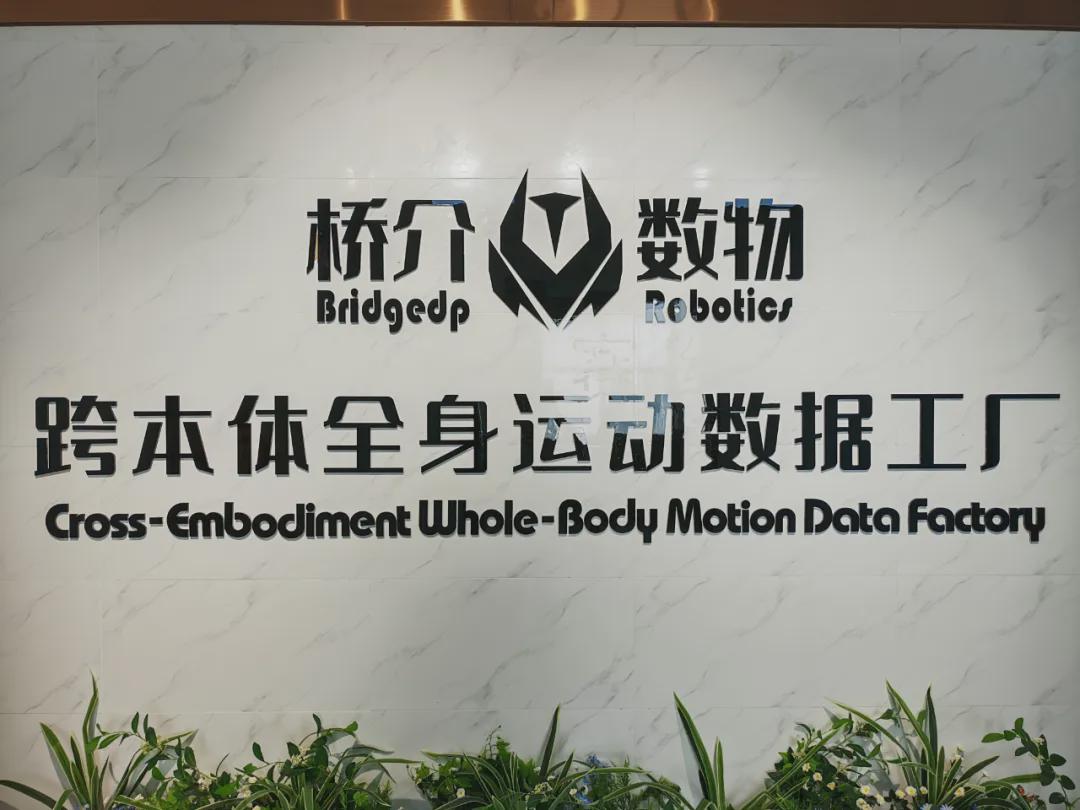
BridgeDP Robotics Launches Comprehensive Motion Data Factory
BridgeDP Robotics has unveiled its new 'Comprehensive Motion Data Factory,' a facility designed to tackle the existing data gap in motion control. This launch, which took place recently, aims to facilitate the collection of high-quality motion data on a large scale. By establishing a closed-loop system that encompasses data design, collection, processing, training, and feedback, the initiative is crucial for the advancement of the company's universal motion control platform. The facility is expected to enhance the capabilities of motion control technologies, ultimately contributing to more sophisticated applications in various industries.
Motion Control Data Collection Robotics Artificial Intelligence Data Infrastructure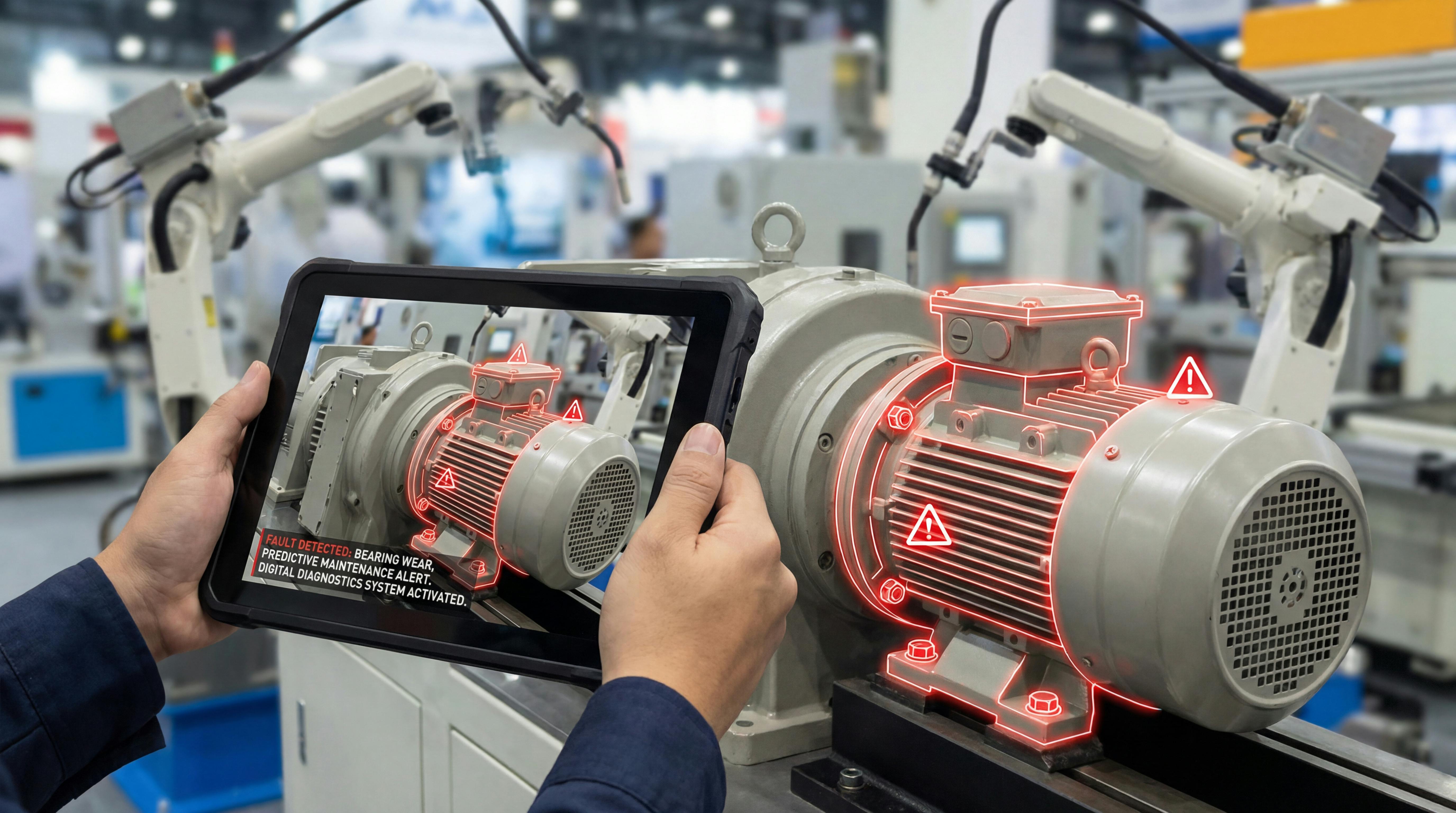
How Modern Drive Technologies Are Solving Industry’s Toughest Precision Challenges
Industry experts from Beckhoff and Siemens have highlighted the significant role of advanced technologies such as smart diagnostics, digital twins, and predictive maintenance in enhancing the accuracy of industrial machinery while minimizing downtime. This discussion took place during a recent industry conference, where the experts shared insights on how these innovations are transforming manufacturing processes. The integration of smart diagnostics allows for real-time monitoring of machinery, enabling operators to identify potential issues before they escalate. Digital twins, which create virtual replicas of physical assets, facilitate better understanding and optimization of machinery performance. Meanwhile, predictive maintenance strategies leverage data analytics to forecast equipment failures, ensuring timely interventions and reducing unexpected breakdowns. These advancements are crucial as industries strive to improve efficiency and reduce operational costs in an increasingly competitive market. By adopting these technologies, companies can not only enhance productivity but also extend the lifespan of their equipment, ultimately leading to significant cost savings. The collaboration between Beckhoff and Siemens exemplifies the industry's commitment to innovation and the continuous improvement of manufacturing practices.
Factory / Motion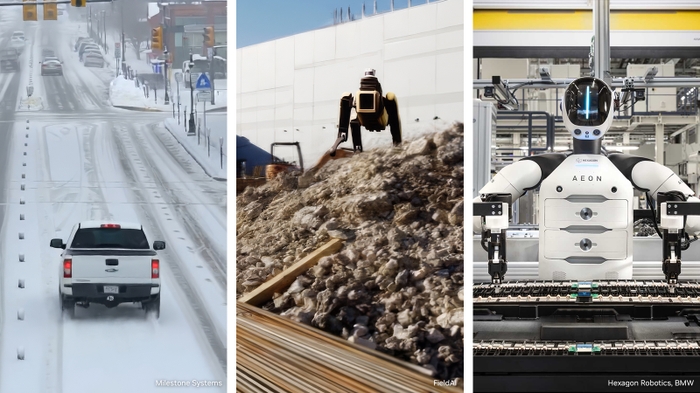
NVIDIA Announces Open Physical AI Data Factory Blueprint to Accelerate Robotics, Vision AI Agents and Autonomous Vehicle Development
NVIDIA has unveiled the NVIDIA Physical AI Data Factory Blueprint, an innovative open reference architecture designed to streamline the generation, augmentation, and evaluation of training data for physical AI applications. Announced today, this blueprint aims to significantly cut costs, time, and complexity associated with training AI models. By providing a unified and automated approach, NVIDIA seeks to enhance the efficiency of AI development processes, making it easier for organizations to implement and scale their AI initiatives. This initiative reflects NVIDIA's commitment to advancing AI technology and supporting developers in overcoming the challenges of data management in AI training.
Video Friday: Autonomous Robots Learn By Doing in This Factory
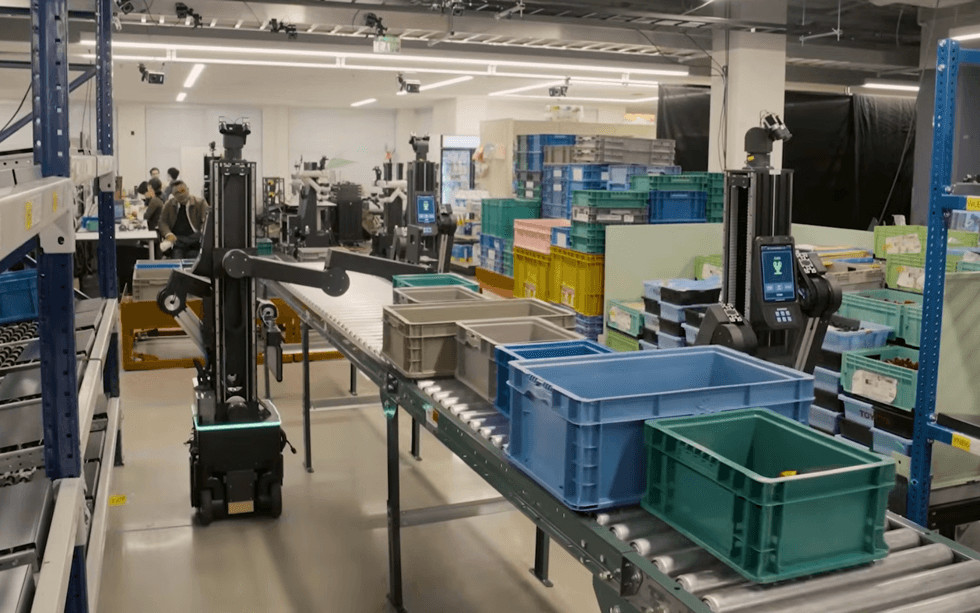
In a recent edition of Video Friday, IEEE Spectrum robotics showcased a variety of innovative robotics projects and developments. Notably, scientists at the Toyota Research Institute are collaborating with Toyota Manufacturing to implement autonomous robots on factory floors, enhancing production efficiency. Zipline shared insights into their drone delivery system, detailing the challenges faced and lessons learned in its development. Humanoid introduced KinetIQ, an AI framework designed for the orchestration of humanoid robot fleets, which integrates task allocation and execution through advanced cognitive layers. Meanwhile, researchers at VISTEC unveiled a decentralized adaptive resilient neural control system (DARCON) that enables legged robots to autonomously adapt to limb loss, ensuring mission success despite mechanical failures. NASA's Jet Propulsion Lab presented an animation of the Perseverance rover's drive along the Jezero Crater, captured on December 10, 2025, showcasing the rover's navigation capabilities. Additionally, Unitree's humanoid robot G1 made its mark on the snowfields of Altay, demonstrating its adaptability in extreme conditions. The Norwegian University of Science & Technology introduced a hierarchical 3D scene graph to enhance autonomous agents' understanding of their environments. Other highlights included the HoLoArm quadrotor, which features compliant arms for improved stability, and SkyDreamer, a pioneering vision-based autonomous-drone racing policy. The event also featured demonstrations of dexterous object manipulation by the AI Worker robot and advancements in swarm robotics for architectural applications.
Video-friday Autonomous-robots Humanoid-robots Industrial-robots Robot-ai Perseverance-rover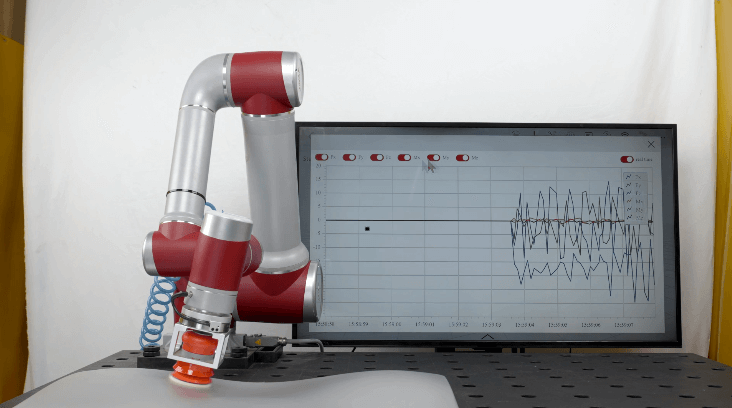
Three Reasons Why Your Factory Needs an Integrated Cobot Solution (Cobot + Vision)
Manufacturing facilities are increasingly turning to integrated cobot solutions to address persistent challenges in precision tasks and product variability. JAKA, a leader in this field, has developed a system that combines collaborative robots with machine vision to enhance environmental awareness and adaptability. This innovative approach allows for precise operations, such as polishing, where robots can adjust their actions based on real-time visual feedback. The integration of machine vision significantly improves process consistency, especially when dealing with non-uniform parts. By guiding the robot to identify part location, orientation, and surface geometry, the system can adapt pressure, speed, and patterns to minimize defects and enhance product quality. This closed-loop control mechanism is crucial for achieving high equipment effectiveness across production batches. Moreover, these integrated systems facilitate rapid changeovers and flexible production, essential for high-mix, low-volume manufacturing. The vision component enables a single robotic cell to recognize different product models, reducing changeover times from hours to minutes by eliminating the need for extensive manual adjustments. This flexibility allows for efficient handling of diverse tasks, including assembly and inspection, without compromising cycle times. Additionally, the integration generates valuable process data, transforming cobots into connected nodes within the factory's data ecosystem. This data stream supports predictive maintenance and continuous improvement, enabling engineers to refine quality and efficiency over time. As factories seek to enhance quality, agility, and operational intelligence, the adoption of vision-guided cobot solutions represents a strategic advancement in modern manufacturing.

Denso Wave to Showcase Factory Robots and 3D Vision AI at ROBOT TECHNOLOGY JAPAN 2026
Denso Wave will participate in the upcoming "ROBOT TECHNOLOGY JAPAN 2026," scheduled to take place from June 11 to June 13, 2026, at the Aichi Sky Expo in Aichi Prefecture. This event aims to showcase advancements in robotics technology, reflecting the growing interest and innovation in the field. Denso Wave's involvement highlights its commitment to contributing to the development and promotion of robotics solutions.
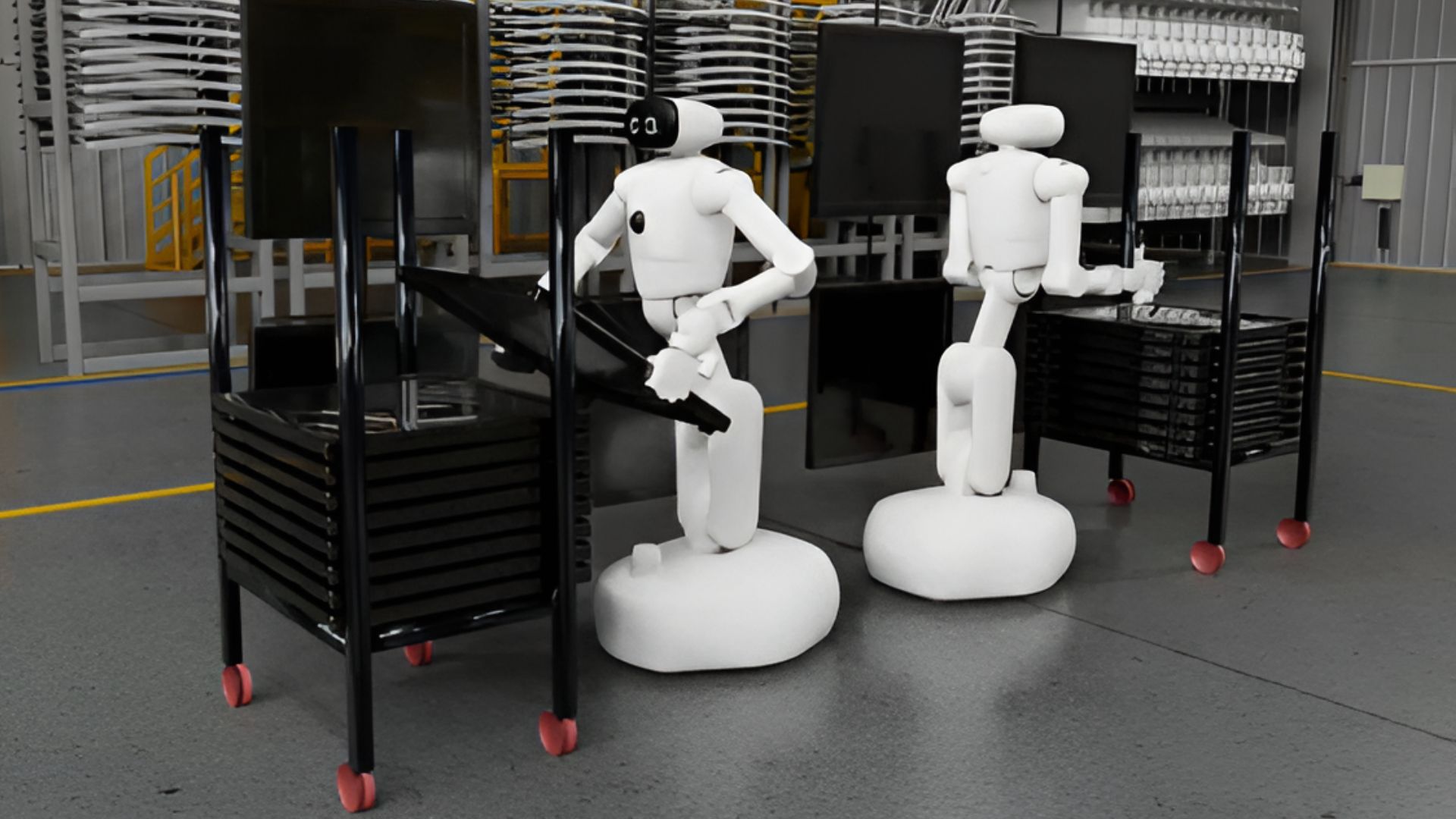
NVIDIA and LG Group build AI factory to train robots and power future mobility
Researchers and engineers are advancing the next frontier of artificial intelligence, focusing on the development of machines capable of movement, visual perception, and autonomous decision-making. This initiative, which has gained momentum in recent months, aims to enhance the functionality and adaptability of AI systems across various sectors, including healthcare, transportation, and robotics. The push for these advancements is driven by the increasing demand for intelligent systems that can operate in dynamic environments and perform complex tasks without human intervention. By integrating advanced sensors and machine learning algorithms, developers are working to create AI that not only processes information but also interacts with the physical world in real-time. This evolution in AI technology is taking place in research laboratories and tech hubs around the globe, with significant contributions from universities, private companies, and government agencies. As these entities collaborate, they are exploring innovative applications that could revolutionize industries and improve everyday life. The ongoing research is expected to culminate in prototypes and pilot programs by early 2024, showcasing the potential of these intelligent machines. As the field progresses, ethical considerations and safety measures are also being prioritized to ensure responsible deployment and integration into society. The ultimate goal is to create AI systems that enhance human capabilities and contribute positively to various aspects of life.
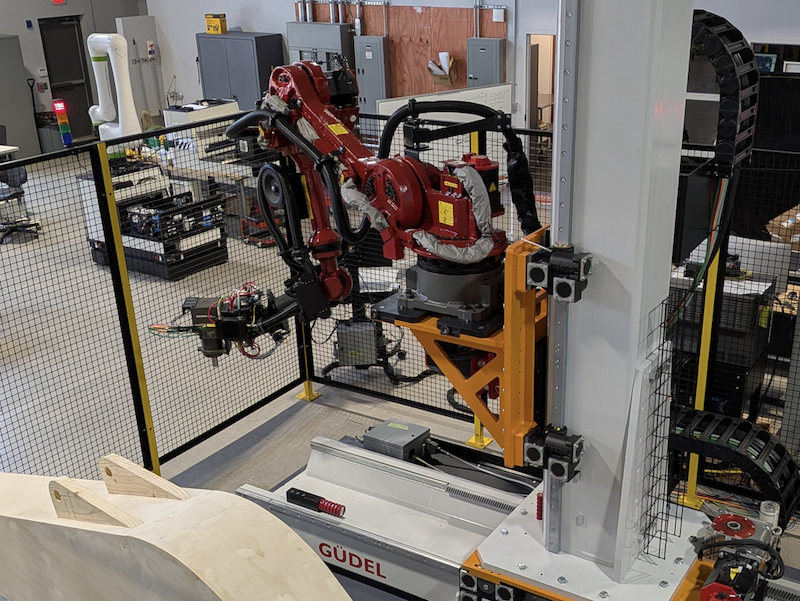
Güdel enhances robotic grinding capabilities with integrated vertical and horizontal movement.
The automation of grinding and surface finishing for large fabricated parts is gaining attention as a solution to the challenges posed by traditional methods, which are often characterized as dull, dirty, and dangerous. However, the implementation of robotic systems in this area presents significant hurdles, including the need for multiple robots and intricate part repositioning. These factors contribute to increased costs and longer cycle times, while also introducing new variations into the manufacturing process. As industries seek to enhance efficiency and safety, the push for automation in grinding applications continues to evolve, highlighting the need for innovative solutions to streamline operations and reduce overhead.
Engineering Events Automate 2026 automation news factory automation fanuc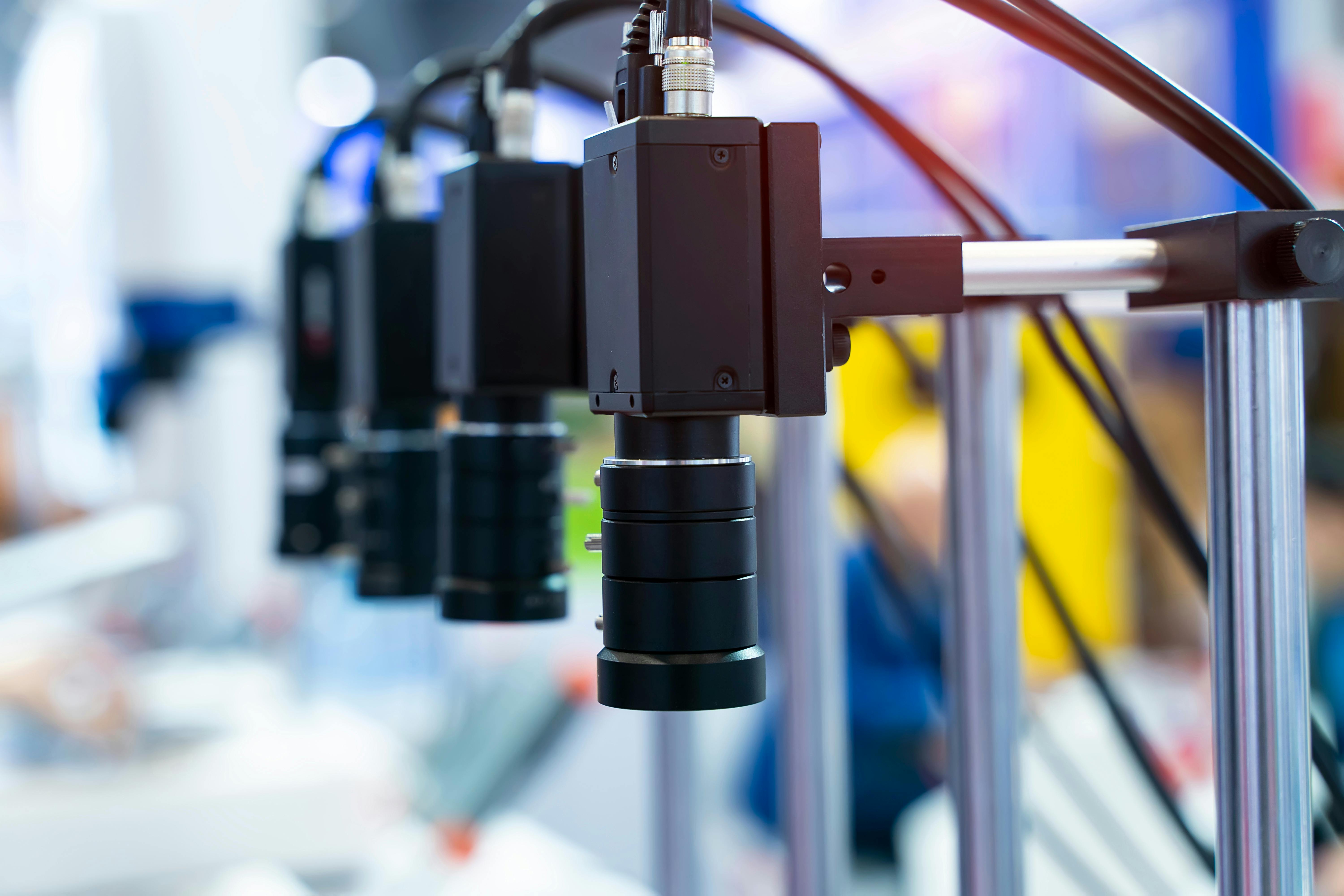
How Industrial Vision Systems Beat Dust, Heat and Vibration to Stay Sharp on the Factory Floor
Engineers and operators in the manufacturing sector are addressing environmental threats to machine vision cameras, which can compromise system accuracy and lead to operational downtime. To mitigate these risks, experts are implementing protective measures and maintenance strategies designed to enhance the durability and reliability of these critical systems. By focusing on proactive maintenance and environmental safeguards, teams can ensure that machine vision technology continues to function effectively, even in challenging conditions. This approach not only helps maintain productivity but also extends the lifespan of the equipment, ultimately supporting the efficiency of manufacturing processes.
Factory / Sensors
What Do Cobots Do? Essential Functions and Purpose
In the evolving landscape of manufacturing and automation, JAKA is pioneering the development of collaborative robots, or cobots, designed to enhance daily operations without disrupting existing workflows. These robots assist human operators with repetitive, precision-driven, and ergonomically challenging tasks while ensuring a safe and adaptable working environment. Cobots are utilized in various applications, including assembly, material handling, testing, packaging, and quality inspection, requiring stable motion control and consistent repeatability. Unlike traditional industrial robots confined to safety cages, JAKA's cobots feature integrated sensing and safety logic, allowing them to operate safely alongside human workers in shared spaces, particularly in high-mix, low-volume production settings. The design of these collaborative robots aims to lower the barriers to automation, enabling more teams to integrate robotic assistance without needing extensive programming skills. JAKA emphasizes intuitive interaction, allowing operators to easily adjust paths, speeds, and task logic directly on the production floor, thereby enhancing deployment efficiency while maintaining operational consistency. JAKA's innovative approach includes embedding vision capabilities into cobots, facilitating more natural interactions with humans and their environments. This advancement enables the robots to adapt to positional variations and process changes with minimal setup, broadening their application in inspection, assembly, and adaptive handling tasks. Ultimately, JAKA views cobots as essential tools for improving efficiency, safety, and consistency in industrial settings. By combining user-friendly controls, integrated vision, and a focus on human safety, these robots serve as reliable partners on the factory floor, allowing teams to concentrate on higher-value work while ensuring stable and scalable operations.
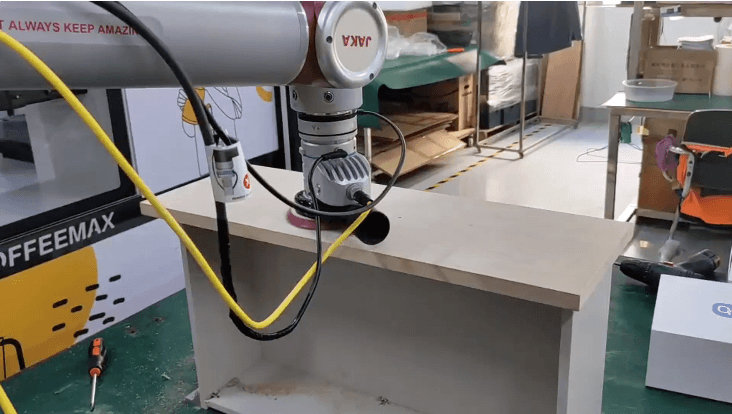
Understanding Automation Robotics Technology: From Sensors to Control Systems (JAKA CAB V3)
JAKA, a leader in automation robotics technology, has unveiled its advanced polishing robot, powered by the innovative CAB V3 controller, designed to enhance the precision and consistency of metal component finishing. This cutting-edge system, which integrates sophisticated sensing and control mechanisms, addresses the challenges faced by skilled artisans in achieving flawless surfaces. The CAB V3 controller serves as the brain of the robot, translating high-resolution sensor data into precise motion commands. Equipped with advanced proprioceptive sensors and force control technology, the polishing robot can adapt to subtle variations in part geometry, ensuring optimal tool orientation and pressure during operation. This real-time feedback loop allows the robot to maintain high standards of quality while compensating for any deviations. JAKA's design philosophy emphasizes the seamless integration of sensing, computation, and mechanical action, enabling the polishing robot to operate smoothly without vibrations that could damage surfaces. The CAB V3 also supports connectivity with external vision systems and factory networks, enhancing flexibility in mixed-production environments. By leveraging this advanced automation technology, manufacturers can achieve unprecedented levels of consistency and quality in their finishing tasks, transforming the traditional polishing process into a highly efficient and repeatable operation.
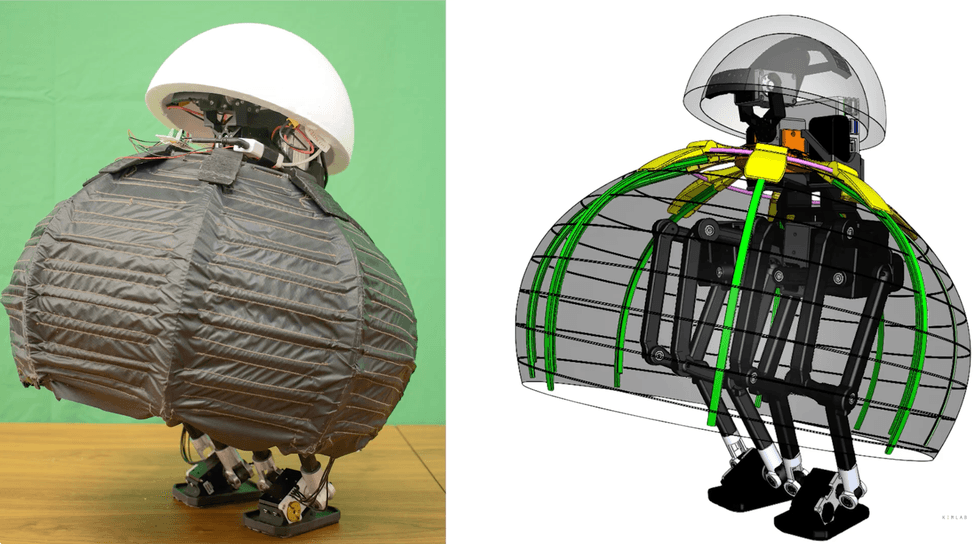
Video Friday: Bipedal Robot Stops Itself From Falling
IEEE Spectrum robotics has released its latest edition of Video Friday, showcasing a variety of innovative robotics videos and announcing upcoming events in the field. Among the highlights is the Robotic Autonomy in Complex Environments with Resiliency (RACER) program, which is nearing completion after extensive collaboration with the U.S. Army and Marine Corps. This program is expected to leave a lasting impact on military operations and stimulate private-sector investment in autonomous technologies. Notable advancements include the introduction of COSA, a cognitive operating system that enhances humanoid robots' capabilities for high-level cognition and motion control. Meanwhile, the 1X World Model has made significant strides in robot learning, allowing its NEO model to perform tasks autonomously based on voice or text prompts, even for unfamiliar objects. In assistive technology, the GuideData Dataset has been launched to improve interactions between guide dog trainers and visually impaired individuals, aiming to enhance mobility and safety. Additionally, Fourier's Care-Bot prototype is gaining attention for its interactive features at CES 2026. In environmental monitoring, ETH Zurich has developed an autonomous quadruped robot for volcanic gas measurements, successfully tested on Mount Etna. Humanoid robots have also made progress in industrial logistics, completing proof-of-concept testing at Siemens's factory in Erlangen. Columbia Engineers have created a robot capable of learning facial lip motions for speech and singing through observational learning, marking a significant milestone in robotics. Lastly, DEEP Robotics showcased its quadruped robots' capabilities in complex firefighting scenarios, while Synapticon introduced its POSITRON platform to enhance safety in humanoid robots for real-world applications.
Robotics Video-friday Bipedal-robots Humanoid-robots Quadruped-robots Industrial-robots
Why Precision Swiss Machining is Critical to the Future of Robotics and Automation
The industrial production landscape is undergoing a significant transformation due to the rapid advancements in robotics, factory automation, and intelligent manufacturing systems. This shift is characterized by an increasing reliance on highly precise mechanical systems that can operate continuously with minimal deviation. As automation technologies evolve and become more interconnected, modern manufacturing environments are integrating collaborative robots, automated assembly systems, and sensor-driven equipment. These innovations are not only enhancing efficiency but also improving the accuracy and reliability of production processes. The ongoing evolution in this sector reflects a broader trend towards smarter, more automated manufacturing practices that aim to meet the growing demands of global markets.
Automation Engineering Factories automated manufacturing automation hardware automation news
Japan Pioneered Humanoid Robots—Can It Now Catch China?
“In the future, the relationship between humans and robots will deepen, and the distinction between them will probably disappear.” This prediction, from one of the attendees at the recent Humanoids Summit in Tokyo, might have been unremarkable had it not come directly from an android that was first introduced to the world 20 years ago. Geminoid HI-6 is the sixth-generation of a robot originally designed in 2006. The mechanical twin of Osaka University professor Hiroshi Ishiguro, Geminoid HI-6 is now equipped with a large language model trained on Ishiguro’s own writings and interviews. It has advanced conversational skills and can even have a chat with its creator, an eerie spectacle. But at the Humanoids Summit, Geminoid was one of the few humanoid robots from Japan, the country that pioneered the form factor.While the event in Tokyo only had about 40 robots on display, Chinese systems outnumbered Japanese by roughly three to one. Some Japanese robotics firms were even using Chinese robots in their own technology demonstrations, something that would have been unthinkable in the recent past—one Japanese engineer described the situation as “sad.” The conference was a stark reminder of how Japan has ceded its early lead in humanoid robot development to overseas competitors, and the challenge it now faces to secure a place in an ecosystem increasingly dominated by general-purpose robots powered by AI. Twenty-five years ago, Japan was turning out groundbreaking humanoids that were showstopping in their abilities, but they were not commercialized as practical machines in any meaningful way. Heavily influenced by science fiction and lacking practical applications, they were mostly expensive technology demonstrations that were eventually mothballed. What Japan retains, however, is robotics design and know-how, which it must leverage to be a key player in the rapidly evolving humanoid ecosystem. Learning to Walk—Then Standing StillTo anyone who has seen recent videos of Chinese humanoids doing kung-fu and synchronized acrobatics, as well as half-marathon races, China’s remarkable progress in the field is nothing new. At the Humanoids Summit, Toyota showed a video of its latest basketball-playing robot, and Honda exhibited its latest robot hand, but the full-scale humanoids on the floor were mostly Chinese–the kid-size K1 machines from Booster Robotics of Beijing were dancing to Michael Jackson tunes. The full-scale G1 humanoid from Unitree Robotics of Hangzhou was also doing demos. “You cannot sell these bipedal systems in Japan for safety and compliance reasons,” says Shuichi Nagao, a frequent visitor to China as CTO of Omakase Robotics, a division of Zeals, a Japanese humanoid robot developer. Omakase was exhibiting a G1 modified with an external PC controller, a dextrous hand, a suction-cup manipulator and a sensor “hat” with an extra speaker, mic and camera. “In China, the government is pushing humanoid development. They didn’t have an industry 20 years ago. The people pushing it are young, in their 20s and 30s. It’s a really different mentality out there,” says Nagao. “Big players in Japan are still looking for use cases for humanoids. In China, they’re already doing mass production and reducing the cost, so other countries can’t compete with them anymore.”Another Japanese company showing off G1 bots was summit sponsor GMO AI & Robotics, a subsidiary of Japanese internet company GMO. It’s using the robots in partnership with Japan Airlines to load and unload cargo containers at Tokyo’s Haneda airport. The cargo project is a trial—like many other humanoid experiments—but the fact that Chinese machines have penetrated so far into Japan’s ecosystem upends a long history. In 1973, scientists at Waseda University in Tokyo built WABOT-1, considered the first full-scale humanoid robot and capable of slow bipedal locomotion, grasping objects and simple communication. It inspired Honda’s groundbreaking Asimo humanoid, but it was never commercialized. Asimo was eventually retired in 2022, the year ChatGPT was released. Two years later, Unitree’s G1 went on sale for US $16,000. China’s High Torque Technology Co. showed off its Mini Pi biped, customized with an anime-inspired head, at Humanoids Summit in Tokyo. The regular version is priced at $3,500. Tim HornyakSupply and DemandJapan’s development of humanoids happened before practical applications or widespread demand were in place, but bad timing is only part of the story—Japan also has a history of developing technologies that might appeal to domestic consumers but not necessarily those overseas. For example, decades after they first appeared, its highly engineered, multifunction toilets have only recently found a following abroad. Japan’s humanoid prowess was partly built on the back of its legendary industrial automation, yet even that stronghold has eroded. Ani Kelkar, a partner from McKinsey & Company in Boston who produces analytical reports about the robotics industry, told the summit audience that while Japan occupied the top spot in the world in manufacturing robot density (the number of multipurpose industrial robots in operation per 10,000 employees) from at least 1994 to 2009, it then slipped to second in 2014, third in 2019 and fifth in 2024. In that year, South Korea was at the top of the leaderboard with a robot density of 1,220 compared to Japan’s 446. The International Federation of Robotics estimates China now has the most operational industrial robots in the world, with around 2 million total units, approximately 4.5 times more than Japan. “The annual installation numbers are impressive too: 54 percent of all robots installed worldwide in 2024 were deployed in China,” the IFR said in a release in April 2026. “I think the loss of Japanese leadership is more to do with the rise of China as a manufacturing powerhouse including for sectors that Japan had high export levels,” Kelkar said in an email interview. “The recovery has not yet happened as Japan ‘missed’ the rapid acceleration in AI for robotics and is now playing catchup.”How Japan Can Adapt Kelkar believes Japan has a US $100 billion opportunity in general-purpose robotics, which are machines that can perform a wide variety of tasks, and it cannot rely on the slower-growing industrial robot market, which is centered on factory machines that do one simple and predictable task like welding car parts. He points to a McKinsey white paper suggesting that while Japan has much of the hardware and technology experience needed to support general purpose robot development, it must change its strategy to capture more share in AI, software, data collection and robotics platforms.Tetsuya Ogata is a professor of engineering and director of the Institute for AI and Robotics at Waseda University, the birthplace of humanoids in Japan. He briefed the summit on how a nonprofit he chairs, the AI Robot Association (AIRoA), is working with Toyota and other members to develop foundational technologies for collaborative use. For instance, AIRoA has collected some 80,000 hours of data on remote operation of mobile manipulators, and Ogata believes it’s the largest dataset of its kind. Using the data, it built and verified Vision-Language-Action (VLA) models, and it has also started data collection for dual-arm mobile manipulation. In an interview, Ogata acknowledged Japan’s struggle to find its place in the changing landscape. “The world of AI is inherently a game of scale,” says Ogata. “Therefore, Japan’s absolute prerequisite is to secure a competitive baseline of scale—in data, computing resources, and talent. Beyond that, what I consider most critical is a mindset shift: rather than trying to hoard scale within a single nation or company, we must grow stronger by collaborating with a diverse ecosystem of domestic and international players.” Specifically, this means creating a ‘collaborative domain’ to address data—the single biggest bottleneck—through industry-wide cooperation rather than data-siloing. By collectively nurturing a pre-competitive, shared data infrastructure and foundation model, individual companies can then compete on top of it with their own applications. “By offering this open ‘data ecosystem’ to the world, we can engage global players and establish a ‘third pole’ alongside the US and China,” says Ogata. “I believe this is how Japan can reclaim its global presence.”In 1999, Japan introduced the world’s first mobile internet services platform. But being first didn’t turn Japan into a smartphone manufacturing or design center—it’s now merely a supplier of parts to other countries who are leading the smartphone industry. If Japan can avoid a repeat of that experience and successfully deregulate, diversity, and commercialize its original humanoid dreams, it stands a better chance of influencing the direction of the industry and reaping billions in value. As automobiles and electronics were pillars of Japan’s industrial strategy in the last century, Japan could make humanoid robots one of its key value generators in the 21st century, an approach that would not only deliver economic benefits but give Japan greater clout in how the industry will evolve. Just like Japanese cars, electronics, and even toilets, Japanese humanoids could stand for craftsmanship and reliability. It’s a legacy that Japan can’t afford to give up.
Japan Robotics Humanoids Humanoid-robots
Hyundai builds new robot units to scale Atlas deployment
Hyundai Motor Group is intensifying its efforts in humanoid robotics by launching new divisions aimed at integrating the Atlas robot, developed by its US subsidiary Boston Dynamics, into its vehicle production processes. This initiative was reported on Tuesday, highlighting the establishment of a software-defined factory promotion division, with Alpesh Patel appointed as executive vice president. The new division will focus on creating smart manufacturing facilities where artificial intelligence oversees production, logistics, and quality control, enhancing operational efficiency and innovation within Hyundai's manufacturing framework.
All News
New pet robot uses local multimodal AI to learn and adapt to human behavior
A groundbreaking development in robotics is underway, as researchers unveil a new type of robot designed for applications beyond traditional factory settings. This innovative robot, which is being developed by a team of engineers and scientists, aims to enhance human interaction and assist in various everyday tasks. The project, initiated in late 2023, is based in a state-of-the-art research facility that focuses on advanced robotics and artificial intelligence. The motivation behind this initiative stems from the growing demand for robots that can seamlessly integrate into daily life, providing support in areas such as healthcare, education, and home assistance. Unlike conventional industrial robots, this new design emphasizes adaptability and user-friendliness, allowing it to engage with people in a more natural manner. To achieve this, the team is employing cutting-edge technologies, including machine learning algorithms and advanced sensory systems, to enable the robot to understand and respond to human emotions and commands. The development process involves extensive testing and feedback from potential users to ensure that the final product meets the needs of diverse populations. As this project progresses, it holds the potential to revolutionize the way robots are perceived and utilized in society, moving them from the confines of factories into the heart of everyday life.

What Company Makes Robotic Arms?
As industrial automation increasingly shapes modern manufacturing, companies are seeking robotic arms that can effectively adapt to real production environments. JAKA, a prominent player in the robotics sector, emphasizes the importance of understanding how robotic arms function on the factory floor rather than merely in controlled testing scenarios. The demand for flexible and compact robotic systems is rising, driven by the need for quick deployment and adaptability to changing production requirements across various industries, including electronics and automotive assembly. JAKA distinguishes itself by focusing on collaborative robotic arms that facilitate close interaction with human workers and existing production systems. By developing systems that balance precision, payload, and safety without necessitating extensive infrastructure changes, JAKA enables the integration of robotic arms into compact workspaces and mixed-production lines. Their design philosophy prioritizes standardized interfaces and modularity, allowing seamless compatibility with vision systems and other automation components. The design and support of robotic arms throughout their lifecycle are crucial factors in determining a manufacturer’s reliability. JAKA’s lightweight structures, consistent motion control, and user-friendly programming interfaces reduce deployment time and operational barriers, making their systems suitable for a variety of tasks such as assembly, inspection, packaging, and testing. By emphasizing system compatibility and long-term usability, JAKA positions itself as a trusted supplier, committed to supporting customers through integration and future automation expansions. Ultimately, the effectiveness of robotic arms in real-world applications hinges on their ability to adapt and support sustainable automation strategies.
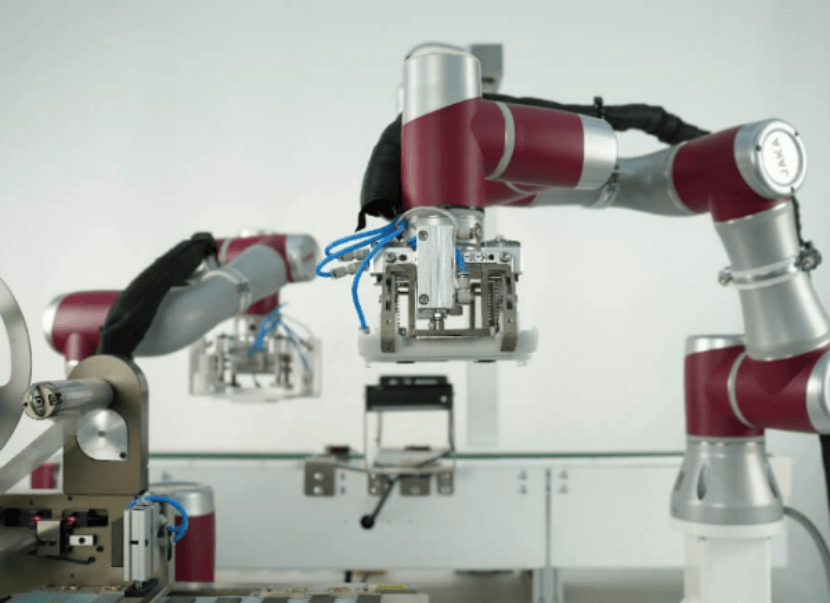
Cobots vs. Traditional Industrial Robots: Which Is Better for SMEs?
Small and medium-sized enterprises (SMEs) are increasingly faced with the challenge of choosing between collaborative robots (cobots) and traditional industrial robots for upgrading their production lines. This decision, influenced by factors such as production space, workforce skill levels, and the frequency of product changes, is crucial for aligning automation solutions with operational needs. JAKA, a company specializing in automation technology, emphasizes the importance of flexibility and safety in this choice. Collaborative robots are designed to work alongside human operators, allowing for gradual automation without significant changes to factory layouts. They require less safety fencing and can be installed more quickly than traditional robots, making them suitable for smaller manufacturing environments. JAKA's systems are tailored for rapid redeployment and user-friendly programming, enabling SMEs to implement automation incrementally while managing costs effectively. In addition to flexibility, SMEs prioritize process consistency and quality control. JAKA’s AL solution is engineered for precise and repeatable motion, essential for applications like adhesive application, which helps maintain product quality and reduce defect rates. The adaptability of cobots allows for quick adjustments to different workpieces, minimizing the need for additional equipment investments during process changes and enhancing workplace safety by reducing manual handling of hazardous tasks. Ultimately, the choice between cobots and traditional robots varies for each SME, depending on their production volume and flexibility needs. JAKA advocates for a practical approach to automation that supports gradual growth, enabling SMEs to enhance efficiency while ensuring operational stability.
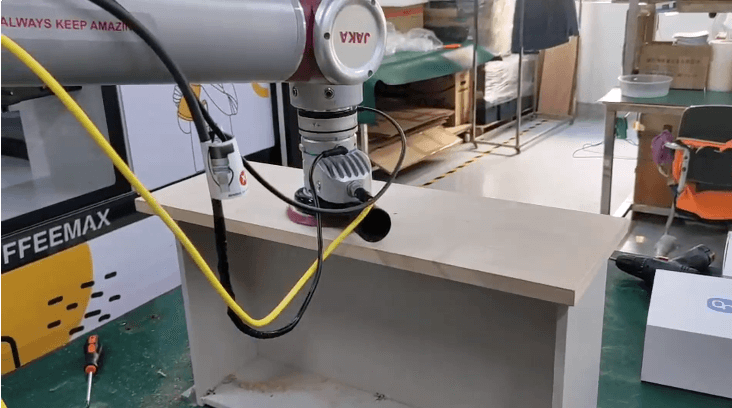
How Do Collaborative Robots Work?
JAKA, a leader in robotics, has developed collaborative robots (cobots) designed to operate safely alongside human workers in shared workspaces. These advanced machines utilize a combination of sensing technology, intuitive programming, and adaptable design to enhance productivity in manufacturing environments. The cobots continuously monitor their surroundings, employing sophisticated algorithms for collision detection that allow them to halt or retract when encountering obstacles, such as people. This real-time responsiveness, complemented by features like jitter suppression, ensures safe interaction without the need for protective barriers. JAKA's cobots are user-friendly, supporting graphical programming and drag-and-drop teaching methods. Operators can easily guide the robotic arms through desired motions, simplifying task setup and enabling quick adaptations directly on the factory floor. This accessibility empowers workers to leverage the technology effectively. Moreover, the compact design of JAKA's Zu series allows for seamless integration into existing production lines, both physically and digitally. The cobots can connect with various machinery and software systems, making them versatile tools capable of performing tasks ranging from assembly to quality inspection without disrupting established workflows. Overall, JAKA's collaborative robots exemplify a modern approach to manufacturing, acting as intelligent partners that enhance human capabilities and adapt to the evolving demands of the industry.
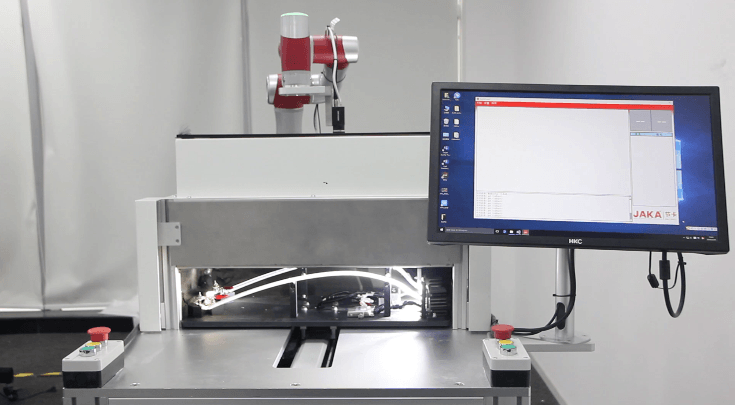
Top 5 Trends of the Industrial Robot Arm Industry in 2026
In 2026, the landscape of industrial automation and robotics is undergoing a transformative shift, moving from rigid machines to intelligent, adaptive systems. This evolution is driven by global manufacturing challenges, including labor shortages and the demand for hyper-personalization. Key advancements in connectivity and artificial intelligence are reshaping productivity and safety on factory floors. A major trend is the emergence of "self-evolving" robots that utilize generative AI to autonomously learn new tasks, minimizing the need for manual programming. Additionally, agentic AI empowers these machines to make informed decisions in complex environments, enhancing their ability to predict equipment failures and optimize operations in real-time. The convergence of Information Technology (IT) and Operational Technology (OT) is facilitating seamless data exchange between digital systems and physical robots. This integration allows for the creation of digital twins, enabling manufacturers to simulate production changes before implementation. Cloud connectivity has become standard, with nearly half of new deployments leveraging IoT technology for predictive maintenance. This capability allows robots to monitor their health and schedule repairs proactively, reducing unplanned downtime and long-term costs. Furthermore, advanced 2D and 3D vision systems are enhancing robots' capabilities, enabling them to perform high-speed quality inspections and adjust their behavior for safety around human workers. The shift towards modular and scalable automation is also notable, as manufacturers adopt flexible robot cells that simplify integration and facilitate quick changeovers. Leading this innovation is JAKA Robotics, whose JAKA A12 model exemplifies the future of flexible automation. With a 12 kg payload and a 1425 mm working radius, the JAKA A12 combines high performance with user-friendly deployment through a wireless software ecosystem, positioning itself as a key player in the evolving industrial landscape.
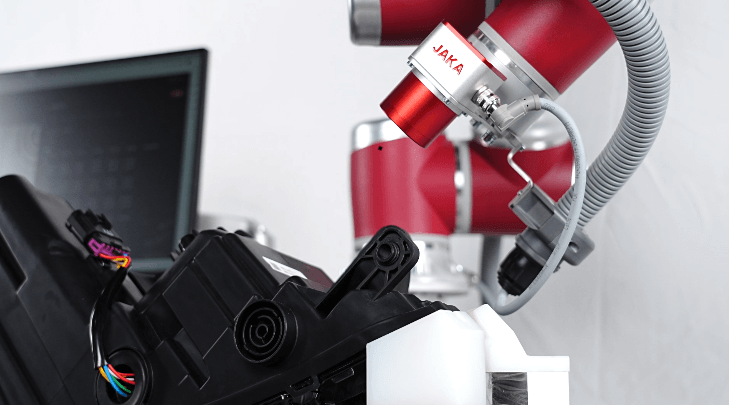
Assembly Robots for Consumer Electronics: Challenges and Solutions
The consumer electronics industry is increasingly adopting specialized assembly robots to address the challenges posed by rapid product life cycles and the need for precision in manufacturing. As smartphones, wearables, and home gadgets evolve, traditional manual assembly methods struggle to keep up with the demand for high-quality production. This shift is driven by the need for accuracy in handling densely packed components, which require sub-millimeter precision and are sensitive to electrostatic discharge. To adapt to frequent design changes and seasonal updates, manufacturers are turning to flexible automation solutions. These advanced robots can be quickly reprogrammed and equipped with modular end-effectors, enabling them to perform various tasks across different product lines. The integration of 2D and 3D vision systems enhances quality control, allowing robots to make real-time adjustments to ensure precise assembly. JAKA, a leader in robotics technology, has developed the JAKA A12L, designed specifically for the electronics sector. This robot offers a long reach and high payload capacity, making it suitable for large-format assembly. With an impressive repeatability of ±0.03mm, JAKA's solutions meet the stringent requirements of consumer electronics manufacturing. The company emphasizes ease of integration and safety, providing an open software ecosystem for seamless communication with vision sensors and factory systems, along with user-friendly wireless control through the JAKA App. This innovation positions manufacturers to turn production challenges into competitive advantages.
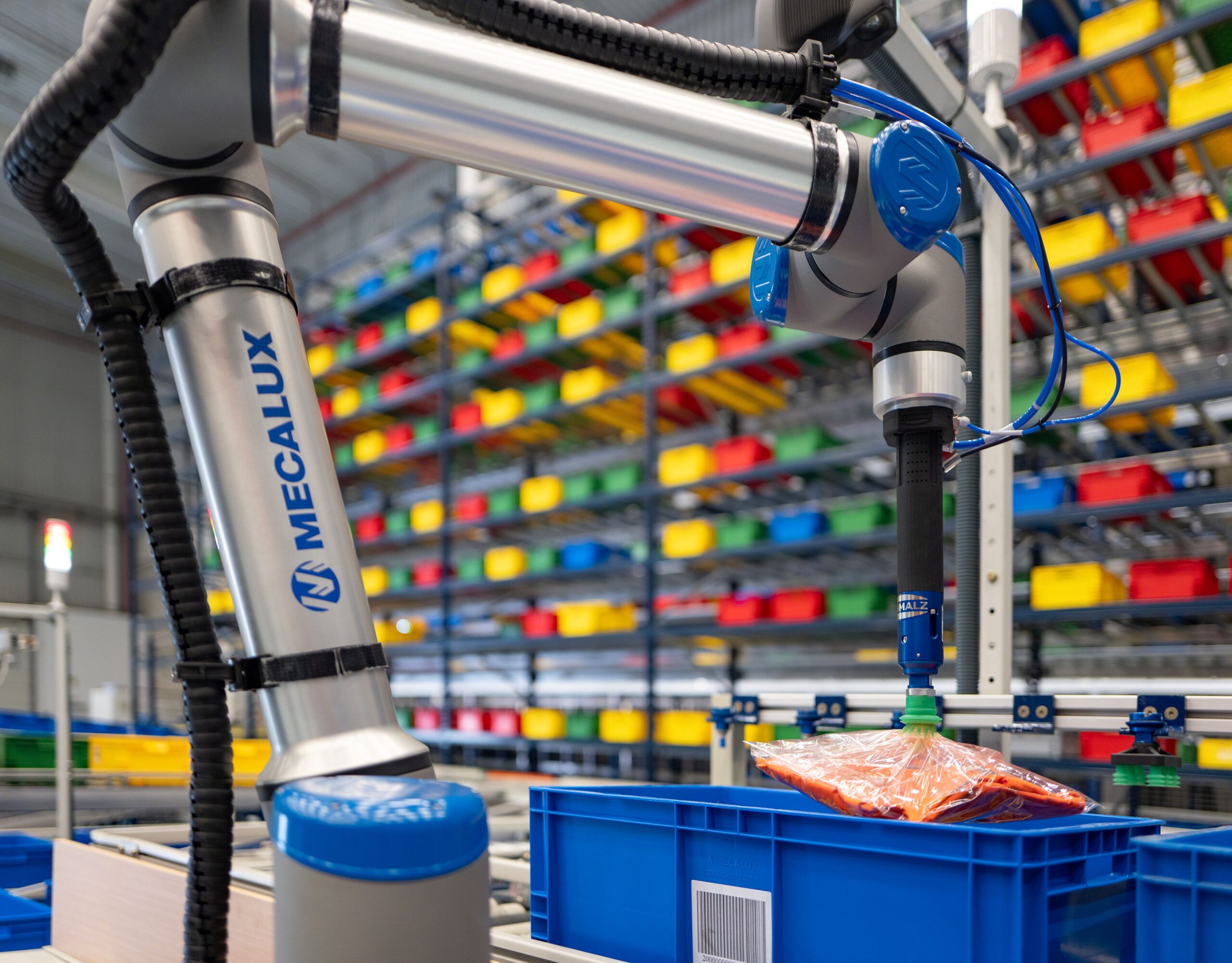
Siemens et la robotique : comment le géant allemand redéfinit l’usine intelligente
Siemens, the German conglomerate established in 1847, is playing a crucial yet often overlooked role in the transformation of industrial factories, particularly in the realm of robotics. While companies like ABB, FANUC, and KUKA are well-known for manufacturing industrial robots, Siemens focuses on redefining smart factories through its innovative technologies. The company does not produce robots directly but contributes significantly to the automation and efficiency of manufacturing processes. This shift towards smarter, more integrated factory systems is reshaping the landscape of industrial robotics, highlighting Siemens' influence in an area typically dominated by traditional robot manufacturers. The insights into Siemens' impact on industrial robotics were discussed in a recent article featured in Robot Magazine.
À la une Actualités IA Industriel Robotique automatisation industrielle.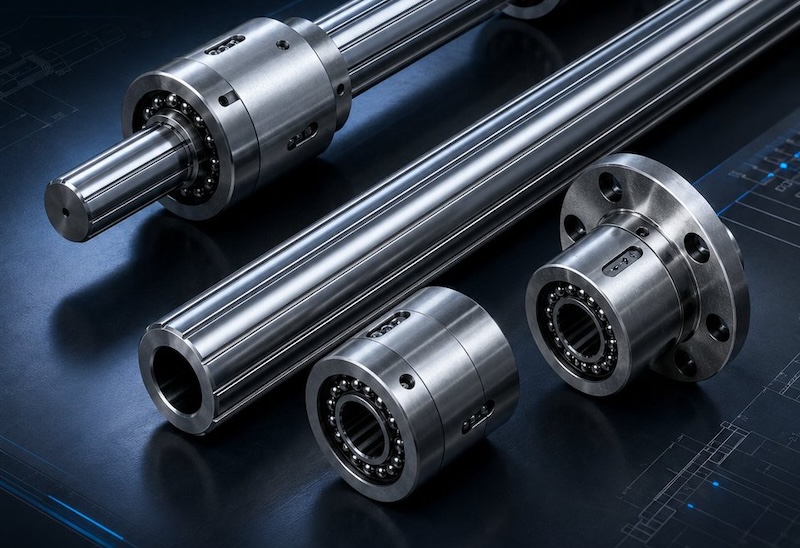
How JLCMC is Redefining Industrial Automation Solutions for Modern Factories
The manufacturing industry is undergoing significant transformation as companies strive to increase production efficiency, minimize waste, and adapt to market demands while keeping costs manageable. Central to this evolution is the rise of industrial automation, supported by various suppliers that play a crucial role behind the scenes. One such emerging player in this sector is JLCMC, an online store that is gaining recognition for its contributions to the automation landscape. As manufacturers navigate these challenges, the integration of advanced technologies and innovative solutions is becoming essential for sustained growth and competitiveness in a rapidly changing environment.
Automation Industry automation engineers cnc factory automation industrial automation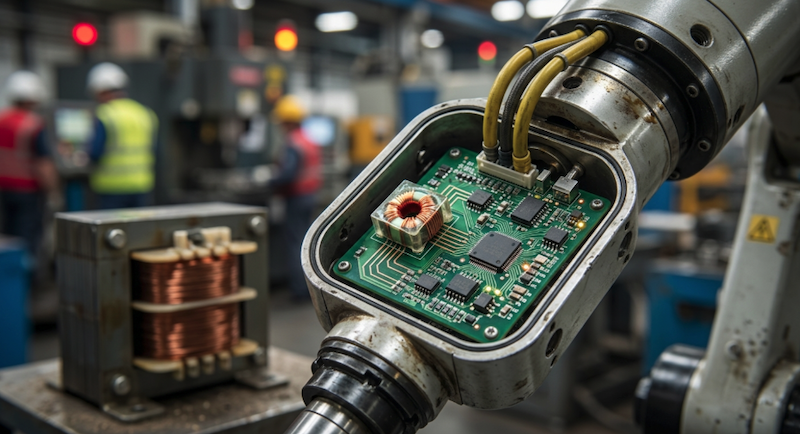
The Small Component Problem Behind More Reliable Industrial Robots
In a groundbreaking development for the manufacturing industry, advanced automation technology is transforming assembly lines and semiconductor packaging facilities. A robotic arm, capable of executing movements with sub-millimeter precision at an impressive rate of 300 cycles per minute, is at the forefront of this innovation. These robotic systems are enhanced by machine vision technology, remote input/output blocks, and sensitive microcontrollers, allowing for seamless coordination and efficiency in production processes. This technological advancement is taking place in various industrial settings, where multiple machines share a common power source through an industrial rail system. The integration of heavy CNC machines into this grid further exemplifies the collaborative nature of modern manufacturing, where precision and speed are paramount. The motivation behind this shift towards automation is to increase productivity and reduce human error in manufacturing processes. By leveraging sophisticated robotics and interconnected systems, companies aim to streamline operations and enhance overall output. As industries continue to adopt these cutting-edge technologies, the future of manufacturing looks increasingly automated and efficient, promising significant advancements in production capabilities.
Components Design Engineering Industrial robots amrs automation news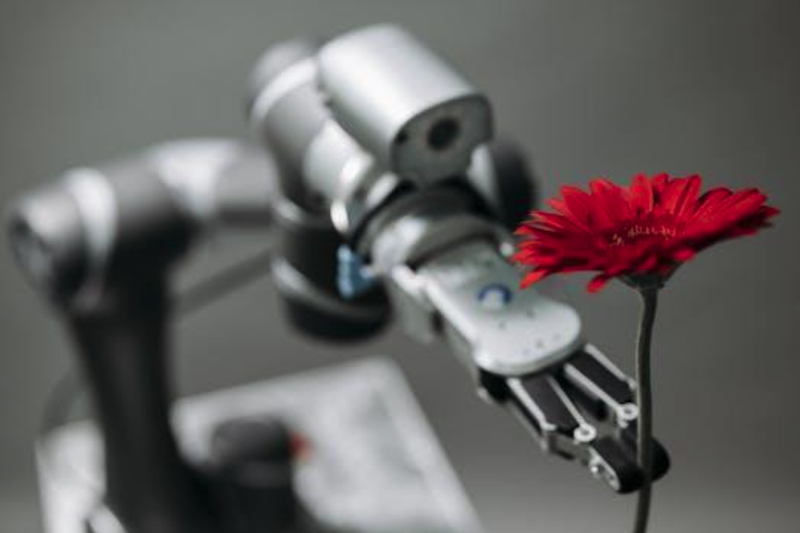
The Role of RF Connectors in Robotic Vision, Sensor Communication, and Automated Inspection Systems
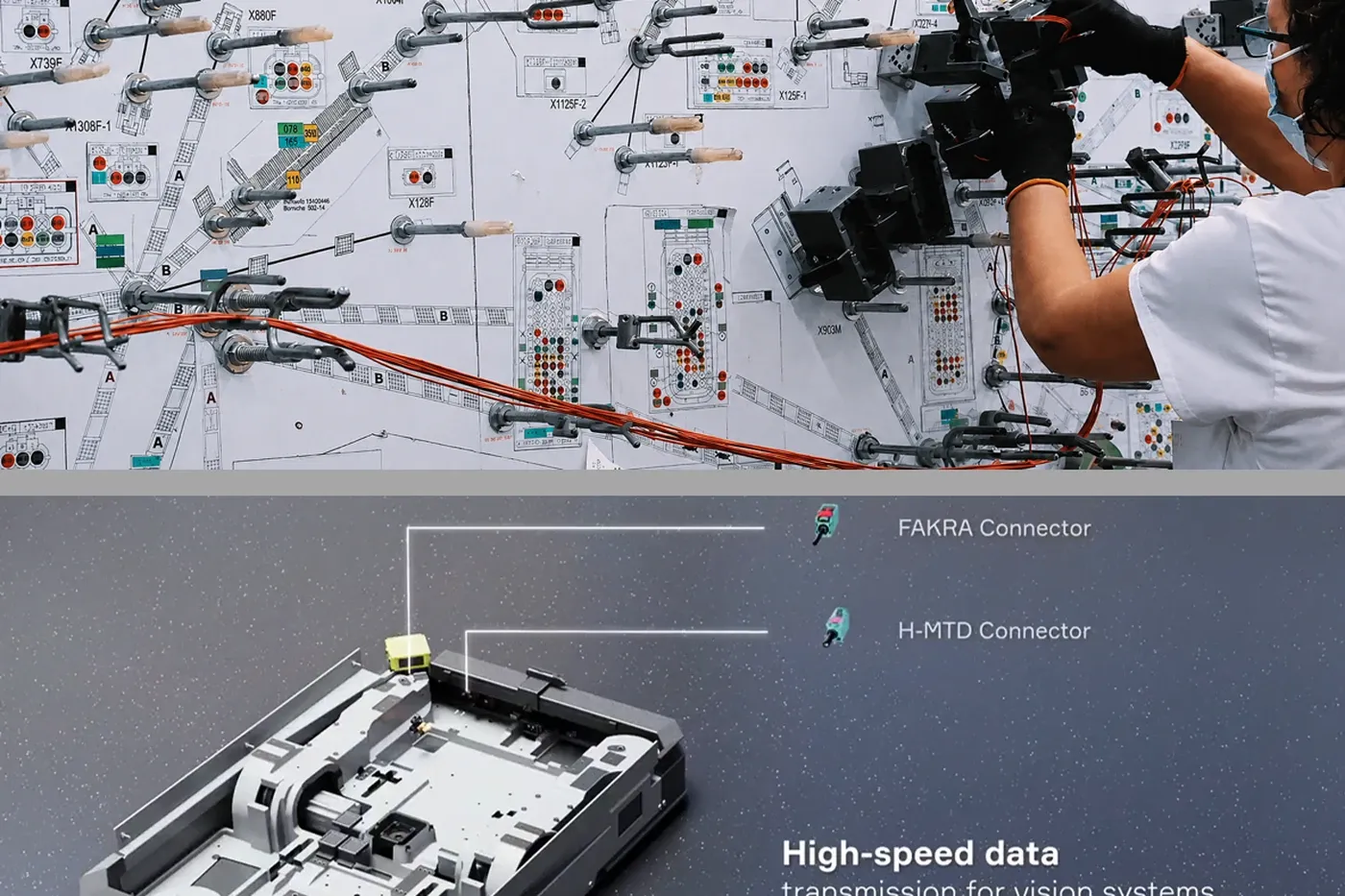
Recent advancements in robotic vision and automated inspection have highlighted the limitations of software solutions in addressing physical challenges. While fast GPUs, sophisticated models, and user-friendly dashboards are often celebrated as technological triumphs, they falter when confronted with the realities of a compromised physical signal path. For instance, a camera's ability to process images is hindered by a noisy clock, and sensors struggle to deliver accurate readings when interfaces become loose after repeated vibrations. This underscores the importance of considering the physical environment in the development and implementation of automated systems, as reliance solely on software capabilities may lead to significant operational failures.
Design Engineering Technology automated inspection automation news factory automation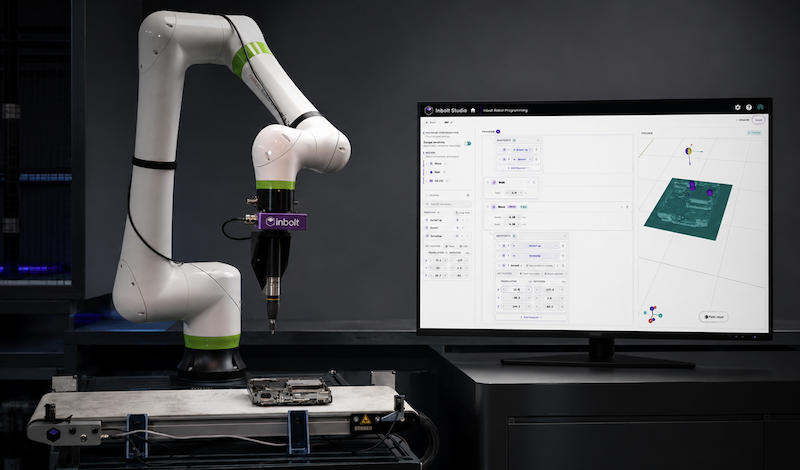
Inbolt to launch vision-enabled robot programming at Automate event
Inbolt, a company specializing in robot intelligence and digital twin technology, is set to unveil two new capabilities aimed at enhancing its AI vision model for robot guidance. The new features, Inbolt Robot Programming and an expanded Inbolt Robot Control, will be showcased at Automate 2026, taking place in Chicago from June 22 to June 25. CEO and co-founder Rudy Cohen emphasized that these advancements are integral to the company's mission of advancing live robot control through innovative AI solutions.
Events Industrial robots Software adaptive manufacturing ai robotics Automate 2026
ABB and Salzburg researchers patent AI system to cut energy use in industrial robots
Salzburg University of Applied Sciences has partnered with ABB’s Machine Automation Division, B&R, to enhance energy efficiency in industrial automation through the application of artificial intelligence. This collaboration is centered at the Josef Ressel Center for Intelligent and Secure Industrial Automation (JRZ ISIA), where the two entities aim to translate cutting-edge research into viable solutions for industrial drive systems. By leveraging AI technologies, the initiative seeks to optimize energy consumption and improve operational efficiency in manufacturing processes, addressing the growing demand for sustainable industrial practices.
Industrial robots News abb ai in manufacturing AI optimization automation news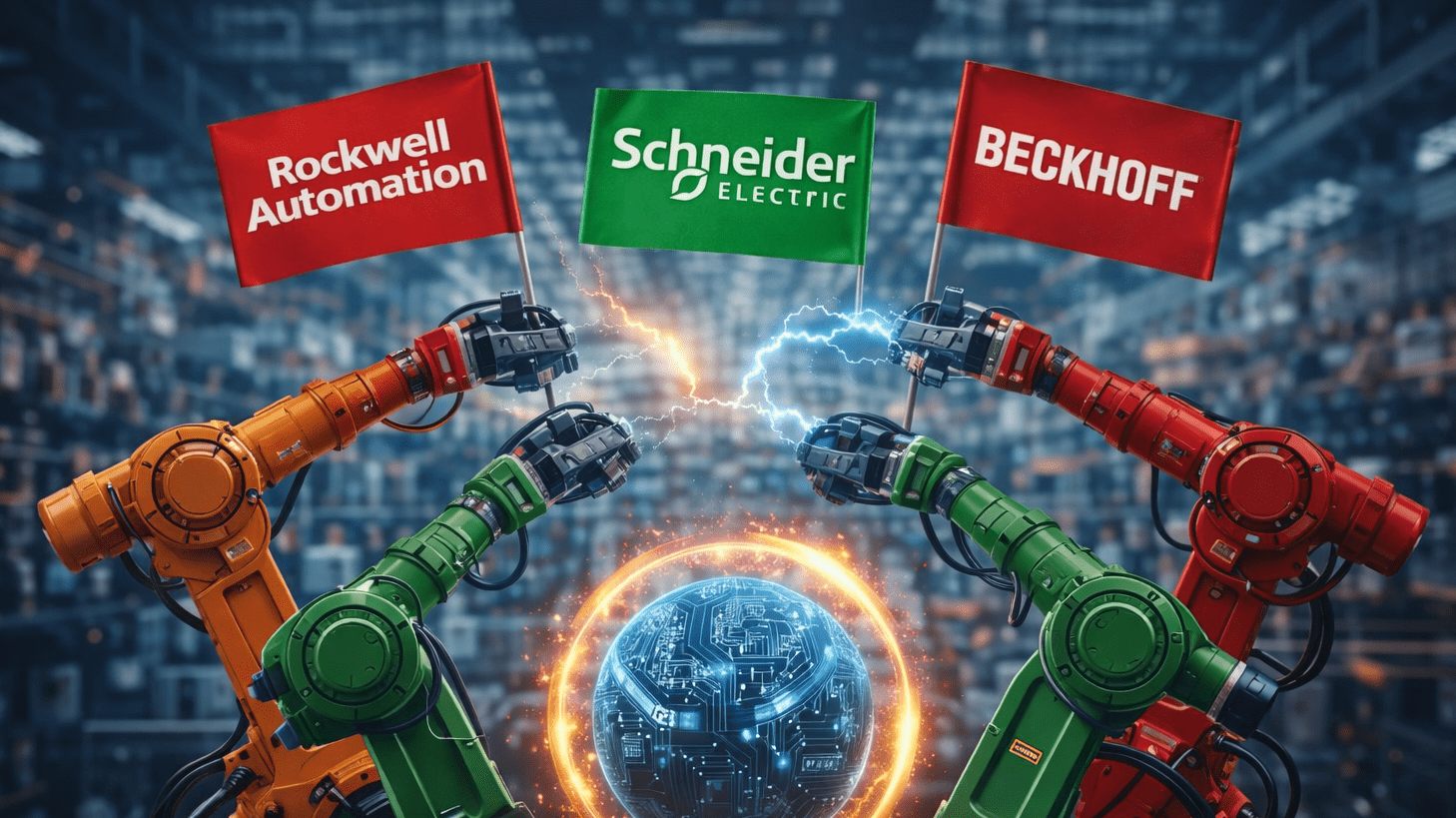
Rockwell, Schneider, Beckhoff : La Guerre des architectures industrielles
In the context of Industry 4.0, the selection of an automation architecture has evolved into a strategic decision that will impact the scalability, cybersecurity, and software agility of manufacturing plants for the next two decades. Rockwell Automation represents the pragmatic strength of the North American approach, while Schneider Electric emphasizes software openness. This shift highlights the growing importance of architecture choices in the industrial sector, as companies navigate the complexities of modern manufacturing environments. The discussion surrounding these architectural strategies underscores the competitive landscape among industry leaders.
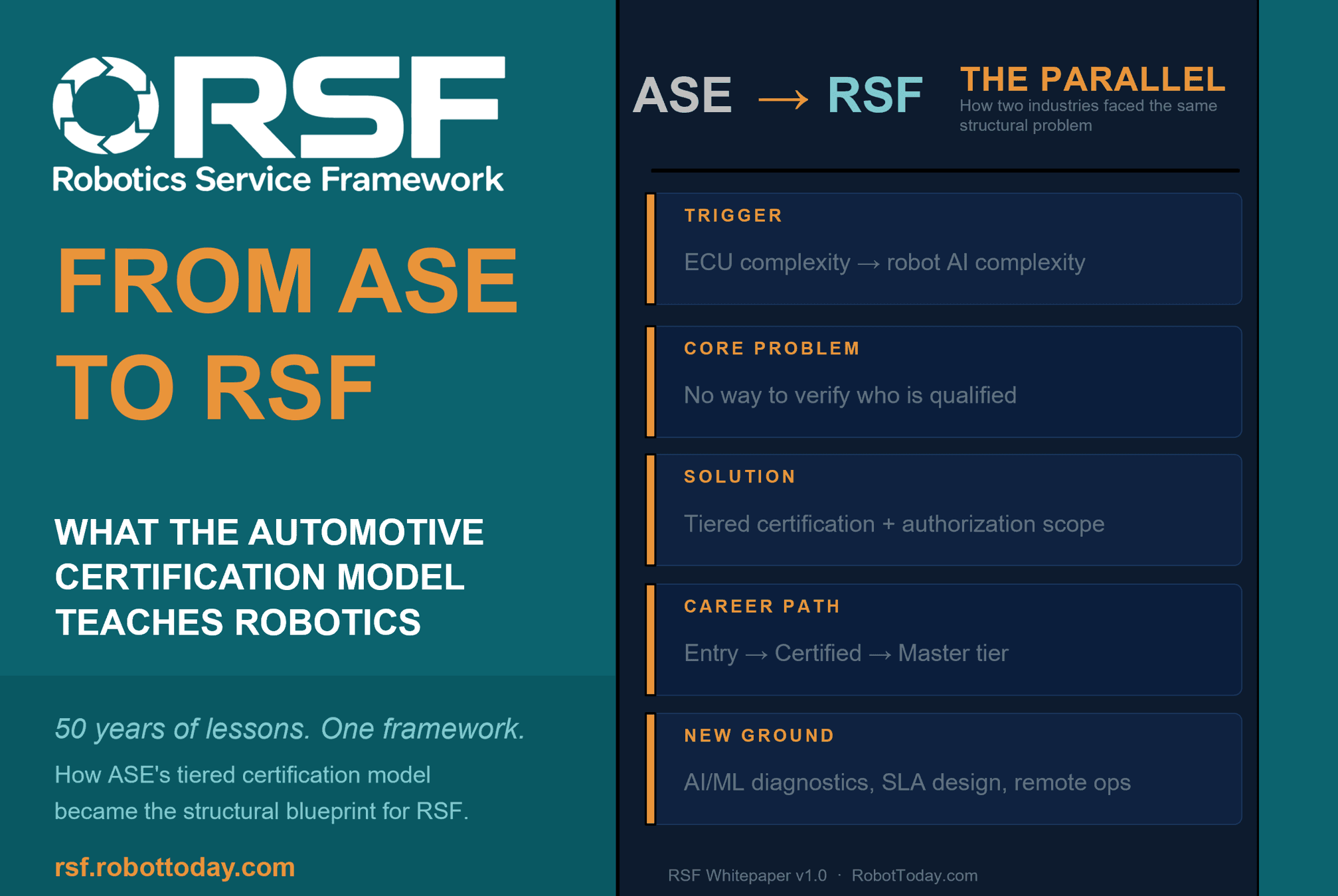
À la une Actualités IA Industriel Robotique Architecture IndustrielleRobotics needs a service framework.
RSF defines a common language for robot service capability, lifecycle operations, certification pathways, and service-provider networks.