Industry Briefing
A single destination for timely, editor-curated robotics news from around the world.
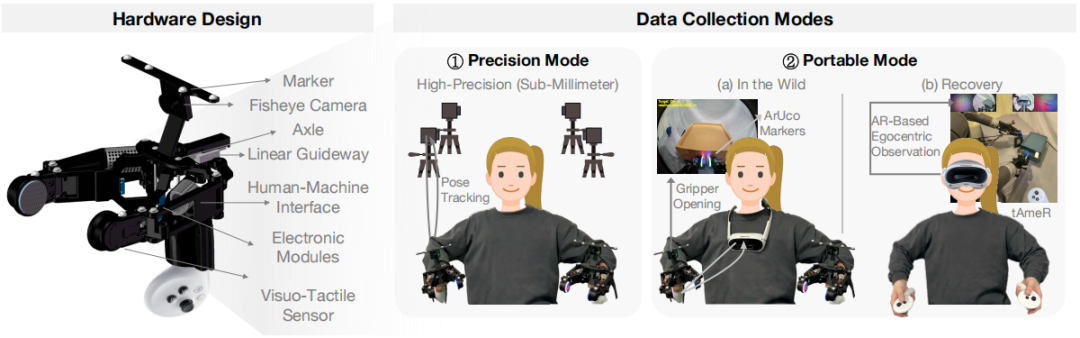
Sub-Millimeter Tactile Control and 100% Reproduction! HKU and Fudan University Launch TAMEn to Solve Data Collection Challenges for Dual-Handed Robots
Researchers from the University of Hong Kong (HKU), in collaboration with Fudan University and other institutions, have unveiled the TAMEn tactile perception manipulation engine. This innovative technology is designed to tackle significant challenges associated with dual-handed robotic tasks. By seamlessly integrating visual and tactile data collection, the TAMEn engine enhances the precision and adaptability of robots, enabling them to perform complex manipulation tasks more effectively. The development of this engine marks a significant advancement in robotics, potentially transforming how robots interact with their environment and improving their functionality in various applications.
Tactile Robotics Dual-Handed Manipulation Data Collection Technology Robotics Research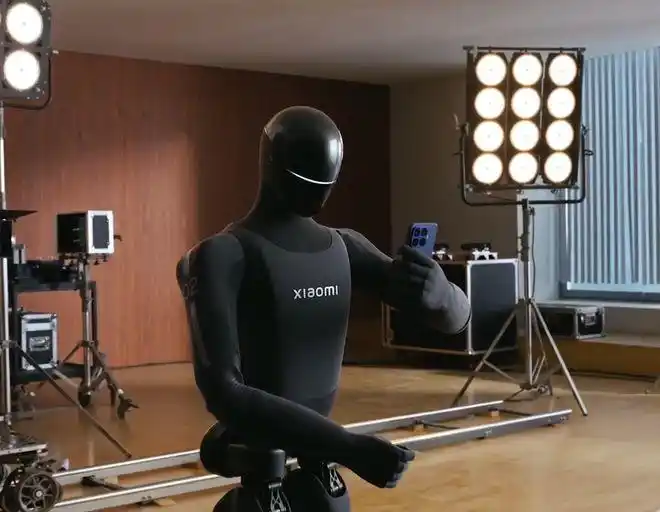
"Stealing the Spotlight from the Smartphone Launch! Behind CyberOne's One-Handed Photography, Xiaomi's Robot Claims 'Dual Champion'"
Xiaomi has made headlines with its latest innovation, CyberOne, a robot that boasts advanced one-handed photography capabilities. This announcement coincided with the launch of the company's new smartphone, showcasing the tech giant's commitment to pushing the boundaries of robotics and mobile technology. The event took place recently in Beijing, where Xiaomi unveiled its dual champion, highlighting the robot's unique features that set it apart in the competitive landscape of artificial intelligence and consumer electronics. The introduction of CyberOne aims to enhance user experience by integrating sophisticated photography functions into a robotic platform, catering to the growing demand for innovative tech solutions. By leveraging cutting-edge technology, Xiaomi seeks to capture the attention of both consumers and industry experts, positioning itself as a leader in the rapidly evolving market. The launch event not only emphasized CyberOne's capabilities but also served as a strategic move to shift focus from the smartphone launch, demonstrating Xiaomi's ambition to diversify its product offerings and engage with a broader audience. As the company continues to explore the intersection of robotics and everyday technology, the implications of CyberOne's introduction could reshape consumer expectations and inspire future developments in the field.
Robotics Automation AI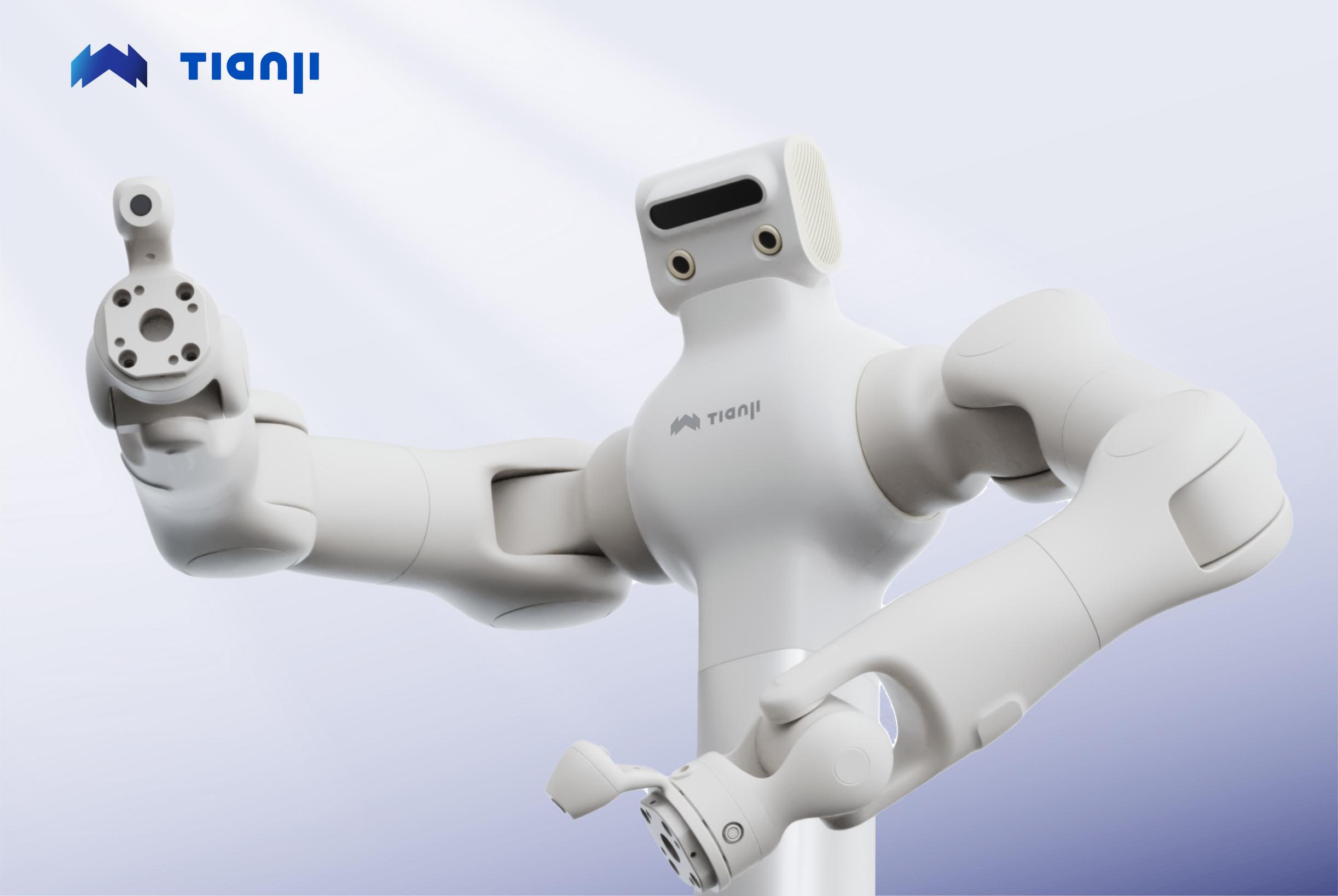
Tianji Intelligent: Defining Industry Standards for Force Control Humanoid Dual Arms and a New Generation of Embodied Intelligent Platforms
Tianji Intelligent is set to revolutionize the humanoid robotics industry with the introduction of the world's first force control humanoid arms in 2024, followed by dual arms in 2025. This groundbreaking development is driven by the company's commitment to enhancing precision and performance in robotics. Utilizing innovative MEMS force sensors and advanced dual-arm coordination technology, Tianji Intelligent aims to establish new standards in the field. The launch is anticipated to significantly impact various applications, showcasing the potential of humanoid robots in industries requiring intricate manipulation and interaction.
Force Control Robotics Humanoid Robots Industrial Automation AI Technology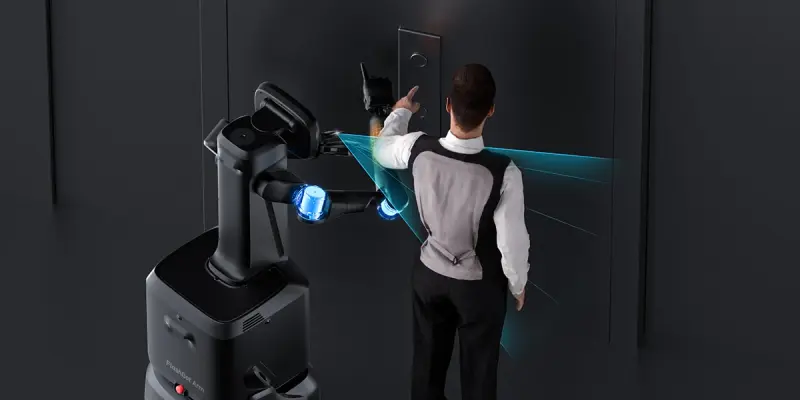
Video: Pudu Robotics Equips Delivery Bot with Dual Arms in New FlashBot Arm
Pudu Robotics has unveiled its latest innovation, the FlashBot Arm, a cutting-edge service robot that features dual seven-degree-of-freedom arms and dexterous hands mounted on a mobile delivery base. This advanced robot is engineered to perform a variety of tasks, including operating elevators and opening doors, thereby enhancing its functionality in diverse service environments. The introduction of the FlashBot Arm signifies a significant step towards integrating autonomous navigation with sophisticated manipulation capabilities, allowing for greater versatility in settings such as hotels, hospitals, and restaurants. By combining these technologies, Pudu Robotics aims to improve efficiency and service delivery in industries increasingly reliant on automation.
pudu robotics flashbot arm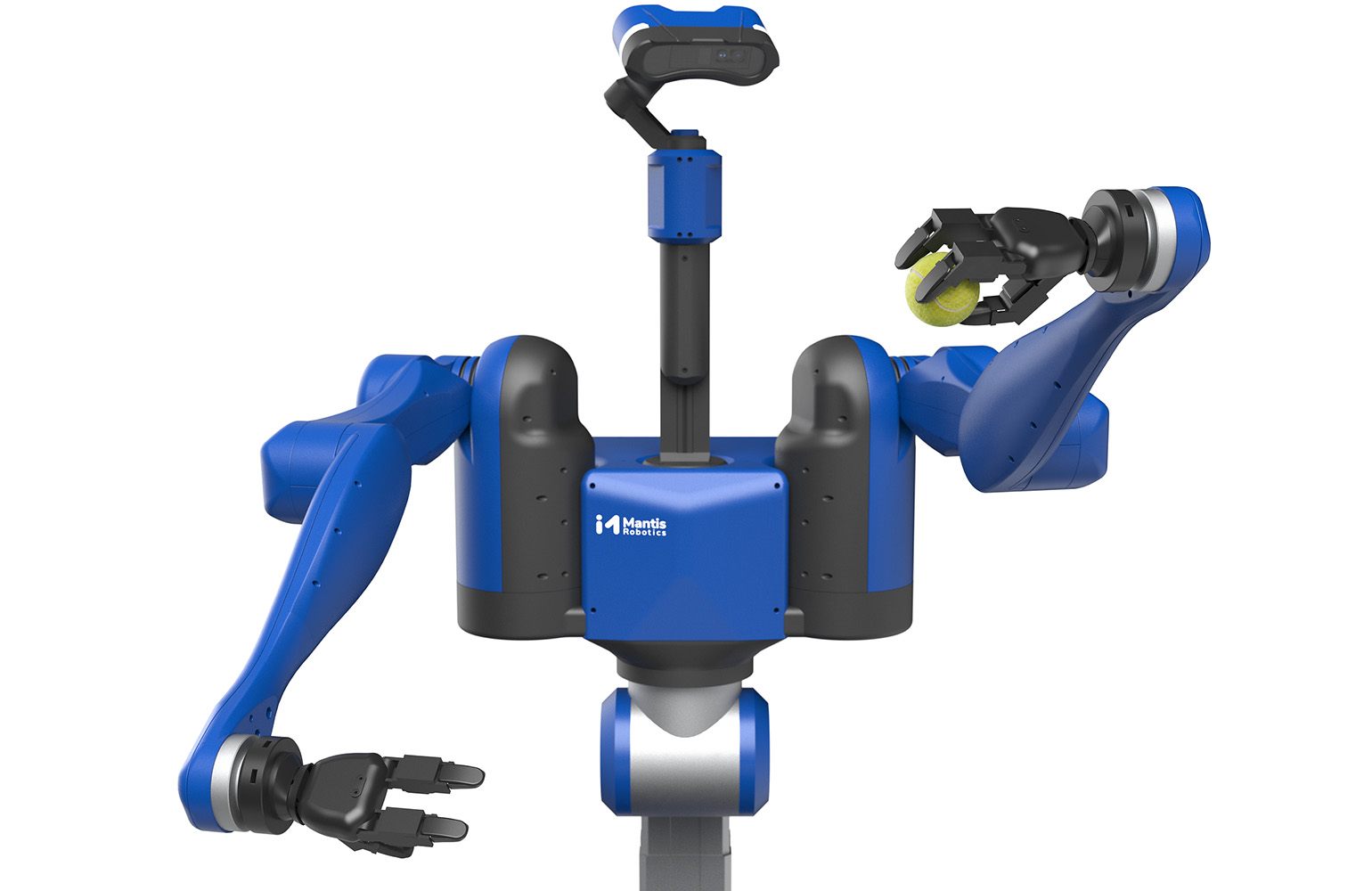
Mantis Robotics launches dual-arm, fenceless robot
Mantis Robotics has introduced a groundbreaking dual-arm, fenceless robot designed to enhance automation flexibility in intricate real-world settings. This innovative technology aims to address the challenges of configuring automation systems in environments that require adaptability and precision. The launch of this robot marks a significant advancement in robotics, as it allows for more versatile applications across various industries. Mantis Robotics emphasizes that this new solution can transform how businesses approach automation, enabling them to optimize operations without the constraints of traditional safety barriers.
Artificial Intelligence Artificial Intelligence / Cognition Cobot Arms Collaborative Robots Design / Development News
Elephant trunk skin’s dual-zone design offers blueprint for advanced robotic grippers
An elephant's trunk, a remarkable adaptation of the species, showcases its strength and versatility as it can effortlessly transport heavy logs across open spaces. This impressive ability not only highlights the physical prowess of elephants but also serves a crucial role in their daily activities, such as foraging and building shelters. Observations of these behaviors contribute to a deeper understanding of elephant intelligence and their interactions with the environment. The trunk's dexterity allows elephants to manipulate objects with precision, demonstrating their complex problem-solving skills and social behaviors. As researchers continue to study these magnificent creatures, they uncover insights into their ecological impact and the importance of preserving their habitats.
AI and Robotics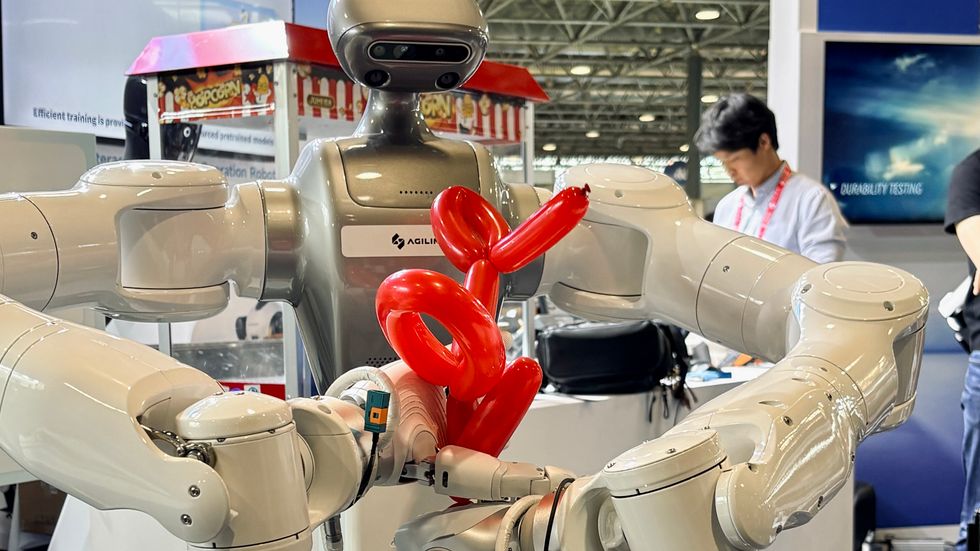
Beyond Dexterity: Why Contact May Define the Next Era of Robotics
At the 2026 IEEE International Conference on Robotics (ICRA) in Vienna, AGILINK showcased a captivating demonstration of robotic dexterity by creating a balloon dog, which drew significant attention from attendees. This seemingly playful task is recognized in the robotics community as a complex manipulation challenge due to the balloon's lightweight and highly deformable nature. The demonstration highlighted the intricate balance between motion and contact intelligence, essential for successful robotic manipulation. AGILINK's approach involved mapping the actions of professional balloon artists to robotic hands, allowing the robot to learn both successful manipulation sequences and recovery strategies during failures. This dual focus on motion and contact intelligence is crucial, as maintaining stable interaction with the balloon is as important as executing the correct sequence of actions. In conjunction with the balloon dog demonstration, AGILINK introduced the OmniHand 3 Ultra-M, a dexterous robotic hand designed to enhance contact intelligence through advanced sensing and faster response capabilities. The hand features 20 active degrees of freedom and a direct-drive architecture, enabling precise force regulation and tactile sensing across its surface. The significance of these advancements extends beyond balloon animals, addressing broader challenges in robotics related to unstable and deformable interactions, such as delicate assembly and household tasks. As robotics research increasingly prioritizes interaction dynamics, AGILINK's innovations may pave the way for more effective manipulation in unpredictable real-world environments.
Humanoid-robots Physical-ai Dexterous-hands Direct-drive-actuation Robotic-manipulation Reinforcement-learning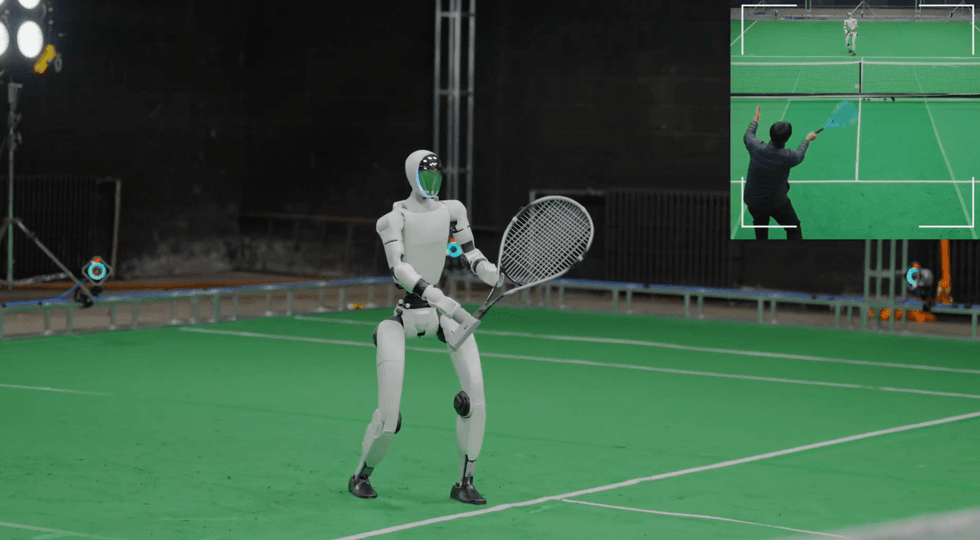
Video Friday: Humanoid Learns Tennis Skills Playing Humans
IEEE Spectrum robotics has released its latest edition of Video Friday, showcasing a variety of innovative robotics videos and announcing upcoming events in the field. Notable events include the International Conference on Robotics and Automation (ICRA) scheduled for June 1-5, 2026, in Vienna, and a Summer School on Multi-Robot Systems from July 29 to August 4, 2026, in Prague. Among the featured advancements, researchers have developed LATENT, a system designed to teach humanoid robots tennis skills by learning from imperfect human motion data. This innovation addresses the challenges of replicating human-like athleticism in robotics. Additionally, a breakthrough has been achieved in robotic manipulation, with a robot successfully peeling an apple using dual dexterous hands, showcasing significant progress in bimanual tasks. The development of MoDE-VLA, a control system that integrates vision, language, force, and touch data, further enhances the robot's ability to perform complex tasks with stability and precision. This shared-autonomy approach allows human operators to guide robots in executing intricate movements. In other highlights, collaborations between Tesollo and Hanyang University have led to advancements in robotic hand technology, while the Fluent Robotics Lab at the University of Michigan is set to present a paper on operational PR2 robots. The KAIST DRCD Lab has also demonstrated the capabilities of its humanoid robot, trained through deep reinforcement learning. As robotics continues to evolve, these innovations reflect the ongoing efforts to bridge the gap between human-like dexterity and robotic functionality.
Humanoid-robots Video-friday Robot-locomotion Nvidia Robot-manipulation Quadruped-robots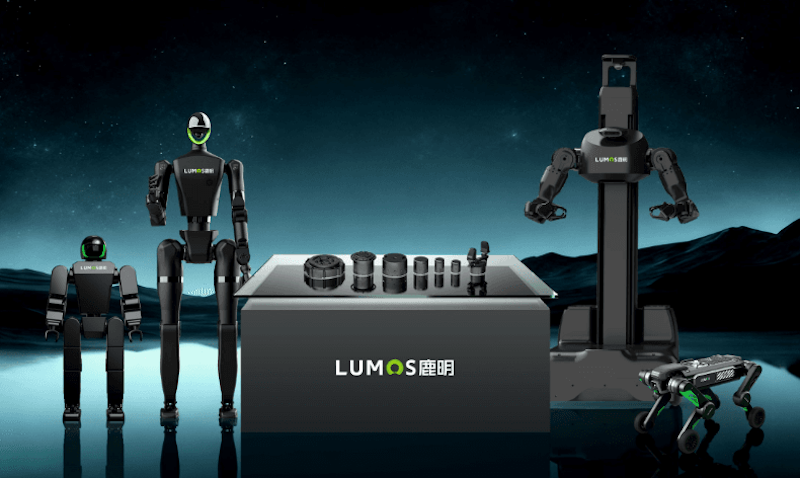
Lumos Robotics tops global benchmark test for zero-shot embodied AI
Lumos Robotics says its Prime R0 industrial embodied AI model has achieved the highest overall score on the latest MolmoSpaces leaderboard, outperforming larger models from competitors including Nvidia and research teams from the United States. The Chinese robotics company said its 2.8-billion-parameter model ranked first across both single-arm fine manipulation and dual-arm collaboration tasks in […]
Artificial Intelligence Computing News Robotics AI models embodied ai
Humanoid Announces its KinetIQ Ascend Reinforcement Learning Approach
A groundbreaking robotic system has demonstrated its effectiveness in various manipulation tasks, including retrieving parts from bins, delivering objects to humans, and lifting and moving containers with its dual arms. This innovative technology was rigorously tested and has shown promising results across multiple scenarios, showcasing its potential for practical applications in industries requiring automation. The trials were conducted recently, highlighting the system's versatility and efficiency in handling complex tasks that typically require human intervention. As industries increasingly seek to enhance productivity through automation, this new robotic solution could play a significant role in transforming operational workflows.

RoboScience launches Visics, a versatile embodied model for cross-ontology, cross-object, and cross-task applications.
On June 24, RoboScience, a company specializing in embodied intelligence, unveiled its self-developed Visics large model, introducing the innovative VLOA (Vision-Language-Object-Action) architecture. This announcement marks a significant advancement in the field, demonstrating the model's applications in real-world scenarios such as furniture assembly, dexterous grasping, and dynamic assembly lines. The current landscape of embodied intelligence lacks a universally accepted foundational representation unit, which hampers data collection, model learning, and the transfer of knowledge to new contexts. Traditionally, models have focused on replicating specific robotic movements tied to particular tasks, limiting their adaptability to new robots, objects, or environments. Founder and CEO Tian Ye highlighted three major challenges in robotic operations: poor generalization, difficulty in precise manipulation, and cumulative errors in long-range tasks. To address these issues, RoboScience has developed a new foundational representation unit from the ground up. The Visics model employs a dual-engine architecture, consisting of an embodied world model and a universal operation model, each operating independently. The embodied world model utilizes vast amounts of internet video data to learn the physical dynamics of objects, while the operation model translates object trajectories into actionable commands for robots. This layered design enhances the model's generalization capabilities across various robotic platforms and tasks. RoboScience's innovative approach also includes a high-precision simulation engine, RoboMirage, which, combined with automated video data annotation, significantly reduces data acquisition costs. The company aims to build a comprehensive dataset of over 1 terabyte of high-quality manipulation trajectories by 2026. Since its inception, RoboScience has garnered support from multiple investors and established research and production centers in major Chinese cities. The company plans to collaborate with various sectors, including retail and logistics, to standardize robotic products for industrial and commercial applications by the end of this year.
Hello Robot is recognized by World Economic Forum as a tech pioneer
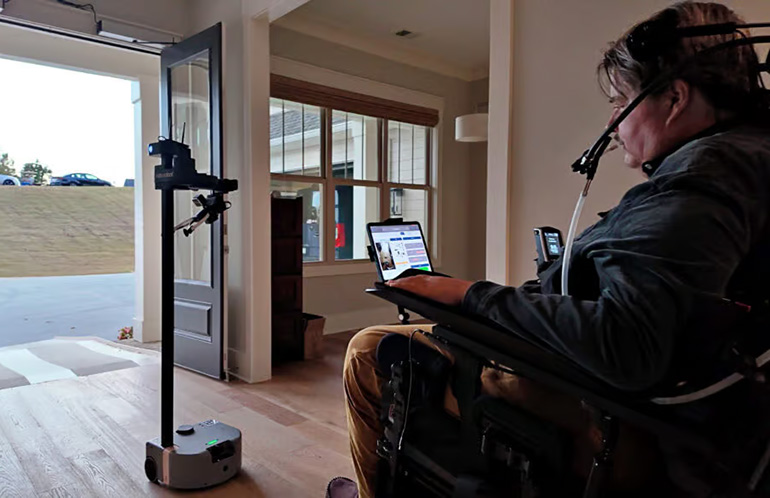
Hello Robot has been recognized as a technology pioneer by the World Economic Forum for its innovative Stretch system, which offers mobile manipulation assistance to older adults and individuals with disabilities. This acknowledgment highlights the company's commitment to enhancing the quality of life for these populations through advanced robotic solutions. The recognition comes as part of the World Economic Forum's initiative to spotlight groundbreaking technologies that address pressing societal challenges.
Autonomous Mobile Robots (AMRs) Healthcare Robotics Human Robot Interaction / Haptics News Assistive Technologies Hello Robot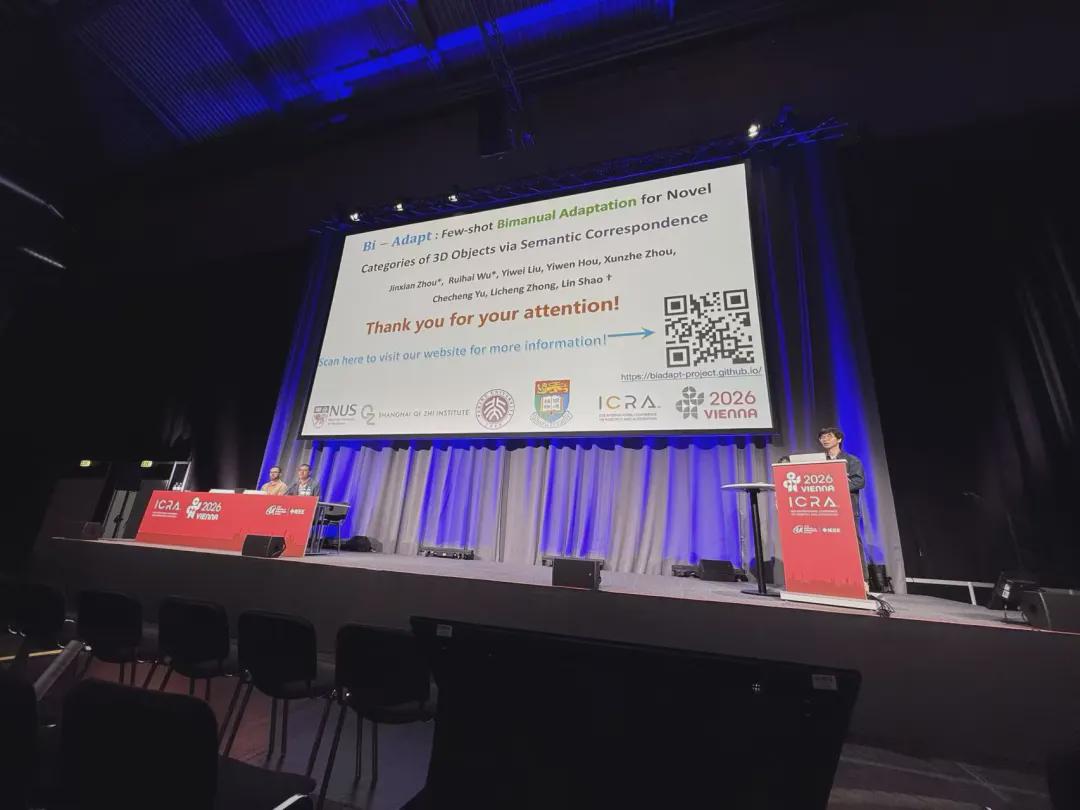
RoboScience Advances Embodied Intelligence Towards the VLOA Era at ICRA
RoboScience is making strides in the field of embodied intelligence with its innovative Vision-Language-Object-Action (VLOA) framework, designed to improve robotic capabilities by enabling robots to predict changes in objects within dynamic environments. The company recently gained notable recognition at the International Conference on Robotics and Automation (ICRA), where it presented groundbreaking research focused on robotic manipulation and dual-arm collaboration. This research aims to tackle the complexities faced in real-world applications, positioning RoboScience at the forefront of advancements in robotics.
Embodied Intelligence Robotic Manipulation Dual-Arm Robotics AI VLOA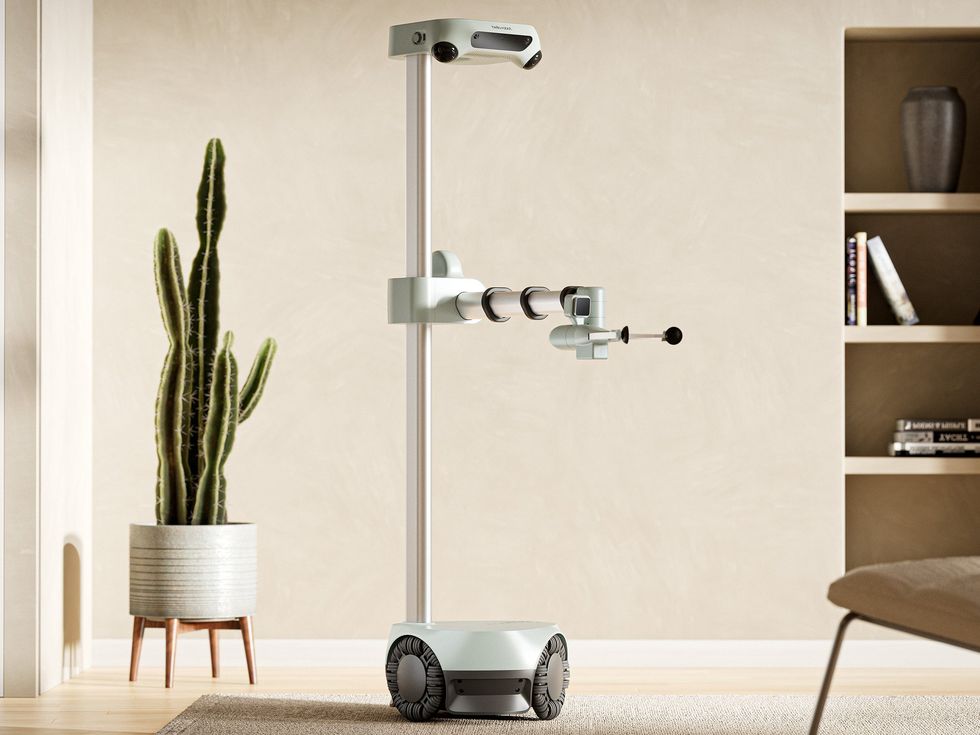
Hello Robot Sets the Standard for Practical, Safe Home Robots
Hello Robot has announced the launch of Stretch 4, a new version of its mobile robot designed for practical household tasks. This announcement comes as the company aims to transition from research-focused robotics to a deployable solution for home use, particularly for individuals with severe mobility impairments. The unveiling took place today, with the robot's design emphasizing mobility and manipulation over humanoid features. Stretch 4 features an advanced omnidirectional base allowing it to move in any direction, enhancing user control. The robot is equipped with a sophisticated sensor suite for improved navigation and autonomy, including cameras and lidar technology. Co-founders Aaron Edsinger and Charlie Kemp highlighted the challenges faced during the design process, aiming to avoid overcomplicating the robot while ensuring it meets real-world needs. The robot is intended for pilot deployments in homes, with the goal of gathering data to refine its capabilities for everyday use. Unlike humanoid robots, which may not effectively serve individuals with disabilities, Stretch 4's wheeled design is seen as more practical and safer for home environments. Priced at $29,950, Stretch 4 is positioned as an affordable option in the mobile manipulation market, with plans for further development leading to a commercially viable assistive robot in the near future.
Hello-robot Home-robots Humanoid-robots Mobile-manipulator Mobility-impaired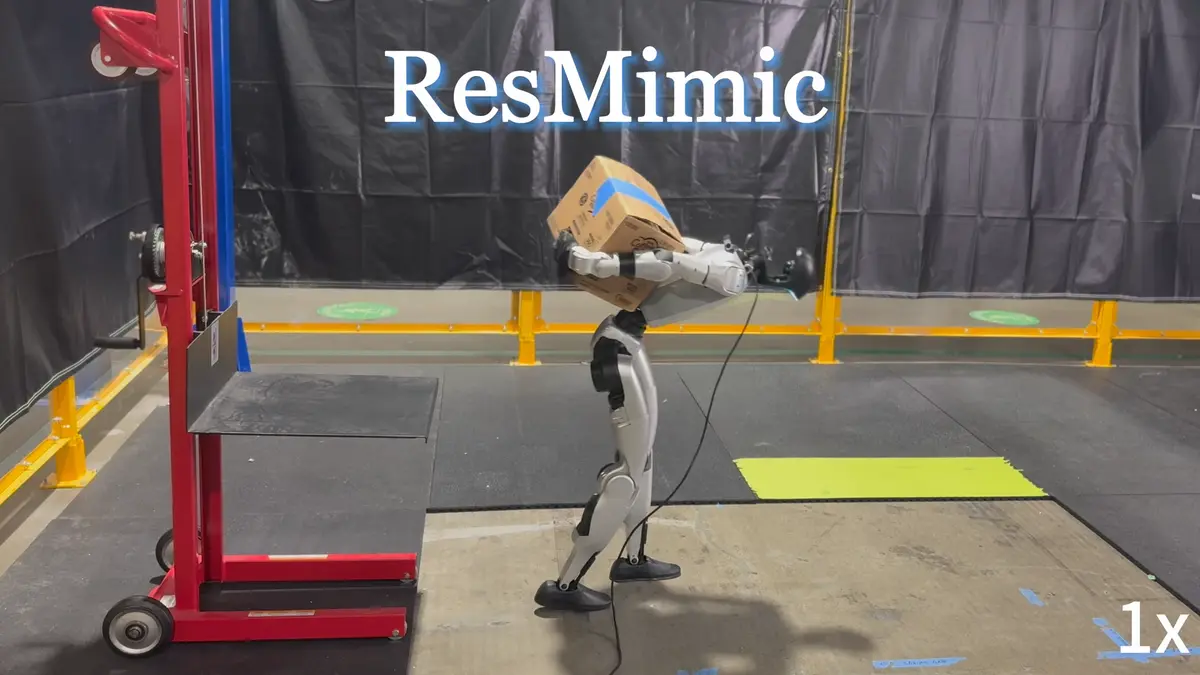
Amazon's ResMimic Teaches Humanoids to Handle Objects by Adding Precision to General Motion
Amazon has unveiled its latest robotics initiative, ResMimic, which aims to enhance the capabilities of humanoid robots in performing complex loco-manipulation tasks. This innovative project employs a two-stage residual learning framework that allows for the efficient teaching of these skills. By refining a general motion policy with specific corrections tailored to individual tasks, the system empowers a Unitree G1 robot to adeptly manage heavy and irregular objects with remarkable precision. This development is part of Amazon's ongoing efforts to advance robotics technology and improve automation processes in various applications.
reinforcement-learning Unitree Robotics AI Amazon robotics
Japan Pioneered Humanoid Robots—Can It Now Catch China?
“In the future, the relationship between humans and robots will deepen, and the distinction between them will probably disappear.” This prediction, from one of the attendees at the recent Humanoids Summit in Tokyo, might have been unremarkable had it not come directly from an android that was first introduced to the world 20 years ago. Geminoid HI-6 is the sixth-generation of a robot originally designed in 2006. The mechanical twin of Osaka University professor Hiroshi Ishiguro, Geminoid HI-6 is now equipped with a large language model trained on Ishiguro’s own writings and interviews. It has advanced conversational skills and can even have a chat with its creator, an eerie spectacle. But at the Humanoids Summit, Geminoid was one of the few humanoid robots from Japan, the country that pioneered the form factor.While the event in Tokyo only had about 40 robots on display, Chinese systems outnumbered Japanese by roughly three to one. Some Japanese robotics firms were even using Chinese robots in their own technology demonstrations, something that would have been unthinkable in the recent past—one Japanese engineer described the situation as “sad.” The conference was a stark reminder of how Japan has ceded its early lead in humanoid robot development to overseas competitors, and the challenge it now faces to secure a place in an ecosystem increasingly dominated by general-purpose robots powered by AI. Twenty-five years ago, Japan was turning out groundbreaking humanoids that were showstopping in their abilities, but they were not commercialized as practical machines in any meaningful way. Heavily influenced by science fiction and lacking practical applications, they were mostly expensive technology demonstrations that were eventually mothballed. What Japan retains, however, is robotics design and know-how, which it must leverage to be a key player in the rapidly evolving humanoid ecosystem. Learning to Walk—Then Standing StillTo anyone who has seen recent videos of Chinese humanoids doing kung-fu and synchronized acrobatics, as well as half-marathon races, China’s remarkable progress in the field is nothing new. At the Humanoids Summit, Toyota showed a video of its latest basketball-playing robot, and Honda exhibited its latest robot hand, but the full-scale humanoids on the floor were mostly Chinese–the kid-size K1 machines from Booster Robotics of Beijing were dancing to Michael Jackson tunes. The full-scale G1 humanoid from Unitree Robotics of Hangzhou was also doing demos. “You cannot sell these bipedal systems in Japan for safety and compliance reasons,” says Shuichi Nagao, a frequent visitor to China as CTO of Omakase Robotics, a division of Zeals, a Japanese humanoid robot developer. Omakase was exhibiting a G1 modified with an external PC controller, a dextrous hand, a suction-cup manipulator and a sensor “hat” with an extra speaker, mic and camera. “In China, the government is pushing humanoid development. They didn’t have an industry 20 years ago. The people pushing it are young, in their 20s and 30s. It’s a really different mentality out there,” says Nagao. “Big players in Japan are still looking for use cases for humanoids. In China, they’re already doing mass production and reducing the cost, so other countries can’t compete with them anymore.”Another Japanese company showing off G1 bots was summit sponsor GMO AI & Robotics, a subsidiary of Japanese internet company GMO. It’s using the robots in partnership with Japan Airlines to load and unload cargo containers at Tokyo’s Haneda airport. The cargo project is a trial—like many other humanoid experiments—but the fact that Chinese machines have penetrated so far into Japan’s ecosystem upends a long history. In 1973, scientists at Waseda University in Tokyo built WABOT-1, considered the first full-scale humanoid robot and capable of slow bipedal locomotion, grasping objects and simple communication. It inspired Honda’s groundbreaking Asimo humanoid, but it was never commercialized. Asimo was eventually retired in 2022, the year ChatGPT was released. Two years later, Unitree’s G1 went on sale for US $16,000. China’s High Torque Technology Co. showed off its Mini Pi biped, customized with an anime-inspired head, at Humanoids Summit in Tokyo. The regular version is priced at $3,500. Tim HornyakSupply and DemandJapan’s development of humanoids happened before practical applications or widespread demand were in place, but bad timing is only part of the story—Japan also has a history of developing technologies that might appeal to domestic consumers but not necessarily those overseas. For example, decades after they first appeared, its highly engineered, multifunction toilets have only recently found a following abroad. Japan’s humanoid prowess was partly built on the back of its legendary industrial automation, yet even that stronghold has eroded. Ani Kelkar, a partner from McKinsey & Company in Boston who produces analytical reports about the robotics industry, told the summit audience that while Japan occupied the top spot in the world in manufacturing robot density (the number of multipurpose industrial robots in operation per 10,000 employees) from at least 1994 to 2009, it then slipped to second in 2014, third in 2019 and fifth in 2024. In that year, South Korea was at the top of the leaderboard with a robot density of 1,220 compared to Japan’s 446. The International Federation of Robotics estimates China now has the most operational industrial robots in the world, with around 2 million total units, approximately 4.5 times more than Japan. “The annual installation numbers are impressive too: 54 percent of all robots installed worldwide in 2024 were deployed in China,” the IFR said in a release in April 2026. “I think the loss of Japanese leadership is more to do with the rise of China as a manufacturing powerhouse including for sectors that Japan had high export levels,” Kelkar said in an email interview. “The recovery has not yet happened as Japan ‘missed’ the rapid acceleration in AI for robotics and is now playing catchup.”How Japan Can Adapt Kelkar believes Japan has a US $100 billion opportunity in general-purpose robotics, which are machines that can perform a wide variety of tasks, and it cannot rely on the slower-growing industrial robot market, which is centered on factory machines that do one simple and predictable task like welding car parts. He points to a McKinsey white paper suggesting that while Japan has much of the hardware and technology experience needed to support general purpose robot development, it must change its strategy to capture more share in AI, software, data collection and robotics platforms.Tetsuya Ogata is a professor of engineering and director of the Institute for AI and Robotics at Waseda University, the birthplace of humanoids in Japan. He briefed the summit on how a nonprofit he chairs, the AI Robot Association (AIRoA), is working with Toyota and other members to develop foundational technologies for collaborative use. For instance, AIRoA has collected some 80,000 hours of data on remote operation of mobile manipulators, and Ogata believes it’s the largest dataset of its kind. Using the data, it built and verified Vision-Language-Action (VLA) models, and it has also started data collection for dual-arm mobile manipulation. In an interview, Ogata acknowledged Japan’s struggle to find its place in the changing landscape. “The world of AI is inherently a game of scale,” says Ogata. “Therefore, Japan’s absolute prerequisite is to secure a competitive baseline of scale—in data, computing resources, and talent. Beyond that, what I consider most critical is a mindset shift: rather than trying to hoard scale within a single nation or company, we must grow stronger by collaborating with a diverse ecosystem of domestic and international players.” Specifically, this means creating a ‘collaborative domain’ to address data—the single biggest bottleneck—through industry-wide cooperation rather than data-siloing. By collectively nurturing a pre-competitive, shared data infrastructure and foundation model, individual companies can then compete on top of it with their own applications. “By offering this open ‘data ecosystem’ to the world, we can engage global players and establish a ‘third pole’ alongside the US and China,” says Ogata. “I believe this is how Japan can reclaim its global presence.”In 1999, Japan introduced the world’s first mobile internet services platform. But being first didn’t turn Japan into a smartphone manufacturing or design center—it’s now merely a supplier of parts to other countries who are leading the smartphone industry. If Japan can avoid a repeat of that experience and successfully deregulate, diversity, and commercialize its original humanoid dreams, it stands a better chance of influencing the direction of the industry and reaping billions in value. As automobiles and electronics were pillars of Japan’s industrial strategy in the last century, Japan could make humanoid robots one of its key value generators in the 21st century, an approach that would not only deliver economic benefits but give Japan greater clout in how the industry will evolve. Just like Japanese cars, electronics, and even toilets, Japanese humanoids could stand for craftsmanship and reliability. It’s a legacy that Japan can’t afford to give up.
Japan Robotics Humanoids Humanoid-robots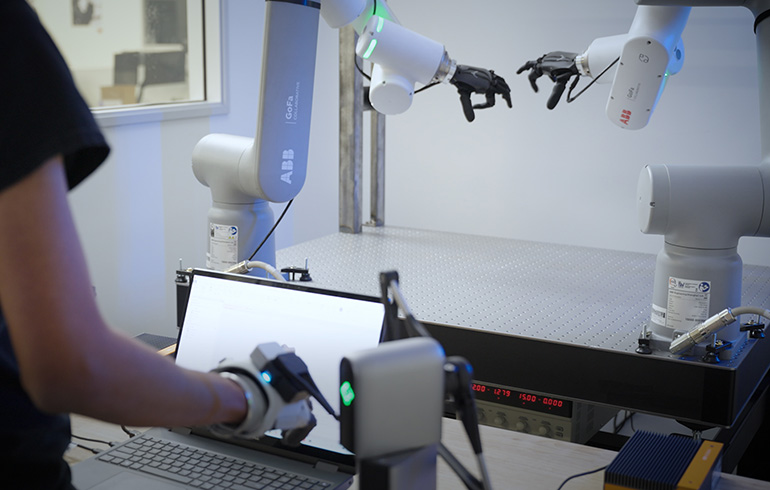
PSYONIC partners with ABB Robotics to apply human touch to robot dexterity
PSYONIC has announced a collaboration with ABB Robotics to enhance robotic dexterity by integrating its Ability Hand prosthetic with ABB's GoFa collaborative robot arm. This partnership aims to leverage data collected from prosthetic users to improve the robot's grasping capabilities, effectively mimicking human touch. The initiative underscores the growing intersection of robotics and prosthetics, with the goal of creating more intuitive and responsive robotic systems. The collaboration reflects a commitment to advancing technology that not only aids individuals with disabilities but also enhances the functionality of robotic devices in various applications.
Arms / Manipulators Artificial Intelligence Automotive Cobot Arms Collaborative Robots End Effectors / Grippers
Simple color cue helps people master prosthetic devices faster
Researchers have highlighted the complexities involved in controlling robotic arms, prosthetic hands, and rehabilitation devices, emphasizing the challenges of precision in tasks such as picking up an egg. The study, which draws on data up to October 2023, illustrates that achieving the right amount of force is critical; insufficient pressure can lead to dropping the object, while excessive force risks breaking it. This research aims to improve the functionality and usability of assistive technologies, ultimately enhancing the quality of life for individuals relying on these devices. By refining control mechanisms, the team seeks to make these technologies more intuitive and effective for users in everyday situations.
Robotics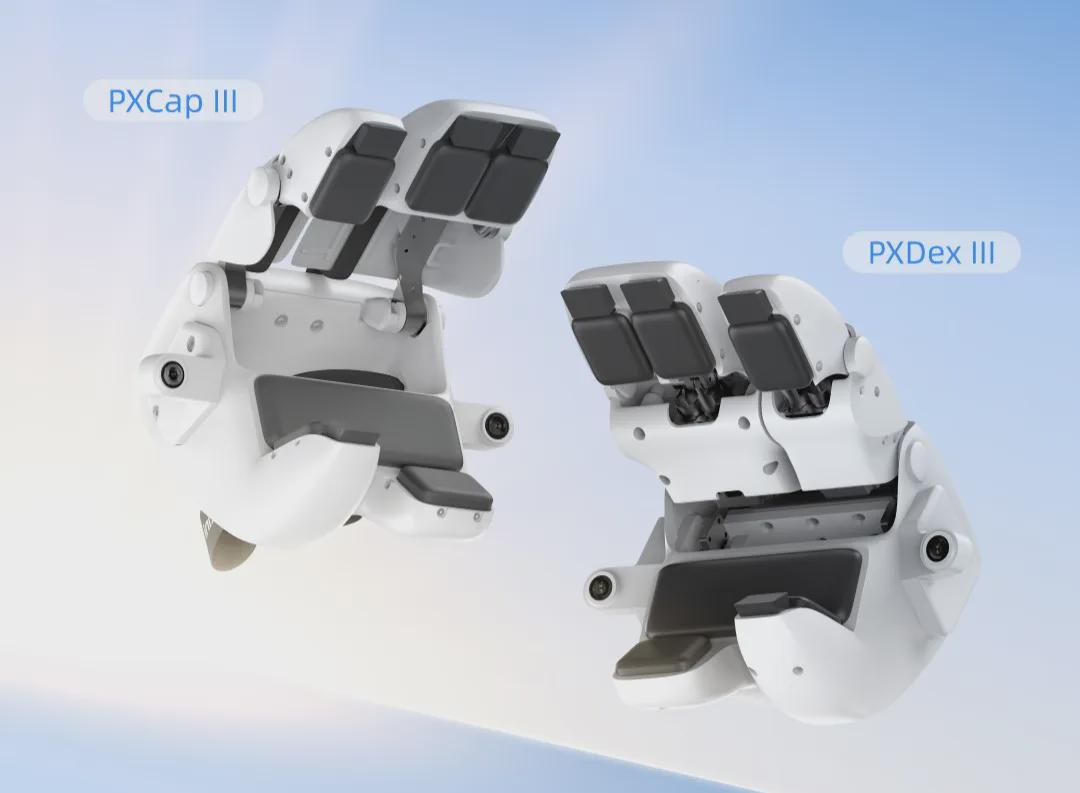
PaXini Launches World's First Mass-Produced Data Collection and Execution System PXCap III × PXDex III
PaXini has introduced its latest technological advancements, the PXCap III data collection gloves and the PXDex III execution end-effector, which together represent a significant leap in the integration of data capture and robotic execution. This innovative dual-end system aims to improve data quality for embodied intelligence by addressing the persistent structural discrepancies that have historically existed between data collection devices and robotic execution. The launch of these products is expected to facilitate the seamless deployment of high-quality data, enhancing the efficiency and effectiveness of robotic applications.
Data Collection Robotic Systems Embodied Intelligence Sensor Technology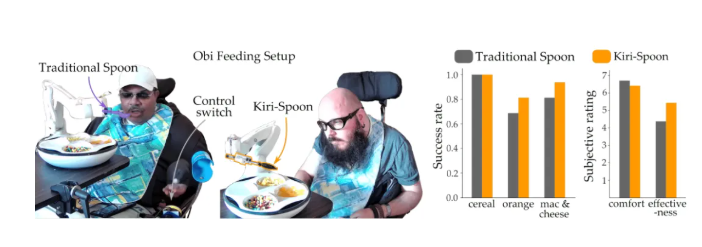
Top Journal IJRR | Scientists Create a Spoon That 'Embraces' Food to Assist Eating Robots
Researchers from Virginia Tech and Cornell University have unveiled the Kiri-Spoon, a groundbreaking eating utensil tailored for assistive robots. This innovative spoon, inspired by the intricate art of Kirigami, features a unique design that allows it to change shape, enabling it to securely grasp various types of food. The development aims to enhance the feeding experience for individuals with mobility challenges, making mealtime more accessible and manageable. The Kiri-Spoon represents a significant advancement in assistive technology, addressing the needs of those who require support during meals.
Assistive Robotics Eating Assistance Robotic Utensils Healthcare Technology
20 High-Degree of Freedom Dexterous Hands Now Available for Just 9,998 Yuan! Exclusive Insight into the Underlying Logic of Interstellar Lightyear's Scalable Implementation
Interstellar Lightyear is transforming the dexterous hand industry with its innovative dual-engine product strategy, which incorporates cutting-edge tendon-driven technology. The company has recently introduced the Gaia Hand 20, a cost-effective option aimed at developers that prioritizes modular design and accessibility. In contrast, the Pantheon Hand is designed to demonstrate advanced capabilities, catering to more specialized applications. This strategic approach not only enhances the functionality of robotic hands but also makes them more accessible to a broader range of users, potentially revolutionizing the field of robotics.
Dexterous Hands Robotics Technology Modular Design Tendon-Driven SystemsRobotics needs a service framework.
RSF defines a common language for robot service capability, lifecycle operations, certification pathways, and service-provider networks.