

Industry Briefing
A single destination for timely, editor-curated robotics news from around the world.

Design of Tentacle Structure and Dynamic Parameters for a Biomimetic Jellyfish Robot and Investigation on Its Propulsion Performance
A recent study published in the Journal of Field Robotics highlights advancements in autonomous robotics, focusing on their applications in various fields such as agriculture, search and rescue, and environmental monitoring. Conducted by a team of researchers from leading universities, the study was released in early October 2023. The research aims to address the growing demand for efficient and reliable robotic systems that can operate in unpredictable environments. By integrating advanced machine learning algorithms and sensor technologies, the team demonstrated how these robots can navigate complex terrains and perform tasks with minimal human intervention. The findings underscore the potential for autonomous robots to enhance productivity and safety in critical operations, particularly in areas that are hazardous for human workers. The study emphasizes the importance of continued innovation in robotics to meet the challenges posed by climate change and population growth. As the field of robotics evolves, the researchers advocate for collaboration between academia and industry to accelerate the development and deployment of these technologies. The implications of this research could significantly impact various sectors, paving the way for smarter, more adaptable robotic solutions in the near future.
RESEARCH ARTICLE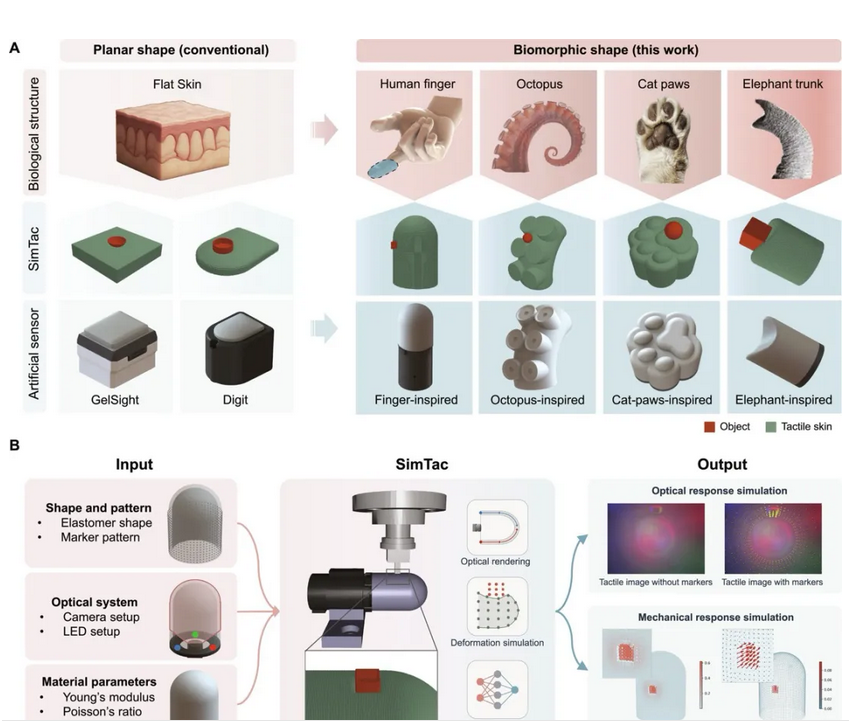
SimTac: A Tactile Sensor Simulator That Shortens Biomimetic Robot Design Cycles
A collaborative team from King's College London and various institutions has unveiled SimTac, an innovative simulation platform designed to revolutionize the development of robotic tactile systems. This groundbreaking tool allows researchers and engineers to create tactile sensors in any biomimetic shape, facilitating virtual testing of tactile responses. By streamlining the design and training processes, SimTac significantly reduces the time required to develop these advanced robotic systems. The platform aims to enhance the efficiency and effectiveness of tactile sensor design, ultimately advancing the field of robotics.
Tactile Sensors Robotics Simulation Technology Biomimicry
Biomimetic Design and Performance Analysis of a Magnetic H‐Shaped Microrobot
A recent study published in the Journal of Field Robotics highlights advancements in autonomous robotic systems designed for agricultural applications. Researchers from various institutions collaborated to develop innovative technologies aimed at improving efficiency in crop management. The findings, released in early October 2023, emphasize the growing need for sustainable farming practices amid increasing global food demands. The study showcases how these robotic systems can enhance precision in tasks such as planting, monitoring, and harvesting crops. By integrating artificial intelligence and machine learning, the robots are capable of analyzing environmental conditions and making real-time adjustments to optimize yield. This technological evolution is driven by the urgent need to address labor shortages in agriculture and the rising costs associated with traditional farming methods. Field tests conducted in diverse agricultural settings demonstrated the robots' effectiveness in reducing resource consumption while increasing productivity. The research team believes that widespread adoption of these autonomous systems could significantly transform the agricultural landscape, promoting sustainability and resilience in food production. As the agricultural sector faces unprecedented challenges, this study underscores the potential of robotics to revolutionize farming practices, ensuring food security for future generations.
RESEARCH ARTICLERobotics needs a service framework.
RSF defines a common language for robot service capability, lifecycle operations, certification pathways, and service-provider networks.
Join the RobotToday community on LinkedIn
Daily robotics news, in-depth analysis, conference highlights, and discussions with professionals worldwide.







