Industry Briefing
A single destination for timely, editor-curated robotics news from around the world.
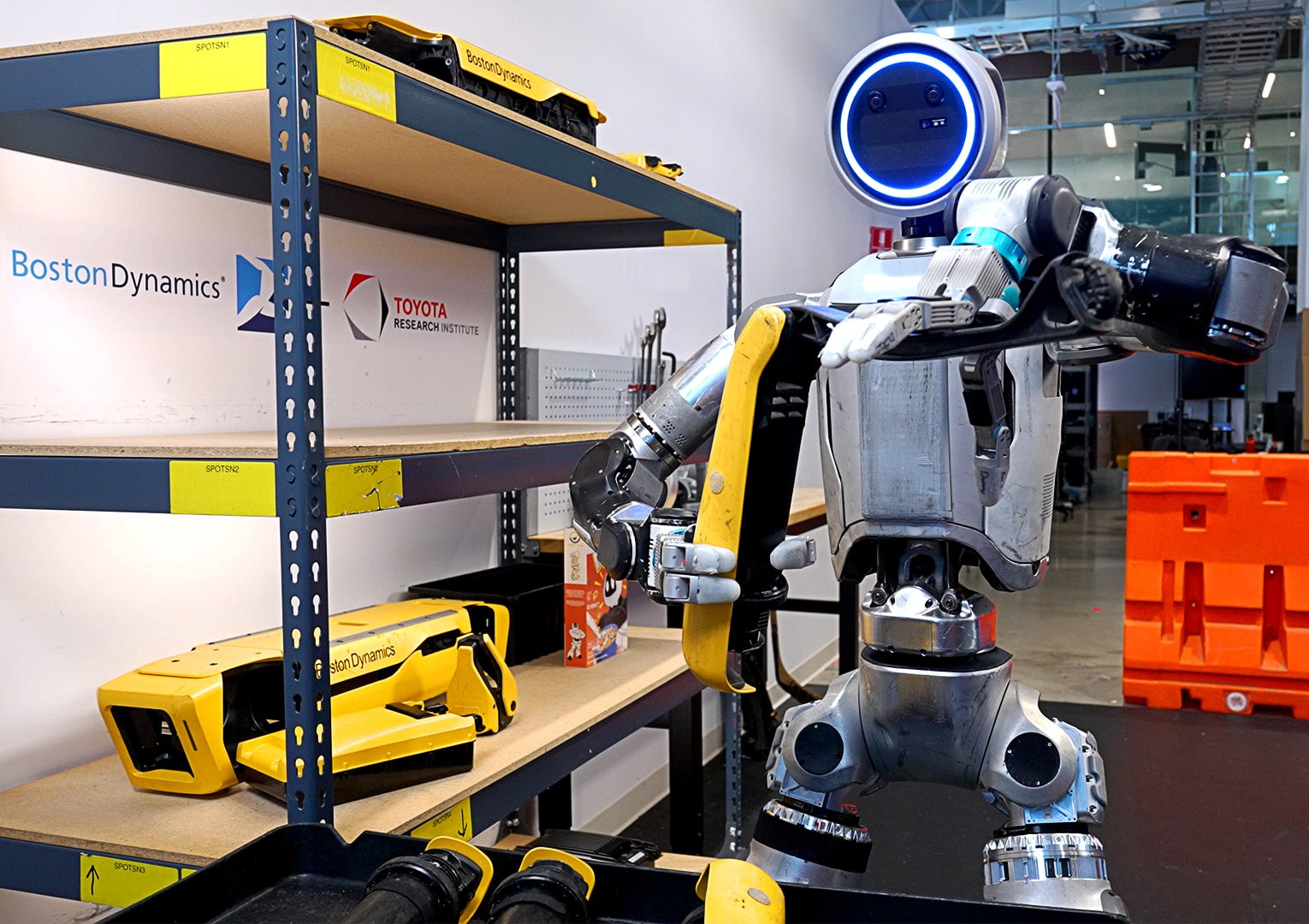
Large Behavior Models and Atlas Find New Footing | Boston Dynamics
Researchers emphasize that the development of effective humanoid robots hinges on a comprehensive set of skills. These robots must be capable of manipulating a wide variety of objects, ranging from hard to soft and heavy to delicate. They should also possess the ability to coordinate their movements to adapt to their surroundings, navigate obstacles, and maintain balance in unpredictable situations. This multifaceted approach is essential for creating AI generalists that can perform a diverse array of tasks, ultimately advancing the field of robotics. The ongoing research aims to address these challenges and enhance the functionality of humanoid robots, paving the way for their practical applications in everyday life.
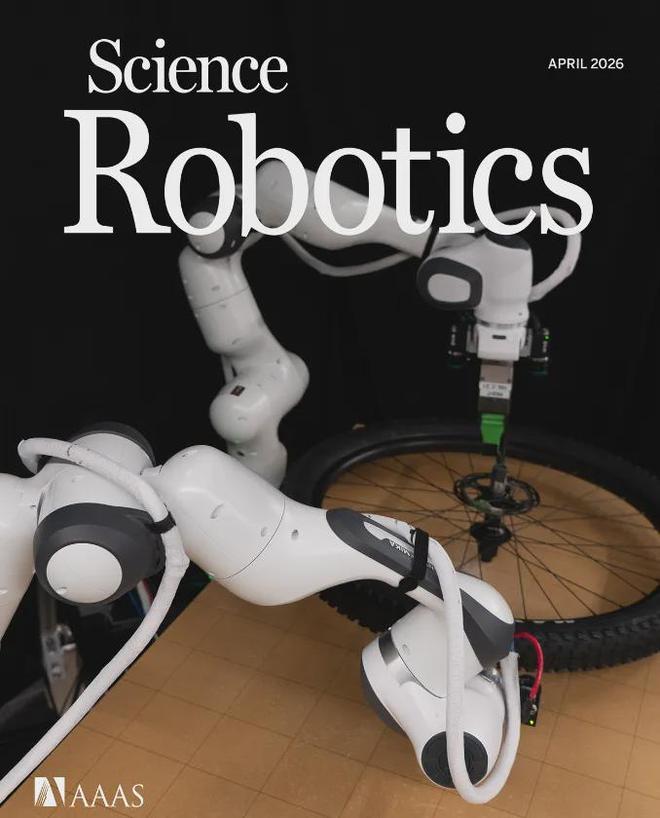
Latest Cover of Sci Robot: Toyota Research Institute and Others Release Groundbreaking Findings, Enhancing Robot Learning Efficiency by 5 Times with 1700 Hours of Data!
A research team at the Toyota Research Institute has made a significant breakthrough in robotics by showcasing the capabilities of Large Behavior Models (LBMs). Their findings indicate that LBMs can enhance learning efficiency for new tasks by five times. This research, which analyzed 1,700 hours of robot demonstration data, provides valuable insights that could advance the development of general-purpose robots. The study highlights the potential for LBMs to revolutionize how robots learn and adapt, paving the way for more versatile and efficient robotic systems in various applications.
Robotics Artificial Intelligence Machine Learning Automation
Boston Dynamics' Atlas Behavior Model Open-Sourced by Independent Developer
In a noteworthy advancement for the field of robotics, Bryson K. Jones has unveiled an open-source version of the Large Behavior Model (LBM) developed by the Toyota Research Institute. This model, which serves as the driving force behind Boston Dynamics' Atlas robot, offers a streamlined solution that delivers high performance without requiring extensive computational power. By making this technology accessible to developers, Jones aims to democratize robotics innovation, allowing a broader range of creators to experiment and build upon this foundational model. The release marks a significant step forward in making advanced robotic capabilities more attainable for various applications.
Robotics Behavior Models Open Source AI Machine Learning
GenEgoData: The Industry's First Dataset for Embodied World Models Officially Released
JianZhi Robotics has unveiled GenEgoData, the first multimodal dataset specifically designed for embodied world models. Launched recently, this innovative dataset captures high-quality, natural human interactions from an ego-centric perspective. The primary goal of GenEgoData is to improve the understanding of physical world dynamics and human behavior, providing valuable insights for researchers and developers in the field of robotics and artificial intelligence. By focusing on realistic interactions, the dataset aims to bridge the gap between human experiences and machine learning applications, ultimately enhancing the development of more intuitive and responsive robotic systems.
Embodied Intelligence World Models Human Behavior Data AI Robotics
Popular AI Models Aren’t Ready to Safely Power Robots
Researchers Rumaisa Azeem and Andrew Hundt have highlighted significant safety and discrimination issues in robots powered by widely used artificial intelligence models. Their recent study revealed that these robots failed multiple tests designed to assess safety and bias, uncovering deeper risks associated with their physical behavior. The findings underscore the urgent need for regular risk assessments before deploying AI systems in real-world robotic applications. The research, conducted at Carnegie Mellon University's Robotics Institute, emphasizes the importance of ensuring that AI technologies are adequately prepared to operate safely and equitably in various environments.
Research
New Microsoft tool lets devs spin up AI behavior tests using text descriptions
On Tuesday, Microsoft unveiled its new open-source framework, Adaptive Spec-driven Scoring for Evaluation and Regression Testing, designed to enhance AI evaluations. This innovative tool aims to streamline the process of assessing AI models by providing a structured approach to scoring, which can significantly improve the accuracy and efficiency of evaluations. The announcement highlights Microsoft's commitment to advancing AI technology and making powerful tools accessible to developers and researchers. By leveraging this framework, users can better manage the complexities of AI testing, ensuring that models perform reliably in various scenarios. The initiative reflects the growing importance of robust evaluation methods in the rapidly evolving field of artificial intelligence.
AI ai evaluations AI regression testing Microsoft
Robot Swarm Models Reveal Principles of Cell Organization
MorphoSystem, a pioneering research organization, has developed programmable robot swarms to simulate cell adhesion, a critical process in biological self-organization. This innovative technology provides a controlled environment that allows scientists to study the mechanisms underlying how cells adhere to one another and organize themselves. By utilizing these robotic swarms, researchers aim to gain deeper insights into cellular behaviors that are fundamental to various biological processes. The initiative underscores the intersection of robotics and biology, showcasing how advanced technology can enhance our understanding of complex life systems. This groundbreaking work is expected to contribute significantly to fields such as tissue engineering and regenerative medicine, potentially leading to new therapeutic approaches.

X Square Robot Develops Integrated Stack for General-Purpose Robotics
X Square Robot, a Chinese company focused on embodied AI, is pioneering an integrated stack for general-purpose robots. This stack combines data learning, a world model for predicting physical changes, and an action model that integrates perception, planning, reasoning, and decision-making. The company emphasizes the importance of quality interaction data over sheer quantity, utilizing its Universal Manipulation Interface (UMI) to enhance data collection. The significance of X Square Robot's approach lies in its potential to unify various aspects of robotic intelligence, addressing the fragmented nature of current systems. By prioritizing interaction quality and establishing a closed inspection loop for data validation, the company aims to create a more effective learning environment for robots. This method not only reduces costs but also enhances the reliability of the training data, which is crucial for developing general-purpose robots capable of performing diverse tasks. Looking ahead, X Square Robot's WALL-WM world model represents a shift towards event-based action prediction, allowing for more coherent and context-aware robotic behavior. As the company continues to refine its models and data collection methods, the broader robotics community will be watching for independent validation of its results and the potential implications for the future of general-purpose robotics.
Home-robots Type-sponsored Large-language-models Embodied-intelligence Ai-robots Robot-learning
From Fortnite to robots: General Intuition raises $2.3B on bet that video games can train AI agents for the real world
General Intuition has successfully secured $320 million in funding to enhance its artificial intelligence capabilities, which are designed to mimic human intuition by leveraging extensive data from millions of hours of gameplay and betting actions. This significant investment aims to propel the development of AI systems that can better understand and predict human behavior in gaming contexts. The funding round, which reflects growing interest in AI applications within the gaming and betting industries, will enable General Intuition to expand its research and development efforts. The company plans to utilize this capital to refine its algorithms and improve the accuracy of its AI models, ultimately striving to create technology that resonates more closely with human decision-making processes.
Startups AI Robotics Fundraising Khosla Ventures AI training data
Wanxun Technology Launches Universal Charging Service Engine with 0.000s Tolerance
On July 9, Wanxun Technology unveiled its 'Flexible Charging' universal charging service engine in Beijing, marking the industry's first comprehensive solution for public, dedicated, and home charging applications. This engine features a unique 0.000s tolerance technology, which addresses the core challenges of automatic charging in chaotic environments, enabling reliable and scalable commercial applications across various scenarios. The significance of this launch lies in its potential to overcome the limitations of existing automatic charging solutions, which often struggle with unpredictable variables such as diverse vehicle models, environmental conditions, and user behaviors. Wanxun's technology promises to enhance safety, reliability, and adaptability, making it suitable for a wide range of charging situations, from public stations to private homes. Looking ahead, Wanxun Technology aims to expand its automatic charging solutions across various sectors, including unmanned logistics and public transportation. The company has already initiated collaborations with manufacturers, operators, and government entities to accelerate the deployment of its solutions. No further timeline was disclosed at the time of publication.

What Makes AI Art Worth Collecting?
In May, an anonymous artist who goes by SHL0MS on X posted that he had used AI to generate an image inspired by Claude Monet and asked people to weigh in on how it missed the mark. More than 600 responses called out issues, saying the colors were off, the depth was all wrong, and that AI didn’t understand how light worked.SHL0MS then revealed that the image was of a real Monet, one of around 250 variations of water lilies the artist had painted in his lifetime. He had simply downloaded a high-resolution image from Wikimedia and cropped out the signature. He minted the exchange as an NFT (a unique digital collectible recording ownership of the work), titled it “Inferior Image,” and sold it for just over US $40,000 after 28 bids.The stunt exposed how charged the conversation around AI art has become, and how quick people are to dismiss anything AI-generated as slop—even when it’s not. Yet even as those arguments continue, a market for AI-generated art has begun to form anyway. It’s fragmented and contested, but bigger than most people realize.Jediwolf, an anonymous collector who says he has spent more than 20 years acquiring digital and AI art, was watching the experiment unfold in real time on X. He had never interacted with SHL0MS before, but when the NFT went up for auction he made a bid and won. “I was buying a unique moment in time,” he says, “captured by an artist and preserved as a token.”The Monet was not AI art, but most of what Jediwolf buys is. One of Jediwolf’s digital collections, which he calls UnderTheGAN—a play on GANs, or generative adversarial networks, the AI technology that preceded today’s diffusion models—comprises roughly 100 works valued at around $72,000, focused on early AI art from 2015 to 2020, before the medium went mainstream. He describes his role as part collector, part researcher, part curator, trying to document a fast-moving field.“A decade ago, digital art was often treated as peripheral to the ‘serious’ art world,” he says. “Today, it is increasingly difficult to separate contemporary culture from the internet.”AI Art Moves Into MuseumsThe market for AI art extends beyond NFTs: AI-generated pieces are also finding their way into physical installations. Last month saw the opening of Dataland, the world’s first generative AI museum, in downtown Los Angeles. It was spearheaded by Refik Anadol, a digital artist who has built a career out of transforming data into large-scale immersive experiences. The opening exhibition has pieces that use data that Anadol collected from rainforests around the world, with real-time weather information from 16 rainforests feeding into all five galleries. In three of the rooms, the imagery also shifts in response to visitors’ own biometric data, tracked by bracelets they wear. Like any museum it sells tickets, ranging from $49 to $79, and has a gift shop. This shop, however, uses visitors’ biometric data collected during their visit to generate a unique design printed on a T-shirt. For $15,000, a robotic painting system called Qualia creates a one-of-a-kind canvas from that same data, painted once a day, with a waiting list already forming. A founding collection of 1,000 AI data sculptures that evolve based on environmental data from global rainforests sold out in 34 minutes at $5,000 each.The system running it all, which Anadol calls the Large Nature Model, was trained on more than 500 million nature images representing 2.2 million species, gathered through field expeditions to 16 rainforests and partnerships with institutions including the Smithsonian and the Cornell Lab of Ornithology.For Anadol, AI art requires a different kind of transparency than any medium that came before it. Because commercial AI tools have shaped how most people understand the technology, artists working with it seriously have to be more open about their process than painters or photographers ever did.“For AI art, we have to know where the data comes from, we have to know which model is trained and how it’s trained,” he says. “We can’t just think about authenticity and uniqueness if a service and product is the fundamental layer of the artwork.”The reviews for Dataland have mostly been positive, with one critic calling it the Citizen Kane of immersive experiences. But Anadol is used to a more divided reception. His 2022 installation at MoMA—a 7-by-7-meter screen of AI-generated fluid forms with shifting colors and sounds—drew 3 million visitors and entered the permanent collection, even as New York Magazine called it “a massive techno lava lamp.” Anadol sees the skepticism as nothing new, just the latest version of a resistance that has greeted all new media. “Every art form has gone through similar cycles of denial,” he says. “We are living in a renaissance that started 10 years ago, and I just don’t think everyone is aware of it yet.”Who Is Buying AI Art?The broader market data points in multiple directions at once. According to the Art Basel and UBS Art Market Report 2026, digital art’s share of sales nearly tripled between 2024 and 2025, and just over half of all fine art collectors surveyed had purchased a digital artwork in 2025, making it the third most popular category after painting and sculpture (the report does not break out AI art specifically).Meanwhile, Christie’s shuttered its pioneering digital art department in September, folding digital works back into its broader contemporary sales after none of its dedicated auctions broke $400,000.The most data-rich window into buyer behavior comes from a less glamorous corner of the market. After one major stock image platform allowed AI-generated images, monthly sales jumped 80 percent, according to Samuel Goldberg, an economist at Stanford Graduate School of Business who published a research paper about the shift. Traditional contributors began leaving the platform as generative images flooded in, and creators using AI tools rushed to fill the gap. “It looks like consumers like generative AI,” Goldberg says, “and it seems like nongenerative artists could be getting crowded out of the market.” Stock images are essentially a commodity version of art, according to Goldberg, and because image-generating models are already very good at producing them, what’s happening there may be a preview of what’s coming for other creative goods markets—including fine arts—as the technology improves.Artists are typically among the first to test the limits of a new technology; early adopters have created AI art since the 1970s. What’s new now is the ability for anyone to generate an image in seconds with a text prompt. That, according to Christiane Paul, curator of digital art at the Whitney Museum of American Art, is not the same thing at all. What fills those stock-image platforms, and what most people encounter when they think of AI art, does not qualify as art.True AI art, Paul says, is a subcategory of digital art that uses artificial intelligence as both a tool and a medium, engaging with it practically and conceptually, doing things like training custom models, building extensions, and layering control systems. “A visual created by a prompt is not art,” she says. What serious AI artists are actually doing is much more than typing a few words into DALL-E.Far from the shortcut most people assume, working seriously with AI as an artistic medium is, by her account, brutally hard. Every artist she talks to says the same thing. “It is much, much harder than a paintbrush to handle,” she says. “You are literally communicating with a system with a completely different logic.”Thanks to bubblemaps.io for its research assistance on the NFT market.
Ai-art Generative-ai Digital-art Blockchain
An AI-powered control system for robots with legs
Walking robots, such as quadruped robotic dogs, must be able to move safely through rough, often changing environments. Today, there are two main ways to program these walking, or legged, robots. The first is called model predictive control. This technique optimizes the robot's behavior but relies on accurate dynamics models, which are challenging to achieve in real-world settings and often require simplifying assumptions. The second is model-free reinforcement learning, which allows the robot to learn reliable but fixed behaviors, making them difficult to adapt after training.
Robotics
The Lab Mistake That Might Revolutionize Computing
Researchers have made a significant breakthrough in artificial intelligence technology by discovering a new way to create electronic components that mimic the behavior of biological neurons and synapses. This development, which occurred in a laboratory in 2024, could drastically reduce the energy consumption associated with AI applications. Currently, AI systems rely on powerful GPUs housed in data centers, consuming up to 1,000 watts each, which is comparable to household appliances. In contrast, the human brain operates at a fraction of that energy efficiency. The team, led by researchers Mario Lanza and Sebastian Pazos, stumbled upon this innovation while experimenting with metal-oxide-semiconductor field-effect transistors (MOSFETs). They found that by manipulating the bulk terminal of a MOSFET, they could replicate neuron-like behavior, producing sharp current spikes similar to those of biological neurons. This discovery not only allows for the creation of artificial neurons but also enables the development of artificial synapses, leading to a new type of neurosynaptic random-access memory (NSRAM). The implications of this technology are vast, as it could lead to brain-inspired microchips that are more energy-efficient than current GPUs, particularly for smaller-scale AI tasks. The researchers are now focused on refining their models and conducting further simulations to optimize performance. If successful, this innovation could pave the way for a new generation of AI systems that are both powerful and environmentally sustainable.
Neuromorphic-computing Cmos Mosfet Synapse
How Storm Season Disrupts Trailer Availability Across Freight Networks
Recent shifts in weather patterns are causing severe weather events to occur in regions that have traditionally been less affected, leading to increased unpredictability in storm behavior. This change is attributed to climate change, which is altering atmospheric conditions and contributing to more extreme weather phenomena. As a result, areas that were once considered safe from such events are now facing challenges that require new preparedness strategies. Meteorologists are emphasizing the need for updated forecasting models to better predict these unpredictable storms and mitigate their impacts on communities.

Robots learn to anticipate chaos, but still fail to read a decidedly human signal
Researchers at Cornell University are exploring the integration of artificial intelligence into robotics to enhance social intelligence, enabling robots to interpret facial expressions, anticipate human needs, and interact effectively within societal contexts. In a recent study, the team evaluated vision language models (VLMs)—AI systems capable of processing and generating both visual and linguistic data. The research focused on assessing these models' ability to predict outcomes in tense scenarios depicted in short videos, such as a toddler precariously carrying an overflowing mug of coffee. This investigation aims to advance the development of robots that can better understand and respond to human emotions and behaviors, ultimately improving their functionality in everyday environments.
Robotics
Torc Robotics Announces First-Ever Autonomous-Trucking Partnership at Mila to Advance Physical AI
Torc Robotics has announced a groundbreaking partnership with the Quebec Artificial Intelligence Institute, known as Mila, aimed at enhancing physical AI research. This collaboration, revealed on May 27, 2026, marks Torc as the first autonomous trucking company to join Mila's ecosystem in Montreal. The partnership will provide Torc access to top academic talent, including students and researchers, and includes dedicated research space on-site. By embedding itself within Mila's renowned environment, Torc intends to advance its capabilities in areas such as generative world models, multi-agent behavior modeling, and reinforcement learning. This initiative is part of Torc's mission to develop safe and scalable autonomous trucks, with a focus on bridging the gap between research and real-world applications. Mila, recognized globally for its contributions to machine learning, has a strong network of researchers and ties to leading Canadian universities, making it an ideal partner for Torc. The collaboration builds on a relationship that began in 2020 and reflects Torc's commitment to investing in AI talent and research partnerships. Both organizations aim to unlock safer and more efficient autonomous transportation solutions, contributing to the commercialization of autonomous trucking technology.

JD Launches China's Largest Embodied Intelligence Data Collection Base in Suqian
JD Group, in partnership with the Suqian government, has inaugurated China's first community dedicated to embodied intelligence data collection. This innovative initiative, which was launched recently, aims to collect over 10 million hours of real-life behavioral data from more than 100,000 participants across diverse sectors such as logistics and healthcare. The project utilizes JD Group's proprietary technology, the JoyEgoCam, to enhance the training of intelligent models. By gathering extensive data, the initiative seeks to improve the development of AI applications, ultimately contributing to advancements in various industries.
Embodied Intelligence Data Collection Smart Devices AI Training
The app store for robots has arrived: Hugging Face launches open-source Reachy Mini App Store with 200+ apps
Hugging Face, a New York City-based startup known for its open-source AI models, has launched the Reachy Mini App Store, a platform designed for its low-cost physical robot, Reachy Mini, which debuted in July 2025. Priced at $299, the robot aims to make robotics accessible to hobbyists and developers. The App Store features over 200 community-built applications, allowing users to download and create custom apps without needing a technical background. This initiative is part of Hugging Face's broader goal to democratize robotics, enabling individuals to develop functional software for the robot using simple English commands. The launch comes as Hugging Face has sold around 10,000 Reachy Mini units, with 3,000 sold in the past two weeks alone. The platform supports various AI models, including Hugging Face's own ML Intern, and offers tools for users to simulate and test their apps in a virtual environment. By removing traditional barriers to robotics development, Hugging Face aims to shift the focus from technical expertise to creativity in programming robotic behaviors. The App Store is part of Hugging Face's ongoing "Le Robot" project, which seeks to provide open-source resources for robotics development.
Technology
AI may not need massive training data after all
Recent research has revealed that artificial intelligence (AI) can exhibit human-like behavior without the necessity for extensive training data. Scientists have redesigned AI systems to mimic the structure and function of biological brains, resulting in certain models demonstrating brain-like activity spontaneously, without prior training. This finding challenges the conventional data-intensive methods currently employed in AI development. The implications of this work suggest that smarter design strategies could significantly enhance learning efficiency while reducing both costs and energy consumption in AI systems.

Scientists uncover the brain’s hidden learning blocks
Researchers at Princeton University have discovered that the human brain's ability to learn is significantly enhanced by its use of modular "cognitive blocks" that can be repurposed across various tasks. This finding emerged from experiments involving monkeys that were tasked with switching between visual categorization challenges, revealing that the prefrontal cortex can assemble these cognitive blocks in a manner akin to building with Legos, thereby facilitating the creation of new behaviors. The study, conducted recently, sheds light on the brain's remarkable flexibility, which accounts for the rapid learning capabilities of humans compared to artificial intelligence models that often struggle to retain previously acquired skills. These insights hold promise for advancing the development of more effective AI systems and could lead to innovative clinical treatments aimed at enhancing cognitive adaptability in individuals with impairments.

Ocean Robots Exploring Role of ‘Marine Snow’ in Carbon Storage
Scientists from the UK’s National Oceanography Centre (NOC) have launched an innovative year-long experiment in the Labrador Sea, deploying a state-of-the-art fleet of ocean robots and instruments. This initiative aims to explore the depths of the sea, enhancing our understanding of marine ecosystems and oceanographic processes. The deployment is part of a broader effort to gather critical data that could inform climate change research and improve predictive models for ocean behavior. The experiment began recently and will continue for the duration of the year, utilizing advanced technology to navigate and collect information from previously inaccessible underwater environments.
ocean robots ‘marine snow’ carbon storage
General Intuition’s $2.3B bet that video games can train AI agents for the real world
General Intuition has successfully secured $320 million in funding to enhance its artificial intelligence capabilities, leveraging extensive data derived from millions of hours of gameplay and betting action. This significant investment aims to advance the development of AI that mimics human intuition more closely. The funding round, which took place recently, underscores the growing interest in AI technologies that can interpret complex patterns and make decisions similar to human behavior. By utilizing this vast dataset, General Intuition seeks to refine its algorithms and improve the performance of its AI systems, positioning itself at the forefront of innovation in the gaming and betting industries.
AI Fundraising Robotics Startups AI training data general intuitionRobotics needs a service framework.
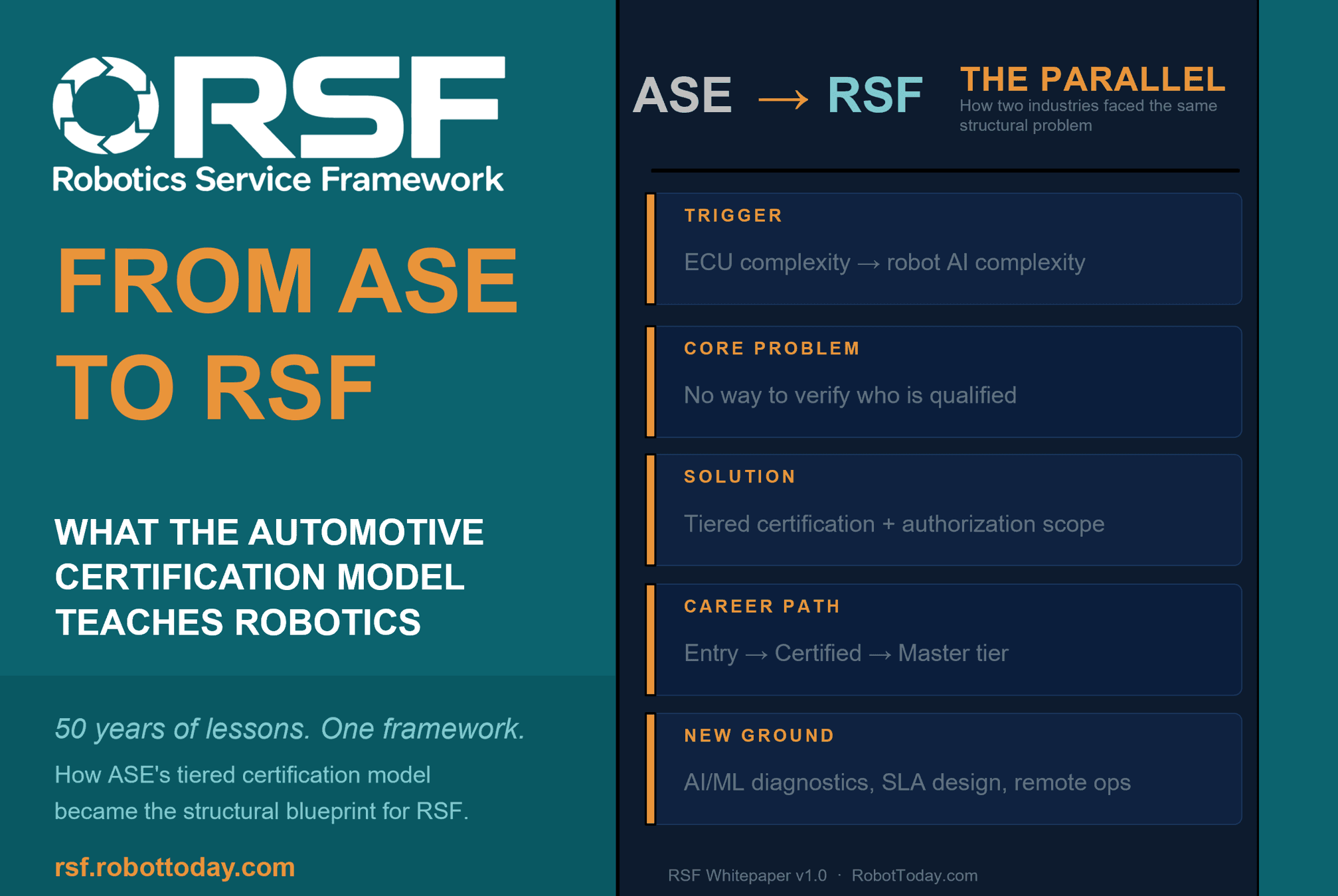
RSF defines a common language for robot service capability, lifecycle operations, certification pathways, and service-provider networks.