

Industry Briefing
A single destination for timely, editor-curated robotics news from around the world.

Exploring Non-Invasive Ultrasound Brain-Computer Interfaces for Anxiety and Depression Treatment
A recent salon focused on anxiety and depression, part of a series initiated by the Shanghai Science and Technology Exchange Center, discussed non-invasive ultrasound brain-computer interfaces (BCIs) as potential new treatment avenues. Experts from various fields, including psychiatry and AI engineering, examined the complexities of emotional disorders, highlighting the need for precise identification and intervention strategies. The World Health Organization reported that in 2023, approximately 470 million people globally suffer from anxiety disorders and about 322 million from depression. The discussion emphasized that these conditions are not caused by a single mechanism, and effective treatment requires understanding the diverse psychological and neurological processes involved. The potential of ultrasound technology to target multiple brain areas simultaneously was underscored as a promising approach to treatment. Looking ahead, experts noted that the field of brain-computer interfaces is rapidly evolving, with significant investments and research underway. The need for multi-center, large-sample studies to validate treatment efficacy was highlighted, along with the importance of ethical considerations and collaboration between medical and engineering sectors. No further timeline was disclosed at the time of publication.
Brain-Computer Interfaces Mental Health Technology Non-invasive Treatments AI in Healthcare
Chip Stocks Decline Amid Rising Global Bond Market Concerns
Chip stocks experienced a downturn as global bond market anxiety intensified, impacting investor sentiment. The closing bell on Wall Street saw discussions among notable financial experts, including DoubleLine Capital's Jeffrey Sherman and Oppenheimer's Brian Nagel, who provided insights into the market dynamics. This decline in chip stocks is significant as it reflects broader economic concerns, particularly regarding interest rates and inflation. The presence of industry leaders like Midi Health's Joanna Strober and Fort Robotics' Samuel Reeves during the discussions highlights the interconnectedness of various sectors and their responses to financial market fluctuations. Looking ahead, market participants will be closely monitoring bond yields and their implications for the tech sector, especially semiconductor companies. No further timeline was disclosed at the time of publication.

Overcoming Automation Anxiety: The Safety-First Approach to Robot Integration
As the integration of robots into the workforce accelerates, manufacturers are increasingly focusing on safety features to protect human workers. To ensure a smooth and secure transition, businesses planning to adopt robotic technology are advised to implement several key preliminary steps. These measures are crucial for prioritizing safety and minimizing risks associated with human-robot interactions. By establishing comprehensive safety protocols and integrating advanced safety features into robotic systems, companies can enhance workplace safety and foster a collaborative environment between humans and machines.

Friendly social robots may help ease a child's anxiety at the doctor's office
During a recent medical appointment at the UC Davis MIND Institute, 3-year-old Cameron encountered a delightful surprise in the waiting room: friendly AI robots visiting from Japan. Cameron's mother, Caroline Nguyen, expressed their immediate affection for the robots, stating, "We both melted when we saw them. They're so adorable, and the little sounds they make—I mean, she took to them right away." The visit aimed to provide a comforting and engaging experience for young patients, showcasing the potential of social robots in healthcare settings.
Robotics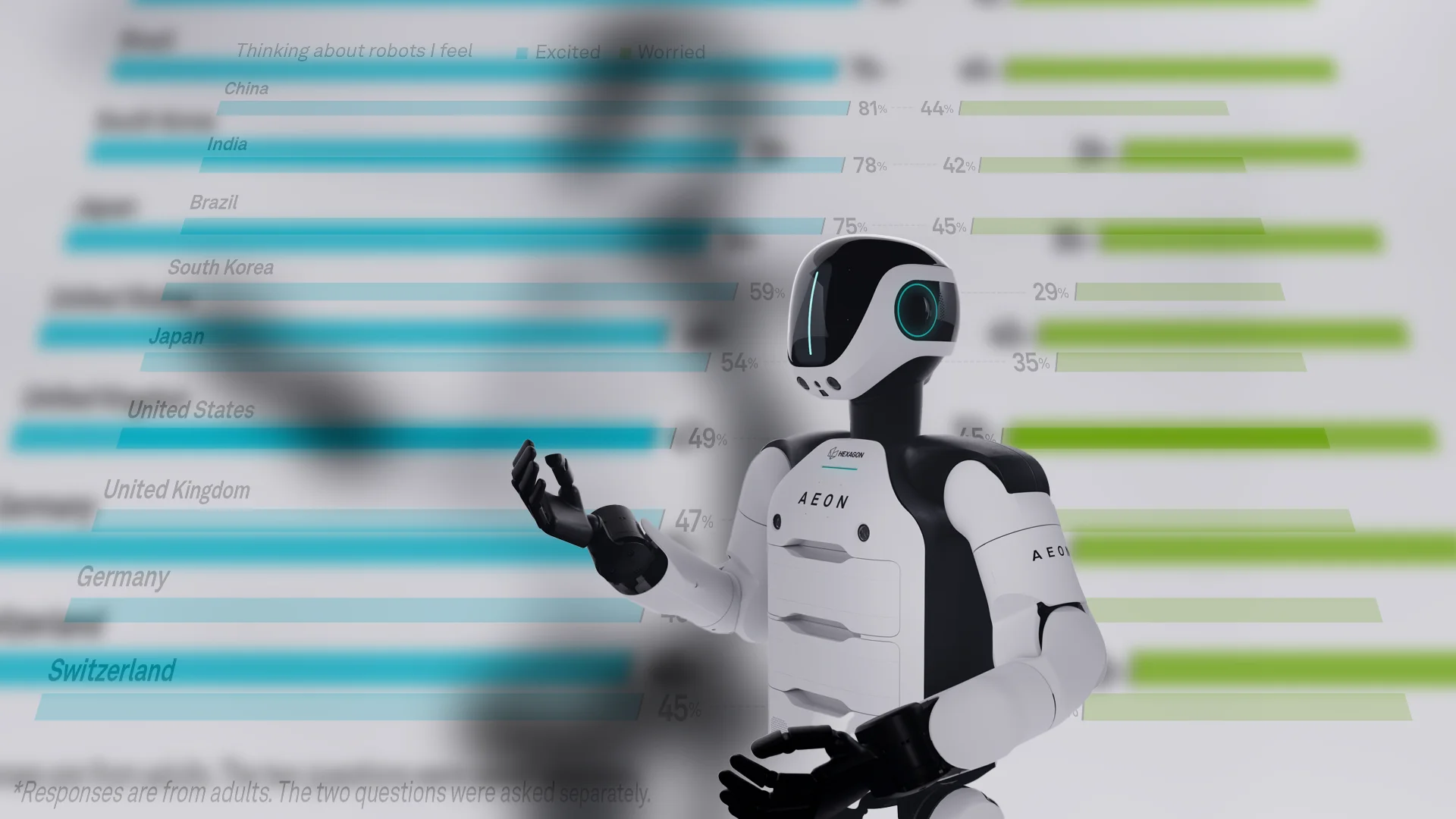
Familiarity Breeds Trust: Hexagon Study Finds "Robot Anxiety" Spikes Where Visibility is Low
A recent global study involving 18,000 participants has uncovered a significant relationship between public trust in robotics and individuals' real-world exposure to these technologies. Conducted in late 2023, the research highlights a shift in public sentiment, indicating that concerns about security have now surpassed fears related to job displacement. This finding suggests that as people interact more with robotic systems, their apprehensions evolve, with a growing emphasis on safety and security implications. The study underscores the importance of addressing these security concerns to foster greater acceptance and trust in robotic innovations across various sectors.
aeon Europe hexagonRobotics needs a service framework.
RSF defines a common language for robot service capability, lifecycle operations, certification pathways, and service-provider networks.
Join the RobotToday community on LinkedIn
Daily robotics news, in-depth analysis, conference highlights, and discussions with professionals worldwide.







