
A single destination for timely, editor-curated robotics news from around the world.
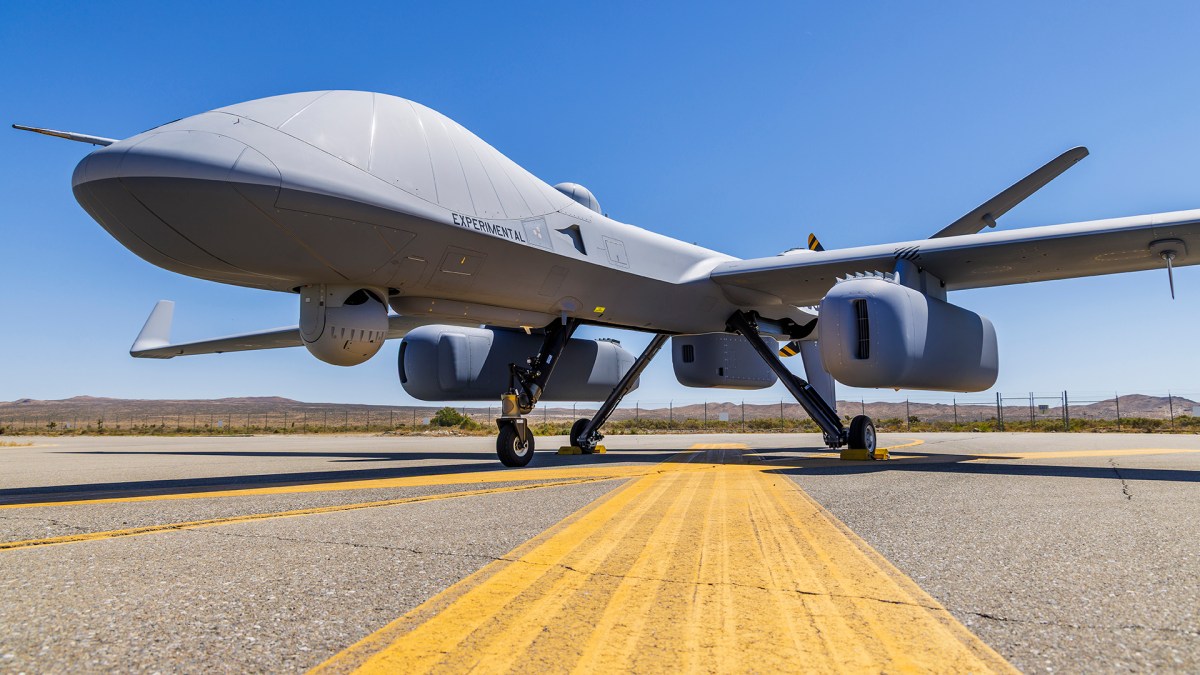
The introduction of radar-equipped MQ-9 drones marks a significant advancement in airborne early warning capabilities, addressing an urgent need for enhanced surveillance in contemporary military operations. This development comes at a time when the demand for cost-effective and adaptable aerial monitoring solutions is critical. The MQ-9's ability to provide persistent airborne early warning is expected to improve situational awareness and response times in various operational scenarios. As military forces seek to bolster their defensive and offensive strategies, the integration of this technology is seen as a crucial step in modernizing aerial reconnaissance and ensuring readiness in an increasingly complex security environment.
TheWarZone By Tyler Rogoway Jun 18, 2026 Air Airborne Radar Airborne Sensors Drones News & Features Q-9
The 3rd Mobile Brigade Combat Team of the 101st Airborne Division recently executed a successful robotic combined arms breach during a rotation at the Joint Readiness Training Center (JRTC). This operation, highlighted by the brigade's commander in an interview with Breaking Defense, showcases the unit's advancements in integrating robotic technology into combat scenarios. The exercise aimed to enhance operational effectiveness and readiness in modern warfare, reflecting the military's ongoing commitment to innovation and adaptation in response to evolving threats. The successful breach demonstrates the brigade's capability to leverage advanced technologies to improve tactical operations on the battlefield.
BreakingDefense By Carley Welch Jun 17, 2026 Land Warfare 101st Airborne Division Army autonomy Drones UGV
At the Eurosatory defense and security international exhibition, Saab unveiled its latest Giraffe AMB D radar system. This launch comes shortly after the Swedish Defence Materiel Administration (FMV) confirmed that it had placed an order for several units in the weeks leading up to the event. The Giraffe AMB D radar is designed to enhance surveillance and air defense capabilities, reflecting Saab's commitment to advancing military technology. The exhibition, held in Paris, serves as a significant platform for defense industry innovations, making it an ideal venue for Saab to showcase its new product and secure further interest from potential clients.
Army-Technology By John Hill Jun 17, 2026 News
A cutting-edge radar system has been developed to enhance the detection of drones operating near ports, vessels, harbors, and other critical maritime areas. This innovative technology aims to bolster maritime security by providing real-time surveillance and threat assessment capabilities. The radar is designed to identify and track drones, which have increasingly become a concern for safety and security in busy maritime environments. The system's deployment is expected to take place in the coming months, with trials set to occur at various strategic locations along coastlines. By integrating advanced detection algorithms and high-resolution imaging, the radar will enable authorities to respond swiftly to potential threats, ensuring the safety of maritime operations and protecting vital infrastructure. This initiative reflects a growing recognition of the need for enhanced security measures in response to the rising prevalence of drone activity in sensitive areas.
InterestingEngineering.com By Prabhat Ranjan Mishra Jun 15, 2026 Innovation Military
Several federal initiatives are set to influence the drone industry in the coming months, particularly as attention remains on Chinese drone restrictions and supply chain policies. Key developments include airspace restrictions related to the World Cup and new regulations for critical infrastructure. The long-anticipated Beyond Visual Line of Sight (BVLOS) rule is also a focal point for industry stakeholders. These initiatives, while not widely publicized, are progressing and could significantly impact the operational landscape for drones. As the summer unfolds, the drone industry is closely monitoring these changes, which may reshape regulations and operational capabilities in the near future.
Dronelife.com By Miriam McNabb Jun 12, 2026 DL Exclusive Drone News Drone News Feeds Drones in the News FAA Feature 1
US companies Reach Power and Gambit have unveiled that their collaborative initiative, the SWARM project, has secured funding. This financial backing aims to advance the development of innovative technologies in the renewable energy sector. The announcement was made on October 15, 2023, highlighting the growing interest and investment in sustainable energy solutions. The SWARM project is designed to enhance energy efficiency and promote the integration of renewable resources into existing power grids. By leveraging cutting-edge technology and strategic partnerships, Reach Power and Gambit intend to address the increasing demand for clean energy alternatives. This initiative reflects a broader trend in the industry, as companies seek to align with global sustainability goals and reduce carbon footprints.
InterestingEngineering.com By Chris Young Jun 11, 2026 Innovation
German weapon manufacturer Diehl Defence has unveiled its latest innovation, the Cobra 600, a jet-powered interceptor drone designed to enhance aerial defense capabilities. This advanced drone is engineered to intercept and neutralize threats in real-time, showcasing Diehl Defence's commitment to cutting-edge military technology. The Cobra 600 was officially introduced during a defense exhibition held in Berlin in October 2023, where industry leaders gathered to discuss advancements in military hardware. The motivation behind the development of the Cobra 600 stems from the increasing demand for sophisticated defense systems in response to evolving aerial threats. By integrating jet propulsion technology, Diehl Defence aims to provide armed forces with a faster and more agile solution for intercepting hostile drones and other airborne threats. The drone's design emphasizes not only speed but also precision, allowing for effective engagement in various combat scenarios. The introduction of the Cobra 600 marks a significant step forward in unmanned aerial vehicle technology, reflecting a broader trend in the defense sector towards automation and enhanced operational efficiency. As military forces around the world seek to modernize their arsenals, Diehl Defence positions itself at the forefront of this transformation with its innovative approach to aerial defense.
InterestingEngineering.com By Munis Raza Jun 11, 2026 Military
MatrixSpace, a portable radar manufacturer, has successfully integrated its technology with Anduril Lattice and IBCS-M, receiving validation from the U.S. Army during a recent exercise at Fort Carson. This achievement is part of Operation Jailbreak, the Army's largest initiative aimed at incorporating emerging technologies into command-and-control systems. The validation places MatrixSpace among 55 companies participating in this significant interoperability effort, showcasing its sensor capabilities within the Anduril framework. The integration is expected to enhance the Army's operational effectiveness by streamlining communication and coordination among various technological platforms.
Dronelife.com By staff Jun 02, 2026 Defense Drone News Drone News Feeds Military News air defense
The U.S. Army’s 44th Medical Brigade is enhancing its battlefield medical operations by expanding the use of drones to deliver critical supplies more efficiently and safely. This initiative, announced by the XVIII Airborne Corps, reflects a broader military strategy to incorporate unmanned systems into logistics and sustainment efforts. The program aims to reduce the risk to soldiers while ensuring timely access to essential medical resources in combat situations. By leveraging drone technology, the Army seeks to improve operational effectiveness and support its personnel in high-stakes environments.
Dronelife.com By Miriam McNabb Jun 02, 2026 Applications Delivery Drone News Drone News Feeds Medical News
Boeing has confirmed the stealth capabilities of its MQ-28 collaborative combat aircraft (CCA) after conducting radar cross-section (RCS) tests aimed at assessing its survivability and detection risks. The tests, which are part of Boeing's ongoing efforts to enhance the aircraft's operational effectiveness, demonstrate the company's commitment to developing advanced military technology. The results indicate that the MQ-28 can effectively minimize its radar signature, thereby increasing its chances of evading enemy detection. This validation comes as military forces worldwide seek to integrate more advanced, stealthy unmanned systems into their operations, reflecting a growing emphasis on survivability in modern combat scenarios.
Airforce-Technology By Jangoulun Singsit Jun 02, 2026 News
Sky Spy and Evolve Dynamics have formed a partnership to enhance the capabilities of unmanned aircraft systems (UAS) by integrating airborne signals intelligence (SIGINT) technology. This collaboration follows a successful demonstration conducted with the French Armed Forces, showcasing a drone-mounted system designed to detect and locate drone operators, control stations, jammers, and other radio frequency (RF) emitters in contested environments. The integration aims to improve military operations by providing advanced detection and situational awareness, enabling users to identify potential threats more effectively. This initiative reflects a growing emphasis on utilizing drone technology for military applications, particularly in complex and challenging operational settings.
Dronelife.com By Miriam McNabb Jun 01, 2026 Applications Defense defense Drone News Drone News Feeds Dual Use
IHI, a prominent player in Japan's aerospace industry, has successfully integrated two operational ICEYE synthetic aperture radar (SAR) satellites into its operations, with plans to deploy two additional satellites in the near future. This advancement marks a significant step for IHI, enhancing its capabilities in satellite technology and data acquisition. The deployment of these satellites is expected to bolster IHI's position in the aerospace sector, allowing for improved monitoring and analysis of various environmental and industrial applications. The initiative reflects IHI's commitment to advancing its technological offerings and responding to the growing demand for satellite-based data solutions.
Airforce-Technology By John Hill May 28, 2026 News
As police departments throughout the United States enhance their drone programs, they are facing a growing challenge related to congested low-altitude airspace. The proliferation of both authorized emergency-response drones and unauthorized aircraft operating near critical sites has heightened the need for law enforcement agencies to improve their situational awareness of aerial activities. This development comes as agencies seek to leverage drone technology for various operational purposes, including surveillance and emergency response, while navigating the complexities of airspace management. The increasing demand for drone usage underscores the urgency for effective solutions to monitor and regulate the crowded skies, ensuring safety and security in urban environments.
Dronedj.com By Ishveena Singh May 27, 2026 News
Field operations across various sectors, including construction and emergency response, are increasingly challenged by unpredictable weather patterns that can compromise safety and hinder progress. As traditional weather forecasts often fail to accurately predict localized storms, the reliance on fixed-location radar stations has become problematic due to their frequent blind spots. This situation underscores the urgent need for more advanced weather monitoring solutions to enhance operational safety and efficiency. By addressing these gaps in forecasting, organizations can better prepare for adverse weather conditions, ultimately improving outcomes in critical field operations.
RoboticsAndAutomationNews.com By Sam Francis May 27, 2026 Communications Infrastructure atmospheric monitoring automation news autonomous systems aviation safety
The Pentagon has responded to concerns regarding significant increases in fees associated with linking LUCAS kamikaze drones to SpaceX's Starlink satellite network. Despite the pushback on these reports, the military's reliance on SpaceX's technology has become increasingly crucial for U.S. operations. This situation underscores the growing dependence of the Pentagon on private aerospace companies for essential services and capabilities in modern warfare. The ongoing integration of commercial satellite systems into military operations highlights the evolving landscape of defense logistics and technology.
TheWarZone By Joseph Trevithick May 26, 2026 News & Features Air Airborne Communications Drones Unmanned
The U.S. Air Force is set to deploy an enhanced version of its ULTRA surveillance glider, designed to improve reconnaissance capabilities. This advanced system, which features upgraded technology for better data collection and analysis, is expected to be operational in the coming months. The deployment aims to bolster national security and enhance situational awareness in various operational theaters. By utilizing the glider's unique design, which allows for extended flight durations and reduced radar visibility, the Air Force seeks to gather critical intelligence while minimizing risks to personnel and assets. The initiative reflects a broader strategy to modernize military surveillance methods in response to evolving global threats.
InterestingEngineering.com By Kaif Shaikh May 26, 2026
Researchers at the Technological University of Denmark have developed a groundbreaking radar system aimed at monitoring pollinators, such as bees and wasps, in a cost-effective and non-invasive manner. Traditional methods of tracking these vital insects have been labor-intensive and often harmful, as they typically require capturing and killing specimens for identification. The new approach, detailed in a study published on April 28 in the journal PNAS Nexus, leverages millimeter-wave radar technology to analyze micro-Doppler signatures generated by insect wingbeats. The team, led by associate professor Adam Narbudowicz, trained a machine learning model using radar data from five species of pollinators captured on the campus of Trinity College Dublin. By focusing on the unique radar reflections produced by the insects, the researchers achieved an impressive 85 percent accuracy in species classification and 96 percent accuracy in distinguishing between bee and wasp species. The accuracy improved with the duration of time the insects remained in the radar beam, suggesting potential for further refinement. This innovative radar system not only promises to enhance the monitoring of pollinators but could also be adapted to track pests and invasive species. The researchers aim to create a portable version of the technology and establish a global database of insect radar signatures, which could include environmental factors to better understand how conditions affect pollinator behavior. This advancement could ultimately contribute to more effective conservation efforts and agricultural practices.
IEEESpectrumAI By Charles Q. Choi May 23, 2026 Radar Insects Machine-learning
Uber has reintroduced its autonomous vehicles to the streets as part of its new Autonomous Vehicle (AV) Lab initiative. This project aims to gather data for its numerous robotaxi partners. The vehicles will be equipped with standard self-driving technology, including cameras, lidar, and radar. However, these cars will not be functioning as fully operational robotaxis during this phase. The decision to restart testing comes as part of Uber's strategy to enhance its data collection capabilities and improve the performance of its autonomous driving systems. The initiative is expected to contribute to the development of safer and more efficient self-driving technology in the future.
TheVerge.com By Andrew J. Hawkins May 21, 2026 Autonomous Cars News Ride-sharing Transportation Uber
A new technological advancement in autonomous systems has been announced, emphasizing the integration of radar and vision with edge AI processing into a single unit. This innovative approach aims to enhance the speed, reliability, and robustness of next-generation autonomous solutions. The development is crucial for meeting the increasing demands for advanced autonomy in various applications. The system is designed to operate efficiently, leveraging cutting-edge technology to ensure optimal performance in real-time scenarios. This breakthrough is expected to significantly impact industries reliant on autonomous technologies, paving the way for more sophisticated and dependable systems in the near future.
roboticstomorrow-Robotics May 21, 2026
NATO troops have been observed enhancing their counter-drone capabilities through recent training exercises. The soldiers were seen engaging in drills aimed at improving their skills in detecting and neutralizing unmanned aerial vehicles. This initiative comes amid rising concerns over the increasing use of drones in modern warfare and the potential threats they pose to military operations and security. The training sessions took place at various military installations across Europe, where troops utilized advanced technology and tactics to prepare for potential drone-related challenges. By bolstering their counter-drone strategies, NATO aims to ensure the safety and effectiveness of its forces in the face of evolving threats.
InterestingEngineering.com By Prabhat Ranjan Mishra May 21, 2026
Leonardo has unveiled a cutting-edge electronic warfare and signals intelligence system designed to enhance the capabilities of military troops. This innovative technology was introduced during a recent defense exhibition held in London, showcasing the company's commitment to advancing military operations. The system aims to provide armed forces with improved situational awareness and the ability to counteract potential threats in real-time. By integrating advanced data processing and analysis features, the new system allows for more effective communication and coordination among units on the battlefield. Leonardo's development of this technology reflects the growing need for enhanced defense solutions in an increasingly complex global security environment.
InterestingEngineering.com By Aamir Khollam May 20, 2026
ICEYE has successfully delivered the MikroSAR radar satellite reconnaissance system to the Polish Armed Forces, achieving this milestone in under a year following the contract signing. This swift deployment underscores ICEYE's commitment to enhancing Poland's defense capabilities through advanced satellite technology. The MikroSAR system is designed to provide critical reconnaissance data, enabling improved situational awareness and operational effectiveness for military operations. The delivery marks a significant step in strengthening Poland's defense infrastructure and showcases ICEYE's efficiency in fulfilling defense contracts.
Airforce-Technology By Jangoulun Singsit May 18, 2026 News
Robin Radar Systems, a Dutch company specializing in drone-detection radar, has announced a significant expansion in the United States to meet the growing demand for homeland security solutions. On May 18, 2026, the company revealed the appointment of senior sales leadership and the establishment of a larger headquarters in Virginia. This strategic move aims to enhance their operational capabilities and better serve the national security sector as concerns over drone-related threats continue to rise. By bolstering its presence in the U.S. market, Robin Radar Systems seeks to strengthen its position in the defense industry and address the increasing need for advanced counter-drone technologies.
Dronelife.com By staff May 18, 2026 Anti-drone technology C-UAS defense Drone News Drone News Feeds Military
MatrixSpace, a Massachusetts-based company, is enhancing low-altitude airspace awareness for M-SHORAD units in Pabradė, Lithuania, by deploying its portable AI-powered radar system. This initiative is part of the U.S. Army’s Flytrap 5.0 counter-drone exercise, taking place from May 1 to May 15, 2026. The announcement of MatrixSpace's involvement was made on May 12, following their recent success in the xTechCounter Strike competition during the previous Flytrap 4.5 exercise. The deployment aims to bolster the Army's capabilities in counter-drone operations, reflecting the growing need for advanced technologies in modern military exercises.
Dronelife.com By staff May 14, 2026 Defense defense Drone News Drone News Feeds Military News
The Boeing E-7 Wedgetail, an advanced airborne early warning and control aircraft, has seen a resurgence in support following its previous consideration for cancellation during the Trump administration. This shift in prospects comes as a result of mounting pressure from lawmakers advocating for the program and a new strategic approach within the Pentagon. The renewed interest in the E-7 highlights a changing attitude towards military procurement and modernization efforts, emphasizing the importance of maintaining advanced surveillance capabilities in the face of evolving global threats. As discussions continue, the future of the E-7 Wedgetail appears more secure, reflecting a broader commitment to enhancing the U.S. military's operational readiness.
BreakingDefense By Michael Marrow May 12, 2026 Air Warfare Pentagon Air Force Boeing Defense Budget 2027 E-3 Sentry
At the SAHA 2026 exhibition, ASELSAN introduced its latest defense portfolio, showcasing a comprehensive and integrated defense architecture. This innovative framework combines electronic warfare, counter-unmanned aerial vehicle (UAV) systems, and capabilities for both airborne and naval operations. The unveiling highlights ASELSAN's commitment to advancing military technology and enhancing operational efficiency in response to evolving security challenges. By integrating these diverse capabilities, the company aims to provide a unified solution that meets the complex demands of modern defense environments.
BreakingDefense By Brittany Cianflone May 07, 2026 Global Naval Warfare Sponsored Post Air Force Army Aselsan
New York University (NYU) is revolutionizing academic research through its newly established Institute for Engineering Health, which focuses on addressing disease states rather than adhering to traditional academic disciplines. This innovative approach encourages collaboration among experts in various fields, including immunology, engineering, and artificial intelligence, to tackle specific health challenges, such as allergic asthma. Under the leadership of Jeffrey Hubbell, NYU's vice president for bioengineering strategy, the institute has already seen promising outcomes, such as the development of a startup that creates devices for detecting airborne pathogens and navigation technology for visually impaired subway riders. Hubbell advocates for a shift from a conventional drug-inhibition model to one that promotes beneficial biological pathways, necessitating a new breed of researchers who possess interdisciplinary skills. To foster this environment, NYU is constructing a science and technology hub in Manhattan, designed to facilitate collaboration among diverse disciplines. This initiative aligns with the university's strategy of organizing around "grand challenges" rather than traditional academic silos, as emphasized by Juan de Pablo, the executive dean of the Tandon School of Engineering. The institute also emphasizes a proactive approach to translating research into practical applications, conducting "translational exercises" to map potential pathways from discovery to deployment. This comprehensive strategy aims to accelerate innovation in science and technology, positioning NYU as a leader in addressing complex health issues through collaborative, cross-disciplinary research.
IEEESpectrumAI By Thomas Machinchick Apr 27, 2026 Type-sponsored Nyu-tandon Health Clinical-trials Data-science Nyu
Texas Instruments has announced the integration of its mmWave radar technology with NVIDIA's Jetson Thor platform, aiming to enhance robotic safety in real-world applications. This collaboration seeks to address the critical "last mile" challenge in AI deployment, where simulated environments often differ from actual operational conditions. By combining advanced radar capabilities with powerful AI processing, the partnership intends to improve the reliability and effectiveness of robotic systems in various settings. The initiative reflects a growing trend in the tech industry to bridge the gap between theoretical AI models and practical, safe implementations in everyday environments.
HumanoidsDaily By [email protected] (Humanoids Daily Staff) Mar 05, 2026 NVIDIA nvidia-gtc Market Texas Instruments
In the evolving landscape of automated workspaces, JAKA emphasizes the importance of a thorough risk assessment before removing physical safety barriers for collaborative factory robots, known as cobots. The company argues that while advanced features like force and speed monitoring enhance safety, they do not eliminate the need for traditional safeguards in all scenarios. A comprehensive risk assessment, aligned with industry standards, is essential to evaluate the entire application of the robot arm, including its tools and the surrounding environment. Even cobots equipped with power and force limiting capabilities can pose risks when handling hazardous materials, such as sharp or hot components. For instance, a polishing robot may generate airborne particulates or involve high-speed tools that could cause injuries, necessitating a layered safety approach. Workspace design also plays a crucial role in determining the necessity of barriers. In environments where humans and robots work closely together, cobots' built-in safety features may suffice. However, in areas with unpredictable human movement, such as walkways adjacent to the robot's operational range, physical barriers remain vital to prevent accidents. Ultimately, JAKA advocates for a balanced safety strategy that combines advanced sensor technology with thoughtful workspace design and appropriate physical safeguards, particularly in high-risk applications like polishing. This approach aims to create a secure and efficient environment where humans and machines can collaborate effectively.
jaka.com By JAKA Jan 09, 2026
AgiBot, a Chinese manufacturer of humanoid robots, has emerged as the global leader in shipment volume for 2025, delivering 5,168 units and capturing 39% of the worldwide market share. This information comes from a recent report by market research firm Omdia, which highlighted the rapid growth phase of the global humanoid robot market. The report, titled General-Purpose Embodied Robotics Market Radar, indicates a significant surge in demand and production within this sector, reflecting advancements in technology and increasing applications for humanoid robots across various industries.
TechNode.com By TechNode Feed Jan 09, 2026 News Feed
Chinese drone manufacturer DJI introduced its latest flagship civilian delivery drone, the FC100, on Monday. Priced starting at RMB 89,999 (approximately $12,500), the FC100 is designed to enhance delivery capabilities with a maximum payload capacity of 80 kilograms. The drone boasts an impressive flight range, capable of traveling up to 6 kilometers on a single battery and extending to 12 kilometers when equipped with dual batteries. Incorporating advanced technology, the FC100 is equipped with LiDAR (Light Detection and Ranging) and millimeter-wave radar, which enhance its navigation and obstacle avoidance capabilities. This launch reflects DJI's commitment to advancing drone technology and meeting the growing demand for efficient delivery solutions in various sectors. The introduction of the FC100 is expected to significantly impact the logistics and delivery industry, providing businesses with a reliable tool for transporting goods quickly and efficiently.
TechNode.com By TechNode Feed Jul 01, 2025 News FeedRSF defines a common language for robot service capability, lifecycle operations, certification pathways, and service-provider networks.
Excepteur sint occaecat cupidatat non proident







