

Industry Briefing
A single destination for timely, editor-curated robotics news from around the world.

Numeral Secures $100M Series C to Enhance AI-Driven Tax Compliance Solutions
Numeral, an AI-powered sales tax compliance platform, has successfully raised $100 million in a Series C funding round led by Insight Partners, with participation from Salesforce Ventures and others. This funding brings Numeral's total financing to $157 million and will be used to accelerate product development and expand into various industries, including software and manufacturing. The significance of this funding lies in Numeral's ability to adapt to evolving sales tax regulations, such as California's upcoming tax on SaaS starting in 2027. As businesses expand across jurisdictions, the demand for reliable tax compliance solutions is increasing, making Numeral's offerings crucial for operational efficiency and accuracy. Looking ahead, Numeral aims to process over 80 million transactions through its tax engine, capitalizing on its 327% year-over-year growth in transaction volume. The company is also launching an accounting partner program to deepen collaborations with accounting firms, enhancing its service offerings as it continues to grow across diverse industries.
AI Funding & Investment AI AI-driven platform capital markets funding funding round
AI Call Centers Transforming with Compliance Challenges Ahead
The AI outbound call industry is undergoing structural differentiation, with its market size surpassing 12 billion yuan and an annual growth rate of 38% as of 2026. Driven by large model technology, the proportion of outbound solutions utilizing these models has increased from under 15% in 2024 to over 40% in 2025, addressing key pain points by evolving from simple keyword repetition to dynamic conversational agents. However, compliance remains a significant challenge as the industry faces new bottlenecks. An industry analysis highlights that while large models serve as the 'brain' of AI call systems, the effectiveness of these systems also relies heavily on the stability of the communication infrastructure, compliance with number regulations, and coverage of voice lines. For instance, Gaositong employs Huawei's IMS telecom-grade system, ensuring minimal downtime and high system availability. As AI call centers become more intelligent, the risk of spam calls increases, complicating compliance efforts. Reports indicate that a single AI robot can make between 800 to 1,500 calls daily at a low cost, with capabilities to disguise caller IDs and remove spam labels. The core issue lies in the technology architecture, which must be fortified against misuse to ensure compliance. The industry is at a crossroads, where the focus will shift from the capabilities of large models to the integrity of communication infrastructures.
AI Call Centers Compliance Technology Communication Infrastructure Large Language Models
Understanding the Failures of Process Safety Management Programs Despite OSHA Compliance
In 2005, an explosion at BP’s Texas City refinery resulted in 15 fatalities and over 170 injuries, highlighting critical failures in Process Safety Management (PSM) systems. Despite many organizations implementing PSM programs, incidents continue to occur, such as a refinery explosion in Port Arthur, Texas in March 2026. The effectiveness of PSM relies on the integration and maintenance of its 14 elements, which often become disconnected over time due to prioritization of short-term operational demands. The disconnect between documented practices and actual operations can lead to significant risks, as procedures may not reflect current conditions. Additionally, incident investigations often focus on outcomes rather than underlying causes, which can perpetuate the same risks. Contractor management further complicates PSM effectiveness, as misalignments between contractor safety programs and facility requirements can introduce additional hazards. To maintain an effective PSM program, organizations must ensure ongoing alignment with current operations and proactively address gaps. Regular compliance audits and structured reviews are essential for identifying issues and prioritizing corrective actions. Without this level of oversight, even comprehensive PSM programs can drift out of alignment, leading to increased risk of major incidents.
Factory / Safety
Blueprint for Securing Cross-Border Trade Between the U.S. and Mexico
A new white paper outlines strategies for supply chain executives to enhance security in cross-border trade between the U.S. and Mexico. It provides a detailed framework aimed at mitigating risks and ensuring customs compliance, which are critical for maintaining smooth operations in international trade. This guidance is significant as it addresses the complexities of U.S.-Mexico trade, where regulatory challenges and security concerns can disrupt supply chains. By implementing the strategies outlined in the paper, companies can better navigate these challenges, ultimately leading to more resilient and efficient cross-border operations. Looking ahead, supply chain executives should monitor the adoption of these strategies and their impact on trade efficiency. The paper serves as a vital resource for organizations seeking to strengthen their cross-border operations and ensure compliance with evolving regulations. No further timeline was disclosed at the time of publication.
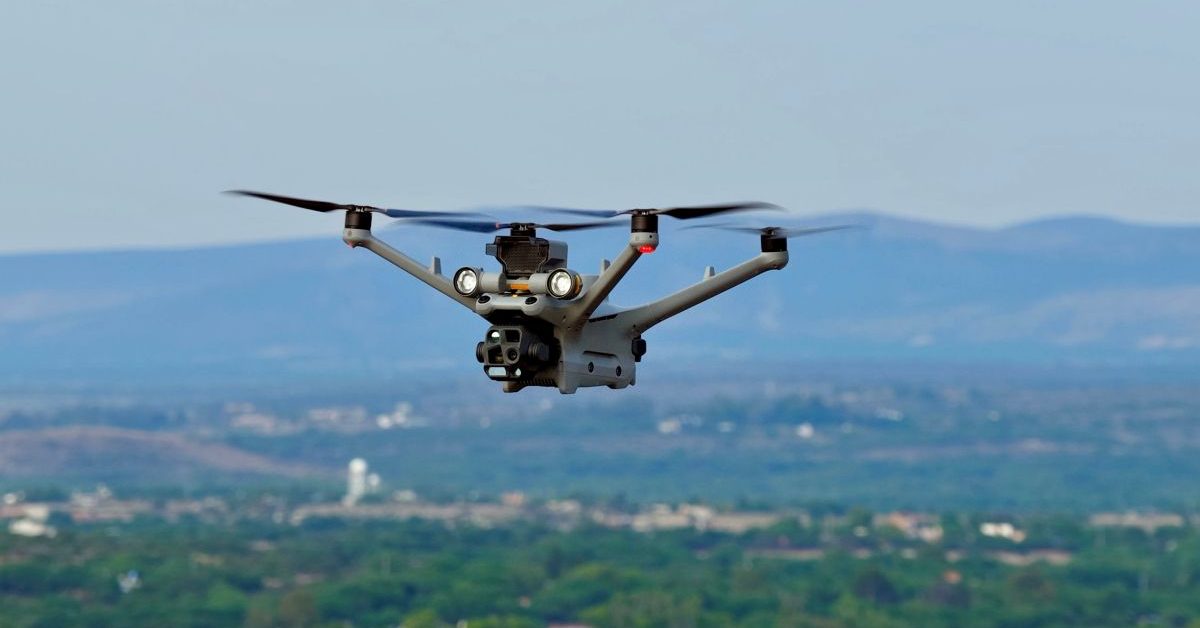
DJI Matrice 4D drone gains standalone C6 compliance across Europe
DJI has unveiled a significant certification update for its Matrice 4D drone series, now recognized under C6 certification in Europe. This enhancement allows operators to use the DJI RC Plus 2 Enterprise controller for direct operation, expanding the functionality of the drones beyond the previous requirement of using the DJI Dock 3. The update aims to improve accessibility and operational flexibility for enterprise users, reflecting DJI's commitment to meeting regulatory standards while enhancing user experience.
News
First in the Industry: Dual Model Compliance for Huisi Kaiwu's Intelligent Robotics Platform
On June 26, 2026, the Huisi Kaiwu platform, part of the Beijing Humanoid Robot Innovation Center, marked a significant achievement by successfully completing compliance registration for two foundational models, Pelican-VL and WoW. This milestone represents the first instance of dual model registration in China's humanoid robotics sector. The accomplishment underscores the platform's preparedness for commercial deployment and signals a broader shift towards practical applications and technological advancements within the industry.
Humanoid Robots AI Robotics Compliance Simulation Models
Brain Corp Achieves SOC 2 Compliance, Reinforcing Trusted Enterprise-Grade Deployment of AI Systems at Scale
Brain Corp has achieved a significant security milestone with its autonomous robots, which are increasingly being deployed in commercial spaces. This development comes as businesses seek innovative solutions to enhance operational efficiency and safety. The milestone was reached in October 2023, reflecting the company's commitment to advancing robotic technology in various environments, including retail and logistics. The growing adoption of these robots is driven by the need for improved cleaning and maintenance processes, particularly in high-traffic areas. By utilizing advanced sensors and AI, Brain Corp's robots can navigate complex spaces while ensuring a high level of security and reliability. This progress not only streamlines operations but also addresses the rising demand for contactless services in the wake of the pandemic. As more companies integrate these autonomous solutions, Brain Corp is positioned to lead the market, demonstrating how technology can transform traditional practices in commercial settings. The successful implementation of these robots marks a pivotal moment in the evolution of automated services, paving the way for broader applications in the future.

Hai Robotics Secures Radio Equipment Directive (RED) Articles 3.3(d) Compliance, Strengthening Cybersecurity for Automated Warehouses
Hai Robotics has successfully complied with the EU Radio Equipment Directive (RED) Articles 3.3(d), a significant milestone that enhances the cybersecurity of its automated warehouse systems. This certification underscores the company's dedication to adhering to regulatory standards while bolstering the reliability and integrity of its HaiPick Systems. As a result, the systems will ensure secure wireless communications and operational resilience within connected logistics environments, reflecting the growing importance of cybersecurity in the automation sector.
Cybersecurity Warehouse Automation Logistics Industrial Equipment Regulatory ComplianceRobotics needs a service framework.
RSF defines a common language for robot service capability, lifecycle operations, certification pathways, and service-provider networks.
Join the RobotToday community on LinkedIn
Daily robotics news, in-depth analysis, conference highlights, and discussions with professionals worldwide.







