A single destination for timely, editor-curated robotics news from around the world.

A significant initiative to expand the use of driverless shuttles beyond corporate campuses and testing sites is gaining momentum. This effort, which has been in progress for several years, aims to integrate autonomous vehicles into public transportation systems, thereby enhancing mobility options for urban residents. The push is particularly relevant as cities seek innovative solutions to address traffic congestion and reduce carbon emissions. Recent developments indicate that several municipalities are collaborating with technology companies to pilot driverless shuttle programs in urban environments. These trials are designed to assess the feasibility and safety of autonomous vehicles in real-world settings, with the goal of eventually implementing them as a regular mode of transport for the public. The motivation behind this initiative stems from the increasing demand for efficient and sustainable transportation solutions. By leveraging advancements in artificial intelligence and vehicle technology, proponents believe that driverless shuttles can provide a reliable alternative to traditional public transit, particularly in underserved areas. As cities prepare for these trials, stakeholders are focused on ensuring regulatory compliance and addressing public concerns regarding safety and privacy. The successful deployment of driverless shuttles could mark a transformative shift in urban mobility, paving the way for smarter, more sustainable cities.
InterestingEngineering.com By Munis Raza 3 hours ago Innovation
RealSense has introduced its latest innovation, the D585 Pro depth camera, designed specifically for robotic applications. This new model is powered by a proprietary Gen 5 system-on-chip, which enhances its performance by providing over twice the depth quality compared to its predecessor. The unveiling of the D585 Pro marks a significant advancement in depth sensing technology, aimed at improving the capabilities of robots in various environments. The announcement was made recently, highlighting RealSense's commitment to advancing AI-native solutions in the robotics sector.
RoboticsBusinessReview.com By The Robot Report Staff 3 hours ago Artificial Intelligence / Cognition Autonomous Mobile Robots (AMRs) Cameras / Imaging / Vision Collaborative Robots Humanoids Industrial Robots
Noematrix, a company specializing in embodied intelligence, has recently secured hundreds of millions in funding, led by Wuxi Data Group, with participation from Shanghai Jiao Tong University's AI Future Fund, Shanghai Chuangzhi Technology Co., and Yicun Capital. This marks the latest financing round for Noematrix, which has attracted investments from several notable firms, including Prosperity7 Ventures and Alibaba, since its establishment in November 2023. The company focuses on the autonomous development of foundational models and systems for embodied intelligence, having launched its core product, Noematrix Brain. This product is part of a comprehensive hardware and software ecosystem that spans data collection, model training, deployment, and application in embodied robotics. The industry narrative surrounding embodied intelligence is shifting from merely executing tasks to ensuring robots can operate stably in real-world environments. Noematrix aims to enhance model robustness by integrating real-world and simulated data into its training processes, utilizing its proprietary data collection devices to gather diverse datasets from various environments. Noematrix's robots have already begun commercial deployment in pharmacies, addressing longstanding labor challenges in the sector by automating order fulfillment. The company has partnered with several leading pharmacy chains, achieving significant order volumes. Following this funding round, Noematrix plans to accelerate the development of its general-purpose embodied intelligence models, targeting applications in retail and hospitality sectors.
36kr.com 6 hours ago
Havelar, a Portuguese construction company specializing in 3D printing technology, has successfully completed a public building for the municipality of Matosinhos. The project involved the construction of a 500 square meter recycling center office located at the Ecocentro de Perafita in Porto. Remarkably, the building was printed in just nine days and completed within budget, utilizing a COBOD BOD2 construction 3D printer. This innovative approach not only showcases the efficiency of 3D printing in construction but also highlights the growing trend of sustainable building practices in the region.
RoboticsAndAutomationNews.com By Sam Francis 6 hours ago Construction Features 3D printed buildings additive manufacturing automated construction automation news
Anduril, ShieldAI, and Collins have been selected to create the autonomy system for a new collaborative combat aircraft. This initiative aims to enhance the capabilities of military aviation by integrating advanced autonomous technologies. The project is part of a broader effort to modernize defense systems and improve operational efficiency in combat scenarios. The collaboration between these companies reflects a growing trend in the defense industry to leverage cutting-edge technology for enhanced performance in aerial missions. The development is expected to take place over the coming months, with the goal of delivering a sophisticated system that can operate seamlessly in complex environments.
BreakingDefense By Aaron Mehta and Michael Marrow 12 hours ago Air Warfare Air Force Anduril CCA Collins Aerospace Drones
Researchers at Carnegie Mellon University's School of Computer Science have developed an innovative system called VideoManip, which enables robots to learn manipulation skills by analyzing videos of human interactions with objects. This groundbreaking approach allows robots to reconstruct movements and understand how humans make contact with various items, significantly reducing the need for lengthy, hands-on demonstrations by humans. By utilizing readily available internet videos, the system streamlines the training process for robots, enhancing their ability to acquire new skills efficiently. This advancement marks a significant step forward in robotics, potentially transforming how machines are trained to perform tasks in diverse environments.
ri.cmu.edu By Mallory Lindahl Jun 17, 2026 Research
AirData UAV, based in El Dorado Hills, California, has announced a significant milestone, surpassing 120 energy and utility customers globally. This achievement comes as the company prepares for the upcoming FAA Part 108 regulations, which are set to impact the drone industry. With over 63 million flights logged, AirData UAV is positioning itself as a leader in providing data solutions for these sectors. The expansion reflects the growing demand for drone technology in energy and utility operations, highlighting the company's commitment to innovation and compliance in a rapidly evolving regulatory landscape.
Dronelife.com By staff Jun 17, 2026 Drone News Drone News Feeds Energy infrastructure News utilities
In the past six months, the focus of the domestic embodied intelligence sector has shifted from hardware competition to the deeper challenges that define the intelligence limits of robots. Luo Jianlan, an associate professor at Shanghai Chuangzhi Academy and chief scientist at Zhiyuan Robotics, argues against the prevailing notion that robots can replicate large language models through sheer data accumulation. He emphasizes that the core issue in embodied intelligence is not about breakthroughs in isolated components but rather the ability to create a closed-loop system in real-world deployments. Luo, who has a background in both academia and industry, including roles at Google X and DeepMind, believes that many teams in the sector are not genuinely pre-training models but are instead engaged in mid-training or fine-tuning due to the scarcity of high-quality interaction data. He asserts that true embodied intelligence requires a scalable closed-loop system, where deployment leads to data collection, which in turn enhances model capabilities. His current focus includes developing scalable online post-training infrastructure, enabling robots to learn continuously in real-world environments, and creating a world model that predicts the consequences of actions rather than merely generating video. Luo suggests that the future of embodied intelligence hinges on successfully integrating these elements into a cohesive system, with significant advancements expected in the next 12 to 18 months. He believes that the first team to effectively implement a "deployment-data-iteration" cycle in semi-structured environments like convenience stores will gain a substantial competitive edge.
36kr.com Jun 17, 2026
China’s R6000, recognized as one of the largest uncrewed tiltrotor aircraft globally, has commenced full free-flight testing. This significant development took place recently, marking a crucial step in advancing the country's aerospace capabilities. The testing is being conducted in various locations, showcasing the aircraft's versatility and potential applications in both military and civilian sectors. The motivation behind this initiative is to enhance China's technological prowess in aviation and to explore new operational possibilities for unmanned aerial vehicles. The R6000's design allows it to take off and land vertically while also achieving high-speed horizontal flight, which could revolutionize transport and logistics in challenging environments. As the testing progresses, engineers and researchers are closely monitoring the aircraft's performance to ensure safety and efficiency, paving the way for future innovations in unmanned flight technology.
InterestingEngineering.com By Chris Young Jun 17, 2026 Military
An elephant's trunk, a remarkable adaptation of the species, showcases its strength and versatility as it can effortlessly transport heavy logs across open spaces. This impressive ability not only highlights the physical prowess of elephants but also serves a crucial role in their daily activities, such as foraging and building shelters. Observations of these behaviors contribute to a deeper understanding of elephant intelligence and their interactions with the environment. The trunk's dexterity allows elephants to manipulate objects with precision, demonstrating their complex problem-solving skills and social behaviors. As researchers continue to study these magnificent creatures, they uncover insights into their ecological impact and the importance of preserving their habitats.
InterestingEngineering.com By Munis Raza Jun 17, 2026 AI and Robotics
Built Robotics is partnering with the University of Pennsylvania’s Safe Autonomous Systems Lab, known as xLAB, to advance research in physical AI aimed at creating autonomous construction systems capable of safe operation in real-world environments. This collaboration combines Built Robotics' expertise in deploying autonomous technologies on construction sites with xLAB's cutting-edge research in safety and automation. The initiative seeks to enhance the efficiency and safety of construction processes by leveraging innovative AI solutions.
AIInsider By Greg Bock Jun 17, 2026 AI AI Funding & Investment AI Research & Advances Robotics Built Robotics Partnership
Neuroscientist and robotics researcher Elisa Donati has emphasized the limitations of artificial intelligence robots that seem intelligent only in controlled environments. In a recent discussion, she highlighted the need for these robots to possess real-world readiness, which demands more than just advanced software capabilities. Donati argues that to function effectively outside of laboratory settings, robots must integrate various sensory inputs and adapt to unpredictable situations. This insight sheds light on the challenges facing the robotics industry as it strives to develop machines that can operate autonomously in diverse and dynamic environments.
TechXplore:Robotics Jun 17, 2026 Robotics
A Chinese robotics company, X Square Robot, is focusing on a challenging objective: developing robots capable of functioning in the unpredictable and complex environments typical of human settings. Unlike many firms that highlight humanoid robots performing impressive feats like backflips and obstacle courses, X Square Robot aims to create machines that can adapt to real-world conditions where people live and work. The company's founder emphasizes the importance of this endeavor, suggesting that successfully teaching robots to navigate such environments could have significant implications for various industries. This initiative reflects a broader trend in robotics, where the emphasis is shifting from mere performance demonstrations to practical applications that enhance everyday life.
RoboticsAndAutomationNews.com By Sam Francis Jun 17, 2026 Computing Humanoids News Robot simulation ai robotics artificial intelligence
In a groundbreaking study published in the June 2026 issue of Science Robotics, researchers from leading universities have unveiled a new robotic system designed to assist in complex surgical procedures. This innovative technology aims to enhance precision and reduce recovery times for patients undergoing surgery. The research team, comprised of experts in robotics and medicine, conducted extensive trials to evaluate the system's effectiveness. Their findings indicate that the robotic assistant can significantly improve surgical outcomes by minimizing human error and providing surgeons with advanced tools for intricate tasks. The development of this robotic system comes in response to the growing demand for more efficient and safer surgical methods, driven by an increase in minimally invasive procedures. By integrating artificial intelligence and machine learning, the robot is capable of adapting to various surgical environments and techniques, thereby expanding its applicability across different medical specialties. The trials took place in several hospitals, where the robotic system was tested alongside traditional surgical methods. Results showed a marked improvement in patient recovery rates and overall satisfaction with the surgical experience. As the healthcare industry continues to evolve, this robotic innovation represents a significant step forward in the integration of technology into medical practice, promising to transform the future of surgery and patient care.
AAAS:ScienceRobotics By Shelly Levy-Tzedek Jun 17, 2026 Focus
In a groundbreaking study published in the June 2026 issue of Science Robotics, researchers from a leading university have unveiled a new robotic system designed to assist in disaster response efforts. The innovative technology, which combines advanced artificial intelligence with agile mobility, aims to enhance the efficiency and effectiveness of rescue operations in environments that are hazardous or difficult to navigate. The research team conducted extensive field tests in various simulated disaster scenarios, demonstrating the robot's ability to traverse challenging terrains and perform critical tasks such as locating survivors and delivering supplies. These tests were carried out in collaboration with emergency response organizations to ensure real-world applicability. The motivation behind this development stems from the increasing frequency and severity of natural disasters, which necessitate improved response mechanisms to save lives and minimize damage. By integrating cutting-edge robotics with emergency protocols, the researchers hope to provide first responders with a powerful tool that can operate in conditions that are unsafe for human intervention. This advancement in robotic technology represents a significant step forward in disaster management, showcasing how innovation can be harnessed to address pressing global challenges. The study highlights the potential for future enhancements and the importance of ongoing collaboration between scientists and emergency services to refine these systems for practical use in real-world situations.
AAAS:ScienceRobotics By Melisa Yashinski Jun 17, 2026 Editors' Choice
Kawasaki Robotics introduced its latest advancements in automation technology at Automate 2026, held in Chicago on June 17, 2026. The company showcased the new RL030N robot platform, which features eight degrees of freedom specifically designed for Physical AI applications, alongside its patented Pulseboard inspection technology. These innovations highlight Kawasaki's commitment to enhancing industrial automation through the integration of robotics, artificial intelligence, and machine learning. The RL030N robot stands out as the industry's first 8-axis platform, enabling high-speed motion and enhanced dexterity for complex tasks in dynamic environments. This robot is engineered to support AI-driven applications that require adaptive motion and obstacle avoidance, setting it apart from traditional industrial robots optimized for repetitive tasks. Additionally, Kawasaki demonstrated the Pulseboard technology in a robotic weld inspection system developed with Fives DyAG. This system significantly improves inspection efficiency by synchronizing image acquisition with the robot's movements, allowing for up to ten times faster weld inspections without compromising accuracy. Seiji Amazawa, President of Kawasaki Robotics, emphasized the importance of these technologies in shaping the future of automation, stating that they are designed to support emerging Physical AI applications while maintaining the reliability that manufacturers expect. The event marks a pivotal moment for Kawasaki Robotics as it continues to lead in intelligent automation solutions.
RoboticsTomorrow.com Jun 17, 2026
The New Netherlands Customer Innovation Center has been established to enhance customer engagement and regional support while providing access to AI-enabled robotic automation throughout Europe. This initiative, launched recently, aims to foster innovation and collaboration among businesses in the region. By leveraging advanced technologies, the center seeks to address the growing demand for automation solutions in various industries. The initiative is part of a broader strategy to position the Netherlands as a key player in the European tech landscape, ultimately driving economic growth and improving operational efficiencies for local companies. Through workshops, demonstrations, and tailored support, the center will facilitate knowledge sharing and help businesses integrate cutting-edge automation technologies into their operations.
RoboticsTomorrow.com Jun 17, 2026
A new collaboration has emerged between xLAB and Built Robotics, focusing on enhancing safety in autonomous systems. This partnership aims to combine xLAB's extensive experience in developing high-performance, safety-critical technologies with Built Robotics' advanced edge AI model, which specializes in personnel detection and ensuring human safety. The initiative is designed to address growing concerns about safety in automated environments, particularly as the use of autonomous systems becomes more prevalent across various industries. By integrating their expertise, the two companies hope to create solutions that not only improve operational efficiency but also prioritize the well-being of individuals working alongside these technologies.
RoboticsTomorrow.com Jun 17, 2026
Researchers have developed an innovative spatial memory system designed for robots, enabling them to effectively capture and retain detailed information about objects encountered during environmental exploration. This advancement, which leverages cutting-edge technology, aims to enhance the robots' ability to navigate and interact with their surroundings more intelligently. The system was introduced in a study published in October 2023, showcasing its potential to improve robotic perception and memory capabilities. By integrating sophisticated algorithms, the robots can now better recognize and remember various objects, ultimately leading to more autonomous and efficient operations in diverse settings. This breakthrough is expected to have significant implications for fields such as robotics, artificial intelligence, and automation, as it allows for more nuanced interactions between machines and their environments.
MITNews By Adam Zewe | MIT News Jun 17, 2026 Research Computer science and technology Algorithms Artificial intelligence Machine learning Robotics
Thales has introduced a new line of advanced battlefield drones as military forces worldwide strive to keep pace with the increasing use of unmanned aerial vehicles in combat. This announcement comes amid growing concerns over the evolving nature of warfare, where drones are becoming a pivotal element on the front lines. The unveiling took place during a defense technology exhibition in Paris, highlighting the company's commitment to enhancing military capabilities in response to modern threats. Thales aims to provide innovative solutions that not only improve operational efficiency but also ensure the safety of personnel in high-risk environments. The new drones are designed to integrate seamlessly with existing military systems, offering enhanced surveillance and combat support. As nations invest heavily in drone technology, Thales's latest offerings reflect the urgent need for armed forces to adapt to these advancements and maintain strategic advantages on the battlefield.
InterestingEngineering.com By Aamir Khollam Jun 16, 2026 Military
Genesis AI has introduced Eno, its inaugural general-purpose robot, marking a significant step in the company's ambition to advance robotics technology. The unveiling took place recently, showcasing Eno's capabilities designed to perform a variety of tasks across different sectors. This launch is part of Genesis AI's broader strategy to innovate and integrate artificial intelligence into everyday applications, aiming to enhance efficiency and productivity in various industries. By leveraging cutting-edge technology, Eno is expected to address diverse needs, from automation in manufacturing to assistance in healthcare. The development of this robot reflects the growing trend in the tech industry towards creating versatile AI-driven solutions that can adapt to multiple environments and challenges.
InterestingEngineering.com By Neetika Walter Jun 16, 2026 AI and Robotics
DJI has introduced the DJI O4 Ground Station, a new transmission system aimed at addressing a significant challenge for drone pilots: maintaining a strong and reliable connection in challenging environments. Announced recently, this innovative system is designed to significantly enhance drone communications, particularly in areas prone to signal interference, obstacles, or long distances that can disrupt operations. By improving reliability, the O4 Ground Station seeks to empower drone users to operate more effectively in difficult conditions, ultimately enhancing their overall flying experience.
Dronedj.com By Ishveena Singh Jun 16, 2026 News
Genesis AI and LG CNS have announced a long-term partnership aimed at assessing and implementing general-purpose robots in manufacturing and logistics sectors across the United States. This collaboration seeks to provide companies globally with a streamlined approach to adopting robotics on an enterprise scale. Zhou Xian, co-founder and CEO of Genesis AI, emphasized the significance of this partnership in facilitating the deployment of advanced robotic solutions. The initiative reflects a growing trend towards automation in various industries, driven by the need for efficiency and innovation in operational processes.
AIInsider By Greg Bock Jun 16, 2026 AI AI Funding & Investment AI Use Cases Robotics genseis AI industrial robotics
In a recent initiative aimed at enhancing military capabilities, European defense experts are focusing on the integration of advanced technologies, including drones and artificial intelligence, into modern warfare. This modernization effort is particularly evident in Eastern Europe, where the deployment of drone walls has become a strategic priority. The initiative underscores the growing recognition of the need for innovative solutions to address contemporary security challenges. Taking place throughout 2023, this movement is centered in various Eastern European nations, which are increasingly investing in cutting-edge military technologies to bolster their defense systems. The motivation behind this modernization is driven by the evolving geopolitical landscape and the necessity to respond effectively to potential threats. Experts are collaborating on developing systems that incorporate AI into military vehicles, such as tanks, enhancing their operational efficiency and decision-making capabilities. This integration of technology aims to create a more agile and responsive military force, capable of adapting to rapidly changing combat environments. As Europe navigates these advancements, the emphasis on modernization reflects a broader commitment to maintaining security and stability in the region, ensuring that military forces are equipped to meet future challenges. The ongoing efforts highlight the importance of innovation in defense strategies, positioning European nations at the forefront of military technology development.
BreakingDefense By Breaking Defense Jun 16, 2026 Networks & Digital Warfare Sponsored Post artificial intelligence AI Counter UAS cUAS CUAS cyber security
ABB Robotics has announced a collaboration with California-based bionic company PSYONIC to enhance the development of more dexterous robotic systems. This partnership aims to leverage PSYONIC's expertise in bionic technology to create advanced robotic solutions that can perform intricate tasks with greater precision and adaptability. The initiative is part of ABB's ongoing commitment to innovation in robotics, seeking to address the growing demand for versatile robotic applications across various industries. The collaboration was officially unveiled in October 2023, marking a significant step forward in the integration of bionic technology into robotic systems. By combining their strengths, both companies hope to push the boundaries of what is possible in robotic dexterity, ultimately improving efficiency and productivity in sectors such as manufacturing, healthcare, and beyond.
InterestingEngineering.com By Jijo Malayil Jun 16, 2026 AI and Robotics
L3Harris has announced a significant advancement in its counter-unmanned aerial systems (c-UAS) capabilities by integrating a small interceptor drone into its Vampire platform. This development marks the first time the Vampire system will feature this technology, enhancing its operational effectiveness against potential aerial threats. The integration aims to bolster defense measures in various environments, reflecting L3Harris's commitment to innovation in military and security applications. The deal underscores the growing need for advanced solutions in countering drone threats, as the use of unmanned aerial vehicles continues to rise globally.
BreakingDefense By Elisabeth Gosselin-Malo Jun 16, 2026 Air Warfare Global Land Warfare Air Force Army Business & Industry
xLAB and Built Robotics have announced a partnership aimed at enhancing construction site safety through advanced artificial intelligence. This collaboration focuses on capturing additional data to refine AI models that can better predict and mitigate risks in construction environments. The initiative comes at a time when the construction industry is increasingly prioritizing safety measures, driven by the need to reduce accidents and improve operational efficiency. By leveraging innovative technology, the two organizations aim to create a more secure working environment for construction workers. The development of this physical AI is expected to take place over the coming months, with both companies committed to integrating their expertise to achieve significant advancements in the field.
RoboticsBusinessReview.com By Mike Oitzman Jun 16, 2026 Academia / Research Artificial Intelligence Autonomous Mobile Robots (AMRs) Construction Mining News
BlueME has developed innovative magnetoelectric antennas designed to enhance data exchange for underwater robots, enabling communication over long distances while maintaining a low power consumption of under 10 watts. This advancement is particularly significant for operations in real-world ocean environments, where efficient data transmission is crucial for various marine applications. The technology aims to improve the capabilities of underwater robotics, facilitating better data collection and communication in challenging aquatic settings.
AZOrobotics.com Jun 16, 2026
A recent study conducted by Hexagon has revealed that both adults and children are increasingly receptive to the integration of robots in the workplace. The findings indicate a growing acceptance of robotic assistance, yet respondents emphasized the importance of establishing clear guidelines regarding the roles and environments in which these machines should operate. The study highlights a nuanced perspective on automation, reflecting a desire for collaboration between humans and robots while ensuring that ethical and practical boundaries are respected. This research, part of Hexagon's global Robot Generation initiative, underscores the evolving attitudes towards technology in professional settings as of October 2023.
AZOrobotics.com Jun 16, 2026
DefSecIntel has unveiled DroneHive, an innovative automated multi-cell interceptor trailer designed to enhance aerial defense capabilities. This new system operates in conjunction with the company's advanced EIRSHIELD C2 platform, which is equipped with a variety of sensors for comprehensive situational awareness. The launch took place recently, marking a significant advancement in drone interception technology. The introduction of DroneHive aims to address the growing concerns surrounding unauthorized drone activities and potential threats to security. By automating the interception process, DefSecIntel seeks to improve response times and operational efficiency in protecting sensitive areas. The integration of the EIRSHIELD C2 platform allows for real-time data analysis and decision-making, further bolstering the effectiveness of the interceptor system. This development reflects a broader trend in the defense industry towards leveraging automation and advanced technology to counter evolving aerial threats. As drone usage continues to rise, solutions like DroneHive are becoming increasingly vital for ensuring safety and security in various environments.
Army-Technology By John Hill Jun 16, 2026 News
ABB Robotics has partnered with California-based bionics company PSYONIC to enhance robotic dexterity and grasping capabilities by utilizing human-generated data from prosthetic use. Announced on June 16, 2026, this collaboration aims to address the significant challenge of replicating human-like dexterity in industrial robotics, which is essential for the development of Autonomous Versatile Robotics (AVR™). By integrating the PSYONIC Ability Hand with ABB's GoFa™ collaborative robot, the two companies will explore how real-world manipulation data can train robots to perform delicate tasks that are typically difficult to automate. This initiative is expected to reduce engineering time by up to 30% and improve productivity, flexibility, and workplace safety across various industries, including automotive, aerospace, packaging, logistics, and life sciences. Marc Segura, President of ABB Robotics, emphasized the importance of bridging the gap between human and robotic dexterity to enable robots to learn and interact with their environments more intuitively. Dr. Aadeel Akhtar, Founder and CEO of PSYONIC, highlighted that the collaboration will leverage high-fidelity data on movement and grip force to enhance robotic performance in complex tasks. The GoFa™ robot will provide the precision necessary for industrial applications, ensuring consistent execution of intricate movements, which is crucial for handling fragile or irregular objects. This partnership represents a significant step towards advancing physical AI in robotics, allowing for more effective collaboration between humans and machines.
RoboticsTomorrow.com Jun 16, 2026
Leopard Imaging is set to showcase its extensive range of advanced imaging and perception technologies at this year's event, aimed at enhancing robotics, industrial automation, autonomous systems, machine vision, and edge AI applications. Scheduled for [insert date], the demonstration will take place at [insert location], where attendees can engage with live presentations. The showcased technologies will include stereo vision, RGB-D perception, long-range depth sensing, surround vision, and compact embedded camera systems. This initiative underscores Leopard Imaging's commitment to advancing the capabilities of imaging technologies in various sectors, providing visitors with firsthand experience of innovations that could transform operational efficiency and effectiveness in automation and AI-driven environments.
RoboticsTomorrow.com Jun 16, 2026
The IH520 Series has been introduced as a slim incremental hollow shaft encoder, specifically engineered to deliver accurate motion feedback for compact robotics and motion control applications. This innovative device is particularly suited for environments with restricted space and the need for continuous operation. Key features include a low axial profile, flange mounting, and a hollow shaft design, all of which facilitate straightforward installation. The development of the IH520 Series addresses the growing demand for efficient and reliable motion control solutions in modern robotics.
RoboticsTomorrow.com Jun 16, 2026
Genesis has announced a strategic partnership with LG CNS to create a scalable deployment model for full-stack robotics tailored for industrial environments. This collaboration aims to enhance automation capabilities across various sectors, addressing the growing demand for efficient and flexible robotic solutions. The initiative was unveiled on October 15, 2023, and will focus on integrating advanced robotics technology into manufacturing and logistics operations. By leveraging LG CNS's expertise in IT services and Genesis's innovative robotics solutions, the partnership seeks to streamline processes and improve productivity in industrial settings. This development reflects a broader trend in the industry towards adopting sophisticated automation technologies to meet evolving operational needs.
RoboticsTomorrow.com Jun 16, 2026
Alibaba Group Holding has unveiled its inaugural suite of artificial intelligence models designed for robots, positioning itself in the competitive landscape of advancing AI beyond traditional chatbot applications. On Tuesday, the Hangzhou-based technology leader introduced the Qwen Robot Suite, a significant step into the realm of "embodied AI," which enables machines to perceive, reason, and engage with their physical surroundings. This innovative suite has been developed by Alibaba's AI research division, Tongyi Lab, and is currently undergoing pilot testing with select partners within the company. This move reflects Alibaba's commitment to expanding the capabilities of AI in real-world applications, aiming to enhance the interaction between machines and their environments.
SCMPTech By Wency Chen Jun 16, 2026
Humanoid robots are poised to become a common presence in households, with advancements in technology emphasizing the importance of tactile sensation for their safe and effective operation. As homes present complex, unstructured, and dynamic environments, the development of robots equipped with a sense of touch is essential for their integration into daily life. This innovation is driven by the need to enhance the robots' ability to navigate and interact with various household tasks and obstacles, ensuring they can function effectively alongside humans. With ongoing research and development in this field, the arrival of these sophisticated humanoids is anticipated in the near future, marking a significant step forward in domestic robotics.
roboticstomorrow-Robotics Jun 16, 2026
PSYONIC has announced a collaboration with ABB Robotics to enhance robotic dexterity by integrating its Ability Hand prosthetic with ABB's GoFa collaborative robot arm. This partnership aims to leverage data collected from prosthetic users to improve the robot's grasping capabilities, effectively mimicking human touch. The initiative underscores the growing intersection of robotics and prosthetics, with the goal of creating more intuitive and responsive robotic systems. The collaboration reflects a commitment to advancing technology that not only aids individuals with disabilities but also enhances the functionality of robotic devices in various applications.
RoboticsBusinessReview.com By Eugene Demaitre Jun 16, 2026 Arms / Manipulators Artificial Intelligence Automotive Cobot Arms Collaborative Robots End Effectors / Grippers
In the rapidly evolving field of artificial intelligence, world models that simulate physical environments are gaining attention as the next frontier, surpassing traditional large language models. Recent developments indicate that China is leading the way in this area, outpacing the United States in the deployment of these advanced systems. These world models, which comprehend the physical laws governing the universe, are already being utilized to enhance AI applications, including robotics and autonomous vehicles. As of October 2023, China has integrated these technologies more extensively than its American counterparts, marking a significant advancement in the global AI landscape. This trend highlights the growing competition between the two nations in harnessing AI's potential for practical applications.
SCMPTech By Vincent Chow Jun 16, 2026
A recent study published in the Journal of Field Robotics highlights advancements in autonomous robotic navigation. Researchers from a leading robotics institute conducted experiments to enhance the efficiency of robots in complex environments. The study, released in early October 2023, focuses on the integration of advanced algorithms that allow robots to better interpret their surroundings and make real-time decisions. The research was carried out in various challenging terrains, including urban settings and natural landscapes, to test the robots' adaptability. The motivation behind this work stems from the growing demand for autonomous systems in sectors such as agriculture, search and rescue, and urban planning. By improving navigation capabilities, the researchers aim to facilitate the deployment of robots in scenarios where human intervention is limited or dangerous. Through a series of simulations and field tests, the team demonstrated that the new algorithms significantly reduced the time taken for robots to complete tasks while increasing their accuracy in obstacle avoidance. This breakthrough could lead to more reliable and efficient robotic systems, paving the way for wider applications in everyday life. The findings underscore the potential of robotics to transform various industries by enhancing operational efficiency and safety.
JournalofFieldRobotics By Rajesh Kannan Megalingam, Kusumanchi Surya Shanmukh, Aditya Ashvin, Pochareddy Nishith Reddy, Aryan Kurungadathil, Shree Rajesh Raagul Vadivel Jun 16, 2026 RESEARCH ARTICLE
A recent study published in the Journal of Field Robotics highlights advancements in autonomous robotic systems designed for agricultural applications. Researchers from a consortium of universities and tech companies conducted the study to address the growing need for efficient farming solutions amid rising labor costs and food demand. The research, which began in early 2023, took place across various agricultural sites in California, focusing on the integration of robotics in crop monitoring and harvesting. The team developed a prototype robot equipped with advanced sensors and machine learning algorithms, enabling it to navigate fields and collect data on crop health. This innovation aims to enhance productivity and reduce the reliance on manual labor, which has become increasingly scarce. The researchers conducted extensive field tests to evaluate the robot's performance and adaptability to different farming conditions. The findings suggest that these autonomous systems could significantly improve yield and reduce waste, addressing both economic and environmental challenges in agriculture. The study underscores the potential of robotics to transform traditional farming practices, paving the way for more sustainable and efficient food production methods in the future.
JournalofFieldRobotics By Yiting Chen, Jiali Fan, Chenglong Li, Boliao Li, Zhenbo Wei, Jun Wang Jun 16, 2026 RESEARCH ARTICLE
In the rapidly evolving field of artificial intelligence, the initial phase of developing any advanced AI model begins with a crucial training run. The efficiency and effectiveness of this training process are heavily influenced by the underlying infrastructure that supports it. This infrastructure determines the speed at which teams can refine their models, the scale of the models they are capable of constructing, and the reliability of job completions. As AI technology continues to advance, the importance of robust and efficient training environments becomes increasingly clear, impacting the overall progress and capabilities of AI development.
NvidiaNews By NVIDIA Jun 16, 2026
NVIDIA has launched the public beta of its XR AI, providing developers with a new framework designed for creating multimodal AI agents tailored for augmented reality (AR) glasses and extended reality (XR) devices. This initiative, which became available in October 2023, aims to enhance the capabilities of AR and XR technologies by enabling more sophisticated interactions and functionalities within these platforms. By offering this framework, NVIDIA seeks to empower developers to innovate and expand the potential applications of AI in immersive environments, ultimately transforming user experiences in the rapidly evolving tech landscape.
NvidiaNews By NVIDIA Jun 16, 2026
As military forces seek innovative solutions to enhance soldier safety and situational awareness, recent advancements in technology are being explored. These developments aim to provide troops with better protection while ensuring they remain alert to their surroundings. The initiative comes in response to the increasing challenges faced by soldiers operating in high-stress environments, where the balance between safety and awareness is crucial. By integrating cutting-edge wearable devices and advanced communication systems, armies are working to create a more effective and responsive combat experience. This effort is particularly relevant in light of ongoing conflicts and the evolving nature of warfare, which demands that soldiers be both protected and informed. The implementation of these technologies is expected to improve operational efficiency and reduce risks on the battlefield, ultimately enhancing the overall effectiveness of military missions.
InterestingEngineering.com By Aamir Khollam Jun 15, 2026 Military
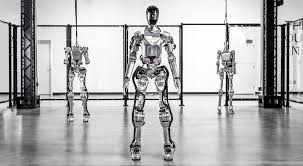
Recent reports indicate that Boston Dynamics' humanoid robot, Atlas, is nearing the level of autonomy required for practical use in industrial settings. This advancement comes as the company continues to refine Atlas's capabilities, enhancing its ability to navigate complex environments and perform tasks with minimal human intervention. The development is seen as a significant step forward in robotics, potentially transforming various industries by increasing efficiency and safety. Boston Dynamics aims to address the growing demand for automation in sectors such as manufacturing and logistics, where robots can assist in repetitive or hazardous tasks. As the technology progresses, the company is exploring partnerships and pilot programs to facilitate the integration of Atlas into real-world applications.
InterestingEngineering.com By Jijo Malayil Jun 15, 2026 AI and Robotics
A mobile robot created by Rainbow Robotics, a company under Samsung's control, has commenced testing operations within Coupang's facilities. This initiative, which began recently, aims to enhance the efficiency of logistics and delivery processes in the rapidly growing e-commerce sector. The collaboration between Rainbow Robotics and Coupang reflects a broader trend of integrating advanced robotics into supply chain management, driven by the increasing demand for faster and more reliable delivery services. The testing phase will assess the robot's capabilities in navigating the complex environments of Coupang's warehouses, potentially paving the way for wider adoption of robotic solutions in the industry.
InterestingEngineering.com By Kaif Shaikh Jun 15, 2026 AI and Robotics
WaiV Robotics, a London-based maritime autonomous infrastructure developer, has officially launched its services in the U.S. market this week. The company aims to address the increasing challenges faced by offshore energy operators in inspection, maintenance, and emergency response as assets are positioned further from shore. By introducing its innovative autonomous drone launch and recovery technology, WaiV Robotics seeks to enhance operational efficiency for offshore operators across the country. The platform is designed to streamline processes and improve safety in the demanding offshore environment.
Dronelife.com By Miriam McNabb Jun 15, 2026 Applications Drone News Drone News Feeds Drones in the News News ocean
Researchers are making significant strides in developing unmanned aerial vehicles (UAVs), or drones, capable of executing the challenging maneuver of transitioning from water to air. This complex task, often performed effortlessly by birds and marine animals like mobula rays, has proven to be a formidable challenge for drone technology. As of October 2023, advancements in engineering and design are being explored to enhance the capabilities of these aerial vehicles, aiming to improve their performance in various applications, including search and rescue missions, environmental monitoring, and recreational use. The ongoing research highlights the potential for drones to operate in diverse environments, ultimately expanding their utility and effectiveness in real-world scenarios.
TechXplore:Robotics Jun 15, 2026 Robotics
AeroVironment, an American defense company, has unveiled the TOM 50 RE, a new lightweight, backpackable uncrewed aerial vehicle (UAV) designed for military applications. The introduction of this advanced drone took place recently, showcasing its capabilities to enhance situational awareness and support ground troops in various operational environments. The TOM 50 RE is engineered to be easily transportable, allowing soldiers to deploy it quickly in the field. This innovation aims to address the growing demand for efficient reconnaissance tools that can operate in challenging terrains and provide real-time intelligence. The development reflects AeroVironment's commitment to advancing drone technology to meet the evolving needs of defense forces worldwide.
InterestingEngineering.com By Chris Young Jun 15, 2026 Military
Hyundai Motor Group is rapidly advancing its humanoid robot initiatives, particularly as Boston Dynamics' Atlas robot approaches the necessary level of autonomy for industrial use. A report published on Monday by KB Securities analyst Kang Sung-jin highlights that recent footage from Boston Dynamics, a subsidiary of Hyundai based in the United States, indicates substantial progress in the development of "general intelligence" for humanoid robots. This capability allows robots to adapt to various tasks and environments, marking a significant step towards their practical application in industries.
KoreaHerald.com By The Korea Herald Jun 15, 2026 All News
A Taiwanese company has introduced its first humanoid robot designed to engage in physical interactions with humans. This groundbreaking development was announced during a technology expo held in Taipei on October 15, 2023. The robot, which features advanced artificial intelligence and motion capabilities, aims to enhance human-robot collaboration in various sectors, including healthcare and customer service. The motivation behind this innovation is to address the growing demand for automation and assistance in daily tasks, particularly in environments where human interaction is essential. By utilizing sophisticated sensors and machine learning algorithms, the robot can understand and respond to human gestures and commands, making it a versatile tool for both personal and professional use. The unveiling of this humanoid robot marks a significant milestone in Taiwan's robotics industry, showcasing the nation's commitment to technological advancement and innovation.
InterestingEngineering.com By Jijo Malayil Jun 15, 2026 AI and RoboticsRSF defines a common language for robot service capability, lifecycle operations, certification pathways, and service-provider networks.
Excepteur sint occaecat cupidatat non proident