

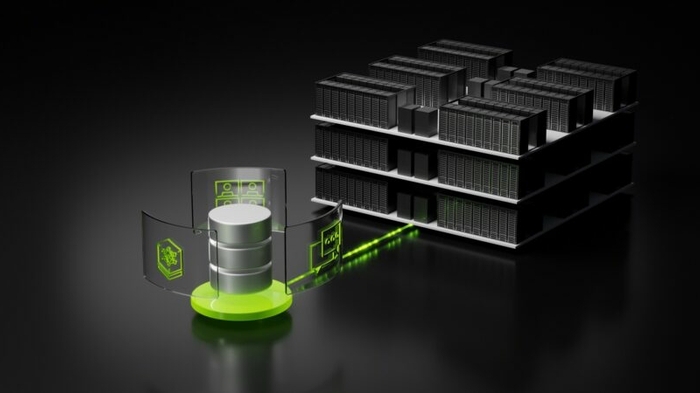
NVIDIA has introduced new storage advancements at the Future of Memory and Storage (FMS) conference, addressing the increasing demands of AI for massive datasets and context windows. The company emphasizes that simply adding storage capacity is insufficient; instead, efficient and secure storage architectures are essential for managing the data consumed by AI agents.
The significance of these advancements lies in their ability to enhance throughput and reduce the bottlenecks caused by simultaneous access from thousands of AI agents. NVIDIA's Vera CPU, part of the Vera BlueField-4 STX, reportedly delivers up to 3.21 times higher throughput than traditional x86 CPUs in handling compression and encryption tasks, thereby improving the efficiency of storage platforms in managing AI data.
Looking ahead, the gap between AI's requirements and memory limitations will necessitate a collaborative approach across the ecosystem, involving memory and storage manufacturers as well as software developers. NVIDIA's announcement of open sourcing its cuFile APIs aims to facilitate direct GPU access to storage, marking a significant step towards a unified, security-focused storage stack that enhances interoperability between GPUs and data.
Editor's Note
The advancements presented by NVIDIA at the FMS conference highlight a critical shift in how storage systems must evolve to support the growing demands of AI applications. As AI continues to drive the need for rapid data processing and access, organizations must consider the implications of these innovations on their storage infrastructure and overall data strategy.































Leave a comment