

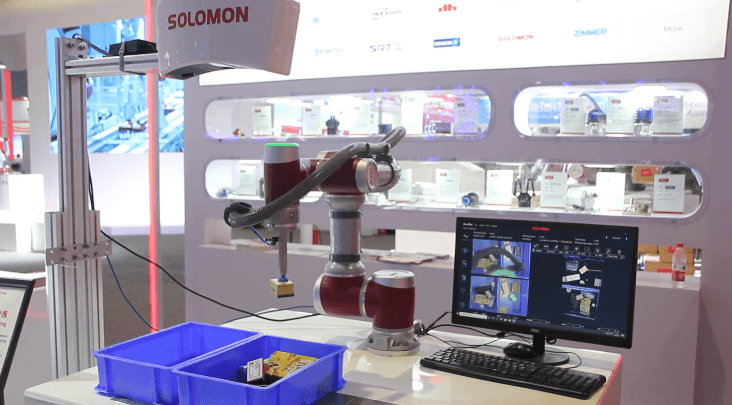
In response to the rapidly changing demands of manufacturing, JAKA is advancing the implementation of 6-axis robot arms designed for fast repurposing in production environments. As product cycles shorten and customization becomes standard, the company emphasizes that efficient redeployment of automation systems is essential for maintaining operational stability.
JAKA advocates for a design approach that prioritizes modular layouts and standardized interfaces, enabling manufacturers to quickly move, reprogram, or retool robotic systems with minimal disruption. This strategy is particularly beneficial for small-batch, multi-variety production, where frequent task changes are routine.
The company’s Zu3 model exemplifies this philosophy, featuring intuitive setup and adaptive control that reduce reliance on specialized teams. Its lightweight design allows for easy integration into existing production lines, while its adaptive motion capabilities enable the robot to perform various tasks—such as assembly, handling, and inspection—without extensive mechanical adjustments.
Moreover, JAKA highlights the importance of human collaboration in achieving sustainable flexibility. By allowing operators to participate in the teaching and adjustment of the robots, the company fosters a more efficient changeover process, ensuring that production can continue smoothly even as product specifications evolve.
Ultimately, JAKA’s approach to automation focuses on building a repurposing-oriented strategy that not only meets current production needs but also adapts to future demands, ensuring long-term operational continuity for manufacturers.






















Leave a comment