

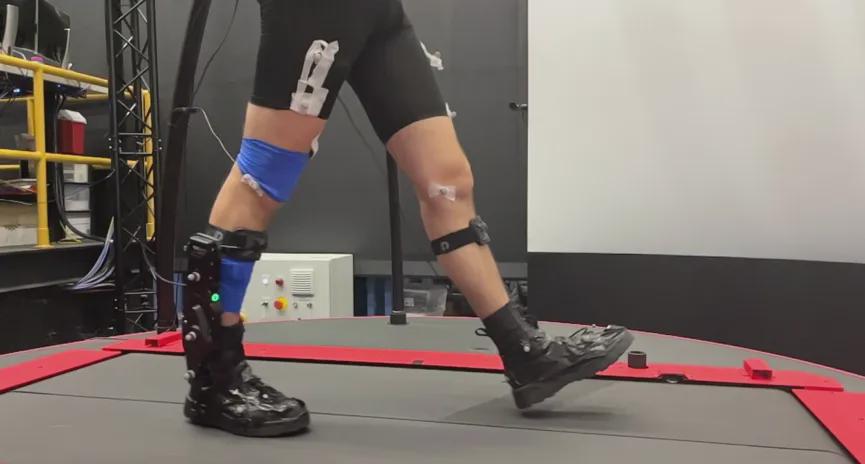
Researchers at Georgia Tech have developed a system that uses six electrodes placed on the skin to track muscle activity during walking. This innovative approach extracts information about muscle contractions from electrical signals, showing a strong correlation with ultrasound measurements. The findings, published in Science Robotics, suggest that wearable robots could utilize this technology for more convenient and efficient muscle monitoring.
The significance of this development lies in its potential to enhance the functionality of exoskeletons and other wearable robots. By using electrical impedance myography (EIM), the system can monitor muscle activity without the need for invasive procedures or complex ultrasound equipment. This could lead to more accessible and lower-power solutions for tracking muscle behavior in real-time.
Looking ahead, researchers aim to further explore the relationship between muscle contractions and the electrical impedance changes observed. Understanding how these internal muscle dynamics contribute to movement will be crucial for advancing wearable robotics and improving their integration into everyday activities. No further timeline was disclosed at the time of publication.
Editor's Note
The integration of electrical impedance myography into wearable robotics represents a significant advancement in muscle monitoring technology. This approach could streamline the development of exoskeletons and other assistive devices, making them more user-friendly and efficient. As the industry moves towards more sophisticated and responsive robotic systems, such innovations will play a critical role in enhancing human-robot interaction and performance.


























Leave a comment