Humanoid Education & Research Motion & Navigation Human-Machine Interaction Software & Algorithm Provider
Exploring China's Equivalent of NVIDIA at WAIC: Advancements in Robotics
Original from leaderobot.com: Discovering China's Equivalent of NVIDIA at WAIC

Exploring China's Equivalent of NVIDIA at WAIC: Advancements in Robotics

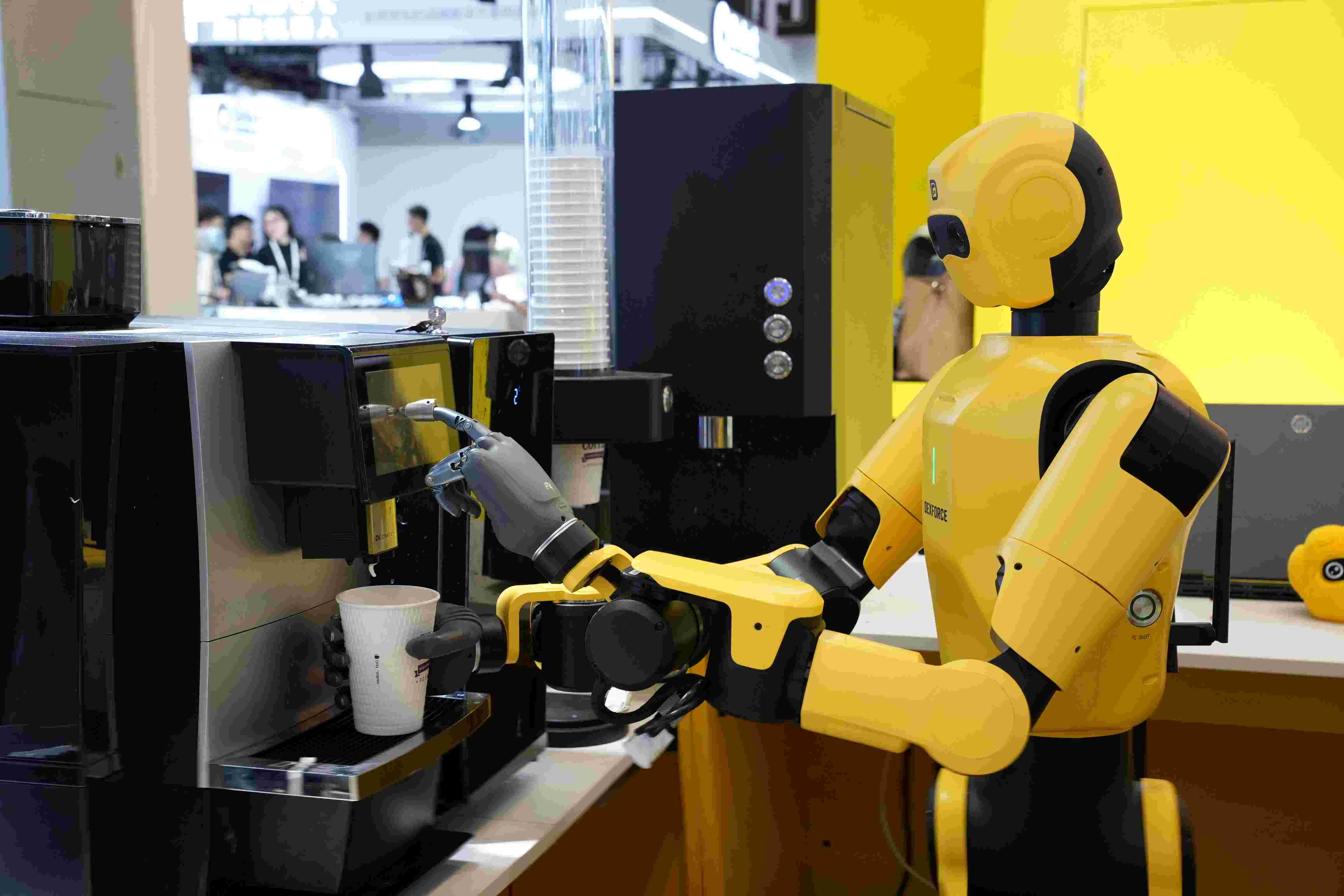
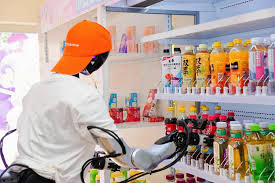
At this year's WAIC, the spotlight in the robotics exhibition was on humanoid robots capable of complex movements, such as walking, dancing, and conversing. However, the real challenge lies in how these robots handle unpredictable real-world scenarios, such as identifying and scanning barcodes from randomly placed products. This capability is crucial for robots to transition from theoretical demonstrations to practical applications.

The significance of these advancements is profound, as they reflect a shift in the robotics industry from rigid programming to adaptive learning. Robots must now operate in dynamic environments, requiring them to understand physical laws and continuously learn from their experiences. This evolution indicates a competitive transition where the focus is not just on the robots themselves but on the infrastructure that enables ongoing learning and adaptation.

Looking ahead, the industry is poised for a transformation similar to that seen in AI, where NVIDIA played a pivotal role. The next phase of robotics will depend on establishing foundational systems that allow robots to learn from real-world data and simulations. As companies like Kuawei develop datasets and simulation engines, they aim to become the driving force behind the physical AI era, ensuring that robots can evolve and adapt effectively in various environments.

Editor's Note

The robotics industry is witnessing a paradigm shift towards embodied intelligence, where robots must adapt to unpredictable environments rather than relying on predefined rules. This transition emphasizes the need for robust data infrastructure to support continuous learning and adaptability, mirroring the evolution seen in AI with companies like NVIDIA. As the demand for intelligent robotics grows, the focus will increasingly be on developing systems that facilitate this learning process.
RobotToday Initiative

Robotics needs a service framework.

RSF defines a common language for robot service capability, lifecycle operations, certification pathways, and service-provider networks.

Share

Related Articles/News

Qingche Intelligent Showcases Comprehensive Data Systems and Robotics at WAIC 2026

Qingche Intelligent Showcases Comprehensive Data Systems and Robotics at WAIC 2026

From July 17 to 20, 2026, Qingche Intelligent participated in the World Artificial Intelligence Conference (WAIC) in Shanghai, focusing on bridging models and real-world intelligence. The company showcased a complete technology system from real-world data collection to model training and robotic applications, emphasizing the importance of real-world data ...

Embodied Intelligence Data Management Robotics
Yao Maoqing Discusses the Evolution of Physical AI Through Model and Data Integration

Yao Maoqing Discusses the Evolution of Physical AI Through Model and Data Integration

On July 19, during the 2026 World Artificial Intelligence Conference, Yao Maoqing, Senior Vice President and President of the Embodied Business Division at Zhiyuan, shared insights on the technological pathways for scaling physical AI. Zhiyuan has developed a three-phase training architecture of 'pre-training, post-training, and continuous learning' to ad...

Physical AI Data Infrastructure Machine Learning
ROBOTTODAY Weekly July 13 – 17, 2026

ROBOTTODAY Weekly July 13 – 17, 2026

This week in robotics: Hyundai takes full ownership of Boston Dynamics, Xpeng targets 1,000 Iron humanoids a month, LimX Dynamics raises $200M pre-IPO, and Agility opens a Silicon Valley physical-AI hub. July 13–17, 2026.

RobotToday Weekly
WAIC 2026: Embodied Intelligence Enters Industrial Deployment Era

WAIC 2026: Embodied Intelligence Enters Industrial Deployment Era

WAIC 2026 in Shanghai (July 17–20) saw 200+ embodied intelligence companies, 300+ live robots, and first confirmed humanoid deployments in logistics and pharmacy. RobotToday engineering analysis.

Market and Business News
Inside Guident: How Harald Braun Is Building the Safety Layer Every Autonomous Vehicle Needs

Inside Guident: How Harald Braun Is Building the Safety Layer Every Autonomous Vehicle Needs

Guident CEO Harald Braun on the RMCC architecture, IRLS risk identification system, and why California’s 2026 AV mandates validate six years of platform development.

Market and Business News
Midea Group Signs 300 Million RMB Strategic Deal to Expand Industrial Robotics

Midea Group Signs 300 Million RMB Strategic Deal to Expand Industrial Robotics

Midea Group's subsidiary KUKA has signed a strategic cooperation agreement with YINGKE Medical and YINGKE Recycling, valued at over 300 million RMB. This deal includes 1,500 industrial robots, 500 mobile and embodied intelligent robots, and 50 automated storage systems, showcasing Midea's commitment to expanding its industrial robotics capabilities. This ...

Industrial Robotics Automation Solutions Smart Manufacturing
ROBOTTODAY Weekly July 6 – 10, 2026

ROBOTTODAY Weekly July 6 – 10, 2026

This week in robotics: AI² Robotics raises $735M for wheeled humanoids, Unitree G1 performs first live surgery, Dexmal launches DexOS platform, Agility Robotics announces SPAC, and Ondas acquires DZYNE for $875.8M. July 6–10, 2026.

RobotToday Weekly
MIT Develops FloatForm Swarm of Autonomous Boats for Adaptive Marine Infrastructure

MIT Develops FloatForm Swarm of Autonomous Boats for Adaptive Marine Infrastructure

MIT researchers have unveiled FloatForm, a swarm of 21-centimeter-square autonomous robotic boats capable of self-assembling into floating structures. Each boat is equipped with thrusters, sensors, and a magnetic latching mechanism, allowing them to connect and reconfigure with minimal human intervention. This modular system can adapt to various environme...

AI and Robotics
Physical AI Landscape: From Digital Intelligence to the Embodied Physical World

Physical AI Landscape: From Digital Intelligence to the Embodied Physical World

A comprehensive industry analysis of Physical AI — covering Embodied AI, Field AI, Factory AI, VLM, World Model, VLA, and the VLA vs WAM architecture debate. Includes 20+ companies, 28 references, and the RobotToday Physical AI Landscape diagram. July 2026.

Artificial Intelligence
Piaggio Fast Forward Brings kilo® Autonomous Mobile Robot to Automate 2026

Piaggio Fast Forward Brings kilo® Autonomous Mobile Robot to Automate 2026

Piaggio Fast Forward showcases kilo®, an infrastructure-free collaborative AMR (300 lb payload, 360° LiDAR), at Automate 2026 booth #17054.

Market and Business News
Ant Group Releases Open Source LingBot-VLA 2.0 with 60,000 Hours of Real-World Data

Ant Group Releases Open Source LingBot-VLA 2.0 with 60,000 Hours of Real-World Data

On July 8, Ant Group unveiled the upgraded LingBot-VLA 2.0 model, which has been enhanced through the integration of 60,000 hours of high-quality real-world data. This latest version offers improved support for a variety of robot configurations and degrees of freedom, leading to increased efficiency and performance in both dual-arm operations and mobile t...

Robotics AI Open Source
2026H2 Robotics Events Briefing: Tailored Recommendations for Robotics Readers

2026H2 Robotics Events Briefing: Tailored Recommendations for Robotics Readers

Discover the ultimate directory of global robotics events in 2026. Tailored briefings for engineers, investors, and founders on humanoid robots, AI, and industrial automation by RobotToday.

Events Market and Business News

Related Suppliers

The Robot Learning Company

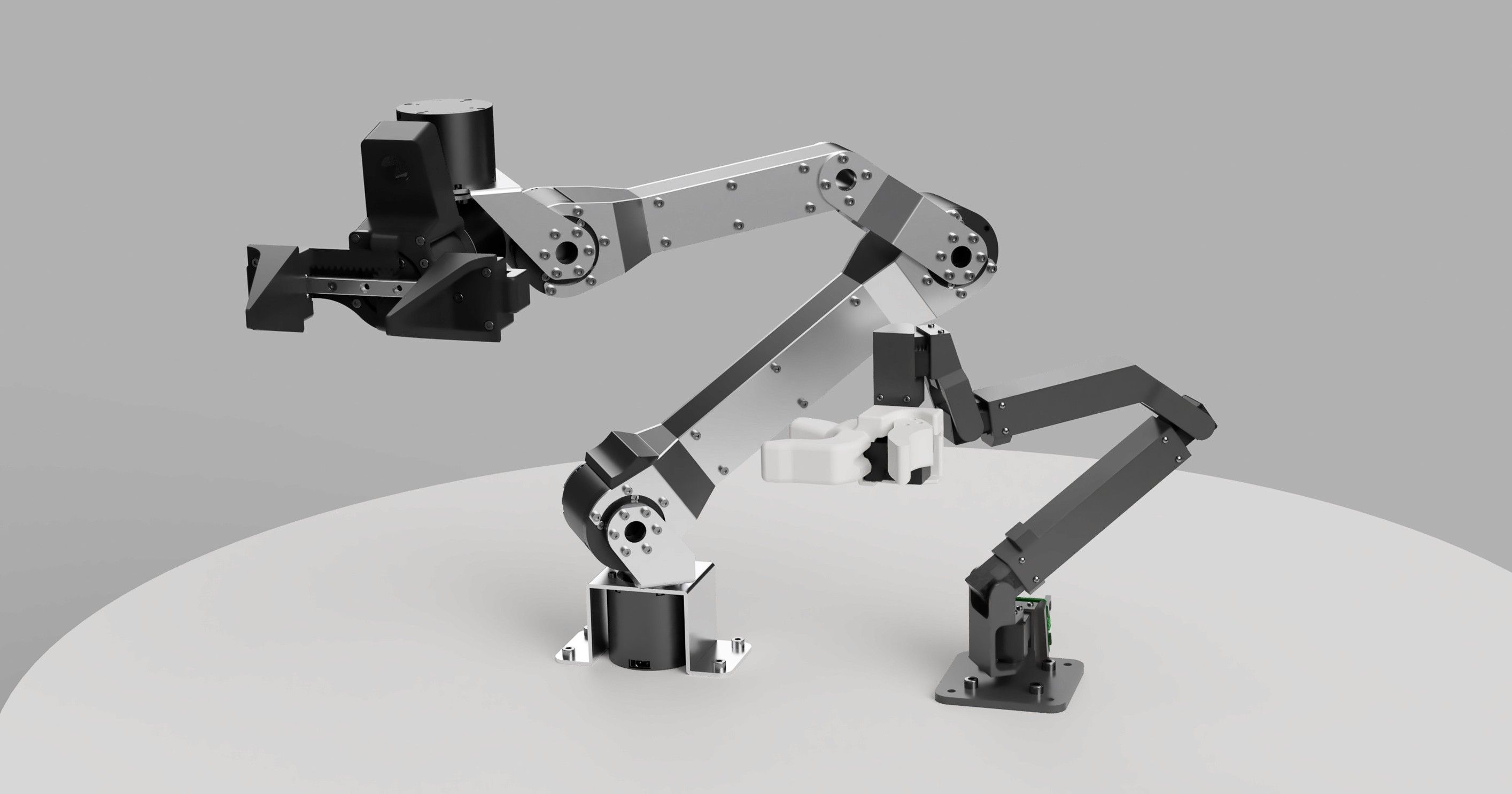
The TRLC-DK1 is an open-source development kit designed for AI-native robotics, featuring a single-arm configuration with a 700mm reach and 1kg payload capacity. It supports multiple operating systems (Linux, MacOS, Windows) and utilizes USB-C for data transfer. The advanced TRLC-DK1-X variant enables bimanual learning with dual leader-follower setups and enhanced sensory input through three cameras.

U Leuven

KU Leuven is a Belgian research university with active robotics research groups covering robot learning, manipulation, autonomous vehicles, and human-robot interaction. The university collaborates extensively with industrial partners on applied robotics projects.

Education & Research Healthcare & Senior Care Research Institute

Noematrix Intelligent 穹彻智能

NOEMATRIX focuses on embodied intelligence for robotic systems, delivering general-purpose AI frameworks and tools (AnySkill, Brain, Toolchain) to accelerate adaptive robotics in logistics, household services and research.

Adaptive Vision and Robotics

Adaptive Vision Robotics specializes in machine vision and robotics integration for food, automotive, pharmaceutical, and manufacturing industries. Offers precision inspection, traceability, logistics automation, and IIoT solutions with advanced vision-guided robotic systems for quality control and process optimization.

Robot Manufacturer Software & Algorithm Provider Perception & Vision

Parallel Domain

Parallel Domain provides a synthetic data platform for training and testing autonomous systems. The API and SDK generate high-fidelity simulated sensor data — camera, LiDAR, radar — with full annotations, enabling perception teams to validate AI models at scale without real-world data collection.

Vassar Robotics

The development of home humanoids involves a systematic approach: initiating with an open-source semi-humanoid developer kit, progressing to scalable manufacturing processes, and collecting real-world data for enhancing machine learning algorithms. This leads to improved autonomy in humanoid robots, targeting a performance benchmark of 20 hours of operational capability per week in domestic environments.

Deplace AI

The product focuses on deploying Physical AI solutions in industrial environments, specifically factories and warehouses. It evaluates various AI models based on performance metrics and real-world applications. The platform facilitates task automation by analyzing specific use cases, providing data-driven insights, and ensuring alignment with key performance indicators (KPIs) to optimize return on investment (ROI) in robotic deployment scenarios.

MAUM.AI Inc.

MAUM.AI (South Korea) develops Physical AI foundation modules for embodied systems. Key tech: MAIED (edge robotic brain, multi-chip VLA support), BODA (vision), SUDA (language), WoRV (motion), MAAL (action/LLM). Products include JINDO BOT (autonomous quadruped security robot), Mate Box (retrofit brain for Unitree quadrupeds/humanoids), on-premise LLMs. Focus: autonomous decision-making, task automation in security, industrial, and service applications.

WindBorne Systems

WindBorne's Global Sounding Balloon (GSB) technology enables comprehensive atmospheric data collection through controlled vertical profiles, offering approximately 50 profiles per balloon over multi-week missions. This contrasts with traditional weather balloons, which provide a single profile with a limited operational duration of about two hours. The integration of AI-driven models enhances forecast accuracy by leveraging proprietary atmospheric data.

Blue Edge Systems Engineering (PT)

Portuguese engineering company providing sensor data acquisition and processing services, including bathymetric surveying and topographic-hydrographic data collection. Specializes in systems from sensor hardware through to data processing.

CASBOT 灵宝

CASBOT (灵宝) is an Embodied Intelligence company dedicated to the R&D and application of general-purpose humanoid robots. They focus on developing high-dynamic integrated joints and a multi-layered control framework to enable complex, real-world task execution in manufacturing and service sectors.

ELU-AI 原力无限

ELU.AI is a Chinese company specialising in embodied intelligence robotics, launching its “FORCE” series fully-automatic charging robots and developing industry-specific AI Agent products such as the HEE super energy engine.