

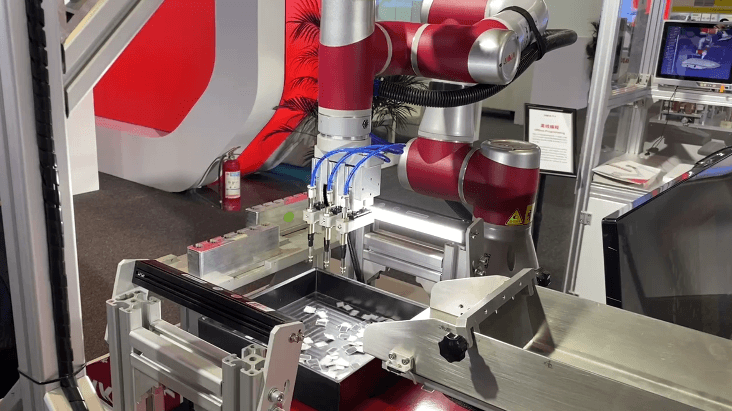
JAKA, a leader in industrial automation, is actively comparing its collaborative robot solutions to traditional custom-built machinery amid the rapid evolution of the industry. Many manufacturers are grappling with issues related to flexibility, scalability, and overall costs associated with bespoke automation. In contrast, JAKA's industrial collaborative robots, such as the JAKA Pro16, offer significant adaptability, allowing for quick transitions between tasks like palletizing, machine tending, and welding with minimal reconfiguration.
The JAKA Pro16 is designed to thrive in demanding environments, boasting an IP68 rating that protects it from dust and liquids, making it a robust choice for dynamic industrial settings. This flexibility not only reduces downtime but also enables manufacturers to respond swiftly to production changes.
Moreover, JAKA's collaborative robots present a lower total cost of ownership compared to traditional machinery, requiring less specialized installation and engineering time. The JAKA Pro16 can be deployed in weeks rather than months, facilitating easier scaling and adjustments in operations. Its high payload capacity and precision, even in harsh conditions, contribute to consistent performance and reduced quality variations.
Overall, JAKA's experience suggests that industrial cobots provide greater flexibility, faster deployment, and enhanced reliability compared to custom-built solutions. While bespoke machinery may still be necessary for highly specialized tasks, JAKA believes that collaborative robots offer a practical and cost-effective solution for many industries facing modern automation challenges.





















Leave a comment