


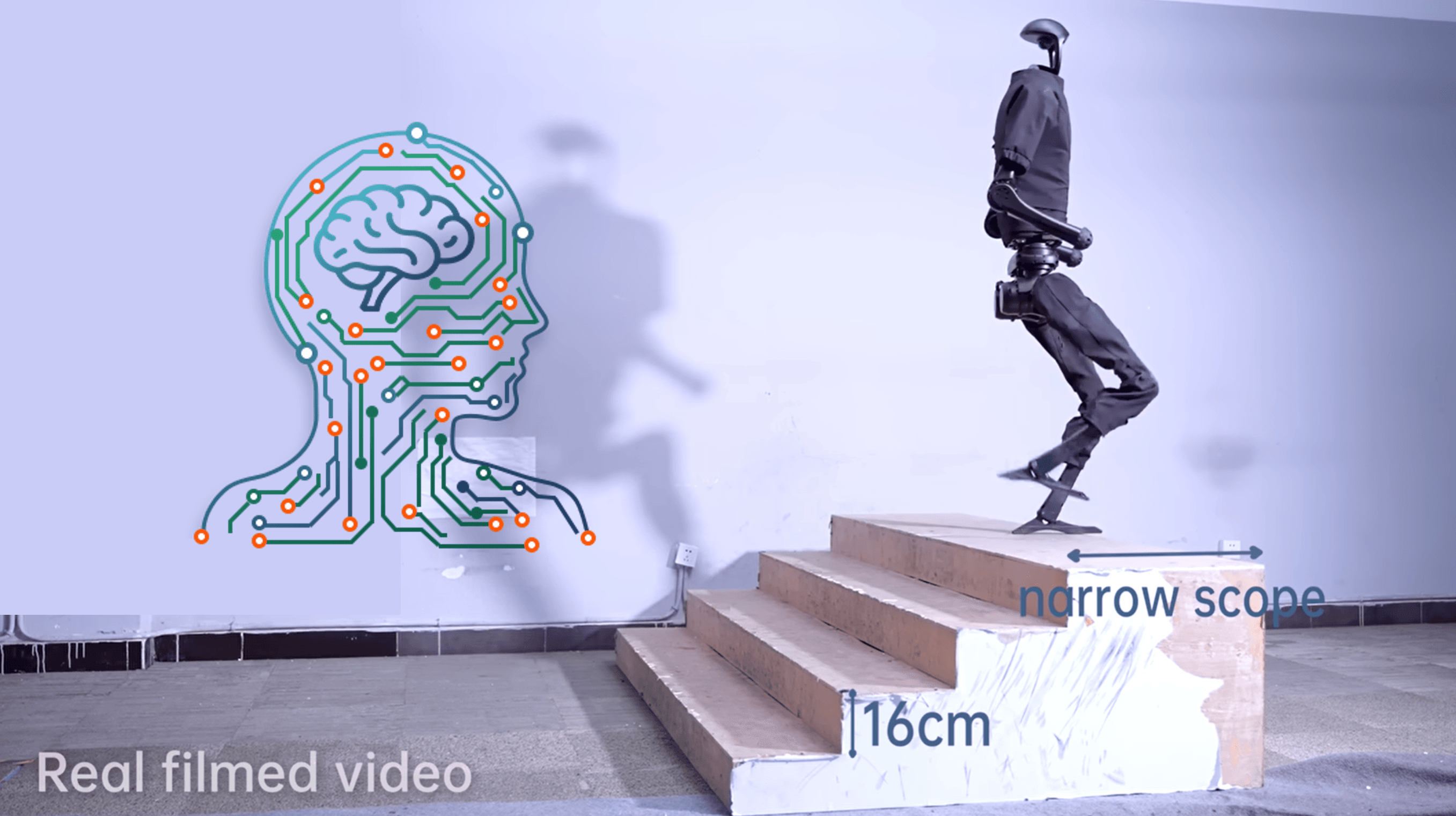
The Shot Heard Around the Robotics World
On February 28, 2026, at Beijing's YiZhuang innovation district, China's Ministry of Industry and Information Technology (MIIT) unveiled a document that every robotics engineer, product strategist, and policy maker: the Humanoid Robot and Embodied Intelligence Standard System (2026 Edition) — or HEIS 2026.
Drafted collaboratively by more than 120 research institutions, manufacturers, and industry end-users under the newly formed MIIT Technical Committee, this is China's first comprehensive, top-level national standard framework covering the full industrial chain and complete lifecycle of humanoid robots and embodied AI. It did not arrive in a vacuum. It arrived as China's industry reached a scale the West is only beginning to reckon with: over 140 domestic humanoid robot manufacturers, more than 330 product models on the market, and 2025 officially declared the country's "Year One of Humanoid Mass Production."
This article deconstructs the standard, what it actually contains, and — critically for our EU and North American readers — what it means for your business, your supply chain, your regulatory posture, and your competitive window.
Part I: Context — Why a Standard Framework, Why Now?
China's Humanoid Industry at Inflection Point
The numbers are stark. According to MIIT figures released in January 2026, Chinese humanoid robot manufacturers shipped roughly 87% of all humanoid robots delivered globally in 2025, with total global shipments reaching just over 13,000 units. Unitree Robotics alone disclosed shipping more than 5,500 humanoid units in 2025, with production exceeding 6,500. That figure is reported to be approximately 36 times the combined shipments of US rivals Figure and Tesla's Optimus program for the same period.
The industry is moving from lab-floor demonstrations to factory floors at pace. Unitree's humanoids have been quietly operating in automotive assembly at NIO and Geely facilities since 2024, achieving strong results on single-sequence tasks. AgiBot has partnered with German automotive supplier Minth and is opening experience centers in Malaysia. DeepRobotics is building systematic local support networks in North America. This is no longer just a China story.
But rapid scale-up has exposed a structural problem that is common to any fast-moving technology sector: fragmentation. Interfaces between sensors, joints, and controllers are not standardized across manufacturers. There are no agreed performance grades for embodied AI models. Safety certification pathways for bipedal robots operating near humans remain undefined. Cross-vendor software and hardware integration is costly and slow.
The HEIS 2026 framework is China's answer to this fragmentation — a nationally coordinated attempt to establish the rules of the game before anyone else does.
The Standardization Committee Behind It
The framework was produced under the MIIT Humanoid Robot and Embodied Intelligence Standardization Technical Committee, formally constituted on December 26, 2025 — just two months before the standard's release. The committee's vice-chairs include Wang Xingxing (founder, Unitree Robotics) and Peng Zhihui (CTO, AgiBot). Its member roster reads like a who's-who of China's embodied AI ecosystem: representatives from UBTech, SenseTime, Beijing Academy of Artificial Intelligence (BAAI), and the National Institute for Natural Hazard Mitigation Research, among others.
The speed of formation-to-publication is deliberate. As Wang Xingxing stated at the unveiling: "To enable robots to truly work in real-world scenarios, industry-wide standards are indispensable." Peng Zhihui was more pointed about the stakes: "Standardization is not merely a technical specification, but an accelerator for industrial implementation."
Part II: Inside the Standard — The Six Pillars
HEIS 2026 is structured around six primary categories, covering 22 secondary domains and more than 80 granular sub-standards. Here is what each pillar actually contains and why it matters beyond China's borders.
Pillar 1: Basic Commonality — The "Common Language"
This is the framework's foundation layer, and arguably the most globally relevant pillar for interoperability discussions. It covers:
Unified terminology and definitions for humanoid robots, embodied intelligence, linear and rotary joints, dexterous hands, VLA (Vision-Language-Action) models, and Sim2Real transfer — eliminating the definitional ambiguity that has plagued early standards efforts globally (including the ISO 25785-1 working group's own deliberate avoidance of the word "humanoid")
A five-tier intelligence classification system (Lv1–Lv5) mapping from basic capability through to full general intelligence, aligned with China's information industry AI grading framework
Hardware electrical interface specifications governing sensor-joint-controller interconnects
Software data exchange protocols for embodied AI model-to-motion controller communication, targeting plug-and-play cross-vendor integration
For EU and NA integrators sourcing Chinese hardware components, this tier is the most immediately practical: if Chinese components are built to HEIS 2026 interface specs, understanding those specs becomes a prerequisite for integration planning.
Pillar 2: Brain-Like and Intelligent Computing — The AI Core
This pillar governs what makes a humanoid robot "intelligent," and it targets technology that does not yet have equivalent treatment in any Western or international standard:
VLA and VTLA (Vision-Tactile-Language-Action) model specifications: input/output formats, physical common-sense reasoning requirements, action generation precision grades, and zero-shot/few-shot transfer capability tiers
Training data requirements: including simulation data authenticity validation methods — directly relevant to the Sim2Real transfer problem that every embodied AI lab in the US and Europe is grappling with
Inference engineering metrics: latency, power consumption, and on-device compute requirements for deployed models
Multi-modal sensor fusion standards: time-space alignment methods for vision, force, tactile, and IMU inputs; dynamic obstacle recognition performance benchmarks
This is territory where no ISO or IEEE standard currently exists at comparable specificity. The IEEE Humanoid Study Group's 2025 report laid groundwork but produced no binding specifications. China is moving to define the technical baseline first.
Pillar 3: Limbs and Components — Driving Domestic Substitution
This pillar targets what is arguably China's most sensitive strategic objective: reducing dependence on imported precision components and creating the technical foundation for domestic parts to achieve international certification credibility.
Key component categories covered include:
Transmission systems: planetary roller screws, ball screws, harmonic drives, and planetary gearboxes — with specifications for thread precision grades, transmission efficiency, rated load, back-lash, torque density, temperature rise, and lifecycle testing methods
Drive systems: frameless motors, hollow-core motors, axial-flux motors — covering torque density, power density, thermal performance, and control precision; plus battery pack energy density, cycle life, charge/discharge performance, and thermal safety
Dexterous hands: DOF specifications, gripping force ranges, tip tactile sensing precision, and fine manipulation test protocols for industrial assembly and service scenarios
Sensing and control: six-axis force sensors, tactile sensors, depth cameras, joint controllers, and main computing platforms — including functional safety requirements for primary control chips
For Western component suppliers, this pillar represents a direct competitive challenge. China's goal is explicit: use standardized specifications to validate domestic alternatives to imported motors, screws, and reducers at scale. As component standards mature, expect Chinese-spec parts to begin appearing in procurement conversations globally.
Pillar 4: Complete Machines and Systems
Covering the integrated whole-robot product, this pillar establishes:
Baseline design principles, environmental adaptability, reliability ratings, and energy consumption indices for complete humanoid systems
MTBF (Mean Time Between Failures), ingress protection grades, and payload-to-weight ratios as core performance baselines
Whole-body control (WBC) and Model Predictive Control (MPC) algorithm performance requirements
Bipedal gait stability, complex terrain traversal rates, and multi-joint coordinated control precision standards
This is the layer that will matter most for any prospective buyer of Chinese humanoid platforms — it establishes what "compliant" means for a complete robot system, enabling structured procurement and risk assessment for the first time.
Pillar 5: Safety and Ethics — The Mandatory Floor
Positioned as the framework's "non-negotiable bottom line," this pillar establishes mandatory compliance requirements across:
Mechanical safety: collision protection, entrapment risk prevention, motion limit controls
Electrical safety: insulation, withstand voltage, short-circuit protection, battery safety
Functional safety: adaptation levels for ISO 26262 and IEC 61508 standards, plus mandatory fault diagnosis and emergency stop requirements
Data and privacy compliance: governing data collection, storage, and use during human-robot interaction
Ethical boundaries: prohibited application scenarios, human-machine interaction behavioral codes, algorithm decision explainability and fairness requirements
The functional safety layer is notable: by explicitly referencing IEC 61508 and ISO 26262 (the automotive functional safety standard), HEIS 2026 is positioning Chinese humanoids to demonstrate compliance with standards that European and North American safety authorities already recognize. This is deliberate bridge-building toward international market access.
Pillar 6: Application and Services — From "Can Work" to "Works Well"
Scenario-specific standards covering:
Industrial manufacturing: production line adaptation specs, human-robot collaborative operation safety requirements
Special operations: explosion-proof, waterproof, and impact-resistant specifications for hazardous environments
Commercial service and consumer/domestic: human-machine interaction usability and operational accessibility standards
Lifecycle operations: full maintenance, servicing, and repair protocols; operator training and qualification requirements
Part III: The Implementation Roadmap
The standard is not a single document but a phased implementation program with explicit prioritization:
H1 2026 (Immediate Priority): Terminology and classification standards; core component technical specs (screws, motors, reducers); mechanical and electrical safety mandatory standards; general test methods. These will be published as group standards (essentially industry consortium standards) with simultaneous national standard filing initiated.
H2 2026 (Industry Coordination Layer): Software/hardware interface and data exchange protocols; core technology performance test standards; complete machine general technical requirements; component reliability test standards.
2027–2028 (Scale and Internationalize): Full system completion; upgrade priority standards from group → industry → national standard level; engage ISO/IEC to push Chinese standards into international adoption.
The committee has also established a dynamic update mechanism — a deliberate architectural choice to handle the tension between standardization stability and a technology that is still evolving rapidly. The model is "anchor standard + technical white paper": the core standard holds its framework stable, while annual technical white papers absorb technology iteration. This is operationally smarter than most standards bodies' revision cycles.
Part IV: What HEIS 2026 Means for EU Industry
The Regulatory Gap That China Just Started Closing
Europe's current regulatory posture on humanoid robots is patchwork. The EU AI Act (2024) classifies autonomous robots as high-risk AI systems, requiring risk management, data governance, and human oversight — but provides no humanoid-specific technical specifications. ISO 10218:2025 governs collaborative robots but was not designed for bipedal systems with adaptive AI. ISO 25785-1 (published May 2025) represents the first international safety standard for bipedal "industrially stable" robots, but its scope is narrow and its adoption timeline is multi-year.
The result: European manufacturers and integrators currently operate in a technical standards vacuum for humanoid robots. HEIS 2026 fills that vacuum — but with Chinese specifications.
The Supply Chain Reality Check
European robotics leaders are candid about what this means. As noted at a recent Euronews analysis, one prominent venture investor in the space stated plainly that expecting European independence from Chinese hardware supply chains in robotics would be "naive." BMW is already trialing humanoid robots at its Leipzig plant. Other European OEMs are in pilot discussions. If those robots are Chinese-made — and statistically, that is increasingly likely — their components will be built to HEIS 2026 specifications.
European integrators therefore face a near-term choice: treat HEIS 2026 as a foreign standard requiring translation, or treat it as a de facto technical reference that their procurement and engineering teams need to understand.
Standards as Market Access Tools
China is transparent about its long-term objective: push HEIS-derived standards into ISO and IEC international adoption. This is a playbook that has been used successfully before, most visibly in 5G, where Chinese-backed specifications achieved substantial international standardization. The robotics sector is now the arena for the next iteration of this strategy.
For European standards bodies — DIN, AFNOR, BSI, and their parent organizations at CEN and CENELEC — the window to shape the international standards landscape for humanoid robotics is narrowing. With no equivalent European comprehensive humanoid standard currently in development, the risk is that when ISO does move to adopt or harmonize humanoid robot standards, the Chinese framework has the first-mover advantage in technical content.
Opportunity: The Safety and Ethics Layer
One area where European firms hold genuine competitive advantage is in safety engineering and ethical AI governance — precisely the areas where HEIS 2026's mandatory requirements are thinnest in technical specificity. The framework mandates functional safety alignment with IEC 61508 and ISO 26262, but the implementation depth for AI-driven decision systems is far less developed than what European safety certification bodies have been building for autonomous vehicles and industrial automation. European safety certification expertise, compliance tooling, and audit infrastructure represent real differentiation for companies entering this market.
Part V: What HEIS 2026 Means for North American Industry
Volume Disparity and the Standards Power Dynamic
North America's humanoid robot landscape is technology-rich but volume-thin. Figure AI, Apptronik, Agility Robotics, and Tesla's Optimus program are doing serious engineering work — but their combined 2025 shipment volumes are a fraction of Unitree's alone. In standards politics, volume matters: the party with the most deployed units, the most real-world data, and the most manufacturers has the strongest argument that their technical specifications represent practical ground truth.
China's MIIT is betting that HEIS 2026 — backed by 140+ manufacturers and hundreds of real-world deployments — will carry that argument convincingly at ISO/IEC.
The Data Standardization Angle
One of HEIS 2026's more consequential technical moves is establishing whole-body teleoperation as the unified method for high-quality physical training data collection. This is not purely a Chinese industry choice — it reflects genuine technical consensus that teleoperation-generated data produces the most generalizable robot policies. But by standardizing the data format and collection protocol nationally, China is positioned to build data scale advantages that are difficult to replicate. North American AI labs working on embodied intelligence will need to track whether HEIS 2026's data specifications become the de facto format for the world's largest training datasets.
Intelligence Grading and Market Segmentation
HEIS 2026's Lv1–Lv5 intelligence grading system is directly relevant to any US company attempting to sell into industrial procurement channels where Chinese competitors are present. If Chinese manufacturers can cite HEIS 2026 intelligence grade compliance, and US manufacturers cannot cite equivalent standardized grades, procurement officers face an asymmetric comparison. Developing equivalent or compatible intelligence grading frameworks — potentially through IEEE, A3, or ANSI processes — becomes a competitive necessity, not just a policy exercise.
Supply Chain Strategy
North American manufacturers face the same hardware supply chain reality as their European counterparts, perhaps with higher political pressure to address it. HEIS 2026's component standards for motors, transmissions, sensors, and controllers will effectively set the specification targets that any domestically produced substitute must match or exceed. US-based component developers in the humanoid supply chain — working in areas like linear actuators, six-axis force sensors, or dexterous hand mechanisms — should treat HEIS 2026 component specifications as their competitive benchmark document.
Part VI: The International Standards Race — Who Moves Next?
The global humanoid robot standards landscape in early 2026 is genuinely wide open, and the next 18 months will be decisive. Here is a rough map of the key players:
China (HEIS 2026): Comprehensive framework now published. Moving to national standards filing and ISO/IEC engagement. First-mover advantage in scope and specificity.
ISO TC299 (Robotics): Working on ISO 25785-1 (bipedal robot safety, industrial scope) and ISO 26058-1 (dynamically stable mobile robots). Both are narrower in scope than HEIS 2026 and in earlier development stages.
IEEE Humanoid Study Group: Published a framework report in 2025 laying groundwork for future standards development in classification, stability, and human-robot interaction. No binding specifications yet.
EU AI Act: Provides a high-risk AI system governance wrapper but no humanoid-specific technical content.
A3/ANSI (North America): Updated ISO 10218 alignment in progress, but no humanoid-specific work at comparable scope.
The pattern is clear. China has produced the most technically comprehensive humanoid-specific standard framework, by a significant margin. Every other major standardization body is working at narrower scope or earlier stages. Xu Jincheng, CEO of tactile-sensing firm PaXini Tech, captured the situation directly at the HEIS unveiling: China's progress in embodied intelligence has drawn global attention, and "continued technological progress may position the country to play a significant role in shaping future international standards."
That is diplomatic understatement. If HEIS 2026 executes its 2027–2028 roadmap and achieves ISO/IEC engagement with volume-backed technical credibility, China will not merely participate in shaping international humanoid robot standards. It will likely author the first chapters.
What to Do with This Information
HEIS 2026 is not just a regulatory document for Chinese domestic manufacturers. It is a strategic signal about who intends to define the technical vocabulary, performance benchmarks, safety architecture, and AI evaluation framework for the global humanoid robot industry.
While HEIS 2026 establishes a comprehensive standard system for humanoid robots and embodied intelligence across the product lifecycle, the industry's next challenge may lie beyond the robots themselves. As deployments scale globally, attention is likely to shift toward the people and organizations responsible for installation, maintenance, lifecycle operations, and service quality. Frameworks such as the Robotics Service Framework (RSF), which focus on service capability, certification, and lifecycle management, represent a complementary layer that could help bridge this emerging gap between product standards and operational excellence.
Sources: MIIT Technical Committee for HEIS; Xinhua; China Daily; TechCrunch; Euronews; IEEE Humanoid Study Group; Barclays Research; Morgan Stanley Humanoid 100; ISO TC299; Humanoids Daily;
RobotToday provides independent analysis of the global robotics industry. This article represents editorial analysis and does not constitute investment or legal advice.
Related Articles:
Humanoid Robotics Standards HEIS 2026 vs. the International Landscape
China's 15th Five-Year Plan and the Space Robotics Imperative
Stay ahead with real-time robotics and AI news in our Industry Briefing






Leave a comment