


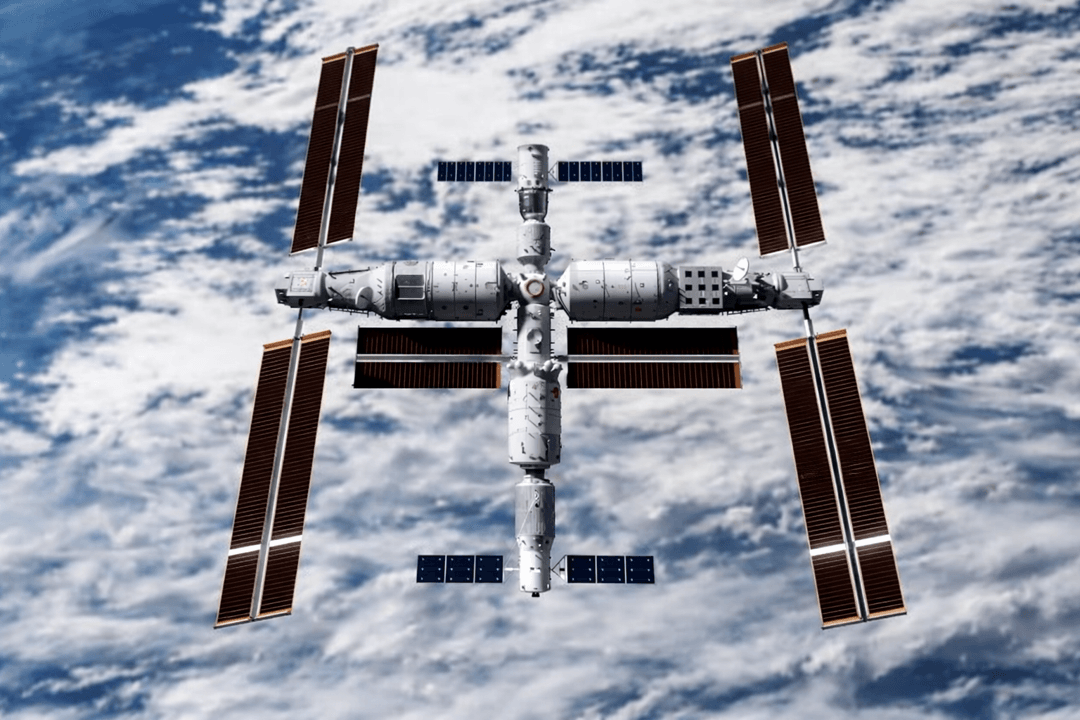
THE 15TH FIVE-YEAR PLAN: AEROSPACE AS STRATEGIC INFRASTRUCTURE
China's 15th Five-Year Plan (2026–2030), ratified in March 2026, marks the most consequential restructuring of the country's aerospace priorities in a generation. For the first time, aerospace is named one of six 'strategic emerging pillar industries' — placed alongside integrated circuits and advanced manufacturing in a tier of sectors deemed non-negotiable for economic competitiveness. The language is deliberate: aerospace is no longer a prestige engineering programme but a multi-trillion-renminbi engine of industrial transformation, explicitly tasked with 'leading ten-trillion-renminbi markets and catalysing the next round of industrial revolution.'
This elevation changes the funding mechanism (pillar industries attract sovereign and state-backed industrial funds rather than project-specific grants), the regulatory posture (the world's first dedicated national commercial space regulator — the Commercial Space Administration Bureau — was established in November 2025), and the demand signal sent to the private sector. For the global space robotics community, it means China's mission schedules are now backed by an economic logic that makes delay costly.
Three Structural Pillars
The plan organises its aerospace ambitions around three pillars. The first is the national flagship tier, entering a 'harvest phase': the Chinese Space Station shifts from construction to long-duration scientific operations, and the crewed lunar programme accelerates toward a 2030 south pole landing with Long March 10 and the Mengzhou spacecraft. These missions are fully state-funded and schedule-driven — robots will reach the lunar surface before humans do, and their performance determines mission success.
The second pillar is commercial space, where planning language shifts decisively from 'technology demonstration' to 'commercial operation.' Priority targets include completing the StarNet and Qianfan low-Earth orbit broadband constellations (jointly targeting more than 10,000 satellites) and scaling reusable launch vehicles to sub-$3,000 per kilogram. China's commercial space sector raised RMB 18.6 billion in 2025 — up 32% year-on-year — as sovereign-wealth and state-backed funds joined VC investors in what now looks like a structural allocation.
The third pillar, 'space intelligence', may prove the most transformative over the decade. The Tiangong Kaiwu major R&D programme targets systematic breakthroughs in space resource surveying and in-situ utilisation. The plan also calls for 'lifelong learning algorithms' — AI architectures capable of adapting in real time to conditions no simulation fully anticipated — to be integrated into space systems.
The 15th Five-Year Plan frames Chang'e-8, the ILRS, and the crewed lunar landing not as scientific endeavours but as demand anchors for an entire emerging industry vertical. For equipment manufacturers, algorithm developers, and systems integrators, it is in effect a long-term purchase order.
THREE DEMAND LINES DRIVING SPACE ROBOTICS
Demand Line 1 — The Chang'e Programme: Hard Deadlines, Defined Requirements
Chang'e-7 (2026) will deploy a surface lander, orbiter, and a hopper vehicle to investigate permanently shadowed craters for water-ice. The robotic challenge is primarily perceptual: navigating terrain with solar illumination angles below five degrees and temperature swings exceeding 200°C, where round-trip communication delay makes real-time teleoperation impractical for hazard avoidance.
Chang'e-8 (2028) is the step-change. Deputy chief designer Wang Qiong has confirmed the mission will carry a modular operations robot to demonstrate ISRU: drilling regolith, sintering it into structural bricks via 3-D printing, and assembling those bricks into a structural prototype. This is a construction robot with no operational precedent in any space programme, operating in vacuum under ionising radiation across a thermal environment that cycles between extremes on every local day. Beyond Chang'e-8, the International Lunar Research Station — targeted for basic completion around 2035 — is explicitly designed as 'long-duration autonomous with periodic human presence,' making robots the primary operational layer.
Demand Line 2 — Tiangong Space Station: The Continuous Operations Problem
The station's two-arm configuration — a 10.2-metre large arm rated for 25-tonne loads plus a 5-metre precision arm — now routinely supports EVA, module repositioning, and external inspection. In December 2025, a record eight-hour EVA saw the combined system perform window inspection, debris shield installation, and thermal cover replacement simultaneously. Yet three priority shortfalls remain: dexterous manipulation of non-cooperative objects; autonomous multi-arm coordination; and on-board AI-driven task planning that reduces per-manoeuvre ground consultation. Each represents an active procurement requirement, not merely a research aspiration.
Demand Line 3 — Commercial Constellations: The Service Economy Taking Shape
StarNet and Qianfan together target more than 10,000 LEO satellites, with China likely operating over 1,000 commercial LEO assets by end-2027. At this scale, on-orbit servicing becomes economically compelling: satellites carrying 15-year fuel reserves pay a persistent launch mass premium that servicing could eliminate. The actuarial arithmetic of large constellations also creates demand for deorbit assistance and active debris management. The first commercial servicing contracts in China are likely within the 15th Five-Year Plan window — though the provider ecosystem is earlier-stage than its Western counterparts.
PROGRAMME MILESTONES & SPACE ROBOTICS IMPLICATIONS
Confirmed and announced milestones mapped to their space robotics requirements and strategic objectives.
YEAR | MISSION | SPACE ROBOTICS REQUIREMENT | STRATEGIC OBJECTIVE |
2026 | Chang'e-7 — Lunar South Pole | Autonomous rover + hopper for permanently shadowed craters; multi-modal terrain sensing | Map polar water-ice; validate long-range autonomous navigation |
2026–28 | Commercial LEO buildout (StarNet / Qianfan) | On-orbit inspection, satellite capture & maintenance robots; debris management | Reduce constellation TCO; enable servicing-as-a-service model |
2028 | Chang'e-8 — ISRU Demonstrator | Modular construction robot: regolith drilling, 3-D brick printing, structural assembly | Validate in-situ resource utilisation ahead of lunar base construction |
2030 | First Crewed Lunar Landing | Precursor robotic site-prep; human–robot collaborative EVA support | Establish first permanent Chinese human presence on the Moon |
2030s | ILRS — Basic Configuration | Heterogeneous robot swarms: survey, logistics, construction, science operations | Sustain long-duration, largely autonomous lunar outpost |
Ongoing | Tiangong Space Station | Upgraded arm + dexterous-hand combos; AI-assisted inspection; autonomous EVA support | Reduce EVA frequency; extend service life; develop embodied AI for microgravity |
Sources: CNSA mission announcements; National Space Science Medium and Long-Term Development Plan (2024–2050); 15th Five-Year Plan Guidelines, NDRC March 2026; CAST technical briefings.
FOUR TECHNICAL FRONTIERS
Frontier 1 — Lunar Surface Robotics: From Single Agent to Construction Crew
The robotics required for Chang'e-8 and the ILRS build phase are qualitatively different from anything previously deployed on a planetary surface. Existing rovers — including Yutu-2, the longevity record holder — are single-agent systems that stop and await ground commands when uncertain. A construction robot cannot operate this way: structural assembly has sequencing dependencies that make conservative 'stop and ask' behaviours unacceptable on a mission timescale. Three distinct layers must be addressed simultaneously: environmental adaptation (bespoke lubricants, sealing materials, and radiation-tolerant electronics for multi-year south pole deployment); integrated manipulation (combining mobility, sampling, material processing, and assembly in a single platform); and multi-agent coordination (heterogeneous swarms operating under shared task allocation with minimal ground intervention). China has substantive institutional capability in all three — HIT, Zhejiang University, the Deep Space Exploration Laboratory — but transition from laboratory TRL to flight-qualified hardware remains the principal gap.
Frontier 2 — On-Orbit Dexterous Manipulation: The Dexterity Deficit
The space station arms excel at large-load transfer and precise repositioning. The gap is fine manipulation: interacting with fasteners and components not designed for robotic handling. Chinese engineering literature openly acknowledges this shortfall relative to Dextre on the ISS, which has performed fingertip-level in-orbit servicing tasks since 2008. The emerging solution is a 'mother-daughter' architecture — the large arm handles coarse positioning while a compact dexterous end-effector at its distal interface handles precision tasks. The missing enablers are space-grade force-torque sensing with sufficient resolution for fine assembly, and AI grasp planning that generalises to novel components.
Frontier 3 — Embodied AI for Space: The Migration Challenge
China's terrestrial embodied AI sector is genuinely world-class: by early 2026, Zhiyuan, Unitree, Qianxun, and Xinghaitu had collectively crossed RMB 30 billion in valuation, with VLA models demonstrating strong performance in unstructured factory and logistics environments. Space migration faces obstacles that are distinct from terrestrial deployment, not merely incremental versions of the same problems. Galactic cosmic rays cause single-event upsets in semiconductor logic that terrestrial robotics never encounters. Communication latency eliminates cloud-based inference: all reasoning must run on-board within strict power budgets. Training data for extraterrestrial environments is radically scarce. These constraints define a commercially valuable unsolved problem for which no incumbent — Chinese or Western — has a deployable answer.
The question for space embodied AI is not whether the algorithms are capable — recent VLA results suggest they are — but whether the compute substrate can survive radiation, thermal, and power environments far outside anything terrestrial robotics has faced. Neither side has solved this.
Frontier 4 — Deep Space Autonomy: Beyond the Speed of Light
Mars sample return missions impose an autonomy requirement of a categorically different order from lunar operations. A one-way communication delay of up to 20 minutes makes teleoperation physically impossible for real-time hazard response. China's Zhurong demonstrated teleoperated-with-limited-autonomy architecture; future sample return will require full autonomous traverse and sampling over multi-kilometre ranges with on-board fault recovery. Research programmes at the Deep Space Exploration Laboratory and National Space Science Center are active in this area but remain at early TRL.
TECHNOLOGY READINESS & COMMERCIAL OPPORTUNITY MATRIX
Current Chinese TRL levels across key domains, benchmarked against the global frontier with commercial opportunity assessment.
TECHNOLOGY DOMAIN | CHINA TRL | GAP VS. FRONTIER | COMMERCIAL WINDOW | KEY PLAYERS |
| Large-arm manipulation (space station) | TRL 9 | Narrow | Supply chain upgrades | CAST / CASC 5th Academy |
| Planetary surface rovers | TRL 8–9 | Narrow | Gov. contracts & spin-offs | CNSA / Deep Space Exploration Lab |
| Dexterous in-orbit end-effectors | TRL 4–5 | Significant | High — underserved | HIT, Beihang Univ., early startups |
| Non-cooperative target capture | TRL 3–4 | Large | High — debris removal | CASC, academic R&D |
| Multi-robot coordination (space) | TRL 2–3 | Large | High — ILRS build phase | HIT, Zhejiang Univ. |
| Embodied AI / space-grade edge inference | TRL 2–3 | Very large | Very high — nascent | No incumbent globally |
| ISRU construction robotics | TRL 3–4 | Moderate | High — Chang'e-8 onwards | CNSA, research consortia |
| Radiation-hardened AI chips | TRL 2–3 | Large | Very high — greenfield | Loongson, NUDT, Tianjin groups |
TRL scale: 1–3 basic research; 4–6 technology development; 7–8 demonstration; 9 operational. Gap assessment relative to Western/international programmes. Source: RobotToday analysis; engineering.org.cn; CASC technical reports.
THE INDUSTRY & INVESTMENT LANDSCAPE
State Primes: The Incumbent Tier
CAST (a CASC subsidiary) holds prime contractor responsibility for the station arm systems and Chang'e robotic elements. These institutions have deep flight heritage and exclusive procurement access. They are structurally conservative innovators: breakthrough technology originates in academic partner institutions and transfers inward for flight qualification. Engaging this tier commercially means operating as a qualified sub-system supplier.
The Component Supply Chain: Dual-Market Positioning
The most actionable opportunity sits in advanced components serving both terrestrial and space applications. Harmonic drives illustrate the pattern: Lvde Harmonic (绿的谐波) has broken the Western duopoly, supplying more than 60% of domestic humanoid robot manufacturers while qualifying products for satellite deployment mechanisms. High-performance servo drives (Inovance), precision motor systems (Mingjie Electric), and joint-level force-torque sensing represent nodes where technical barriers are high, incumbent positions are early-stage, and dual-market demand compounds growth.
The Deep-Tech Tier: High Risk, Asymmetric Upside
Radiation-hardened AI inference chips, space-qualified dexterous end-effectors, and simulation-to-reality transfer tools for extraterrestrial robot training do not yet exist at commercial scale. These require creating new product categories. Institutions with the clearest head starts — HIT's space robot team, Beihang's intelligent systems laboratory, the Deep Space Exploration Laboratory — are academic entities, so the pathway to market involves either spin-out formation or structured partnership with state primes.
HONEST ASSESSMENT: GAPS, RISKS, AND MISCONCEPTIONS
Programme timelines have slipped before. Chang'e-6 launched in 2024 after multiple adjustments; the ILRS basic configuration has been revised from a 2030 target to 2035. Technical delays in flight-qualifying the Chang'e-8 construction robot could push key milestones into the 16th Five-Year Plan. Build schedule contingency into any thesis anchored on specific mission dates.
The embodied AI convergence story is compelling in direction but risks overstating near-term delivery. The gap between demonstrating VLA manipulation in a controlled factory and deploying it on the lunar south pole is not a refinement problem — it requires solving challenges terrestrial AI has never confronted. Claims of 'space-ready embodied AI' without a radiation-hardened compute solution should be treated sceptically.
Commercial on-orbit servicing in China lacks the contractual precedents, interface compatibility frameworks, and insurance structures that Western markets are beginning to develop. The first servicing transactions in any market require years of trust-building overhead. Revenue from commercial space robotics in China is a second-half-of-the-plan story at the earliest.
CONCLUSION
The 15th Five-Year Plan translates China's space ambitions into a language that the engineering and investment community can act on. Hard mission schedules create procurement requirements for robotic systems at every level of complexity. The institutional machinery to deliver — state-funded research, a maturing component supply chain, a capital market beginning to price space assets at appropriate valuation — is in place in a way it simply was not at the start of the 14th Five-Year Plan.
The technical challenges are real. Radiation-tolerant embodied AI inference, dexterous manipulation of non-cooperative in-space targets, and construction-grade ISRU robotics remain unsolved. But the 15th Five-Year Plan has done more than any single policy document in recent memory to make those problems worth solving — commercially, not just scientifically.
The 15th Five-Year Plan has issued what amounts to a long-term purchase order for space robotics. The companies and institutions that treat it as such will own the infrastructure layer of the cislunar economy.
DATA SOURCES
• Chinese Academy of Sciences: National Space Science Medium and Long-Term Development Plan (2024–2050) — cas.cn
• National Development and Reform Commission: 15th Five-Year Plan Guidelines, March 2026 — ndrc.gov.cn
• China National Space Administration: Chang'e programme mission announcements — cnsa.gov.cn
• CCTV / CASC: 15th Five-Year Plan aerospace briefings, November 2025 — news.cctv.cn
• Xinhua: Chang'e-8 modular construction robot confirmation, December 2024 — news.cn
• engineering.org.cn: 'Space Robot Development Strategy for Autonomous Spacecraft Maintenance,' March 2024
• National Space Science Center / NSFC: ILRS technical architecture documentation
• 36Kr / The Paper: China commercial space investment analysis 2025–2026
• CASC: Chinese space station mechanical arm operational updates 2022–2025
• China Fund News: '2025 Robot & AI Investment Forum' proceedings, December 2025
Related articles:
China vs. The World: A Space Robotics Competitive Analysis
A domain-by-domain competitive benchmark of China versus the international space robotics field — covering on-orbit servicing, lunar ISRU, space station
China's 15th Five-Year Plan and the Space Robotics Imperative (this article)
China's 15th Five-Year Plan names aerospace a strategic pillar industry alongside semiconductors and sets hard mission schedules — Chang'e-7, Chang'e-8, crewed lunar landing — that make space robotics one of the most consequential engineering battlegrounds of the late 2020s.
Space Robotics: The 2026 Breakout
An inflection point in 2026 is expected to accelerate commercialization in space robotics, driven by satellite servicing demand, lunar missions, and in-orbit manufacturing.
Space Robotics' Killer App: The $30B Satellite Servicing Market
The projected $30 billion satellite servicing market is emerging as the primary revenue engine for space robotics, spanning life-extension, refueling, repair, and debris mitigation.
Space Robot- Lunar Rovers: Building Infrastructure on the Moon
Next-generation lunar rovers are transitioning from exploration tools to infrastructure enablers, supporting construction, resource extraction, and sustained operations on the Moon.
Space Station's AI Assistants: From Robotic Arms to Autonomous Partners
AI-enabled robotic systems aboard space stations are evolving from teleoperated manipulators into semi-autonomous partners that enhance crew productivity and operational resilience.
Space Robot- Building Skyscrapers in Space: ISMA's Industrial Revolution
Orbital assembly concepts, including ISMA-driven large-scale structures, signal the beginning of an industrial revolution in space construction and high-rise in-orbit manufacturing.






Leave a comment