Zhejiang Wanfeng Technology Development Co., Ltd.
Zhejiang automotive robot system integrator under Wanfeng Group; acquired US firm Paslin in 2016 for $302M to lead global welding robot integration.
Contact Zhejiang Wanfeng Technology Development Co., Ltd.
WEBSITE
https://www.wanfengdiecasting.comPHONE
+8615325858280HEADQUARTERS
China

Company Facts
Founded
2000
Primary Role
Manufacturer
Company Size
employees 5000-10000
Primary Region
Asia-Pacific
Annual Sales
-
Funding Stage
-
Funding Total
-

U.S. Robotics Sector Seeks National Strategy for Innovation and Manufacturing
U.S. robotics researchers and industry leaders are advocating for a cohesive national strategy to enhance basic research and boost domestic production of robots. Recent advancements, such as Boston Dynamics' Atlas performing complex movements, underscore the U.S.'s role as a leader in technological innovation. However, critics warn that without a focus on manufacturing robotic hardware domestically, the U.S. risks losing economic benefits from its innovations. The U.S. has historically relied on a free-market approach to drive technological advancements, significantly contributing to its GDP and leadership in artificial intelligence. The Department of Defense has emerged as a key player in funding robotics, with a proposed $13.4 billion budget for autonomous systems in 2026, reflecting the growing importance of robotics in military applications. Despite these investments, the U.S. faces challenges in competing in physical manufacturing, which requires substantial capital and long-term commitment. As the U.S. ranks third in industrial robotics consumption, the reliance on foreign imports for manufacturing poses a risk to national security. The lack of domestic infrastructure for robotic production contrasts sharply with countries like Japan, which has a minimal dependency on imports. Moving forward, the U.S. must address these vulnerabilities to maintain its competitive edge in the global robotics landscape. No further timeline was disclosed at the time of publication.
Power Shift in the Global Robotics Industry as Traditional Leaders Face Challenges
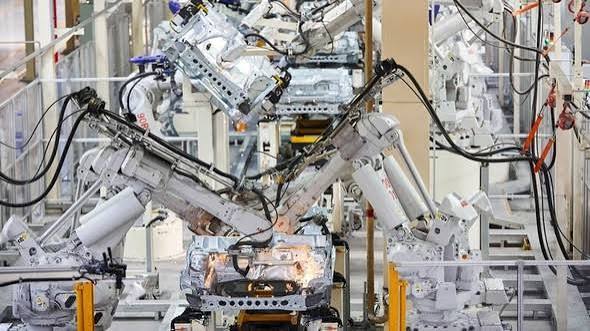
In 2026, a significant power shift is occurring within the global robotics industry, particularly impacting the Chinese market. The four major foreign companies, Fanuc, Yaskawa, ABB, and KUKA, known as the 'Four Families,' are experiencing unprecedented challenges, while domestic brands have gained a market share exceeding 55% in industrial robotics. Fanuc's share has dropped to 9%, highlighting a dramatic change in the competitive landscape. This shift is crucial as it marks the decline of established players who once dominated over 60% of the Chinese industrial robotics market. The rise of domestic brands, particularly in collaborative and welding robots, indicates a growing trend towards local innovation and manufacturing capabilities. ABB's strategic retreat, including the planned sale of its robotics business, underscores the urgency of this transformation. Looking ahead, the robotics industry is witnessing the emergence of new players and innovative technologies. Companies like Tianji Intelligent and Yushu Technology are making strides in capital markets, while cross-industry giants like Xiaomi and Midea are integrating robotics into their operations. The ongoing power transfer suggests that the industry is entering a new phase, with the balance of power shifting towards domestic manufacturers and innovators.
Industrial Robots Vacuum Robots Automation Chinese Robotics Market
Palladyne AI and Fanuc America Collaborate on AI-Enhanced Robotics for Industry
Palladyne AI and Fanuc America have established a strategic partnership to advance AI-driven robotic automation tailored for manufacturing, warehousing, and logistics sectors. This collaboration aims to integrate Fanuc's industrial robots with Palladyne IQ, focusing on enhancing motion planning, adaptive behavior, and human-assisted learning capabilities. The significance of this partnership lies in addressing challenges faced by manufacturers and logistics operators, such as skilled labor shortages and the need for increased productivity. By combining their technologies, the companies aim to create more adaptable robotic systems that can efficiently respond to dynamic environments, ultimately streamlining deployment processes across various operations. Looking ahead, the collaboration will also emphasize joint customer validation and the development of standardized deployment workflows, which are expected to simplify the introduction of robotic automation. No further timeline was disclosed at the time of publication.
AI AI Funding & Investment Capital Markets Robotics automation Fanuc
Palladyne AI and FANUC America Form Strategic Partnership to Enhance Robotic Automation
Palladyne AI and FANUC America have announced a strategic collaboration aimed at advancing intelligent robotic automation. This partnership will integrate FANUC America's extensive industrial robot portfolio with Palladyne AI's innovative physical AI software platform. The collaboration is significant as it seeks to simplify the deployment of robotic systems, enhance their adaptability, and broaden the scope of automation across various sectors, including manufacturing, warehousing, and logistics. By leveraging both companies' strengths, the partnership aims to address the growing demand for efficient automation solutions. Looking ahead, industry stakeholders should monitor the developments from this collaboration, particularly how the integration of AI with robotics will impact operational efficiencies in the targeted sectors. No further timeline was disclosed at the time of publication.

Emerging 2D Flex Feeding Revolutionizes Industrial Part Picking with Simplified Vision Systems
The article discusses the advancements in 2D Flex feeding technology, which simplifies robotic vision for industrial part picking. Unlike traditional 3D bin picking, this new approach allows for quicker and more reliable implementations, making it accessible for a broader range of applications. This innovation is significant as it enhances the capabilities of industrial robots in manufacturing, reducing the complexity associated with advanced vision systems. Experts Nicholas Kern from SICK and Nick Barron from Feedall highlight the advantages of flex feeding over bowl feeding, showcasing early adopters who are already experiencing substantial benefits. Looking ahead, the future of feeding robots appears promising with the integration of smarter vision systems. As this technology continues to evolve, it will be essential to monitor its adoption and impact on manufacturing efficiency and productivity. No further timeline was disclosed at the time of publication.
Factory / Robotics
Universal Robot Launches Da Sheng 1: A Versatile Industrial Dexterous Hand
At the WRC exhibition, Universal Robot unveiled the Da Sheng 1, an industrial-grade dexterous hand designed to overcome existing limitations in robotic gripping technology. This innovative product aims to combine the high load capacity of traditional grippers with the versatile operational capabilities of dexterous hands, addressing a significant industry challenge. The Da Sheng 1 features a dynamic reconfiguration ability, allowing it to switch between multiple operational configurations, thus enhancing its adaptability for various tasks on production lines. This capability is crucial as manufacturing trends shift towards high variety and frequent changeovers, necessitating more flexible robotic solutions. Looking ahead, the industry will be keen to observe how the Da Sheng 1 performs in real-world applications and whether it can effectively replace traditional grippers in diverse operational scenarios. No further timeline was disclosed at the time of publication.
Dexterous Hands Industrial Robotics Automation Technology Robotics Innovation
Tsubaki KabelSchlepp Introduces Robotrax System for Protecting Industrial Robot Cables
Tsubaki KabelSchlepp has launched the Robotrax System, a specialized three-dimensional cable carrier designed to protect electrical cables and hoses in six-axis articulated robots. This innovative system addresses the mechanical stress caused by rapid movements and torsional twists, which often lead to conductor fatigue and costly production halts. The Robotrax System features a central steel cable that absorbs tensile loads, preserving conductor integrity and extending cable service life. Its unique spherical link design allows for smooth flexing across three axes, while modular cable routing prevents signal interference and mechanical abrasion. This design significantly reduces installation and maintenance time, making it a valuable solution for automated manufacturing environments. Looking ahead, the Robotrax System's active retraction mechanism minimizes collision risks during complex robot movements. With tailored protective accessories, it is built to withstand demanding industrial conditions. No further timeline was disclosed at the time of publication.
Articulated-robots Robot-uptime Automation Robot-arms Manufacturing Factory-robots
MagicLab Showcases Comprehensive Industrial Solutions at IFA 2026 for European Market
From September 4 to 8, 2026, MagicLab will present its full-stack industrial solutions at IFA 2026, focusing on flexible handling and logistics sorting for the European enterprise market. The company aims to demonstrate its global competitiveness as an end-to-end provider of industrial-grade embodied intelligence solutions. Attendees will have the opportunity to observe the collaborative scheduling of MagicBot D1 and HyperBot, as well as experience the zero-sample generalization and anti-interference capabilities of the Magic-VLA K02 model. Three new robotic products will be showcased, including the flagship MagicBot X1, which features significant upgrades in joint modules and materials, enhancing durability and lightweight design. As European manufacturing faces challenges from an aging workforce and labor shortages, MagicLab's focus on flexible handling and logistics sorting addresses the urgent need for automation upgrades. No further timeline was disclosed at the time of publication.
Industrial Robotics AI Solutions Logistics Automation Flexible Handling Robot Collaboration
Tianlian Launches TCE605 Robotic Arm at a Groundbreaking Price of ¥17880
Tianlian Robotics has introduced the TCE605 robotic arm, priced at ¥17880, marking a significant advancement in embodied intelligence. This model features a lightweight design at 6.8kg, capable of handling a rated load of 5kg and a maximum load of 8kg, with a working radius of 653mm and a repeat positioning accuracy of ±0.05mm. The TCE605's innovative design combines full harmonic joints with a dual encoder system, ensuring smooth motion and high precision even under rapid movements. Its low power consumption and safety features enhance its adaptability for various applications, including exploration, disaster relief, and industrial automation. This launch signifies a shift in the collaborative robotics market, making high-performance robotic arms accessible at a lower cost. The TCE605 aims to serve as a versatile interface in the embodied intelligence ecosystem, supporting various robotic operating systems and applications, thus transforming the concept of embodied intelligence into practical solutions.
Robotic Arms Embodied Intelligence Automation Industrial Robotics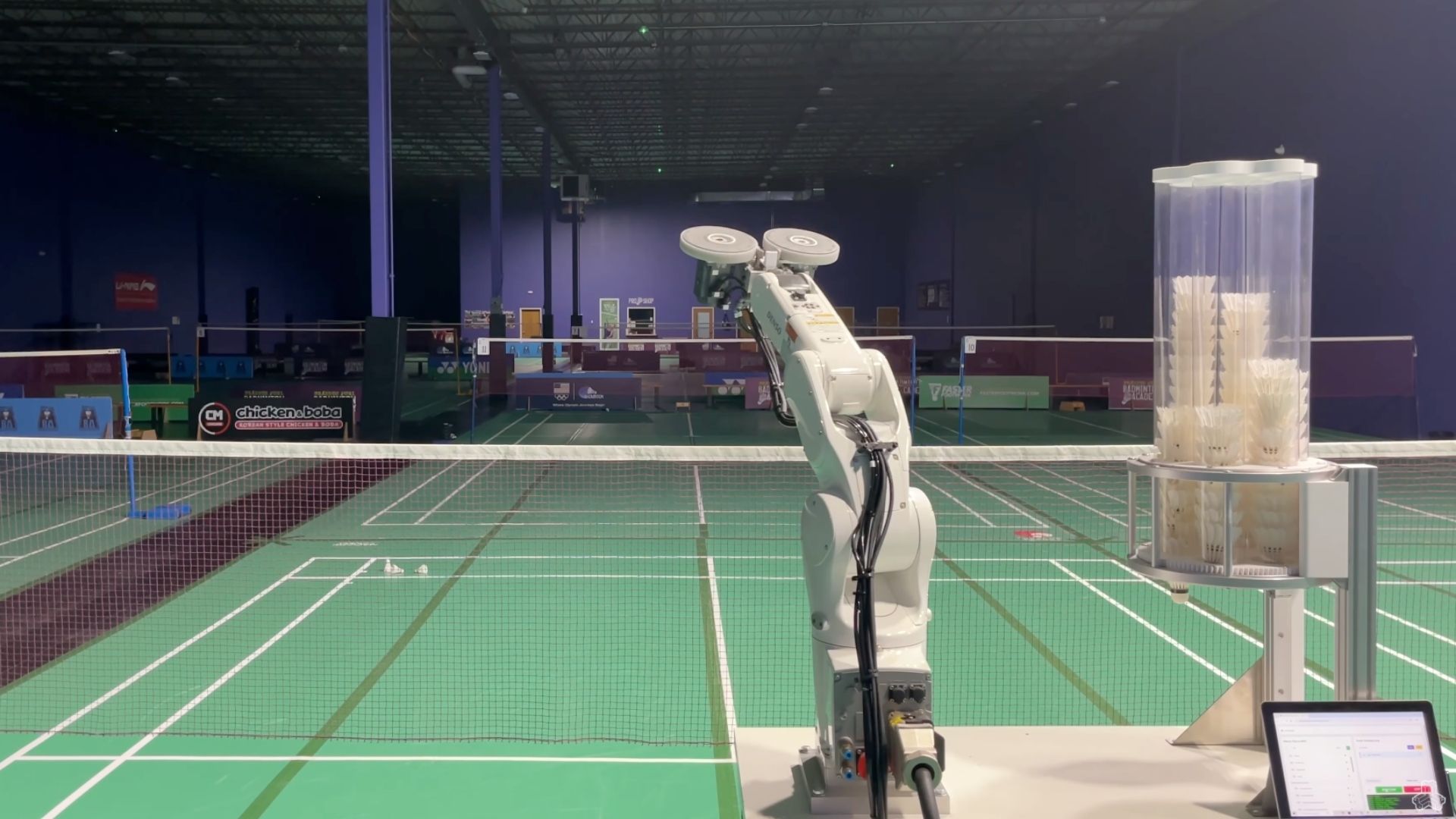
Denso VS-050 Robot Arm Transformed into Automated Badminton Serving Machine
A Denso VS-050 industrial robot arm has been repurposed into an automated badminton machine that serves shuttlecocks for practice sessions. Developed by Travis Mitchell over six months, this innovative project showcases the adaptability of industrial robotics for recreational use, allowing players to practice without a partner. The conversion involves a custom-built launching mechanism that utilizes the robot's six-axis capabilities to aim and fire shuttlecocks accurately. The design includes a shuttlecock magazine, pneumatic actuators, and high-speed spinning wheels, demonstrating how surplus industrial equipment can be creatively utilized in sports training. Looking ahead, the project highlights the potential for further innovations in the intersection of robotics and sports. As more enthusiasts explore similar adaptations, the future may see a rise in automated training systems across various sports disciplines. No further timeline was disclosed at the time of publication.
AI and Robotics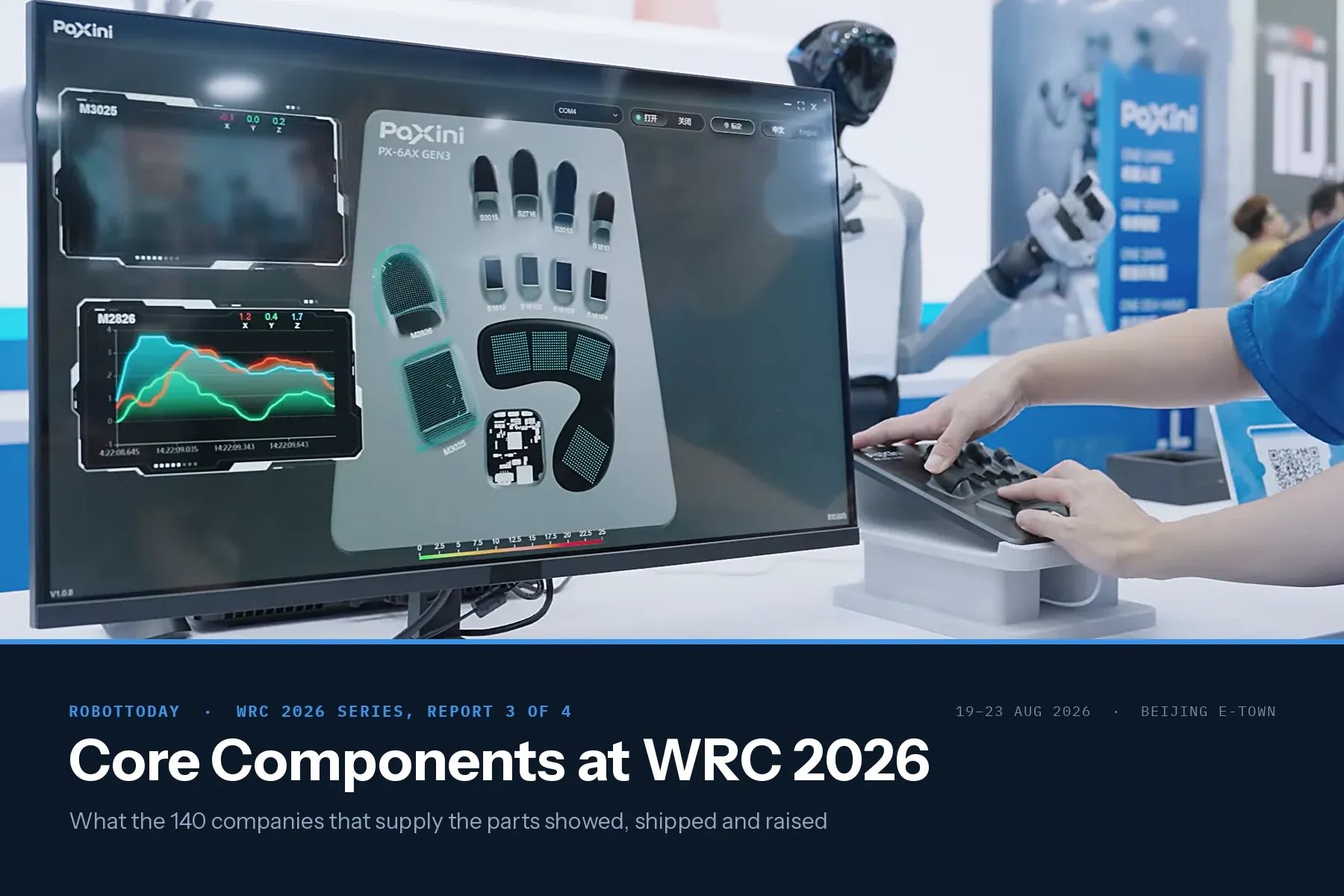
WRC 2026 Core Components: 137 Robot Parts Suppliers
The third report in the WRC 2026 series. Report 1 mapped all 248 exhibitors by category and Report 2 covered the 139 that build finished robots. This one covers the 137 that build what goes inside them.

ROBOTTODAY Weekly June 1 – 5, 2026
This week in robotics: NVIDIA’s Jensen Huang visits Seoul to deepen physical AI ties, Generalist AI raises $400M at $2B valuation, Amazon upgrades Proteus with natural-language control, and UBTECH humanoid attracts 1,200 pre-orders. June 1–5, 2026.

UBTECH Robotics FY2025 Results: Humanoid Revenue Surges 2,200%, Loss Narrows Sharply
UBTECH Robotics (9880.HK) reported FY2025 revenue of RMB 2.0 billion (+53.3%) with humanoid robot sales surging 2,203.7% to RMB 820.6M. Net loss narrowed to RMB 789.8M. Full results breakdown.
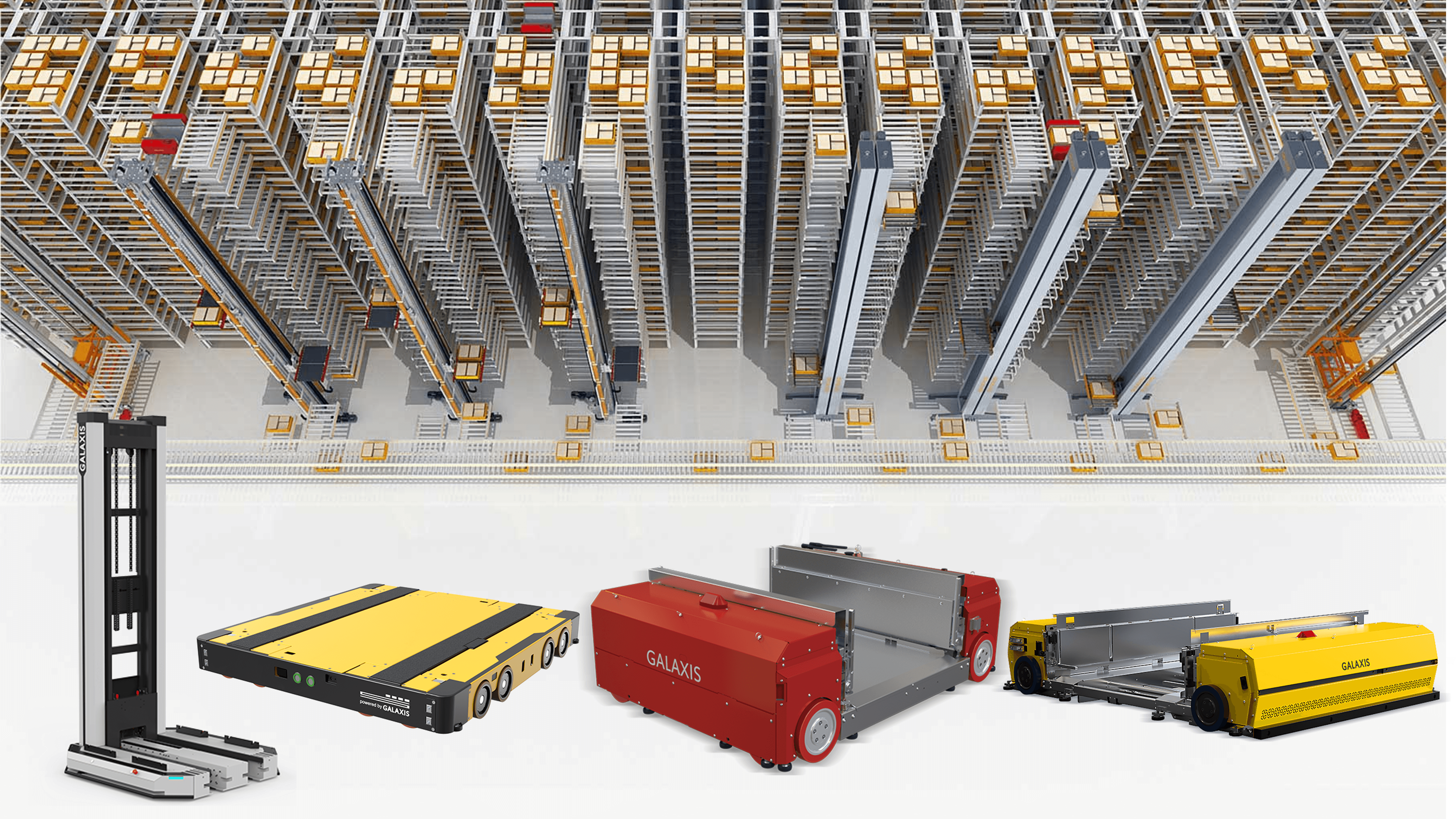
Galaxis Tech IPO: Logistics Robotics Firm Jumps 96% on Hong Kong Debut
Full-stack logistics robotics company Galaxis Tech (02729.HK) debuts in Hong Kong, with strong first-day performance, integrated robot systems, and a growing global order base.

China vs. The World: A Space Robotics Competitive Analysis
A domain-by-domain competitive benchmark of China versus the international space robotics field — covering on-orbit servicing, lunar ISRU, space station

China's 15th Five-Year Plan and the Space Robotics Imperative
China's 15th Five-Year Plan names aerospace a strategic pillar industry alongside semiconductors and sets hard mission schedules — Chang'e-7, Chang'e-8, crewed lunar landing — that make space robotics one of the most consequential engineering battlegrounds of the late 2020s.

Wuzhou Xinchun The Rising Mechanical Power Behind Tesla‘s Optimus Humanoid Robot
Discover how Wuzhou Xinchun is becoming a critical mechanical transmission supplier for Tesla’s Optimus humanoid robots with planetary roller screws, micro ball screws, and precision bearings.
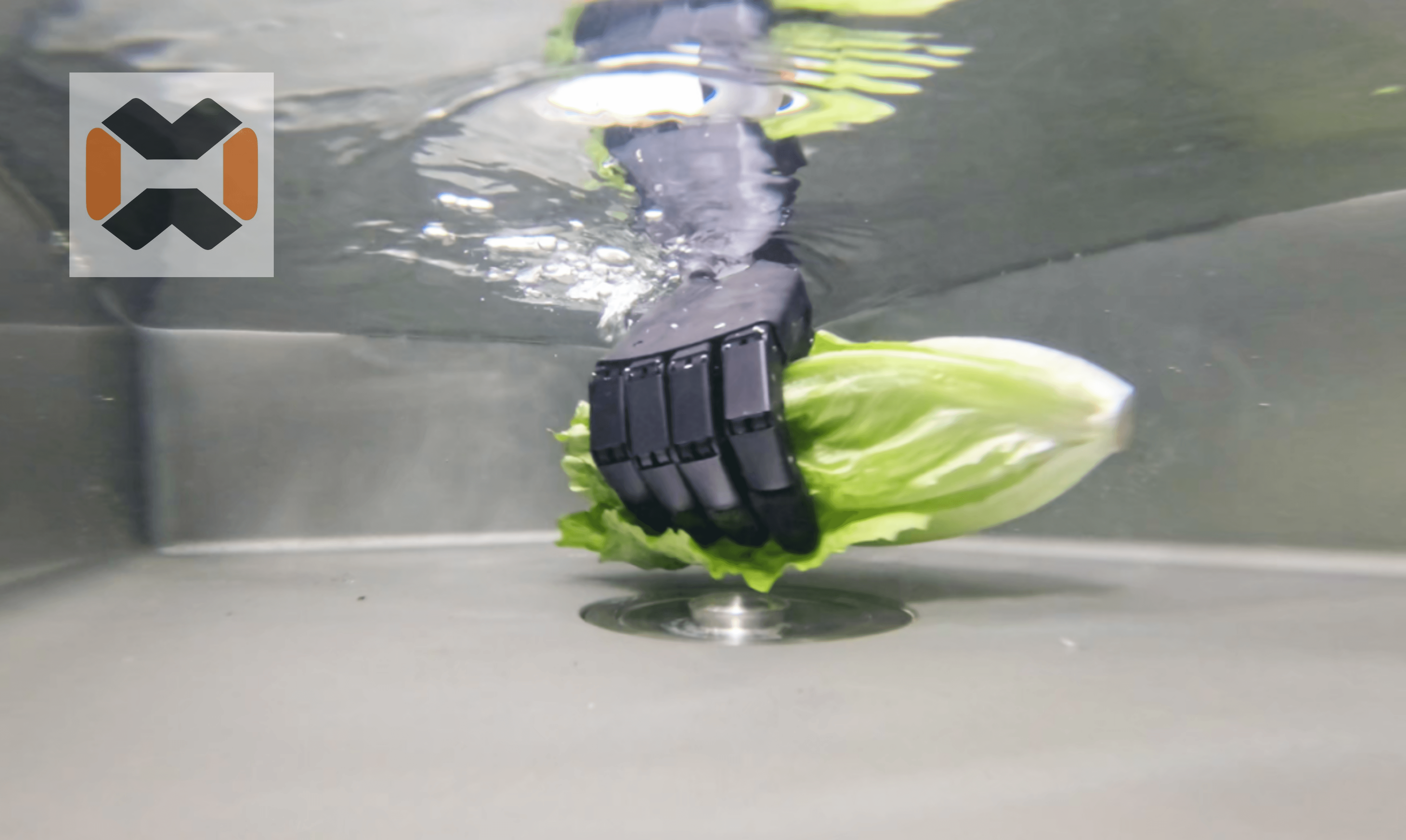
Heyman Waterproof Robotic Hand Can Wash Dishes Or Work 10 000 Meters Under The Sea
Heyman’s waterproof robotic hand handles everything from washing dishes to deep-sea tasks at 10,000 m, showcasing rugged manipulation for extreme environments.

Why the Tesla Supply Chain for Optimus is Consolidating in Chinese Yangtze River Delta
Why Tesla’s Optimus supply chain is consolidating in China’s Yangtze River Delta, where actuators, motors, and robotics suppliers enable humanoid scale.

Rongtai‘s Surge In The Tesla Optimus Supply Chain
Learn how Zhejiang Rongtai is emerging as a strategic supplier in Tesla’s Optimus humanoid robot supply chain, providing critical insulation and safety materials.