

Xiangdao Mobility 享道出行
SAIC-backed Shanghai ride-hailing platform (est. 2018) pivoting to robotaxi with Momenta-developed autonomous driving tech; refiled HK IPO in 2026.
Contact Xiangdao Mobility
WEBSITE
https://www.saicmobility.com/PHONE
400-920-1115HEADQUARTERS
China

Company Facts
Founded
2018
Primary Role
RaaS
Company Size
-
Primary Region
Asia-Pacific
Annual Sales
-
Funding Stage
Subsidiary / Acquired
Funding Total
-

Extend Robotics Secures £2.6M Funding to Enhance Outcome-Based Robotics Services
Extend Robotics has successfully raised £2.6 million in pre-Series A funding to advance its Result-as-a-Service model, enabling manufacturers to pay for robotic work completed rather than purchasing robots outright. This funding, led by Skyworks Venture Capital Fund with participation from Neo Venture Europe and Zip Capital, will facilitate the company's expansion across the U.K. and Europe, as well as the development of a distributed remote-operator network. Extend's AMAS platform integrates immersive teleoperation with AI assistance, currently serving 35 subscription customers across various sectors including agriculture and manufacturing. Looking ahead, Extend Robotics aims to leverage its funding to enhance its service offerings and expand its customer base. The company is focused on addressing manufacturing challenges that are difficult to automate with traditional systems, particularly in high-mix production and hazardous environments. No further timeline was disclosed at the time of publication.
AI Funding & Investment Physical AI AI Extend Robotics industrial robotics Pre-A financing
AGIBOT Collaborates with Vietnam National Innovation Center to Boost Embodied AI and Talent Development
AGIBOT has formed a partnership with the Vietnam National Innovation Center (NIC) to promote the embodied AI industry and talent ecosystem in Vietnam. This collaboration was showcased at the inaugural Vietnam Embodied AI Conference, emphasizing the importance of advancing this technology in the region. The partnership is significant as it includes the launch of the 'Yuan Sheng Program,' which aims to incorporate embodied intelligence into educational and research frameworks. Additionally, the introduction of the RaaS (Robot as a Service) model is expected to enhance the flexibility of robotic applications across various sectors, thereby fostering innovation. Looking ahead, stakeholders will be keen to observe the impact of the Yuan Sheng Program on education and research in embodied AI. The effectiveness of the RaaS model in facilitating diverse robotic applications will also be a critical area to watch as AGIBOT and NIC work together to strengthen Vietnam's position in the global AI landscape. No further timeline was disclosed at the time of publication.
Embodied AI Innovation Robotics Education Technology Development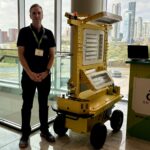
Antobot Plans 300 Deployments of UV-C Robots in Strawberry Crops by 2027
UK-based startup Antobot is targeting the deployment of 300 autonomous robots in strawberry crops by 2027. These robots utilize UV-C light to combat powdery mildew and other fungal pathogens, offering a chemical-free alternative to traditional fungicides. According to VP Marc Jones, this technology not only reduces chemical usage but also contributes to healthier crop yields. The significance of Antobot's initiative lies in its potential to transform agricultural practices by minimizing reliance on chemical treatments. As growers increasingly adopt UV-C technology, the company aims to expand its distributor network, having already signed agreements in the UK and Spain. The shift towards a more sustainable approach is driven by consumer concerns over pesticide residues and the need for effective disease control in various markets. Looking ahead, Antobot plans to transition from a robots-as-a-service model to a direct sales approach, allowing customers to purchase and operate the machines themselves. This change is expected to enhance operational efficiency as the company scales its deployments. No further timeline was disclosed at the time of publication.
Agtech APAC Artificial intelligence Deeptech EMEA Startups & funding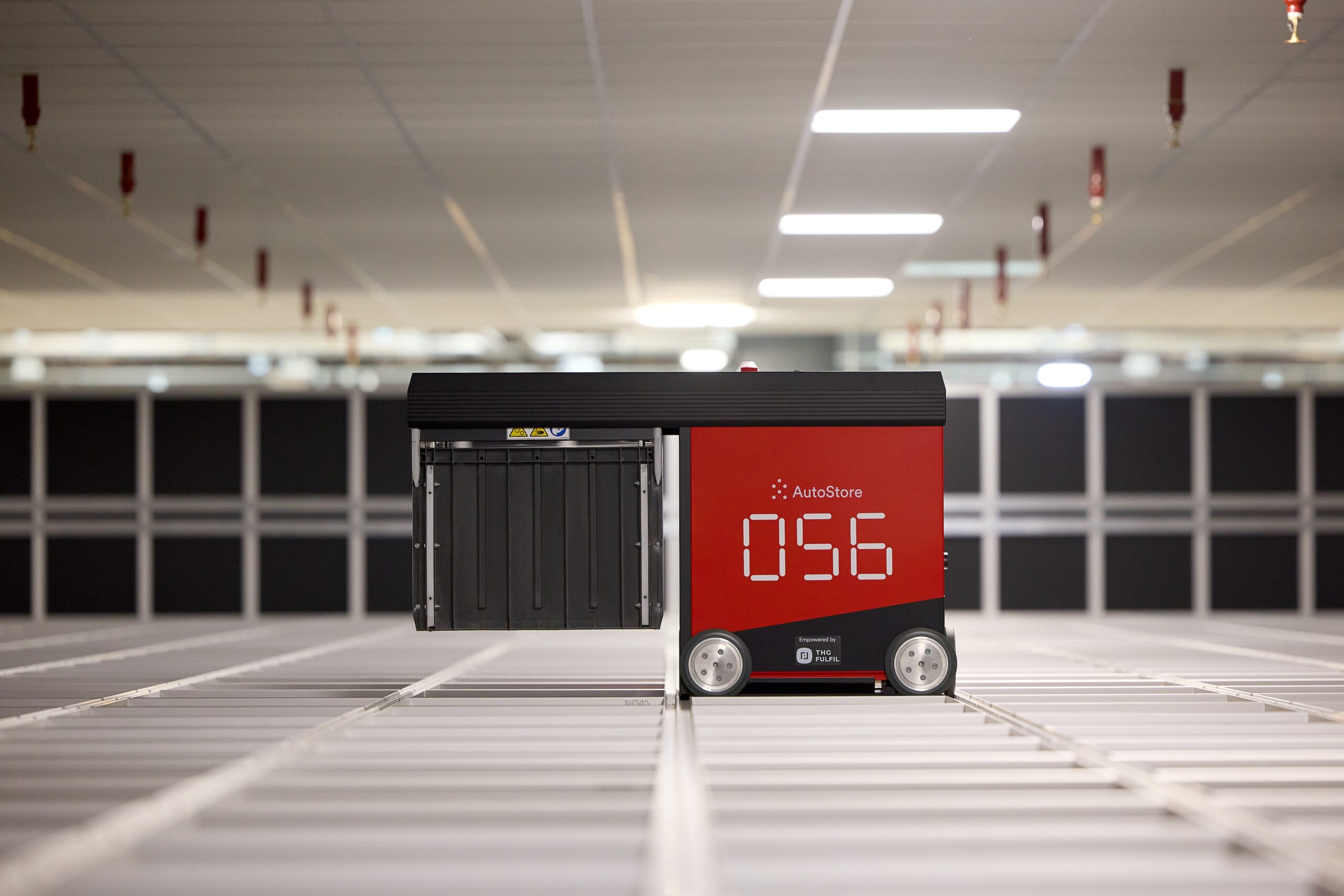
THG Fulfil Expands AutoStore Distribution Partnership with CapEx and RaaS Options
THG Fulfil has announced an expansion of its distribution partnership with AutoStore, allowing the company to offer AutoStore systems through both CapEx ownership and its existing Robotics-as-a-Service (RaaS) model. This expanded agreement provides brands and retailers with enhanced flexibility in warehouse automation investments, enabling them to choose between CapEx, RaaS, or a hybrid approach. The significance of this partnership lies in its ability to cater to diverse investment strategies among brands and retailers. Some businesses prefer to protect cash flow and scale capacity according to demand, while others may opt for outright ownership of automation assets. The expanded agreement ensures that clients can select the model that best aligns with their financial priorities without changing their distribution partner. Looking ahead, THG Fulfil operates 796 AutoStore robots and has integrated the AutoStore system with its proprietary WCS, achieving impressive operational efficiencies. The company has also recently completed an AutoStore build for Footasylum, featuring 85 AutoStore R5 robots. No further timeline was disclosed at the time of publication.
Automation Systems and Shuttles eFulfilment Materials Handling ASRS autostore RaaS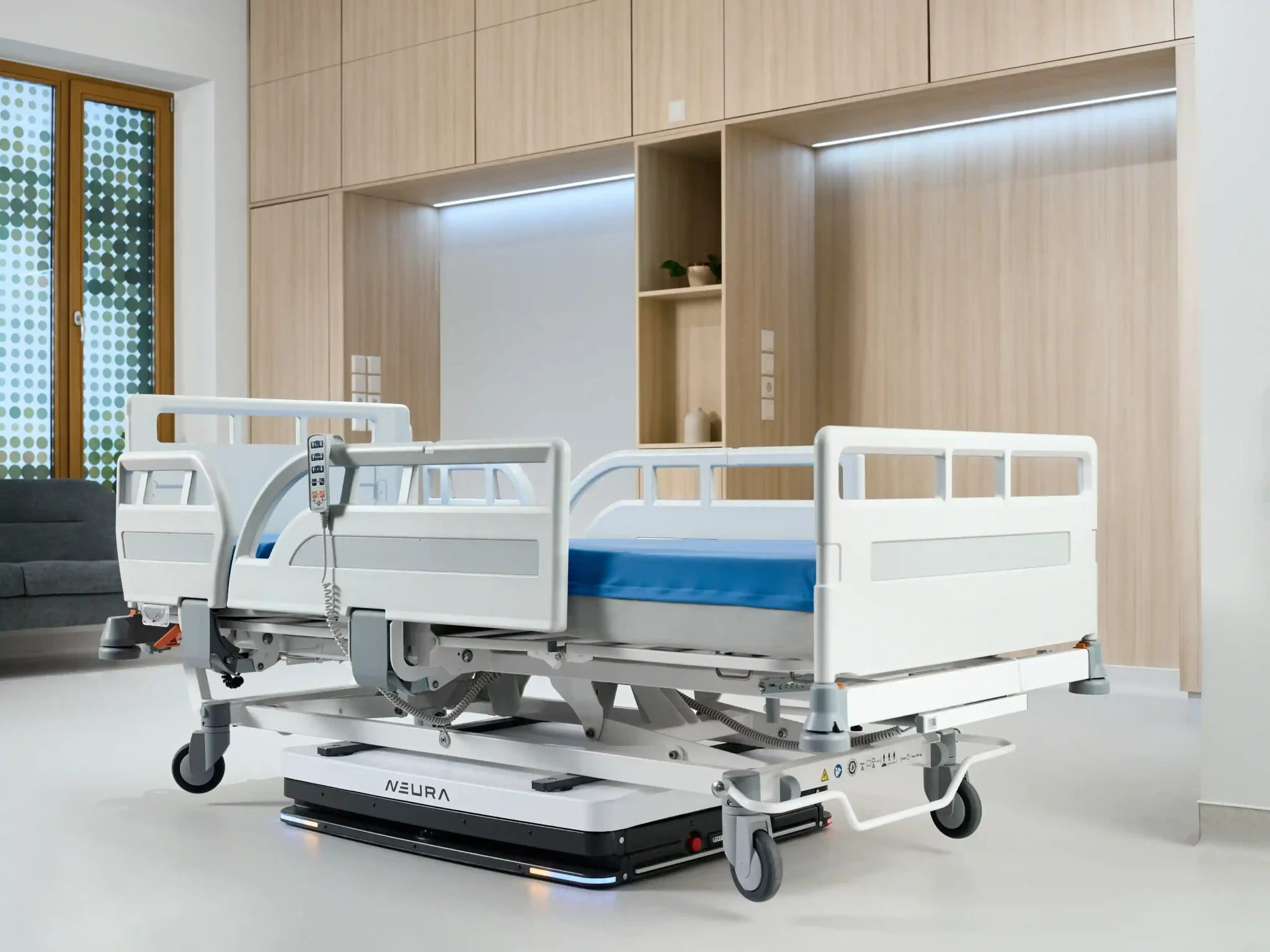
NEURA Robotics Establishes HealthTech Unit, Launches MiPA for Hospital Bed Transport
NEURA Robotics has launched NEURA HealthTech, a new business unit focused on healthcare and life sciences. The initial offering is an autonomous mobile platform designed for transporting empty hospital beds, with the MiPA service robot set to follow. According to NEURA's announcement on September 30, MiPA is currently undergoing training in various environments. This development is significant as it aims to enhance hospital efficiency, with NEURA projecting that the bed-moving platform could save over 1,300 staff hours annually by facilitating around 20 moves per day. The platform will be available through partners on a monthly Robotics-as-a-Service basis, although it is important to note that these figures are projections and not based on published trial results. Looking ahead, stakeholders should monitor NEURA's operational evidence, including named installations and measured staff time savings. While the bed-moving platform serves as a practical starting point, the future role of MiPA in patient rooms will necessitate further demonstrations of its reliability and effectiveness in clinical settings. No further timeline was disclosed at the time of publication.
Neura Robotics Europe
Faraday Future's Robotics Division to Merge with AIxC for NASDAQ Listing at $200 Million Valuation
Faraday Future announced that its robotics division will merge with NASDAQ-listed AIxC, aiming for an independent public listing with a valuation of $200 million. This move is part of Faraday Future's strategic upgrade to focus on a Robotaxi shared network and Physical AI investments. The merger signifies a pivotal transition for both companies, as Faraday Future aims to enhance the value of its robotics business while AIxC restructures to become a pure embodiment of intelligent robotics. The transaction is subject to final agreements and regulatory approvals, with an 18-month lock-up period for shares in the robotics division. Looking ahead, Faraday Future projects significant growth in its robotics business, targeting positive cash flow by Q3 2028 and total revenue of $7.1 million by 2026. The company also plans to expand its robotics ecosystem and enhance its automotive strategy, transitioning from an EAI manufacturer to a Robotaxi operator, while continuing to innovate in the robotics sector.
Robotaxi EAI Robots Physical AI Automotive Technology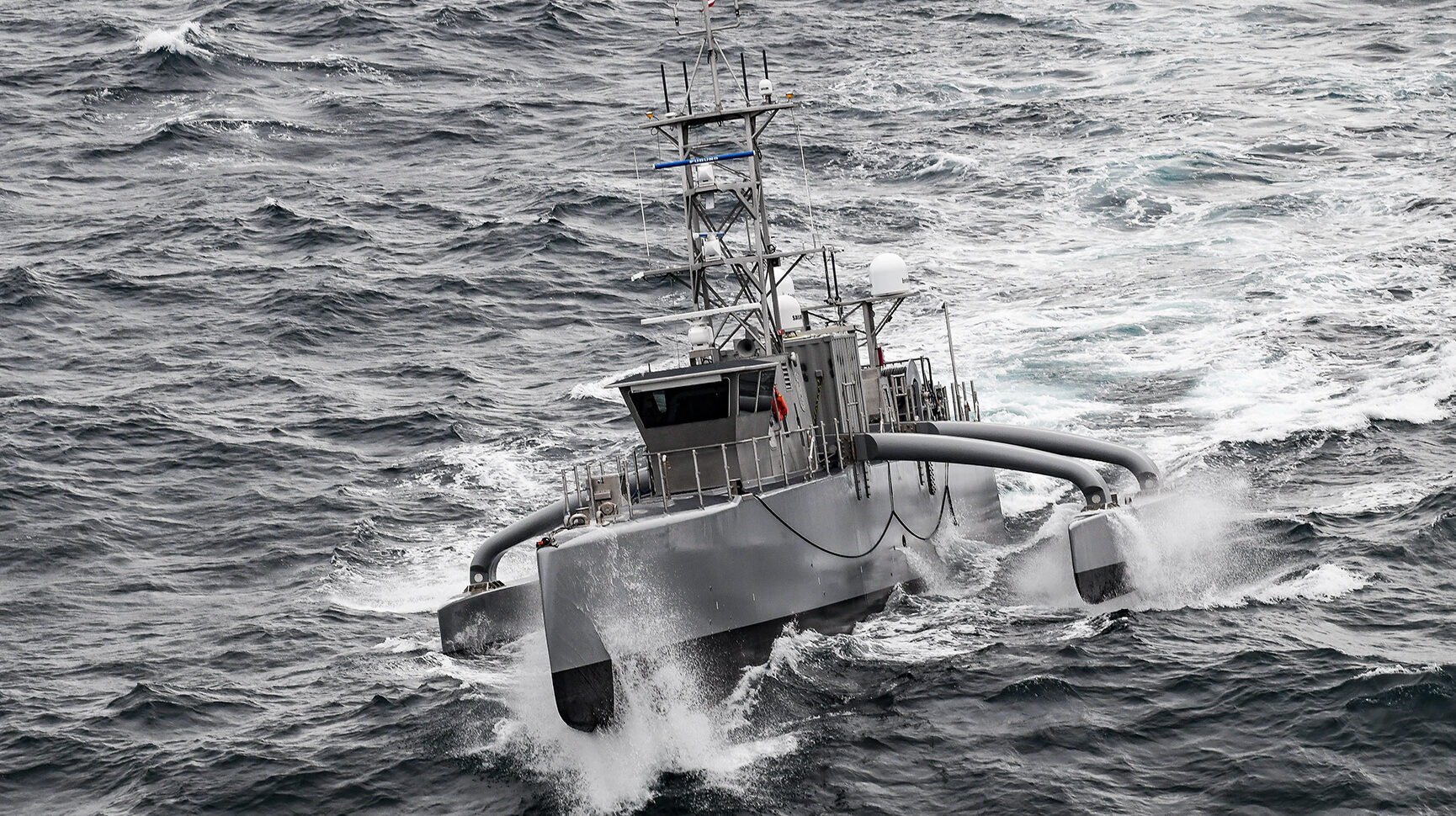
Navy Establishes Robotics and Autonomous Systems Warfighting Development Center in Virginia
The Navy has launched the Robotics and Autonomous Systems Warfighting Development Center (RASWDC) to develop tactics and procedures for unmanned systems. Headquartered at Joint Expeditionary Base Little Creek-Fort Story in Virginia, RASWDC aims to unify efforts across the Navy to enhance operational coherence in unmanned capabilities. This initiative is significant as it aligns with the Navy's broader strategy to integrate robotic and autonomous systems into its operations, as emphasized by Chief of Naval Operations Adm. Daryl Caudle. The RASWDC will work closely with the Direct Reporting Portfolio Manager for Robotic and Autonomous Systems to facilitate the acquisition and deployment of these technologies. Looking ahead, the RASWDC is expected to play a crucial role in ensuring that sailors are equipped with the necessary training and doctrine to effectively utilize unmanned systems. No further timeline was disclosed at the time of publication.
Naval Warfare Adm. Daryl Caudle Drones Navy robotics Unmanned
Coway Introduces Wearable Walking Assist Robot Available for Rental Starting October
On September 22, Coway announced the launch of a wearable walking assist robot developed in collaboration with WIRobotics. This innovative product is designed to support users in daily activities such as walking, climbing stairs, and hiking. Weighing 1.6 kilograms, the robot features an ergonomic design that allows it to be worn over regular clothing, with multiple walking modes available for different activities. The significance of this launch lies in Coway's strategic shift from traditional home appliances to health assistance devices. The rental-only business model reflects the current market dynamics, making it easier for users to try the product without a high upfront cost. The robot's lightweight design and versatile walking modes cater to various user needs, indicating a growing trend in wearable technology for everyday activities. Looking ahead, Coway aims to expand its product line to enhance customer mobility and physical activity. No further timeline was disclosed at the time of publication. The collaboration with WIRobotics marks a pivotal step in Coway's evolution, as it seeks to bridge the gap between home appliances and health-focused solutions.
Wearable Robots Assistive Technology Health Devices Robotics
RLWRLD and CJ Logistics Strengthen Robotics Partnership for Logistics Automation
RLWRLD and CJ Logistics have expanded their partnership to develop and test AI systems for logistics robots, aiming for commercial deployments in South Korea and international markets. The collaboration includes proof-of-concept projects utilizing RLWRLD's RLDX-1 model, which employs sensor data to enhance robotic task performance in logistics operations. This partnership is significant as it combines RLWRLD's advanced robotics AI software with CJ Logistics' operational infrastructure, potentially leading to improved productivity in logistics through real-world data integration. The companies plan to explore Logistics as a Service (LaaS) offerings, allowing businesses to leverage logistics capabilities without the need for extensive infrastructure investments. Looking ahead, RLWRLD and CJ Logistics intend to identify specific logistics processes for initial deployments and conduct further proof-of-concept projects. They aim to expand their technology to additional logistics applications and evaluate opportunities for joint sales efforts and strategic partnerships in overseas markets. No further timeline was disclosed at the time of publication.
AI AI Funding & Investment Capital Markets Robotics CJ Logistics foundation model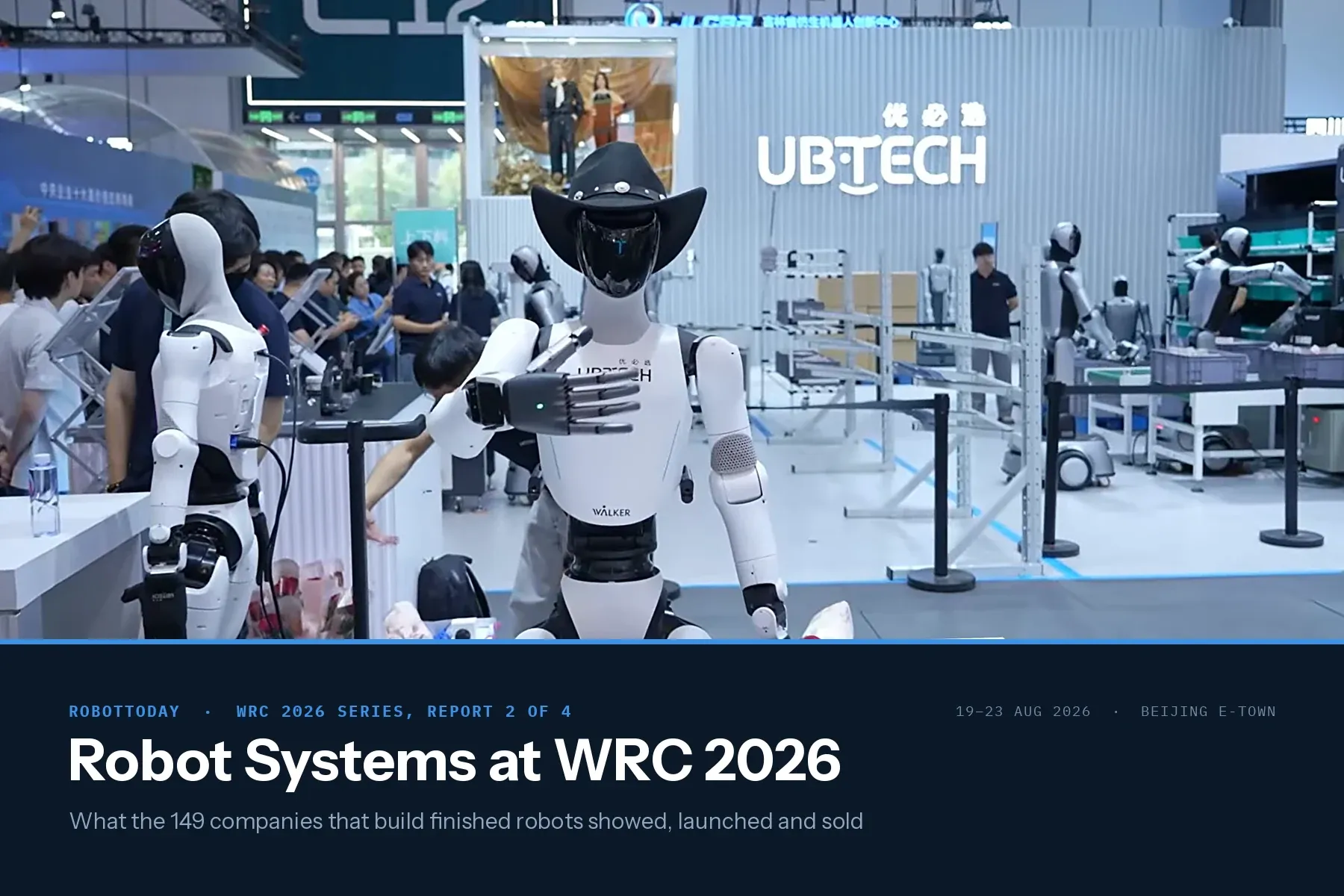
WRC 2026 Robot Systems: 149 Companies That Build Robots
149 of the 248 classified WRC 2026 exhibitors build finished robots. 93 build humanoid or legged machines. The audited humanoid sales number is one unit.

ROBOTTODAY Weekly July 20 – 24, 2026
Your weekly robotics briefing: AGIBOT unveils four new robots at WAIC 2026, the NDAA bars Chinese humanoids from the U.S. military, SoftBank eyes Gravis Robotics for its Roze vehicle, and Anduril reveals its Thunder autonomous attack tiltrotor at Farnborough.

US Restrictions on Chinese Humanoid Robots: The Full Map
Every US restriction on Chinese humanoid robots — NDAA Sec. 163, GUARD Act, the 1260H list — plus the supply-chain math and a 4-tier map of decoupling.

Xiangdao faces 16% "platform tax" challenge.
In May 2026, Xiangdao Mobility, backed by SAIC Group, submitted a revised prospectus to the Hong Kong Stock Exchange, marking its second attempt at an initial public offering (IPO). This updated filing includes comprehensive financial and operational data for the entirety of 2025, signaling an improvement in the company's profitability. Despite a steady increase in revenue, which rose from 5.718 billion yuan in 2023 to 6.774 billion yuan in 2025, the number of active drivers has stagnated. The monthly active driver count grew marginally from 94,000 to 100,000, with a notable 9% drop from 2024 to 2025. This discrepancy suggests that revenue growth is primarily driven by an increase in orders per driver rather than an expansion of the driver base. As the ride-hailing market approaches saturation, with over 20 major cities issuing capacity warnings in 2026, Xiangdao reported an average of 8.6 daily orders per vehicle in 2025, reflecting a 14.6% year-on-year increase. However, the company relies heavily on external platforms for 98.5% of its orders, incurring significant commission costs that compress profit margins. Looking ahead, Xiangdao aims to pivot towards autonomous driving technology, collaborating with partners like Momenta for development while focusing on enhancing its smart dispatch and safety monitoring systems. However, the transition to Robotaxi services raises questions about future profitability and market positioning, especially as the company remains cautious about international expansion compared to its competitors.

FUTURE WARFARE | The Geopolitical Competitive Landscape
Military robotics is no longer a U.S.-centric story. Global defence spending crossed $2.75 trillion in 2026; defence-tech VC hit a record $49.1 billion in 2025; and a multipolar robotics order is crystallising in real time — with China’s 15th Five-Year Plan institutionalising civil-military fusion, Europe’s €381 billion defence budget financing its own AI champions, and Turkey and Israel reshaping the export market with affordable, combat-proven systems. Part Five of the Future Warfare Series maps the country-by-country competitive landscape, the collapsing regulation race, and the investment forces reshaping who builds — and who controls — the autonomous weapons of the next decade.

FUTURE WARFARE | Cross-Domain Integration - Integration How Land, Sea, Air and Software Are Converging Into a Single Kill Chain
Cross-domain robotics is reshaping modern warfare as drones, UGVs, AI targeting systems, and autonomous logistics converge into a single networked kill chain across land, sea, air, and software.

GLOBAL ROBOTICS INDUSTRY Comprehensive Sector Overview
A comprehensive global robotics industry overview for 2025, analyzing 14 key market segments — from industrial and humanoid robots to logistics AMRs, military systems, and service robots — with expert market sizing, US case studies, five-year forecasts, and bilingual English-Chinese analysis for executives and investors.
FUTURE WARFARE | Land - Unmanned Ground Vehicles — From Logistics Mules to Front-Line Robots
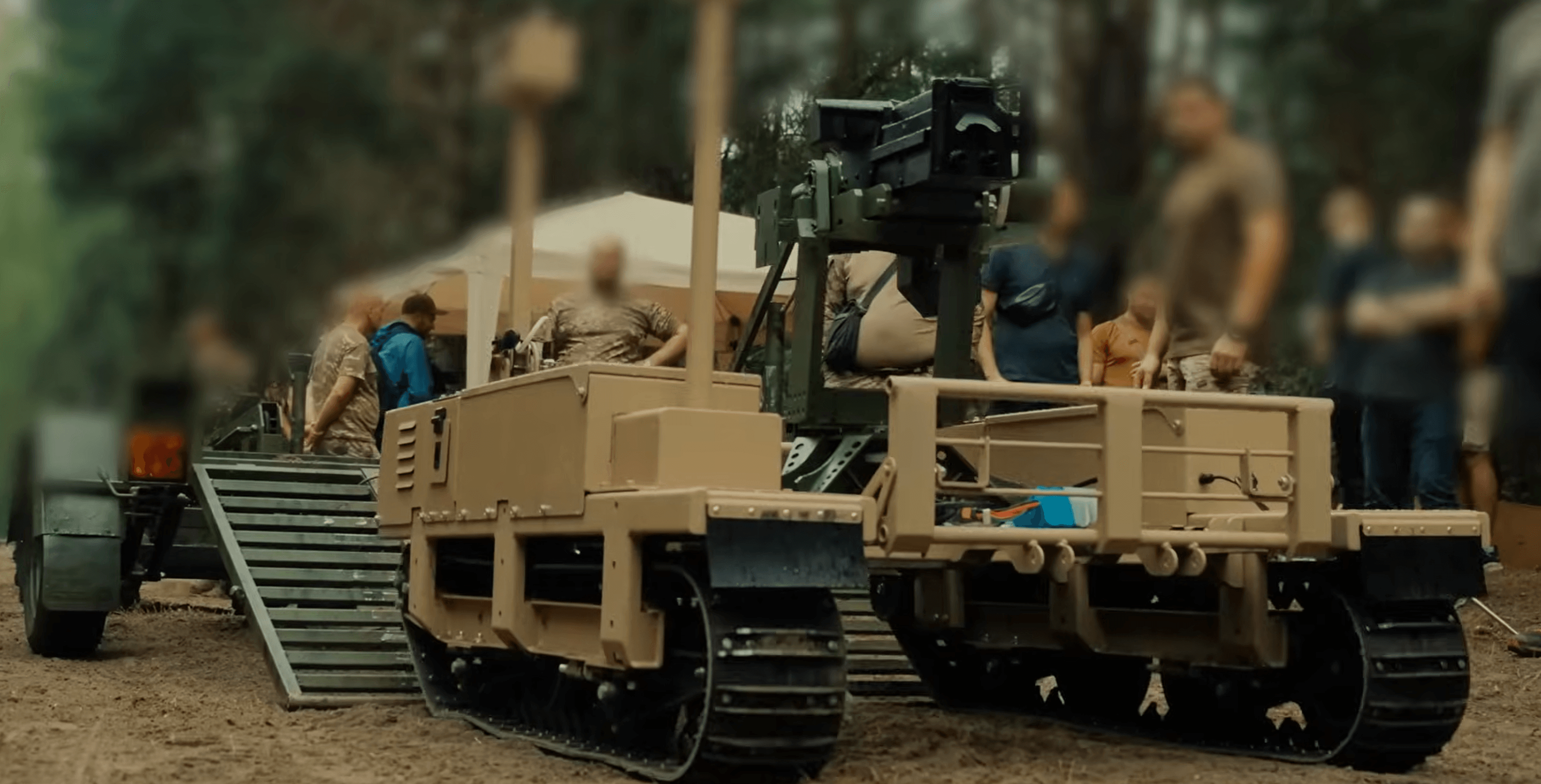
Ukraine fielded 15,000 unmanned ground vehicles in 2025 — surpassing its own procurement targets by over 100 percent. A single UGV held a front-line position for 45 days. Up to 90 percent of supplies to Pokrovsk now move by robot, not truck. The U.S. Army cancelled its $3 million Robotic Combat Vehicle and is starting over. China is deploying $3,000 robot dogs in PLA urban-warfare exercises. This article maps the emerging UGV battlefield — from Ukraine’s garage-built logistics fleet to the Pentagon’s stalled combat-vehicle ambitions, and from Ghost Robotics’ Vision 60 to the quadruped proliferation problem no treaty has yet addressed.

EU Bets €1.5B on Drones and AI: Inside EDIP's 2026–2027 Defence Industry Programme
The EU's €1.47 billion European Defence Industry Programme (EDIP) 2026–2027 targets drones, counter-UxS systems, AI-enabled autonomy, and loitering munitions across six major funding calls — allocating over €232 million directly to unmanned systems and related electronics supply chains.

FUTURE WARFARE | The Autonomy Spectrum
How modern weapons shattered the concept of human control — from kill-switch confirmation to AI systems that select targets independently.

EKA Mobility Secures $57 Million from NIIF’s India-Japan Fund to Drive Leadership in Electric Commercial Vehicles
EKA Mobility raises $57 M from the India-Japan Fund (NIIF) to accelerate electric commercial vehicle growth and electrification leadership in key markets.


