


Rob Surgical
Spanish surgical robotics company founded in 2012 as a UPC/IBEC spin-off, developing the Bitrack system for minimally invasive hybrid robotic surgery.
Contact Rob Surgical
WEBSITE
https://robsurgical.comPHONE
+34 93 013 08 83HEADQUARTERS
Spain

Company Facts
Founded
2012
Primary Role
Manufacturer
Company Size
-
Primary Region
Europe
Annual Sales
-
Funding Stage
-
Funding Total
-
Certifications & Memberships

RobotToday Weekly Briefing August 31 – September 4, 2026
This week in robotics: NVIDIA agrees to buy Hugging Face for $12.93 billion, Figure signs a $3.5 billion compute deal with Nscale for up to 100,000 GPUs, Tesla launches steering-wheel-free Cybercabs in Austin under NHTSA scrutiny, and Uber and Wayve bring the UK its first autonomous rides. August 31 – September 4, 2026.

China Establishes Reimbursement Group for Robot-Assisted Surgery in DRG/DIP 3.0 Plan
China's National Healthcare Security Administration has officially created a distinct reimbursement group for robot-assisted surgery within the DRG/DIP 3.0 plan. This significant move addresses a pricing gap that could have adversely affected hospitals that choose to adopt surgical robots. The establishment of this reimbursement group is crucial as it encourages the integration of advanced robotic technologies in surgical procedures. By providing a clear reimbursement framework, hospitals may be more inclined to invest in surgical robots, ultimately enhancing patient care and operational efficiency. Looking ahead, stakeholders in the healthcare sector should monitor the impact of this new reimbursement structure on the adoption rates of robotic surgical systems. No further timeline was disclosed at the time of publication.

Enovis Acquires eCential Robotics for €155 Million to Enhance Surgical Orthopedic Robots
Enovis announced its acquisition of eCential Robotics for €155 million (approximately $180 million) to advance the development of surgical robots for orthopedic procedures. This strategic move aims to close a competitive gap and formalize an existing collaboration with eCential, which previously developed Johnson & Johnson's Velys Spine surgical robot. Enovis plans to launch a knee robot in late 2028 and a shoulder robot in 2029, enhancing its Astra enabling technology system with robotics capabilities. The acquisition is significant as it positions Enovis to compete more effectively in the orthopedic surgical robot market, where rivals like Johnson & Johnson and Stryker are already active. Enovis CEO Damien McDonald emphasized that integrating robotics technology is crucial for the company's long-term growth strategy. The planned knee and shoulder robots are expected to feature unique capabilities, including a robotic arm with seven degrees of freedom, setting them apart from existing offerings in the market. Looking ahead, Enovis aims to leverage eCential's expertise to accelerate product development and respond more effectively to clinician needs. The acquisition includes an upfront payment and potential milestone payments totaling up to €35 million, contingent on the successful development of the new devices. No further timeline was disclosed at the time of publication.
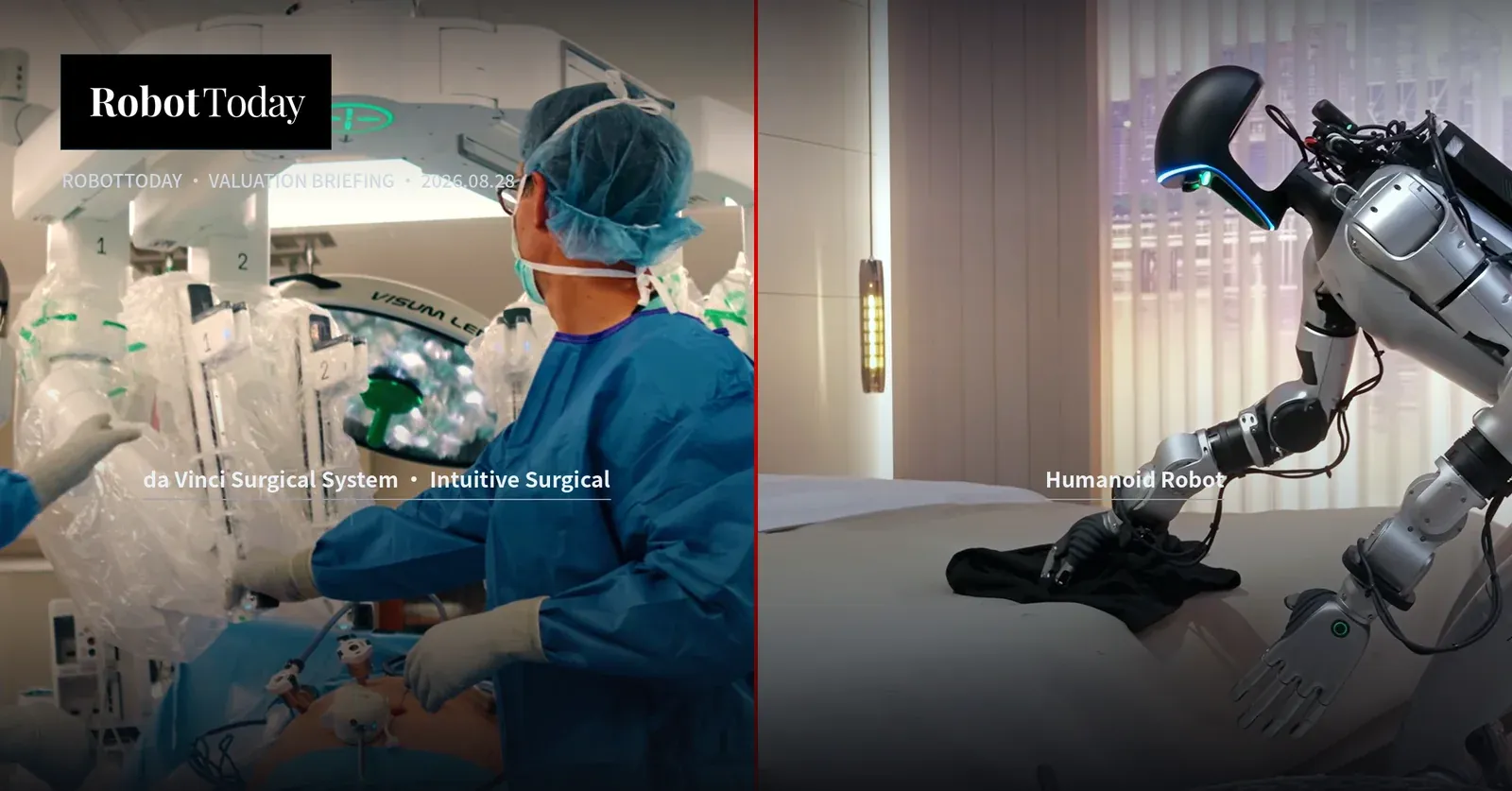
Robotics Investing: Intuitive Surgical or Unitree?
Unitree (STAR 688836) trades near 410x earnings after a 46% drawdown; Intuitive Surgical sits at 42.5x. A definition-aligned comparison of both companies.

Five Innovative Robots Transforming Modern Medicine and Patient Care
The integration of robots in healthcare has evolved from a futuristic concept to a reality, with machines now playing vital roles in operating rooms and rehabilitation centers worldwide. These robots enhance surgical precision, disinfect hospital environments, and assist in patient recovery, showcasing their diverse applications in modern medicine. The da Vinci Surgical System, developed by Intuitive Surgical, stands out as the most widely adopted surgical robot globally, approved by the FDA since 2000. It enables surgeons to perform complex procedures with enhanced dexterity and reduced tremors, impacting various specialties such as urology and gynecology. Meanwhile, the Xenex LightStrike robot addresses the critical issue of hospital-acquired infections by using ultraviolet light to disinfect rooms quickly and effectively, contributing to patient safety and infection control. As the healthcare landscape continues to embrace robotic technology, stakeholders should monitor advancements in robotic applications and their implications for patient care. The ongoing development of robots like the da Vinci and LightStrike highlights the potential for improved outcomes in surgery and infection management. No further timeline was disclosed at the time of publication.
Lists
ROBOTTODAY WEEKLY BRIEFING August 24 – 28, 2026
This week in robotics: XPeng's Dogotix raises over $900 million at a $6.3 billion valuation, Unitree's post-IPO slump revives bubble talk, Beijing's World Humanoid Robot Games close with a shift to real-world tasks, and Teradyne sues JAKA at Europe's Unified Patent Court. August 24–28, 2026.

Noah Medical Plans Hong Kong IPO to Support Expansion in Mainland China
Noah Medical, a surgical robotics firm backed by SoftBank, is preparing to file for a Hong Kong listing as early as next year. The company aims to raise over $100 million to bolster its expansion efforts in mainland China. Founder Zhang Jian emphasized that Hong Kong's status as an international financial center makes it an ideal location for their listing. The move is significant as Noah Medical seeks to tap into the growing demand for surgical robotics in China. With regulatory approval from China's drug regulator obtained in November, the company is targeting hospitals such as Sir Run Run Shaw Hospital for its products. Currently, 90% of Noah Medical's revenue comes from the U.S., where its surgical robots have successfully treated around 15,000 patients. Looking ahead, the company’s listing could provide the necessary capital to enhance its market presence in China. No further timeline was disclosed at the time of publication.
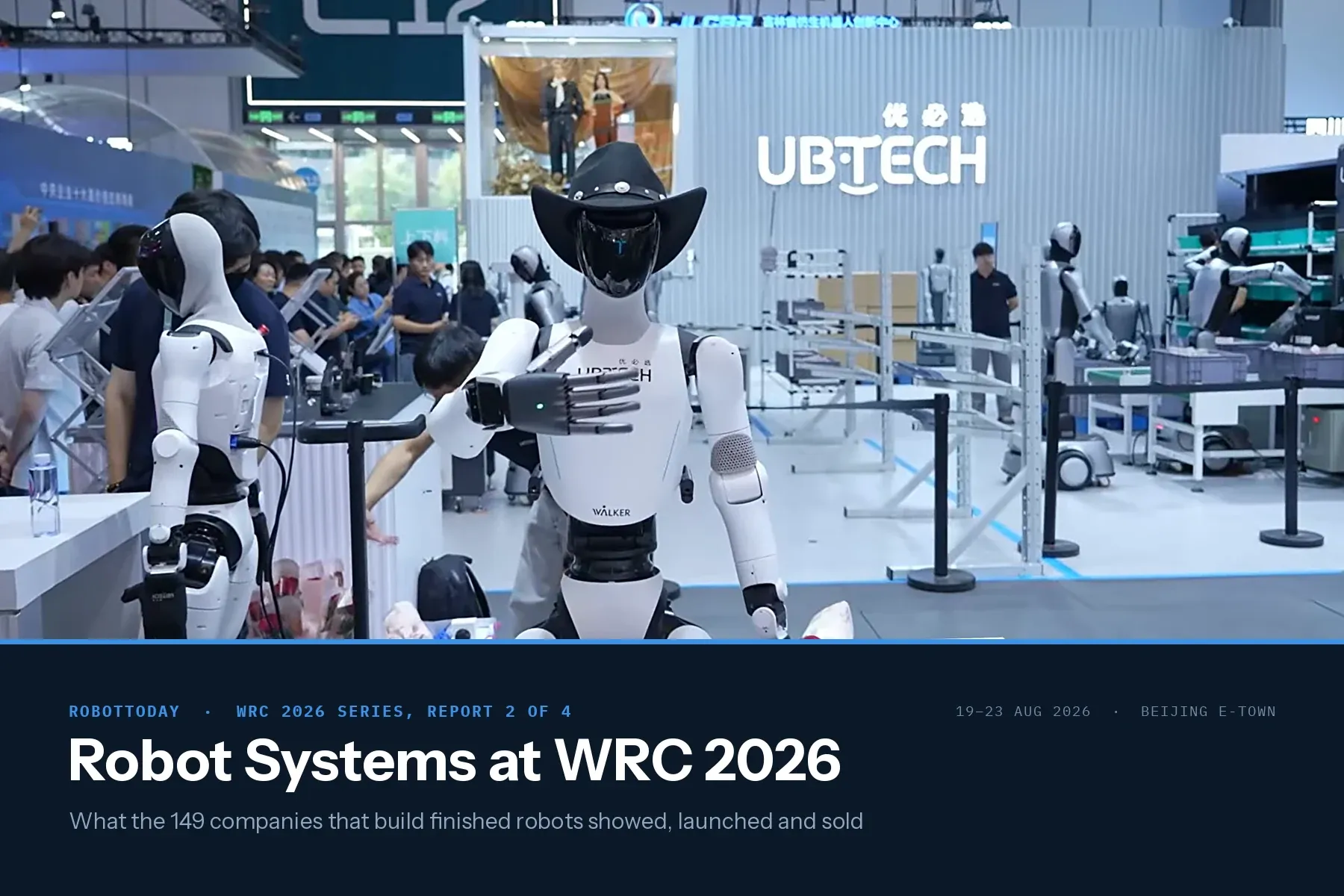
WRC 2026 Robot Systems: 149 Companies That Build Robots
149 of the 248 classified WRC 2026 exhibitors build finished robots. 93 build humanoid or legged machines. The audited humanoid sales number is one unit.

WRC 2026 Exhibitor Map: 248 Robotics Companies Mapped
We classified 248 WRC 2026 exhibitors with the RobotToday taxonomy. Motion & Actuation leads at 75 companies, Humanoid at 72, and compute stays thin at 12. (Modified 2026-08-27)

Surgical Robots Shine at International Medical Expo: Domestic Innovations Reshape Operating Rooms
From August 14 to 16, the 32nd China International Medical Instrument and Equipment Exhibition took place at the National Convention Center. Surgical robots became the highlight of the event, which focused on showcasing innovative medical devices and digital healthcare technologies. Attendees observed demonstrations of various surgical robots, including both international models like the da Vinci and domestic innovations, highlighting their evolution from auxiliary tools to primary surgical instruments. The significance of this event lies in the emergence of domestic surgical robot companies, whose products span laparoscopic, orthopedic, and neurosurgical applications. Some of these robots have already completed thousands of surgeries in top-tier hospitals, and their competitive pricing compared to imported devices is expected to accelerate their adoption in grassroots healthcare facilities. The exhibition also featured China's medical equipment applications in Africa, reflecting the growing export of Chinese medical devices, with a notable increase in high-value products like surgical robots. Looking ahead, industry experts noted that as the costs of surgical robots decrease and demand from grassroots hospitals rises, the Chinese medical robot market is entering a growth phase. According to Frost & Sullivan, the market size for surgical robots in China is projected to exceed 50 billion yuan by 2030, with domestic production rates expected to surpass 50%. No further timeline was disclosed at the time of publication.
Surgical Robots Medical Devices Healthcare Technology AI in Medicine
Joint Robot Training in Guiyang Achieves Success with Over 2.04 Million Views
On August 7, 2026, a training program on the safety and effectiveness of domestic joint surgery robots was successfully held at Guizhou Provincial People's Hospital. This event was organized by the Sichuan International Medical Exchange Promotion Association and featured experts from various prestigious hospitals, including Sichuan University West China Hospital and the PLA General Hospital. The training included surgical demonstrations and academic discussions, showcasing the capabilities of Yuanhua Intelligent Technology's surgical robots. The significance of this training lies in its demonstration of advanced robotic technology in orthopedic surgeries, particularly in total knee arthroplasty (TKA) and total hip arthroplasty (THA). Yuanhua Intelligent's robots, equipped with precise navigation capabilities, received high praise from attending experts. The event highlighted the importance of integrating robotics into surgical practices, which can enhance surgical precision and improve patient outcomes. Looking ahead, the continued development and application of robotic-assisted surgeries will be crucial in the orthopedic field. Experts shared insights on the future of robotic surgery, emphasizing the need for ongoing training and knowledge sharing among medical professionals. No further timeline was disclosed at the time of publication.
Orthopedic Robotics Surgical Training Medical Technology Healthcare Innovation
Nanyang Technological University Develops 5-in-1 Seed-Sized Surgical Robot
Scientists at Nanyang Technological University (NTU Singapore) have created a seed-sized surgical robot capable of performing five functions wirelessly. Measuring just 4.4 mm, the robot can navigate soft surfaces to cut tissues, release drugs, grip samples, and generate heat, all controlled by magnetic fields. This innovation aims to enhance precision in surgeries and medical treatments. The significance of this development lies in its potential to revolutionize minimally invasive procedures. Unlike traditional magnetic robots that perform limited functions, this new robot can switch between tasks in under a second, making it a versatile tool for targeted surgeries. Associate Professor Lum Guo Zhan, leading the project, envisions its use in navigating the body for precise treatments without large incisions. Looking ahead, the NTU team has successfully tested the robot on biological tissues, demonstrating its capabilities in cutting and heat generation. Future research may focus on further refining its functions and exploring its applications in clinical settings. No further timeline was disclosed at the time of publication.

Domestic Surgical Robots Achieve Enhanced Vision with New 8mm Endoscope Technology
On August 6, Tuge Medical, a subsidiary of Jian Shi Medical, received EU CE certification for its 8mm 3D+4K+fluorescence endoscope. This follows its approval from the National Medical Products Administration for domestic market entry two months prior. The new 8mm endoscope enables surgical robots to operate through standard 8mm instrument ports, reducing the need for larger incisions and improving surgical efficiency. The 8mm endoscope represents a significant advancement in the surgical robot industry, allowing for full compatibility with all instrument channels. Surgeons can switch viewing angles without repositioning patients, minimizing trauma and risk while enhancing operational efficiency. According to Jian Shi Medical's CTO, Wang Yanggang, integrating dual-camera systems into the compact 8mm design posed substantial engineering challenges, but domestic suppliers have now stabilized the supply of high-precision optical components. Looking ahead, by 2025, domestic surgical robot bids are expected to surpass those of imported brands. The evolution of the endoscope not only enhances visibility during procedures but also captures valuable clinical data that will be crucial for AI in healthcare. This leap from 10mm to 8mm signifies a transformative step for China's high-end medical equipment towards self-innovation.
Surgical Robots Endoscopy Medical Technology AI in Healthcare
Shenzhen's Robot Exports Increase Tenfold in First Half of the Year
In the first half of the year, Shenzhen's robot exports reached 6.94 billion yuan, marking a tenfold increase compared to the previous year. This surge reflects the city's significant role in the global robotics market, accounting for 25.5% of China's total robot exports. The growth is driven by various sectors, including industrial and surgical robots, which saw increases of 36% and 3.3 times, respectively. The rise in exports is crucial as it indicates a shift in China's robotics industry from manufacturing to global sales and ecosystem building. Companies like Purui Robotics have established extensive networks and services to support international clients, enhancing their competitive edge. The introduction of specialized tax categories for intelligent bionic and cleaning robots further facilitates international trade. Looking ahead, the trend of increasing robot exports is expected to continue, with production schedules extending to 2027. This indicates strong demand in the global market, as evidenced by the establishment of local offices and service networks by Chinese companies. No further timeline was disclosed at the time of publication.
Robot Exports Industrial Robotics Service Robots Global Trade Automation Technology
Innovations in Domestic Surgical Robots Face Industry Challenges Amid Rapid Evolution
Recent advancements in surgical robotics, including ultra-remote 5G-assisted surgeries and single-port minimally invasive robots, are redefining precision in modern surgical medicine. However, as the industry progresses towards large-scale delivery, many research teams face harsh realities in engineering, struggling with the production of critical components like fatigue-resistant screws and high-rigidity cables. The innovation of high-end medical devices is not a solo endeavor, as the Chinese surgical robot industry transitions from prototype validation to deep autonomous innovation. The gap between laboratory success and stable mass production remains significant, with teams encountering structural challenges in achieving the extreme physical requirements for components, which include high tensile strength and stringent biocompatibility. To overcome the difficulties of transitioning from prototype to mass production, collaboration across the entire value chain is essential. This includes integrating core components, high-end materials, surface treatment processes, and complete system engineering, rather than relying solely on individual manufacturers or suppliers to address these complex challenges.
Surgical Robots Medical Devices Supply Chain Collaboration Precision Manufacturing
WAIC Review 4/4: From Port AGVs to Hospital Night Shifts: What WAIC 2026 Reveals About Real Robot Deployments
From 530+ AGVs at a Singapore port to robots on Apple's line, WAIC 2026 speakers shared concrete data on where embodied AI robots are actually working today.

AI Space Data Centers: Power the Next Generation of Robotics
From Starcloud's $170M Series A to Google's Project Suncatcher and China's operational LEO constellations, AI space data centers are moving from concept to infrastructure. Here's what the robotics industry needs to know.

HUMANOID ROBOTICS | Amazon Acquires Fauna Robotics to Advance “Approachable” Consumer Humanoids
Amazon acquires Fauna Robotics, signaling a shift toward approachable humanoid robots like Sprout, focused on safety, design, and human-centric interaction.
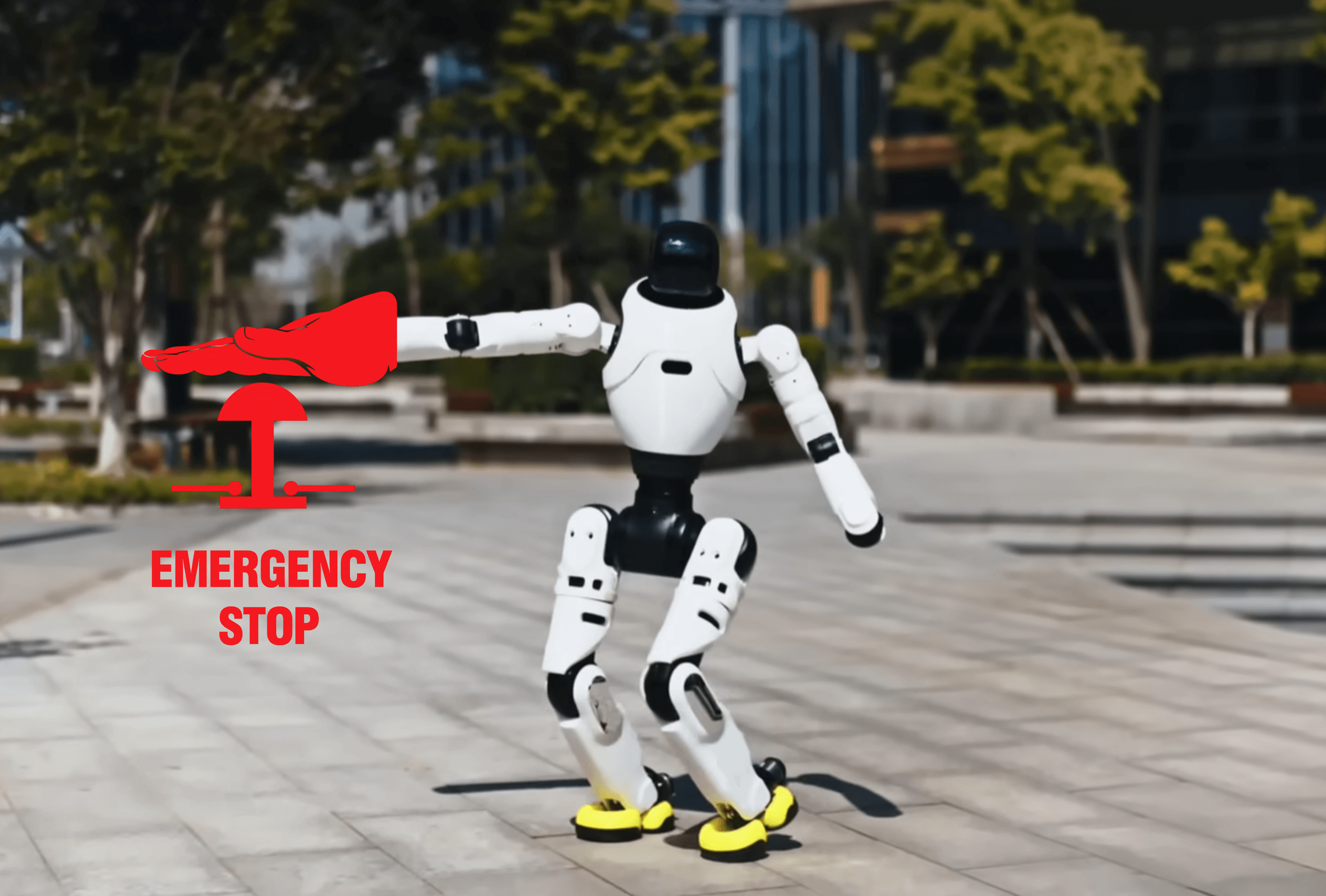
Humanoid Robot E-Stop Risk Exposed by AgiBot Incident
A humanoid robot lost control at a Haidilao restaurant in California, exposing the unresolved E-Stop paradox: for bipedal robots, cutting power may be as dangerous as doing nothing. Standards must catch up before deployment scales further.

The E-Stop Paradox: Why the Red Button on a Humanoid Robot Might Be Its Biggest Safety Risk
Why the emergency stop button may increase risk for humanoid robots. An expert analysis of E-Stop design, safety standards, and controlled stopping.

