Industry Briefing
A single destination for timely, editor-curated robotics news from around the world.
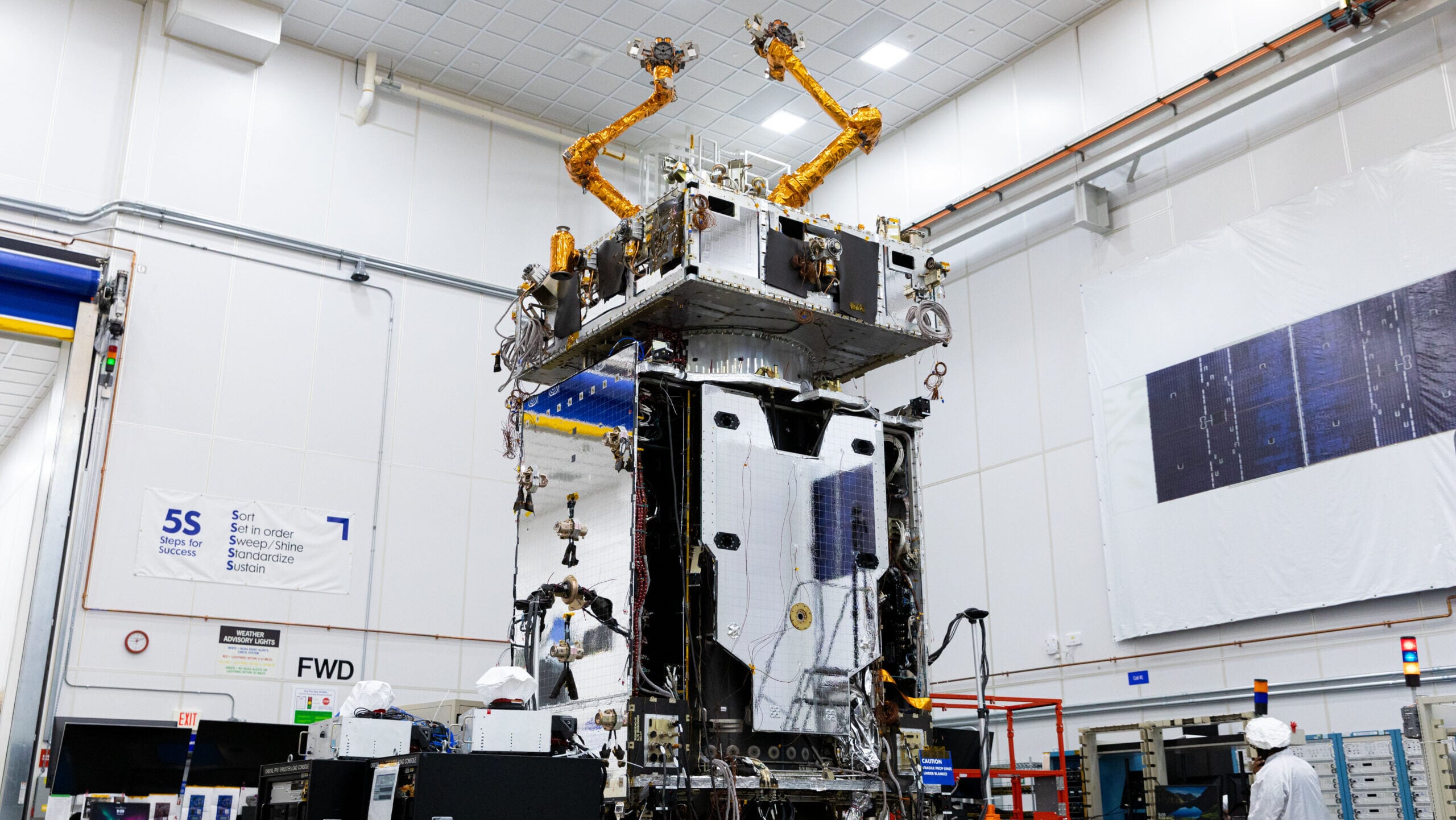
DARPA’s robotic servicing spacecraft to finally fly this summer
The Robotic Servicing of Geosynchronous Satellites mission, a collaboration between DARPA and Northrop Grumman, is set to establish the United States' first on-orbit servicing capability for satellites. This groundbreaking initiative aims to enhance satellite maintenance and repair, extending the operational lifespan of critical space assets. Company officials announced the mission's significance, highlighting its potential to revolutionize satellite operations and reduce costs associated with launching new satellites. The project is expected to take place in the coming months, marking a pivotal advancement in space technology and satellite management.
Space darpa Defense Advanced Research Projects Agency Naval Research Laboratory Northrop Grumman on-orbit refueling
Tesla's Optimus Robots to Support Starmind Satellite Production, Not Maintenance
Tesla's Optimus robots will not be used to repair Starmind satellites in orbit, as confirmed by recent statements from Elon Musk. Instead, these robots are intended to assist in the construction and operation of the Terafab chip manufacturing facility in Texas. The AI1 satellites, designed to disintegrate upon reentry, highlight the company's swap-and-replace strategy rather than traditional maintenance practices. This approach is significant as it reflects a broader trend in satellite management, where mass-produced satellites are replaced rather than repaired. The economics of servicing missions are prohibitive, with the cost of launching a replacement satellite being significantly lower than conducting a repair mission. This model aligns with SpaceX's operational history, where rapid replacement of satellites is more efficient than attempting to maintain them in orbit. Looking ahead, the focus will remain on the production capabilities of the Gigasat factory, which is expected to support the continuous replacement of satellites. No further timeline was disclosed at the time of publication, but the demand for rapid satellite turnover suggests a robust future for Optimus robots in terrestrial manufacturing rather than in-space servicing.
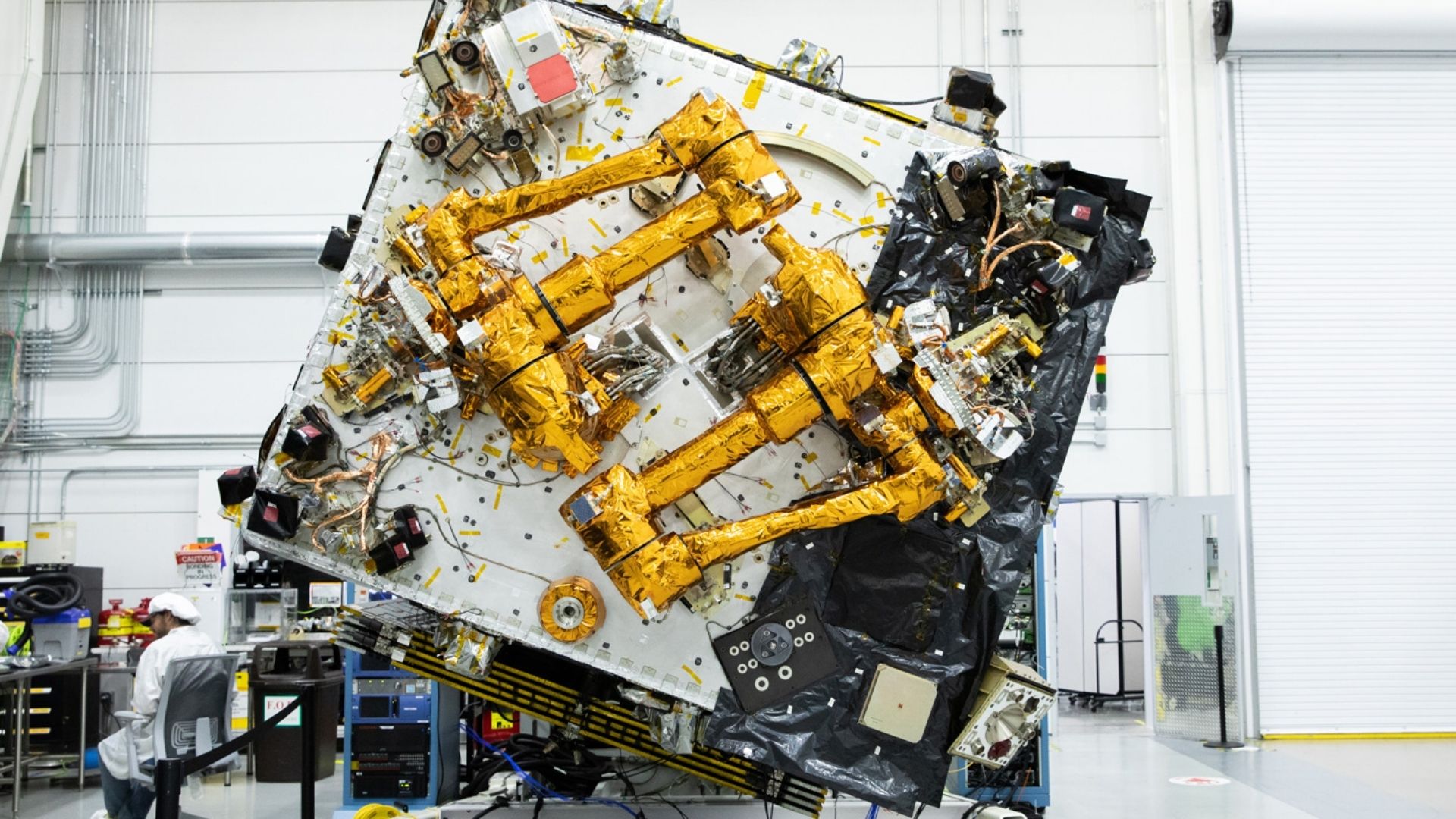
DARPA`s orbital robotic servicing satellite set for 2026 launch
The Defense Advanced Research Projects Agency (DARPA) is set to launch its Robotic Servicing of Geosynchronous Satellites (RSGS) program this summer. This initiative aims to enhance the capabilities of satellites in geosynchronous orbit by enabling robotic servicing, which includes maintenance, upgrades, and repairs. The program is designed to address the growing need for satellite longevity and functionality in an increasingly crowded orbital environment. By employing advanced robotics technology, DARPA seeks to extend the operational life of critical satellite assets, thereby ensuring continued communication and data services. The launch of RSGS represents a significant step forward in satellite servicing, with the potential to revolutionize how space assets are managed and maintained.
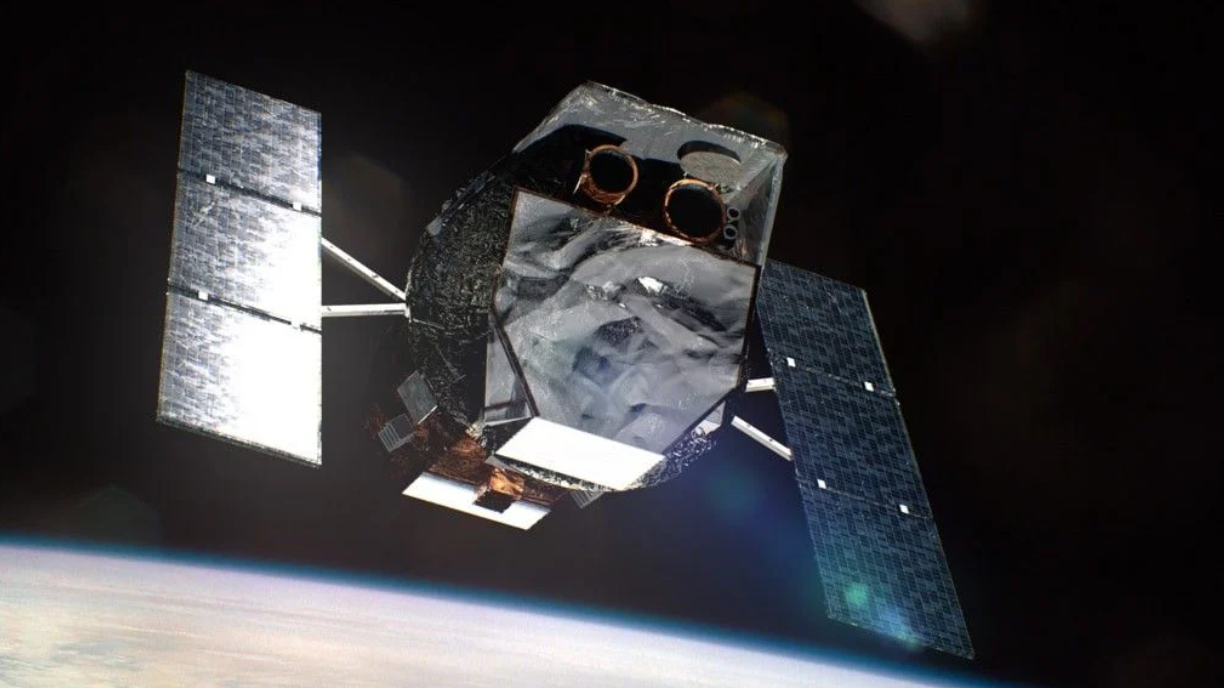
Three-Arm Robot to Rescue NASA's $500 Million Telescope in Space
Katalyst Space Technologies, a startup, has unveiled a three-arm robot spacecraft named LINK, designed to rescue NASA's Swift Observatory, which is currently at risk of re-entering the atmosphere and burning up. The initiative is backed by a $30 million contract and aims to capture and reposition the telescope into a safer orbit. This mission represents a notable advancement in space maintenance technology and underscores the intensifying competition in satellite servicing between the United States and China.
Space Robotics Satellite Servicing Aerospace Technology NASA Space Exploration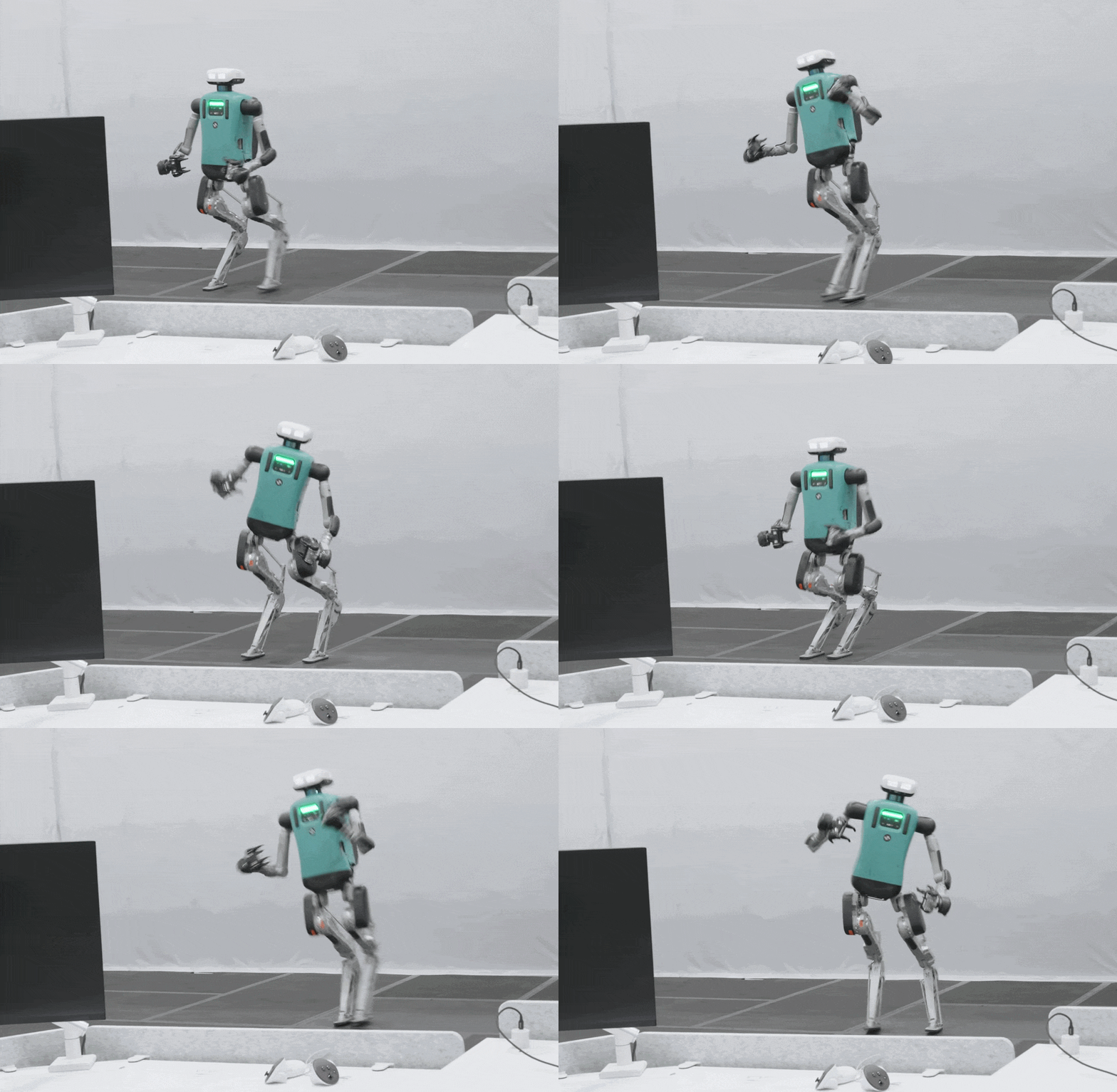
Video Friday: Digit Learns to Dance—Virtually Overnight
In a recent roundup of advancements in robotics, IEEE Spectrum highlighted several notable developments and upcoming events in the field. Among the key innovations is Digit, a humanoid robot that can learn new whole-body control capabilities overnight through sim-to-real reinforcement training, enhancing its performance in various tasks. Additionally, the introduction of GEN-1 marks a significant milestone in robot learning, achieving a 99% success rate in simple physical tasks and drastically reducing task completion time. Unitree has made strides by open-sourcing the UnifoLM-WBT-Dataset, a comprehensive dataset for humanoid robot teleoperation, which has been available since March 5, 2026. Meanwhile, researchers presented MRReP, a Mixed Reality interface that allows users to guide autonomous mobile robots in human-shared environments through hand gestures. In other developments, Sanctuary AI showcased its advanced hydraulic hands capable of dexterous manipulation, while China’s Yuxing 3-06 satellite successfully completed an in-orbit refueling test, paving the way for future satellite servicing. Furthermore, Japan Railway West collaborated with Serendix to utilize 3D printing technology for rapid construction at Hatsushima station, demonstrating innovative solutions to infrastructure challenges. Upcoming robotics events include ICRA 2026 in Vienna from June 1-5, and the Summer School on Multi-Robot Systems in Prague from July 29 to August 4, 2026, providing platforms for further exploration and collaboration in the robotics sector.
Humanoid-robots Video-friday Robot-ai Human-robot-interaction Teleoperation Industrial-robotsRobotics needs a service framework.
RSF defines a common language for robot service capability, lifecycle operations, certification pathways, and service-provider networks.